
PharmD application document tracker

Co-Founder and Chief Data Scientist
A missing transcript or late recommendation can delay an otherwise complete Doctor of Pharmacy (Pharm.D.) application. This tracker is for applicants comparing U.S. pharmacy schools, including those still finishing prerequisites. It separates documents you can prepare once from requirements you must check for each program, then gives you fields for recording requests, receipt, and deadlines. Use it to decide where you are ready to apply, what needs attention first, and whether a school's requirements fit your coursework, budget, and plans.
Key Things You Should Know
- Keep one master record for every school, but track each program's supplemental materials, prerequisite decisions, and deadlines separately; there is no universal Pharm.D. document checklist.
- Request official transcripts and evaluations early, then confirm their status in the application system. A document being requested, received, or verified can mean different things.
- The PCAT was retired in January 2024. Do not spend time arranging a current PCAT sitting; check each school's published admissions requirements instead.
What documents are required for a PharmD application?
Most applicants need academic records, application responses, and evaluations, but the exact package depends on the school and whether it uses the Pharmacy College Application Service (PharmCAS). An online or hybrid format does not remove program-specific admissions requirements; compare online Doctor of Pharmacy degree options against each school's current instructions.
Copy this master tracker for each program. Enter the school's actual deadline and use the status field to distinguish "not started," "requested," "received," "verified," and "accepted by school."
| Document or record | Required by this school? | Requested or drafted | Received or submitted | School deadline | Final status or issue |
| Official transcripts from every required institution | ___ | ___ | ___ | ___ | ___ |
| Prerequisite course record and in-progress courses | ___ | ___ | ___ | ___ | ___ |
| Recommendations or evaluations | ___ | ___ | ___ | ___ | ___ |
| Personal statement and school-specific essays | ___ | ___ | ___ | ___ | ___ |
| Experience, service, and activity entries | ___ | ___ | ___ | ___ | ___ |
| Supplemental application or other school forms | ___ | ___ | ___ | ___ | ___ |
| Any school-requested additional documentation | ___ | ___ | ___ | ___ | ___ |
"Additional documentation" might include an explanation of a transcript discrepancy or an international credential evaluation. Do not send sensitive identification or health records unless the school requests them through an approved process.
How does the PharmCAS application process work?
PharmCAS is a centralized application service used by participating pharmacy schools, not by every school. It collects application information and materials and processes academic records; individual programs decide admissions requirements, supplemental steps, and offers. If you plan to apply to pharmacy school while finishing prerequisites, record each school's last acceptable completion date before submitting.
Use this sequence to keep a submitted application from being mistaken for a complete school file:
- Check the current PharmCAS directory and each program's admissions page for participation, requirements, and deadlines.
- Enter coursework and experiences as instructed; arrange official transcripts and evaluations through the required channels.
- Submit the application and payment before the applicable deadline, allowing time for transcript processing and verification.
- Monitor PharmCAS and each school's portal for missing items, supplemental requests, interview invitations, and decisions.
Keep separate dates for "submitted to PharmCAS," "verified," and "complete at school." A program may require materials to be received - not merely requested - by its deadline. Follow the current cycle's instructions for updates and corrections rather than assuming every field remains editable after submission.
What admission requirements do PharmD programs have?
Programs set their own prerequisite courses, minimum grades or GPA rules, credit requirements, interview policies, and conditions for enrollment. Some admit applicants without a completed bachelor's degree; others have different pathways or expectations. Undergraduate pre-pharmacy courses prepare you to enter the professional Pharm.D. curriculum - they are not themselves Pharm.D. coursework. A published minimum establishes eligibility to be considered, not a promise of admission. Compare pharmacy schools and entry standards using each program's current primary admissions information.
Record these distinctions for every school before deciding where to apply:
- Required: Courses, labs, grades, credits, assessments, and materials that must meet stated rules.
- Recommended: Experiences or coursework the school values but does not require.
- Conditional: In-progress prerequisites, interviews, final transcripts, or other items due before enrollment.
The Pharmacy College Admission Test (PCAT) was retired in January 2024. Do not treat an old PCAT reference on a third-party checklist as a current testing opportunity; ask the program how it evaluates applicants under its present policy.
Follow the current application instructions for official transcripts from every institution whose coursework must be reported, including schools attended for summer or community-college courses. A transcript from the institution that awarded your degree may not replace a separate record from another school. In-progress work belongs in your course record even though a final grade is not yet available.
Match each completed and planned course to the school's published prerequisite list. Check labs, minimum grades, course-age rules, substitutions, and when unfinished courses must be completed. For AP or IB credit, repeated classes, online labs, and international coursework, request a written school-specific determination where the policy is unclear. The receiving school - not the sending school - decides how prior study applies; review pharmacy school credit transfer options without assuming prerequisite acceptance means transfer into the professional curriculum.
Add a note beside any course awaiting a decision, with the question sent, the staff member or office contacted, and the response date. That record is more useful than marking a disputed prerequisite "complete."
Check each school's required number of evaluations, acceptable recommender roles, and submission method. A science instructor, pharmacist supervisor, or employer may describe different strengths, but an impressive title does not override a program's rules. Applicants exploring pharmacy degree options for science majors should select recommenders who can discuss their readiness for patient-facing professional study, not just laboratory performance.
Keep a separate record for each recommender. The following steps make a late or unusable evaluation less likely:
- Ask whether the person can provide a specific, supportive evaluation and confirm that their role meets the school's rules.
- Share your résumé, relevant work examples, target programs, submission instructions, and the earliest deadline.
- Record the invitation date, the recommender's agreement, the system's receipt status, and a planned follow-up date.
- Check whether every intended program has received an acceptable evaluation before marking the item complete.
Do not upload a letter yourself if the application requires confidential, recommender-submitted evaluations.
Check the current application prompt, length limit, and submission channel for the general statement, then log each school's separate essay prompts. A school may ask why its curriculum, practice opportunities, or delivery format fits your goals. If accelerated study interests you, compare online Pharm.D. program timelines before claiming in an essay that a particular schedule suits you.
Track each response by prompt, word or character limit, draft version, reviewer, and submission status. Explain your motivation through a concrete experience and what you learned; do not imply that observing pharmacists qualified you to practice independently. Address a setback directly when a prompt calls for it, and make sure a reused draft actually answers the new school's question.
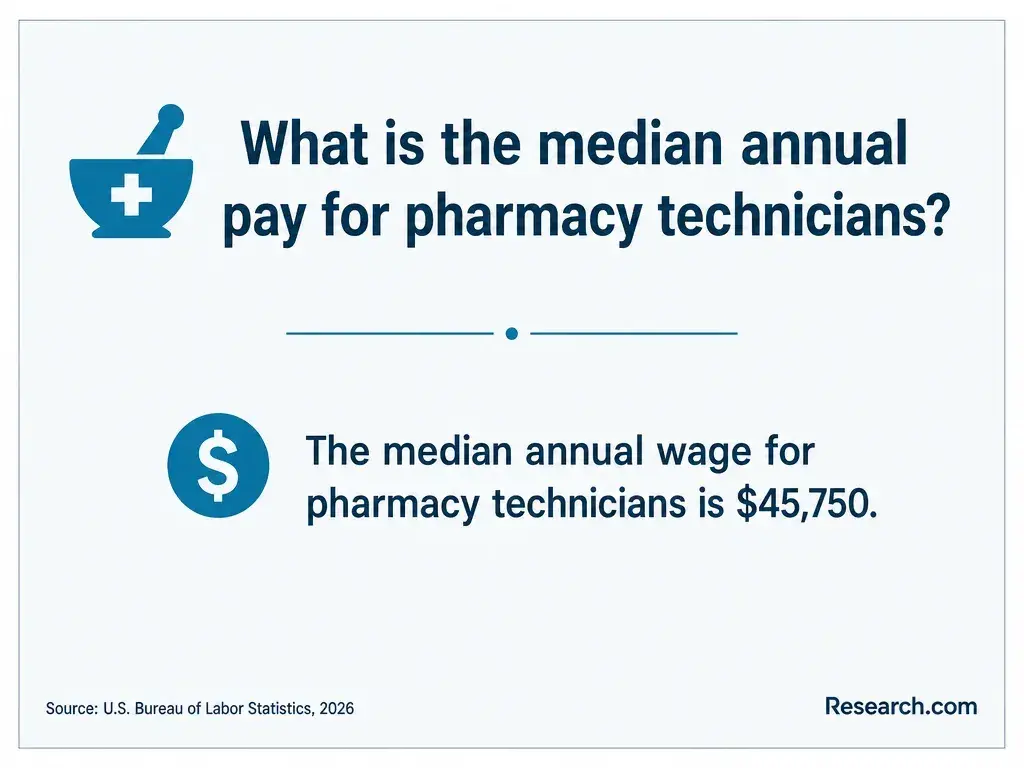
Use the application's categories to record paid work, volunteering, shadowing, research, leadership, and service accurately. For each entry, retain the organization, role, supervisor or contact if requested, dates, approximate time commitment, responsibilities, and one specific contribution. Distinguish observing a pharmacist from working as a pharmacy technician; technician duties and credential requirements vary by state and are not a substitute for a Pharm.D. or pharmacist licensure.
Experience helps explain your interest but does not erase unmet prerequisites. Be equally careful with claims about online pharmacy program length: a shorter pharmacy-related credential is not automatically a route to pharmacist eligibility. If your experience was interrupted, record the actual dates rather than inflating hours to fill a gap.
Track the application deadline, any earlier priority or scholarship deadline, transcript and evaluation receipt rules, supplemental deadline, interview response window, final prerequisite deadline, and enrollment deposit date. Add the time needed for documents to reach and be processed by the recipient; a last-day request may not satisfy a receipt deadline.
Budget separately for application-service charges, school supplemental charges, transcript delivery, credential evaluation if applicable, interview travel, and any deposit. Amounts and refund rules can change by cycle and school. Comparing online pharmacy school cost options is useful, but an application budget is not the same as total tuition and clinical-rotation costs.
Before paying a nonrefundable charge, confirm that the school will consider your coursework and that you can meet any in-person attendance requirements. For enrollment planning, seek the school's current cost-of-attendance and aid information: federal borrowing rules changed for many new graduate and professional borrowers beginning July 1, 2026, so older loan-limit advice may not fit your circumstances.
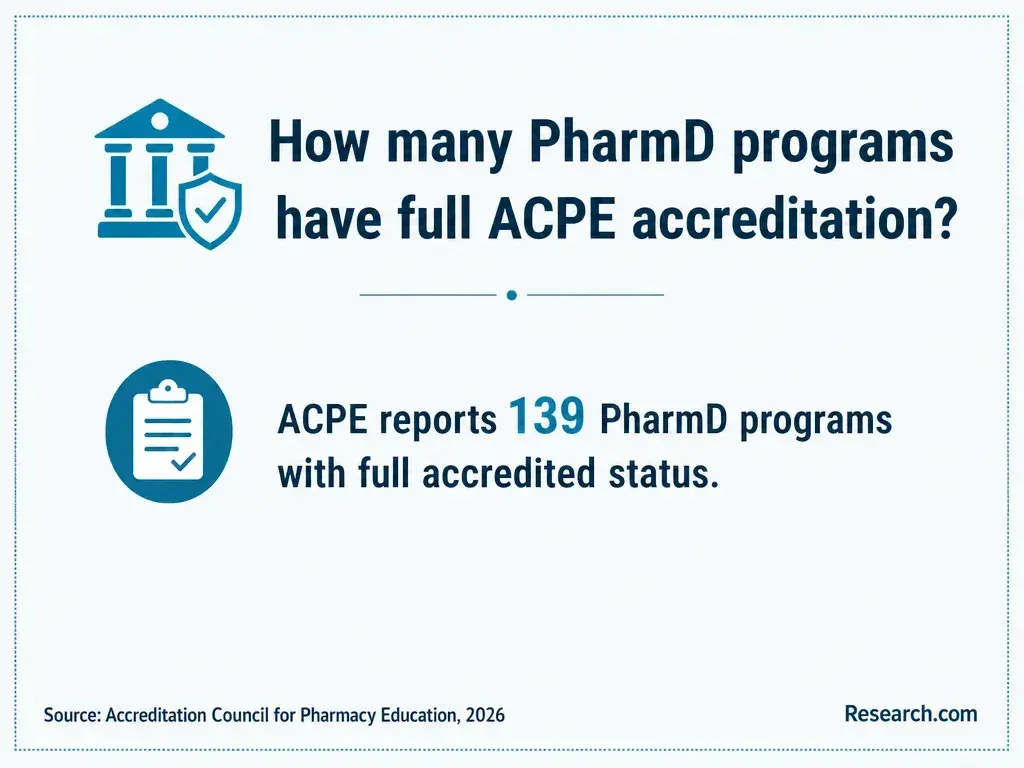
Look up the specific professional Pharm.D. program in the Accreditation Council for Pharmacy Education (ACPE) program records and note its current status. ACPE program accreditation is distinct from an institution's accreditation and from authorization to enroll a distance-learning student in a particular state. This check also matters when evaluating lower-cost pharmacy degree pathways: a pharmacy-related credential is not necessarily a professional Pharm.D.
Record the state where you intend to seek pharmacist licensure and check that board of pharmacy's current education, intern-registration, examination, and application requirements. U.S.-educated graduates generally encounter the North American Pharmacist Licensure Examination (NAPLEX), but jurisprudence examination rules vary; do not assume every jurisdiction uses the Multistate Pharmacy Jurisprudence Examination (MPJE). A Pharm.D., passing an exam, or completing a residency does not itself issue a license.
For a hybrid program, also confirm state authorization, required campus visits, and where the school can arrange or approve in-person introductory and advanced pharmacy practice experiences. Save the source and date of each status check because authorization and licensing rules can change.
How can applicants choose the right PharmD program and prepare for enrollment?
A complete tracker should help you make a choice, not just meet a deadline. Compare schools on confirmed prerequisite eligibility, professional-program accreditation, full educational cost, scheduling, placement logistics, and the state where you expect to seek licensure. A faster schedule can mean less time to earn income or complete prerequisites; doctoral programs with accelerated timelines should not be treated as interchangeable with an ACPE-accredited professional Pharm.D.
Use these final checks before accepting an offer:
- Resolve every prerequisite exception in writing and confirm the conditions attached to your offer.
- Compare tuition and required fees alongside travel, equipment, and potential housing costs for labs or clinical rotations.
- Ask who secures experiential placements, where they may occur, and what schedule, travel, intern registration, or health-clearance requirements you must meet.
- Confirm the deposit deadline and refund policy, then plan for final transcripts and enrollment tasks through the school's official portal.
Choose a program only after the remaining uncertainties are acceptable to you. A lower advertised price may be offset by travel or lost work time; a convenient format may still require substantial in-person training.
Other Things You Should Know About PharmD
Not as a universal Pharm.D. admissions requirement. Check each school's experience expectations and your state's rules before taking a technician job.
Do not assume a prior submission carries forward unchanged. Read the current cycle's reapplicant instructions and review every carried-over entry, document requirement, and school-specific response.
No. Format and scheduling depend on the program. Confirm whether an interview is virtual or on campus before budgeting travel or requesting time off.
Only if the school permits it under its current policy. Ask about deferral eligibility, deadlines, deposit treatment, and whether you would need to apply again.
- Apply to the Pharm.D. Program | College of Pharmacy https://pharmacy.utexas.edu/apply/pharmd/apply
- How to Apply to the PharmD Program | Texas A&M University Irma Lerma Rangel College of Pharmacy https://pharmacy.tamu.edu/pharmd/apply.html
- Does Pharmacy School Require the PCAT? | Mercer College of Pharmacy https://pharmacy.mercer.edu/2024/03/05/does-pharmacy-school-require-the-mcat-or-pcat/
- PharmD Application Process and Requirements | umich.edu https://pharmacy.umich.edu/pharmacy-programs/pharmd-program/application-process-requirements/
- Admissions Frequently Asked Questions and Tips | ucsf.edu https://pharmd.ucsf.edu/admissions/faq-tips
- PharmD Application Process | pitt.edu https://www.pharmacy.pitt.edu/academics/doctor-pharmacy/apply-pharmd-program/pharmd-application-process
- PharmD Apply Now - UW School of Pharmacy https://sop.washington.edu/pharmd/admissions/application-procedures/
- Pharmacy Admissions | University of Health Sciences and Pharmacy in St. Louis https://www.uhsp.edu/admissions/pharmd-admissions/
- PharmD Application Process - School of Pharmacy https://pharmacy.wisc.edu/pharmd/application-process/
- FAQ | OSU College of Pharmacy - Oregon State University https://pharmacy.oregonstate.edu/programs-admissions/pharm-d/faq


