PharmD Versus Pharmaceutical Sciences Degree

Co-Founder and Chief Data Scientist
A Doctor of Pharmacy (Pharm.D.) and a pharmaceutical sciences degree can both lead to work involving medicines, but they prepare students for different responsibilities. Choosing the wrong route can mean paying for training you do not need - or discovering that your degree does not qualify you for the job you want.
This guide compares the two paths for prospective U.S. students, from admissions and cost to licensure and research careers, so you can match a program to your goal before applying.
Key Things You Should Know
- Choose an accredited Pharm.D. pathway if your goal is pharmacist licensure; a pharmaceutical sciences degree alone does not qualify you to practice as a pharmacist.
- Choose pharmaceutical sciences when your primary interest is drug discovery, formulation, testing, or related research; some advanced research roles require graduate study.
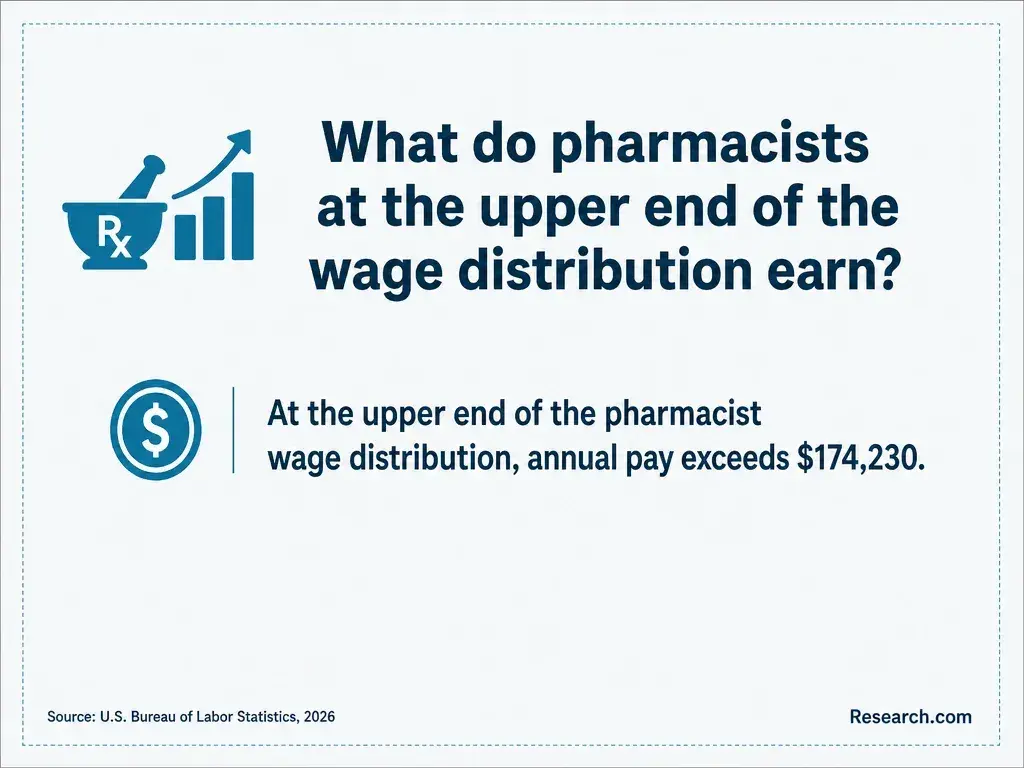
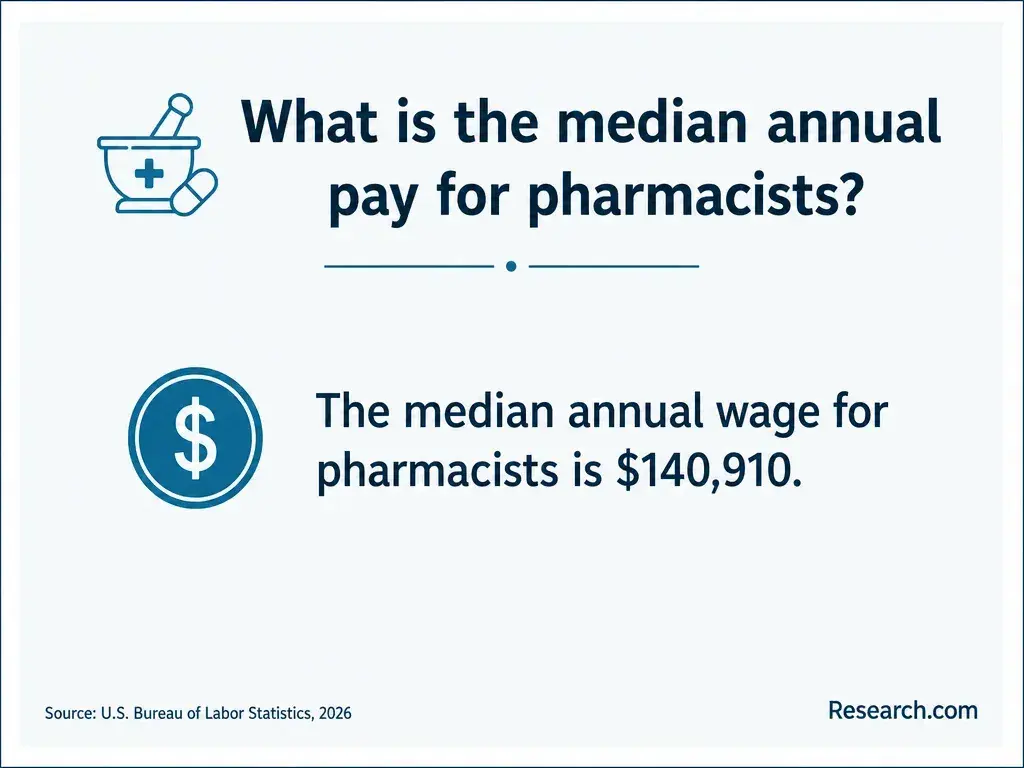
- Pharmacists had a median annual pay of $140,910 in May 2025, with 5% projected job growth from 2025-2035, according to the Bureau of Labor Statistics. Those figures describe the pharmacist occupation, not pharmaceutical sciences graduates.
What is the difference between a PharmD and a pharmaceutical sciences degree?
A Pharm.D. is a professional degree designed to prepare students for pharmacist practice. A pharmaceutical sciences degree is an academic degree focused on how medicines are discovered, developed, formulated, and evaluated. The latter may be a bachelor's, master's, or doctoral degree, so its depth and career options depend heavily on the credential.
This comparison highlights the distinction that matters most when selecting a pathway: whether the curriculum prepares you for regulated patient-care practice or for scientific work involving medicines.
| Decision factor | Pharm.D. | Pharmaceutical sciences degree |
| Primary focus | Medication use, patient care, and pharmacy practice | Drug research, development, formulation, and analysis |
| Typical study | Professional doctoral curriculum after required undergraduate prerequisites | Bachelor's, master's, or research doctorate |
| Practical training | Required supervised pharmacy practice experiences | Laboratory work, research projects, or internships, depending on the program |
| Pharmacist licensure pathway | Provides the professional education typically required of U.S.-educated applicants; other licensing requirements still apply | Does not, by itself, provide the required professional pharmacy education |
Undergraduate pre-pharmacy courses are preparation for applying to a Pharm.D. program, not the professional degree itself. Students coming from biology, chemistry, or a pre-pharmacy track can explore pharmacy education after a pre-pharmacy track, but each school decides how prior coursework meets its prerequisites.
Does a pharmaceutical sciences degree qualify you to become a pharmacist?
No. In the usual U.S.-educated pathway, aspiring pharmacists complete a Pharm.D. program accredited by the Accreditation Council for Pharmacy Education (ACPE), then satisfy the licensing requirements of the state or jurisdiction where they intend to practice. These can include supervised experience, the North American Pharmacist Licensure Examination (NAPLEX), a jurisprudence assessment where required, and other board requirements. Some jurisdictions use different law-exam arrangements, including the Uniform Multistate Pharmacy Jurisprudence Examination (UMPJE); do not assume every board requires the MPJE.
A pharmaceutical sciences graduate can apply to a Pharm.D. program, but admission and recognition of prerequisite courses are not automatic. If coursework is unfinished, examine pharmacy schools and prerequisite completion, then confirm the receiving school's rules for courses still in progress. Neither admission to a Pharm.D. program nor graduation from one is itself a pharmacist license.
Which degree is better for pharmacy practice or pharmaceutical research?
For licensed pharmacy practice, choose the Pharm.D. Its patient-care training and required practice experiences serve a purpose that a laboratory-centered pharmaceutical sciences curriculum does not. If you want to counsel patients, evaluate medication regimens, or work in another role legally reserved for pharmacists, assess Pharm.D. programs and the rules of your intended licensing board.
For drug-focused research, start by identifying the work you want to do. A pharmaceutical sciences degree is usually the more direct academic route to laboratory research, formulation, or analytical work. A research doctorate may be important for roles involving independent research leadership; an entry-level laboratory role may not require one. Pharm.D. graduates can also work in research or industry, particularly where clinical and medication-use expertise matters, but the professional degree is not a substitute for every research skill.
If time is your main concern, comparisons of doctoral study with a shorter time commitment can provide scheduling context. Check the credential and intended occupation first: a shorter doctorate in another field cannot replace the Pharm.D. education required for the standard U.S. pharmacist pathway.
Pharm.D. graduates who obtain a pharmacist license may pursue roles in community pharmacies, hospitals, ambulatory care, health systems, and other practice settings. Some also work in industry, informatics, or medication safety; employers may prefer additional experience or training for particular positions. Pharmacy residency is postgraduate practice training, while a fellowship typically emphasizes a defined research or industry area. Neither is required for every pharmacist job, and specialty board certification is separate from state licensure.
Pharmaceutical sciences graduates may seek work in laboratory research, formulation, manufacturing, quality, regulatory affairs, or clinical research support. The attainable role depends on degree level, methods training, and employer requirements. The Bureau of Labor Statistics projects about 12,500 pharmacist openings per year from 2025-2035, but that pharmacist figure should not be treated as a forecast for pharmaceutical sciences jobs.
Compare likely entry roles before borrowing for a degree. Resources on affordable pharmacy studies with a focused timeline can help frame the search, but a short pharmacy-related credential should not be mistaken for a pharmacist-qualifying Pharm.D.
Pharm.D. students study subjects such as pharmacology, therapeutics, pharmacokinetics, drug information, communication, and medication safety. They apply that knowledge through introductory pharmacy practice experiences (IPPEs) and advanced pharmacy practice experiences (APPEs) under program and site supervision. These experiences prepare students for practice; students must still follow applicable supervision and intern-registration rules.
Pharmaceutical sciences curricula may emphasize medicinal chemistry, pharmaceutics, toxicology, drug delivery, biotechnology, or analytical methods. Bachelor's students may build broad laboratory foundations, while master's and Ph.D. students often undertake more specialized research. Course titles alone do not show how much hands-on work a program provides: compare laboratory access, projects, and any internship or thesis requirement.
Shorter options discussed in guides to how quickly can an online pharmacy degree be completed may cover different credentials and subjects. Check the actual curriculum rather than assuming similar-sounding degrees teach the same skills.
Pharm.D. applicants generally need specified undergraduate prerequisite courses, often including sciences, before entering the professional curriculum. A completed bachelor's degree is not universally required. Schools set their own course, laboratory, grade, credit, and coursework-age policies, and they decide whether courses in progress are acceptable. The Pharmacy College Admission Test (PCAT) was retired in January 2024 and is not a current exam to schedule.
Pharmaceutical sciences bachelor's programs typically use undergraduate admission criteria. Graduate programs may require a relevant bachelor's degree and evidence of preparation for advanced scientific work; research interests and faculty fit can matter, especially for a Ph.D. Neither an admission minimum nor completion of prerequisites guarantees acceptance.
For a Pharm.D. application, check the current school directory and the program's own instructions before relying on general descriptions of pharmacy admissions criteria. Confirm whether the school uses PharmCAS and whether it requires an interview, recommendations, or supplemental materials.
A Pharm.D. commonly involves roughly four years of professional study after required undergraduate prerequisites, although approved program structures vary. Prerequisite study adds time for students who have not completed it. A pharmaceutical sciences bachelor's degree commonly follows a four-year undergraduate plan; master's and Ph.D. timelines vary with coursework, research, and thesis or dissertation requirements.
Some schools offer ways to complete a Pharm.D. on an accelerated schedule. Compare the full timeline from your starting point, not just the advertised professional-program length: prerequisite gaps, tightly sequenced terms, and required in-person experiences can change how quickly you finish. A faster calendar may also leave less room for paid work.
There is no reliable single price for either route. Pharm.D. tuition varies by school and residency status, and its required practice experiences can create costs beyond tuition. Pharmaceutical sciences costs depend strongly on degree level and institution; some research-based graduate offers include funding, while others do not. Compare the same academic years and the full cost of attendance, not one program's annual tuition against another's total price.
The cost categories below show why a lower advertised tuition may not mean a lower-cost route. Ask each school for a current, student-specific estimate.
| Cost category | Pharm.D. considerations | Pharmaceutical sciences considerations |
| Before enrollment | Unfinished prerequisites and application expenses | Required preparatory coursework and application expenses |
| During study | Tuition, fees, supplies, clinical resources, and living costs | Tuition, fees, laboratory or technology costs, and living costs |
| Location-dependent | Rotation travel or housing and any required campus visits | Campus laboratory attendance, research travel, or relocation |
| After graduation | Licensure application and examination expenses | Expenses tied to the chosen job or further degree |
Federal borrowing rules changed for many new graduate and professional borrowers beginning July 1, 2026. Do not build a budget around an assumed loan limit or automatic Grad PLUS eligibility; ask the financial aid office how current rules apply to your enrollment and borrowing history. When exploring an affordable route to a Pharm.D., include required travel and the income you might forgo while studying.
Some Pharm.D. programs offer online or hybrid classroom instruction, but that does not make their hands-on requirements remote. Students may need scheduled live classes, campus visits, and in-person IPPEs and APPEs. Ask who arranges or approves practice sites, whether a nearby placement is possible, and what travel, intern registration, or state restrictions may apply. An online label does not imply a self-paced schedule or guaranteed compatibility with full-time work.
Online pharmaceutical sciences coursework is also available in some programs, particularly where the curriculum emphasizes concepts or professional applications rather than bench research. A laboratory-intensive degree may still require campus facilities or approved in-person work. For online Pharm.D. program selection, verify the professional program's accreditation, your state's distance-education authorization, and clinical-placement logistics separately; none of these alone establishes licensure eligibility.
How do you choose an accredited PharmD or pharmaceutical sciences program?
For a U.S. Pharm.D. goal, check the program's current status in ACPE's official records and confirm that its pathway meets the education requirements of the board where you intend to seek licensure. ACPE accredits professional pharmacy education programs, not individual pharmacists. Also check institutional accreditation, published licensure-exam outcomes where available, practice-site support, and total costs. Institutional accreditation and distance-education authorization answer different questions from ACPE accreditation.
For pharmaceutical sciences, evaluate the institution's recognized accreditation and the specific program's curriculum, facilities, research opportunities, graduate outcomes, and funding terms. Do not assume a program is suitable for your intended work simply because it sits within a college of pharmacy.
Before accepting either offer, obtain written answers to the questions that could change your timeline or budget. This is particularly important if you have prior college coursework.
- Which of my completed courses satisfy prerequisites, and will any credits apply to the degree itself?
- What required attendance, laboratory work, rotations, or research activities must occur in person?
- What will I pay beyond tuition, and what aid am I eligible to receive?
- For a Pharm.D., what accreditation status and state-specific licensing steps apply to my intended pathway?
The receiving school makes the final credit decision. Use resources on how to evaluate credits for pharmacy prerequisites to prepare your questions, but request an official evaluation before treating prior coursework as accepted.
Other Things You Should Know About PharmD
The Pharm.D. is a doctoral degree, but how the title may be used in patient-care settings depends on employer policy and applicable law. A graduate should never use it in a way that misrepresents their role or licensing status.
Yes. Some institutions offer combined pathways, and students can also pursue the degrees separately. Confirm admission rules, funding, research expectations, and whether the combined route advances your specific career goal.
Not as a universal requirement. A school may require a project or offer research opportunities, but a traditional research thesis is more closely associated with many graduate research degrees. Check the program's curriculum.
No. Licensure is jurisdiction-specific. A licensed pharmacist seeking to work elsewhere must follow the new jurisdiction's licensing or license-transfer process and any applicable examination requirements.
- Pharmacist Licensure Guide | Department of State https://www.pa.gov/agencies/dos/resources/professional-licensing-resources/licensure-processing-guides-and-timelines/pharmacist-guide
- Pharmacist - Florida Board of Pharmacy https://floridaspharmacy.gov/pharmacist/
- U.S. Graduate Pharmacy References | EducationUSA https://educationusa.state.gov/your-5-steps-us-study/research-your-options/graduate/graduate-student/what-graduate-programs-a-4
- Review of National and International Accreditation of... - PMC https://pmc.ncbi.nlm.nih.gov/articles/PMC6325464/
- PharmD vs. PhD vs. Master of Science | Mercer U. https://pharmacy.mercer.edu/2024/07/03/decoding-degrees/
- Accreditation Status - School of Pharmacy https://pharmacy.ku.edu/accreditation-status
- Pharmaceutical Career Guide: 5 Paths To Pursue | Bouvé College of Health Sciences https://bouve.northeastern.edu/news/pharmaceutical-career-paths/
- College News | College of Pharmacy | University of Houston https://uh.edu/pharmacy/news-and-events/news-releases-2025/february/acpe-reaccredits-uhcop-pharmd/
- BSPS Careers - College of Pharmacy | Rhode Island Small Business Development Center https://web.uri.edu/pharmacy/academics/bsps/careers/
- Evaluating Curriculum Differences in US PharmD Programs | sciencedirect.com https://www.sciencedirect.com/science/article/abs/pii/S0002945924104317