
PharmD enrollment decision checklist before paying a deposit

Co-Founder and Chief Data Scientist
A PharmD deposit can secure your seat, but paying it before resolving an accreditation, cost, or clinical-placement question can leave you committed to the wrong program. This guide is for applicants comparing Doctor of Pharmacy offers in the United States. It gives you a fillable comparison worksheet, the questions to send each school, and clear reasons to pay, pause, or decline. Use it to check the path from admission through pharmacist licensure - not just the appeal of an offer letter.
Key Things You Should Know
- Before paying, confirm the program's current ACPE status, your remaining admission conditions, and whether its required placements and graduates' licensing pathway fit your intended state.
- Compare written estimates of total attendance costs and aid, not tuition alone; federal borrowing rules changed for many new graduate and professional borrowers beginning July 1, 2026.
- A PharmD is not a pharmacist license: graduates must satisfy state board requirements, including applicable exams. Pharmacists' median annual pay was $140,910 in May 2025, but that occupation-wide figure cannot establish your return on investment.
What should you verify before paying a PharmD program deposit?
Verify the facts that could change whether you can enroll, finish, afford the program, and seek licensure. Ask for answers in writing before the deposit deadline, especially when an offer is conditional or a school's website is unclear. Do not mistake doctoral programs with flexible timelines for equivalent routes to pharmacist licensure; the professional PharmD has distinct accreditation and experiential requirements.
Use this worksheet for each offer. Fill the blank cells with the school's written answer, the source or contact, and any unresolved condition; comparing the same fields makes a deposit decision less dependent on marketing claims.
| Decision field | Program A: answer and source | Program B: answer and source |
| Current ACPE professional-program status | ________ | ________ |
| Unmet prerequisites or admission conditions | ________ | ________ |
| Expected completion date and required in-person schedule | ________ | ________ |
| Estimated full cost, aid offer, and funding gap | ________ | ________ |
| Rotation locations, placement responsibility, and travel | ________ | ________ |
| Intended state's licensure eligibility requirements | ________ | ________ |
| Deposit deadline, refund policy, and amount credited to charges | ________ | ________ |
Resolve a blank or disputed field before committing if it could affect your eligibility or finances. These steps turn the worksheet into a pay-or-pause decision:
- Confirm your offer conditions and deposit terms with admissions, including whether the payment is refundable or credited toward your bill.
- Get a program-specific cost of attendance and financial aid estimate, then identify what you would need to cover without assumed loans or scholarships.
- Check ACPE records and ask your intended state board about any uncertain licensure or placement issue.
- Pay only when material questions are resolved and you can meet the academic, scheduling, and financial commitments; otherwise request clarification or a deadline extension.
Is the PharmD program accredited by ACPE?
Check the Accreditation Council for Pharmacy Education (ACPE) official program directory for the specific professional PharmD program and its current status. Read any status qualifications and ask the school what they mean for your anticipated graduation date. Institutional accreditation concerns the university; it is not a substitute for ACPE professional-program accreditation. State authorization to enroll an online student is a separate question again.
Use the same check even when comparing pharmacy schools that may be easier to enter. An admission offer does not establish accreditation or future licensing eligibility. If the directory entry or a change in status is unclear, pause the deposit decision until the school explains it in writing and you have checked with your intended state board.
What are the PharmD admission requirements and prerequisites?
Pre-pharmacy prerequisites are undergraduate courses completed before the professional PharmD curriculum. A bachelor's degree is not universally required. Compare each school's current admissions page and PharmCAS directory entry, if that school uses PharmCAS, against your transcript: required courses and labs, minimum grades, course-age rules, GPA thresholds, and the deadline for finishing work in progress. Minimum eligibility does not guarantee admission.
If you still have coursework to finish, review pharmacy schools and prerequisite completion as a starting point, then obtain the admitting school's written evaluation of your own courses. Ask specifically about community-college credits, AP or IB credit, online labs, repeated courses, and any proposed substitutions. The receiving school decides how prior credit applies; acceptance as a prerequisite does not mean transfer into the professional curriculum. Also verify interviews, recommendations, supplemental applications, transcripts, and remaining offer conditions. The PCAT was retired in January 2024 and is not a current exam to schedule.
Compare the program's published sequence with the prerequisites you still need, not just its advertised professional-program length. Accelerated schedules can shorten elapsed time while increasing weekly demands or limiting paid work. Use online Pharm.D. program timelines to identify formats worth examining, then request each school's term-by-term calendar, required attendance dates, and expected graduation date for your entry point.
Ask for a current, individualized cost of attendance covering tuition and mandatory fees plus books, technology, lab supplies, background checks, immunizations, campus travel, and rotation-related housing or transportation. Compare written aid offers and the amount left to fund. Federal loan rules changed for many new graduate and professional borrowers beginning July 1, 2026; confirm your classification, eligibility, borrowing limits, and any transitional exception with the financial aid office under the rules for your entry year. Do not assume older Grad PLUS arrangements will cover a gap.
Online instruction does not make a PharmD fully remote or self-paced. Both formats may require scheduled classes, hands-on assessments, and in-person introductory and advanced pharmacy practice experiences. When comparing online Doctor of Pharmacy degree options, request exact live-session times, campus immersion dates, exam arrangements, and rotation calendars rather than relying on the word "flexible."
For either format, ask who secures and approves clinical sites, whether placements near your home are available, and what happens if a site falls through. Confirm whether you must arrange travel, meet immunization and background-check requirements, or obtain intern registration in a placement state. A campus program may simplify access to facilities but still require rotation travel; an online program may reduce routine commuting while creating concentrated trips and time away from work. For distance enrollment, confirm state authorization separately from both ACPE status and eligibility for clinical placements.
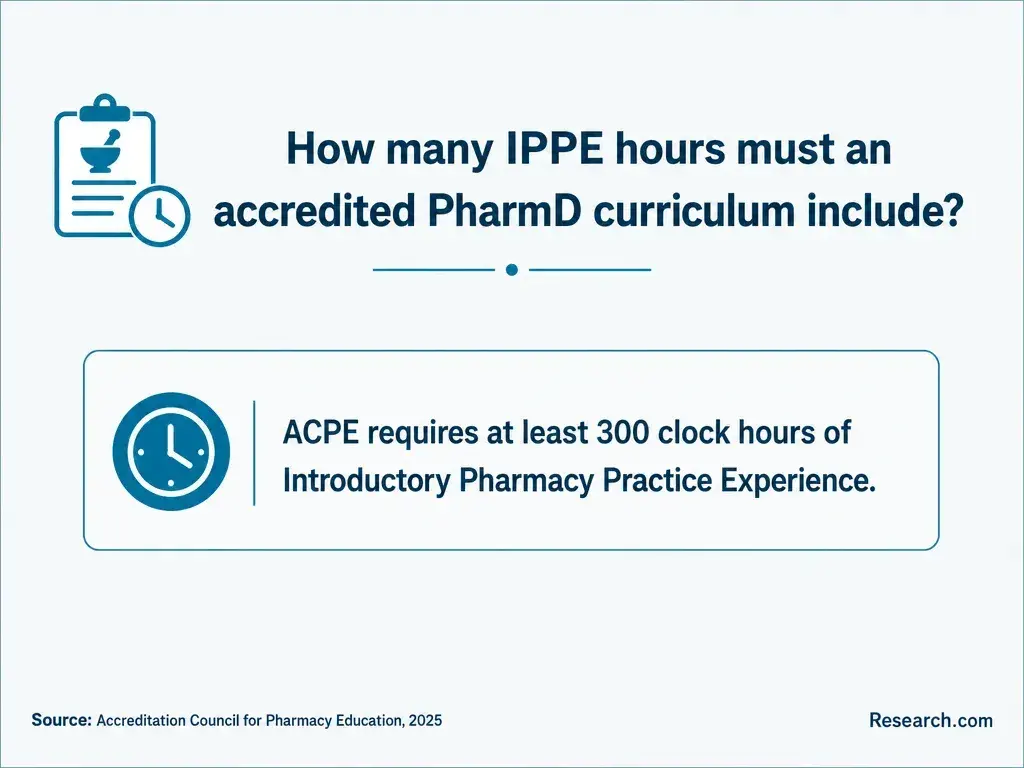
The professional curriculum typically develops knowledge of medications and therapeutics alongside patient assessment, communication, medication safety, and supervised practice. Introductory pharmacy practice experiences (IPPEs) introduce practice settings; advanced pharmacy practice experiences (APPEs) provide more extensive supervised rotations. Request the actual curriculum map and experiential handbook to see when these occur, which settings are required, and how students are evaluated.
Ask whether a proposed prior course can satisfy a prerequisite or instead count toward professional study: those are different decisions. Guidance on transfer credits for pharmacy school can help frame the question, but only the receiving program can approve your credit. Do not assume a job in a pharmacy replaces a required rotation. If a school cannot explain placement responsibility, expected locations, and foreseeable travel, treat its advertised completion schedule as uncertain.
A PharmD graduate must apply to a state board of pharmacy and meet that jurisdiction's requirements to become a licensed pharmacist. These generally include the North American Pharmacist Licensure Examination (NAPLEX) and may include a jurisprudence exam or other state-specific conditions. Check the National Association of Boards of Pharmacy and your intended board for current eligibility, intern-hour rules, background checks, and applicable examinations. Do not assume every jurisdiction uses the MPJE: some began transitioning to the UMPJE in 2026. Passing an exam alone does not issue a license.
Be careful when comparing fast online pharmacy program choices: a shorter pharmacy-related credential is not automatically a licensure-qualifying PharmD. If you were educated as a pharmacist outside the United States, ask the board about the applicable foreign-graduate pathway rather than assuming the U.S.-educated graduate process applies.
After obtaining the required state license, pharmacists may pursue community, hospital, ambulatory care, specialty pharmacy, or other roles, subject to employer requirements and state practice rules. A PharmD also supports some pharmaceutical-industry and research paths, although those jobs may value different experience and may not require pharmacist licensure. If you are changing fields, use Doctor of Pharmacy pathways for career transitions to compare entry routes while accounting for prerequisites and time away from work.
Postgraduate residency can help develop practice expertise; fellowships often emphasize areas such as industry or research. Board certification is a separate specialty credential, not a state license. None is universally required for pharmacist employment. If your goal is a pharmacy technician job or a pharmaceutical-sciences role rather than licensed pharmacist practice, compare that role's actual entry requirements before paying for a PharmD.
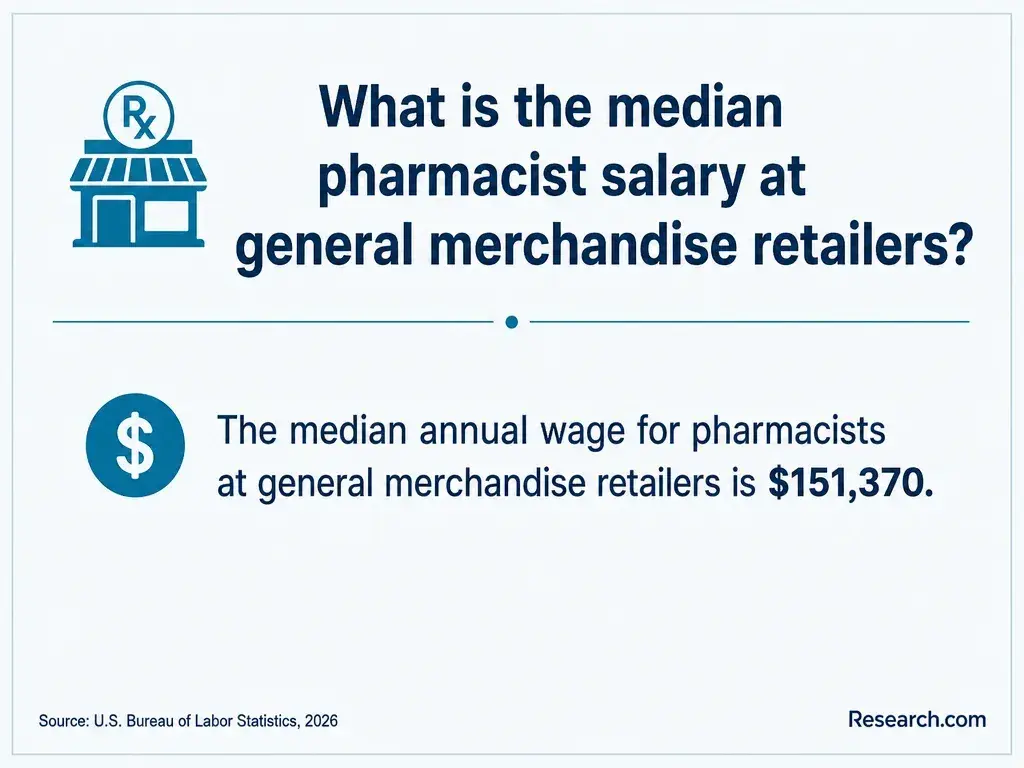
The Bureau of Labor Statistics reports median annual pay of $140,910 in May 2025 for pharmacists. That is an occupation-wide midpoint, not an entry-level offer or a promise to a particular graduate. Pay can differ by setting, location, hours, and experience, so test your prospective debt and repayment plan against realistic job options rather than the median alone.
When weighing cost-effective pharmacy degree options, keep the intended occupation fixed: a less expensive credential may serve another pharmacy career but will not substitute for a licensure-qualifying PharmD. Compare each offer's total cost and the earnings you might forgo while enrolled, not tuition against a pharmacist salary in isolation.
What is the job outlook for pharmacists and pharmacy graduates?
The Bureau of Labor Statistics projects 5% growth in pharmacist employment from 2025-2035, with about 12,500 openings per year. Those nationwide projections indicate potential demand, not a job guarantee in your preferred city, setting, or specialty. Ask programs for clearly defined graduate employment and licensure-exam outcomes, including the reporting period and who is counted, before treating them as evidence of your prospects.
Because a national outlook cannot remove individual financial risk, compare affordable Doctor of Pharmacy options using full attendance costs, placement logistics, and accreditation - not a price ranking alone. A sound deposit choice is one you can complete and finance even if your first-choice job takes longer to secure.
Other Things You Should Know About PharmD
Yes. Ask admissions before the deadline, explain which information you are waiting for, and request written confirmation of any extension. The school may decline.
Check each offer's terms and any applicable application-service policies. If you hold multiple seats temporarily, meet every stated deadline and promptly release a seat you will not use.
Only if the school permits it. Ask whether deferral requires approval, how long it lasts, and whether your deposit and admission conditions carry over.
Contact admissions immediately. Ask whether your offer remains available and whether a late payment or reconsideration is possible; do not assume the school will hold your seat.
- School-Determined Requirements | 2024-2025 Federal Student Aid Handbook https://fsapartners.ed.gov/knowledge-center/fsa-handbook/2024-2025/vol1/ch1-school-determined-requirements
- Undergraduate Cost of Attendance | Tuition & Fees | Seattle University https://www.seattleu.edu/admissions-aid/tuition-and-fees/undergraduate-cost-of-attendance/
- UNC Charlotte Undergraduate Admissions Enrollment Deposit https://admissions.charlotte.edu/enrollment-deposit/
- Undergraduate Enrollment Contract - UDayton Global https://global.udayton.edu/enrollment-contract/undergraduate/
- Cost of attendance - Office of Admissions https://admit.washington.edu/costs/coa/
- Background Checks & Drug Tests | Student Affairs | SUNY Downstate https://www.downstate.edu/education-training/student-affairs/background-checks-drug-tests.html
- Tuition & Expenses | Student Financial Services https://financialaid.wsu.edu/tuition-and-expenses/
- Accreditation Status - Doctor of Pharmacy (PharmD) https://pharmsci.uci.edu/degrees-programs/doctoral-programs/pharmd/accreditation-status/


