2027 BS in Business Administration Program Choice: An Individual Project Instead of a Group Capstone as a Capstone Option
Audited and Verified:
Our Editorial and Data Verification Process
Research.com uses government datasets, official education statistics and primary institutional information to support its career and degree guides. Our review process checks factual accuracy, occupational definitions, source dates and the requirements associated with the credentials discussed.
How This Article Was Fact-Checked
Our editorial team verifies salary estimates, employment projections, education requirements and program information against original data providers and official organizations. Salary figures are checked against the relevant occupational definitions and reporting periods. Information about licensure, accreditation and required in-person training is reviewed separately.
Fact-checked and verified on:

Co-Founder and Chief Data Scientist
An individual capstone can give you control over your final business administration project, but it is not automatically an option - or the better choice. If you are comparing BS programs or approaching your final courses, the distinction matters: project format affects scheduling, data access, faculty feedback, and what you can show employers. This guide explains how solo and group capstones differ, how to build a feasible individual project, and which program policies to confirm before you enroll or request approval.
Key Things You Should Know
- A solo capstone is a viable choice only if the program permits it and approves your topic, supervision, and assessment plan; an online degree does not guarantee a solo option.
- Choose an individual project for clear ownership and scheduling control; choose a group capstone when collaboration and shared access to resources better serve your learning goal.
- Before committing, confirm the deliverables, data permissions, presentation rules, required credits, and whether a change in format could delay graduation.
What is an individual capstone project in a BS in Business Administration program?
An individual capstone is a faculty-assessed final project that one student plans, executes, and presents. It typically draws on several business subjects to address a defined decision, such as how a small organization could evaluate a marketing channel or improve an ordering process. It is academic work, not proof that a company adopted the recommendation.
A manageable project starts with a decision-maker, a question, and evidence you can lawfully use. This framework can help you propose one:
- Define the decision and audience: for example, a store owner deciding how to compare two inventory policies.
- Specify available inputs, such as public information, an approved simulation, or workplace records you have permission to use.
- Select a limited output - a cost comparison, process map, market analysis, or recommendation memo - and state its assumptions.
- Agree with the faculty adviser on milestones, evaluation criteria, and a final presentation or report.
A capstone focused on scheduling or process improvement is not the same as specialist project-management training. If that is your longer-term goal, an accredited online project management tuition guide can help you compare the cost of a separate degree pathway with the business program you are considering.
Why choose an individual project instead of a group business capstone?
A solo project makes your contribution easier to identify and can reduce coordination across work schedules. The trade-off is that you must handle the research, analysis, writing, and revisions yourself. A group project can produce a broader analysis and demonstrate collaboration, but uneven participation or meeting times may complicate completion.
The comparison below concerns learning and workload, not a guarantee that either format is available at a particular school.
| Consideration | Individual project | Group capstone |
| Accountability | One student owns the full deliverable | Contributions and decisions are shared |
| Scheduling | Work can often be planned around individual availability | Meetings and joint deadlines require coordination |
| Skill evidence | Shows independent analysis and follow-through | Can show collaboration and role-specific contributions |
| Main risk | Scope may exceed one student's capacity | Participation and access to shared materials may vary |
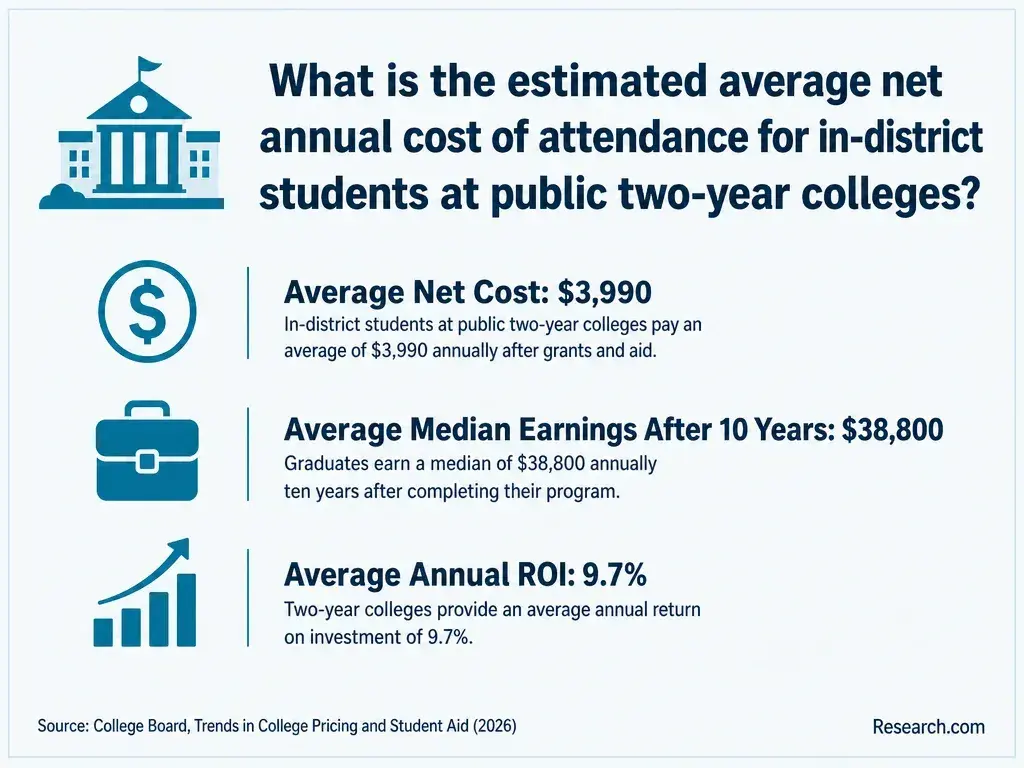
Choose based on the project you can finish well, not simply the format you prefer. Ask whether both options carry the same credits and fees, and whether switching formats could require another term. If an added term would affect your budget, review federal aid options at accredited business administration colleges and confirm your own eligibility with the school's financial-aid office.
How do you find an accredited BS in Business Administration program?
First, confirm the institution's accreditation through the accreditor and the school, then verify the exact degree title and catalog that will govern your enrollment. Institution-level accreditation and business-school accreditation are different: AACSB, ACBSP, or IACBE status, where present, must be checked for its actual scope. Neither type of accreditation establishes that a solo capstone is offered.
Use national online business program rankings as a starting list, not a substitute for policy review. Request the capstone syllabus or current catalog language and ask the program director whether an individual project is guaranteed, available by proposal, or not permitted. Confirm who approves topics, how often the course runs, and whether the policy applies to your anticipated graduating term.
A BS in Business Administration generally combines foundational business study with quantitative work, general education, and electives or a formal concentration. Accounting, finance, marketing, management, operations, statistics, and business communication can supply the methods for a capstone, although course requirements differ by school. An elective cluster is not necessarily an officially awarded concentration.
Choose a project that uses methods you have actually learned. A marketing student might compare publicly available market information; an operations student might map a process using approved observations. If supply chain is your intended specialty, explore fast-track supply chain bachelor's programs as a separate degree comparison rather than assuming a general-business capstone provides the same depth.
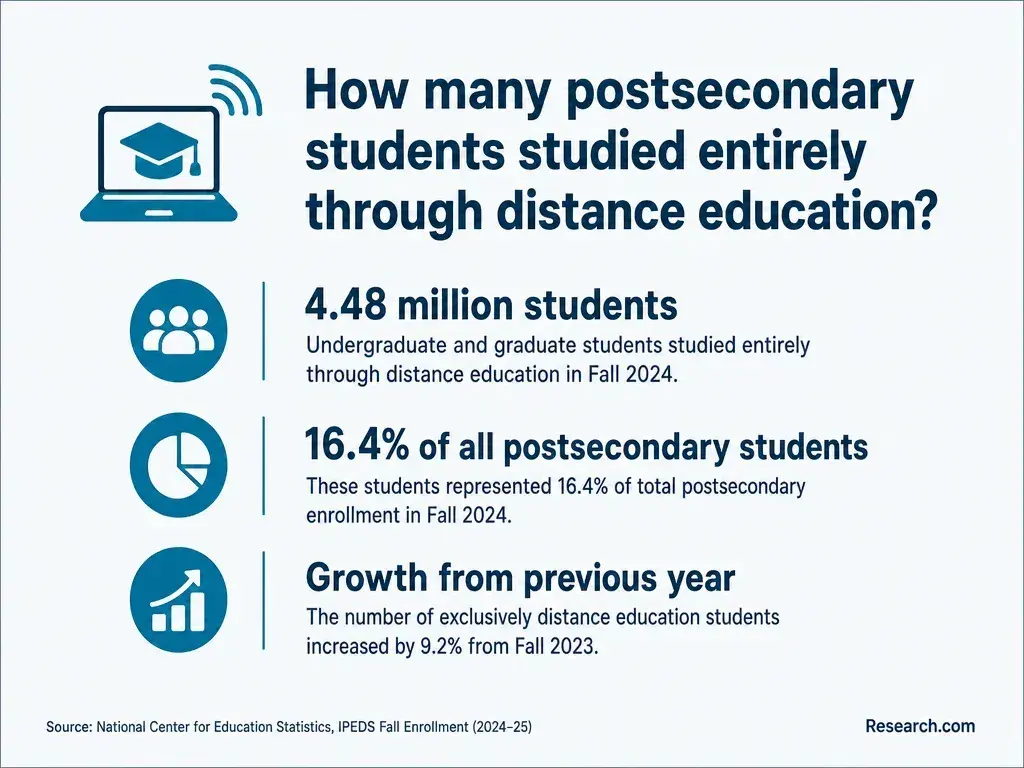
Yes, if the program offers an online capstone and permits an individual format. Online delivery does not establish that meetings, presentations, exams, or deadlines are asynchronous. Before enrolling, ask whether the adviser requires live check-ins, whether the final presentation is virtual, and whether any employer-site visit or campus attendance is required.
For a student balancing employment or caregiving, the strongest online option has a realistic milestone calendar and accessible faculty feedback - not merely an accelerated label. Compare those conditions when reviewing flexible accelerated bachelor's degrees. A shorter calendar can intensify weekly work even when the capstone is completed alone.
Requirements vary by institution and by whether you enter as a first-year, transfer, or returning student. Schools may request prior transcripts and evidence of secondary-school completion; admission to the institution may be separate from entry into the business major. Mathematics or introductory business courses can also affect when you may take upper-level courses and the capstone.
Ask for a written degree audit that separates accepted transfer credits from credits applied to the business core, electives, and graduation requirements. Use business administration degree prerequisite planning to prepare questions, then have the receiving school confirm your individual requirements. A preliminary credit estimate is not a capstone eligibility decision.
Completion time depends on the school's required credits, the courses applied from prior study, course sequencing, and your enrollment pace. A solo capstone does not necessarily shorten the degree: it may replace a group section within the same required course. Check whether your chosen format is offered in the term you need it.
Compare the cost of the remaining degree, including tuition, mandatory fees, materials, software, and any additional term caused by unavailable courses. When you compare lower-cost business degree options, request an individualized audit and an estimate based on your expected enrollment pace. Do not assume a lower advertised tuition rate means a lower final cost.
The degree can support applications for roles in operations, marketing, human resources, sales support, and project coordination. Your strongest entry route depends on prior experience and the evidence behind your capstone.
A documented market analysis may help you discuss research and recommendations in an interview; it does not replace campaign experience or qualify you automatically for a management role.
For context, the U.S. Bureau of Labor Statistics projects employment of market research analysts to grow 7% from 2025 to 2035. That occupation-wide projection signals demand for relevant skills, not a hiring forecast for business administration graduates. If time to entry matters, compare ranked accelerated undergraduate business schools alongside their internship access, career services, and capstone expectations rather than speed alone.
There is no single salary for the degree. Pay follows the occupation, location, employer, and experience more closely than the capstone format. The U.S. Bureau of Labor Statistics reports a May 2025 median annual wage of $75,940 for human resources specialists. That is the median across workers in the occupation, not an expected starting salary for a new graduate or a return attributable to a solo project.
Use a target role and local job postings when weighing education costs against potential earnings. Resources covering shorter online business administration degrees with cost details can help narrow program choices, but compare each school's remaining cost with roles you could realistically pursue given your experience.
What certifications or licenses complement a business administration degree?
A credential is most useful when it addresses a skill gap for a specific role. Depending on your goal, you might investigate human-resources or project-management certifications, software training, or an industry-specific license. Each awarding organization sets its own eligibility rules; a business degree or capstone alone does not confer certification, accounting licensure, or authority to manage projects professionally.
If project management is your main objective, compare certification eligibility and relevant work experience before paying for additional education.
You can also compare affordable project management schools if a specialized degree would serve your goal better than a general business degree with a project-themed capstone. Before submitting any capstone as credential evidence, verify the certifier's documentation rules and remove information you lack permission to share.
Other Things You Should Know About Business Administration
Possibly, but seek faculty approval before changing the question, data source, or deliverable. A substantial change may require a revised proposal or affect your timeline.
Follow the course's AI-use and citation policies. Check every claim and calculation yourself, and do not enter confidential workplace or personal data into a tool without authorization.
Usually the academic aim is sound analysis, not a favorable finding. Explain what the evidence supports, what remains uncertain, and why a recommendation may not be justified.
Ask your adviser. Some courses permit a simulated case or public-data project, while others require an approved organization or client. Label hypothetical inputs and projections clearly.
- Rubrics: Tools for Making Learning Goals and Evaluation Criteria Explicit for Both Teachers and Learners - PMC https://pmc.ncbi.nlm.nih.gov/articles/PMC1618692/
- Eligibility Requirements | Federal Student Aid https://studentaid.gov/understand-aid/eligibility/requirements
- Program Eligibility, Written Arrangements, and Distance Education | 2024-2025 Federal Student Aid Handbook https://fsapartners.ed.gov/knowledge-center/fsa-handbook/2024-2025/vol2/ch2-program-eligibility-written-arrangements-and-distance-education
- Establishing Learning Outcomes for UCLA Capstone Majors https://learningoutcomes.ucla.edu/process-guidelines/establishing-learning-outcomes-for-ucla-capstone-majors/index.html
- Prerequisite Rules in Economics | University at Albany https://www.albany.edu/economics/resources/prerequisite-rules-economics
- Using rubrics | Center for Teaching Innovation https://teaching.cornell.edu/teaching-resources/assessing-student-learning/using-rubrics
- Prerequisite Management | MAUI Help - The University of Iowa https://help.maui.uiowa.edu/prerequisite-management
- Group Work | McGraw Center for Teaching and Learning https://mcgraw.princeton.edu/group-work
- What Is a Capstone Project? - Boston University Questrom https://www.bu.edu/questrom/blog/what-is-a-capstone-project/
- Ethics and international business research: Considerations and best practices - ScienceDirect https://www.sciencedirect.com/science/article/pii/S0969593123001075