2027 BS in Business Administration Transfer Planning: A Transfer Scholarship That Requires a Completed Associate Degree
Audited and Verified:
Our Editorial and Data Verification Process
Research.com uses government datasets, official education statistics and primary institutional information to support its career and degree guides. Our review process checks factual accuracy, occupational definitions, source dates and the requirements associated with the credentials discussed.
How This Article Was Fact-Checked
Our editorial team verifies salary estimates, employment projections, education requirements and program information against original data providers and official organizations. Salary figures are checked against the relevant occupational definitions and reporting periods. Information about licensure, accreditation and required in-person training is reviewed separately.
Fact-checked and verified on:

Co-Founder and Chief Data Scientist
A transfer scholarship can make a BS in Business Administration more affordable, but "completed associate degree" is a condition that must be documented - not just a credit total to reach. This guide is for community college students and returning undergraduates deciding when to apply, where to transfer, and whether the award will reduce their actual cost.
You'll learn how to confirm the scholarship rules, protect the usefulness of your transfer credits, and build a completion plan before committing to a school.
Key Things You Should Know
- Finishing associate-degree coursework may not be enough: confirm whether the scholarship requires the degree to be officially awarded and shown on a transcript by its deadline.
- Get two separate decisions in writing: scholarship eligibility from the awarding office and an official degree audit showing where accepted credits apply to the BS.
- Compare the award against remaining tuition and fees, not the advertised scholarship amount alone; prerequisites, residency rules, and course scheduling can change the total.
What is a BS in Business Administration transfer scholarship requiring an associate degree?
It is an award intended for students moving into a bachelor's program that makes an earned associate degree an eligibility condition. The scholarship might be offered by the receiving college, a community college partnership, or another organization. Its rules - not the phrase "transfer scholarship" - determine the qualifying degree, application deadline, award amount, renewal conditions, and eligible BS programs.
Admission, transfer credit, and scholarship eligibility are separate decisions. A university could admit you before your associate degree is posted, accept some of your courses, and still withhold an award that requires proof of graduation. Conversely, qualifying for an award does not mean every associate-degree course will satisfy a bachelor's requirement.
Start with the scholarship's official terms and ask the awarding office whether the BS in Business Administration is covered. Do not infer eligibility from an award aimed at a different major; for example, scholarship search options for project management majors may have restrictions that do not apply to business administration students.
What associate degree requirements qualify students for a business administration transfer scholarship?
The decisive requirements are those in the particular award agreement. Check whether it accepts an AA, AS, AAS, or only a designated transfer degree; whether the degree must come from a partner college; and whether graduation must occur before application, admission, or the first term of enrollment. An AAS may qualify for a scholarship yet leave more general education or business prerequisites unfinished than an AA or AS.
Confirm what counts as proof. A completed application for graduation, a transcript showing enough credits, and an unofficial advising note are not necessarily proof of an awarded degree. Ask the associate-degree college when its registrar will post the credential, then ask the scholarship office whether it accepts a temporary completion letter if that date falls after the award deadline.
If you are considering a different business-related major, compare its award eligibility and transfer map separately. Human resources degree options for college transfers can help frame that comparison, but a scholarship restricted to the BS in Business Administration may not follow you into another program.
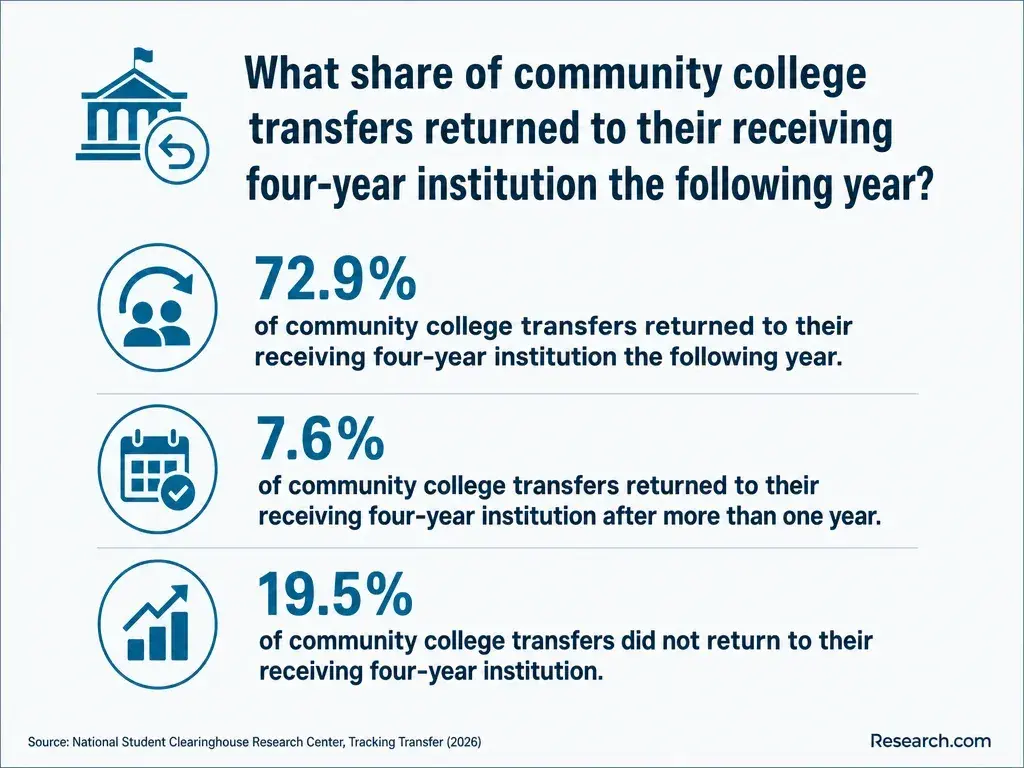
How can students plan a successful transfer into a BS in Business Administration program?
Work backward from the scholarship deadline and the term you hope to enter. The central planning document is the receiving school's degree audit, read alongside its catalog for your intended enrollment term. It should distinguish credits the school accepts from credits that actually satisfy general education, business core, concentration, elective, and residency requirements.
Use this sequence to avoid graduating with an associate degree that earns the award but leaves preventable bachelor's requirements:
- Request the scholarship terms and confirm the qualifying credential, proof deadline, eligible major, enrollment level, and renewal rules with the awarding office.
- Send official transcripts and course descriptions when requested; have the transfer office evaluate equivalencies and the business adviser identify missing prerequisites.
- Ask for an updated degree audit and a term-by-term plan that accounts for course availability, prerequisite order, and any required credits taken at the receiving school.
- Resolve disputed equivalencies through the school's transfer-appeal or substitution process before relying on them in your budget or graduation date.
Accounting, statistics, and quantitative courses deserve particular attention: a course accepted as an elective may not clear a business-core prerequisite. Reviewing college coursework required for business administration entry can help you prepare questions, but the receiving institution has final authority over its equivalencies and degree requirements.
First, verify that the receiving institution holds recognized institutional accreditation. Then check whether it claims separate business accreditation from AACSB, ACBSP, or IACBE, and whether the accreditor's stated scope covers the school and undergraduate program you would attend. Institutional accreditation and business accreditation are different; neither substitutes for an official transfer evaluation or proves that a scholarship is available.
Program identity matters, too. A BS in Business Administration, an HR degree, and a business elective cluster are not interchangeable credentials. If you are weighing those paths, understanding human resources degree levels can help you identify which credential you are comparing; verify accreditation and scholarship eligibility for the actual program, not merely its subject area.
Choose the format that lets you complete the remaining required courses on a workable schedule. An online program may remove commuting but still require scheduled presentations, group meetings, proctored exams, or an internship. A campus program may offer easier access to local employers and in-person support while requiring travel and fixed class times.
For either format, ask which upper-division business courses run each term and whether a required capstone has live or on-site components. A faster advertised calendar is useful only if your evaluated credits meet its entry assumptions and you can sustain its pace. Compare ranked accelerated undergraduate business schools as possible options, then test each one against your own degree audit and weekly availability.
Requirements vary, but a BS commonly combines general education with accounting, economics, finance, marketing, management, operations, business law, quantitative work, and a strategy or capstone course. A formal concentration may add a prescribed sequence; a few related electives do not automatically create a concentration on your transcript.
For transfer planning, course placement matters more than course count. An introductory accounting class might satisfy the business core at one school and count only as an elective at another. If you want supply chain work and your intended BS offers few relevant courses, compare its available electives with shorter online supply chain degree pathways. Make that choice only after checking which route accepts and applies more of your completed work.
Expect the school to request official college transcripts and evidence that you meet its transfer admission rules. Admission to the university may be distinct from entry to the business major; the latter may require specified courses or academic standing. Scholarship applications can have separate forms and earlier deadlines, even when admission does not require a completed associate degree.
Ask admissions when a pending associate degree must appear on your record, the business department when prerequisites must be finished, and the scholarship office when it needs final proof. If application charges are a concern, you can compare no-fee college applications, but do not let an application-fee saving outweigh poor credit applicability or a missed scholarship deadline.
There is no reliable completion-time or net-price estimate until a school evaluates your credits and identifies the courses still required. Two students with the same associate degree may have different plans because of prerequisite equivalencies, concentration choices, course availability, and residency requirements.
Compare schools using a written estimate of remaining required credits, tuition and mandatory fees, likely terms of enrollment, and scholarship conditions. Add books, software, travel or proctoring where applicable, and consider how part-time attendance or a delayed course affects aid and living costs. Budget-friendly online business schools are worth examining, but a lower advertised tuition rate is not necessarily a lower completion cost.
Have the financial-aid office explain when the scholarship is credited, whether it can be combined with other aid, and what enrollment or academic-progress rules keep it renewable. Treat any estimate based on a preliminary credit review as provisional.
The degree can support applications for business operations, project coordination, marketing, HR, and other functions, but the first role depends on prior experience and evidence of relevant skills. Coursework and an approved project can demonstrate preparation; neither guarantees a management job.
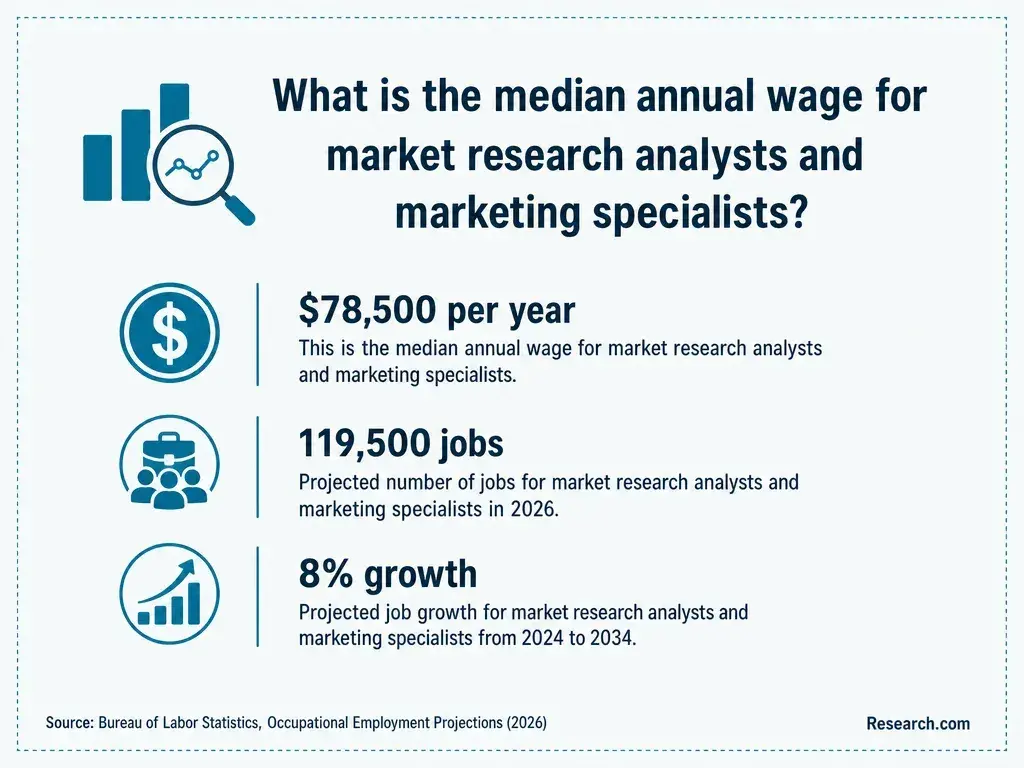
For context, the U.S. Bureau of Labor Statistics reports a May 2025 median annual wage of $75,940 for human resources specialists and projects 6% employment growth for that occupation from 2025 to 2035.
Those are occupation-wide figures, not expected starting pay or outcomes for BS in Business Administration graduates. If HR is your specific goal, compare business electives and experience opportunities with the dedicated degree path discussed in understanding human resources degree levels.
Ask the financial-aid office whether your chosen institution and program participate in the federal aid programs you intend to use. FAFSA-accepting colleges for business administration students are a useful starting point for that question, but eligibility for aid and for a particular transfer scholarship still requires an individual review.
What certifications and professional standards benefit business administration graduates?
Choose an additional credential only after identifying the work you want to do and checking its issuing organization's eligibility rules. HR, project management, accounting, and financial services have different certifications or licensing requirements; a BS in Business Administration does not award them automatically. Relevant work experience, exams, continuing education, or specialized coursework may also be required.
Before paying for a credential, compare the employer requirement with a course, supervised project, or entry-level role that would build the missing skill. For a project-focused career, tuition and aid questions for project management students can inform a separate degree comparison, but project-management degree funding is not proof that a business transfer scholarship covers that path.
Other Things You Should Know About Business Administration
That depends on the award agreement. Ask the scholarship office who receives payment, when it is disbursed, and whether any unused amount can be refunded to you.
Only if its terms permit summer enrollment. Confirm eligible terms, minimum enrollment, and whether summer use reduces the amount available later.
Do not assume the award carries over. Ask whether you must submit a new application and whether the same eligibility rules will apply.
Some awards exclude students pursuing a second bachelor's degree. Check the scholarship's prior-degree rule and the university's second-degree policies before applying.
- School-Determined Requirements | 2024-2025 Federal Student Aid Handbook https://fsapartners.ed.gov/knowledge-center/fsa-handbook/2024-2025/vol1/ch1-school-determined-requirements
- Associate Degree for Transfer (ADT) Resources | San Diego Mesa College https://www.sdmesa.edu/student-support/transfer/associate-degree-for-transfer.shtml
- Scholarship Renewal Policy | thomasmore.edu https://apps.thomasmore.edu/Policy/Home/Policy
- Policies and Procedures on Non-Lottery Scholarships | The University of New Mexico https://scholarships.unm.edu/Resources/non-lottery-scholarships.html
- Transfer Agreements and Guides | Registrar | University of Nebraska Omaha https://www.unomaha.edu/registrar/students/before-you-enroll/transfer-credit/guided-pathways/trxfr-agmts.guides.php
- Transfer Student Application Requirements | ucsd.edu https://admissions.ucsd.edu/transfer/application-requirements.html
- Institutional Scholarship Renewal Requirements | WVU Hub https://hub.wvu.edu/types-of-aid/scholarships/renewal-reqs
- Associate Degree for Transfer Scholarship | National University https://www.nu.edu/admissions/undergraduate/transfer-information/adt-pathways/
- Articulation Agreements & Consortia Relationships | uaeacc.edu https://www.uaeacc.edu/upages.php
- Bachelor of Science in Business Administration | CSUSM https://www.csusm.edu/el/programs/business/bachelor-of-science-business-administration/details.html