PharmD Versus Master’s in Clinical Research

Co-Founder and Chief Data Scientist
A Doctor of Pharmacy (Pharm.D.) and a master's in clinical research can both lead to work involving medicines, but they prepare you for different responsibilities. That distinction matters if you are weighing years of study against a specific job goal.
This guide compares licensure eligibility, research careers, admissions, curriculum, time, cost, and salary context so you can identify the credential your intended role actually requires - and avoid paying for one that does not.
Key Things You Should Know
- Choose an accredited Pharm.D. if your goal is U.S. pharmacist licensure; a clinical research master's does not qualify you for that license.
- Choose a clinical research master's if you want training in study design, trial operations, or research data and do not need to practice as a pharmacist.
- The Bureau of Labor Statistics reports pharmacists' median pay was $140,910 in May 2025, but that occupation-wide figure does not predict earnings for either degree holder.
What is the difference between a PharmD and a master's in clinical research?
A Pharm.D. is the professional pharmacy degree designed to prepare students for pharmacist practice and subsequent licensure. A master's in clinical research is a graduate degree focused on how studies involving people are designed, conducted, monitored, and analyzed. The degrees overlap in medication-related research, but they are not substitutes.
The comparison below separates each credential's main purpose from what it does not authorize. That distinction is more useful than comparing degree titles alone; even broader doctoral degree timeline options cannot tell you whether a credential meets pharmacist licensing requirements.
| Decision point | Pharm.D. | Master's in clinical research |
| Primary focus | Medication use, patient care, and pharmacy practice | Clinical study methods, operations, and evidence generation |
| Typical starting point | Required pre-pharmacy undergraduate coursework; a bachelor's degree is not universally required | Usually a bachelor's degree, with acceptable backgrounds set by the program |
| Professional outcome | Provides the educational pathway toward pharmacist licensure when the program meets applicable requirements | Does not provide a pathway to pharmacist licensure |
| Important limitation | Degree completion alone does not issue a license or guarantee a research position | Research training does not authorize independent pharmacy practice |
Which degree prepares you for pharmacist licensure and clinical research careers?
For a U.S.-educated applicant seeking pharmacist licensure, the relevant route is an Accreditation Council for Pharmacy Education (ACPE)-accredited professional Pharm.D. program - not a clinical research master's. After graduation, applicants must satisfy their state board's requirements, which can include supervised experience and the North American Pharmacist Licensure Examination (NAPLEX). Jurisprudence testing varies by jurisdiction; do not assume every state uses the Multistate Pharmacy Jurisprudence Examination (MPJE). Passing an exam alone does not issue a license.
For research roles that do not require pharmacist practice, a clinical research master's may be the more direct route. A licensed pharmacist can also work in clinical research, particularly when medication expertise is central, but a Pharm.D. is not a universal hiring requirement for trial operations. If you already have a science background, compare pharmacy degree options for science majors against research-focused programs rather than assuming your undergraduate degree settles the choice.
What careers can you pursue with a PharmD versus a clinical research master's?
A Pharm.D. is the clearer choice for someone who wants to dispense medications, counsel patients, or pursue other work that legally requires a pharmacist license. Depending on the employer and role, pharmacists may also contribute to investigational-drug services, medication safety, clinical trials, or pharmaceutical development. Some positions favor postgraduate training or experience; a residency, fellowship, or specialty board certification is distinct from licensure and is not required for every pharmacist job.
A clinical research master's can support applications for roles such as clinical research coordinator, trial operations specialist, research project manager, or clinical data specialist. Employers may also accept relevant experience or other degrees, and senior positions often require demonstrated trial experience. The table connects likely work to the credential decision without implying that either degree guarantees a job.
| Work you want to do | More relevant starting credential | What else to check |
| Practice as a pharmacist | Pharm.D. | ACPE program status and state licensing requirements |
| Manage study visits, documentation, or trial workflows | Clinical research master's may help; it is not always required | Employer experience requirements and supervised training |
| Oversee investigational medications as a pharmacist | Pharm.D. and pharmacist licensure | Site-specific experience or postgraduate training preferences |
| Design or analyze clinical studies | Clinical research master's may be directly relevant | Required statistical skills and whether the role expects further study |
If your intended job does not require a pharmacist license, investigate its postings before entering a professional pharmacy program. Conversely, pharmacy school application readiness matters if licensed practice is the goal: research work experience cannot replace missing Pharm.D. prerequisites.
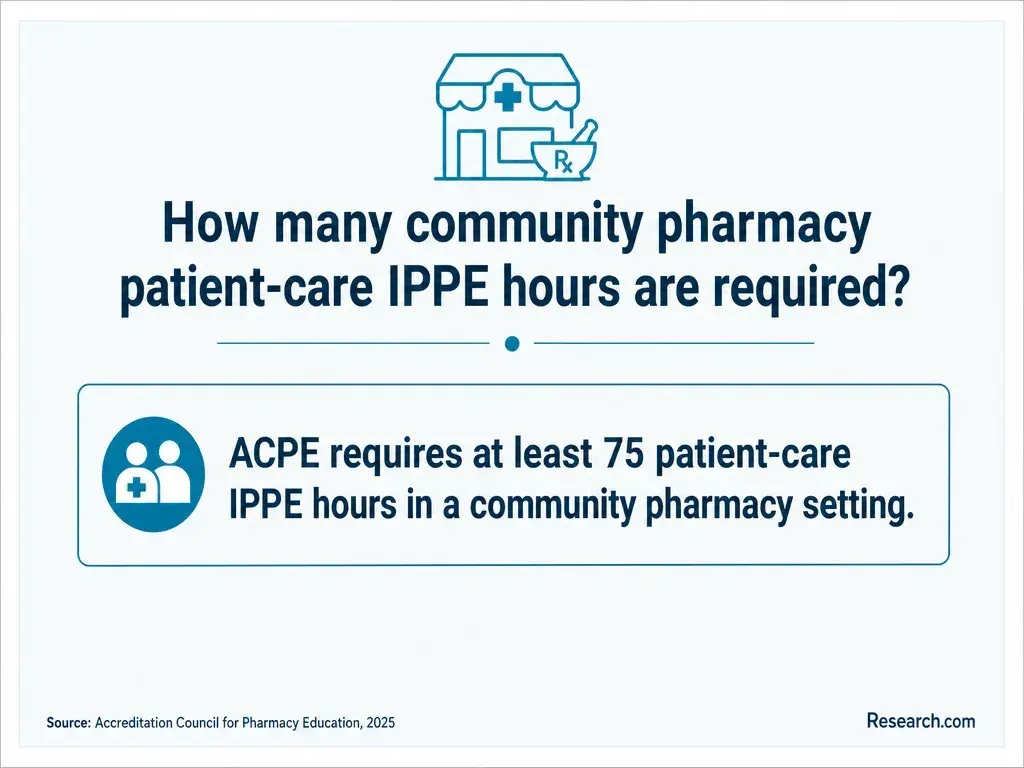
Pharm.D. coursework typically develops knowledge of pharmacology, pharmacotherapy, drug information, medication safety, and patient communication. Its professional curriculum also includes supervised introductory and advanced pharmacy practice experiences, known as IPPEs and APPEs. Those experiences are distinct from the undergraduate science courses required before admission.
Clinical research master's curricula generally emphasize study design, biostatistics, research ethics, regulatory requirements, data management, and trial operations. Some programs offer a thesis, capstone, or practicum; others emphasize coursework. Compare required courses and hands-on experience, not just course titles.
Delivery format also affects what you can realistically learn while working. When reviewing online pharmacy school programs, check for scheduled classes, campus labs, and in-person practice experiences rather than assuming an online label means fully remote study. A research master's may have different in-person requirements, particularly if it includes a practicum.
Pharm.D. applicants must meet each school's specified pre-professional coursework, which commonly includes sciences and other general education subjects. Required credits, laboratories, grades, and whether a bachelor's degree is needed vary by program. Schools may also require recommendations, an interview, and an application through the Pharmacy College Application Service (PharmCAS); not every school uses PharmCAS. The Pharmacy College Admission Test (PCAT) was retired in January 2024 and should not be treated as a current routine requirement.
Clinical research master's programs generally seek a bachelor's degree, but acceptable majors, work experience, statistics preparation, and application materials vary. Relevant research or healthcare experience may strengthen an application without replacing a stated requirement. Published minimums are eligibility thresholds, not admission promises.
Compare your transcript with the current requirements of each program you might attend. Lists of pharmacy schools with accessible admissions can help identify possibilities, but only the school can confirm whether your courses, labs, and application meet its rules.
A traditional professional Pharm.D. curriculum typically takes four academic years after required pre-pharmacy study. Your total timeline depends on coursework you have already completed, program sequencing, and any approved advanced-standing pathway. A clinical research master's commonly takes about one to two years of full-time study; part-time enrollment or a substantial research project can extend it.
The shorter route can mean entering research work sooner, but it cannot later be treated as an abbreviated pharmacist license. Similarly, advertised accelerated pharmacy education options should be checked for their actual prerequisites, professional-program duration, breaks, and required practice experiences - not just the number of calendar years in a headline.
There is no dependable single price for either degree. Compare each school's current tuition and mandatory fees over the entire expected enrollment period, using the same assumptions about residency status and course load. A Pharm.D. may also bring prerequisite-course costs, equipment, clinical placement travel, and licensing expenses. A research master's may involve practicum travel, software, or added time for a thesis.
More years in school can mean more tuition and time away from paid work, but a lower sticker price does not automatically produce better value. Use online pharmacy degree affordability comparisons as a starting point, then request a program-specific cost of attendance and ask which required expenses are excluded.
Before planning to borrow, confirm your eligibility and the rules for your entry year with the school's financial aid office. Federal borrowing rules changed for many new graduate and professional students beginning July 1, 2026; do not assume older Grad PLUS access or borrowing limits apply to you.
An online clinical research master's can be credible if the institution has recognized institutional accreditation and the curriculum, faculty oversight, assessments, and any practicum meet your goals. Online delivery alone establishes neither quality nor employer acceptance. Ask how students obtain research experience and whether scheduled activities or placements fit your location and work hours.
Do not apply pharmacy accreditation rules to the wrong credential: ACPE accredits professional pharmacy programs, not clinical research master's degrees simply because they discuss medications. Institutional accreditation is a separate check. If comparing an online Pharm.D., also verify its ACPE status, state authorization to enroll you, hands-on requirements, and whether completion supports licensure eligibility in your intended jurisdiction.
A published online pharmacy degree cost comparison may help narrow a search, but confirm whether the quoted price includes campus visits and clinical travel. A format is only flexible if you can meet its actual attendance and placement schedule.
The Bureau of Labor Statistics reports median annual pay for pharmacists of $140,910 in May 2025, with 5% projected job growth, 2025-2035, and about 12,500 openings per year projected. These are occupation-wide figures - not starting salaries, Pharm.D. graduate outcomes, or estimates for research-only positions. Pharmacist employment also requires a license.
There is no equally precise single salary or outlook figure for "clinical research master's graduate": that degree can lead to different job titles with different experience requirements. Compare postings for the exact roles and locations you want, including whether a master's is required, preferred, or unnecessary. A faster entry into paid research work can change the financial calculation; claims about how to finish an online pharmacy degree sooner should not be mistaken for a generally available shortcut to an initial, licensure-qualifying Pharm.D.
How do you choose an accredited PharmD or clinical research program?
Begin with the job's legal requirements, then evaluate programs against them. For a Pharm.D., verify the specific professional program's current ACPE status and review your intended state board's licensing rules. For a clinical research master's, check recognized institutional accreditation and whether its required training matches the research roles you are targeting. Neither institutional accreditation nor permission to offer online courses substitutes for ACPE professional-program accreditation or state licensure eligibility.
Use these checks before paying a deposit; each addresses a mismatch that can be expensive to correct later.
- Save several current job postings and separate legally required credentials from employer preferences.
- Ask each program to evaluate your prerequisites and confirm whether prior coursework applies; the receiving school decides pharmacy program credit acceptance.
- Request the full schedule, including live classes, campus visits, practica, and - in a Pharm.D. - IPPE and APPE placement arrangements.
- Compare total expected costs, available aid, and the time you may need away from work.
- For a Pharm.D., confirm ACPE status, review published NAPLEX outcomes in context, and ask the state board about your licensing pathway.
If pharmacist practice is nonnegotiable, choose a qualifying Pharm.D. pathway and plan separately for licensure. If your goal is to run or analyze studies without practicing pharmacy, a clinical research master's - or relevant entry-level experience before committing to graduate tuition - may be the more focused choice.
Other Things You Should Know About PharmD
Some institutions offer dual-degree or coordinated study, but availability and shared-credit rules are school-specific. Confirm the additional courses, cost, and time before assuming a second credential will help with your target job.
Not universally. Employers set hiring requirements, while certification bodies set their own eligibility rules. Check job postings and the credentialing organization before paying for a course or exam.
No. A research master's does not replace the applicable foreign-educated pharmacist pathway. Check the National Association of Boards of Pharmacy and your intended state board for current eligibility requirements.
Not for every leadership role. Requirements depend on whether the work involves trial operations, statistical research, or serving as a study investigator. Review the duties and credentials in your intended field rather than assuming one degree fits all three.
- Research Summary: Education and Lifetime Earnings | ssa.gov https://www.ssa.gov/policy/docs/research-summaries/education-earnings.html
- Credentialing, Licensing, and Education | NCCIH - NIH https://www.nccih.nih.gov/health/credentialing-licensing-and-education
- U.S. Graduate Pharmacy References | EducationUSA https://educationusa.state.gov/your-5-steps-us-study/research-your-options/graduate/graduate-student/what-graduate-programs-a-4
- Understanding College Costs | studentaid.gov https://studentaid.gov/resources/prepare-for-college/students/choosing-schools/consider-costs
- PharmD Admissions - R. Ken Coit College of Pharmacy https://www.pharmacy.arizona.edu/academics/pharmd/admissions
- PharmD Application Process and Requirements | umich.edu https://pharmacy.umich.edu/pharmacy-programs/pharmd-program/application-process-requirements/
- In-Demand Entry-Level Roles (and What They Do) | Duke Clinical and Translational Science Institute https://ctsi.duke.edu/career-development/education-and-workforce-development/entry-level-clinical-research-careers/demand
- Admissions: USC Mann PharmD Program https://mann.usc.edu/program/doctor-of-pharmacy-pharmd/admissions/
- Clinical Research vs. Regulatory Affairs | UC Berkeley Extension https://voices.berkeley.edu/sciences-mathematics-and-biotechnology/clinical-research-vs-regulatory-affairs
- How to Apply to the PharmD Program | Texas A&M University Irma Lerma Rangel College of Pharmacy https://pharmacy.tamu.edu/pharmd/apply.html