Pre-pharmacy versus PharmD program: pathway comparison

Co-Founder and Chief Data Scientist
Choosing between pre-pharmacy and a Doctor of Pharmacy (Pharm.D.) program is really a question of where you are in the pharmacist education pathway. Pre-pharmacy coursework can prepare you to apply, but it cannot qualify you to practice; the professional Pharm.D. moves you toward licensure, with a much larger commitment of time and money. This guide compares the routes for prospective U.S. pharmacy students, including those who already have college credit. You'll learn what each stage requires and how to avoid paying for coursework that does not advance your goal.
Key Things You Should Know
- Pre-pharmacy is prerequisite undergraduate study, not a pharmacist credential; an accredited professional Pharm.D. is the educational route for U.S.-educated pharmacist applicants.
- Many pathways combine roughly two or more years of prerequisites with a four-year Pharm.D.; accelerated and integrated schedules vary by school, and a bachelor's degree is not universally required.
- A Pharm.D. does not itself confer a license. For career context, pharmacists' median annual pay was $140,910 in May 2025, according to the Bureau of Labor Statistics - not a guaranteed graduate salary.
What is the difference between pre-pharmacy and a PharmD program?
Pre-pharmacy prepares you to apply; a Pharm.D. prepares you to enter the pharmacist licensing process. Pre-pharmacy usually means undergraduate prerequisite courses rather than a standardized degree. The professional Pharm.D. combines pharmacy science, patient-care training, and supervised practice experiences.
This comparison shows what each stage accomplishes - and what it does not - so you can match your next enrollment decision to your current credits and career goal.
| Decision factor | Pre-pharmacy coursework | Professional Pharm.D. program |
| Starting point | Students completing a school's admission prerequisites | Applicants who meet that program's entry requirements |
| Academic focus | Foundational sciences, mathematics, and general education | Pharmacotherapy, patient care, pharmacy practice, and experiential education |
| Result | Potential eligibility to apply; credits may also support another degree | A professional degree that supports application for pharmacist licensure |
| Key limitation | Neither admission nor a pharmacist job is assured | Graduation alone does not issue a state license |
If your goal is a pharmacy-related role that does not require pharmacist licensure, compare pharmacy degree options with shorter study periods before committing to the professional pathway. Check the actual credential and jobs each option supports: a pharmacy technician program, for example, is not a shortcut to pharmacist licensure.
Do you need pre-pharmacy coursework before entering a PharmD program?
Typically, yes: Pharm.D. applicants must complete the receiving school's prerequisite courses before enrollment. You do not necessarily need to enroll in a program labeled "pre-pharmacy" or earn a bachelor's degree first. A school may accept qualifying courses taken toward another major or at a community college, subject to its policies.
If you already have college credit, request a course-by-course review rather than assuming your major satisfies the requirements. Ask whether in-progress courses are allowed when you apply, when they must be finished, and whether older science courses or online labs count. Pharmacy school requirements and exceptions can help frame those questions, but only the admitting school can confirm how your record will be evaluated.
What are the education requirements to become a licensed pharmacist?
For the standard U.S.-educated route, complete the admission prerequisites, graduate from a professional Pharm.D. program accredited by the Accreditation Council for Pharmacy Education (ACPE), and meet the licensing requirements of the state or jurisdiction where you intend to practice. The Pharm.D. includes supervised introductory and advanced pharmacy practice experiences, commonly called IPPEs and APPEs.
After graduation, applicants generally must satisfy their board's eligibility rules and pass the North American Pharmacist Licensure Examination (NAPLEX). Jurisdictions may also require a law examination, such as the Multistate Pharmacy Jurisprudence Examination (MPJE) or Uniform Multistate Pharmacy Jurisprudence Examination (UMPJE), or use another way to assess law knowledge. Internship hours, background checks, and application rules vary. Passing an exam does not itself issue a license.
Do not substitute a general doctorate for the required professional credential: doctoral programs with flexible timelines are not necessarily Pharm.D. programs and do not establish pharmacist licensing eligibility. Internationally educated pharmacists should check the separate credentialing and state-board rules that apply to their circumstances.
Pre-pharmacy often takes about two or more academic years, depending on your starting credits and the schools you target. A traditional professional Pharm.D. commonly takes four academic years after prerequisites. Integrated entry routes and accelerated professional programs can use different calendars, so compare the actual date you could start - and finish - rather than program labels alone.
These time commitments are planning ranges, not promises. Labs, course sequencing, admission timing, and required rotations can extend an individual student's schedule.
| Pathway stage | Typical planning range | What can change it |
| Prerequisites | About two or more academic years | Prior credit, required labs, and course availability |
| Traditional professional Pharm.D. | Commonly four academic years | Program calendar, progression rules, and rotations |
| Accelerated professional Pharm.D. | May have a shorter calendar | Year-round study and fewer breaks; prerequisites still apply |
Accelerated pharmacy school options may reduce elapsed time but can make working during school harder. Compare when clinical experiences occur and whether the faster schedule actually reduces your total cost.
Common prerequisite subjects include general and organic chemistry, biology, mathematics or statistics, writing, and other general education courses. Schools differ on exact courses, lab requirements, minimum grades, accepted substitutions, and how recently a course must have been completed. There is no single nationwide prerequisite checklist.
Start with each target school's current admissions page and, where applicable, its PharmCAS directory entry. Compare those requirements against your transcript course by course. A receiving school - not the institution that awarded your credits - decides whether prior study meets its prerequisites. Pharmacy degree transfer credit policies are particularly important if you plan to change institutions: acceptance of a prerequisite does not mean credit will transfer into the professional Pharm.D. curriculum.
Expect a program-specific combination of prerequisite completion, academic records, an application, and possibly recommendations, an interview, or supplemental materials. Schools set their own minimum grades and grade-point averages; meeting a published minimum does not guarantee admission. Many schools use the Pharmacy College Application Service (PharmCAS), but not all do, and participating schools can set additional requirements and deadlines.
The Pharmacy College Admission Test (PCAT) was retired in January 2024, so it is not a current exam to schedule. When comparing pharmacy degree entry options, focus on your eligibility and the school's published selection process rather than treating an apparent admission minimum as an acceptance prediction.
Before applying, confirm which requirements may remain in progress at application and which must be complete before matriculation. That distinction can determine whether you should apply now or spend another term strengthening your record.
Online prerequisite courses and Pharm.D. programs with online instruction are available, but their acceptance and delivery conditions vary. A Pharm.D. advertised as online may still require scheduled live classes, campus visits, hands-on activities, and in-person IPPE and APPE rotations. Ask who coordinates placements, whether travel is likely, and what intern registration or site requirements apply.
Check three different things before enrolling: the professional Pharm.D. program's status in ACPE's directory, the institution's accreditation, and authorization to enroll students in your state. None alone confirms that a particular online course will satisfy another school's prerequisites or that you can complete rotations locally. Use review online pharmacy doctorate programs as a starting point, then verify current delivery and placement rules directly with the school.
There is no dependable single price for either stage. Pre-pharmacy costs depend on where you take prerequisites, your residency status, and how many credits you already hold. Pharm.D. costs depend on tuition and fees across the professional curriculum, which may differ sharply from undergraduate rates.
Compare each school's published cost of attendance, not tuition alone. Include books and required resources, equipment, background checks, immunizations, campus travel, and possible housing or transportation during rotations. A lower tuition quote may be less attractive if it requires extra prerequisites or substantial travel. Doctor of Pharmacy programs with manageable tuition are worth comparing only on the same basis: expected total cost for your circumstances.
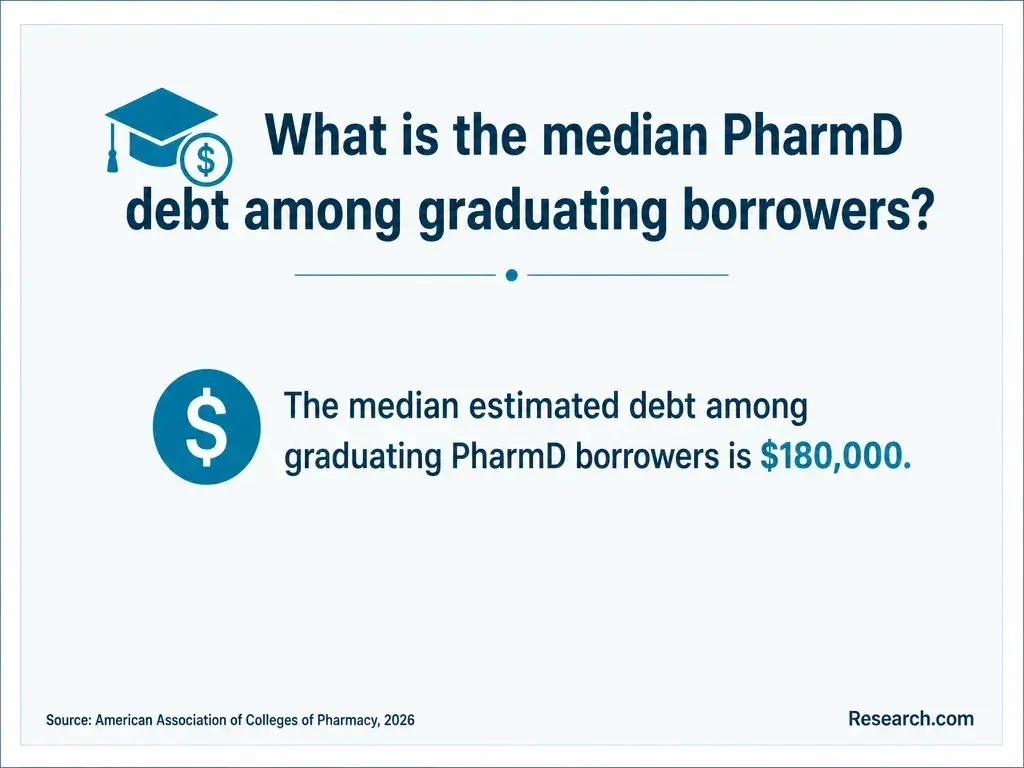
Ask financial aid offices to explain your classification and available aid for each stage. Federal borrowing rules changed for many new graduate and professional borrowers beginning July 1, 2026; do not build a budget around assumed Grad PLUS access or an old loan limit. Request an aid-year-specific estimate and identify any funding gap before paying an enrollment deposit.
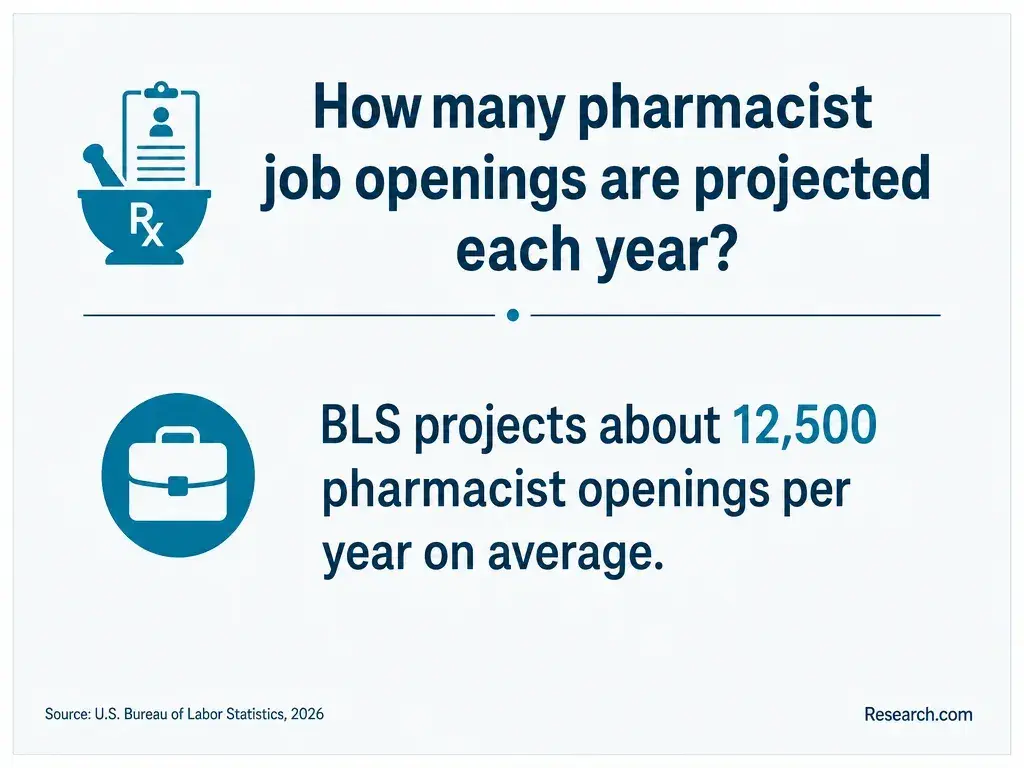
A licensed pharmacist may work in community, hospital, ambulatory care, or other settings, with duties and employer expectations varying by role and state. The Bureau of Labor Statistics reports pharmacists' median annual pay of $140,910 in May 2025 and projects 5% job growth from 2025 to 2035, with about 12,500 openings per year. Those occupation-wide figures do not predict a new graduate's pay, local vacancies, or return on tuition.
Residencies provide structured postgraduate clinical training; fellowships typically emphasize a particular research, industry, or other professional focus. Neither is universally required to practice as a pharmacist. Specialty board certification is a separate credential, not a substitute for state licensure.
If you want pharmacy work without the time and expense of pharmacist education, consider the role before selecting a degree. Pharmacy technicians are a separate occupation that does not ordinarily require a Pharm.D.; lower-cost pharmacy degree pathways may suit some goals, but verify the credential required for the exact job you want.
How do you choose an accredited PharmD program?
First, confirm the exact professional program and its current ACPE status in ACPE's official directory. Then compare schools against the same practical criteria: whether your courses meet prerequisites, total expected cost, calendar and attendance requirements, rotation placement arrangements, and published licensing-exam outcomes. Institutional accreditation matters too, but it does not replace ACPE professional-program accreditation.
Use this sequence to turn a broad school list into an enrollment decision:
- Send each school your course history and request written clarification of missing prerequisites, accepted labs, and any course-age rules.
- Ask for a current tuition-and-fee estimate and the likely costs of required travel and rotations.
- Confirm class meeting times, campus attendance, placement responsibilities, and any state restrictions that affect you.
- Review the school's published NAPLEX results with cohort size and reporting year in mind; investigate outcomes rather than treating one figure as a guarantee.
- Check your intended licensing board's education, exam, and internship rules before committing.
For applicants coming from biology, chemistry, or another science major, online pharmacy programs for science-background students can help narrow the search. The decisive question remains how each school applies your existing credits and whether its full professional pathway is feasible for you.
Other Things You Should Know About PharmD
Yes. Schools generally evaluate required courses rather than requiring a particular undergraduate major. Check the prerequisites for every program on your list.
Possibly. Acceptance varies by school and subject, especially for science courses with labs. Ask the admissions office how the credit must appear on your transcript.
Do not assume so. Scheduled classes, exams, labs, and full-time rotation blocks can conflict with work even when some instruction is online. Request the program's actual attendance and rotation calendar.
Yes, but check each school's application method, deadlines, prerequisites, and supplemental materials. A shared PharmCAS application does not make participating schools' requirements identical.
- Are Prerequisite Courses Barriers to Pharmacy Admission or the Keys to Student Success? - PMC https://pmc.ncbi.nlm.nih.gov/articles/PMC10159397/
- Pharmacist Licensure Guide | Department of State https://www.pa.gov/agencies/dos/resources/professional-licensing-resources/licensure-processing-guides-and-timelines/pharmacist-guide
- Pharmacist Licensure by Exam - Texas State Board of Pharmacy https://www.pharmacy.texas.gov/applicants/pharmacist-exam.asp
- GAC - Chapter 480-2 LICENSURE AS A PHARMACIST https://rules.sos.ga.gov/gac/480-2
- Cost of Attendance (Budget) | 2025-2026 Federal Student Aid Handbook https://fsapartners.ed.gov/knowledge-center/fsa-handbook/2025-2026/vol3/ch2-cost-attendance-budget
- PharmD Student Voices: A Clinical Training Explainer | Doctor of Pharmacy https://pharmacy.wisc.edu/2025/08/13/pharmd-student-voices-a-clinical-training-explainer/
- Admissions Frequently Asked Questions and Tips | ucsf.edu https://pharmd.ucsf.edu/admissions/faq-tips
- Prospective Students | Ernest Mario School of Pharmacy https://pharmacy.rutgers.edu/info-for/prospective-students/
- Admissions: USC Mann PharmD Program https://mann.usc.edu/program/doctor-of-pharmacy-pharmd/admissions/
- Accreditation Status | School of Pharmacy and Pharmaceutical Sciences | Binghamton University https://www.binghamton.edu/pharmacy-and-pharmaceutical-sciences/about/accreditation.html