Questions to Ask Residency Program Directors

Co-Founder and Chief Data Scientist
A pharmacy residency can shape your first years of practice, but a program's specialty label alone tells you little about its supervision, workload, or outcomes. This guide gives Pharm.D. students and pharmacists questions to ask program directors, a way to compare their answers, and warning signs to investigate before ranking programs.
Several required section headings refer to law school residencies; where they do, the guide separates legal training from the postgraduate pharmacy training relevant to your decision.
Key Things You Should Know
- Ask for the actual rotation schedule, staffing expectations, preceptor assignments, licensure deadline, and recent graduate destinations - not just a list of available experiences.
- Verify pharmacy residency accreditation through ASHP; ACPE accredits professional pharmacy education programs, while bar eligibility concerns law graduates.
- Compare stipend against required expenses and time away from other work. The U.S. Bureau of Labor Statistics reports pharmacists' median annual pay of $140,910 in May 2025, but that occupation-wide figure is not a residency stipend.
What is a law school residency program?
"Law school residency" is not a standard name for a U.S. pharmacy credential. A law school may use the term for an in-person academic requirement, an externship, or a supervised legal-practice experience. None of those is a postgraduate pharmacy residency, and their rules should not be used to evaluate one.
For pharmacists, a residency is structured training after the professional Doctor of Pharmacy (Pharm.D.) degree. A postgraduate year one (PGY1) residency develops broad practice skills; a postgraduate year two (PGY2) residency provides more focused training, generally after PGY1 or another qualifying route specified by the program. Residency is distinct from a research-oriented fellowship, state pharmacist licensure, and optional specialty board certification.
If you are still planning pharmacy education after undergraduate science coursework, start by separating admission to a Pharm.D. program from eligibility for postgraduate residency. Undergraduate prerequisites do not themselves qualify someone for pharmacist practice.
What should you ask a residency program director about the program?
Ask questions that reveal what every resident must do, what depends on site availability, and what has changed recently. Use the same questions with each director so an attractive elective list does not obscure a less suitable day-to-day schedule.
- "What are the required rotations, staffing shifts, projects, and on-call duties, and can I see a representative resident calendar?"
- "Which electives were residents actually able to complete recently, and how are competing requests resolved?"
- "How often do residents receive documented feedback, and what happens if a rotation or preceptor is not working well?"
- "What were recent graduates' first roles, and which outcomes are verified rather than self-reported?"
Record comparable answers after each conversation. This worksheet separates a program's published promise from the details you still need confirmed.
| Comparison field | Program A | Program B |
| Required rotations and staffing | ________ | ________ |
| Electives actually available | ________ | ________ |
| Feedback and remediation process | ________ | ________ |
| Verified graduate destinations | ________ | ________ |
| Unanswered question or concern | ________ | ________ |
Applicants with nontraditional preparation can also compare pharmacy programs for students with varied academic backgrounds, but a flexible Pharm.D. admission route does not waive a residency's graduation or licensure requirements.
Is the residency program accredited or approved for bar eligibility?
Bar eligibility is a law-licensing question, not a pharmacy-residency standard. For a pharmacy residency, ask: "Is this specific PGY1 or PGY2 program ASHP-accredited, a candidate, or not accredited, and where can I verify its current status?" Check the ASHP residency directory and clarify the status of the particular program - not merely its health system.
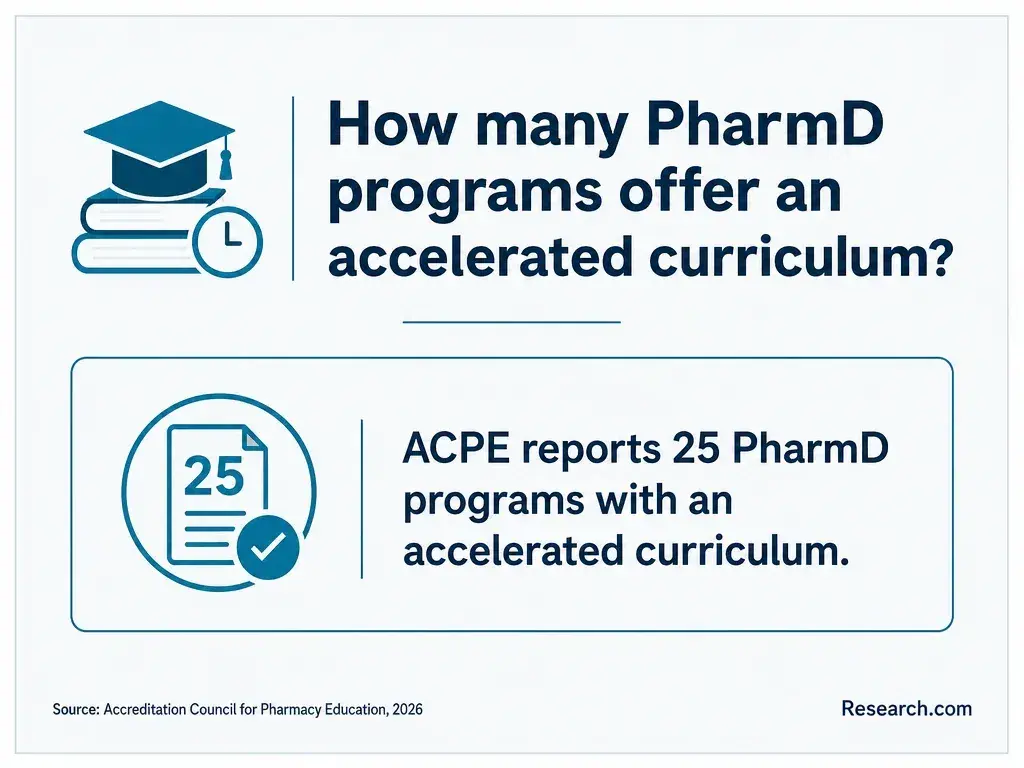
Keep three other approvals separate. The Accreditation Council for Pharmacy Education (ACPE) accredits professional pharmacy education programs; a state board issues pharmacist licenses; and a school's authorization to enroll online students is a separate matter. If you are comparing pharmacy schools offering online Pharm.D. study, verify those educational and state requirements before treating residency eligibility as the next step. Neither a Pharm.D. nor a residency independently grants a license.
A pharmacy residency does not provide legal-practice coursework. Ask instead which pharmacist responsibilities you will perform under supervision: medication-use evaluations, patient care, interdisciplinary rounds, counseling, medication safety work, teaching, and a research or quality-improvement project. Request the learning objectives and assessment methods for required rotations.
To judge whether training is genuinely hands-on, ask what decisions residents make, when a preceptor reviews them, and how independence increases. Also ask how much scheduled time is protected for projects and presentations. A long list of clinical settings is less useful than a clear account of your role in each one.
Do not assume that a resource about how to finish an online pharmacy degree sooner describes a shortened route through the professional Pharm.D. and a PGY1 residency. Confirm the exact credential and requirements before comparing its timeline with supervised postgraduate training.
Ask the director who assigns rotations, how residents rank electives, whether off-site experiences are possible, and who resolves a poor preceptor match. Request a distinction between guaranteed required experiences and electives that depend on capacity. For mentoring, ask whether residents choose a mentor, how often they meet, and whether the research adviser is also a clinical supervisor.
Speak with current residents about access to preceptors during demanding shifts and whether feedback arrives early enough to use. This matters more than a directory of impressive mentors whom a resident rarely sees.
Earlier in the education pathway, pharmacy school prior learning credits are a different placement question: the receiving school decides whether previous coursework applies to its Pharm.D. curriculum. Such credit does not replace residency rotations.
Ask for the program's current written eligibility criteria: Pharm.D. graduation timing, pharmacist licensure deadline and permitted jurisdiction, required application materials, interview process, and any PGY1 prerequisite for a PGY2 position. Ask whether the program uses the Pharmacy Online Residency Centralized Application Service (PhORCAS) and participates in the ASHP Match; confirm its posted deadlines and procedures rather than assuming every position follows the same route.
Licensure timing deserves particular attention. A resident may be hired before receiving a license, but a program can require licensure by a specified date and impose consequences for missing it. State boards determine licensing requirements, including applicable examinations; do not assume every jurisdiction uses the same jurisprudence exam.
If you have not entered pharmacy school, review pharmacy school application eligibility separately. Pharm.D. admission requirements vary by school and are not residency admission criteria.
PGY1 and PGY2 each generally represent a year of postgraduate training, but ask for exact contract dates, leave policies, scheduled hours, staffing frequency, and whether a project can extend beyond the appointment. Request the current stipend and benefits in writing, along with expected costs for licensure, travel, parking, conferences, and relocation. Compare the stipend with local living costs and any income you would forgo by taking the position.
The Bureau of Labor Statistics reports median annual pay for pharmacists of $140,910 in May 2025. That figure covers the broader occupation, not first jobs in a particular specialty or residency compensation; it is context for opportunity cost, not a predicted raise after training.
For applicants still budgeting for the degree, Doctor of Pharmacy programs with manageable tuition may reduce an earlier expense, but compare total educational costs and aid eligibility separately from residency finances. Federal borrowing rules for many new graduate and professional borrowers changed beginning July 1, 2026, so confirm the rules that apply to your enrollment and loan history before making a funding plan.
Do not assume that remote meetings make a pharmacy residency remote. Patient-care responsibilities, staffing, supervision, and site-specific training commonly require physical presence. Ask which activities, if any, can be completed remotely; whether off-site rotations require travel; and whether a change of residence or state license would be necessary. Obtain the answer for the specific program and appointment.
An online or hybrid Pharm.D. is a separate educational question: online coursework may still involve scheduled classes, in-person labs, and supervised clinical rotations. If you are comparing lower-cost online pharmacy degree programs, check the credential, campus visits, placement logistics, and total travel expense. A flexible degree format does not make subsequent residency training location-independent.
Pharmacy residency graduates pursue pharmacy roles, not legal practice by virtue of their residency. Depending on training and hiring requirements, destinations may include hospital pharmacy, ambulatory care, managed care, medication safety, or a more focused PGY2 pathway. Ask the director for recent graduates' actual roles, employers or practice settings, and whether residents who sought PGY2 positions obtained them. Small cohorts can make a single year's outcomes misleading.
A residency may be valuable when a target employer prefers postgraduate clinical training; direct employment may be the better choice when the role does not require it and supervised learning is available on the job. A fellowship may fit a research or industry goal more closely. Broad doctoral degree length comparisons cannot settle this career choice: compare the qualifications requested in the jobs you want with the time and responsibilities of each route.
How does the residency prepare students for licensure and employment?
A pharmacy residency is postgraduate employment and training, not a substitute for initial pharmacist licensure. Ask when licensure must be completed, what support the program offers during that period, and which duties an unlicensed resident may perform under applicable state rules. A Pharm.D. graduate must still meet state-board requirements; passing the North American Pharmacist Licensure Examination (NAPLEX) alone does not issue a license. Jurisprudence-exam requirements vary by jurisdiction, including whether an MPJE, UMPJE, or another process applies.
For employment preparation, ask which competencies are documented, whether residents build a presentation and project portfolio, and how mentors support job or PGY2 applications. Compare those benefits with the position descriptions for your target roles. If you are still evaluating pharmacy doctorate program length, remember that faster degree completion and postgraduate specialty preparation solve different problems.
Before ranking a program, confirm its accreditation status, written licensure deadline, required schedule, full compensation package, and access to current residents. Treat unanswered questions about these commitments as decision-relevant, not as details to sort out after accepting a position.
Other Things You Should Know About PharmD
Bring more than you expect to ask, then prioritize the few whose answers could change your ranking. Review the program's published materials first so interview time goes toward details that are not already clear.
Yes. You can ask whether there is a scheduled resident-only conversation. Be respectful of residents' time and ask about their experience rather than requesting confidential information about other applicants or employees.
A brief thank-you is reasonable if the program permits contact. Use it to clarify a specific unanswered question, not to seek a commitment about ranking or selection.
You can discuss your own impressions, but respect any interview instructions and the privacy of residents and other applicants. Keep an accurate personal record of program-specific answers before details from different interviews blur together.
- Preparing for the Structured Interview Examination - CalHR - CA.gov https://www.calhr.ca.gov/about-calhr/divisions-programs/selection-division/preparing-for-the-structured-interview-examination/
- A Graduated Responsibility Supervising Resident Experience Using Mastery Learning Principles - PMC https://pmc.ncbi.nlm.nih.gov/articles/PMC10712466/
- UCLA GME Resident and Fellow Supervision Policy https://medschool.ucla.edu/ucla-gme-resident-and-fellow-supervision-policy
- Insight From Residents on What to Ask During Residency Interviews | Students & Residents https://students-residents.aamc.org/interviewing-residency-positions/insight-residents-what-ask-during-residency-interviews
- night float versus full overnight call | SMJ http://www.smj.org.sg/article/nationwide-survey-comparing-residents%E2%80%99-perceptions-overnight-duty-systems-singapore-night
- Balancing Supervision and Independence in Residency Training | Journal of Ethics | American Medical Association https://journalofethics.ama-assn.org/article/balancing-supervision-and-independence-residency-training/2015-02