
Online PharmD Study Environment Setup Guide

Co-Founder and Chief Data Scientist
An online Doctor of Pharmacy (Pharm.D.) program can bring coursework into your home, but it also brings scheduled classes, hands-on training, and clinical placements into your calendar. A desk and laptop alone will not make that workload manageable.
This guide is for prospective and incoming U.S. pharmacy students who need to decide whether they can build a reliable study environment. You will learn what to confirm with a program, what to set up before classes begin, and where online flexibility ends - so you can commit with a realistic plan for time, space, technology, and cost.
Key Things You Should Know
- Online instruction may still require live attendance, campus labs, introductory pharmacy practice experiences (IPPEs), and advanced pharmacy practice experiences (APPEs) at approved sites.
- Confirm its device and internet specifications, exam-proctoring rules, meeting schedule, placement process, and accessibility support before buying equipment or changing work hours.
- Compare tuition with travel, rotation-related costs, and the financial aid available to you under applicable 2026-27 rules; an online Pharm.D. is not a fully remote shortcut to pharmacist licensure.
What is an online PharmD program and how does it work?
An online Pharm.D. is a professional pharmacy degree program that delivers some academic instruction online. "Online" does not necessarily mean asynchronous, self-paced, or entirely remote. Programs may use live classes, recorded lessons, virtual patient cases, in-person skills assessments, campus immersions, and supervised clinical experiences. The mix is program-specific.
Start your setup with the weekly timetable, not a shopping cart. Ask for a sample term schedule showing required live sessions, exams, group work, and any campus dates. Then reserve a quiet place where you can counsel a simulated patient aloud, participate on camera when required, and study without exposing course or patient information to others. A private room is useful; a shared space can work only if you can reliably control interruptions and meet program rules.
Compare online Pharm.D. pathways for future pharmacists by their required attendance and in-person commitments rather than by the word "online" in their descriptions.
Are online PharmD programs accredited and recognized for licensure?
The Accreditation Council for Pharmacy Education (ACPE) accredits professional Pharm.D. programs, not individual pharmacists. Before enrolling, check the exact program and its current status in ACPE's official program directory. Separately confirm the institution's accreditation and whether it may enroll a student living in your state. These are different checks: state authorization for distance education does not establish eligibility for pharmacist licensure or approve a clinical placement.
Tell the school where you live and where you intend to complete rotations and seek a license. Ask it to document any state restrictions affecting enrollment, intern registration, placements, or graduate eligibility. Confirm licensing requirements with the relevant state board of pharmacy; a school's general statement about national recognition is not a substitute for that check.
Other online doctoral degree options may fit different career goals, but a doctorate in another subject should not be treated as an interchangeable route to pharmacist licensure.
What are the requirements to become a licensed pharmacist after an online PharmD?
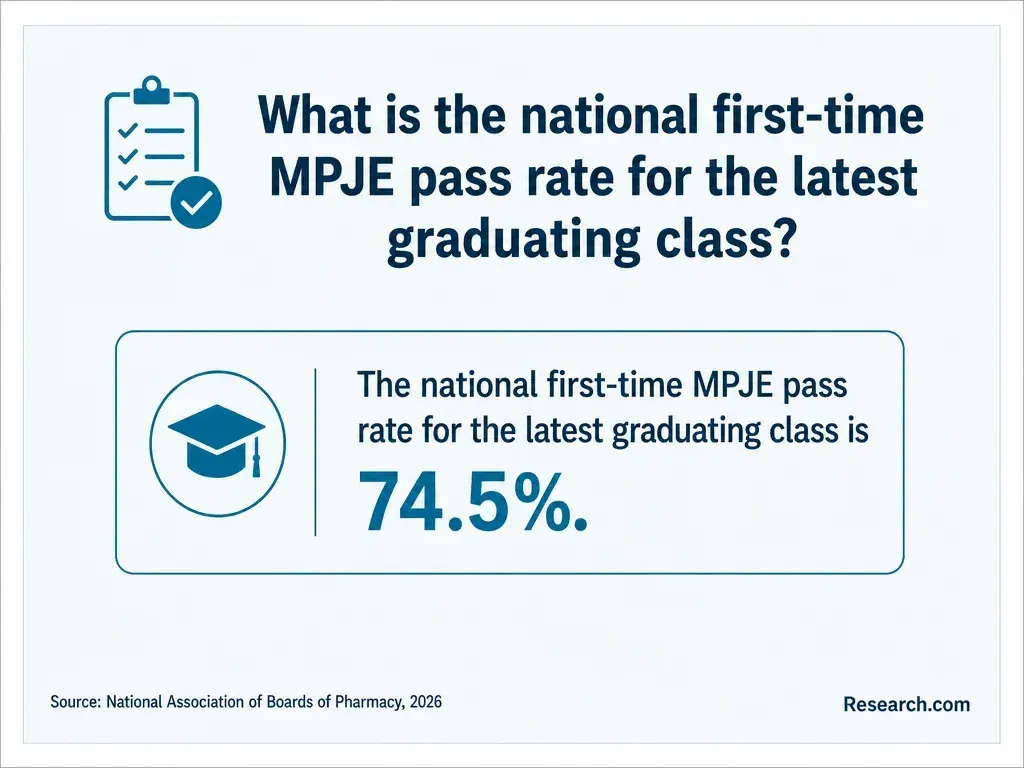
Graduation and licensure are separate milestones. A U.S.-educated graduate generally must meet a state board's education and other eligibility rules, complete any required intern training or registration, pass the North American Pharmacist Licensure Examination (NAPLEX), meet applicable law-exam requirements, and receive a license from the board before practicing as a pharmacist. Requirements and application order vary by jurisdiction. Some jurisdictions use the Multistate Pharmacy Jurisprudence Examination (MPJE), some have begun using the Uniform Multistate Pharmacy Jurisprudence Examination (UMPJE), and others have different rules; check the board where you plan to practice.
Keep a secure folder for transcripts, placement records, intern documents, and board correspondence, but do not store identifiable patient information there. Put board deadlines and potential examination costs on your postgraduation calendar. If speed is your main reason for considering online study, distinguish the Pharm.D. route from online pharmacy programs under two years, which do not by themselves replace the professional degree and state licensing process.
Both formats can require demanding professional coursework and in-person clinical training. The practical difference is where routine classes happen - and how much responsibility you take for maintaining a suitable learning space. Use the comparison below to test which environment you can sustain, not to assume one format is easier.
| Decision factor | Online or hybrid format | Campus-based format |
| Daily study space | Student needs dependable quiet, privacy, and connectivity at home | Campus classrooms and study areas may reduce home-space demands |
| Live interaction | May require scheduled video attendance and remote group work | Usually centers scheduled in-person classes and labs |
| Hands-on work | May require travel for campus labs and approved clinical sites | Typically includes campus labs and approved clinical sites |
| Location-related costs | Home technology, possible immersion travel, and rotation travel | Commuting or relocation, plus possible rotation travel |
Request comparable total-cost estimates before deciding; tuition alone leaves out living arrangements and required travel. A comparison of pharmacy program tuition and length is a starting point, not proof that the shortest or least expensive listing will cost you less overall.
After pre-professional prerequisites, the professional curriculum commonly develops knowledge of drug action, pharmacotherapy, calculations, drug information, medication safety, law, and patient care. Students also practice communicating with patients and healthcare teams. Course names and sequencing vary, so use a school's current curriculum map to identify when group projects, skills assessments, and in-person labs will compete for time.
Match your study tools to those tasks: a dependable device for course materials and approved assessments; a headset if it helps you hear and speak clearly; and a system for reviewing calculations and clinical cases without leaving sensitive information on shared devices. Use the drug-information resources and simulation tools the program actually provides rather than paying for an assumed software package. Access to a tool is not the same as hands-on proficiency.
Students arriving from biology, chemistry, or pre-pharmacy study may recognize foundational science but should not assume those credits replace professional patient-care courses. Review Doctor of Pharmacy pathways after pre-pharmacy study alongside each school's own curriculum and credit policies.
Requirements vary by school. Applicants may need specified prerequisite courses and labs, minimum grades, transcripts, recommendations, an interview, and other program-specific materials. A bachelor's degree is not universally required. Some schools use the Pharmacy College Application Service (PharmCAS), while others set different application processes or supplemental requirements. The Pharmacy College Admission Test (PCAT) was retired in January 2024; do not plan around taking it.
Admissions planning affects your study setup because unfinished prerequisites may overlap with work and application deadlines. Build one calendar for course completion, transcript requests, interviews, and the program's stated matriculation conditions. Check pharmacy program applicant requirements for comparison ideas, then confirm the current rules and deadlines directly with each school. Meeting a published minimum does not guarantee admission.
Completion time depends on the admission pathway, curriculum sequence, and clinical schedule. Do not assume that recorded lectures let you accelerate required labs or rotations. Ask for a term-by-term plan covering both remaining prerequisites and the professional program, including any period when rotations make regular employment impractical.
For a realistic budget, obtain the school's current tuition and mandatory-fee schedule and identify costs it does not include. These categories belong in your comparison:
- Required computer, connectivity, exam-proctoring equipment, textbooks, and clinical-reference access.
- Campus-immersion travel and lodging, plus transportation or temporary housing for approved rotations.
- Background checks, immunizations, required supplies, and eventual licensing applications and exams.
- Income you may lose if scheduled classes, labs, or rotations require fewer paid work hours.
Use online Doctor of Pharmacy tuition comparisons to identify questions, then request each program's current cost of attendance. Financial aid depends on the student and program; federal borrowing rules changed for many new graduate and professional borrowers beginning July 1, 2026. Confirm your applicable 2026-27 options with the school's aid office rather than assuming older loan limits or Grad PLUS access still apply.
Introductory pharmacy practice experiences (IPPEs) introduce supervised practice during the professional program. Advanced pharmacy practice experiences (APPEs) provide more intensive supervised work in later stages. They take place at approved practice sites; online lectures do not turn these experiences into remote-only training. Settings, timing, hours, and site policies depend on the program.
Before accepting an offer, ask who identifies and approves sites, whether placements near your home are possible, and when locations and schedules are confirmed. Also ask what you must arrange yourself, such as intern registration, immunizations, background checks, transportation, or time away from work. Do not assume your current pharmacy job can substitute for a rotation or that every placement will be local.
Map those commitments against online Pharm.D. program timelines, then get the school's own rotation calendar. Reserve a separate planning space for site paperwork and changing schedules; your quiet home desk will still matter when coursework and clinical preparation overlap.
After meeting state licensing requirements, pharmacists may work in community, hospital, ambulatory care, and other practice settings. The U.S. Bureau of Labor Statistics reports median annual pay of $140,910 in May 2025 for pharmacists. That occupation-wide median is context for a career decision, not a forecast of a new graduate's pay or a return on tuition.
BLS projects 5% pharmacist employment growth, 2025-2035, with about 12,500 openings per year. Location, setting, experience, and hiring requirements still shape an individual search. Some roles favor postgraduate residency training, while fellowships and optional specialty board certification serve different purposes; none substitutes for a state pharmacist license. Pharmacy technician work is a separate occupation that does not ordinarily require a Pharm.D.
If you are changing careers, inventory prior science coursework before pricing the transition. Pharmacy admissions for students with prior credits can help you frame questions, but the receiving school decides how earlier study applies. Your study plan must still leave room to develop pharmacy-specific patient-care, communication, and supervised practice skills.
How can you choose a reputable online PharmD program?
Choose a program only after testing whether its requirements fit your home, finances, location, and weekly availability. The following sequence turns a general impression of "flexibility" into a decision you can document:
- Confirm the exact Pharm.D. program's ACPE status, your state's enrollment eligibility, and the intended licensing board's requirements.
- Request the technology specifications and policies for live classes, proctored exams, privacy, accessibility, and technical outages; test your space and internet against them.
- Get a term calendar with campus visits, labs, IPPEs, and APPEs; compare it with work and caregiving commitments.
- Ask how placements are approved and what happens if a local site is unavailable; price plausible travel before paying a deposit.
- Compare current tuition, required fees, other attendance costs, aid eligibility, and published licensure-exam outcomes using the same measures for each school.
If you have prior coursework, ask for a written evaluation rather than assuming it transfers because both schools are accredited. A guide to pharmacy programs that accept transfer credits can help identify possibilities; only the receiving program can determine how your credits apply. Treat vague answers about required travel, clinical placement responsibility, or licensure eligibility as reasons to pause - not as details to solve after enrollment.
Other Things You Should Know About PharmD
Possibly. You need a reliable quiet period for scheduled activities and a private way to discuss cases or take assessments. Check the program's camera, background-noise, and privacy rules before relying on a shared room.
Follow the school's published outage procedure immediately, including its rules for contacting the instructor or testing office. Set up an approved backup connection in advance, but do not switch devices, locations, or exam software unless the policy permits it.
Yes. Contact the institution's accessibility office early to discuss the process and documentation for online instruction, assessments, and required in-person activities. Do not assume an accommodation arranged for one setting automatically covers every placement site.
Not if the notes contain identifiable patient information without authorization. Follow the school's and site's privacy policies, use approved systems, and ask a supervisor how to create de-identified learning notes safely.
- NYS Pharmacy: License Requirements - Office of the Professions https://www.op.nysed.gov/professions/pharmacist/license-requirements
- Data Security: K-12 and Higher Education | ed.gov https://studentprivacy.ed.gov/data-security-k-12-and-higher-education
- Internet-Based Proctored Assessment: Security and Fairness Issues - PMC https://pmc.ncbi.nlm.nih.gov/articles/PMC7404853/
- Licensure Notice - Fisher Pharm.D. Online | SJF-PHA https://onlinepharmd.sjf.edu/legal/licensure/
- Laptop Requirement | UNC Eshelman School of Pharmacy https://pharmdstudenthandbook.web.unc.edu/laptop-requirement/
- Online Pharmacy School in Ohio | University of Findlay Online https://pharmdonline.findlay.edu/
- FAQ | OSU College of Pharmacy - Oregon State University https://pharmacy.oregonstate.edu/programs-admissions/pharm-d/faq
- Online Proctoring Overview | Instructional Technology Help Center https://help.intech.arizona.edu/article/314-online-proctoring-overview
- Pharmacy Licensure | MCPHS https://www.mcphs.edu/academics/registrar/licensure-and-certification-support/pharmacy-licensure
- Ideal Study Environment for Online Learning | Purdue Global https://www.purdueglobal.edu/blog/online-learning/create-perfect-study-environment-online-learning/


