2027 Should You Choose a BS in Business Administration or A Professional Coaching Certificate for Your Next Career Step?
Audited and Verified:
Our Editorial and Data Verification Process
Research.com uses government datasets, official education statistics and primary institutional information to support its career and degree guides. Our review process checks factual accuracy, occupational definitions, source dates and the requirements associated with the credentials discussed.
How This Article Was Fact-Checked
Our editorial team verifies salary estimates, employment projections, education requirements and program information against original data providers and official organizations. Salary figures are checked against the relevant occupational definitions and reporting periods. Information about licensure, accreditation and required in-person training is reviewed separately.
Fact-checked and verified on:

Co-Founder and Chief Data Scientist
A BS in Business Administration and a professional coaching certificate prepare you for different kinds of work. One builds broad business knowledge and awards a bachelor's degree; the other focuses on helping clients or employees pursue goals through a structured coaching process.
If you are changing careers or deciding how to advance, the distinction affects what you will study, what employers may require, and how much time you will commit. This guide compares the pathways so you can choose based on your target role, not the appeal of a credential's name.
Key Things You Should Know
- Choose the BS when your target business role calls for a bachelor's degree or broad preparation in operations, finance, marketing, and management; choose coach training when you already have a direction and need supervised coaching skills.
- A coaching certificate documents completion of a training program. It is not the same as an independently awarded coaching certification or a bachelor's degree.
- The U.S. Bureau of Labor Statistics projects 11% employment growth for training and development specialists from 2025 to 2035, but that occupation includes work beyond coaching and does not measure demand for independent coaches.
What is the difference between a BS in Business Administration and a professional coaching certificate?
A BS in Business Administration is an undergraduate degree combining general education with a business core and, sometimes, a concentration. A professional coaching certificate is evidence that you completed a particular training program.
Coaching usually involves asking questions, supporting reflection, and helping a client set and review goals; it is distinct from providing therapy or simply giving business advice.
The comparison below shows what each credential establishes, and what it does not:
| Decision point | BS in Business Administration | Professional coaching certificate |
| Primary purpose | Broad academic preparation for business functions | Focused training in coaching methods and practice |
| Credential awarded | Bachelor's degree | Provider-issued certificate of completion |
| Typical evidence of learning | Coursework, assessments, and sometimes applied projects | Training, practice, feedback, and assessments set by the provider |
| Key limitation | Does not establish coaching competence or guarantee a management job | Does not satisfy a bachelor's-degree requirement or automatically grant independent certification |
If you need a degree but time is the obstacle, compare the actual remaining requirements, not just advertised speed, when reviewing a national comparison of accelerated business bachelor's schools.
Which career goals are better suited to business administration or professional coaching?
Start with the work you want to do next and the experience you already have. For a move into business operations, marketing coordination, HR administration, or another role where employers expect undergraduate education, the BS is generally the stronger match.
A career changer should still identify the target function and build evidence through relevant work, projects, or internships; the degree alone does not confer experience.
Coach training is a more direct choice if you already work with people, for example, in leadership development, education, or client services, and want to add a defined coaching practice.
If your goal is an internal HR role rather than coaching clients, compare the BS curriculum with a specialized HR pathway, including whether you can make use of existing credits in a human resources degree.
Neither pathway substitutes for the other when an employer states a specific requirement. If the job requires both a bachelor's degree and demonstrated coaching skill, you may ultimately need both; if it requires neither, targeted training plus relevant experience may be the less costly next step.
What are the education and certification requirements for becoming a professional coach?
There is no universal U.S. degree or government-issued license for general professional coaching. Requirements depend on the work: a private client may assess your experience and methods, while an employer or coaching organization may require particular education, documented practice, or an independent credential. Coaching does not authorize someone to diagnose or treat mental health conditions.
Distinguish a provider's training certificate from certification awarded by a credentialing organization. For example, the International Coaching Federation evaluates applicants against requirements for coach-specific education, coaching experience, mentor coaching, and assessment; completing a course alone does not automatically award an ICF credential. Confirm the current requirements directly with the organization before enrolling.
If your intended employed role also requires a bachelor's degree, coach training will not replace it. You can compare accelerated undergraduate programs, but ask how many of your prior credits will actually apply before assuming a faster completion date.
Programs commonly cover accounting, economics, finance, marketing, management, operations, business law, statistics, and communication alongside general education.
The exact mix matters: an organizational behavior course may inform workplace coaching, but it is not supervised coach training. Likewise, studying management does not make a graduate qualified to manage staff immediately.
If your goal is a specific business function, inspect required courses, electives, prerequisites, and applied assignments rather than relying on the degree title.
A supply chain interest, for instance, may call for more focused operations and logistics study; faster-paced online supply chain college study is worth comparing only if that specialization matches your intended work.
Both formats can lead to a legitimate BS if the institution awards the same degree and the program meets your needs. Online study may reduce travel, while campus study may make face-to-face collaboration and local recruiting easier.
Neither format is inherently more flexible: online courses can still require scheduled meetings, group presentations, proctored exams, or fixed deadlines.
Ask each school for a sample term schedule, assessment rules, required campus visits, and access to advising and career services.
Use a national guide to ranked online business colleges to identify possibilities, then verify the policies and course availability that affect your own schedule. For coaching training, apply a similar test to live practice, observation, feedback, and any in-person requirements.
Business bachelor's applicants typically submit prior academic records, but high-school, transfer, and returning-student requirements vary by institution. Admission to a college is also different from admission to its business major.
If you have previous coursework, request an official evaluation showing which credits satisfy general education, business core, electives, and residency requirements; accepted credit is not necessarily credit toward the major. Review business administration admissions coursework and credit requirements before selecting courses to repeat or transfer.
Coaching programs set their own entry rules. Some welcome beginners; others expect work experience or a particular professional background. Before paying, ask whether the program is introductory or advanced, what prior experience it assumes, and whether completion supports the independent credential you intend to pursue.
A bachelor's degree is a substantially larger academic commitment than a focused coaching certificate. Your remaining BS timeline depends on applicable transfer credits, enrollment pace, course sequencing, and graduation requirements.
Coaching programs vary in training length and may require additional practice and assessment before you qualify for an independent credential.
Do not compare a degree's tuition alone with a coaching course's advertised price. Request a written estimate of remaining degree tuition and fees, books or software, and any travel; for coaching, include training, mentor coaching, assessments, credential applications, and renewal obligations where applicable.
Low-cost online business degree programs can help you form a shortlist, but the least expensive advertised option may not have the lowest cost to finish after your credits are evaluated.
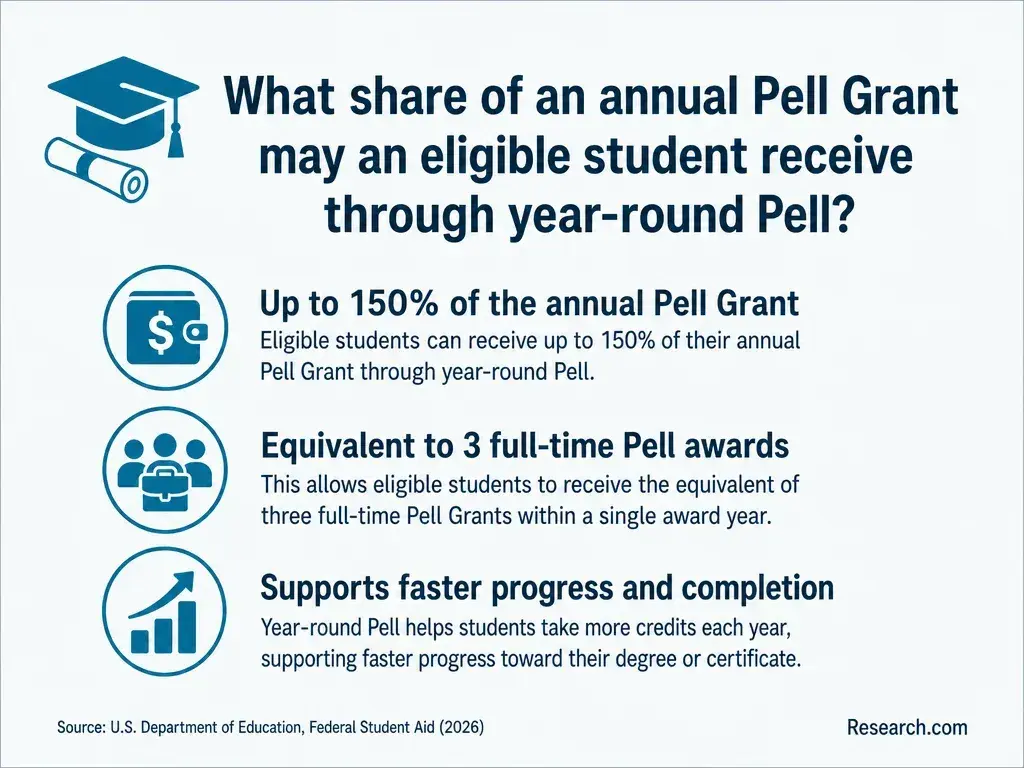
For an investment decision, compare the amount you must pay, the time you must commit, and the qualification your target role actually requires. Check financial aid and employer reimbursement separately: eligibility, payment timing, and covered programs can change the amount you need upfront.
A business administration graduate may pursue entry-level or early-career work in operations, marketing, HR, sales support, or project coordination, depending on skills and experience.
A coaching certificate may support independent coaching, an existing leadership-development role, or coaching responsibilities within another job. It does not, by itself, establish eligibility for a corporate position or a client base.
Compare job descriptions by tasks, not titles. If you want to organize budgets, schedules, and deliverables, project coordination may be closer to your goal than coaching; compare the education and cost of that route through total costs of project management programs.
If you want to conduct coaching conversations, seek training with observed practice and feedback. An aspiring independent coach must also consider client acquisition, recordkeeping, privacy, and business operations.
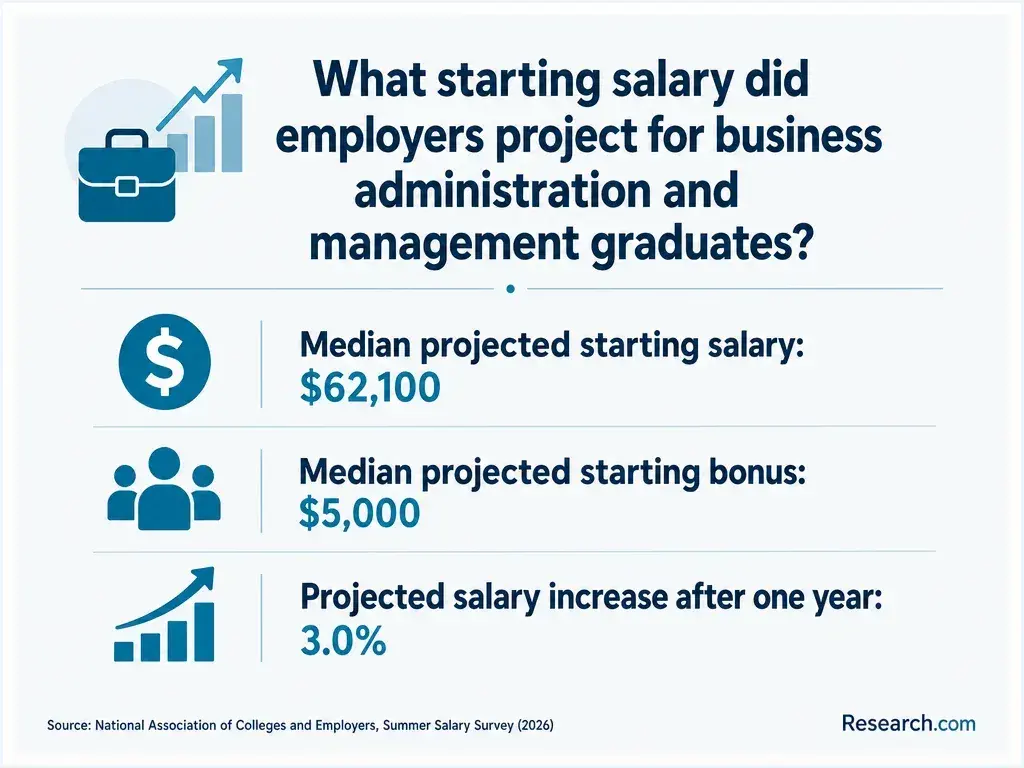
There is no single reliable national salary figure for people holding a business administration BS or a coaching certificate: earnings attach to occupations, experience, location, and employment arrangements.
The Bureau of Labor Statistics reports a May 2025 median annual wage of $69,280 for training and development specialists, with projected employment growth of 11% from 2025 to 2035.
That occupation can include workplace learning and development, but its figures are not an estimate of independent coaches' earnings or new certificate holders' starting pay.
Business outcomes also depend on the function you enter. For example, supply chain work has its own occupation-specific prospects, making shorter supply chain degrees and career value a more useful comparison than a broad "business graduate salary" if logistics is your target.
For self-employed coaching, estimate what you could realistically charge and how much paid client work you could secure; revenue is not take-home pay after expenses.
How can you choose an accredited business school or reputable coaching program?
For a BS, verify the institution's recognized accreditation and confirm that the specific degree, delivery format, and location are covered. AACSB, ACBSP, and IACBE accreditation concern business education within their stated scope; do not assume that institution-level accreditation means a particular business program holds one of those accreditations.
Ask for the current catalog, a credit evaluation, total-cost estimate, course schedule, and evidence of relevant career support. An application-fee saving may help you compare options, but applying to accredited online colleges for free says nothing by itself about fit or completion cost.
For coaching training, verify who awards the certificate, whether a credentialing organization recognizes the training for your intended application, and how practice, observation, and feedback work.
Ask for the full fee schedule and speak with graduates about the training, not promised earnings. The best choice is the one whose verified requirements close the gap between your present experience and your next role.
Other Things You Should Know About Business Administration
Yes. That sequence may suit someone who first needs a bachelor's degree for employment and wants to develop coaching skills after gaining workplace experience. Check the later training program's requirements when you are ready to apply.
Often, yes, if your training and services support remote sessions. Agree on privacy, scheduling, recordkeeping, and the limits of the service before working with clients.
Possibly. Ask whether the benefit covers that provider and credential, whether approval is required before enrollment, and when reimbursement is paid.
Refer when a client needs services outside your competence, particularly mental health diagnosis or treatment, legal advice, or regulated financial advice. Establish clear boundaries and a referral process before taking clients.
- Types of Financial Aid: Grants, Work-Study, and Loans | studentaid.gov https://studentaid.gov/understand-aid/types
- Skills Gaps: A Review of Underlying Concepts and Evidence | congress.gov https://www.congress.gov/crs-product/R47059
- Writing an Effective Job Description | Human Resources | Wright State University https://www.wright.edu/human-resources/writing-an-effective-job-description
- 10 Best Business Degrees for High Pay and Career Growth | Pace University New York https://www.pace.edu/news/best-business-degrees-undergrad-grad
- ICF-Accredited Professional Coach Certificates | uwm.edu https://sce-register.uwm.edu/public/category/courseCategoryCertificateProfile.do
- What Can I Do with a Business Administration Degree? | CTU https://www.coloradotech.edu/degrees/studies/business-and-management/articles/what-can-i-do-with-a-business-administration-degree
- How Much Does Coach Certification Cost and Is It Worth It? | Co-Active Training Institute https://coactive.com/blog/coach-certification-costs
- How Much Does a Business Administration Degree Cost? | sofi.com https://www.sofi.com/cost-of-business-administration-degree/
- Business Administration Degrees (Types, Courses & FAQ) | allbusinessschools.com https://www.allbusinessschools.com/business-administration/degrees/