2027 BS in Business Administration Transfer Planning: A Portfolio Assessment Fee Compared with Retaking a Course
Audited and Verified:
Our Editorial and Data Verification Process
Research.com uses government datasets, official education statistics and primary institutional information to support its career and degree guides. Our review process checks factual accuracy, occupational definitions, source dates and the requirements associated with the credentials discussed.
How This Article Was Fact-Checked
Our editorial team verifies salary estimates, employment projections, education requirements and program information against original data providers and official organizations. Salary figures are checked against the relevant occupational definitions and reporting periods. Information about licensure, accreditation and required in-person training is reviewed separately.
Fact-checked and verified on:

Co-Founder and Chief Data Scientist
A business course is missing from your transfer audit, but your work experience may cover the same material. Paying for a portfolio assessment could save you a retake - or leave you with a fee and no usable credit. For students returning to finish a BS in Business Administration, the decision affects course sequencing, financial aid, and graduation timing. This guide explains how to compare the two routes, what a portfolio must prove, and which approvals to obtain before spending money.
Key Things You Should Know
- Pay an assessment fee only after the school identifies a specific unmet requirement that portfolio credit could satisfy; accepted elective credit may not replace the business course you need.
- Compare the nonrefundable fee and preparation time with the full cost and schedule of a retake. There is no universal portfolio price or guaranteed credit award.
- Get a written degree-audit decision on equivalency, credit limits, residency, and prerequisites before relying on either option in your graduation plan.
What Is a BS in Business Administration Portfolio Assessment Fee?
A portfolio assessment fee pays a college to evaluate documented learning acquired outside a conventional course. The student typically submits evidence - such as work products, training records, and an explanation connecting experience to course learning outcomes. An assessor decides whether that evidence meets the institution's standard for credit for prior learning, often called PLA.
The fee buys an evaluation, not a passing result. Schools may charge for portfolio preparation, assessment, or posting awarded credit separately. Confirm which charges are refundable and whether a denial can be revised without another fee.
This charge is also different from an admissions application fee; explore fee-free online university applications as a start.
Should You Pay a Portfolio Assessment Fee or Retake a Business Course?
Choose assessment when the receiving school confirms that the course permits portfolio credit, you can document its learning outcomes, and an award would satisfy the precise requirement in your audit. Choose a retake when the course is excluded from PLA, your evidence is weak, you need a letter grade or prerequisite preparation, or the next section fits your schedule at a reasonable cost.
Neither route is automatically cheaper. A portfolio may require substantial unpaid preparation and still be denied; a retake may involve tuition but provide structured instruction in skills you have not used recently.
If the proposed retake is unusually expensive, compare it with equivalent courses and find inexpensive online business administration colleges - but obtain written preapproval before taking a course elsewhere. A cheaper course that transfers only as an elective does not solve the problem.
How Does Portfolio Assessment Work for Business Administration Transfer Credit?
Portfolio assessment is generally an evaluation of learning, not a conversion of years employed into credits. For example, a student seeking operations credit might use an authorized process map and a written analysis of scheduling decisions to demonstrate specified course outcomes. A job title or supervisor's endorsement alone may not show the required depth.
Before assembling sensitive workplace material, follow this sequence:
- Ask the PLA office or business department for eligible courses, learning outcomes, the rubric, deadlines, fees, and assessor requirements.
- Ask an academic adviser to identify where an award would appear in the official degree audit and whether it would clear any prerequisite.
- Collect permitted evidence, explain your individual contribution, and redact confidential, proprietary, and personal information.
- Submit the portfolio, retain the decision, and request an updated audit showing how any awarded credit applies.
Prior coursework follows a different evaluation process from workplace learning. If you are considering a function-specific degree instead, the questions involved in applying previous coursework to a project management degree can help frame an alternative transfer audit; that degree's policies do not determine what a business administration program will award.
The receiving institution decides whether previous coursework is accepted and, separately, whether it fulfills general education, the business core, a concentration, or electives. The same distinction applies to portfolio credit. A student can have enough accepted credits to appear close to graduation while still lacking accounting, statistics, or another required course.
Check the catalog for transfer and PLA credit caps, minimum grades for transferred courses, course recency, upper-division requirements, residency credits, and restrictions on using PLA for prerequisites or the capstone. An associate degree or applied degree may bring substantial credit without satisfying every business-core requirement.
Quarter-credit conversions can also leave a credit shortfall. Ask the registrar or transfer office for the official equivalency and the business department for any substitution approval.
If your intended concentration changes, revisit the audit rather than assuming previously approved electives will still count. This matters when comparing business administration with a specialized pathway: supply chain degree duration and salary considerations are useful only alongside a school-specific account of which of your credits satisfy that program's requirements.
There is no reliable national price for this comparison: colleges set their own assessment charges and tuition, and the amount of work remaining differs by student. Request an itemized quote for both paths under the same enrollment plan. The table identifies costs to include; it does not represent published prices.
| Cost or constraint | Portfolio assessment | Course retake |
| Direct academic charge | Preparation, evaluation, and any credit-posting charges | Tuition and mandatory course or term fees |
| Additional spending | Possible records or documentation costs | Books, software, materials, proctoring, or travel |
| Time commitment | Evidence collection, writing, and possible revision | Scheduled instruction, assignments, and exams |
| Financial-aid treatment | Ask whether PLA charges are covered; do not assume they are | Ask whether the retake counts toward aid eligibility and enrollment status |
| Financial risk | A fee may be owed even if credit is denied | A passing course may still fail to meet the intended requirement without preapproval |
Compare net out-of-pocket cost, not just the fee against tuition: account for confirmed grants, employer reimbursement, and whether an extra term would create additional charges. The financial-aid office must determine aid treatment for your circumstances. Listings of affordable accredited business administration programs accepting FAFSA can help identify programs to investigate, but FAFSA submission does not establish eligibility for a particular retake or PLA charge.
A successful assessment can remove a course from the plan, but it shortens the calendar only if that course would otherwise delay a requirement or graduation. If the next required course has other prerequisites, or the capstone is offered only in a later term, portfolio credit may reduce workload without moving the finish date.
Compare the assessor's decision deadline with the retake's start date, withdrawal deadline, and the term when the course is needed. Ask whether portfolio credit must be posted before you may enroll in a follow-on class.
An accelerated course can be faster than a prolonged assessment review, although business programs with accelerated online classes still require checking actual course availability and workload. Build a backup plan for a denied or late decision rather than dropping the retake before the result is official.
Eligibility is set by the institution and sometimes by the business department, course by course. Applied topics such as management, marketing, operations, or human resources may offer opportunities to demonstrate prior learning. That does not mean every course in those subjects accepts a portfolio. Schools may restrict assessment of foundational quantitative courses, advanced requirements, internships, or capstones.
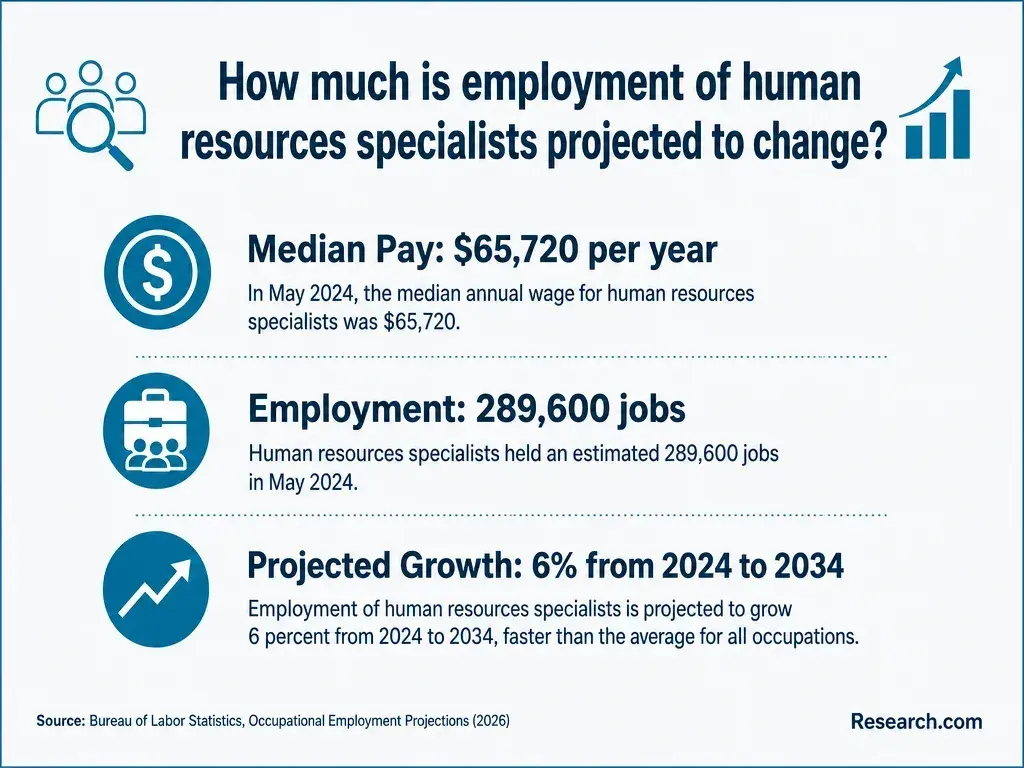
For each candidate course, compare the published outcomes with evidence of what you did and understood. Processing payroll paperwork, for example, does not necessarily demonstrate an entire human resources course covering employment practices and organizational decisions. If HR is your intended direction, review human resources education and career options separately; a portfolio award for one business course is not an HR credential.
Where the work revealed gaps, taking the course may be more valuable than seeking credit for it.
Delivery format does not establish a PLA policy. An online program may accept electronic submissions and remote assessor meetings; a campus program may do the same. Either may require an orientation, a portfolio-development course, interviews, or term-based deadlines. Ask whether assessments are available to online students in your state and whether any meeting or exam requires attendance at a particular time or place.
For a returning student balancing work and other obligations, compare the full schedule rather than treating online assessment as instant credit. The same caution applies to bachelor's degrees with compressed schedules: shorter course blocks do not necessarily shorten portfolio review, prerequisite sequencing, or the time needed to prepare convincing evidence.
Check that an institution holds recognized institutional accreditation, then verify its own transfer and PLA policies. Institutional accreditation is not a promise that another college will accept its credits. Business-school accreditation - such as AACSB, ACBSP, or IACBE, where applicable - has a different scope and likewise does not guarantee a portfolio award or a particular course equivalency.
If you compare lower-priced project management degrees, verify each institution's accreditation and each named program's coverage independently. Then request separate written audits. A school's accreditation status cannot tell you whether your operations experience replaces its required project management or business course.
How Should You Choose a Business Administration Program for Transfer Students?
Choose using the cost and time to complete your remaining requirements, not the largest advertised transfer-credit allowance. Request an official evaluation from each finalist using the same transcripts, training records, and proposed portfolio topic.
Compare how credits apply, which courses remain, when those courses run, the PLA decision process, total charges, and a realistic graduation schedule. Keep any written substitutions and approvals with your degree audit.
If a business administration program leaves many required courses despite accepting your credits as electives, test an adjacent program against your actual goal. For a student whose experience centers on supervising teams, compare accelerated organizational leadership degrees.
Do not switch solely for a shorter advertised timeline: the new program must still apply your credits and offer the preparation you want.
Before paying an assessment fee or registering for a retake, ask the adviser to confirm the exact requirement at issue, the office authorized to approve its replacement, and how each possible outcome changes your final-term plan. That written answer is more useful than a preliminary estimate of credits accepted.
Other Things You Should Know About Business Administration
Often, PLA credit is recorded without a letter grade, but transcript and GPA policies vary. Ask the registrar how an award appears and whether your business major requires a graded course.
Possibly. Request the school's appeal or revision policy before submitting, including its deadline, permitted new evidence, and any additional charge.
You may be able to reuse permitted evidence, but another college can require a different format or reject the assessment. Its own faculty or authorized evaluator controls the credit decision.
Obtain permission before submitting them. Ask the assessor whether redacted examples, a supervisor-verified description, or a newly created demonstration can establish the learning without disclosing protected information.
- Prior Learning Credits | Windward Community College https://catalog.windward.hawaii.edu/prior-learning-credits
- Undergraduate and Graduate Tuition and Fees | Purdue Global https://www.purdueglobal.edu/tuition-financial-aid/undergraduate-graduate-tuition-and-fees/
- Registrar | uwsuper.edu https://catalog.uwsuper.edu/undergraduate/student-services/registrar/
- Credit for Prior Learning - Portfolio Credit | Virginia Western Community College https://www.virginiawestern.edu/get-started/cpl/portfolio-credit/
- E-10: Credit by Portfolio Assessment | psu.edu https://aappm.psu.edu/policy/e-10-credit-by-portfolio-assessment
- Academic Policies and Procedures | post.edu https://post.edu/student-services/academic-affairs/academic-policies-and-procedures/
- Academic Portfolio Assessment - Credit for Prior Learning https://umaine.edu/creditforpriorlearning/academic-portfolio-assessment/
- Credit by Portfolio Evaluation - NECC https://necc.edu/academics/beyond-the-classroom/credit-prior-learning/credit-portfolio-evaluation/
- Portfolio Assessment Guidelines - Prior Learning Assessment https://priorlearning.psu.edu/portfolio-assessment-guidelines
- Academic Policies & Procedures - University of Massachusetts Boston https://catalog.umb.edu/content.php