2027 BS in Business Administration: Comparing Programs When Your Goal Is an External Job Search
Audited and Verified:
Our Editorial and Data Verification Process
Research.com uses government datasets, official education statistics and primary institutional information to support its career and degree guides. Our review process checks factual accuracy, occupational definitions, source dates and the requirements associated with the credentials discussed.
How This Article Was Fact-Checked
Our editorial team verifies salary estimates, employment projections, education requirements and program information against original data providers and official organizations. Salary figures are checked against the relevant occupational definitions and reporting periods. Information about licensure, accreditation and required in-person training is reviewed separately.
Fact-checked and verified on:

Co-Founder and Chief Data Scientist
If you plan to apply outside your current employer, a business administration degree must do more than meet a graduation requirement. You need a program that helps you demonstrate relevant skills, find opportunities, and explain your experience to unfamiliar hiring managers.
This guide is for prospective and returning students comparing BS in Business Administration programs with an external job search in mind. It shows how to assess recruiting access, coursework, applied learning, outcomes, format, and cost - and when a more specialized route may serve your target role better.
Key Things You Should Know
- Compare programs against specific job postings: a recognized degree, relevant coursework, and work samples matter more than an appealing concentration name alone.
- Request evidence of employer access and outcomes for students like you; an institution-wide placement claim does not establish results for its business graduates or online students.
- Price the remaining degree, not just tuition per credit. For perspective on one specialized path, U.S. logistician employment is projected to grow 18% from 2025 to 2035, but that projection does not predict an individual graduate's prospects.
What Is a BS in Business Administration?
A BS in Business Administration is an undergraduate degree combining general education with a broad business core, often including accounting, finance, marketing, management, operations, and quantitative analysis. Schools may offer electives or a formal concentration. The BS label does not establish how quantitative or specialized the curriculum is: compare actual requirements with those of a BBA or another business bachelor's degree.
For an external search, broad preparation is useful when you are considering several business functions or need a bachelor's credential alongside existing work experience. If your target postings consistently require substantial accounting, information-systems, or supply-chain expertise, a specialized major may provide a clearer match. Returning students reviewing ranked online business bachelor's completion routes should first determine which previously earned credits would satisfy each school's actual degree requirements.
How Do You Compare Accredited Business Administration Programs?
Start with the jobs you intend to pursue, then compare programs on evidence a hiring manager might recognize and support you can actually use. Accreditation is a baseline check, not proof of placement: verify the institution's recognized accreditation and, if a school cites AACSB, ACBSP, or IACBE, confirm that the applicable business unit or program is within its stated scope.
The following comparison separates program features from the evidence needed to judge their value for an external search.
| Comparison area | What distinguishes a stronger fit | Evidence to request |
| Target-role alignment | Required courses and electives develop skills named in relevant postings | Current catalog, course descriptions, and approved concentration requirements |
| Recruiting access | Eligible students can use employer events, internships, and career coaching | Eligibility rules for online, part-time, transfer, and graduating students |
| Demonstrable work | Students can produce assessed, shareable analyses or projects | Assignment descriptions, project rules, and portfolio permissions |
| Outcomes | Published results identify the business cohort and how results were collected | Graduation and employment definitions, reporting period, and response rate |
Ask career services whether its employer relationships reach your intended industry and location, especially if you will study remotely. Use online business programs in US college rankings as a starting set of options, then verify each program's policies and outcomes directly; a ranking cannot establish your personal hiring prospects.
What Careers Can You Pursue With a BS in Business Administration?
The most plausible first role depends on your prior experience. A student with customer-facing work might pursue sales operations or marketing coordination; someone with scheduling, purchasing, or logistics experience might target operations or procurement support. HR assistant, administrative specialist, and project coordinator roles can also fit, subject to each employer's requirements. Apply for work whose tasks you can support with examples, rather than assuming graduation qualifies you to manage staff or budgets.
Match coursework and evidence to the function: a spreadsheet-based inventory analysis may support an operations application, while a properly authorized campaign report may support marketing. If most attractive postings require deeper supply-chain preparation, compare the BS with a specialized degree, including three-year supply chain undergraduate degree routes. Confirm both the curriculum and any advertised timeline before choosing on speed alone.
Neither format is inherently better for external hiring. Campus study may make local employer events and in-person networking easier to attend. Online study may preserve work hours and let you apply beyond your immediate area, but remote access to internships, recruiting events, and career advising varies by school.
For each format, check live-session attendance, group-project schedules, exam proctoring, required visits, internship rules, and access to career services. If you need to remain employed, compare degree options for working business administration students against your actual weekly availability. An online label does not mean self-paced coursework or unrestricted access to campus recruiting.
Requirements vary, but programs commonly pair general education with introductory accounting, economics, finance, marketing, management, operations, statistics, and business communication. Some include a capstone, internship, or concentration. For job-search purposes, inspect the depth and assignments behind each course title: introductory analytics exposure is different from repeated practice building and explaining analyses.
Choose electives backward from your target postings. Project coordination, for example, may call for scheduling, budgeting, stakeholder communication, and spreadsheet skills; it does not necessarily call for a dedicated project management degree. Compare the additional subject depth and cost of online project management programs for smaller budgets before choosing that route over a broad BS with relevant electives and experience.
Schools set their own requirements for first-year and transfer applicants. They may request secondary-school or college transcripts and may have separate requirements for entry into the business major. Prior study in mathematics, accounting, economics, or statistics can affect placement or the courses remaining even when it is not a condition of university admission.
Before applying, review what to check before applying for a business administration degree, then ask each admissions office which rules apply to your applicant status. If you have college credits, obtain an official evaluation showing which credits satisfy general education, the business core, and electives. Admission and acceptance of transfer credit do not establish that you can graduate without additional required courses.
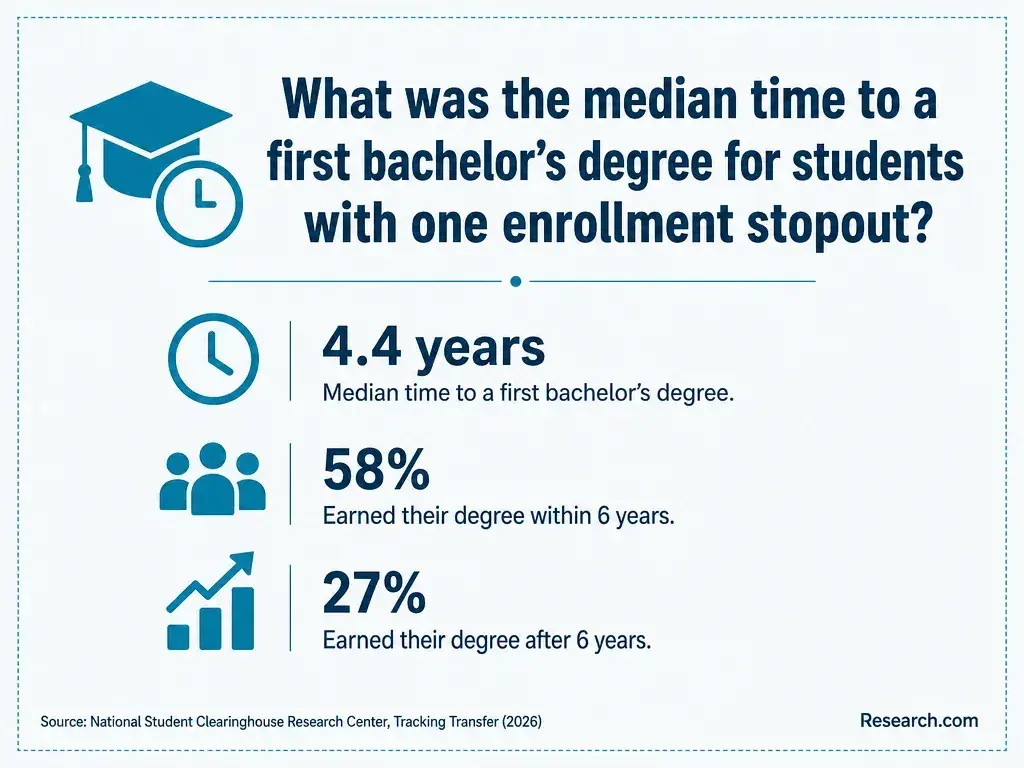
A conventional full-time bachelor's pathway is often planned around four academic years; transfer credits, part-time study, prerequisite sequences, and course availability can substantially change an individual timeline. An advertised accelerated term does not necessarily reduce the number of credits or the weekly effort required.
For each school, request a term-by-term plan based on your evaluated credits, including when required courses and career-building opportunities are offered. Compare online business study with accelerated terms on a realistic completion date, not just term length. A faster schedule may leave less time for an internship or an effective external search before graduation.
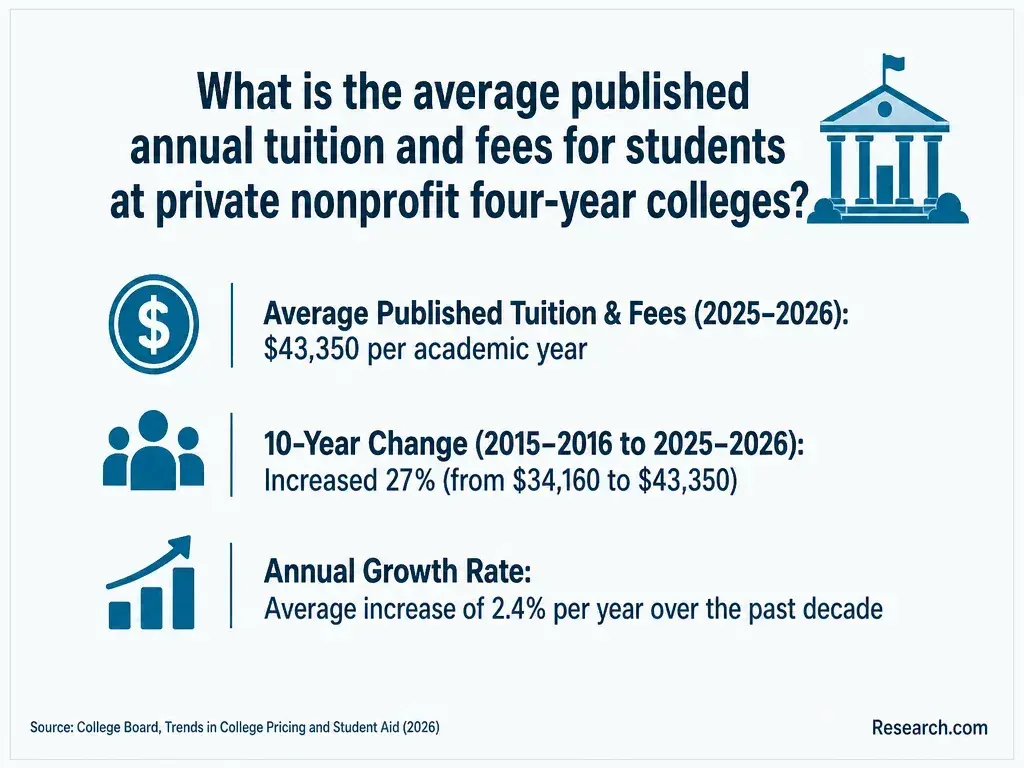
There is no reliable universal price for the degree. Compare each school's tuition and mandatory fees against the courses you would actually have left after an official credit evaluation. Add books, software, proctoring, travel, and any earnings you would forgo; then distinguish grants or employer reimbursement from loans that must be repaid.
When reviewing economical online business administration college programs, request an itemized estimate for your enrollment plan. A lower per-credit rate may not produce a lower completion cost if more credits remain, required courses are unavailable when needed, or reimbursement arrives only after you pass a course. Compare that cost with the likely value of the program's recruiting support for your target job - not an assumed salary increase.
There is no single salary or growth rate for BS in Business Administration graduates. The U.S. Bureau of Labor Statistics reports occupation-wide figures, which include workers with different degrees and experience levels. For example, the median annual wage for human resources specialists was $75,940 in May 2025. That is not a new graduate's expected offer; use local, entry-level postings to assess pay for the roles you can realistically pursue.
Outlook is similarly role-specific. U.S. logistician employment is projected to grow 18% from 2025 to 2035, but growth alone does not show whether a general business graduate meets a particular employer's technical requirements. If supply chain is your goal, compare economical supply chain study timelines with the cost and relevant coursework of your BS options. Treat advertised pay claims separately from occupation-wide labor data and actual offers.
Do Business Administration Graduates Need Licenses or Certifications?
A general BS in Business Administration does not itself confer a professional license, and many coordinator or support roles do not require one. Requirements change with the work: regulated accounting or financial-services activities can have separate rules, while employers may prefer particular HR or project credentials. Check the target occupation and the credential issuer rather than assuming a concentration establishes eligibility.
For an external search, pursue an additional credential only when target postings value it and you meet its requirements. If you are comparing a short project management credential with another bachelor's degree, factor in the larger program's time and financing; project management bachelor's tuition assistance options are relevant to that degree decision, not proof that a certification course receives the same aid.
Other Things You Should Know About Business Administration
Yes, if the school formally awards or records it and it is relevant to the job. Otherwise, list pertinent courses or projects without presenting an elective cluster as an official concentration.
Only if you have permission to share it. Follow employer and school rules, remove confidential or personal information, and describe your contribution without claiming results you cannot document.
Start researching target roles early enough to choose useful courses and projects. Ask career services about recruiting timelines, then schedule applications around the roles and locations you want rather than waiting automatically for graduation.
Compare your actual tasks with job postings and identify the missing evidence. An adjacent coordinator or assistant role, supervised project, or targeted training may bridge the gap more directly than relying on the degree title alone.
- Fact Sheet #71: Internship Programs Under The Fair Labor Standards Act | U.S. Department of Labor https://www.dol.gov/agencies/whd/fact-sheets/71-flsa-internships
- Understanding College Costs | studentaid.gov https://studentaid.gov/resources/prepare-for-college/students/choosing-schools/consider-costs
- Optional Practical Training (OPT) for F-1 Students | uscis.gov https://www.uscis.gov/working-in-the-united-states/students-and-exchange-visitors/optional-practical-training-opt-for-f-1-students
- NCWorks Career Centers | NC Commerce https://www.commerce.nc.gov/jobs-training/resources-job-seekers/ncworks-career-centers
- Annual Earnings by Educational Attainment - COE https://nces.ed.gov/programs/coe/indicator/cba/annual-earnings
- What Jobs Can You Get With a Business Degree? | snhu.edu https://www.snhu.edu/about-us/newsroom/business/what-jobs-can-you-get-with-a-business-degree
- Career Outcomes | The Bryan School https://bryan.uncg.edu/career-services/career-outcomes/
- Undergraduate Student Outcomes Data | Career and Professional Development https://career.vt.edu/outcomes/
- 1 in North Carolina for Career Placement | Academic Advising https://www.highpoint.edu/career-outcomes/
- 11 Types of Business Degrees and Career Pathways | National University https://www.nu.edu/blog/types-of-business-degrees/