2027 BS in Business Administration: A Remote Internship During an Online Degree
Audited and Verified:
Our Editorial and Data Verification Process
Research.com uses government datasets, official education statistics and primary institutional information to support its career and degree guides. Our review process checks factual accuracy, occupational definitions, source dates and the requirements associated with the credentials discussed.
How This Article Was Fact-Checked
Our editorial team verifies salary estimates, employment projections, education requirements and program information against original data providers and official organizations. Salary figures are checked against the relevant occupational definitions and reporting periods. Information about licensure, accreditation and required in-person training is reviewed separately.
Fact-checked and verified on:

Co-Founder and Chief Data Scientist
A remote internship can make an online business degree more useful - but only if the work fits your goals and your school approves it. For students balancing classes with a job or other commitments, the important details are supervision, scheduling, meaningful business tasks, and whether the experience counts toward graduation. This guide explains how to evaluate a remote placement, compare it with other ways to gain experience, and check the degree's cost and career value before committing.
Key Things You Should Know
- A remote internship does not automatically earn degree credit; obtain academic approval and confirm the required supervision, hours, and assessments before starting.
- Online coursework and remote work can still involve fixed meetings, group assignments, and deadlines, so compare both schedules before accepting a placement.
- The internship's strongest value is evidence of relevant work, not a guaranteed job: the U.S. Bureau of Labor Statistics reports a $78,760 median annual wage for market research analysts in May 2025, an occupation-wide figure rather than a new-graduate salary.
What Is a BS in Business Administration With a Remote Internship?
A BS in Business Administration is an undergraduate degree covering business functions such as accounting, management, marketing, and operations. A remote internship is supervised work performed primarily away from an employer's site, usually through digital communication and business systems. A school may offer an internship course, permit an approved internship as an elective, require experiential learning, or offer no internship credit at all.
The degree and placement serve different purposes: coursework builds a foundation, while the internship lets a student practice defined tasks and receive feedback. A remote marketing intern might organize campaign reporting; an operations intern might document a workflow. Neither assignment, by itself, establishes specialist expertise or managerial experience.
Confirm the exact credential before comparing options. A BS, BBA, and specialized business bachelor's degree can differ in required courses and internship policies. A comparison of business administration degrees compared by cost duration and outlook can help frame the search, but the school's current catalog and internship agreement determine what applies to you.
How Does a Remote Internship Work During an Online Business Degree?
Typically, the student identifies a suitable role, the employer names a supervisor, and the academic program approves learning objectives before credit-bearing work begins. The student then completes assigned work and submits whatever reflections, evaluations, or deliverables the course requires. A remote location changes where the work happens - not the need for supervision or assessment.
Use this sequence before accepting an offer; it separates an attractive job posting from a placement that can meet degree requirements.
- Ask the internship coordinator whether the role qualifies, when approval is due, and whether credit requires enrollment in a particular term.
- Agree with the supervisor on specific business tasks, feedback meetings, expected availability, pay status, and who provides software or equipment.
- Compare employer meetings with class deadlines, live sessions, and group projects; clarify time-zone expectations.
- Confirm what may be submitted to faculty and what may later appear in a portfolio, using employer-approved, redacted, or public information where necessary.
Substantive assignments matter more than the word "remote." Updating a tracker without understanding its purpose may offer less learning than analyzing a process, explaining findings, and revising work after feedback. If your goal is specifically HR and the general business program cannot support suitable placements or electives, compare transfer pathways into online human resources programs rather than assuming an HR internship can replace specialized coursework.
Is an Online BS in Business Administration Worth It?
It can be worthwhile when you need a bachelor's degree, want broad business preparation, and can secure relevant supervised experience without taking on an unmanageable cost or schedule. It is less compelling if you already meet your target job's education requirements and need only a specific software skill or a short period of hands-on experience.
The comparison below shows how the internship changes the decision. Check the requirements of your target roles before choosing a path.
| Path | Potential advantage | Main limitation to check |
| Online BS plus approved remote internship | Combines broad coursework with supervised, relevant work | Placement availability, approval, and competing time demands |
| Online BS without internship credit | May fit an existing job or a program with another applied requirement | Requires a separate way to show practical skills |
| Targeted training or relevant work instead | May address a narrow skill gap more directly | Will not satisfy an employer's bachelor's-degree requirement |
Assess the return against your remaining degree cost, likely time to finish, and the quality of experience you can realistically obtain - not a promised salary increase. If price is a major constraint, compare affordable business education options online, then request an individual cost estimate from each school.
Programs commonly combine general education with accounting, economics, finance, marketing, management, operations, quantitative reasoning, and business communication. Exact requirements vary, as do electives, concentrations, and whether an internship can satisfy one of them. Read the degree audit rather than assuming an internship replaces a business-core course.
Choose courses that support the work you hope to do remotely. Spreadsheet and analytics coursework can help with reporting; marketing research can support campaign analysis; operations courses can inform process documentation. Ask what tools and assignments students actually use. If the intended internship is in procurement or logistics, compare the general business curriculum with online supply chain programs balancing cost and completion time. Specialized study may be a better fit, but only after checking transfer applicability and remaining requirements.
Admission rules depend on the institution and on whether you enter as a first-year or transfer student. Schools may request secondary-school records, prior college transcripts, and evidence that required mathematics or other preparatory courses are complete. Some admit students to the university first and apply separate rules for entry into the business major.
For a student planning an internship, admission is only the first checkpoint. Ask when you become eligible for the internship course, whether prerequisites must be complete, and whether a placement arranged before enrollment can be approved. Transfer students should obtain a formal evaluation showing which accepted credits satisfy degree requirements. If application charges affect your shortlist, no-application-fee online college choices may help you identify schools to investigate; confirm each school's current application policy directly.
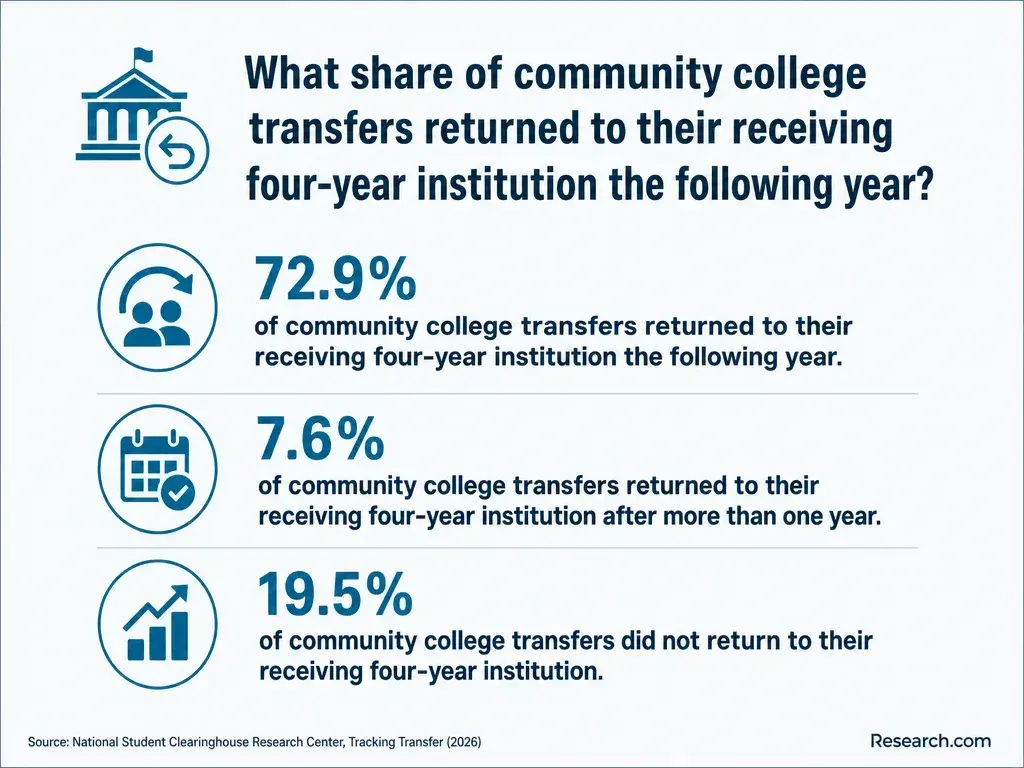
Completion time depends on credits that apply to the degree, enrollment pace, prerequisite sequencing, and when required courses are offered. An internship can also affect timing if approval deadlines, course enrollment, or employer availability do not align with your academic calendar.
Ask an adviser to map your remaining courses and proposed internship term together. A heavier course load may shorten the calendar but leave too little time for useful internship work; part-time study may be more sustainable alongside employment. If speed is a priority, review fast-track bachelor's degree options, then verify whether their pace leaves room for an approved internship and whether faster completion changes the total price.
There is no reliable single price for an online BSBA: tuition may be charged by credit or term, and your total depends on applicable transfer credit and remaining requirements. An internship may add course tuition or fees even if the employer does not pay you. Technology, books, and any required travel can add costs.
Request a written estimate based on your degree audit and ask the financial-aid office how internship enrollment affects aid eligibility. Compare both total cost and cash flow: unpaid work may reduce your available paid-work hours, while employer tuition reimbursement may arrive only after you complete a course. For a related example of aid questions to investigate, see federal aid for undergraduate project management study; your own school must confirm which aid and enrollment rules apply to its BSBA.
First, verify the institution's accreditation with the accreditor or the U.S. Department of Education's recognized-accreditor information. Then check whether any advertised AACSB, ACBSP, or IACBE business accreditation actually covers the school or program you are considering. Institutional accreditation and business-specific accreditation have different scopes; neither guarantees an internship placement or employment.
For this decision, request the current internship handbook, a sample learning agreement, the online course schedule, and the policy on remote employers. Ask who approves placements, whether the school helps find them, how supervisors are evaluated, and what happens if a placement falls through. US business college rankings for online learners can create a shortlist, but these written policies are more useful for judging whether a remote internship will work for you.
A BSBA can support applications for roles such as operations coordinator, marketing coordinator, HR assistant, sales-support specialist, or project coordinator. The internship helps most when its tasks match the role: documented reporting work is more persuasive for an analyst-support opening than an unrelated internship title. Hiring still depends on the employer's requirements and your demonstrated skills.
For example, a student aiming at supply chain work could seek supervised experience with purchasing records, inventory reporting, or vendor coordination. If that function is already the clear goal, compare the general BSBA with supply chain bachelor's options focused on completion speed before choosing. Neither a degree nor an internship automatically qualifies someone to supervise staff or manage a major budget.
What Salary and Job Outlook Can Business Graduates Expect?
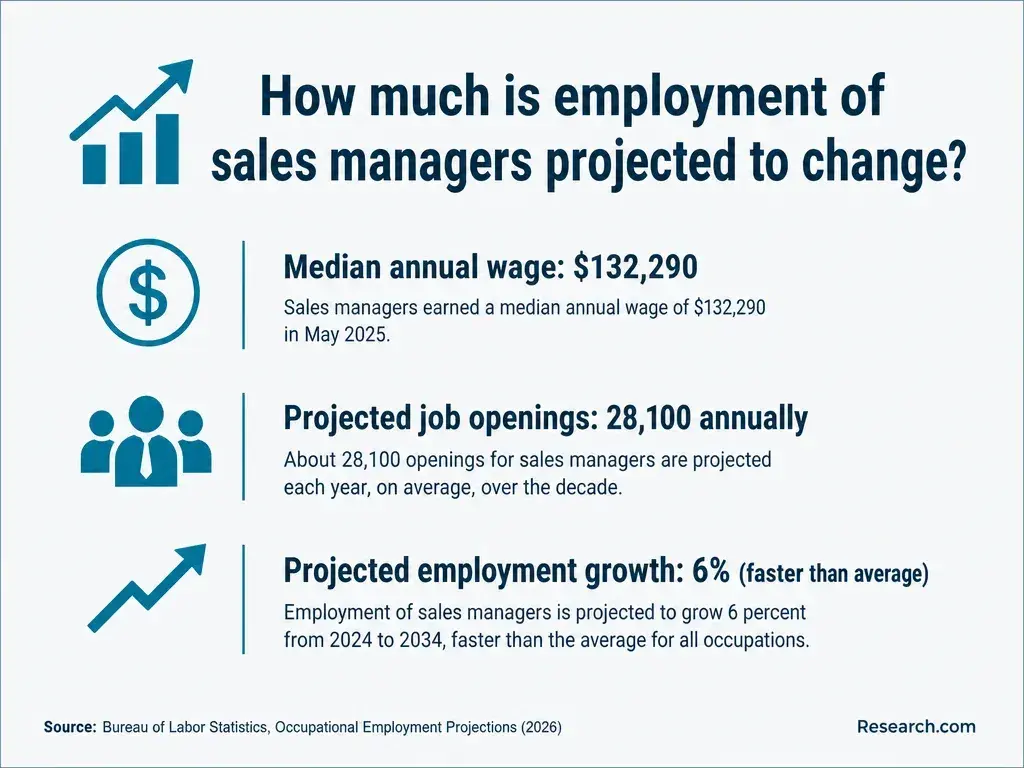
There is no single salary or growth rate for BSBA graduates; labor statistics track occupations, not everyone holding a particular degree. As one relevant example, the U.S. Bureau of Labor Statistics reports a $78,760 median annual wage for market research analysts in May 2025 and projects 7% employment growth from 2025 to 2035. Those are occupation-wide figures, not an expected starting wage or a hiring forecast for an individual graduate.
Use the occupation closest to your intended internship and first job when assessing prospects. A student drawn to project coordination, for instance, should inspect actual postings for required experience and tools rather than apply an analyst salary to that path. If the goal calls for more focused study, colleges accepting coursework toward project management bachelor's study offer a comparison point; obtain a school-specific transfer evaluation before estimating time or cost.
Other Things You Should Know About Business Administration
Possibly. The deciding factors are the school's eligibility rules, a supervisor who can provide feedback, and work that meets approved learning objectives - not the employer's size.
Some programs may allow it, but credit enrollment and assessment deadlines vary. Get the arrangement approved before planning work across terms.
It depends on the employer. Confirm device, software, security, and internet requirements before accepting, particularly if you would need to pay for access yourself.
Contact the internship coordinator immediately. The school can explain whether completed work can be assessed and whether a replacement placement or another approved option is available.
- Fact Sheet #71: Internship Programs Under The Fair Labor Standards Act | U.S. Department of Labor https://www.dol.gov/agencies/whd/fact-sheets/71-flsa-internships
- Partnering with the College of Business on Internships | Career Management Center Colorado State University https://bizcareers.colostate.edu/resources/employers-internship-guide/
- Guidelines and Requirements to Gain Course Credit | Judd Leighton School of Business and Economics https://business.iusb.edu/academic-centers/center-for-experiential-learning/guidelines-and-requirements.html
- AC 3: Internships for Academic Credit | Nevada State University https://nevadastate.edu/policy/current/ac-3-internships-for-academic-credit/
- Online B.S. in Business Administration for Transfer Students | sonoma.edu https://business.sonoma.edu/programs/undergraduate/bachelors-online-degree-completion-program
- Business Administration, Online | Bachelor of Science Degree (B.S.) | Pennsylvania College of Technology https://www.pct.edu/academics/bas/accounting-business-administration/business-administration-online
- What are Asynchronous Classes? | University of Bridgeport https://www.bridgeport.edu/news/what-are-asynchronous-classes/
- How online learning builds remote work skills for today's workplace | Penn LPS Online https://lpsonline.sas.upenn.edu/features/how-online-learning-builds-remote-work-skills-todays-workplace
- Important Considerations Before Accepting a Job or Internship | nyu.edu https://www.nyu.edu/students/student-information-and-resources/career-development-and-jobs/find-a-job-or-internship/important-considerations-before-accepting-a-job-or-internship.html
- How Do Asynchronous Classes Work? | Hopkins EP Online https://ep.jhu.edu/news/how-do-asynchronous-classes-work/