2027 Is an Online BS in Business Administration the Right Next Step for Account Coordinators?
Audited and Verified:
Our Editorial and Data Verification Process
Research.com uses government datasets, official education statistics and primary institutional information to support its career and degree guides. Our review process checks factual accuracy, occupational definitions, source dates and the requirements associated with the credentials discussed.
How This Article Was Fact-Checked
Our editorial team verifies salary estimates, employment projections, education requirements and program information against original data providers and official organizations. Salary figures are checked against the relevant occupational definitions and reporting periods. Information about licensure, accreditation and required in-person training is reviewed separately.
Fact-checked and verified on:

Co-Founder and Chief Data Scientist
Account coordinators often manage client communication, deadlines, and reporting without owning an account strategy or budget. An online BS in Business Administration could help build the broader skills needed for a next role, but it may not be the quickest way to advance.
This guide is for coordinators weighing a degree against targeted training and stronger work experience. It explains which career moves the degree supports, what online study demands, and how to check whether the likely benefit justifies the remaining time and cost.
Key Things You Should Know
- An online BS is most useful when a target account, operations, or project role calls for a bachelor's degree and broader business judgment; it does not replace evidence of client-facing results.
- Compare the cost of your remaining credits, not a program's advertised total, and confirm whether your work schedule accommodates deadlines, group projects, and required courses.
- Career pay depends on the occupation, not the degree title: the May 2025 median for project management specialists was $102,320, an occupation-wide figure that is not an expected starting salary for coordinators.
What is an online BS in Business Administration, and can it advance an account coordinator career?
An online Bachelor of Science in Business Administration is an undergraduate degree covering business functions such as accounting, marketing, management, and operations.
Requirements differ by school; a BS and a BBA may overlap substantially, so compare their actual courses rather than assuming the titles signal different career outcomes.
For an account coordinator, advancement usually means moving beyond tracking requests and schedules toward interpreting account performance, coordinating resources, or recommending actions to a client or internal team.
Business coursework can help explain budgets, margins, customer needs, and organizational decisions. It is strongest when paired with work evidence: a documented process improvement, a well-explained client report, or responsibility for a defined part of an account.
The degree is a plausible next step if job postings for your desired role routinely ask for a bachelor's degree and you still need one. If your immediate obstacle is limited account ownership rather than education, seek a stretch assignment first.
To assess study alongside that work, compare work-compatible business administration education options against your actual weekly schedule.
Is an online business administration degree worth it for account coordinators?
It can be worth it when the degree removes a hiring barrier, the curriculum addresses skills you need, and the remaining cost is manageable.
It is less compelling if your target employer accepts equivalent experience and you can close a narrow gap through supervised work, mentorship, or a shorter course.
The options below serve different obstacles. Use your target job postings and a written transfer-credit evaluation to decide which obstacle you actually face:
| Path | Best fit | Main limitation |
| Online BS in Business Administration | You need a bachelor's degree and broad business preparation. | Costs and remaining requirements may exceed what a near-term promotion requires. |
| Targeted training plus expanded account duties | You already meet education requirements but lack a specific skill or example of ownership. | It may not clear a firm bachelor's-degree requirement. |
| Specialized degree | You intend to move decisively into a function such as supply chain or accounting. | Narrower study may be less useful if you want to stay in general account work. |
Ask a supervisor which responsibilities would qualify you for the next role and compare that answer with external postings. If the gap is leadership rather than broad business preparation, accelerated organizational leadership college programs are another curriculum to examine - but a faster advertised timeline is not a substitute for checking transferred credits and required courses.
What careers can account coordinators pursue with a business administration degree?
The closest moves build on what coordinators already do: communicating with clients, maintaining records, meeting deadlines, and spotting service problems. The degree can broaden the range of roles to pursue, but hiring managers will also look for function-specific experience.
These paths differ in what you would need to demonstrate beyond a coordinator title:
- Account manager or client success specialist: Show that you can handle client needs, explain performance, and help retain or grow an account - not merely schedule its activities.
- Marketing or sales operations coordinator: Demonstrate accurate reporting, campaign or pipeline tracking, and an ability to turn findings into a recommendation.
- Project coordinator: Show ownership of timelines, handoffs, risks, and stakeholder updates; specialist positions may demand more substantial project experience.
- Operations or procurement coordinator: Connect your vendor, order, or workflow experience to process and cost decisions. A specialized supply chain curriculum may be better for a committed move into that field.
Manager titles generally bring responsibility for staff, budgets, or account strategy that a degree alone does not establish. If logistics or procurement is your clear destination, compare the relevant coursework and remaining requirements in supply chain bachelor's options focused on completion speed rather than assuming general business is the best fit.
Programs commonly combine general education with accounting, economics, finance, marketing, management, statistics, operations, and a strategy or capstone course. The useful question for an account coordinator is what each course lets you do more convincingly at work.
Accounting and finance can improve how you read an account budget; marketing and analytics can strengthen a client report; operations and management can help you diagnose missed handoffs.
Look for assignments that require a recommendation backed by evidence, not just a description of business concepts. An official concentration may add depth, but an elective alone does not confer one.
If you are considering a switch to people operations, compare the program's HR electives with HR degree coursework and entry requirements.
Choose that depth only if HR tasks and entry roles, not simply a broad interest in working with people, match your goal. Before using a real client case in coursework, check employer permission and the school's rules; remove confidential and personal information.
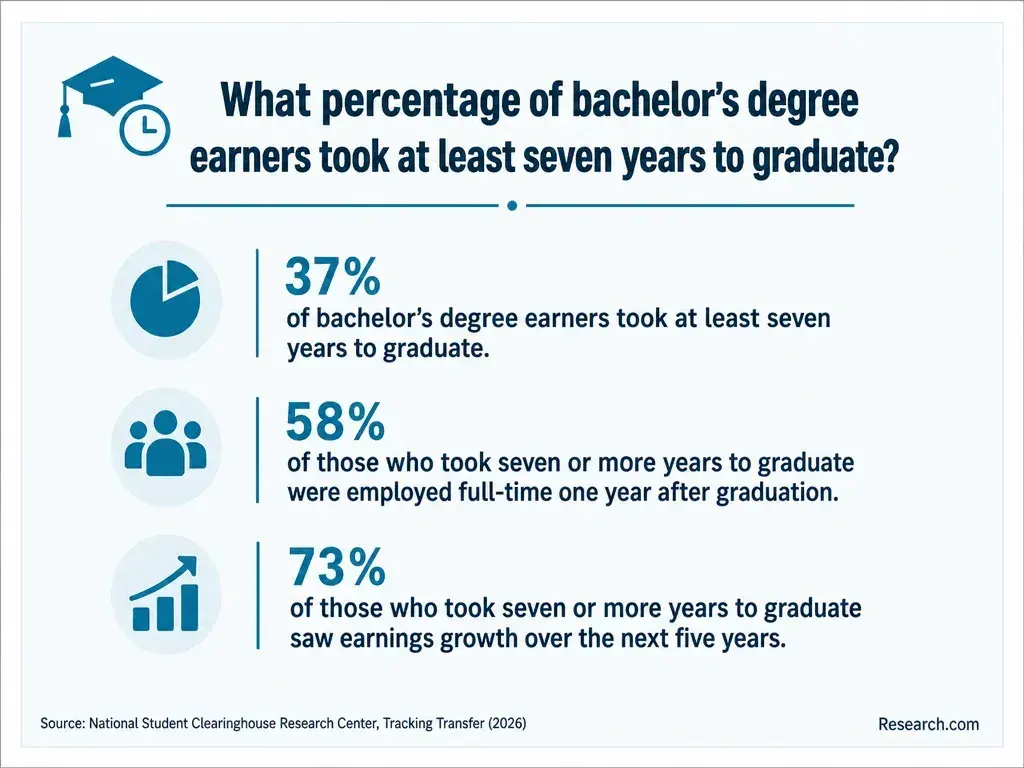
Online study can remove a commute, but it does not necessarily remove fixed meeting times or deadlines. Campus study may make in-person networking easier; either format can include group projects, presentations, and applied assignments. Compare the obligations of required courses, not the format label.
For a working account coordinator, ask whether classes are asynchronous, when discussions close, how teams meet, whether exams are proctored, and whether any campus visits or internships are required.
Then check whether the course sequence still works if a busy client period forces you to study part time. Some accelerated business programs shorten the calendar by increasing course intensity; that trade-off may be difficult during peak account cycles.
Requirements vary by institution and by whether you enter as a first-year, transfer, or returning student. Schools typically request prior academic records and may set GPA or prerequisite rules. Admission to the university, admission to the business major, and application of previous credits toward graduation are separate decisions.
If you have college coursework, request an official evaluation showing where each accepted course applies: general education, business core, concentration, or electives.
Ask specifically about quantitative prerequisites, course recency, and credits that must be completed at the degree-granting school. Experience coordinating accounts can strengthen your application, but it does not automatically award academic credit.
If your intended move is specifically into HR, evaluate transfer-friendly online HR colleges as well. Compare official degree audits rather than assuming the school that accepts the most credits leaves the fewest requirements.
A bachelor's degree commonly requires about 120 semester credits, but your completion time depends on credits that apply to the degree, prerequisite sequencing, course availability, and how many classes you can manage while working. An advertised accelerated schedule may not reflect your transfer evaluation.
Build a personal cost estimate from the school's written remaining-course plan: multiply required credits by the applicable tuition rate, then add mandatory fees, books, software, any travel, and financing costs.
Compare the resulting amount with grants, employer benefits, and what you can pay without borrowing. Employer reimbursement may arrive only after you complete a course, so confirm its timing and conditions before relying on it.
When you explore cheaper business administration college programs, compare the cost to finish your degree, not just a low per-credit price. A school requiring extra courses can cost more even if its published rate is lower.
First, confirm that the institution holds recognized institutional accreditation and that the degree is offered in the online format you need. If a school advertises AACSB, ACBSP, or IACBE accreditation, check the accreditor's listing to see which school or programs it covers. Institutional and business-specific accreditation have different scopes; neither guarantees a promotion.
Then compare the catalog and written policies against your career plan: required account-relevant courses, transfer applicability, part-time sequencing, faculty access, career support, and any required internship or capstone.
Ask whether your current job could support an approved project, but do not assume employment itself satisfies an academic requirement. Review published outcomes carefully: find out whom they measure and whether they describe online students or all graduates.
If federal aid matters, confirm the school's eligibility and your own aid options rather than inferring them from an accreditation claim. Federal aid options at accredited business administration colleges can help frame that comparison; the school's financial-aid office must explain your actual award and obligations.
There is no single reliable national salary for "account coordinator": employers use the title for different mixes of client service, sales support, and marketing work. A business degree also has no fixed graduate salary. Compare pay for the specific role, industry, location, and level of responsibility you are targeting.
For context, the U.S. Bureau of Labor Statistics reports a May 2025 median annual wage of $102,320 for project management specialists and projects 7% employment growth for that occupation from 2025 to 2035.
Those figures describe workers across experience levels, not new graduates or account coordinators; they are useful for assessing a longer-term project path, not calculating an immediate degree payoff.
Before borrowing on the expectation of a raise, compare local postings with your present pay and ask what experience the higher-paid roles require. If you are considering a different function, supply chain degree cost and duration comparisons may help assess its education commitment, but pay claims still need to be matched to a specific occupation and your likely entry point.
Do account coordinators need certifications or licenses to advance?
Most account coordinator and general account-management roles do not require an occupational license. An employer may value training in its customer relationship management system, analytics tools, or industry practices, but a software certificate is not a substitute for showing sound client judgment and reliable execution.
Requirements can change if you move into regulated financial services or another specialized field. Project management credentials also have their own eligibility rules; taking a business course does not automatically qualify you. Check target job postings and the credential issuer before paying for training.
If project work is your goal, compare a credential or supervised project assignment with a degree first. For readers who decide a project-management bachelor's is the better route, FAFSA-based aid for online project management undergraduates is worth investigating alongside program requirements.
Choose the qualification that addresses the hiring gap you can identify, not the one with the most impressive label.
Other Things You Should Know About Business Administration
Yes, if you are enrolled. State the degree, school, and an accurate expected completion date; do not present it as awarded. Relevant completed coursework can be listed selectively.
Use your official title accurately, then describe your actual authority and results. Employers may define "account manager" differently, so clear responsibilities matter more than the title alone.
Client communication and coordination often transfer, but industry terminology, customers, and regulations may not. Show employers how you would learn those specifics and where your existing work is directly comparable.
Not necessarily. Ask what responsibilities and evidence the role requires now. A stretch assignment can strengthen your case while you study and may reveal whether finishing the degree is essential for that employer.
- Accreditation in the U.S. | ed.gov http://www.ed.gov/laws-and-policy/higher-education-laws-and-policy/college-accreditation/accreditation-in-the-us
- General Schedule Qualification Policies | U.S. Office of Personnel Management https://www.opm.gov/policy-data-oversight/classification-qualifications/general-schedule-qualification-policies/
- Is an Online Business Degree Worth It? | American College of Education https://ace.edu/blog/what-employers-think-about-online-business-degrees/
- Credit for Prior Learning - Wayne State College Nebraska https://www.wsc.edu/records-registration/credit-prior-learning
- Tuition and Fees - Undergraduate Programs - University Cashier https://cashier.unc.edu/tuition-fees/undergraduate-programs/
- How Do Asynchronous Classes Work? | Hopkins EP Online https://ep.jhu.edu/news/how-do-asynchronous-classes-work/
- Student Guide to Asynchronous Online Course Success | Fairleigh Dickinson University https://www.fdu.edu/student-guide-to-asynchronous-online-course-success/
- A Guide to Accredited Online Business Administration Programs | American InterContinental University https://www.aiuniv.edu/degrees/business/articles/a-guide-to-accredited-online-business-administration-programs
- What's the Difference Between Asynchronous and Synchronous Learning? | Ohio State Online https://online.osu.edu/content-hub/blogs/whats-the-difference-between-asynchronous-and-synchronous-learning/
- 25 Transferable Skills Employers Look For | Business Career Center https://careerconnections.smeal.psu.edu/blog/2022/10/28/25-transferable-skills-employers-look-for/