2027 Best Online Cloud Engineering Bootcamps

Co-Founder and Chief Data Scientist
Aspiring tech professionals can expect to have a positive career outlook and decent income potential. For instance, employment for software developers, quality assurance analysts, and testers in the United States (US) has been forecasted to increase by 17% from 2023 to 2033 [US Bureau of Labor Statistics (BLS), 2025]. Moreover, these professionals can earn much more than the median annual wage for all occupations in the country.
To help you get started on your tech career, I created an in-depth guide to online cloud engineering bootcamps. These short training programs can help you get into the field quickly. Explore these programs, common courses, costs, salary potential, and available careers below.
What are the benefits of completing an online cloud engineering bootcamp?
- Online cloud engineering bootcamps can help aspirants develop knowledge and skills necessary to become eligible for various roles, such as software developer, quality assurance analyst and tester, computer network architect, computer programmer, and database administrator and architect.
- In May 2024, software developers employed in the US had a median annual wage of $133,080 (US BLS, 2025).
- An online cloud engineering bootcamp offers focused, practical training in high-demand skills, such as AWS, Azure, and DevOps tools. It provides learners with real-world experience and certifications to be able to transition into tech roles quickly.
What can I expect from an online cloud engineering bootcamp?
Online cloud engineering bootcamps offer a fast-paced, hands-on learning experience focused on preparing them for real-world cloud computing roles. These bootcamps usually cover key topics, such as cloud infrastructure, virtualization, DevOps, security, and services offered by major platforms. Students engage in practical labs, group projects, and certification preparation to build job-ready skills.
Bootcamps differ in duration and may take from several weeks to a few months. They are designed to accommodate both beginners and IT professionals seeking specialization.
Many programs also offer career support services, which can help students transition smoothly into cloud-related roles after graduation. With growing demand for cloud engineers, these bootcamps can open doors to high-paying opportunities in tech.
Where can I work with an online cloud engineering bootcamp certificate?
In 2023, around 1.7 million software developers were employed across the US. The following industries employed the largest shares of software developers in the same year (US BLS, 2025):
- Computer Systems Design and Related Services: 32%
- Software Publishers: 10%
- Finance and Insurance: 10%
- Manufacturing: 9%
- Management of Companies and Enterprises: 5%
Moreover, about 205,000 software quality assurance analysts and testers worked in the US in 2023. The following industries employed the largest shares of these professionals (US BLS, 2025):
- Computer Systems Design and Related Services: 29%
- Finance and Insurance: 11%
- Software Publishers: 11%
- Manufacturing: 8%
- Administrative and Support Services: 6%
How much can I make with an online cloud engineering bootcamp certificate?
Online cloud engineering bootcamps can help professionals land higher-paying roles. Explore the following tech positions and their median annual wages in May 2024 (US BLS, 2025):
- Computer Programmers: $98,670
- Software Quality Assurance Analysts and Testers: $102,610
- Database Administrators and Architects: $123,100
- Computer Network Architects: $130,390
- Software Developers: $133,080
These figures are significantly higher than the $49,500 median annual wage of all US occupations in the same period (US BLS, 2025).
- List of Online Cloud Engineering Bootcamps for 2027 List of Bootcamps
- How long does it take to complete an online cloud engineering bootcamp? Completion Time
- How does an online cloud engineering bootcamp compare to an on-campus program? How does an online cloud engineering bootcamp compare to an on-campus program?
- What is the average cost of an online cloud engineering bootcamp? Program Cost
- What are the prerequisites for enrolling in an online cloud engineering bootcamp? Admission
- What courses are typically in an online cloud engineering bootcamp?? What courses are typically in an online cloud engineering bootcamp??
- What types of specializations are available in online cloud engineering bootcamps? What types of specializations are available in online cloud engineering bootcamps?
- How do you choose the best online cloud engineering bootcamp? How do you choose the best online cloud engineering bootcamp?
- What career paths are available to graduates of online cloud engineering bootcamps? Career Paths
- What is the job market like for graduates of online cloud engineering bootcamps? Job Outlook
- What are the common challenges when selecting an online cloud engineering bootcamp? What are the common challenges when selecting an online cloud engineering bootcamp?
- How does an online cloud engineering bootcamp compare with an accelerated computer science degree? How does an online cloud engineering bootcamp compare with an accelerated computer science degree?
Online Cloud Engineering Bootcamps for 2027: Programs, Costs, Timelines, and Career Fit
Choosing an online cloud engineering bootcamp is a practical decision, not just an academic one. You are likely comparing cost, time commitment, certification preparation, employer relevance, and whether a short-format program can realistically help you move into cloud computing, DevOps, networking, software development, or infrastructure roles.
This guide is designed for learners who want job-focused cloud training without committing immediately to a full degree. It explains what online cloud engineering bootcamps teach, how long they take, how much featured programs cost, what prerequisites to expect, how online programs compare with campus-based options, and how to judge whether a bootcamp is worth the investment for your goals.
Quick answer: Are online cloud engineering bootcamps worth considering?
An online cloud engineering bootcamp can be worth considering if you want structured, hands-on training in Linux, cloud platforms, containers, DevOps, and related tools in a shorter format than a degree program. The strongest candidates are learners who can commit consistent weekly study time, build projects, prepare for relevant certifications, and verify that the program offers credible instruction, transparent pricing, and practical career support. A bootcamp is not a guaranteed job path, and it may not replace a degree for employers that require one, but it can help learners build cloud-specific skills faster than self-study alone.
How were these programs selected?
The programs below were reviewed using the Research.com methodology developed by our team. The review considered current information from the IPEDS database, Peterson's database, the College Scorecard database, and the National Center for Education Statistics. Because bootcamp offerings can change quickly, students should confirm tuition, schedules, admissions requirements, voucher availability, and career services directly with each provider before enrolling.
| Program | Length | Cost | Best fit |
| Texas State University | 6 months | Contact university for tuition information. | Learners seeking Linux Foundation-aligned cloud engineering training |
| University of Texas at Dallas | 8 months | $8,000 | Students who want live virtual classes, labs, and AWS and Azure coverage |
| University of New Orleans | 6 months | $3,895 | Learners looking for cloud engineering training with vouchers included |
| University of Arkansas Grantham | 6 months | $3,895 | Students focused on Linux, containers, DevOps, and SRE fundamentals |
| QuickStart | 12 to 20 weeks | $8,900 | Learners comparing software engineering and cloud-adjacent technical pathways |
1. Texas State University
Texas State University offers an online Cloud Engineer Boot Camp built by Linux Foundation experts. The curriculum introduces Linux at the operating system layers, DevOps concepts, and container technologies. Students also receive preparation for the Linux Foundation Certified System Administrator (LFCS) examination and the Certified Kubernetes Administrator (CKA) examination.
- Program Length: 6 months
- Cost: Contact university for tuition information.
- Accreditation: Council on Higher Education Accreditation (CHEA)
2. University of Texas at Dallas
The University of Texas at Dallas provides a Cloud Computing Bootcamp with live virtual instruction, built-in labs, and applied projects. Graduates earn a completion certificate from the Erik Jonsson School of Engineering and Computer Science. Course topics include designing applications and architectures in AWS, designing infrastructure solutions on Azure, and DevOps on AWS.
- Program Length: 8 months
- Cost: $8,000
- Accreditation: Southern Association of Colleges and Schools Commission on Colleges (SACSCOC)
3. University of New Orleans
The University of New Orleans offers an online Cloud Engineer Boot Camp with vouchers included for students. The curriculum covers Linux system administration essentials, Containers fundamentals, and Kubernetes fundamentals, making it a practical option for learners who want a focused technical sequence.
- Program Length: 6 months
- Cost: $3,895
- Accreditation: SACSCOC
4. University of Arkansas Grantham
The University of Arkansas Grantham offers an online Cloud Engineer IT Professional Program that includes vouchers for students. Coursework includes Linux for cloud technicians essentials, Containers fundamentals, and DevOps and SRE fundamentals.
- Program Length: 6 months
- Cost: $3,895
- Accreditation: Distance Education Accrediting Commission (DEAC)
5. QuickStart
QuickStart offers an Online Software Engineering Bootcamp with part-time and full-time enrollment options. The curriculum includes principles of software engineering, web development, UX and product management, fundamentals of modern JavaScript, data structures, and algorithm theory. While this program is broader than a cloud-only bootcamp, it may appeal to learners who want software engineering skills that can support cloud application development.
- Program Length: 12 to 20 weeks
- Cost: $8,900
- Recognition: 2023 EC-Council ATC Circle of Excellence
How long does it take to complete an online cloud engineering bootcamp?
Online cloud engineering bootcamps vary in length based on pace, delivery format, and the amount of hands-on work required. Most part-time bootcamps take between 4 to 6 months to complete and are usually designed for learners who are also working, caring for family, or managing other responsibilities.
Full-time programs move faster and usually last around 8 to 12 weeks. These intensive formats are similar to accelerated cloud engineering courses online because they are built for students who can dedicate 30 to 40 hours per week to lectures, labs, projects, and independent practice.
Self-paced options may take anywhere from 3 months to over a year, depending on how quickly the student moves through the material and how much prior technical experience they bring.
In general, a shorter bootcamp works best for learners who already understand basic IT concepts, while a longer part-time format may be better for career changers who need more time to absorb Linux, networking, cloud platforms, and DevOps tools.
| Bootcamp format | Typical timeline | Best for | Main trade-off |
| Full-time | 8 to 12 weeks | Students who can study 30 to 40 hours per week | Fast completion but heavy weekly workload |
| Part-time | 4 to 6 months | Working adults and career changers | More manageable schedule but longer completion time |
| Self-paced | 3 months to over a year | Independent learners with strong discipline | Maximum flexibility but less external structure |
How does an online cloud engineering bootcamp compare to an on-campus program?
Online and campus-based cloud engineering bootcamps can teach similar technical concepts, but the learning experience is different. The better choice depends on your schedule, learning style, access to local programs, and need for in-person accountability.
| Factor | Online cloud engineering bootcamp | On-campus cloud engineering bootcamp |
| Flexibility | Students can usually study from home and may have part-time, evening, or self-paced options. Programs such as accelerated CompTIA Cloud+ certification training online may be useful for learners balancing work and study. | Students typically follow a fixed class schedule and must attend in person. |
| Interaction | Communication happens through live video, discussion boards, chat tools, labs, and virtual office hours. | Students get face-to-face access to instructors and classmates, which can support networking and group work. |
| Learning environment | Online learners need a reliable workspace, strong time management, and self-direction. | Campus programs provide a more structured setting, which can help students who focus better outside the home. |
| Access | Students can consider programs beyond their local area. | Options may be limited by location, commute, and local availability. |
Choose an online bootcamp if flexibility is your top priority and you can stay organized without daily in-person supervision. Choose an on-campus program if you learn best through direct classroom interaction and can commit to a set schedule.
What is the average cost of an online cloud engineering bootcamp?
The cost of an online cloud engineering bootcamp depends on the provider, program length, included certification vouchers, instructor access, labs, projects, and career services. Among the featured programs with listed prices, tuition ranges from $3,895 to $8,900.
| Institution or provider | Listed cost |
| University of Texas at Dallas | $8,000 |
| University of New Orleans | $3,895 |
| University of Arkansas Grantham | $3,895 |
| QuickStart | $8,900 |
Do not compare bootcamps by tuition alone. A lower-cost program may be the better value if it includes labs, vouchers, and sufficient instructor access. A higher-cost program may be reasonable if it offers live teaching, stronger projects, career coaching, and better alignment with your target role.
- Program Length: Longer bootcamps may cost more because students receive extended access to coursework, labs, and instruction.
- Curriculum Depth: Programs that include cloud platforms, Linux, containers, Kubernetes, DevOps, and applied projects may charge more than basic introductory courses.
- Instructor Quality: Bootcamps taught by experienced cloud, DevOps, or infrastructure professionals may command higher fees.
- Career Services: Resume support, mock interviews, portfolio guidance, and job-search coaching can influence the total price.
- Delivery Format: Live instructor-led formats often cost more than mostly asynchronous programs.
When reviewing costs, also check whether the listed price includes exam vouchers, lab access, software subscriptions, textbooks, financing fees, and career support. Cost comparisons across unrelated fields, such as a Christian studies degree online, are less useful than comparing the actual technical services and outcomes included in each cloud program.
The chart below visualizes the cost of online cloud engineering bootcamps using current tuition data from the featured academic institutions.
What are the prerequisites for enrolling in an online cloud engineering bootcamp?
Many online cloud engineering bootcamps are designed to be accessible, but “beginner-friendly” does not always mean “no preparation needed.” Cloud engineering combines operating systems, networking, scripting, infrastructure, automation, and security concepts. Students who review the basics before enrollment are usually better prepared for the pace.
- Basic IT Knowledge: Students should understand core ideas such as operating systems, networking, databases, file systems, and troubleshooting.
- Familiarity with Programming: Some experience with Python, JavaScript, or another language can help with automation, scripts, and cloud-based development tasks.
- Comfort with Using the Command Line: Linux and cloud tools often rely on command-line work, so learners should be comfortable navigating files, running commands, and reading errors.
If you do not yet have these foundations, consider starting with an introductory IT, networking, or software course before entering an intensive program. Learners comparing adjacent technical routes may also want to review accelerated online software engineering bootcamps to decide whether they prefer application development or infrastructure-focused cloud work.
| Preparation area | Why it matters in cloud engineering | How to check your readiness |
| Networking basics | Cloud services rely on routing, subnets, DNS, firewalls, and secure connectivity. | You can explain what an IP address, port, and virtual network are. |
| Linux fundamentals | Many cloud systems run on Linux-based environments. | You can use basic terminal commands and manage files from the command line. |
| Scripting or programming | Automation is central to DevOps and cloud operations. | You can read simple code and modify a basic script. |
| Study discipline | Bootcamps move quickly and require consistent practice. | You can reserve regular weekly study blocks and complete labs independently. |
What courses are typically in an online cloud engineering bootcamp?
Most online cloud engineering bootcamps combine technical lectures, guided labs, and projects that simulate real cloud work. The curriculum is usually narrower than a computer science degree but more applied and career-focused. Like the shortest online software engineering programs, bootcamps aim to compress practical technical training into a shorter timeframe.
- Cloud Fundamentals: Students learn cloud service models, including IaaS, PaaS, and SaaS, along with deployment models and the basics of cloud infrastructure.
- AWS, Azure, or Google Cloud Platform (GCP) Training: Learners practice using one or more major cloud providers and may complete labs involving compute, storage, networking, and identity tools.
- Linux System Administration Essentials: This area introduces Linux navigation, permissions, file management, service configuration, and other skills commonly used in cloud environments.
- Containers Fundamentals: Students learn how containers, including Docker-style containerization, help applications run consistently across environments. This topic often leads into Kubernetes and orchestration concepts.
- Software Development and Information Technology (IT) Operations (DevOps): DevOps coursework introduces CI/CD, infrastructure automation, deployment workflows, collaboration tools, and practices that connect development teams with operations teams.
| Course area | Skills students should expect to practice | Common career relevance |
| Cloud platforms | Deploying and managing cloud resources | Cloud support, cloud operations, cloud engineering |
| Linux administration | Using the command line, managing permissions, configuring services | Systems administration, DevOps, infrastructure support |
| Containers and Kubernetes | Packaging applications, managing containerized workloads | DevOps, platform engineering, cloud-native application support |
| DevOps practices | Automating builds, deployments, and infrastructure workflows | DevOps engineering, release engineering, site reliability work |
| Projects and labs | Building portfolio-ready examples of cloud workflows | Interview preparation and applied skill demonstration |
What types of specializations are available in online cloud engineering bootcamps?
Cloud engineering is not one single job. After a bootcamp, students may move toward different specializations depending on their background, project portfolio, certifications, and employer needs. Choosing a specialization early can help you select the right bootcamp modules, projects, and certification targets.
- Cloud Security Specialist: This path focuses on protecting cloud environments through encryption, access controls, identity management, compliance practices, monitoring, and threat prevention.
- DevOps Engineer: DevOps roles emphasize automation, CI/CD pipelines, infrastructure as code, deployment reliability, and collaboration between development and operations teams.
- Cloud Solutions Architect: Solutions architects design scalable and cost-conscious cloud systems that align technical architecture with organizational goals.
Specialization should match your long-term direction. For example, a learner interested in public policy and infrastructure planning may be better served by an energy policy degree online than a cloud bootcamp, while a learner interested in technical deployment, automation, and systems design may benefit more from cloud engineering training.
| Specialization | Best for learners who enjoy | Skills to prioritize |
| Cloud security | Risk reduction, access control, compliance, and monitoring | Identity and access management, encryption, logging, security frameworks |
| DevOps | Automation, deployment pipelines, and operational efficiency | CI/CD, scripting, containers, infrastructure automation |
| Cloud architecture | System design, stakeholder communication, and cost-aware planning | Cloud design patterns, networking, scalability, documentation |
The chart below visualizes the employment levels of occupations in the field of cloud engineering in the US in 2023, according to 2025 data from the US BLS.
How do you choose the best online cloud engineering bootcamp?
The best online cloud engineering bootcamp is the one that matches your current skill level, target role, schedule, budget, and need for support. A well-known provider is not automatically the right choice, and a lower price is not automatically the best value.
- Curriculum Relevance: Look for current coverage of cloud platforms, Linux, networking, containers, Kubernetes, DevOps, security basics, and real projects.
- Instructor Expertise: Prioritize programs taught or designed by professionals with practical cloud, infrastructure, DevOps, or systems administration experience.
- Career Support Services: Review whether the bootcamp offers resume help, interview preparation, portfolio guidance, employer connections, or job-search coaching.
Program selection should be goal-driven. A learner preparing for cloud operations needs a different path than someone preparing for military leadership, logistics, or defense studies through a military science degree online. Before enrolling, make sure the program’s outcomes match the job titles you actually plan to pursue.
| Question to ask before enrolling | Why it matters |
| Does the curriculum include hands-on labs and projects? | Employers often want evidence that you can apply skills, not just complete lectures. |
| Which cloud platforms are covered? | AWS, Azure, and Google Cloud Platform (GCP) skills may align with different employer environments. |
| Are certification vouchers included? | Vouchers can affect the real cost of the program. |
| Who teaches the courses? | Instructor experience can affect the quality of explanations, feedback, and practical examples. |
| What career services are included? | Career coaching can help, but students should not assume placement is guaranteed. |
| What happens if you fall behind? | Support policies matter in fast-paced technical programs. |
What career paths are available to graduates of online cloud engineering bootcamps?
Graduates of online cloud engineering bootcamps may pursue cloud-adjacent roles in software, infrastructure, networking, testing, database administration, and DevOps. Exact outcomes depend on prior experience, project quality, certifications, local labor market conditions, and whether the employer requires a degree.
- Software Developers: Cloud knowledge can help developers design, deploy, and manage applications that run on scalable cloud infrastructure.
- Software Quality Assurance Analysts and Testers: QA professionals may use cloud environments and automated testing tools to evaluate software reliability, performance, and security.
- Computer Network Architects: Cloud training can support professionals who design secure, high-performing networks and cloud-connected systems.
- Computer Programmers: Programmers with cloud familiarity can write applications that integrate more effectively with cloud services.
- Database Administrators: Database professionals may manage cloud-hosted databases, monitor performance, maintain backups, and support availability.
Some bootcamp graduates continue into formal academic study, such as an accelerated master’s degree in management information systems online, especially if they want leadership, analytics, systems management, or enterprise technology roles that may value graduate education.
| Possible role area | How cloud engineering training may help | Additional preparation that may be needed |
| Cloud support or operations | Builds familiarity with cloud consoles, Linux, networking, and troubleshooting | Provider certifications, help desk experience, and strong documentation skills |
| DevOps | Introduces automation, CI/CD, containers, and deployment workflows | Scripting practice, portfolio projects, and deeper infrastructure experience |
| Software development | Supports cloud-based application deployment and integration | Stronger programming, data structures, and software engineering practice |
| Network architecture | Connects networking concepts with cloud infrastructure design | Networking experience and architecture-level planning skills |
| Database administration | Introduces cloud-hosted systems and operational reliability concepts | Database-specific training, SQL skills, and backup and recovery experience |
The chart below visualizes the median annual wages of occupations related to the field of cloud engineering in the US in May 2024, according to 2025 data from the US BLS.
What is the job market like for graduates of online cloud engineering bootcamps?
The job market for cloud-related skills is connected to broader hiring trends in software development, networking, databases, automation, and infrastructure. A bootcamp can help students build relevant skills, but hiring still depends on experience, portfolio strength, certifications, interview performance, and employer requirements.
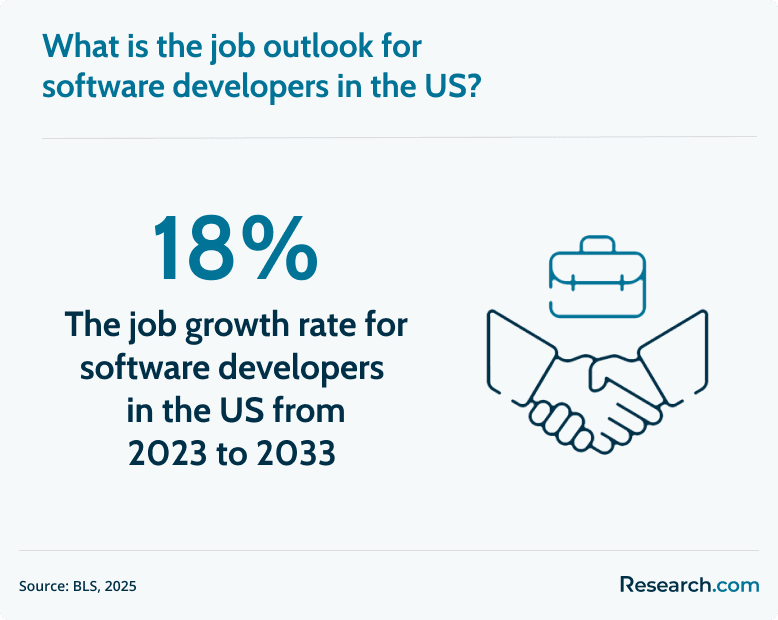
From 2023 to 2033, employment for software developers in the US is expected to grow by 18%, which is significantly higher than the job growth rate for all occupations across the country. In 2023, 1,692,100 software developers were employed in the US. In 2033, the projected employment for the role is 1,995,700 (US BLS, 2025).
Over the same decade, the job growth rate for computer network architects in the US has been forecasted to be at 13%. The employment levels for computer network architects is at 177,800 in 2023, while the projected employment levels for the role is at 201,700 in 2033 (US BLS, 2025). Learners targeting networking and infrastructure roles may also compare cloud training with accelerated CompTIA Network+ online training.
Moreover, employment for computer programmers in the US has been projected to increase by 10% from 2023 to 2033. The figure is equivalent to an average of around 6,400 job openings annually over the decade (US BLS, 2025).
Cloud engineering bootcamps are most useful when paired with evidence of skill: labs, GitHub repositories, documented projects, certification preparation, and clear explanations of how you solved technical problems. Students interested in skilled trades rather than IT may be better served by a field-specific option such as an online locksmith course.
What are the common challenges when selecting an online cloud engineering bootcamp?
The biggest risk is enrolling in a program that sounds career-ready but does not provide enough hands-on practice, instructor support, certification preparation, or transparent outcome information. Cloud bootcamps can be valuable, but quality varies.
| Common mistake | Why it can hurt you | Better approach |
| Choosing based only on price | A cheap program may lack labs, feedback, vouchers, or career support. | Compare total value, not tuition alone. |
| Ignoring accreditation and quality signals | Bootcamps are not always accredited like degree programs, and institutional credibility varies. | Verify the provider, university relationship, third-party recognition, and student support policies. |
| Assuming a bootcamp guarantees employment | No program can guarantee job placement for every student. | Ask for transparent career support details and build a portfolio while studying. |
| Skipping prerequisites | Students without IT basics may fall behind in Linux, networking, and cloud labs. | Review networking, Linux, and basic scripting before the first week. |
| Overlooking certification alignment | The program may not prepare you for the credential your target employers value. | Match the curriculum to your desired job title and certification path. |
| Relying only on testimonials | Individual success stories may not reflect typical outcomes. | Ask about completion support, project requirements, and job-search resources. |
What do graduates say about online cloud engineering bootcamps?
- Stanley: "The labs and project work helped me move from theory to practice. After finishing the bootcamp, I felt prepared to apply for my first technical role."
- Becky: "The organized curriculum and knowledgeable instructors made a difference for me. Earning an AWS certification also gave me something concrete to discuss in interviews."
- James: "Studying while working was demanding, but the flexible format and peer support helped me stay on track. I now work as a junior cloud engineer at a fintech company."
How does an online cloud engineering bootcamp compare with an accelerated computer science degree?
An online cloud engineering bootcamp is usually narrower, faster, and more skills-focused than an accelerated computer science degree. A bootcamp may be the better fit if your immediate goal is to learn cloud platforms, Linux, containers, DevOps practices, and applied infrastructure skills. An accelerated computer science degree may be stronger if you want a broader academic foundation in programming, algorithms, theory, systems, databases, and long-term technical versatility.
| Path | Primary focus | Best for | Potential limitation |
| Online cloud engineering bootcamp | Applied cloud, Linux, DevOps, containers, and infrastructure training | Learners seeking job-focused technical skills in a shorter format | May not satisfy employers that require a degree |
| Accelerated computer science degree | Broader computing foundation with theory and applied coursework | Students who want deeper academic preparation and wider career flexibility | Usually requires a larger time and financial commitment than a bootcamp |
Is further academic education worthwhile after an online cloud engineering bootcamp?
Further education can be worthwhile if your target roles require a degree, if you want management or architecture responsibilities, or if you need stronger theory in computing, systems, or information management. A bootcamp can help you build practical skills quickly, while a degree can provide broader academic depth and a credential that some employers still prefer.
Further study should be aligned with your career direction. A cloud professional pursuing IT leadership may benefit from information systems or computer science study, while someone interested in aerospace, satellite systems, or interdisciplinary technical research may evaluate a masters degree in space studies. The key is to avoid collecting credentials without a clear role target.
Is the ROI of an online cloud engineering bootcamp justified?
The return on investment for an online cloud engineering bootcamp depends on what you pay, how quickly you complete it, whether you use the career support, and how much skill you can demonstrate after graduation. A bootcamp with strong labs, relevant projects, certification preparation, and career coaching may offer good value for students who need focused training. A program with weak support, unclear outcomes, or limited hands-on work may not justify the cost.
To evaluate ROI, compare the bootcamp’s total cost with your realistic job target, current experience, time available for study, and alternative routes. Do not assume that completion alone will lead to a salary increase. Employers typically look for proof that you can troubleshoot systems, work with cloud platforms, document your work, and communicate technical decisions.
What ongoing learning can help cloud engineering graduates advance?
Cloud engineering changes quickly, so a bootcamp should be treated as a starting point rather than a final credential. Graduates can continue improving through provider certifications, Linux practice, networking labs, cloud security study, container projects, infrastructure automation, and real-world troubleshooting experience.
- Build projects after graduation: Create cloud deployments, document architecture decisions, and show your work publicly when appropriate.
- Prepare for relevant certifications: Choose credentials that match your target role instead of collecting unrelated badges.
- Practice automation: Scripting, CI/CD workflows, and infrastructure automation are valuable across many cloud roles.
- Keep a learning log: Document tools used, problems solved, and lessons learned so you can discuss them in interviews.
- Study security fundamentals: Identity, access management, logging, encryption, and compliance appear in many cloud environments.
Is accreditation essential for online cloud engineering bootcamps?
Accreditation matters differently for bootcamps than it does for degree programs. Many bootcamps are not accredited as standalone academic programs, even when offered through universities or workforce divisions. What students should verify is whether the institution is recognized, whether the bootcamp provider is reputable, whether the curriculum is current, and whether completion certificates or vouchers are clearly explained.
Before enrolling, ask whether the program is delivered directly by the university or by an external training partner, what credential you receive, whether academic credit is awarded, and whether the program qualifies for financial aid or employer reimbursement. Do not assume that a university-branded bootcamp carries the same academic status as a degree program.
References
- National Center for Education Statistics. (2024, May). Undergraduate Degree Fields. https://nces.ed.gov/programs/coe/indicator/cta
- US Bureau of Labor Statistics. (2025, April 18). Computer Network Architects. Occupational Outlook Handbook. https://www.bls.gov/ooh/computer-and-information-technology/computer-network-architects.htm
- US Bureau of Labor Statistics. (2025, April 18). Computer Programmers. Occupational Outlook Handbook. https://www.bls.gov/ooh/computer-and-information-technology/computer-programmers.htm
- US Bureau of Labor Statistics. (2025, April 18). Database Administrators and Architects. Occupational Outlook Handbook. https://www.bls.gov/ooh/computer-and-information-technology/database-administrators.htm
- US Bureau of Labor Statistics. (2025). Occupational Employment and Wage Statistics, Industry: Cross-industry, Private, Federal, State, and Local Government. Occupational Employment and Wage Statistics Query System. https://data.bls.gov/oes/#/industry/000000
- US Bureau of Labor Statistics. (2025, April 18). Software Developers, Quality Assurance Analysts, and Testers. Occupational Outlook Handbook. https://www.bls.gov/ooh/computer-and-information-technology/software-developers.htm
Key Insights
- Online cloud engineering bootcamps are best for learners who want focused, practical training in cloud platforms, Linux, containers, Kubernetes, DevOps, and related infrastructure skills.
- Full-time online cloud engineering bootcamps are more intensive and usually last around 8 to 12 weeks. These fast-paced formats are designed for students who can dedicate 30 to 40 hours per week.
- Among the featured programs with listed prices, tuition ranges from $3,895 to $8,900, but students should compare vouchers, labs, instructor access, and career services before choosing.
- Prerequisites matter. Students with basic IT, Linux, networking, command-line, and programming familiarity are better positioned to handle the pace of cloud engineering training.
- Bootcamps can support pathways into software development, QA, networking, programming, database administration, DevOps, and cloud operations, but no program can guarantee employment or salary outcomes.
- In May 2024, computer programmers in the US had a median annual wage of $98,670 (US BLS, 2025).
- From 2023 to 2033, employment for software developers in the US is expected to grow by 18%, which is significantly higher than the job growth rate for all occupations across the country (US BLS, 2025).
- The employment levels for computer network architects is at 177,800 in 2023, while the projected employment levels for the role is at 201,700 in 2033 (US BLS, 2025).
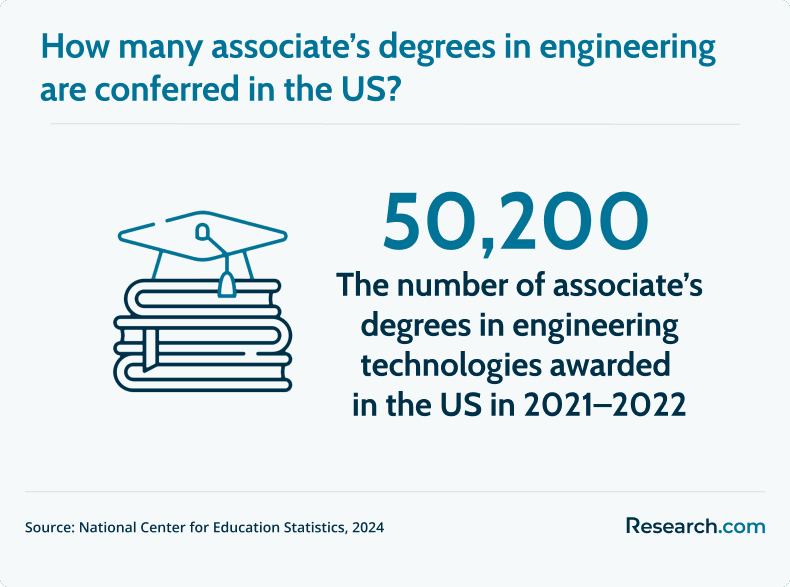
- The number of associate’s degrees in engineering technologies awarded in the US was 50,200 in the academic year 2021–2022 (National Center for Education Statistics, 2024).
- The strongest bootcamp choice is the one that aligns with your target role, current skill level, budget, schedule, and need for support—not simply the cheapest, fastest, or best-known option.
Other Things You Need to Know about Online Cloud Engineering Bootcamp
In 2027, some of the top online cloud engineering bootcamps include Cloud Guru, Udacity’s Cloud Developer Nanodegree, and AWS Certified Solutions Architect by Simplilearn. These programs offer comprehensive curricula, expert instruction, and practical projects to equip learners with essential cloud computing skills and industry certifications.
To enroll in a 2027 online cloud engineering bootcamp, candidates typically need a basic understanding of programming and networking concepts. Some bootcamps may require previous experience in IT or a related field, and a high school diploma is often mandatory.
Most online cloud engineering bootcamps prepare students for vendor exams such as AWS Certified Solutions Architect – Associate, Microsoft Azure Administrator Associate, and Google Cloud Associate Cloud Engineer. Some also include prep for the AWS Certified DevOps Engineer – Professional exam and require passing practice tests before the final certification exam.