2027 History Transfer Credit Trends: How Schools Are Adapting for Adult Learners

Co-Founder and Chief Data Scientist
When a military veteran recently sought to transfer 30 previously earned History credits to a public university, expecting straightforward credit acceptance, the institution instead evaluated only a fraction as applicable toward degree requirements. This unexpected credit loss added costs and delayed graduation by an estimated year. According to a 2024 National Student Clearinghouse report, only 56% of transfer students see full transcript acceptance within their chosen discipline, reflecting ongoing institutional caution toward non-traditional pathways. This cautious stance signals shifting priorities in academic alignment and competency verification, affecting adult learners aiming to leverage prior coursework efficiently.
This article analyzes emerging trends in History transfer credit policies, explores adaptations for adult learners, and offers guidance for optimizing degree completion time and cost.
Key Things to Know About History Transfer Credit Trends for Adult Learners
- Institutions increasingly accept military and workforce credits for history degrees, reflecting employer demand for practical experience, though some academic content gaps require additional coursework, extending time to completion.
- Expanded prior learning assessments boost credit mobility but tradeoffs arise as inconsistent evaluation standards cause uncertainty, requiring adult learners to carefully compare transfer policies affecting credential recognition.
- Technology-enabled transcript reviews streamline transfer evaluations, reducing access barriers and enrollment delays, yet adult learners must still navigate uneven articulation agreements impacting degree path planning and cost control.
- Key Things to Know About History Transfer Credit Trends for Adult Learners Key Things to Know About History Transfer Credit Trends for Adult Learners
- How Are History Programs Changing Transfer Credit Policies for Adult Learners? Evolving Adult Transfer Policies
- Why Are More History Schools Accepting Credit for Prior Learning and Work Experience? Prior Learning Credit Benefits
- How Do History Colleges Evaluate and Award Transfer Credits Today? Transfer Credit Evaluation Process
- Which Alternative Credits Are Most Commonly Accepted by History Programs? Accepted Alternative Credits
- How Are History Schools Improving Transfer Pathways for Community College Students? Improved Community College Pathways
- How Can Transfer Credits Help History Students Graduate Faster? Accelerating Degree Completion
- How Much Money Can Students Save Through History Transfer Credit Opportunities? Cost Saving Through Transfers
- How Are History Programs Supporting Military Students and Workforce Learners Through Transfer Credits? How Are History Programs Supporting Military Students and Workforce Learners Through Transfer Credits?
- What Transfer Credit Innovations Are Shaping the Future of History Education? What Transfer Credit Innovations Are Shaping the Future of History Education?
- How Can Adult Learners Maximize Transfer Credits in a History Program? Maximizing Your Transfer Credits
How Are History Programs Changing Transfer Credit Policies for Adult Learners?
The shift in transfer credit policies within history programs reflects a growing recognition of diverse educational pathways among adult learners and working professionals, emphasizing practical credit mobility over rigid course equivalencies. This shift is especially evident in transfer credit acceptance trends in history programs for adult students, where the integration of community college credits and alternative learning experiences is not only expanding but also strategically mapped to reduce redundancy and accelerate time-to-degree. However, students must carefully evaluate articulation agreements as some institutions impose strict limits on upper-division transfer credits, forcing decisions that balance faster program completion against maintaining curricular depth and academic rigor.
Credit for prior learning increasingly acknowledges military experience and workforce certifications relevant to historical competencies, offering portfolio assessments and competency-based evaluations that convert real-world skills into academic credit. This flexible transfer pathways in history education for working professionals help mitigate affordability and accessibility challenges by shortening degree timelines and recognizing non-traditional learning.
Still, the variability across institutions means transfer students should assess how policies affect course sequencing and degree-completion strategies to maximize their previously earned credits without losing alignment with program outcomes. For adult learners seeking practical guidance on degree options that align with high employability and transferable credits, exploring programs tied to the best 4 year degrees can be a prudent step in educational planning.
Why Are More History Schools Accepting Credit for Prior Learning and Work Experience?
More history programs are recognizing credit for prior learning and professional experience not simply to ease transfer but as part of deliberate adaptations to shifting enrollment and workforce demands. Institutions face pressure to enroll diverse adult learners and veterans while maintaining academic integrity, which requires nuanced evaluation of military training, industry certifications, and competency assessments linked to historical analysis skills.
The 2024 Council for Adult and Experiential Learning report highlights that over 60% of colleges expanding prior learning acceptance saw significant adult enrollment growth, underscoring a strategic move to improve accessibility without compromising curricular rigor. These changes influence degree planning by enabling students to shorten time-to-degree, though not all experiential credits align with program objectives, forcing careful balancing between credit limits and essential theoretical foundations.
Employers increasingly seek history graduates whose learning reflects both academic depth and applied competencies drawn from varied professional contexts, making prior learning credits a practical bridge between work experience and formal qualifications. However, students must weigh how transferred credits affect progression pathways, as overreliance on nontraditional credit can risk gaps in core knowledge or extend time-to-degree if evaluations reveal insufficient equivalencies.
Policy-driven funding incentives and accreditation guidelines, such as those emphasized in the 2023 Higher Education Act reauthorization, further encourage schools to incorporate diverse learning pathways while ensuring consistency. This dual focus on workforce readiness and educational quality shapes ongoing credit acceptance frameworks in history departments striving to remain relevant and responsive.
An adult learner who served in the military navigated a complex prior learning assessment process when enrolling in a history degree program. She initially faced skepticism about how her military training would translate into academic credit, requiring extensive documentation and a portfolio review to demonstrate analytical skills related to historical contexts.
Though institutional guidelines for credit acceptance were evolving, the eventual recognition of her experience helped reduce her coursework by nearly a semester. This validation brought relief but also highlighted the importance of transparent policies and timely decisions to avoid delays, illustrating the real-world challenges and benefits tied to expanding credit for prior learning in history education.
How Do History Colleges Evaluate and Award Transfer Credits Today?
Transfer credit evaluation in History programs has evolved into a strategic function that directly influences enrollment and student success rather than a routine administrative task. Institutions now weigh multiple dimensions, such as accreditation status, course content alignment, learning outcomes, and credit hour equivalencies, to determine which credits will apply toward degree requirements.
For example, a veteran transferring with military training credits may face different scrutiny compared to a student transferring from a regionally accredited community college, where courses must meet not only general education standards but also upper-division rigor specific to History majors. These decisions impact the time and expense required to graduate, making careful upfront credit audits critical for adult learners balancing work and education.
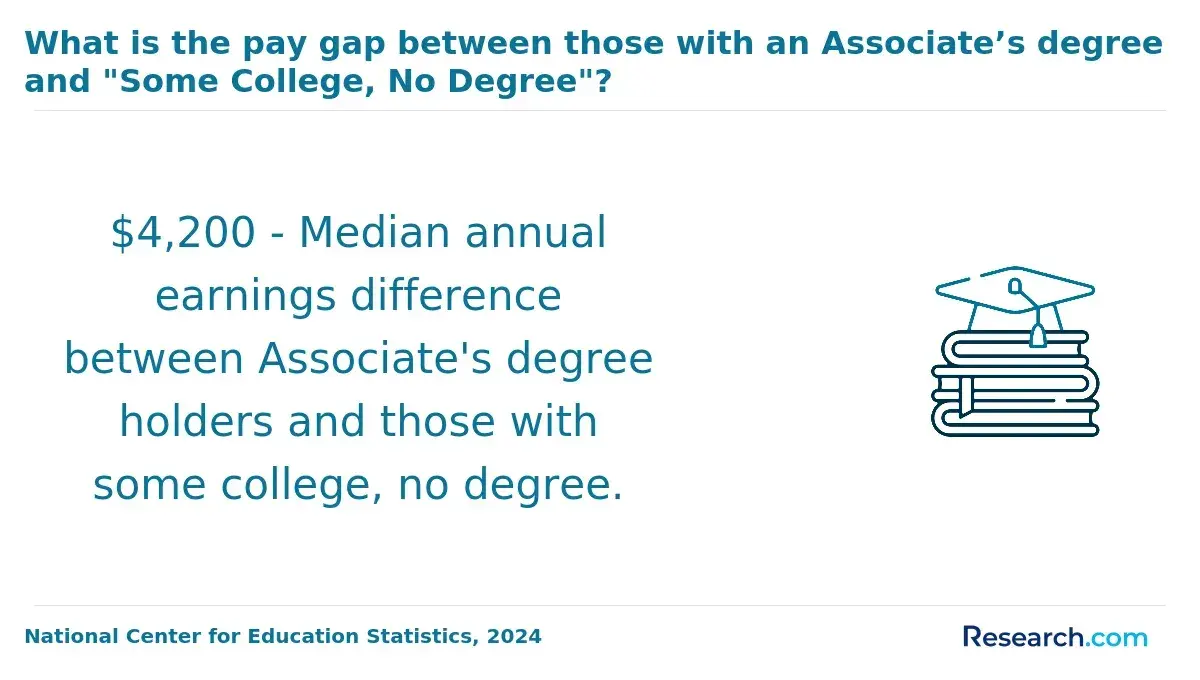
Recent data from the National Center for Education Statistics shows over 75% of colleges prioritize credits from regionally accredited institutions, underscoring quality assurance concerns that continue to shape credit acceptance. Colleges increasingly incorporate portfolio assessments and credit-by-exam options, particularly benefiting military and working adult students capable of demonstrating prior knowledge outside traditional coursework.
Yet, credit applicability often hinges on program-level policies, residency requirements, and the institution's tolerance for older or elective credits, potentially forcing students to retake courses or extend their studies. This complexity necessitates proactive transfer articulation agreements and technology-assisted credit evaluations to expedite decisions while preserving academic standards, especially in content-dense disciplines like History.
For adult learners, the evolving transfer policies reflect a balancing act between flexibility and rigor, aiming to shorten degree completion without diluting academic integrity. Those moving between community colleges, four-year universities, or workforce training face a nuanced credit landscape that may affect educational costs and career planning. While these adaptations facilitate mobility and recognize diverse learning pathways, they require students to engage in strategic academic planning-clarifying credit equivalencies early and understanding institutional constraints-to optimize credit transfers and minimize costly surprises during degree completion.
Which Alternative Credits Are Most Commonly Accepted by History Programs?
Alternative credit acceptance has evolved into a strategic mechanism for enhancing degree accessibility and progression, especially for adult learners navigating History programs. Credit for prior learning (CPL), particularly military training and workforce-based certifications, dominates acceptance due to its tangible link to experiential knowledge and competency. Institutions routinely assess these credits against accreditation standards and course equivalency benchmarks, though limitations surface with upper-division History credits, which often require stricter academic validation. For example, a military-affiliated student aiming to leverage extensive service training may find CPL expedites foundational requirements but still face hurdles transferring advanced credits necessary for degree completion.
Standardized exams such as CLEP and DSST rank highly among alternative credits, recognized by over 65% of four-year public and private History departments as per the latest National Student Clearinghouse Research Center data. Competency-based assessments also facilitate flexible mastery demonstration, appealing to working professionals seeking to accelerate timelines without traditional coursework. However, transfer policies vary widely, and residency or program-specific mandates frequently restrict how alternative credits influence overall affordability and time to degree. Careful planning is essential for students using these pathways to ensure alignment with institutional policies and to optimize outcomes within History degree frameworks focused on alternative credit recognition in history programs.
Emerging alternatives like ACE-recommended credits from providers such as Sophia Learning or Study.com are gradually gaining footholds but remain uneven in acceptance. For adult learners balancing commitments, these credit sources offer potential flexibility but carry risk if not thoroughly vetted against transfer and equivalency rules. Navigating these options prudently can enhance transfer success and reduce redundant coursework, reinforcing practical benefits when integrating previously earned credits into a History curriculum. Students evaluating options should also consider how their credits translate within the broader landscape of online business degrees and comparable fields to inform transfer strategies that maximize real-world applicability and long-term degree value.
How Are History Schools Improving Transfer Pathways for Community College Students?
History programs have increasingly prioritized improving transfer pathways as part of a strategic response to the significant influx of community college students seeking flexible, accelerated degree options. According to the 2024 National Center for Education Statistics report, nearly 40% of bachelor's degree recipients started at a community college, pushing institutions to refine articulation agreements, transfer-friendly course mapping, and credit evaluation procedures.
These adaptations help mitigate the common risk of losing credits or needing to retake comparable courses, which can delay graduation and increase educational costs. Schools balance maintaining academic rigor with practical alignment, using dedicated transfer advisors and prior learning assessments to tailor pathways that recognize diverse student experiences while managing degree requirements.
Technology tools, such as online degree audits, further enhance transparency by allowing students to preview credit applicability before enrollment, reinforcing informed decision-making. However, institutions vary widely in policy and credit acceptance, which challenges students to navigate inconsistent equivalencies and program expectations. This variability means students must proactively engage with advisors and carefully review transfer agreements to optimize credit transfer, as the cumulative effect on academic momentum and time to degree is substantial. These strategies collectively advance accessibility for working adults and military-affiliated learners while acknowledging that transfer is neither seamless nor guaranteed without strategic planning.
One community college transfer student pursuing a history degree experienced a mix of uncertainty and cautious optimism when navigating the transfer process. Initially unsure whether key courses would count toward the four-year institution's requirements, the student faced conflicting information from multiple sources. After a detailed transcript evaluation and consultation with a transfer advisor specialized in history programs, the student gained clarity through a formal articulation agreement that accepted nearly all prior credits. This clear pathway reduced concerns about lost time and allowed the student to focus on upper-division coursework, highlighting the tangible impact of evolving transfer infrastructures on individual educational trajectories.
How Can Transfer Credits Help History Students Graduate Faster?
Transfer credit policies for adult history learners require careful navigation, as not all credits uniformly shorten time to degree completion. While community college credits often transfer more readily thanks to established articulation agreements, upper-division or specialized history courses frequently face stricter acceptance criteria, limiting their applicability toward core major requirements. For example, a working professional with military training credits may gain elective credit through prior learning assessments (PLAs), but these rarely cover essential upper-level history courses, forcing additional enrollment to meet graduation standards.
Accelerated degree completion through history transfer credits depends heavily on institutional residency rules and course sequencing, which can create unforeseen delays despite initial credit transfers. Students must strategically evaluate how articulation agreements and PLA policies align with program requirements, particularly since some universities apply transfer credits primarily to general education rather than major-specific courses. These dynamics influence affordability and enrollment planning, especially for adult learners balancing workforce demands. Military-affiliated students or those with certifications should weigh these factors against institutional flexibility to optimize credit utilization and reduce redundant coursework.
Understanding these realities helps transfer students and adult learners realistically manage expectations when pursuing a History degree, recognizing that transfer credits can be both an asset and a complexity. Those seeking efficient pathways might explore options such as MFT degree frameworks for reference on accelerated program structures, noting that not all transfer-friendly policies guarantee time savings without deliberate academic planning.
How Much Money Can Students Save Through History Transfer Credit Opportunities?
Transfer credit acceptance in History programs can significantly influence a student's overall financial outlay by shortening the path to degree completion, especially for adult learners and those with relevant prior experience. For example, community college students who transfer into four-year History programs often benefit from reduced tuition costs in initial semesters and avoid retaking lower-division courses.
Yet, these gains depend heavily on institutional policies such as transfer credit limits and residency requirements that restrict how many credits can count toward degree fulfillment, sometimes requiring completion of core History courses directly at the receiving institution. These constraints affect strategic planning for working professionals and military-affiliated learners who rely on credit recognition for prior learning or service training to accelerate degree progress and minimize enrollment time.
Recent findings from the National Student Clearinghouse Research Center indicate that successful transfer credit usage can trim degree timelines by roughly 30%, translating into substantial savings on tuition, fees, and living expenses over time. However, inconsistencies in interpreting course equivalencies and rigid program-specific rules often force students to repeat classes, offsetting potential cost reductions.
Moreover, military-affiliated students leveraging credit evaluations can expect shortened degree pathways but must also navigate variable institutional acceptance criteria, which impact the net financial benefit. This underscores the importance of early and comprehensive advising to clarify credit applicability within History curricula, allowing transfer and nontraditional students to optimize course selection, avoid duplication, and strategically reduce their educational investment while accounting for the often-complex realities of credit mobility and degree requirements.
How Are History Programs Supporting Military Students and Workforce Learners Through Transfer Credits?
History programs are increasingly adapting transfer credit policies to recognize the diverse backgrounds of military-affiliated and workforce learners, but these accommodations vary widely in scope and impact. While a 2024 report from the American Council on Education notes that nearly 70% of postsecondary institutions have expanded acceptance of military training credits, in practice, the relevance of these credits to History degree requirements depends heavily on institutional frameworks and the specificity of prior learning assessments. For example, a veteran with experience in cultural resource management may gain credit for applied historical methods, accelerating degree completion, but remaining academic requirements often hinge on whether the institution values military occupational specialties as equivalent to traditional coursework.
Colleges frequently combine credit for professional certifications and workplace learning with online and hybrid degree paths to streamline degree completion, yet inconsistent transfer articulation agreements between two- and four-year programs can introduce uncertainty and extend time to graduation. These policies have practical consequences: adult learners must carefully evaluate how military and experiential credits translate into program-specific History electives or core classes, as failure to secure meaningful credit can result in redundant coursework. Moreover, a 2024 study from the National Center for Education Statistics highlights that a lack of transparency in credit evaluation and institutional policy variation remains a significant barrier for many students, complicating academic planning and impacting workforce reentry timelines.
What Transfer Credit Innovations Are Shaping the Future of History Education?
Transfer credit innovations are reshaping access and degree mobility for adult learners in history programs by advancing technology-driven credit assessment methods that reduce barriers inherent in traditional evaluations. For example, the adoption of AI-assisted transcript evaluation has cut manual review times by approximately 20% at pilot institutions, enabling quicker articulation of credits but also requiring consistent data standards and significant institutional investment. Such automation can streamline degree completion timelines but introduces challenges around transparency and equitable application, particularly for students whose prior learning experiences vary widely in format and provenance.
Competency-based education and expanded credit-for-prior-learning options offer a more flexible path for military-affiliated students and working professionals who must translate diverse historical knowledge and skills into transferable credit. Yet, uneven acceptance of these credits across institutions and employers complicates long-term planning, and credit portability depends heavily on emerging digital credentialing systems and blockchain-enabled transcripts. These tech advances improve security and transfer pathway transparency but require broad institutional adoption to effectively address persistent mobility challenges. Prospective learners should carefully consider these factors, including how streamlined transfer agreements and workforce credit recognition policies align with their career goals and impact final degree costs and timelines.
For adult learners seeking to maximize previously earned credits within history programs, understanding evolving policies and technology-driven credit assessment methods for adult learners in history programs is crucial to avoid excess credits or delayed graduations. Exploring 2 year online degrees can also offer practical, accelerated pathways that integrate many of these transfer innovations, especially for those balancing workforce commitments with academic progression.
How Can Adult Learners Maximize Transfer Credits in a History Program?
Adult learners maximizing transfer credit strategies for adult learners in history programs must carefully weigh institutional limits and course equivalencies to avoid extending time-to-degree. For example, a student transferring military and community college credits might find only core history courses accepted toward their major due to residency requirements or credit caps. Prioritizing credit evaluation early, with documentation from workforce certifications or prior learning assessments, prevents costly course repetition but requires navigating variable university policies that often emphasize degree-completion pathways over total credit acceptance.
Maximizing prior learning credit for working professionals in history involves leveraging credit-for-prior-learning options, such as portfolios or exam-based credits, that many programs now recognize. However, students should be mindful that not all experiential learning translates equally across institutions, which can influence course sequencing and academic flexibility. Institutions implementing robust transfer evaluations demonstrate accelerated degree completion, reducing educational costs, but students must maintain proactive communication with advisors familiar with transfer policies to target programs that align prior credits with career goals effectively. For adult learners seeking flexible options, exploring accelerated bachelors degree programs for adults can supplement traditional pathways with tailored credit acceptance and streamlined progression.
References:
- 4 Ways Transfer Students Can Maximize College Credits for Prior Experience https://www.umassglobal.edu/blog-news/4-ways-transfer-students-can-maximize-college-credits-prior-experience
- Hard up for students, more colleges are offering college credit for life experience, or ‘prior learning’ https://hechingerreport.org/to-fill-seats-more-colleges-offer-credit-for-life-experience/
- Increasing Community College Transfers: Progress and Barriers - Public Policy Institute of California https://www.ppic.org/publication/increasing-community-college-transfers-progress-and-barriers/
- The Impact of the New Adult Learner - Trends in Higher Education in 2023 - UPCEA https://upcea.edu/the-impact-of-the-new-adult-learner-trends-in-higher-education-in-2023/
- How to Transfer Credits and Maximize What You’ve Already Done - ReUp Education https://reupeducation.com/blog/how-to-transfer-credits-and-maximize-what-youve-already-done/
- More Data on Credit Transfer (Part 3) | HESA https://higheredstrategy.com/more-actual-data-on-credit-transfer-part-3/
- What Are University Credits and How Do They Transfer? - Cyprus West University https://www.cwu.edu.tr/what-are-university-credits-and-how-do-they-transfer/
- College Credit for Heroes: Accelerating Degree Completion | Journal of Veterans Studies https://journal-veterans-studies.org/articles/10.21061/jvs.v8i1.264
- How to Graduate College Early: A Practical Guide to Finishing Faster https://www.straighterline.com/blog/graduate-college-early
- Tapping Into Talent: Why Credit for Prior Learning Is a Game Changer for Adult Learners https://mcacs.talentfirst.net/tapping-into-talent/
Other Things You Should Know About History
Yes, relying heavily on transfer credits can restrict students from engaging deeply with current historiographical debates or specialized courses unique to a new institution. Many programs have core seminars or capstones that emphasize critical analysis and updated research approaches, which may be missed if students bypass these through transfer. Prioritizing a balance between transferred credits and in-residence coursework is advisable to ensure both timely completion and robust academic development.
Variability in how colleges accept history credits complicates planning, often forcing adult learners to allocate extra time and resources to consult multiple advisors. Transfers accepted at one institution may be partially or wholly rejected at another, particularly for specialized topics or older course syllabi. This inconsistency requires prospective students to prioritize schools with transparent, flexible transfer guidelines to avoid delays and unforeseen course requirements.
While maximizing transfer credits can expedite graduation, it may inadvertently reduce time available for internships or research projects critical to employability in history-related fields. Given that employers increasingly value applied skills and original research experience, adult learners should weigh completing some credits onsite or through experiential opportunities to enhance career readiness rather than relying solely on transferred academic credits.
Accepting transfer credits that fulfill general requirements but lack relevance to specific career goals can dilute a student's specialized expertise and marketability. For example, credits focused on broad survey courses may not substitute for advanced regional or thematic studies employers seek in research, archiving, or education roles. Adult learners should critically evaluate how transferred credits integrate with their professional ambitions and prioritize degree programs that support purposeful specialization.