2027 Is a Customer Experience Focus Worth Adding to a BS in Business Administration If You Already Work as a customer support team lead?
Audited and Verified:
Our Editorial and Data Verification Process
Research.com uses government datasets, official education statistics and primary institutional information to support its career and degree guides. Our review process checks factual accuracy, occupational definitions, source dates and the requirements associated with the credentials discussed.
How This Article Was Fact-Checked
Our editorial team verifies salary estimates, employment projections, education requirements and program information against original data providers and official organizations. Salary figures are checked against the relevant occupational definitions and reporting periods. Information about licensure, accreditation and required in-person training is reviewed separately.
Fact-checked and verified on:

Co-Founder and Chief Data Scientist
As a customer support team lead, you already know how service problems affect customers and staff. A customer experience focus could help you move from managing a support queue to improving the wider customer journey, but it is not automatically worth extra tuition or time.
This article compares what you would learn with what you already do, where the training could lead, and when a broader business degree or shorter course is the better investment. You will leave with a way to evaluate programs against your next career move.
Key Things You Should Know
- A customer experience focus is most valuable if you want responsibility beyond support operations, such as journey improvement, customer insights, or cross-functional service strategy.
- Choose courses that fill gaps in research, analytics, operations, and finance; an elective cluster is not necessarily an official concentration, and neither guarantees promotion.
- The U.S. Bureau of Labor Statistics reports a May 2025 median annual wage of $78,760 for market research analysts, a related but distinct occupation, not an expected salary for a support lead who completes a degree.
Is a customer experience focus worth adding to a business administration degree?
Usually yes, if it fits your existing degree plan and your goal is to influence the entire customer journey. Customer experience, or CX, covers a customer's interactions across discovery, purchase, onboarding, service, and renewal.
Support leadership gives you a strong view of one part of that journey; CX study can help you investigate what causes problems upstream and make a business case for fixing them.
The deciding factor is incremental value: what will the focus teach you that your job and the business core will not? Compare these paths against the role you want next:
| Path | Best fit | Main limitation |
| BS in Business Administration with CX electives or a formal concentration | Moving from support leadership toward journey improvement or customer strategy | Quality depends on course depth and whether the focus adds credits |
| General business degree plus a work-based CX project | Building broad management skills while demonstrating CX ability | May offer less structured research or analytics training |
| Targeted CX training without an added degree focus | Closing one skill gap when your employer values existing experience | May not satisfy a bachelor's-degree requirement for some roles |
If your preferred next job is mainly logistics or fulfillment operations, CX electives may be less useful than operations study. Supply chain degree cost and duration comparisons offer a separate benchmark for that pivot. Do not choose the CX label alone: an elective, a concentration recorded by the school, and a separately awarded certificate are different credentials.
How does customer experience coursework complement customer support team lead experience?
Your current work may already demonstrate coaching, escalation handling, service-level monitoring, and knowledge-base improvement. Coursework adds the most when it helps you connect those activities to customer behavior, operational costs, and decisions made by product, marketing, and finance teams.
For example, a lead might observe repeated contacts after onboarding. A CX research course could help frame a question, assess feedback without treating a few complaints as representative, and map where customers get stuck.
An analytics or operations course could then help compare contact patterns and propose a test. That is stronger evidence for a cross-functional role than simply reporting that ticket volume increased.
If your preferred advancement is staff coaching or employee relations rather than customer-journey design, compare CX study with HR coursework.
For someone bringing prior college credit, using existing credits in a human resources degree may be worth examining before committing to a new focus. In either direction, ask your employer and faculty before using workplace data in an assignment; remove customer identifiers and follow company privacy rules.
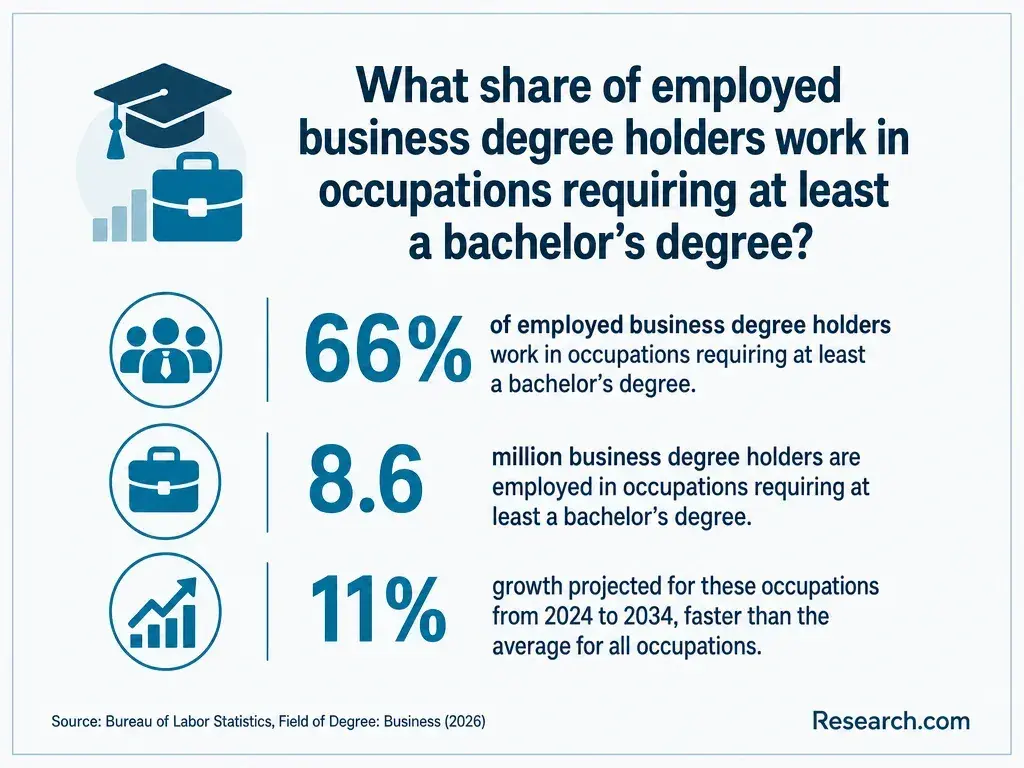
What careers can a business administration degree with customer experience training lead to?
The nearest moves for a support team lead are often support operations supervisor, customer success operations specialist, CX analyst, voice-of-customer coordinator, or service-improvement specialist.
These roles differ: a CX analyst studies patterns and reports findings; a customer success operations specialist improves processes and systems; a CX manager may own cross-functional priorities, budgets, and staff. Employers can use the same title differently, so compare job duties rather than titles alone.
A degree may help you meet an employer's education preference, but advancement into a manager role generally requires evidence that you can lead projects and influence other teams.
Market research analyst is one possible longer-term analytical direction, not a synonym for CX manager. The Bureau of Labor Statistics projects 7% U.S. employment growth for market research analysts from 2025 to 2035; use that outlook as context for research-oriented work, not a forecast of CX openings at your employer.
If your goal is specifically to improve physical fulfillment rather than service interactions, compare fast-track online supply chain bachelor's options with business administration programs before choosing electives.
For a CX move, seek a stretch assignment, such as analyzing an approved, de-identified reason-for-contact report, that lets you show relevant work alongside the degree.
Prioritize courses by the decisions you want to make at work, not by whether "customer experience" appears in every title. A useful combination covers customer research, business measurement, and implementation:
- Marketing research or consumer behavior: Learn to investigate customer needs and assess whether feedback represents a wider group.
- Business statistics or analytics: Interpret contact, retention, and survey measures while recognizing missing data and uncertain conclusions.
- Operations or process improvement: Map handoffs and assess whether a proposed service change is feasible.
- Managerial accounting or finance: Explain the costs and trade-offs of staffing, tooling, and process changes.
Check prerequisites and course descriptions. A basic marketing survey may overlap with what you already know, while an applied research course with a substantive project may fill a real gap. Ask whether your proposed electives satisfy the business major, an official concentration, or only free-elective requirements.
If your main goal is leading employees rather than analyzing customer journeys, undergraduate leadership programs with shorter timelines provide another curriculum to compare.
There is no universal bachelor's-degree or CX certification requirement for customer experience management. Employers set their own hiring standards.
Some prefer a bachelor's degree for analytical or managerial positions; others give substantial weight to support leadership, cross-functional work, and measurable improvements.
A voluntary certification can demonstrate targeted study, but it does not replace evidence of workplace performance or satisfy every employer's degree requirement.
If you have not finished a bachelor's degree, a BS in Business Administration may provide broader preparation in finance, management, and operations than a short CX course. If you already hold a bachelor's degree, compare a small set of relevant courses or employer training before pursuing another undergraduate credential.
Before applying, review the school's requirements and any transfer-credit rules; this business administration degree admissions requirements guide can help you prepare questions, but the institution decides your eligibility and degree audit.
CX training strengthens a promotion case when you can connect it to a responsibility your employer needs filled. A useful case might show that you defined a recurring customer problem, brought the right teams together, proposed a feasible change, and evaluated results with appropriate caveats. Completing courses alone does not establish that a change worked or justify a particular raise.
Use job postings and internal role descriptions to identify the education and evidence expected for your target position. Then compare the added cost of the CX focus with its likely use: Will it qualify you to apply, help you perform a new task, or simply repeat your existing knowledge?
The answer matters more than a broad managerial salary figure, which would describe an occupation rather than your likely post-degree pay.
Ask your benefits team whether approved electives qualify for tuition assistance and whether reimbursement depends on grades, continued employment, or payment after the term ends.
If you are also considering a project-focused credential, project management bachelor's tuition assistance options illustrate another education-cost comparison; verify your own employer's policy before relying on any benefit.
Team leads need coaching, clear communication, escalation judgment, and the ability to spot service problems. A broader CX role also requires customer research, data interpretation, process design, stakeholder influence, and enough financial literacy to explain trade-offs. Managers may additionally be accountable for priorities, budgets, and people decisions; those responsibilities vary by employer.
A practical skills test is whether you can explain a service problem to someone outside support. Can you define the affected customer group, identify a credible measure, distinguish a plausible cause from a proven one, and recommend a next step that product or operations could evaluate? Coursework can help you practice that reasoning, but access to data and decision-makers must be earned at work.
If coordinating implementation is the part you most enjoy, project management may be a more direct specialization than CX. Compare the curriculum and credit applicability of finishing project management studies with transferred college credits against a business degree with CX electives. Neither route substitutes for experience delivering projects.
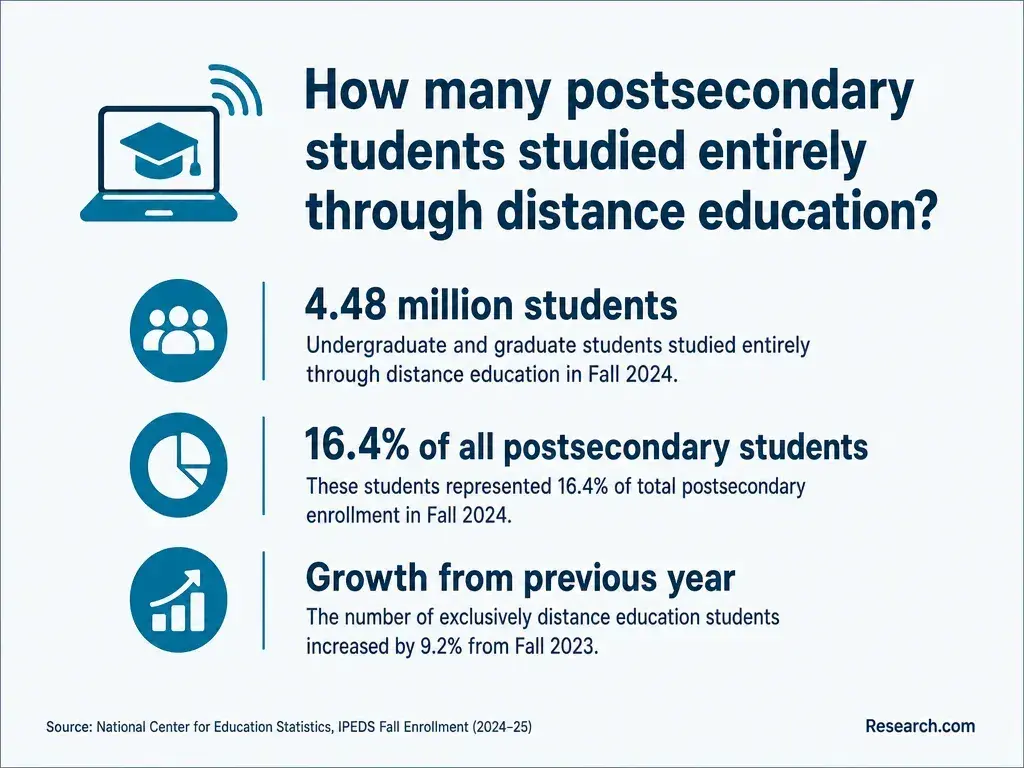
Choose the format around your shift schedule and the way you learn best, not an assumption that online means self-paced. Online courses may still require live meetings, group presentations, fixed weekly deadlines, or proctored exams.
Campus courses can offer easier in-person collaboration but add commuting time and may conflict with peak support hours.
Ask for sample syllabi for the CX and business-core courses, not just the program's general scheduling description. Check live-session times, group-work expectations, exam arrangements, and whether required courses run often enough for your planned pace.
If application costs affect how many schools you can compare, no-application-fee online college choices may broaden your shortlist; confirm current fees and the actual CX curriculum with each school.
A bachelor's degree commonly follows a four-year full-time plan, but a working team lead's remaining time depends on credits the school applies to general education, the business core, electives, and any concentration.
Accepted transfer credit does not necessarily satisfy a required course. Part-time enrollment, prerequisites, and infrequently offered electives can extend the timeline; accelerated terms may shorten the calendar without reducing the work required.
There is no reliable single price for this decision. Request a degree audit and calculate remaining required credits × the applicable tuition rate, then add mandatory fees, materials, technology or travel costs, and any extra courses needed for the CX focus.
Compare that total with the same program without the focus. Account for when employer reimbursement arrives and any borrowing costs, rather than treating the advertised tuition rate as your final cost.
If speed is important, compare actual remaining-course plans with online colleges with accelerated business programs. Ask an adviser to confirm when each required CX course will run; a faster general business schedule is not necessarily a faster CX-focused degree.
How can you choose an accredited business administration program with customer experience courses?
Start with the specific next role you want, then request the current catalog and a written evaluation of your prior coursework. Confirm the exact degree title, whether CX is an official concentration or a set of electives, the courses available to you, and any added credits.
Ask to see an applied assignment that goes beyond describing good service - for example, one requiring research, analysis, and a defensible recommendation.
Verify the institution's accreditation through the institution and its recognized accreditor. If a school advertises AACSB, ACBSP, or IACBE accreditation, confirm its scope rather than assuming it covers every program. Accreditation is an important quality check, not proof of CX course depth or employment outcomes.
Finally, compare your approved degree audits, total costs, schedules, and access to career support. Fast-track undergraduate study options can help you identify formats to investigate, but only the school can confirm your course availability, transfer applicability, and graduation requirements.
Choose the CX focus if it closes a documented skill gap without an unjustified delay or cost; otherwise, finish the stronger-fitting business degree and build CX evidence at work.
Other Things You Should Know About Business Administration
Not necessarily. Schools differ in whether a concentration appears on the diploma, transcript, or both. Ask the registrar how your chosen focus will be recorded.
Possibly, if the school offers an applicable prior-learning assessment or approved work-based course. Employment by itself does not award credit; ask which evidence and approvals are required.
Check your employer's data-use rules and the instructor's requirements first. Anonymizing a case may not be enough if details could identify a customer or reveal proprietary information.
No. Customer experience spans interactions across an organization, while user experience typically focuses on how people interact with a particular product or interface. Some jobs combine them, but their methods and responsibilities can differ.
- What We Do | FDIC.gov https://www.fdic.gov/about/what-we-do
- Plan and Pay for Higher Education - State Controller's Office https://www.sco.ca.gov/eo_higher_education.html
- Customer Experience (CX Concentration) - Career 360 https://career360.snhu.edu/channels/customer-experience-cx-concentration/
- What is Customer Experience? | SNHU https://www.snhu.edu/about-us/newsroom/business/what-is-customer-experience
- Customer Experience Specialists: How to Become One | Franklin University https://www.franklin.edu/career-guide/web-developers/how-to-become-customer-experience-specialists
- Employer Tuition Reimbursement: How It Works and How to Pay for College | Winston-Salem State University https://ramsonline.wssu.edu/blog/employer-education-benefits/
- Business Administration vs. Management Degrees | CMU https://www.calmu.edu/news/business-administration-vs-management
- How AACSB Accreditation Affects Faculty | CSUSM https://www.csusm.edu/coba/about/aacsb/accreditationmatters/aacsbfaculty.html
- Evaluating the Cost, Time and Value of Advanced Degrees | American College of Education https://ace.edu/blog/cost-time-and-value-of-advanced-degrees/
- Types of Business Degrees: Your Complete Guide | UWA Online https://online.uwa.edu/news/types-business-degrees/