2027 What Degree Do You Need To Be a Social Worker: Education Requirements in Michigan

Co-Founder and Chief Data Scientist
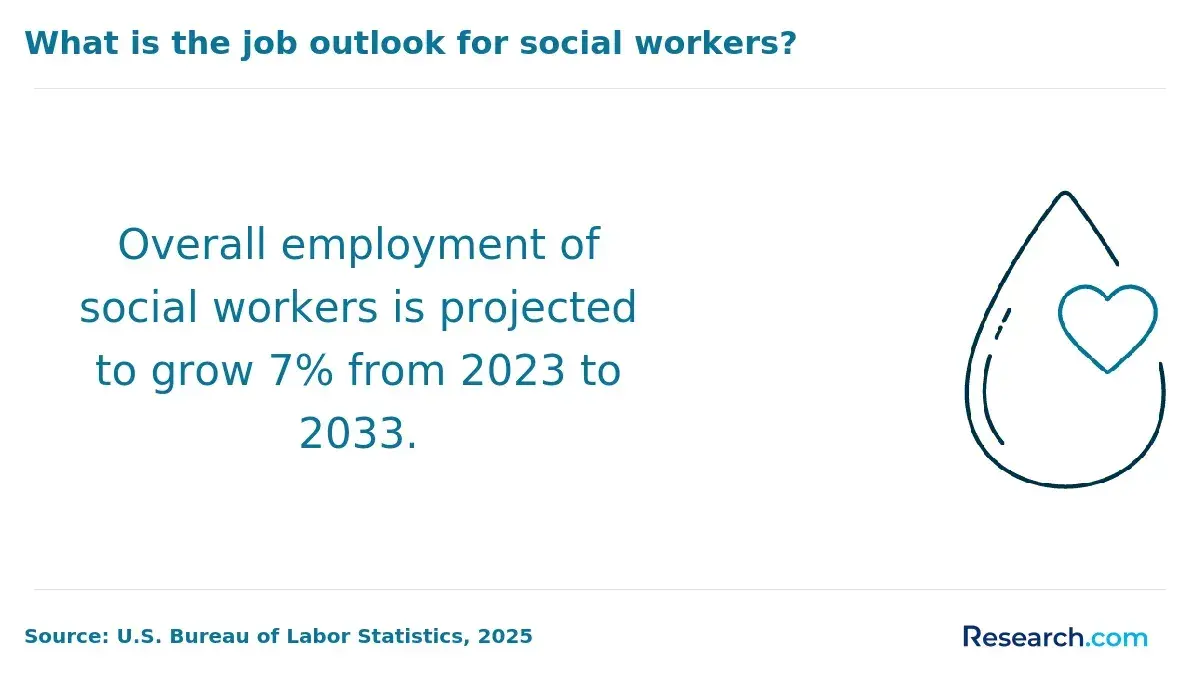
Choosing a social work degree in Michigan is not just an academic decision—it determines which license you can pursue, which jobs you qualify for, whether you can practice clinically, and how quickly you can move into specialized roles such as school social work, healthcare social work, child welfare, gerontology, or community practice. Michigan reports a projected 12% growth in social work jobs over the next decade, so students who understand the state’s degree and licensure requirements early can avoid costly delays and choose a program that fits their career goal.
This guide explains the education requirements for social workers in Michigan, including the minimum degree needed for entry-level work, MSW requirements for advanced practice, online degree recognition, accreditation, timelines, cost considerations, financial aid options, and alternative routes for students who already hold a related degree. It is designed for future BSW and MSW students, career changers, and current human service workers who want a clear path toward Michigan social work licensure.
Quick Answer: What Degree Do You Need to Become a Social Worker in Michigan?
In Michigan, a Bachelor of Social Work (BSW) is the standard minimum degree for licensed bachelor-level social work roles, while a Master of Social Work (MSW) from a CSWE-accredited program is required for master-level licensure and clinical or advanced practice. An associate degree may support paraprofessional social service work, but it does not provide the same licensing opportunities as a BSW or MSW. Students who want clinical, supervisory, school, or specialized roles should plan for an MSW.
Key Things to Know About Social Work Education Requirements in Michigan
- A Bachelor of Social Work (BSW) is the usual entry point for licensed bachelor-level practice and many beginning social work positions in Michigan.
- An MSW from a CSWE-accredited program is required for advanced licensure, including master-level and clinical pathways, which is especially important as Michigan reports 12% projected social work job growth over the next decade.
- Michigan social workers must meet licensure, renewal, and continuing education expectations throughout their careers, and many students now use online or hybrid programs to complete coursework while arranging in-person fieldwork locally.
- What is the minimum degree required to become a licensed social worker in Michigan?
- What courses are covered in a social work degree program in Michigan?
- How long does it take to complete a social work degree program in Michigan?
- How much does a social work degree cost in Michigan?
- What degrees are required for different social work specializations in Michigan?
- What financial aid options are available to social work students in Michigan?
- What are the alternative pathways to become a social worker in Michigan?
- What are the licensure renewal and continuing education requirements for Michigan social workers?
- How can social work degree holders transition into counseling roles in Michigan?
- Are online social work degrees recognized in Michigan?
- What organizations accredit social work degree programs in Michigan?
- What are the top institutions offering social work degree programs in Michigan?
What is the minimum degree required to become a licensed social worker in Michigan?
The minimum degree depends on the level of social work you want to practice. Michigan recognizes different credentials for technical, bachelor-level, master-level, and advanced roles, so students should begin by matching the degree to the license and job setting they want. The most important rule is this: if your goal is independent clinical practice, advanced assessment, supervision, or specialized practice, you should expect to earn an MSW from a CSWE-accredited program.
| Degree level | Typical Michigan pathway | Best fit for | Important limitation |
| Associate Degree in Social Work or related field | May support the Registered Social Service Technician (RSST) credential | Paraprofessional, case support, intake, community service, and supervised human service roles | Does not qualify graduates for the same licensed social work scope as a BSW or MSW |
| Bachelor of Social Work (BSW) | Prepares students for Limited Licensed Bachelor Social Worker (LLBSW) and Licensed Bachelor Social Worker (LBSW) pathways | Entry-level social work, case management, child and family services, community agencies, and healthcare support roles | Not enough for clinical independence or many advanced roles |
| Master of Social Work (MSW) | Required for Limited Licensed Master Social Worker (LLMSW) and Licensed Master Social Worker (LMSW) pathways | Clinical practice, school social work, healthcare leadership, advanced case management, program leadership, and supervision | Requires field education, licensure steps, and usually a larger financial investment |
| Doctoral degree, such as PhD or DSW | Not required for Michigan social work licensure | Research, higher education, policy leadership, advanced administration, and specialized scholarship | Usually unnecessary for direct-practice licensure unless your goal requires research or academic credentials |
Students who are still comparing social work niches should look beyond the minimum requirement and consider the population they want to serve. For example, working with older adults may require specialized preparation beyond the general degree plan; this is why exploring how to become a geriatric social worker can be useful for students interested in aging services, long-term care, or community-based support for older adults.
How to choose the right degree level
- Choose an associate pathway if you want to start in supervised social service support roles and may transfer later.
- Choose a BSW if you want the most direct undergraduate route into licensed bachelor-level social work.
- Choose an MSW if you want clinical, school, supervisory, advanced healthcare, or leadership options.
- Choose a doctorate only if your long-term plan involves teaching, research, policy analysis, or executive-level specialization.
What courses are covered in a social work degree program in Michigan?
Michigan social work programs combine classroom study with supervised field education. The purpose is to prepare students to understand human behavior, assess client needs, work ethically with diverse communities, use evidence-based interventions, and navigate the policies that shape social services. While each school has its own curriculum, CSWE-accredited programs generally cover a common foundation.
| Course area | What students learn | Why it matters for practice |
| Human Behavior in the Social Environment | How individuals, families, groups, organizations, and communities interact across the lifespan | Helps social workers assess client situations within family, cultural, economic, and community contexts |
| Social Welfare Policy and Services | The development, structure, and effects of social policies and public programs | Builds the advocacy and policy literacy needed to help clients access resources and challenge barriers |
| Social Work Practice | Methods for working with individuals, families, groups, organizations, and communities | Connects theory to real intervention, referral, assessment, and case planning skills |
| Research Methods and Statistics | How to evaluate studies, use data, and apply evidence to practice decisions | Supports ethical, evidence-informed practice and program evaluation |
| Field Education or Practicum | Supervised experience in agencies, schools, clinics, hospitals, or community organizations | Gives students real-world preparation and is often central to licensure readiness |
| Diversity, Equity, and Social Justice | How oppression, privilege, culture, race, gender, disability, poverty, and identity affect client experiences | Prepares students to work responsibly with marginalized communities and advocate for equitable systems |
| Specialization or Advanced Practice Courses | Focused practice areas such as Cognitive-Behavioral Interventions, Community Policy, management, or population-specific practice | Allows students to align coursework with clinical, community, policy, healthcare, or school-based goals |
| Michigan school social work preparation | Approved coursework tied to school social work certification expectations | Important for students who want to practice in Michigan school settings |
The strongest programs do more than list courses. They help students connect coursework to practicum placements, licensure goals, and the populations they want to serve. Before enrolling, ask how early field placements begin, whether placements are available near your home, and whether the curriculum supports your intended specialization.
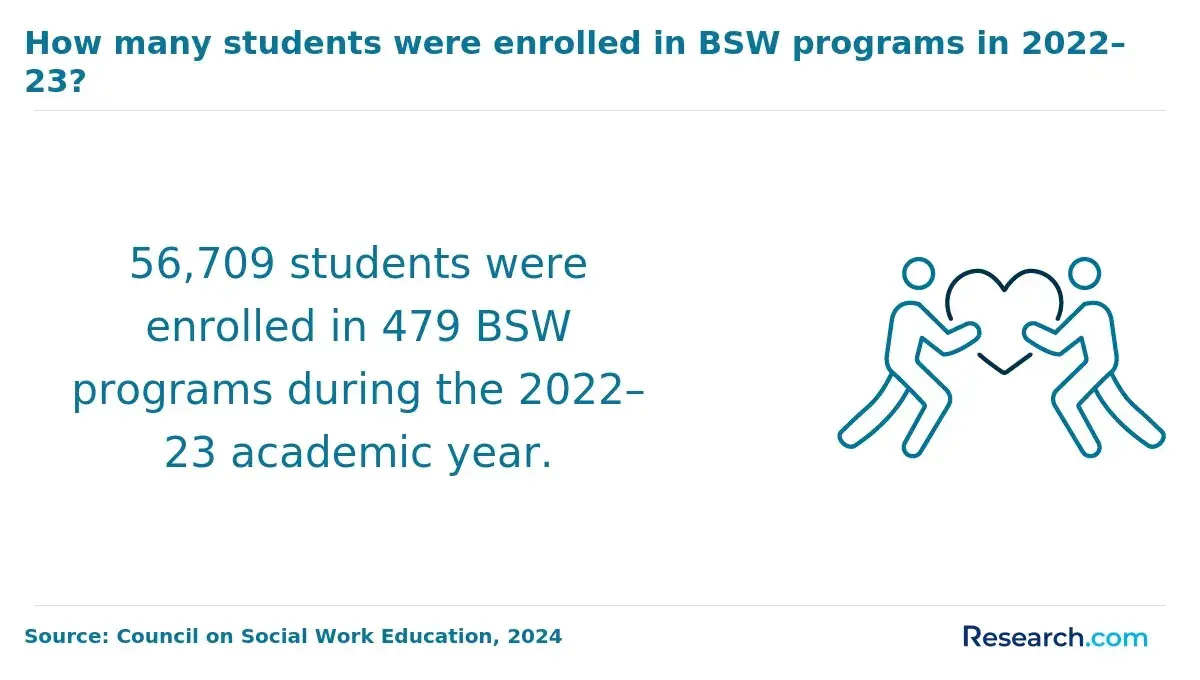
The chart below provides additional context on participation in BSW certificate programs.
How long does it take to complete a social work degree program in Michigan?
The time required to finish a social work degree in Michigan depends on the degree level, your enrollment status, your transfer credits, and whether you qualify for advanced standing. Fieldwork scheduling also matters because practicum placements must fit agency availability, school requirements, and your weekly schedule.
| Program type | Common completion time | Who it works best for | What can speed up or slow down completion |
| BSW | Typically four years of full-time study | First-time college students or transfer students seeking undergraduate preparation for social work | Transfer credits, part-time enrollment, evening courses, online options, and field placement availability |
| Traditional MSW | About 60 credit hours; usually two years full-time or three to four years part-time | Students without a BSW, including career changers with related degrees | Work schedule, practicum requirements, course sequencing, and whether the program allows flexible pacing |
| Advanced Standing MSW | 30-39 credits; as little as one year full-time or two years part-time | Students with a recent BSW from a CSWE-accredited program | Eligibility rules, undergraduate GPA, time since BSW completion, and placement scheduling |
| DSW or PhD | Generally three to five years full-time | Professionals focused on research, higher education, policy leadership, or advanced practice scholarship | Dissertation or capstone progress, assistantships, research requirements, and professional responsibilities |
Part-time study can make a degree more manageable, but it commonly adds one to two years. Full-time study can shorten the calendar, but it may require reducing work hours, arranging childcare, or planning carefully around fieldwork. Some Michigan MSW programs include practicum expectations such as the 450 hours required for MSW students at some Michigan universities, so students should treat placement hours as a major scheduling commitment rather than an afterthought.
Accelerated and dual-degree options can reduce total time for students who are ready for a demanding schedule. If you are mapping the full professional route, compare degree timelines with the broader social worker career path so you understand when education, supervised experience, exams, and licensure steps occur.
Practical timeline questions to ask before enrolling
- Can I complete fieldwork during evenings or weekends, or are weekday daytime hours required?
- Does the school help arrange placements, or am I expected to find my own?
- If I study part-time, will required courses still be available in the right sequence?
- Can transfer credits or prior BSW coursework reduce my total time?
- Will an online program still require in-person practicum hours near my location?
-
: "
For many students, program length is not just a number of semesters. It is a planning issue involving work, family, commuting, placement hours, and personal stamina. Students who understand the fieldwork calendar early are better prepared to finish on time.
"
How much does a social work degree cost in Michigan?
The cost of a social work degree in Michigan varies widely by school type, residency status, degree level, online format, transfer credits, and financial aid. Tuition is only one part of the total cost. Students should also budget for fees, books, commuting, technology, background checks, field placement expenses, lost work hours, and licensure-related costs.
| Degree | Cost information stated for Michigan programs | Cost strategy |
| BSW | Public in-state tuition ranges from $13,000–$17,000 annually; out-of-state students may pay $37,000 or more; private colleges generally charge between $30,000–$45,000 per year | Compare transfer pathways, public in-state rates, scholarships, and online public programs that may extend in-state rates more broadly |
| MSW | In-state tuition at public universities typically falls between $18,000–$28,000 per year; out-of-state costs can reach $40,000–$50,000 annually; private institutions can charge up to $60,000 for the entire program | If eligible, consider advanced standing because it can reduce credits, time, and total cost |
| DSW | Primarily offered by private universities at $25,000–$40,000 per year, though some public options exist at lower rates; online DSW tuition may be slightly less but could include additional residency fees | Choose this route only when it supports a clear leadership, teaching, or advanced practice goal |
| PhD in Social Work | Public universities often provide tuition waivers and stipends; without funding, tuition ranges from $18,000–$30,000 for residents and exceeds $40,000 for others | Prioritize funded offers when research or academic careers are your goal |
How to estimate the real cost of a Michigan social work degree
- Start with tuition by credit or year. Confirm whether the rate is in-state, out-of-state, online, graduate, or professional tuition.
- Add mandatory fees. Some programs have technology, student service, field education, or distance-learning fees.
- Account for field placement costs. Practicum may reduce your ability to work full time, especially if placements require daytime hours.
- Ask about transfer and advanced standing credit. Credit loss can make a cheaper-looking school more expensive.
- Compare aid after admission. Net price after grants, scholarships, assistantships, and employer support matters more than sticker price.
Cost should also be weighed against the career path you actually want. For example, students deciding between school-based social work and counseling roles may benefit from reviewing the difference between school social worker and school counselor before committing to a program.
What degrees are required for different social work specializations in Michigan?
Not every social work role requires the same degree. Some positions are open to BSW graduates, while clinical, school-based, supervisory, and specialized practice roles usually require an MSW and additional licensure or certification steps. Students should choose a degree based on the work setting, population, and scope of practice they want—not only on the fastest route into employment.
| Specialization | Typical degree expectation in Michigan | What to plan for |
| Clinical Social Work | MSW from a CSWE-accredited program | Supervised field experience, ASWB clinical exam, and full licensure requirements before independent clinical practice |
| School Social Work | MSW plus state-approved school social work coursework | Michigan Department of Education certification standards and school-based practicum or specialization preparation |
| Healthcare Social Work | BSW for some entry-level roles; MSW often preferred for advanced clinical or case management work | Hospital, clinic, behavioral health, discharge planning, and interdisciplinary care experience |
| Child and Family Services | BSW for many entry-level roles; MSW for clinical, supervisory, or leadership roles | Child welfare policy, family systems, trauma-informed practice, and supervised practice |
| Community Social Work | BSW for community-based entry roles; MSW for program development, management, and policy leadership | Community organizing, program evaluation, grant work, policy advocacy, and systems change |
| Gerontological Social Work | MSW with coursework focused on aging and lifespan perspectives for advanced practice | Older adult services, long-term care, healthcare navigation, caregiver support, and end-of-life issues |
Current program design increasingly reflects integrated health, behavioral health, cultural competency, and community-based care. Students preparing for future practice should look for programs that connect social work theory with interprofessional collaboration, data-informed practice, ethical technology use, and field placements in the settings where they hope to work.
What financial aid options are available to social work students in Michigan?
Financial aid can make the difference between choosing the right program and settling for a less suitable option. Michigan social work students should apply for aid early, compare school-specific awards, and ask whether scholarships are renewable across the full program length. Graduate students should also ask about assistantships, employer tuition support, and loan repayment options tied to service in high-need areas.
| Aid option | How it may help | What students should check |
| Federal Grants | Need-based awards such as the Pell Grant do not require repayment | Complete the FAFSA and confirm eligibility each year |
| Michigan scholarships and grants | May support students committed to social work, public service, or underserved communities, including awards such as the Social Work Urban Communities Scholarship at Grand Valley State University | Deadlines, residency rules, major requirements, and service commitments |
| University scholarships | Schools such as Western Michigan University, Michigan State University, and Wayne State University provide BSW and MSW awards based on factors such as merit and need | Whether awards are automatic, competitive, renewable, or tied to enrollment status |
| Work-study | Provides part-time employment that may align with campus or social service experience | Whether positions relate to social work and whether hours fit your field placement schedule |
| Student loans and loan forgiveness | Federal and private loans can cover remaining costs; programs such as the Michigan State Loan Repayment Program may help qualifying social workers serving in shortage areas | Borrowing limits, interest, repayment terms, and exact service eligibility |
| Professional association scholarships | Organizations such as the National Association of Social Workers (NASW) – Michigan Chapter may support students with leadership or service commitments | Membership requirements, essay requirements, and award deadlines |
| Graduate assistantships and special grants | May combine tuition support, stipends, research, teaching, or project work | Workload, eligibility, renewal rules, and whether assistantships are available to online students |
| Endowed and private scholarships | Smaller awards, including opportunities at Eastern Michigan University, can help reduce unmet need | Departmental applications, donor criteria, and stacking rules with other aid |
Ways to reduce the cost of a BSW or MSW in Michigan
- Complete the FAFSA as early as possible and update it annually.
- Ask whether community college credits transfer into the BSW major without delaying graduation.
- Compare advanced standing MSW options if you already hold a CSWE-accredited BSW.
- Request a written estimate of total program cost, not just first-year tuition.
- Ask whether online MSW programs charge different rates for Michigan residents and nonresidents.
- Look for paid field placements, employer tuition reimbursement, or agency partnerships when available.
What are the alternative pathways to become a social worker in Michigan?
Students do not always begin with a BSW. Many enter social work after studying psychology, sociology, criminal justice, public health, education, human services, or nonprofit management. Michigan’s main licensure routes still require the appropriate social work degree for licensed practice, but related academic and professional experience can help students move into MSW study or social service roles more efficiently.
| Alternative route | Who it is for | How it helps | Watch out for |
| Traditional MSW for non-BSW graduates | Career changers and students with bachelor’s degrees in related or unrelated fields | Provides the social work foundation and field education needed for graduate-level preparation | Usually takes longer than advanced standing because students must complete foundation coursework |
| Advanced Standing MSW | Students with a recent BSW from a CSWE-accredited program | Can reduce the MSW to about one year full-time through 30-39 credits | Eligibility depends on school rules, accreditation, timing, and academic record |
| Post-bachelor’s certificate or bridge coursework | Students who need foundational social work preparation before graduate study or service roles | Can build readiness for MSW coursework and field expectations | Certificates alone may not qualify graduates for licensure |
| Related-degree leverage | Students with human services, social sciences, public health, or nonprofit experience | May strengthen applications and help with prerequisite or elective alignment | Prior coursework does not automatically replace CSWE-accredited social work degree requirements |
| State-specific alternative certification developments | Students and professionals monitoring evolving access routes | Emerging options such as provisional licensure and jurisprudence exams may reduce barriers for some candidates | Requirements can change, so verify current rules directly with the state licensing authority |
Alternative pathways are especially useful for adults who already have experience in human services, schools, health systems, corrections, community organizing, or nonprofit work. The key is to avoid assuming that related experience automatically equals licensure eligibility. Before spending money on a bridge program, ask the school exactly how the credits apply to an accredited BSW or MSW plan.
-
: "
Career changers often bring valuable skills to social work, including case coordination, advocacy, communication, leadership, and community knowledge. The challenge is translating that experience into the degree, fieldwork, and licensure structure Michigan requires.
"
What are the licensure renewal and continuing education requirements for Michigan social workers?
Michigan social workers must keep their licenses active through renewal and continuing education. Continuing education helps professionals stay current on ethics, law, documentation, supervision, trauma-informed practice, cultural responsiveness, and changes in service systems. Approved learning may include online seminars, workshops, conferences, and in-person training, depending on state rules and the type of license held.
Because renewal requirements can change, social workers should verify the current number of hours, required topics, deadlines, and acceptable providers with Michigan’s licensing authority before the renewal period ends. Missing renewal requirements can interrupt employment, reimbursement eligibility, or legal authority to practice. Students planning their first license can review how to become a social worker in Michigan for a broader view of the education-to-licensure process.
How can social work degree holders transition into counseling roles in Michigan?
A social work degree can provide strong preparation for counseling-related work because students study assessment, interviewing, ethics, human development, crisis response, family systems, and supervised practice. However, counseling and social work are regulated differently. A Michigan social worker who wants to move into a counseling role may need additional coursework, supervised clinical hours, examinations, or a separate counseling credential depending on the position and scope of practice.
Before switching paths, compare the legal scope of practice, required supervision, insurance and billing rules, and employer expectations for social workers versus counselors. Professionals who want the shortest compliant route should look for bridge coursework, advising from licensing specialists, and mentors who understand Michigan requirements. For a focused overview, see the fastest way to become a counselor in Michigan.
Are online social work degrees recognized in Michigan?
Michigan can recognize online BSW and MSW degrees when the program meets the same accreditation and licensure expectations as a campus-based program. The most important factor is not whether courses are online; it is whether the degree comes from a CSWE-accredited program and satisfies Michigan licensing board requirements. Field education must still be completed through supervised, real-world placements, usually arranged in or near the student’s community.
Online social work education has become more common as students balance school with jobs, caregiving, and geographic constraints. Data shows a 45% rise in enrollments in online CSWE-accredited MSW programs nationally between 2020 and 2024. Over 80% of Michigan social service employers accept CSWE-accredited online degrees as equal to on-campus ones when graduates complete required supervised fieldwork. These figures show why accreditation and practicum quality matter more than course delivery format.
Students should also understand that social work cannot be learned entirely online. Programs may deliver lectures, discussions, exams, and assignments remotely, but fieldwork typically requires 420 to 900 hours of supervised placement. Hybrid programs are common because they combine online academic flexibility with in-person skill development.
| Question to ask about an online program | Why it matters |
| Is the BSW or MSW program CSWE-accredited? | Michigan licensure depends heavily on recognized social work accreditation |
| Will the program help me secure a field placement in Michigan? | Fieldwork is required and cannot usually be completed only through online activities |
| Does the curriculum meet Michigan licensure requirements? | Some online programs serve multiple states, so students must confirm Michigan alignment |
| Are there campus visits, residencies, or synchronous class times? | These affect travel, scheduling, and cost |
| Do online students qualify for the same scholarships, advising, and career services? | Support services can affect persistence, placement quality, and job readiness |
What organizations accredit social work degree programs in Michigan?
Accreditation is one of the most important checks a student can make before applying to a social work program. It affects licensure eligibility, employer recognition, transfer options, financial aid access, and confidence that the curriculum meets professional standards. In Michigan, students should pay attention to both program-level accreditation and institutional accreditation.
| Organization or authority | Role | Why it matters for Michigan students |
| Council on Social Work Education (CSWE) | Sets national accreditation standards for bachelor’s and master’s social work programs | Graduates from CSWE-accredited programs are the key licensure-eligible group for Michigan social work pathways |
| Higher Learning Commission (HLC) | Accredits many colleges and universities as institutions | Helps confirm that the school meets broader academic and federal quality standards |
| Michigan Department of Licensing and Regulatory Affairs (LARA) | Regulates social work licensure rather than accrediting programs directly | Uses degree and licensure standards that students must satisfy before practicing under protected credentials |
| Specialized program approvals | May apply to focused preparation such as school social work | Can be important for students seeking Michigan school-based roles or specialized credentials |
How to verify accreditation before enrolling
- Search the program directly in the CSWE accreditation directory or ask the school for its current accreditation status.
- Confirm whether accreditation applies to the specific campus, online format, and degree level you plan to enter.
- Check institutional accreditation through the school’s accreditor, such as HLC where applicable.
- Ask the program in writing whether graduates meet Michigan licensure education requirements.
- For school social work, confirm that the program includes the state-approved coursework or specialization needed for that setting.
Students considering graduate study should treat accreditation as nonnegotiable. An accredited MSW degree can support licensure eligibility and advanced roles, while an unaccredited program may limit professional options even if the coursework sounds similar.
What are the top institutions offering social work degree programs in Michigan?
The best Michigan social work program for you is the one that matches your license goal, specialization, field placement needs, schedule, and budget. Reputation can matter, but it should not be the only factor. A highly ranked program that does not offer placements in your area, flexible scheduling, or the specialization you need may be less practical than a program with stronger alignment to your career plan.
| Institution | Program strengths described | Good fit for students interested in |
| University of Michigan – Ann Arbor | Recognized among the best social work schools in Michigan, with BSW and MSW options, strong field placements, and graduates who earn notably higher salaries compared to other state institutions | Students seeking broad name recognition, extensive placement networks, and advanced social work training |
| Michigan State University | Research-oriented preparation, community partnerships, and advanced standing options | Clinical, community, and macro-level practice with strong university resources |
| Wayne State University | Top-50 ranked MSW program with online and campus options, specialization tracks such as Innovation in Community, Policy, and Leadership, and dual degrees in public health | Urban practice, policy, leadership, public health intersections, and flexible learning formats |
| Western Michigan University | Cohort-based MSW programs emphasizing hands-on training, social justice, and rural practice, with 96% of students engaged in experiential learning | Students who value structured cohorts, field-based learning, and practice in rural or underserved communities |
| Grand Valley State University | Integration with health care systems and field placement opportunities in medical and school settings | Healthcare social work, school social work, and interdisciplinary field experiences |
How to compare Michigan social work programs
- Confirm CSWE accreditation first. Do not rely on marketing language alone.
- Ask about licensure outcomes. The school should explain how its curriculum aligns with Michigan licensure routes.
- Review field placement support. Strong placement advising can be especially important for online, part-time, and rural students.
- Compare total cost after aid. Include tuition, fees, transportation, technology, and fieldwork-related schedule changes.
- Match the specialization. School social work, clinical practice, healthcare, and community leadership may require different coursework and placements.
- Evaluate flexibility honestly. Online courses help, but practicum hours still require predictable availability.
Michigan programs are also adapting to student demand for online flexibility, interdisciplinary learning, evidence-based practice, and community partnerships. Students comparing social work with related mental health careers may also want to review how role, scope, and therapist salary considerations differ before choosing a graduate path.
What Do Social Workers in Michigan Say About Their Degree?
-
: "
Studying social work at Wayne State University shaped how I understand urban families and community systems. The program’s attention to Detroit-area challenges helped me enter school-based practice with a clearer view of what children and families need beyond the classroom. Working in a local school has shown me how much social workers contribute to emotional support, family connection, and student stability. - Tanya
"
-
: "
Michigan State University gave me a strong academic base and a better understanding of the state’s different communities, from rural areas to larger cities. In school social work, I draw on that preparation every day when helping students manage family stress, community pressures, and personal challenges. The collaboration in Michigan schools has helped me keep growing professionally. - Olivia
"
-
: "
At the University of Michigan, I found a program that connected social work education with community service and whole-person development. That foundation influenced how I support students in a school setting. Michigan’s history, economy, and communities create complex needs, and the degree helped me approach those needs with humility, structure, and a commitment to continued learning. - Jameson
"
Common Mistakes to Avoid When Choosing a Michigan Social Work Program
| Mistake | Why it can hurt you | Better approach |
| Choosing a program before checking CSWE accreditation | You may complete coursework that does not support Michigan licensure | Verify accreditation before applying or paying deposits |
| Looking only at tuition | Fees, fieldwork costs, commuting, and lost work hours can change the real price | Compare total program cost after scholarships and aid |
| Assuming all online programs meet Michigan requirements | Some programs may not align with Michigan licensure or field placement expectations | Ask the program to confirm Michigan eligibility in writing |
| Ignoring field placement logistics | Practicum hours can conflict with jobs, childcare, transportation, or location | Ask how placements are arranged and when hours are typically completed |
| Relying only on rankings | A highly ranked school may not be the most affordable or practical option for your specialization | Balance accreditation, cost, placements, specialization, flexibility, and support |
| Assuming a degree guarantees a specific salary or job | Outcomes vary by license, location, employer, specialization, experience, and labor market conditions | Use salary and job data as planning tools, not promises |
Key Insights
- Michigan social work education requirements depend on career level: an associate degree may support paraprofessional work, a BSW is the common entry route for licensed bachelor-level practice, and an MSW is required for advanced and clinical pathways.
- CSWE accreditation is essential. Before enrolling in any BSW or MSW program, confirm that the exact degree and delivery format support Michigan licensure eligibility.
- Online social work degrees can be recognized in Michigan when properly accredited, but field education still requires supervised in-person experience, often totaling 420 to 900 hours.
- Advanced Standing MSW programs can reduce the graduate degree to 30-39 credits for eligible BSW graduates, making them one of the most efficient routes to advanced practice.
- Program cost varies significantly by residency, school type, degree level, and aid. Compare total net cost, not just tuition.
- Specialization matters. School social work, clinical practice, healthcare, child welfare, community leadership, and gerontology can require different coursework, field placements, and licensure planning.
- The best program is not automatically the highest-ranked one. The strongest choice is accredited, affordable, realistic for your schedule, supportive with field placement, and aligned with the license and population you want to serve.
References:
- Council on Social Work Education. (2024). Annual Survey of Social Work Programs. Council on Social Work Education annual survey
- Eastern Michigan University. (2025). 2025-2026 Graduate Catalog. Eastern Michigan University graduate catalog
- Mid Michigan College. (2025). Social Work MiTransfer. Mid Michigan College social work transfer pathway
- Muskegon Community College. (2025). Social Work Pathway (ASA). Muskegon Community College social work pathway
- North Central Michigan College. (2025). Social Work Programs at North Central Michigan College. North Central Michigan College social work programs
- Northwestern Michigan College. (2025). Social Work. Northwestern Michigan College social work program CSWE annual survey reference
- Social Work License Map with edX. (n.d.). Become a Social Worker in Michigan. Social Work License Map Michigan guide
- The University of Olivet. (2025). How To Become a Social Worker in Michigan. University of Olivet Michigan social work guide
- Tobin, J. (2025). Learn How To Become a Licensed Social Worker in MI. Psychology.org Michigan social work licensure guide
- U.S. Bureau of Labor Statistics. (2025). Occupational Outlook Handbook: Social Workers. U.S. Bureau of Labor Statistics social workers profile
- University of Michigan Flint. (2025). Bachelor of Social Work. University of Michigan Flint BSW program
- Western Michigan University. (2025). School Social Work Specialization. Western Michigan University school social work specialization University of Michigan Flint social work reference
Other Things You Need to Know About Becoming a Social Worker in Michigan
In Michigan, becoming a social worker without a degree specifically in social work is possible but limited. While a Bachelor’s or Master’s degree in social work (BSW or MSW) is typically required for licensing as a Licensed Social Worker (LSW) or Licensed Master Social Worker (LMSW), individuals with degrees in related fields such as psychology or sociology may pursue roles as social service specialists or case managers that do not require social work licensure.
However, to practice clinical social work or to hold positions that require state licensure, a social work degree and supervised experience are mandatory. Therefore, while there are entry points in the social services field without a social work degree, advancing to fully licensed social worker roles in Michigan generally requires formal social work education.
A doctorate is not required to become a clinical social worker in Michigan in 2027. The primary educational requirement is a Master of Social Work (MSW) degree. Additional steps include obtaining supervised clinical experience and passing the necessary licensing exams.
To become a licensed social worker in Michigan in 2027, you need at least a Bachelor of Social Work (BSW) degree from an accredited institution. Advanced positions, like clinical social work, generally require a Master of Social Work (MSW) degree.
In Michigan, aspiring social workers can pursue a Bachelor of Social Work (BSW) for entry-level roles, or a Master of Social Work (MSW) for advanced clinical positions. Both degree programs must be accredited by the Council on Social Work Education (CSWE) to qualify for licensure.


![2027 Best Advanced Standing Online MSW Programs [CSWE Accredited] thumbnail](https://research.com/resized/uploads/Online_Advanced_Standing_MSW_301dbd5368.jpg?format=thumbnail)