2027 Online Communication Degrees With Social Media Strategy Coursework

Co-Founder and Chief Data Scientist
Choosing an online communication degree is really a career-fit decision: you need a program that teaches audience research, content strategy, analytics, brand voice, and ethical digital communication. Pew Research Center reported in 2024 that 83% of U.S. adults use YouTube and 68% use Facebook, showing why employers need people who can manage social platforms strategically, not casually.
This guide is for prospective students comparing online programs, costs, courses, accreditation, and career outcomes so they can choose a degree that matches their goals and budget.
Key Things You Should Know
- An online communication degree with social media strategy coursework is best for students who want broad communication training plus applied skills in content planning, analytics, digital campaigns, crisis response, and brand messaging.
- College Board's 2024 pricing data shows published tuition and fees averaged $11,610 for in-state public four-year institutions and $43,350 for private nonprofit four-year institutions, so comparing total online program cost matters as much as comparing course titles.
- BLS 2024 wage data places many related communication, public relations, marketing, and media roles above the national median wage, but outcomes vary by portfolio quality, internships, location, industry, and whether the role is strategic or entry-level execution.
What is an online communication degree with social media strategy coursework, and who is it best for?
An online communication degree with social media strategy coursework is a certificate, bachelor's, or master's program that combines communication theory with practical digital media skills. Students learn how messages influence audiences, how organizations build reputation, and how social platforms are used for campaigns, community management, public relations, recruitment, advocacy, and customer engagement.
The phrase social media strategy coursework matters because it signals more than learning how to post content. Strong programs usually cover audience segmentation, platform selection, editorial calendars, paid and organic strategy, analytics, social listening, influencer partnerships, brand safety, crisis communication, and campaign evaluation.
This path is usually a strong fit for several types of learners. The list below can help you decide whether the degree matches your situation before you compare schools.
- Students who want a broad communication degree rather than a narrow platform-specific credential.
- Working adults who need an online format while building a portfolio of campaigns, writing samples, and analytics projects.
- Marketing, public relations, journalism, or business professionals who want to move into digital strategy roles.
- Career changers who can pair communication coursework with internships, freelance projects, campus media work, or nonprofit campaign experience.
It may not be the best choice if your goal is highly technical work such as data engineering, web development, or paid media performance modeling. In those cases, a data analytics, computer science, marketing analytics, or business program may provide a stronger technical base. If you are more interested in platform-heavy advertising and consumer campaign management than broad communication theory, a specialized social media marketing degree may be worth comparing.
How do online communication degrees compare with campus programs for studying social media strategy?
Online and campus communication programs can cover the same academic content, but the learning experience differs. The most important question is not whether online is "easier" or "harder"; it is whether the format gives you enough practice, feedback, networking, and portfolio development for the type of social media role you want.
The comparison below summarizes the practical differences that usually matter most when students are choosing between online and campus study.
| Factor | Online communication degree | Campus communication degree | What it means for social media strategy students |
| Schedule | Often asynchronous or hybrid, with weekly deadlines | Set class meeting times and in-person activities | Online works well for working adults, but you need self-discipline and a consistent production schedule. |
| Portfolio building | May use digital projects, simulations, client briefs, and discussion boards | May include campus media, student agencies, and live events | Either format can work if the program requires finished campaign assets and analytics reports. |
| Networking | Depends on virtual events, alumni access, group projects, and faculty responsiveness | Often easier through campus clubs, guest speakers, and local internships | Online students should be intentional about LinkedIn, professional associations, and remote internships. |
| Technology exposure | Usually integrated through learning platforms and digital collaboration tools | May include media labs, studio spaces, or equipment checkout | For social media strategy, access to analytics tools and campaign planning projects is more important than physical facilities. |
| Cost structure | May reduce commuting, relocation, and housing costs | May include more campus-based fees and living costs | Compare total cost of attendance, not just tuition per credit. |
Online learning can be especially useful for social media strategy because much of the work already happens in digital environments: content planning platforms, analytics dashboards, collaborative documents, video meetings, and online brand communities. The trade-off is that you may need to create your own networking structure instead of relying on campus activities.
A campus program may be better if you want a highly immersive student media environment, in-person faculty mentoring, or local internships connected to the university. An online program may be better if you already have work experience, need flexibility, or can build portfolio projects through your current employer, freelance clients, or volunteer organizations.
What types of communication degrees offer specialized training in social media strategy online?
Online social media strategy training can appear in several degree types. The best option depends on whether you need a first degree, career advancement, a faster credential, or a more specialized graduate pathway.
The table below compares common online communication-related credentials and when each one makes sense.
| Program type | Typical level | Best for | Common social media strategy focus |
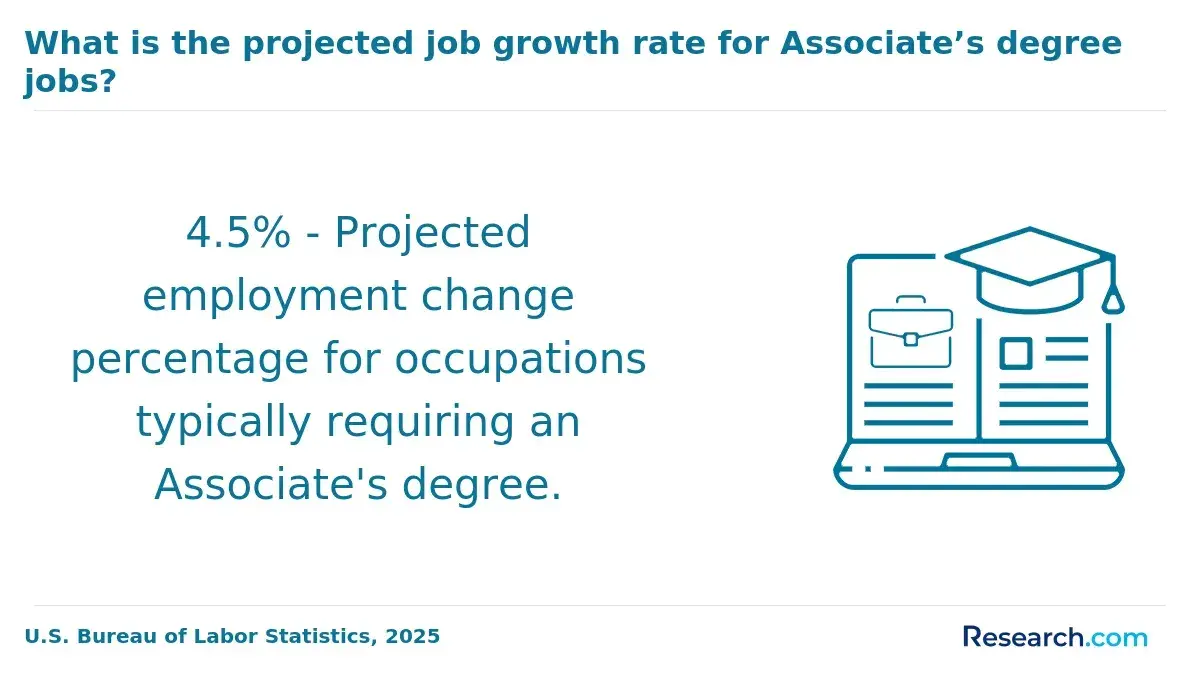
| Associate degree in communication or digital media | Undergraduate | Students seeking a lower-cost start or transfer pathway | Introductory writing, media literacy, basic digital content, and communication fundamentals |
| Bachelor's in communication | Undergraduate | Students pursuing entry-level public relations, content, social media, or corporate communication roles | Communication theory, campaigns, public speaking, media writing, audience analysis, and digital strategy electives |
| Bachelor's in strategic communication or public relations | Undergraduate | Students who want a stronger brand, reputation, campaign, or agency focus | PR writing, campaign planning, crisis communication, social media management, and measurement |
| Bachelor's in marketing communication | Undergraduate | Students interested in consumer behavior, branding, and promotional strategy | Content marketing, social advertising concepts, brand storytelling, and marketing analytics |
| Master's in communication, strategic communication, or digital media | Graduate | Professionals seeking leadership, consulting, or advanced strategy roles | Research methods, communication leadership, reputation management, analytics, digital campaign strategy, and capstone projects |
| Graduate certificate in social media or digital communication | Post-baccalaureate | Degree holders who need focused upskilling without completing another full degree | Platform strategy, digital analytics, content governance, and campaign planning |
Students who want broader career flexibility often choose communication or strategic communication because those programs apply to public relations, internal communication, advocacy, media relations, and brand communication. Students who want more direct preparation for sales funnels, advertising, and consumer acquisition may also compare online business degree programs with marketing concentrations.
A certificate can be a smart choice if you already have a bachelor's degree and need current social media skills quickly. A full degree makes more sense if employers in your target roles commonly request a bachelor's or master's credential, or if you need a broader academic foundation in research, writing, ethics, and organizational communication.
What core courses and social media strategy classes can you expect in these programs?
Course titles vary by school, but strong online communication programs usually balance theory, writing, research, technology, and applied campaign work. For social media strategy, you should look beyond whether a course mentions "social media" and ask whether it teaches decision-making, measurement, and audience insight.
Most programs include a mix of core communication courses and specialized digital media courses. The following list shows the kinds of coursework that typically build toward social media strategy competence.
- Communication theory: Explores how people interpret messages, form opinions, and respond to media in interpersonal, organizational, and public contexts.
- Media writing and storytelling: Builds concise writing, headline judgment, brand voice, editing, and adaptation across channels.
- Public relations or strategic communication: Covers campaign planning, stakeholder communication, media relations, reputation management, and crisis response.
- Digital and social media strategy: Focuses on audience personas, platform selection, content calendars, campaign objectives, and cross-channel coordination.
- Analytics and measurement: Teaches students to interpret engagement, reach, conversion, sentiment, and campaign performance data without confusing vanity metrics with business outcomes.
- Visual communication and multimedia production: Introduces design principles, short-form video, image editing, accessibility, and message consistency.
- Research methods: Develops skills in surveys, interviews, focus groups, social listening, and evidence-based campaign planning.
- Communication law and ethics: Covers copyright, disclosure, privacy, misinformation, influencer transparency, and responsible community management.
- Capstone, internship, or campaign lab: Gives students a finished project that can be used in a portfolio or discussed in job interviews.
AI is changing what students should expect from these courses. Employers increasingly value communicators who can use generative AI tools for ideation, drafting, caption variation, and social listening support while still applying human judgment to accuracy, ethics, tone, and audience trust. A strong program should teach students to evaluate AI outputs rather than simply use tools to produce more content.
One common mistake is choosing a program because it lists trendy platform names in course descriptions. Platforms change quickly; transferable skills such as research, messaging, analytics interpretation, editorial judgment, and crisis communication are more durable.
How can you verify accreditation and program quality for online communication and social media degrees?
Accreditation is one of the most important quality checks for any online degree. For most communication programs, the key baseline is institutional accreditation from an accreditor recognized by the U.S. Department of Education or the Council for Higher Education Accreditation. This affects financial aid eligibility, transfer credit, graduate admission, and employer confidence.
Programmatic accreditation is less universal in communication than it is in fields such as nursing, education, or speech-language pathology. That means students should evaluate both institutional accreditation and program-level evidence of quality.
Use the steps below before you apply or pay an enrollment deposit.
- Confirm the school's institutional accreditation in the U.S. Department of Education's Database of Accredited Postsecondary Institutions and Programs or the accreditor's own directory.
- Check whether online students receive the same diploma, faculty access, library access, tutoring, career services, and alumni support as campus students.
- Review required courses to confirm that social media strategy is taught through campaigns, analytics, research, and ethics, not only through general media studies.
- Ask for examples of capstone projects, internship options, student portfolios, employer partnerships, or alumni job titles.
- Read transfer credit, prior learning, withdrawal, and refund policies before assuming the program is affordable.
- Verify whether courses are taught by full-time faculty, industry practitioners, or a mix, and ask how often the curriculum is updated.
Be cautious if a school cannot clearly explain its accreditation, pressures you to enroll immediately, promises specific job outcomes, or hides fees until late in the process. Accreditation does not guarantee a good fit, but lack of recognized accreditation can create serious problems later.
If you are comparing communication programs with more regulated communication-related fields, note that standards can differ sharply. For example, an SLP online masters program involves licensure-focused clinical requirements that do not apply to most social media strategy degrees.
What are typical admission requirements for online communication programs focused on social media?
Admission requirements depend on the degree level, selectivity of the school, and whether the program is designed for first-time students, transfer students, or working professionals. Online format does not automatically mean open admission, especially for competitive public universities or graduate programs.
The requirements below are common, but students should confirm exact policies with each institution.
- Associate or bachelor's programs: High school diploma or GED, transcripts, minimum GPA, application form, and sometimes placement testing or an essay.
- Transfer bachelor's programs: College transcripts, minimum transferable credits, minimum GPA, and course equivalency review.
- Master's programs: Accredited bachelor's degree, undergraduate transcripts, resume, statement of purpose, recommendation letters, and sometimes writing samples.
- Graduate certificates: Bachelor's degree, transcript review, professional resume, and occasionally prerequisite coursework in communication, marketing, or media.
- International or multilingual applicants: English proficiency documentation may be required depending on the school's policy.
Standardized test requirements are less common than they once were for many online communication programs, but policies vary. If a program is test-optional, use the rest of the application to show readiness through writing samples, professional experience, volunteer campaigns, social media projects, or academic performance.
Applicants can improve their fit by preparing a simple portfolio before applying. It does not need to be professionally polished; it can include a mock content calendar, social media audit, blog post, press release, campaign critique, analytics interpretation, or short-form video concept. This helps admissions teams and faculty see that you understand communication as strategy, not just content production.
How long do online communication degrees take, and what do they usually cost?
Time to completion depends on transfer credits, course load, academic calendar, and whether the program uses accelerated terms. Cost depends on tuition per credit, fees, textbooks, technology, transfer policy, and whether online students pay in-state, out-of-state, or special online tuition.
College Board's 2024 tuition data shows why cost comparisons can be misleading if you only look at sticker price: published tuition and fees averaged $11,610 for in-state public four-year institutions, $30,780 for out-of-state public four-year institutions, and $43,350 for private nonprofit four-year institutions. Online programs may differ from these averages, but the data gives you a useful benchmark for judging whether a quoted price is unusually high or low.
The table below summarizes typical timelines and major cost considerations by credential type.
| Credential | Typical completion time | Common credit range | Cost factors to compare |
| Associate degree | About 2 years full time | Usually around 60 credits | Community college tuition, transferability, online fees, and whether credits apply cleanly to a bachelor's degree |
| Bachelor's degree | About 4 years full time, less with transfer credits | Usually around 120 credits | Per-credit tuition, transfer credit limits, residency requirements, technology fees, and internship costs |
| Master's degree | About 1 to 2 years full time; longer part time | Often around 30 to 36 credits | Graduate tuition, employer tuition assistance, capstone requirements, and whether courses are offered year-round |
| Graduate certificate | Often several months to 1 year | Often around 9 to 18 credits | Whether certificate credits can later apply to a master's degree, plus total fees and software requirements |
To estimate your real cost, calculate the full program price rather than the term price. Include tuition, mandatory fees, books, software, laptop upgrades, transcript fees, graduation fees, and any travel for optional or required residencies.
Students can often reduce cost by transferring general education credits, using employer tuition assistance, choosing public institutions with online tuition discounts, taking advantage of military or veteran benefits, applying for scholarships, and completing the FAFSA if the school participates in federal aid programs. The biggest mistake is choosing the lowest tuition per credit without checking how many credits the school will actually require you to complete.
What careers can you pursue with a communication degree emphasizing social media strategy?
A communication degree emphasizing social media strategy can lead to roles in public relations, corporate communication, marketing communication, nonprofit advocacy, government communication, higher education, entertainment, healthcare, technology, and agency settings. The degree is most useful when paired with a portfolio that shows campaign thinking and measurable results.
The table below connects common roles with what professionals actually do. Use it to match your program choice with the work you want after graduation.
| Career path | Typical responsibilities | Best preparation within the degree |
| Social media coordinator | Schedules content, monitors engagement, drafts captions, prepares reports, and supports campaigns | Content calendars, platform writing, analytics basics, visual communication, and portfolio projects |
| Social media strategist | Sets campaign goals, defines audiences, selects channels, aligns content with brand objectives, and evaluates results | Campaign planning, research methods, social listening, analytics, and strategic communication |
| Public relations specialist | Writes press materials, manages media relationships, supports reputation efforts, and coordinates public messaging | PR writing, crisis communication, media relations, ethics, and audience analysis |
| Content strategist | Plans content themes, voice, publishing workflows, and cross-channel messaging | Storytelling, editorial strategy, brand communication, UX writing concepts, and content measurement |
| Community manager | Moderates online communities, responds to users, escalates issues, and supports brand trust | Interpersonal communication, conflict management, crisis response, accessibility, and ethics |
| Digital communications manager | Oversees email, web, social, and internal or external digital messaging | Organizational communication, leadership, analytics, campaign management, and stakeholder communication |
Entry-level roles often involve execution: publishing content, monitoring comments, preparing reports, and supporting campaigns. Advancement usually requires stronger strategy, analytics, people management, budget awareness, and cross-functional collaboration with design, legal, sales, customer service, and leadership teams.
Social media strategy also overlaps with internal communication and employee engagement. Students interested in workplace culture, employer branding, and recruitment messaging may eventually compare communication graduate study with online human resource management masters programs, especially if they want to work at the intersection of HR, communication, and organizational leadership.
What salary ranges and job outlook can graduates in communication and social media expect?
Salary outcomes vary widely because "social media" can describe entry-level content work, specialized analytics roles, public relations jobs, or management positions. Use salary data as a benchmark, not a promise. Your location, industry, internship experience, writing ability, portfolio, and technical skills can all affect offers.
BLS May 2024 wage data provides a useful U.S. baseline for related occupations. The table below shows roles that commonly overlap with communication and social media strategy pathways.
| Related occupation | 2024 median annual wage | How it connects to social media strategy |
| Public relations specialists | $69,780 | Relevant for students focused on reputation, media relations, public messaging, and campaign communication |
| Market research analysts | $76,950 | Relevant for students who build stronger audience research, survey, analytics, and insight skills |
| Writers and authors | $72,270 | Relevant for content-focused roles that require strong writing, storytelling, editing, and brand voice |
| Public relations and fundraising managers | $138,520 | Relevant as a longer-term leadership path for experienced communicators managing reputation, campaigns, or development communication |
| Advertising, promotions, and marketing managers | $159,660 | Relevant for experienced professionals leading campaigns, brand strategy, budgets, and teams |
Job outlook also depends on the role. BLS projections for 2023 to 2033 show employment for public relations specialists growing faster than the average for all occupations, while advertising, promotions, and marketing managers are also projected to grow. For students, the practical takeaway is that the strongest prospects tend to go to candidates who can combine communication judgment with analytics, writing, and business awareness.
AI and automation are likely to reshape entry-level tasks such as caption drafting, content repurposing, reporting summaries, and image ideation. That does not eliminate the need for skilled communicators, but it raises the bar: graduates should be able to interpret data, verify claims, protect brand trust, manage sensitive issues, and explain why a strategy fits the audience.
How should you choose the best online communication program for your social media career goals?
The best online communication program is the one that fits your target role, budget, schedule, and preferred learning style. A highly ranked program is not automatically the best choice if it lacks social media analytics, portfolio projects, transfer flexibility, or career support for online students.
Before applying, use a structured process so you compare programs on decision factors that affect your outcome.
- Define your target role first: social media coordinator, public relations specialist, content strategist, digital communications manager, or graduate-level leadership role.
- Review the curriculum for strategy depth, including audience research, campaign planning, analytics, crisis communication, ethics, and a capstone or internship.
- Confirm institutional accreditation and make sure credits will transfer if you may continue into another degree later.
- Ask whether online students can access career coaching, alumni networks, internships, faculty office hours, library resources, and portfolio support.
- Compare total cost of completion after transfer credits, not just tuition per credit.
- Look for evidence of current curriculum updates related to AI, platform governance, accessibility, privacy, analytics, and misinformation.
- Request examples of student projects or capstones so you can judge whether coursework produces job-ready work samples.
- Check course delivery format and weekly workload to make sure it fits your job, family responsibilities, and preferred learning style.
There are also red flags to avoid. Be careful with programs that treat social media as a single elective, do not require writing-intensive work, provide little faculty feedback, lack transparent pricing, or cannot explain how online students build portfolios. Also avoid assuming that a degree alone will make you competitive; employers often want evidence that you can plan, write, publish, measure, and improve campaigns.
If you are undecided between communication, marketing, business, or HR-related pathways, compare sample courses and job postings side by side. The right choice should make it easier to build the portfolio and experience your target employers actually request.
Other Things You Should Know About Communication
No, prospective students do not need to be active on every social media platform before enrolling. Programs typically teach foundational skills, including platform-specific strategies, regardless of students' prior online presence. Building expertise during the coursework is more important than pre-existing activity.
No. Programs generally expect communication potential, not influencer-level platform experience. It helps to understand major platforms, but stronger preparation includes writing, audience awareness, curiosity about analytics, and willingness to revise work based on feedback.
Some programs include paid media concepts, but not all communication degrees go deeply into ad buying, bidding, or performance marketing. If paid advertising is your main goal, review syllabi carefully and consider marketing analytics or digital marketing electives.
For many social media and communication roles, both matter. The degree can meet employer education requirements and build theory-based judgment, while the portfolio proves you can apply those skills through campaigns, writing samples, analytics reports, and content plans.
References
- Social Media Management (B.A.) - English - INU – Innovative University AG https://inu.de/en/product/social-media-management-b-a-english/
- Online Bachelor’s in Communication Degree Programs - OnlineEducation.com https://www.onlineeducation.com/communication/bachelors-in-communication-program
- The Need of Accreditation in Online Degree Programs https://www.onlinecu.in/blog/cu/the-importance-of-accreditation-in-online-degree-programs.php
- How to Choose the Right Online Course for Your Career https://careerambit.com/blog/what-to-look-for-in-a-good-online-course
- Best Social Media Marketing Certifications for Rapid Career Growth https://cxl.com/blog/best-social-media-marketing-courses/
- Vogue Social Media Strategy & Marketing | Vogue College of Fashion https://www.voguecollege.com/courses/social-media-strategy-marketing/
- What Can You Do With a Communications Degree? https://www.pointloma.edu/resources/accelerated-undergraduate/what-can-you-do-communications-degree
- Strategy, Marketing and Communication https://www.ied.edu/subjects/strategy-marketing-communication
- Online Bachelor’s in Social Media Programs (Social Media Major) https://www.mastersincommunications.com/related-degrees/bachelors-in-social-media