2027 Accredited Online School Psychology Degree Programs With No GRE or GMAT Requirements

Co-Founder and Chief Data Scientist
Choosing an online school psychology program is harder when admissions pages use different terms for "no GRE, " "test-optional, " and accreditation. The stakes are real: the U.S. Bureau of Labor Statistics reported a May 2024 median annual wage of $84,940 for school psychologists, but licensure-focused programs vary widely in cost, fieldwork rules, and state eligibility.
This guide is for prospective graduate students comparing accredited online or hybrid school psychology degrees without GRE or GMAT requirements. You will learn which factors matter most so you can choose a program for access, quality, affordability, and career fit.
Key Things You Should Know
- Many online school psychology programs no longer require the GRE, and the GMAT is rarely relevant because school psychology is not a business degree pathway.
- No-test admissions do not remove core requirements: applicants still need strong transcripts, recommendations, a purpose statement, field experience, and proof they can complete supervised practicum and internship hours.
- For career planning, use outcomes cautiously: BLS May 2024 data places the median annual wage for school psychologists at $84,940, but state licensure rules and district pay scales affect actual earnings.
Which Accredited Online School Psychology Degree Programs Do Not Require the GRE or GMAT?
Accredited online school psychology programs without GRE or GMAT requirements are usually graduate-level programs leading to an EdS, MA/EdS, MS/EdS, or specialist-level credential. "Online" often means online coursework plus in-person practicum, internship, residencies, or campus intensives, because school psychology is a supervised practice profession.
The table below highlights examples of institutionally accredited U.S. programs that publicly emphasize online or low-residency delivery and do not generally require the GRE or GMAT for standard admission. Policies can change by cycle, so applicants should confirm the current requirement directly with the department before applying.
| School | Program | Online format | GRE or GMAT status | Accreditation and licensure notes |
| Ball State University | MA and EdS in School Psychology pathway | Online coursework with required field experiences | GRE is not generally required; GMAT is not used | Institutionally accredited; applicants should verify current NASP recognition and state eligibility |
| Fort Hays State University | MS and EdS in School Psychology | Online or hybrid structure with supervised school-based training | GRE is not generally required; GMAT is not used | Institutionally accredited; designed for school psychology credential preparation |
| University of Northern Colorado | EdS in School Psychology | Online cohort model with required applied experiences | GRE is not generally required; GMAT is not used | Institutionally accredited; applicants should confirm current specialist-level approval and state fit |
| National University | School Psychology graduate credential pathway | Online coursework with fieldwork requirements, especially relevant to California candidates | GRE and GMAT are not commonly required | Institutionally accredited; state credential alignment is especially important to verify |
| Capella University | MS or specialist-level school psychology-related pathway | Online coursework with required residencies, practicum, or internship components | GRE and GMAT are not commonly required | Institutionally accredited; applicants should closely verify NASP status and licensure eligibility in their state |
A strong shortlist should not stop at "no GRE." For school psychology, the better question is whether the program leads to the credential you need in the state where you plan to work. Institutional accreditation confirms that the college or university meets broad quality standards, while specialized recognition, state approval, or NASP alignment may matter for certification, internship placement, and portability.
Applicants comparing degree pathways from outside psychology sometimes start with undergraduate science or human development interests; if that describes you, an online bachelor's degree in biology can be useful for understanding online degree formats, but school psychology usually requires graduate preparation in assessment, consultation, child development, and school-based intervention.
Why Have Accredited Online School Psychology Degree Programs Eliminated GRE and GMAT Requirements?
Programs have dropped GRE requirements for a practical reason: standardized tests are not always the best predictor of who will become an effective school psychologist. Faculty committees increasingly want evidence that applicants can communicate with families, analyze student needs, work ethically in schools, and succeed in supervised practice.
Several broader trends explain why test-free and test-optional policies have become more common. Online graduate programs are competing for working adults, districts need more mental health support staff, and many applicants face time and cost barriers when preparing for standardized tests. Removing the GRE can widen the applicant pool without lowering expectations for GPA, recommendations, interviews, or field readiness.
There is also a discipline-specific reason the GMAT is absent: school psychology programs are not management programs. If a school psychology admissions page mentions only the GRE, that is typical. If it mentions neither GRE nor GMAT, applicants should still read the full admissions checklist because other screening tools may replace test scores.
Students often compare admissions flexibility across very different graduate fields, such as education, nursing, and psychology. For example, someone researching cheapest DNP programs online is usually looking for affordability and reduced application friction, but school psychology adds a separate layer: eligibility for supervised practice in K-12 settings.
What Admissions Criteria Matter Most Without GRE or GMAT Scores?
Without GRE or GMAT scores, admissions committees put more weight on evidence that predicts graduate persistence and professional fit. The most important materials are usually academic history, relevant experience with children or adolescents, communication skills, and readiness for practicum and internship expectations.
The table below compares common admissions factors and explains why they matter when test scores are absent. Use it to identify where your application is already strong and where you may need to add context.
| Admissions factor | Why it matters without test scores | What a strong applicant shows |
| Undergraduate GPA | Shows academic consistency and readiness for graduate-level psychology and education coursework | Solid overall performance, especially in psychology, education, statistics, research methods, or child development courses |
| Prerequisite coursework | Helps faculty judge whether the student can handle assessment, learning theory, and behavioral intervention topics | Completed or planned courses in psychology, development, learning, statistics, and research |
| Personal statement | Replaces the test score as a major signal of motivation and professional judgment | Clear explanation of why school psychology, why this program, and how prior experience connects to student support |
| Recommendations | Provides third-party evidence of reliability, communication, ethics, and academic ability | Letters from professors, supervisors, school leaders, or mental health professionals who know the applicant well |
| Résumé or experience | Shows exposure to schools, youth services, disability support, tutoring, behavioral health, or community programs | Specific responsibilities, measurable service experience, and reflection on working with diverse learners |
| Interview | Allows faculty to assess maturity, interpersonal skill, and understanding of the profession | Thoughtful answers about assessment, confidentiality, collaboration, equity, and school-based problem solving |
To strengthen an application without test scores, focus on quality rather than volume. Admissions committees are more likely to value a coherent story than a long list of unrelated activities.
- Review each program's prerequisite list before applying and complete missing courses early if allowed.
- Ask recommenders who can speak to both academic ability and professional behavior, not just personal character.
- Use the statement of purpose to connect your experience with the actual work of school psychologists, including assessment, consultation, intervention, and collaboration.
- Prepare for interviews by learning how the program structures practicum, internship, supervision, and state credential preparation.
Are No-GRE or No-GMAT Online School Psychology Degree Programs Easier to Get Into?
No-GRE and no-GMAT programs are not automatically easier to get into. They are easier to apply to because they remove a testing step, but faculty may still be selective if cohorts are small, internship placement capacity is limited, or the program is aligned with licensure requirements.
The biggest misconception is that a missing test requirement equals a lower academic bar. In practice, test-free programs often shift scrutiny toward GPA, writing quality, recommendations, and interviews. A weak statement or vague career rationale can hurt an applicant more when there is no standardized score to offset it.
This comparison explains the practical difference between common admissions policies. It can help you decide whether to submit scores when a program allows them.
| Policy type | What it means | Best applicant strategy |
| Test-required | GRE scores must be submitted for a complete application | Apply only if your timeline allows preparation and your score will not undermine the rest of the file |
| Test-optional | Scores may be submitted but are not required | Submit only if scores are strong and add evidence not already shown by GPA or experience |
| Test-free | Scores are not reviewed or are not part of the admissions process | Invest effort in essays, recommendations, résumé, prerequisites, and interview preparation |
| Test-waiver | Scores are waived if the applicant meets certain conditions | Confirm waiver rules in writing and ask whether waiver applicants are reviewed differently |
Taking the GRE can still make sense if a target program is test-optional and your score is likely to be high, your undergraduate GPA is below the preferred range, or you are applying to a mix of programs that includes test-required schools. Otherwise, skipping the test can save time and application cost that may be better spent improving the rest of your file.
Does Skipping the GRE or GMAT Affect Academic Quality or Accreditation?
Skipping the GRE or GMAT does not, by itself, affect academic quality or accreditation. Accreditation is based on institutional standards, program design, faculty qualifications, student support, assessment practices, and outcomes, not on whether applicants submit standardized test scores.
For school psychology, applicants should understand two layers of quality review. Institutional accreditation applies to the college or university as a whole and is essential for federal financial aid eligibility and general legitimacy. Program-level recognition, state approval, or NASP alignment may be important for certification, internship placement, and mobility across states.
Use the following checks before assuming a no-GRE program is safe for licensure goals. These steps are especially important for online programs because students may complete fieldwork outside the state where the university is located.
- Confirm the school's institutional accreditation through a recognized U.S. accreditor.
- Ask whether the school psychology program is NASP-approved, NASP-aligned, or approved by the state education agency where the university operates.
- Ask whether graduates are eligible for school psychologist certification in your state, not only the university's home state.
- Verify practicum and internship hour requirements, supervisor qualifications, and whether placements can be completed near your location.
- Request written clarification if the admissions page says "licensure track," "credential track," or "school psychology concentration," because these terms can mean different things.
A no-GRE policy is best viewed as an access feature, not a quality signal. A high-quality program should still be transparent about curriculum, supervision, faculty, assessment training, student support, and certification outcomes.
Which Students Benefit Most From Online School Psychology Degree Programs Without GRE or GMAT Requirements?
No-GRE online school psychology programs are especially helpful for applicants who are ready for graduate study but do not have the time, money, or need to complete a standardized exam. The strongest fit is usually a student who can show professional maturity through coursework, service, or work with children and families.
These applicants often benefit most from test-free or test-optional policies because their real strengths are better shown through experience and written materials. The goal is not to avoid rigor; it is to let relevant evidence carry more weight.
- Working educators, paraprofessionals, behavior technicians, tutors, or youth program staff who already understand school environments.
- Career changers with experience in counseling-adjacent, social service, childcare, disability support, or community mental health settings.
- Applicants with strong undergraduate performance but limited access to test preparation resources.
- Students applying on a tight timeline who can produce strong essays, recommendations, and prerequisite evidence faster than they can prepare for the GRE.
- Rural or place-bound students who need online coursework but can arrange supervised fieldwork locally.
Some applicants should be more cautious. If your GPA is low, your experience with children is limited, and your writing sample is weak, the lack of a GRE may remove one possible way to demonstrate academic readiness. In that case, consider strengthening prerequisites, gaining school-based experience, or applying after building a more competitive profile.
Admissions flexibility matters in many online degree searches. A nurse comparing easiest online RN to BSN programs, for example, may prioritize speed and transfer credit, while a future school psychologist must also evaluate supervised practice, child assessment training, and state certification fit.
How Do Tuition and Financial Aid Compare for No-GRE Online School Psychology Degree Programs?
No-GRE online school psychology programs are not automatically cheaper, but skipping the test can reduce upfront application costs and time. The larger financial decision is total program cost: tuition, fees, residencies, background checks, fieldwork travel, lost work hours, and whether you can keep earning while enrolled.
NCES data published in 2024 shows that average graduate tuition and required fees were substantially different by institution type, with public institutions generally lower than private nonprofit institutions. That matters because a school psychology pathway may take multiple years and can include specialist-level credits beyond a master's degree.
When comparing tuition, ask for the full cost of completion rather than relying on per-credit pricing. The items below are the cost categories most likely to surprise online school psychology students.
- Total required credits for the full credential pathway, including master's and specialist-level coursework if both are required.
- Per-credit tuition and whether online students pay additional distance learning, technology, or program fees.
- Residency, campus intensive, or travel costs that are not obvious in the tuition rate.
- Practicum and internship expenses, including transportation, background checks, fingerprinting, liability coverage, and reduced work availability.
- Availability of graduate assistantships, district tuition support, employer reimbursement, scholarships, federal loans, or payment plans.
The table below summarizes how common cost factors affect value. Use it to compare programs beyond the headline tuition rate.
| Cost factor | Why it affects value | Question to ask the program |
| Credit requirement | A lower per-credit rate can still be expensive if the program requires many credits | What is the total number of credits required for credential eligibility? |
| Online fees | Technology or distance fees can raise the real cost of online study | Are online program fees included in the published tuition estimate? |
| Fieldwork logistics | Internship schedules may reduce paid work hours | Can I complete practicum and internship near where I live? |
| Residencies | Travel and lodging can add costs even in mostly online programs | How many in-person visits are required? |
| Financial aid eligibility | Accreditation and enrollment status affect federal aid access | Is this program eligible for federal financial aid, and what enrollment level is required? |
If you are comparing costs across online professional degrees, guides on how much does online nursing school cost can help you think about tuition, fees, and clinical expenses, but school psychology applicants should add internship placement and state credentialing costs to the calculation.
What Career Outcomes Can Graduates Expect From No-GRE Online School Psychology Degree Programs?
Graduates of school psychology programs typically pursue roles in public school districts, charter schools, educational service agencies, private schools, state agencies, or related child-serving organizations. The core role involves evaluating student learning and behavior, consulting with teachers and families, supporting interventions, participating in special education processes, and responding to student mental health needs.
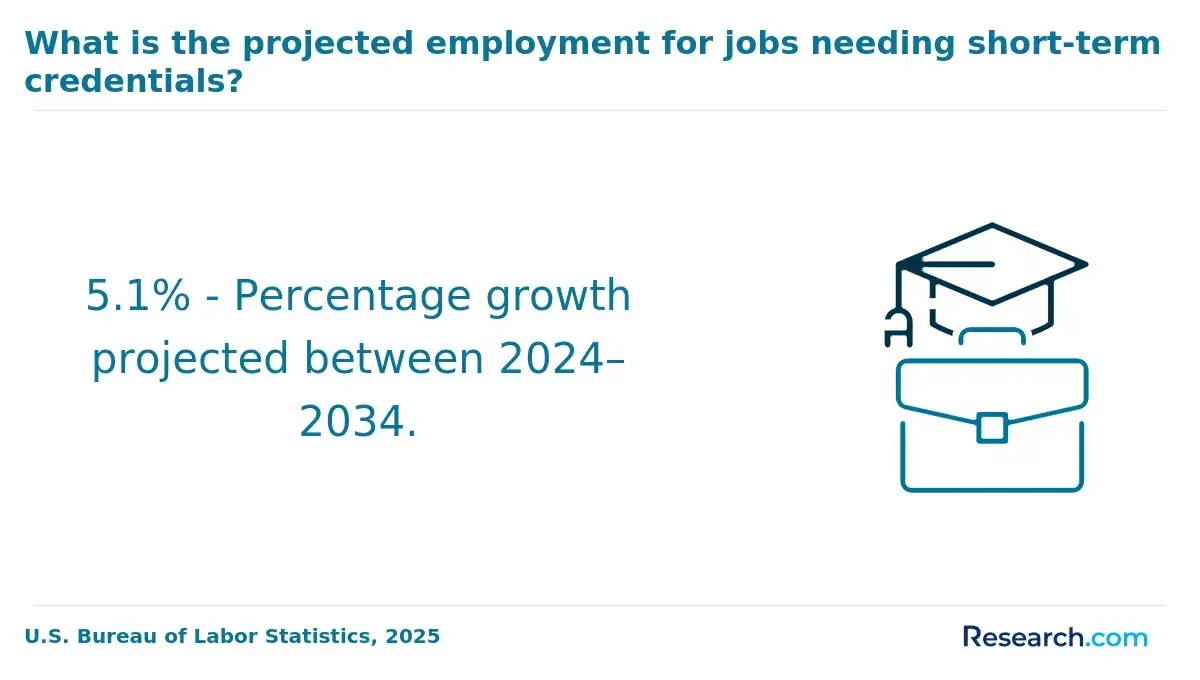
The labor market is supported by continued demand for student mental health services, special education evaluation, behavioral intervention, and multi-tiered systems of support. BLS employment projections for psychologists overall show faster-than-average growth from 2024 to 2034, but school psychology hiring still depends on district budgets, state staffing rules, and regional shortages.
Career outcomes are strongest when the program leads clearly to the credential required in the state where the graduate wants to work. A no-GRE admissions policy is unlikely to matter to employers; what matters more is whether the graduate completed an accredited or approved pathway, passed required exams if applicable, and finished supervised internship hours.
Common school psychology responsibilities include several skill areas. Applicants should choose programs that teach and assess these competencies directly, not just mention them in catalog language.
- Psychoeducational assessment and interpretation of cognitive, academic, social-emotional, and behavioral data.
- Consultation with teachers, families, administrators, and multidisciplinary teams.
- Design and monitoring of academic, behavioral, and mental health interventions.
- Knowledge of special education law, ethics, confidentiality, and culturally responsive practice.
- Crisis prevention, threat assessment support, and student wellness programming within school systems.
Some students compare helping-profession careers before committing to a graduate path. Resources about the cheapest self-paced online college options can be useful for exploring flexible learning models, but school psychology is not usually self-paced because supervised practice and cohort sequencing are central to credential preparation.
What Common Application Mistakes Reduce Admission Chances to No-GRE Online School Psychology Degree Programs?
The most common application mistake is treating "no GRE required" as the main selection criterion. Admissions committees still reject applicants who do not show fit, readiness, or understanding of the profession.
These mistakes can reduce admission chances even when the program is test-free. Avoiding them can make your application more focused and credible.
- Submitting a generic personal statement that could apply to counseling, teaching, social work, or clinical psychology instead of school psychology specifically.
- Ignoring prerequisite coursework until after the deadline, especially statistics, psychology, child development, or research methods requirements.
- Choosing recommenders with impressive titles who cannot describe your academic ability, reliability, or work with children.
- Failing to explain weak grades, academic gaps, or career changes in a constructive and brief way.
- Applying without confirming that practicum and internship placements can be completed in your state or region.
- Assuming "accredited university" means the program automatically meets every state's school psychologist credential requirements.
- Overlooking writing quality, even though essays and case-style responses may replace standardized tests as evidence of graduate readiness.
A better approach is to build an application around professional fit. If you have school-based experience, describe what you learned about collaboration, student diversity, intervention, or assessment. If you are a career changer, explain how your prior work prepared you for ethical decision-making and service to children and families.
How Should Students Compare Accredited Online School Psychology Degree Programs Without GRE or GMAT Requirements?
The best accredited online school psychology program without GRE or GMAT requirements is the one that fits your state credential goal, schedule, budget, and learning style. Admissions convenience should be only one part of the decision.
Use this step-by-step comparison process before applying. It is designed to help you separate legitimate flexibility from risky shortcuts.
- Identify the exact credential you need in the state where you plan to work as a school psychologist.
- Confirm institutional accreditation, then ask about NASP approval, NASP alignment, or state program approval.
- Compare the full program length, including master's-level coursework, specialist-level coursework, practicum, and internship.
- Ask whether online students receive placement support or must independently secure field sites and supervisors.
- Calculate total cost, not just tuition per credit, including fees, residencies, travel, and lost work time during internship.
- Review faculty expertise in assessment, intervention, consultation, special education, and culturally responsive practice.
- Ask about cohort size, advising, exam preparation, internship completion support, and recent graduate outcomes.
- Decide whether submitting optional GRE scores would strengthen your file or simply add cost and delay.
The table below provides a final decision framework. Use it to match your profile with the type of program that is most likely to serve your goals.
| Your situation | Program feature to prioritize | Why it matters |
| You plan to work in a specific state | Clear state credential alignment | Licensure rules vary, and online students must meet the rules where they intend to practice |
| You work full time | Part-time sequencing and evening or asynchronous coursework | Flexibility helps, but practicum and internship may still require daytime school hours |
| You have a lower GPA | Holistic review, prerequisite improvement options, and strong interview process | A no-GRE policy means the rest of the application must prove readiness |
| You need the lowest total cost | Public tuition, local fieldwork, limited residency travel, and financial aid eligibility | Total cost can differ significantly from advertised tuition |
| You may move after graduation | NASP approval or strong portability documentation | Recognized program standards can make credential review easier, though not automatic |
Other Things You Should Know About School Psychology
School psychologists focus heavily on assessment, learning, behavior, special education eligibility, intervention planning, and consultation. School counselors usually focus more on academic planning, social-emotional support, college and career guidance, and short-term student counseling.
Often, yes, but it depends on the program and state rules. Ask whether the university approves out-of-state placements, what supervisor credentials are required, and whether the program helps secure practicum and internship sites.
In many states, a specialist-level degree such as an EdS is the standard school-based credential pathway. Requirements vary, so students should confirm state certification rules before enrolling.
Some do, especially in educational agencies, assessment centers, universities, policy organizations, or child-serving nonprofits. However, clinical diagnosis or independent therapy roles may require a different license, such as a psychologist license or counseling license, depending on the state.
References
- MA in Educational Psychology, PPSP Credential https://www.umassglobal.edu/academic-programs/ma-educational-psychology-ppsp-credential
- The 12 Best School Psychology Programs in California for 2026 - Psychology California https://psychologyca.org/masters-programs/school-psychology/
- 2025's Best Online Master’s in Psychology: No GRE Required https://www.onlinemastersdegrees.org/best-programs/psychology/no-gre/
- School Psychology MA plus Certification https://www.fdu.edu/program/ma-school-psychology-with-certification/
- Best Online School Psychology Programs 2025 | Psychology.org https://www.psychology.org/rankings/best-online-school-psychology-programs/
- Psychology Accreditation: What you need to know https://www.onlinepsychologydegrees.com/articles/accreditation/