
2027 Iowa Nursing License Requirements

Co-Founder and Chief Data Scientist
Getting a nursing license in Iowa is not just a paperwork step. It determines whether you can legally accept a nursing job, renew your credentials on time, practice across state lines through the Nurse Licensure Compact, or move into advanced roles such as nurse practitioner, nurse midwife, or nurse anesthetist. The process can be straightforward when you know which pathway applies to you, but it can become frustrating if transcripts, fingerprints, license verification, or exam steps are handled in the wrong order.
This guide explains how Iowa nursing licensure works for first-time applicants, out-of-state nurses, compact nurses, LPNs, RNs, internationally educated nurses, and nurses planning career advancement. You will learn what documents are typically required, how the NCLEX fits into the process, how renewal works, what costs to expect, which mistakes cause delays, and how to choose education or bridge programs that support your long-term goals.
Quick answer: How do you get a nursing license in Iowa?
To become licensed as a nurse in Iowa, you generally need to complete an Iowa Board of Nursing-approved nursing program, pass the appropriate NCLEX exam, submit an online application, provide official transcripts or credential evaluations when required, complete fingerprinting and a criminal background check, and pay the applicable fees. Nurses already licensed in another state may qualify through endorsement, and nurses with a valid multistate compact license can practice in Iowa if they meet Nurse Licensure Compact requirements.
Key things you should know about Iowa nursing licenses
- Regulating agency: The Iowa Board of Nursing oversees licensure, renewal, discipline, and practice standards for nurses in the state.
- Required exam: RN applicants take the NCLEX-RN, while practical nursing applicants take the NCLEX-PN.
- Education requirement: Applicants must complete an approved nursing program. Practical nursing programs may include a minimum of 60 credit hours, while RN preparation may involve a bachelor’s degree depending on the pathway selected.
- Application materials: Iowa nursing license applications commonly require official transcripts, proof of education, clinical preparation documentation when applicable, fingerprinting, and a background check.
- Fees to plan for: The application fee for registered nursing is listed as $100, while the practical nursing application fee is listed as $75. Some applicants, including endorsement applicants, may encounter a $169 non-refundable fee that includes application processing and the criminal background check. NCLEX costs are separate.
- What is an Iowa nursing license and why is it necessary?
- What types of nursing licenses are available in Iowa?
- What are the requirements for an Iowa nursing license?
- How do you apply for a nursing license in Iowa?
- How often do you need to renew your nursing license in Iowa?
- Can a compact nurse practice in Iowa?
- What advanced practice opportunities are available for nurses in Iowa?
- Can advanced education accelerate your nursing career growth in Iowa?
- How can nurses licensed in other states obtain a license in Iowa?
- What are the common challenges faced by nurses when applying for licensure in Iowa?
- What additional healthcare licensure options can broaden your career in Iowa?
- What are the requirements to become a LPN in Iowa?
- What alternative healthcare career paths can complement your nursing license in Iowa?
- What legal and regulatory updates impact nursing licensure in Iowa?
- What are the steps to become a nurse midwife in Iowa?
- What tips and resources can help you through the licensing exam in Iowa?
- What educational options are available for aspiring nurses in Iowa?
- What are the ongoing professional development and continuing education opportunities for Iowa nurses?
- How can LPNs transition to RN licensure in Iowa?
- What are the career advancement opportunities for LVNs in Iowa?
- What is the cost of obtaining and maintaining a nursing license in Iowa?
What is an Iowa nursing license and why is it necessary?
An Iowa nursing license is the state-issued credential that authorizes a qualified person to practice nursing in Iowa. It confirms that the nurse has met education, examination, background review, and regulatory standards established for safe patient care. Without the appropriate license or compact privilege, a person cannot legally work as an RN or LPN in Iowa.
The license matters for several reasons:
- Legal authority to practice: Employers use licensure to verify that a nurse is eligible to provide patient care within Iowa’s regulatory framework.
- Patient protection: Licensure helps prevent unqualified individuals from performing nursing duties that require clinical judgment, medication administration, assessment, or direct care.
- Professional accountability: The Iowa Board of Nursing can review complaints, investigate potential violations, and take disciplinary action when standards are not met.
- Continuing competence: Renewal requirements encourage nurses to keep their knowledge current as healthcare standards, technologies, and care models change.
- Career mobility: A properly maintained license supports employment, compact practice privileges, endorsement into other states, and advancement into specialized roles.
- Recognition of military experience: Iowa provides pathways that may help military personnel connect relevant training and experience to nursing licensure requirements.
Licensure also has a direct connection to career planning. According to 2023 data from the United States Bureau of Labor Statistics, registered nurses in Iowa, including nurses working in aesthetic or cosmetic settings, earn an average annual salary of $74,610. If you are comparing specialty paths, you may also want to review Research.com’s guide to how much aesthetic nurses make a year.
National demand is another reason to take licensure planning seriously. Licensed practical and licensed vocational nurse employment is projected to grow by 5% from 2022 to 2032, with an estimated 689,900 total jobs by 2032. Those figures do not guarantee employment for any individual applicant, but they show why keeping credentials active and portable can matter in a competitive healthcare labor market.
What types of nursing licenses are available in Iowa?
Iowa primarily licenses two entry-level nursing categories: Registered Nurses and Licensed Practical Nurses. The right option depends on how much responsibility you want, how long you want to study, your budget, and whether you plan to pursue graduate-level practice later.
| License type | Typical preparation | Required exam | Common responsibilities | Best fit for |
| Registered Nurse | Completion of an Iowa Board of Nursing-approved RN program; some pathways involve a bachelor’s degree | NCLEX-RN | Patient assessment, care planning, medication administration, patient education, care coordination, and collaboration with physicians and other healthcare professionals | Students who want broader clinical responsibility, more advancement options, and a stronger foundation for graduate nursing roles |
| Licensed Practical Nurse | Completion of a board-recognized practical nursing program | NCLEX-PN | Basic nursing care, monitoring patient status, supporting RNs and providers, and assisting patients in hospitals, clinics, long-term care, and other settings | Students seeking a faster entry into nursing or a stepping stone toward RN licensure |
Applicants with criminal records are not always automatically excluded. Iowa reviews criminal history and disciplinary concerns as part of the application process, and outcomes may depend on the nature of the offense, timing, documentation, and relevance to safe practice. Internationally educated nurses may also pursue Iowa licensure, but they should expect additional credential review and verification steps.
The nursing workforce is also aging, with the median age of RNs at 52 and LPNs at 53. For new entrants, that can create opportunities over time, but it also raises the bar for preparation, adaptability, and long-term career planning. Nurses who already hold RN licensure and want advanced clinical roles may compare 1 year nurse practitioner programs, although applicants should carefully verify admission requirements, clinical placement expectations, and whether a program fits Iowa licensure needs.
What are the requirements for an Iowa nursing license?
The Iowa nursing license requirements depend on whether you are applying as a new graduate, an out-of-state nurse, an internationally educated nurse, an LPN applicant, an RN applicant, or an advanced practice candidate. Still, most applicants encounter the same core checkpoints: education, examination, background review, documentation, and fees.
| Requirement | What it means | Why it matters | Common delay to avoid |
| Approved nursing education | You must complete a nursing program accepted by the Iowa Board of Nursing for your license level. | The board uses education to confirm that applicants received appropriate classroom and clinical preparation. | Choosing a program without checking whether it supports Iowa licensure. |
| NCLEX exam | RN candidates take the NCLEX-RN; practical nursing candidates take the NCLEX-PN. | The exam tests whether a candidate has the knowledge and judgment needed for safe entry-level nursing practice. | Waiting until after graduation to learn the exam registration process. |
| Clinical training | Clinical hours vary by program, but supervised hands-on experience is a core part of nursing preparation. | Clinical training helps students apply theory to real patient care settings. | Assuming every online program provides or arranges acceptable clinical placements. |
| Background check | Iowa reviews criminal history, prior discipline, and other information relevant to safe practice. | The process helps protect patients and maintain public trust in nursing. | Failing to disclose required information or delaying fingerprint submission. |
| Official documentation | Transcripts, license verifications, fingerprint cards, waivers, and credential evaluations may be required. | The board relies on primary-source documentation rather than applicant-uploaded unofficial records. | Sending unofficial transcripts or incomplete verification forms. |
Career changers and students without a nursing background should compare program formats carefully. Some may begin with associate-level options, accelerated tracks, or bridge pathways. Research.com’s overview of the best online ADN programs for non nurses can help applicants understand one possible starting point, but each student should confirm accreditation, clinical requirements, transfer policies, and Iowa eligibility before enrolling.
International applicants usually need additional documentation, including proof of nursing education, credential review, and successful NCLEX completion. If English is not the applicant’s first language, language testing may also be required depending on the pathway.
Iowa employed 33,300 registered nurses, which shows the scale of the state’s nursing workforce. However, licensure alone does not guarantee a specific job, schedule, specialty, or salary. Your education level, experience, location, employer type, and specialty credentials still matter.

How do you apply for a nursing license in Iowa?
The Iowa nursing license application is completed through the Iowa Board of Nursing’s online process. The exact steps depend on whether you are a first-time applicant, an endorsement applicant, or an internationally educated nurse, but the safest approach is to gather documents before submitting so that your file does not stall.
- Confirm your pathway. Decide whether you are applying by examination, endorsement, compact privilege, or another route.
- Complete the online application. Applicants submit required information through the board’s process and pay the applicable fee. For endorsement applicants, the non-refundable fee is $169, which includes the application and criminal background check.
- Submit fingerprints and background forms. Applicants may need two fingerprint cards and a criminal history background waiver form. Missing or incomplete fingerprint materials can delay review.
- Request official transcripts. Your nursing school must send transcripts directly when required. Unofficial copies are not accepted.
- Verify prior licensure if applicable. Nurses licensed elsewhere typically verify original licensure through Nursys when the state participates. If not, a separate verification form may be needed.
- Provide international credential documentation if applicable. Applicants educated outside the United States may need a CGFNS report or other approved evaluation.
- Register for and pass the NCLEX if required. First-time applicants must complete the correct exam for their license type.
- Monitor application status. Respond quickly to board requests for missing documents, clarification, or additional background information.
Applicants often underestimate how long schools, licensing boards, or credential agencies need to send records. Request transcripts and verification documents early, especially if you studied out of state, changed names, attended multiple institutions, or were educated internationally.
If you are reconsidering direct patient care but want to remain in healthcare, administrative credentials may be useful. Research.com’s guide to the cheapest medical billing and coding program can help you compare another healthcare-related education path.
How often do you need to renew your nursing license in Iowa?
Iowa nursing licenses must be renewed every three years. Renewal is not the same as initial licensure: it is designed to confirm that a nurse remains eligible, compliant, and professionally current.
The renewal process usually involves an online renewal application, a renewal fee, disclosure of required information, and completion of continuing education requirements. Nurses should renew before the deadline because a lapsed license can affect employment, scheduling, credentialing, and the ability to practice legally.
| Renewal factor | What nurses should do | Why it matters |
| Renewal cycle | Track the three-year renewal period and start early. | Late renewal can interrupt employment or practice authorization. |
| Continuing education | Complete the required continuing education hours before submitting renewal. | Continuing education helps nurses stay current with clinical, ethical, and regulatory expectations. |
| Disclosures | Report criminal convictions or disciplinary matters that occurred since the prior renewal when required. | Failure to disclose can become a separate professional conduct issue. |
| Documentation | Keep records of completed continuing education and renewal confirmation. | Documentation is useful if audited or asked to verify compliance. |
Nurses who want stronger advancement options often use the renewal cycle as a reminder to plan additional education. For example, an RN may compare an RN to BSN online cheap pathway when trying to strengthen qualifications without pausing work for a traditional campus-based format.
Can a compact nurse practice in Iowa?
Yes. Iowa joined the Nurse Licensure Compact on January 1, 2018. A nurse who holds a valid multistate license from a compact home state may practice in Iowa without obtaining a separate Iowa single-state license, as long as the nurse continues to meet compact requirements and follows Iowa nursing laws and rules while practicing in the state.
The compact is especially useful for travel nurses, telehealth nurses, nurses living near state borders, and employers that need flexible staffing. It also benefits Iowa-based nurses who want mobility across other compact states. However, a compact privilege is not a substitute for understanding state-specific practice rules. When practicing in Iowa, compact nurses must comply with Iowa’s scope-of-practice expectations, documentation standards, and disciplinary rules.
| Scenario | Likely licensing route | Key point |
| You live in Iowa and want to work only in Iowa | Iowa licensure | You must meet Iowa Board of Nursing requirements. |
| You hold a multistate compact license from your home state | Compact privilege | You may practice in Iowa if your compact license remains valid and Iowa rules are followed. |
| You move your primary residence to Iowa | Iowa licensure process may be needed | Moving states can change your home-state licensing responsibilities. |
| You hold a license from a noncompact state | Endorsement | You generally need to apply for Iowa licensure rather than relying on compact privilege. |
What advanced practice opportunities are available for nurses in Iowa?
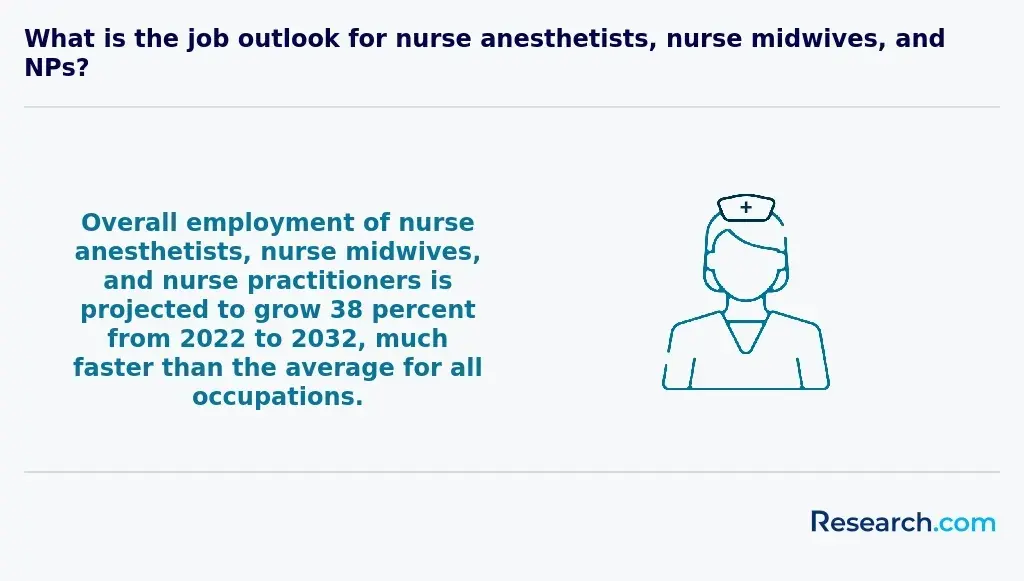
Advanced practice nursing gives experienced RNs a way to move into higher-responsibility clinical roles. In Iowa, advanced practice registered nurse pathways may include nurse practitioner, clinical nurse specialist, certified nurse-midwife, and nurse anesthetist roles. These positions require graduate-level education, advanced clinical preparation, and additional credentialing beyond basic RN licensure.
Advanced practice can make sense if you want greater clinical independence, a stronger role in diagnosis and treatment planning, or a specialized patient population such as family care, women’s health, pediatrics, psychiatric-mental health, anesthesia, or acute care. It is not the right move for every nurse. Graduate programs can be demanding, clinical placements require planning, and licensure or certification rules must be checked before enrollment.
If you are specifically considering the nurse practitioner route, compare nurse practitioner programs in Iowa and verify that each program aligns with your intended specialty, certification exam, clinical placement needs, and Iowa practice expectations.
Can advanced education accelerate your nursing career growth in Iowa?
Advanced education can shorten the distance between bedside nursing and specialized practice, leadership, teaching, or advanced clinical roles. Bridge programs are especially relevant for nurses who already hold licenses and want to avoid repeating coursework they have already mastered.
For example, RN-to-MSN and RN-to-NP options may allow qualified nurses to build on prior education while moving toward graduate preparation. These pathways can be efficient, but they are not automatically faster or cheaper for every student. Applicants should compare admission requirements, clinical placement support, state authorization, accreditation, total tuition, course load, and whether the program prepares graduates for the credential they actually want.
Nurses looking for a direct path into nurse practitioner preparation may explore RN to NP programs online. Before enrolling, confirm that the program’s clinical and academic design supports Iowa licensing and certification requirements.
How can nurses licensed in other states obtain a license in Iowa?
Nurses who already hold a license in another state may be eligible for Iowa licensure by endorsement. Endorsement is not the same as starting over. Qualified nurses usually do not need to retake the NCLEX if they have already passed the appropriate exam and meet Iowa’s requirements.
The general endorsement process includes:
- Submitting an application for Iowa licensure by endorsement to the Iowa Board of Nursing.
- Paying the required application fee.
- Providing proof of a current, active license in good standing from another state.
- Completing Iowa’s criminal background check process.
- Submitting official transcripts from an accredited nursing program when required.
- Verifying original licensure through Nursys if the original state participates, or using the required verification form if it does not.
Foreign-educated nurses may need to complete additional steps, including a credential evaluation from a recognized agency and a passing TOEFL score if English is not their first language. These applicants should start early because international transcript review, translation, credential evaluation, and testing can extend the timeline.
What are the common challenges faced by nurses when applying for licensure in Iowa?
Most Iowa nursing license delays are not caused by one major problem. They usually come from small issues that compound: missing documents, unofficial transcripts, incomplete fingerprints, unclear background disclosures, or confusion about endorsement versus compact practice.
| Common mistake | Why it causes problems | Better approach |
| Choosing a program without checking licensure fit | A program may be accredited or reputable but still may not align neatly with Iowa licensure, clinical placement, or state authorization needs. | Ask the school directly whether graduates are eligible for Iowa nursing licensure and document the answer. |
| Sending unofficial transcripts | The board generally requires official records sent directly from the institution. | Request official transcripts early and confirm where they must be sent. |
| Waiting to complete fingerprints | Background checks can slow down if cards are incomplete, delayed, or require follow-up. | Submit fingerprint materials as soon as the application instructions allow. |
| Assuming compact practice applies automatically | Compact privilege depends on holding a valid multistate license from a compact home state. | Verify your license status and home-state rules before accepting Iowa work. |
| Underestimating NCLEX preparation | Graduating from a nursing program does not guarantee exam success. | Use practice questions, review plans, test-taking strategies, and faculty support before scheduling. |
| Ignoring background disclosures | Failure to disclose required information can create more serious problems than the original issue. | Read the application carefully and provide accurate, complete information. |
| Focusing only on tuition | Books, testing, background checks, commuting, clinical placement costs, and lost work time can change the real price. | Compare total cost of attendance and licensing expenses, not just posted tuition. |
Applicants can reduce stress by creating a checklist before they apply. Include application fee, fingerprints, waiver forms, transcripts, license verification, NCLEX registration, credential evaluation if applicable, and continuing communication with the board or school.
What additional healthcare licensure options can broaden your career in Iowa?
Nursing is not the only licensed healthcare path available in Iowa. Some professionals expand into adjacent fields to increase flexibility, move into non-bedside work, or combine clinical knowledge with another regulated profession. Pharmacy is one example of a separate healthcare licensure route that may appeal to individuals interested in medication management, patient counseling, and pharmacy operations.
Because each profession has its own education, exam, scope-of-practice, and licensing standards, nurses should not assume that nursing coursework automatically satisfies another profession’s requirements. If you are comparing regulated healthcare careers, review the steps for how to become a licensed pharmacist in Iowa before committing to a new pathway.
What are the requirements to become a LPN in Iowa?
To become an LPN in Iowa, an applicant typically needs to complete a state-approved practical nursing program, pass the NCLEX-PN, complete the background check process, submit the required application, and pay the applicable fees to the Iowa Board of Nursing. LPN preparation is often a practical option for students who want to enter nursing sooner and may later bridge into RN education.
The LPN route is best suited for students who are comfortable beginning with foundational nursing responsibilities and working under the applicable supervision and scope rules. It may be less ideal for someone who already knows they want advanced practice, leadership, or specialized RN roles as quickly as possible. For a focused walkthrough, review what are the requirements to become an LPN in Iowa?
What alternative healthcare career paths can complement your nursing license in Iowa?
Nurses who want more career flexibility may consider healthcare roles that use clinical knowledge without requiring the same level of direct patient care. Medical billing and coding is one example. It can be relevant for nurses interested in documentation, reimbursement, compliance, revenue cycle work, care auditing, or administrative healthcare roles.
This does not replace nursing licensure, and it is not a shortcut to clinical advancement. Instead, it can complement nursing experience, particularly for professionals who want remote-friendly or administrative options. If this track interests you, Research.com’s guide to medical billing and coding certification in Iowa explains the related steps.
What legal and regulatory updates impact nursing licensure in Iowa?
Nursing licensure is shaped by state law, board rules, compact requirements, continuing education standards, and scope-of-practice expectations. Changes can affect renewal procedures, documentation, disciplinary processes, advanced practice authority, or how out-of-state nurses practice in Iowa.
The safest habit is to check official Iowa Board of Nursing updates before applying, renewing, accepting a compact assignment, or enrolling in an advanced program. Schools can provide guidance, but applicants remain responsible for meeting licensing rules. Students comparing distance education should also verify that online programs are properly aligned with Iowa expectations. Research.com’s ranking of top online nursing programs in Iowa can be a starting point for research, but it should not replace board confirmation.
What are the steps to become a nurse midwife in Iowa?
Becoming a nurse midwife in Iowa begins with RN licensure and continues through graduate-level midwifery education, supervised clinical preparation, certification, and any additional state requirements. Nurse midwifery is an advanced practice route focused on reproductive, maternal, prenatal, birth, postpartum, and newborn care within the nurse-midwife scope.
- Become a registered nurse. Complete an approved RN program, pass the NCLEX-RN, and obtain RN licensure.
- Gain relevant clinical experience. Experience in labor and delivery, women’s health, public health, or related areas may strengthen preparation.
- Complete graduate-level midwifery education. Select a program that includes both advanced coursework and clinical practicum experiences.
- Pass the required certification exam. Certification verifies readiness for advanced midwifery practice.
- Meet Iowa’s advanced practice requirements. Confirm current board expectations before applying or accepting a role.
Because this path involves both RN and advanced practice regulations, applicants should verify every step before enrolling. Research.com’s guide to the educational requirements for a nurse midwife in Iowa can help you map the route.
What tips and resources can help you through the licensing exam in Iowa?
The NCLEX is one of the most important steps in Iowa nursing licensure. Even strong students can struggle if they treat it like a traditional classroom test. The exam measures safe clinical judgment, prioritization, nursing process, and decision-making under pressure.
- Start with the test plan. Review the NCLEX-RN or NCLEX-PN structure so you know what content and question types to expect.
- Use practice questions daily. Short, consistent practice sessions are often more effective than last-minute cramming.
- Review rationales, not just scores. The explanation behind each answer helps you identify weak clinical reasoning patterns.
- Simulate exam conditions. Timed practice helps reduce anxiety and build endurance.
- Ask your nursing program about prep resources. Many Iowa nursing schools offer review sessions, faculty guidance, or recommended materials.
- Join a structured study group. A good group can clarify difficult topics, but it should follow a schedule rather than becoming a social meeting.
- Use professional support. Organizations such as the Iowa Nurses Association can offer networking, continuing education, mentorship, and professional context.
- Protect your final week. Sleep, nutrition, and anxiety management matter. Do not try to relearn the entire curriculum the night before the exam.
The Iowa Board of Nursing website should be your primary source for licensing instructions, exam-related requirements, and application updates. Review books, online practice tests, and faculty advice are useful, but official requirements should come from the board or exam provider.
What educational options are available for aspiring nurses in Iowa?
Aspiring nurses in Iowa can choose from several education pathways depending on their starting point. A student with no healthcare background may begin with a practical nursing program, an associate-level RN pathway, or a bachelor’s degree route. A working LPN may choose a bridge program. A licensed RN may pursue BSN completion, graduate study, or advanced practice preparation.
| Education option | Who it may fit | Main advantage | Question to ask before enrolling |
| Practical nursing program | Students seeking entry into nursing through the LPN route | Can provide a focused path into basic nursing care roles | Does the program qualify graduates for Iowa LPN licensure? |
| RN associate-level pathway | Students who want RN licensure without immediately completing a longer degree route | Can lead to RN eligibility and later BSN completion | How are clinical placements arranged and documented? |
| BSN pathway | Students who want broader academic preparation and more long-term advancement options | Can support leadership, specialty, and graduate school goals | What are the total program costs and NCLEX outcomes? |
| Online or hybrid nursing program | Working adults or students needing flexibility | Can reduce scheduling barriers | Does the program meet Iowa requirements and include approved clinical experiences? |
| Bridge program | LPNs or RNs building on prior credentials | May reduce repeated coursework and shorten the next step | How many credits transfer, and what is the realistic completion timeline? |
When comparing schools, do not rely only on reputation or convenience. Check approval status, accreditation, clinical placement support, NCLEX preparation, transfer policies, graduation requirements, cost, and whether the school serves students in Iowa. Prospective students can use Research.com’s guide to the best nursing schools in Iowa as one research tool.
What are the ongoing professional development and continuing education opportunities for Iowa nurses?
Continuing education is more than a renewal requirement. It is also how nurses stay current in medication safety, infection prevention, documentation, ethics, patient communication, technology, leadership, and specialty practice. Iowa nurses should choose continuing education that supports both license renewal and career goals.
Useful professional development options include accredited workshops, employer-sponsored training, online courses, specialty conferences, certification preparation, simulation labs, leadership seminars, and mentorship programs. Nurses planning advancement should select continuing education strategically. For example, an LPN moving toward RN licensure may focus on assessment and pharmacology, while an RN preparing for graduate school may choose evidence-based practice, leadership, or specialty population topics.
For a broader career roadmap, Research.com’s guide on how to become a nurse in Iowa explains career entry, licensure, and progression in one place.
How can LPNs transition to RN licensure in Iowa?
LPN-to-RN transition programs help practical nurses build on existing coursework and clinical experience while preparing for RN-level responsibilities. These programs may reduce repeated content, but they still require serious academic and clinical work because RN practice involves broader assessment, care planning, delegation, and decision-making.
LPNs considering RN licensure should compare programs based on board approval, accreditation, transfer credit, clinical placement, schedule flexibility, NCLEX-RN preparation, tuition, and total completion time. Online coursework can be convenient, but nursing programs still require hands-on clinical learning. Make sure any online or hybrid option has a clear plan for clinical requirements in a setting acceptable for Iowa licensure.
Some students research accelerated options such as a 6 month LPN to RN program online. These may be attractive, but applicants should verify that the advertised timeline is realistic for their prior credits, clinical availability, work schedule, and Iowa requirements.
What are the career advancement opportunities for LVNs in Iowa?
Iowa commonly uses the LPN designation rather than LVN, but the LVN term may appear in national career resources or in states that use that title. Nurses with practical or vocational nursing backgrounds can advance by completing specialty training, earning certifications, moving into supervisory roles in appropriate settings, or bridging to RN licensure.
Advancement is usually strongest when it is tied to a clear goal. For example, a nurse interested in long-term care leadership may pursue gerontology-related training, while a nurse interested in acute care opportunities may focus on RN transition. If you are trying to understand the LVN terminology and how it relates to Iowa pathways, Research.com’s guide on how to become an LVN in Iowa provides additional context.
What is the cost of obtaining and maintaining a nursing license in Iowa?
The total cost of becoming licensed in Iowa includes more than the application fee. Applicants should budget for nursing education, testing, background checks, fingerprinting, transcripts, license verification, credential evaluation if educated internationally, and renewal-related continuing education.
| Cost item | Amount or note cited in this guide | Who may pay it |
| RN application fee | $100 | Registered nursing applicants |
| Practical nursing application fee | $75 | LPN applicants |
| Endorsement-related application and background check fee | $169 non-refundable fee | Nurses applying through the endorsement process |
| NCLEX examination | Additional cost beyond state application fees | First-time RN and LPN applicants |
| Transcripts and verification | Varies by school or licensing authority | Applicants needing official records |
| Credential evaluation | Additional cost may apply | Internationally educated nurses |
| Renewal | Occurs every three years and includes a renewal fee plus possible continuing education costs | Licensed Iowa nurses maintaining active status |
Advanced nursing roles require a larger investment because they involve graduate education, certification, and additional credentialing steps. If you are evaluating the nurse practitioner pathway, review Research.com’s guide to how much does it cost to become a nurse practitioner in Iowa so you can compare education costs with long-term career goals.
The best financial decision is not always the cheapest program. A low-tuition option can become expensive if credits do not transfer, clinical placement is weak, licensure eligibility is unclear, or graduation takes longer than expected. Compare total cost, completion timeline, board alignment, and likely career value before enrolling.
Related Articles for Nearby States
- 2027 Minnesota Nursing License Requirements
- 2027 Wisconsin Nursing License Requirements
- 2027 Illinois Nursing License Requirements
- 2027 Nebraska Nursing License Requirements
- 2027 South Dakota Nursing License Requirements
- 2027 Missouri Nursing License Requirements
- 2027 Kansas Nursing License Requirements
- 2027 Indiana Nursing License Requirements
- 2027 North Dakota Nursing License Requirements
- 2027 Michigan Nursing License Requirements
References
- Auerbach, D., Buerhaus, P., & Staiger, D. (2020). Implications Of The Rapid Growth Of The Nurse Practitioner Workforce In The US. Health Affairs, 39 2, 273-279. Health Affairs.
- Health Affairs. Iowa Department of Inspections, Appeals, & Licensing. How Do I Apply for a Nursing License by Endorsement? Iowa Department of Inspections, Appeals, & Licensing
- U.S. Bureau of Labor Statistics. (2023, September 6). Licensed practical and licensed vocational nurses. U.S. Bureau of Labor Statistics
Key Insights
- Iowa nursing licensure depends on your pathway. First-time applicants, endorsement applicants, compact nurses, LPNs, RNs, and internationally educated nurses may face different documentation steps.
- The core requirements are education, NCLEX, application, background check, and official records. Most delays happen when applicants submit unofficial transcripts, incomplete fingerprints, or unclear license verification materials.
- Iowa is a compact state. Since January 1, 2018, nurses with valid multistate compact licenses have been able to practice in Iowa if they meet compact rules and follow Iowa nursing regulations.
- Renewal happens every three years. Nurses should track continuing education, disclosures, and renewal deadlines to avoid lapses that could affect employment.
- Costs vary by application type. Figures cited include $100 for registered nursing applications, $75 for practical nursing applications, and a $169 non-refundable fee for endorsement-related application and background check processing, with NCLEX and education costs separate.
- Program choice matters as much as licensure paperwork. Before enrolling, confirm board approval, accreditation, clinical placement support, transfer credit rules, and whether the program prepares you for Iowa licensure.
- Advanced education can expand opportunities, but only if it matches your goal. RN-to-BSN, LPN-to-RN, RN-to-NP, nurse midwife, and nurse practitioner pathways should be evaluated for cost, clinical requirements, certification alignment, and Iowa regulatory fit.
Other Things You Should Know About Iowa Nursing License Requirements
In 2027, nurses in Iowa seeking licensure must complete an accredited nursing program and pass the NCLEX-RN exam. They must also submit fingerprints, undergo a background check, and meet continuing education requirements for license renewal every three years.
To become a registered nurse (RN) in Iowa, candidates must complete specific educational requirements. The state mandates that aspiring RNs earn either an Associate Degree in Nursing (ADN) or a Bachelor of Science in Nursing (BSN) from an accredited program.
- ADN programs typically take two to three years to complete, while BSN programs generally require four years.
- Graduates must also pass the NCLEX-RN exam to obtain licensure.
- Iowa's nursing workforce is growing, with a projected need for over 10,000 new RNs by 2030, highlighting the importance of meeting these educational standards.
To renew a nursing license in Iowa, nurses must complete 36 contact hours of continuing education every three years. This includes mandatory courses such as child abuse and dependent adult abuse identification and reporting training, essential for compliance with Iowa's licensing standards.
In Iowa, practicing as a registered nurse without a valid nursing license is not permitted. All RNs must obtain licensure through the Iowa Board of Nursing by meeting the educational and examination requirements. Practicing without a license can result in legal penalties and professional reprimand.


