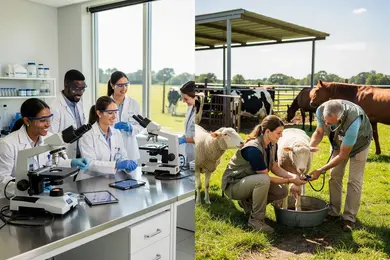
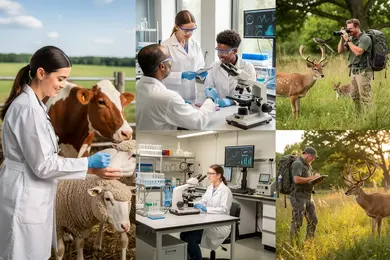
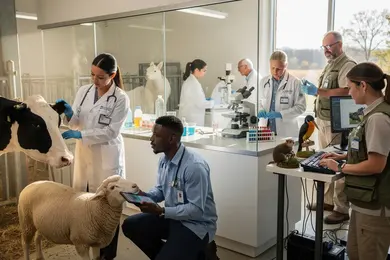
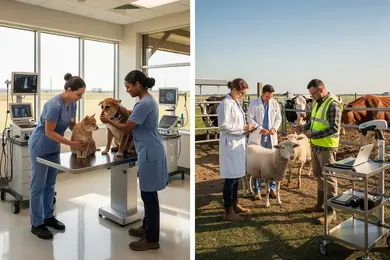
2027 Online Animal Science Bachelor's Degree Completion Programs for Working Adults

Co-Founder and Chief Data Scientist
Working adults with some college credits often struggle to find flexible programs that allow them to complete an online animal science bachelor's degree without interrupting their careers. These students face challenges balancing coursework with professional and personal responsibilities. According to the National Center for Education Statistics, 35% of bachelor's degree completers in science-related fields leveraged online programs to accommodate their schedules.
This article examines the key factors shaping these degree completion programs, including transfer credit policies, accreditation, tuition models, and employer outcomes, providing readers with actionable insights to select the program best suited to their needs and goals.
Key Benefits of Online Animal Science Bachelor's Degree Completion Programs for Working Adults
- Online animal science bachelor's degree completion programs offer flexible scheduling, allowing working adults to balance education with employment and family responsibilities without relocating or pausing their careers.
- Fully asynchronous coursework enables students to study anytime, accommodating shift work or irregular hours, which helps maintain steady income while progressing toward degree completion.
- These programs often provide accelerated paths, reducing total time to graduate by up to 50% compared to traditional four-year degrees started from scratch, benefiting career advancement.
What Are Online Animal Science Bachelor's Degree Completion Programs, and Who Are They Designed For?
Degree completion programs are tailored for adults who have accumulated some college credits but have not yet earned a full bachelor's degree. Unlike traditional four-year programs that begin with freshman-level courses and require completion of all general education and major-specific classes on campus, these programs accelerate the remaining coursework necessary for graduation. They accept a substantial amount of transfer credits, allowing students to bypass courses they have already completed. According to the National Center for Education Statistics (NCES), more than 36 million Americans have some college experience but no degree, making online animal science bachelor's degree completion programs for working adults an ideal path to finishing higher education while managing career and family commitments.
Completion programs feature a fast-paced curriculum, promoting quicker degree attainment. They prioritize transfer credit acceptance, including credits from community colleges or military service, reducing both time and expense. Flexible online or hybrid delivery models are designed around professional schedules, increasing accessibility. Growth in these programs aligns with employers' rising preference for bachelor's degrees in positions that once required less formal education. Key hallmarks include:
- Target Population: Adult learners balancing work, family, and education benefit from programs that acknowledge prior credits and focus on degree completion.
- Accelerated Format: Courses move at a faster pace than traditional semesters to shorten time to graduation.
- Transfer Credit Friendly: Accepts diverse transfer credits to minimize redundancy and total cost.
- Flexible Delivery: Online and hybrid options offer convenience and adaptability to fit busy schedules.
Those seeking options beyond animal science may also explore nursing programs easy to get into as an additional pathway in health sciences. Choosing from the best accredited animal science degree programs with transfer credit options ensures that working adults maximize prior learning and professional outcomes.
How Do Online Animal Science Degree Completion Programs Differ From Traditional Four-Year Animal Science Bachelor's Degrees?
Online animal science degree completion programs cater to students who typically transfer in 60 or more college credits, which often comes from community college or military experience. These programs differ markedly from traditional four-year animal science bachelor's degrees, streamlining degree completion for working adults with prior credits.
- Credit Requirements: Completion programs generally require around 60 additional credit hours focused on upper-division animal science coursework and major-specific electives, compared to the full 120-130 credit hours needed in traditional programs.
- Curriculum Sequencing: These programs replace much of the general education component found in standard bachelor's degrees, often awarding life-experience or competency-based credits that reflect professional or military backgrounds. This design helps adult learners bypass foundational courses and accelerate their path to graduation.
- Time to Completion: With significant credits transferred in, completion programs can typically be finished in two years or less. In contrast, traditional bachelor's programs usually follow a structured four-year timeline beginning from freshman-level coursework.
- Cost and Credit Hour Pricing: According to IPEDS data, completion programs tend to cost less per credit hour than traditional animal science programs at the same institutions due to focused curricula and tiered tuition rates that benefit part-time adult students. This pricing strategy assists in managing the overall financial burden while accommodating flexible pacing.
- Curriculum Customization: Completion programs are curriculum-mapped to adult learners' needs, emphasizing practical and interdisciplinary animal science applications with fully online schedules. This flexibility contrasts with traditional programs' rigid semester timelines and campus-based attendance.
For working adults seeking animal science degrees, distinguishing between these structural differences helps select a pathway aligned with schedules, budgets, and career goals. Whether transferring from a community college or leveraging military experience, students can make an informed choice. Some institutions even offer options comparable to nursing schools without entrance exams, providing flexible admissions pathways for adult learners balancing other responsibilities.
2026 Update: Hands-On Lab and Field Experience Requirements
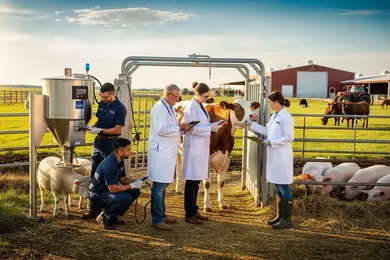
For 2026, this section adds guidance on how online animal science completion programs handle the practical training that cannot be fully completed through virtual coursework.
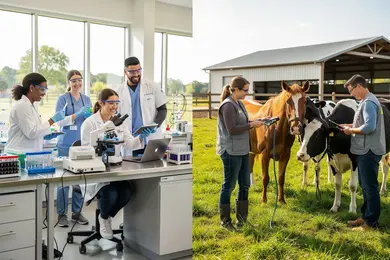
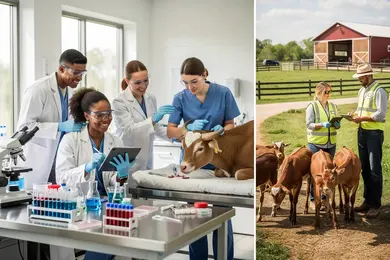
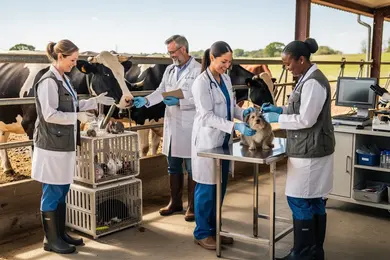
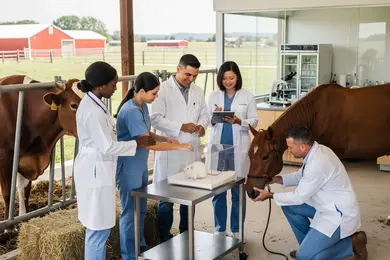
- Whether required labs can be completed online, locally, during short campus visits, or through approved workplace experiences.
- How the program verifies access to animals, facilities, equipment, or supervisors for hands-on assignments.
- Whether internships, practicums, or capstone projects can be completed with a current employer.
- Any travel, housing, lab kit, insurance, or background check costs tied to in-person requirements.
- How far in advance students must arrange field placements or faculty approvals.
- Whether hands-on requirements align with livestock, companion animal, veterinary support, or agribusiness goals.
Checking these details early helps working adults avoid unexpected travel or scheduling conflicts and choose a program that fits both their career goals and daily responsibilities.
Which Accredited Universities Offer the Most Affordable Online Animal Science Bachelor's Degree Completion Programs?
These programs distinguish themselves by offering clear tuition models, including flat-rate pricing that simplifies cost planning for out-of-state students. They consistently feature regional accreditation from respected bodies such as SACSCOC, HLC, and WSCUC, along with programmatic links to professional organizations like ASAS. Prior learning credits and transfer-friendly policies are common, reducing time and expense for adult learners juggling education with career demands. Flexible course schedules and dedicated support services are additional hallmarks of their design.
University of Florida: Offering in-state tuition at $212.08 and $670 for out-of-state students, UF's online bachelor of science in animal science emphasizes health, production, and management. It carries regional accreditation from SACSCOC and program recognition by the American Society of Animal Science (ASAS). The program supports adult learners with flexible pacing and strong transfer policies.
North Carolina State University: Charges $265.92 per credit hour for residents and $1,221.30 for non-residents. Accredited by SACSCOC, NC State's animal science completion program benefits from ASAS programmatic recognition. It features transfer-friendly policies and flexible online scheduling to accommodate working students.
California State University, Fresno: With tuition at $299 per credit for in-state and $344 for out-of-state learners, CSU Fresno provides a competitively priced online animal science degree completion. Accredited by WSCUC, the program offers tailored electives and prior learning credit options that cater to transfer students and working adults.
Texas A&M University: In-state tuition is $336 per credit hour, with out-of-state fees reaching $773. Regionally accredited by SACS, Texas A&M's program also holds programmatic approval from ASAS. It emphasizes applied learning and extends military education benefits to veteran students.
Purdue University Global: Known for a flat-rate tuition of $371 per credit regardless of residency, Purdue Global delivers an online agriculture bachelor's completion program with animal science coursework. It is regionally accredited by The Higher Learning Commission (HLC), with prior learning credit available, although it lacks specific programmatic accreditation in animal science.
Reflecting on his experience, a professional who completed his online animal science bachelor's degree shared how balancing full-time work with coursework initially felt overwhelming. "The flexibility to apply prior credits and manage my own study schedule made the difference," he said. He valued how the program's streamlined transfer process eased his transition, allowing him to progress steadily without sacrificing job responsibilities. "It wasn't just about affordability; it was the supportive structure that kept me motivated." His journey illustrates how accessible and well-structured programs can transform aspirations into career realities for working adults.
How Many Transfer Credits Can Working Adults Apply Toward an Online Animal Science Degree Completion Program?
Most online animal science degree completion programs limit transferable credits to between 60 and 90 semester hours, ensuring that students complete a core portion of their studies at the awarding institution. Transferable coursework undergoes a detailed evaluation to confirm alignment with the animal science curriculum, including assessments of course content, grades, and accreditation of prior colleges. These credit caps are typical transfer credit policies for online animal science degree completion programs designed for working adults.
- Credit Caps: Transfer limits usually range from 60 to 90 semester hours depending on institutional policies and accreditation rules, preventing excessive reliance on external credits.
- Credit Equivalency: Institutions evaluate transcripts to verify that previous courses match degree requirements, maintaining academic quality and curricular consistency.
- Articulation Agreements: Formal partnerships between community colleges and universities help facilitate smooth credit transfers and reduce credit loss during degree completion.
- Credit Loss Risk: According to the U.S. Department of Education's transfer summit, students commonly lose about 40% of their credits in transfer, making it critical to select programs with guaranteed or structured transfer pathways.
- Transfer-Friendly Policies: Leading animal science programs are flexible, accepting ACE-recommended military training credits and relevant professional certifications, benefiting veterans and working professionals.
- Transcript Evaluation: Requesting an official transcript evaluation before enrollment clarifies accepted credits and helps plan the remaining coursework effectively.
Working adults seeking the maximum transferable credits for working adults in animal science programs should also consider exploring cheapest DNP programs as part of broader educational affordability research.
What Are the Typical Admission Requirements for Online Animal Science Bachelor's Degree Completion Programs?
- Transfer Credit Minimums: Applicants usually need between 24 and 60 transferable credits from accredited colleges. These credits serve as the foundation for upper-level coursework toward degree completion.
- GPA Standards: Most programs require a minimum cumulative GPA ranging from 2.0 to 3.0 on a 4.0 scale to demonstrate academic preparedness. More competitive programs may ask for higher GPAs to uphold their quality standards.
- Required Documentation: Official transcripts from all prior institutions are necessary. Depending on the program, letters of recommendation, personal statements, or evidence of relevant work experience may also be requested, especially for adult learners balancing careers.
- Prerequisite Coursework: Foundational classes in animal science, biology, or chemistry are commonly expected. Students missing these courses might need to complete prerequisites before or during enrollment.
- Admission Selectivity: Open-admission programs accept most qualified applicants and tend to offer more flexible access but potentially less personalized academic support. Selective programs have stricter admissions, often delivering stronger academic resources and more reputable credentials but limiting entry.
- Conditional Admission: Some programs offer provisional acceptance to applicants slightly below standard requirements, who may have to meet specific progress benchmarks or GPA targets to stay enrolled.
- Application Boosters: Prospective students can improve acceptance chances by finishing prerequisites at community colleges beforehand. Gaining practical experience or certifications related to animal science also strengthens applications and readiness.
A professional who graduated from an online animal science bachelor's degree completion program shared how navigating the admission process initially felt overwhelming due to varied requirements. She found the transfer credit evaluation to be meticulous and recalls that gathering transcripts from multiple institutions took time. Despite some initial uncertainty, securing conditional admission allowed her to begin coursework while satisfying prerequisite gaps. Reflecting on the journey, she emphasized that completing foundational classes beforehand and demonstrating relevant work experience helped her feel confident and prepared. She described the overall process as challenging but rewarding, noting that the structured support from her program was instrumental in advancing her career in animal science.
How Long Does It Take to Complete an Online Animal Science Bachelor's Degree Completion Program as a Working Adult?
Transfer Credit Influence: The amount of previously earned credits drastically shapes how soon a working adult can finish an online animal science bachelor's degree. Learners entering with 90 credits might complete the program within 12 to 18 months, whereas those holding around 60 credits generally require about two years. Students transferring 30 credits typically face a timeline extending beyond three years, depending on course availability and semester planning.
Enrollment Pace: Choosing part-time enrollment, such as six credits per semester, usually means a two-to-three-year journey for degree completion. In contrast, full-time accelerated paths-taking 12 or more credits each term-can shorten graduation to under a year but demand robust scheduling skills and employer flexibility.
Accelerated Sessions: Many online programs utilize eight-week terms instead of traditional 16-week semesters, enabling students to take more courses annually. Coupled with summer sessions, this structure facilitates faster credit accumulation for motivated adults balancing work and study.
Competency-Based Learning: Some institutions offer competency-based models where progression is tied to mastery rather than calendar time. This approach benefits professionals with relevant expertise, allowing them to advance through the degree requirements more swiftly by demonstrating prior knowledge.
Realistic Workload Model: A common strategy for working students is maintaining two courses per semester, including summer, which balances a manageable workload with steady progress. At this pace, those with 60 transferable credits often complete their degrees within about 2 to 2.5 years.
Life and Employer Factors: Personal responsibilities, job demands, and the extent of employer support notably impact how quickly a student advances. Programs offering tuition aid or flexible work hours empower adults to accelerate their studies.
Recent Trend: Data from the 2023 National Center for Education Statistics shows that over 40% of online bachelor's degree completers are adults aged 25 and older balancing employment, highlighting the rising demand for adaptable online learning options.
What Financial Aid, Grants, and Employer Tuition Assistance Options Are Available for Online Animal Science Completion Students?
Students aiming to complete an online animal science bachelor's degree have access to multiple financial aid options designed for adult learners. Federal Pell Grants and Direct Loans remain available to eligible students regardless of age, providing essential funding based on financial need. Many states offer grants specifically for adult returners, helping reduce out-of-pocket costs for those resuming their education after time away. Additionally, numerous colleges and universities award institutional scholarships that support non-traditional students completing their degrees.
Employer tuition assistance is a valuable resource worth exploring. Under IRS Section 127, employers can provide up to $5,250 annually in tax-free education benefits to employees pursuing undergraduate degrees. This provision encourages working adults to seek employer support for their animal science studies, lessening the financial impact of tuition and related expenses.
Scholarships and fellowships targeted at adult learners in animal science and related fields also exist. These opportunities often address the unique challenges faced by returning students who balance family, work, and education commitments. Prospective students should research foundations, professional organizations, and industry groups within the agricultural and animal science sectors to identify such awards.
Before enrolling, carefully plan your financial aid strategy using the following checklist:
- FAFSA Submission: Complete the Free Application for Federal Student Aid promptly to maximize eligibility for federal grants and loans.
- State Grant Research: Investigate available state-specific financial aid programs aimed at adult learners to complement federal assistance.
- Employer Benefits Inquiry: Speak with your employer about tuition assistance programs and secure written confirmation of any education benefits offered.
- Scholarship Applications: Find and apply to scholarships targeted to adult students completing animal science degrees to help ease costs.
How Does Per-Credit-Hour Tuition for Online Animal Science Completion Programs Compare Across Accredited Institutions?
Per-credit-hour tuition for online animal science bachelor's degree completion programs varies widely among accredited schools nationwide. Recent NCES and IPEDS data show the national average cost per credit hour generally falls between $350 and $550. At this rate, total program costs range from about $21,000 to $33,000 for students transferring 60 credits-assuming the usual 120-credit graduation requirement. For those transferring 90 credits, expected costs drop roughly to $10,500-$16,500, depending on the institution's policies.
Comparing tuition cost comparison for online animal science degrees highlights that per-credit rates alone do not give a full picture of expense. For example, a program charging $375 per credit with a 60-credit requirement totals $22,500, while another with a lower rate of $320 per credit but requiring 70 credits can result in higher total costs. This demonstrates the importance of evaluating both tuition rate and total credit hours required to complete the degree.
Additional ancillary fees such as technology fees, graduation charges, proctoring costs, and textbooks often add several hundred to a few thousand dollars to the overall expense. These fees are frequently overlooked but significantly affect the true cost of enrollment.
Students with transfer credits should confirm credit acceptance policies, as programs requiring extra credits beyond a standard threshold can extend time to degree and increase costs. Evaluating all these factors helps clarify the total financial commitment for completing an online animal science bachelor's degree.
- Average Cost Range: Nationally, per-credit tuition for online animal science completion programs typically falls between $350 and $550, influencing total program pricing.
- Total Credit Impact: Programs requiring more than the usual credit completion hours can offset low tuition rates, resulting in higher overall costs.
- Ancillary Fees: Technology, graduation, proctoring, and textbook fees may add significantly to the advertised tuition, raising total expenses beyond initial estimates.
- Transfer Credit Variability: Students with 60 or 90 transfer credits should verify credit acceptance policies, as additional credits required lengthen time and increase costs.
Those interested in career prospects after earning their degree can explore jobs with a biology degree, which often align well with animal science educational outcomes.
What Prior Learning Assessment and Credit-by-Exam Options Exist in Online Animal Science Degree Completion Programs?
Prior learning assessment (PLA) options provide working adults with flexible pathways to convert their existing knowledge and experiences into academic credit, significantly reducing the time needed to complete an online animal science bachelor's degree. This process recognizes learning gained outside the traditional classroom, including credit by exam, portfolio review, and military training evaluations endorsed by the American Council on Education (ACE).
Credit by Exam: Exams such as CLEP and DSST allow students to demonstrate mastery of foundational animal science topics, potentially earning college credit without taking additional coursework. Many top online animal science degree completion programs accept these exams to facilitate faster credit accumulation.
Portfolio Assessment: Some institutions provide portfolio options where students submit documented evidence of professional work, training, or independent study related to animal science. Such portfolios are evaluated against course competencies and can grant credit for prior learning.
Military and Corporate Training: ACE credit recommendations are highly relevant for veterans and corporate learners, processing training and occupational experiences into transferrable credits recognized by numerous online animal science bachelor's programs. This option complements credit by exam approaches for those with military service.
Maximum Credits and Flexibility: The most expansive online animal science bachelor's completion programs accept up to 90 credits from PLA, combining various methods like exams and portfolios. These policies often include detailed guidelines on acceptable course equivalencies and required documentation.
Documentation and Submission: Effective preparation includes gathering syllabi, training records, work samples, and reflective narratives that align with academic standards. Students should contact admissions advisors early to understand institutional requirements for prior learning evidence evaluation.
To explore the fastest path to degree completion, applicants can review detailed program options and credit transfer policies at online nutrition degree resources, some of which also apply to animal science degree programs offering credit by exam for online animal science degree completion and integrating prior learning assessment options in animal science bachelor's programs.
How Do Asynchronous Schedules in Online Animal Science Programs Accommodate Full-Time Working Professionals?
- Asynchronous Flexibility: Fully asynchronous courses enable students to access lectures, submit assignments, and participate in discussions anytime, offering unmatched convenience across all time zones and work schedules.
- Synchronous and Hybrid Formats: These combine real-time sessions with asynchronous elements, fostering live interaction but requiring fixed scheduling, which may challenge shift workers, travelers, and caregivers.
- Eight-Week Terms: Institutions using condensed eight-week courses allow students to concentrate on fewer classes per term, helping balance academic and professional responsibilities more effectively than traditional semester lengths.
- Time Management: Successful online learners prioritize consistent study routines, use planners or digital calendars, and set specific goals to stay on track amid competing demands from work and family.
- Digital Tools: Commonly embraced resources include learning management systems, mobile apps for notifications, and collaboration platforms that streamline communication and assignment submission.
What Concentrations and Career Tracks Are Available Within Online Animal Science Degree Completion Programs?
Bachelor's degree completion programs in animal science usually incorporate concentrations within the standard 120-credit curriculum, avoiding additional credit requirements. This approach helps manage tuition costs and accelerates graduation timelines while providing in-depth expertise.
- Animal Nutrition: Focuses on dietary planning and feeding practices across species, preparing graduates for roles like nutritionists or feed advisors. According to the Bureau of Labor Statistics (BLS), these jobs in agriculture and food science sectors offer median annual wages near $65,000.
- Livestock Management: Covers breeding, care, and operation of farm animals, equipping students for supervisory or management positions on farms. BLS data indicate steady job growth with median salaries around $55,000.
- Wildlife and Conservation Biology: Emphasizes environmental preservation skills suitable for positions in conservation organizations and zoos. Typical median salaries span $50,000 to $60,000, with some roles requiring certification.
- Equine Science: Specializes in horse husbandry, training, and breeding, ideal for careers at equestrian centers or in veterinary support. Extra certifications, such as Certified Equine Specialist, may enhance job prospects.
- Animal Biotechnology: Applies molecular biology and genetics for animal health improvements, leading to laboratory-based careers with median earnings above $70,000. Graduates might also pursue licensure exams related to biotech professions.
Choosing a concentration should balance your interests with employment demand and certification avenues, guided by BLS data to maximize both career satisfaction and earning potential within animal science.
What Graduates Say About Online Animal Science Bachelor's Degree Completion Programs for Working Adults
- Elena: "The program's clear structure and solid accreditation gave me confidence that my degree would be respected in the industry. I appreciated how seamlessly my previous credits transferred, saving me time and money. Completing the degree online allowed me to balance work and study, and now I've advanced to a management role thanks to this flexibility and the education I received."
- Drew: "Reflecting on my experience, the emphasis on prior learning assessment truly stood out-it recognized the knowledge I'd already gained and reduced redundant coursework. The transparent tuition model made financial planning much easier. Overall, this degree completion program was a perfect fit for professionals like me seeking to elevate their career without starting over."
- Benjamin: "From a professional standpoint, the seamless transfer credit policy saved me significant time, while the program's accreditation reassured employers of my qualifications. The online format was indispensable for balancing existing job responsibilities, and ultimately, this degree helped me transition into a highly specialized role within animal science. I highly recommend it for anyone ready to finish their bachelor's with practical, career-focused education."
Other Things You Should Know About Animal Science Degrees
Employers and graduate schools generally accept online animal science degrees earned through accredited bachelor's degree completion programs as equivalent to traditional degrees. Accreditation from recognized agencies ensures the program meets academic standards, which is a key factor in employer and graduate school recognition. Graduates with online degrees can pursue careers in animal health, research, agriculture, and related fields without facing significant barriers.
Online animal science completion programs typically offer a range of support services tailored to working adults. These often include academic advising focused on transfer credit evaluation, personalized course planning, and access to tutoring or writing centers. Career services may feature job placement assistance, resume reviews, and virtual networking opportunities within the animal science field to help students transition into their desired roles after graduation.
Many online animal science bachelor's degree completion programs offer flexible tuition models tailored for working adults. These include part-time enrollment options, pay-per-credit systems, and sometimes flat-rate or subscription-based plans. Ensuring financial options align with your needs can ease the integration of further education into a busy work life.
References
- Home https://www.husson.edu/online/online-degrees/bachelor-of-science-in-animal-care-and-behavior
- Bachelor's Degree Livestock & Animal Science https://www.bircham.edu/bachelor-s-degree-livestock-animal-science.html
- Universities driving innovation in animal science https://studyinternational.com/news/sustainable-solution-3-leading-departments-transforming-animal-sciences/
- What is Asynchronous Learning? | SNHU https://www.snhu.edu/online-degrees/classes/asynchronous/learning
- Ddsp credit system | FVHE VETUNI https://fvhe.vetuni.cz/ddp-credit-system
- Animal Science https://www.ualberta.ca/en/undergraduate-programs/bachelor-of-science-in-agriculture-animal-science.html
- Cost of Online Education vs. Traditional Education [2025]: Comparison https://educationdata.org/cost-of-online-education-vs-traditional-education
- Asynchronous Education vs Fixed Schedule Online Classes: Which Works for Working Professionals https://puie.ac/asynchronous-education-vs-fixed-schedule-online-classes-which-works-for-working-professionals/
- Online Option for Animal Science Degrees - Peterson's https://www.petersons.com/blog/online-option-for-animal-science-degrees/
- Bachelor's Degree (BS) in Animal Sciences https://academics.uky.edu/programs/bachelors/animal-sciences