
2027 Best MBA in Sustainability Degree Programs

Co-Founder and Chief Data Scientist
An MBA in sustainability is for professionals who want to move from interest in environmental and social impact to decision-making authority inside companies, nonprofits, public agencies, consulting firms, or energy-related organizations. The degree matters because sustainability is no longer treated only as a public relations function: 68% of large US companies now have dedicated budgets for sustainability initiatives, and many organizations are connecting sustainability work to risk management, reporting, cost control, supply chains, brand trust, and long-term value.
This guide explains what an MBA in sustainability covers, how online and campus programs compare, what programs may cost, which careers graduates pursue, and how to judge whether the degree fits your goals. It also includes a ranked program list, practical selection criteria, common mistakes to avoid, and key questions to ask before enrolling.
Quick answer: Is an MBA in sustainability worth considering?
An MBA in sustainability can be a strong option if you want business leadership training with a focus on environmental, social, and governance issues. It is most useful for professionals aiming for roles in sustainability strategy, ESG management, renewable energy, sustainable operations, corporate responsibility, consulting, or executive leadership. It may be less useful if you want a technical environmental science role that requires lab, engineering, policy, or field research credentials more than business management training.
What are the main benefits of earning an MBA in sustainability?
- It prepares graduates for positions such as Chief Sustainability Officer, Sustainability Manager, Environmental Consultant, Sustainability Analyst, and Corporate Social Responsibility Manager.
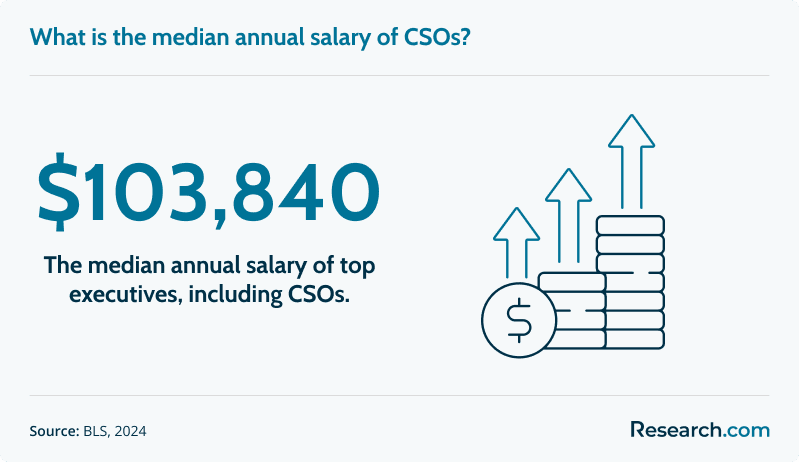
- Top executives, including leaders whose work includes sustainability strategy, earn a median salary of $103,840 per year, according to the US Bureau of Labor Statistics.
- The degree combines finance, operations, leadership, strategy, and sustainability practice, which can help graduates work across departments instead of staying in a narrow environmental role.
What can I expect from an MBA in sustainability degree program?
An MBA in sustainability teaches students how to apply business tools to environmental and social challenges. Instead of studying sustainability only as an ethical issue, students learn how it affects capital allocation, supply chains, regulatory exposure, stakeholder trust, product design, operations, reporting, and competitive strategy.
Most programs include standard MBA coursework in accounting, economics, finance, marketing, analytics, organizational leadership, and operations. The sustainability component usually adds topics such as ESG strategy, corporate responsibility, sustainable finance, renewable energy markets, circular economy models, environmental risk, climate-related business planning, and sustainable supply chain management.
Learning formats vary by school. Some programs rely heavily on case studies and consulting-style projects, while others include internships, residencies, capstones, simulations, or partnerships with companies and nonprofits. The strongest programs help students build a portfolio of practical work, not just complete classroom assignments.
Who should choose an MBA in sustainability?
| Best fit | Why this degree may help | When to consider another path |
| Business professionals moving into sustainability leadership | The MBA adds strategy, finance, and management skills needed for cross-functional roles. | If you already have senior business experience and need only technical ESG reporting training, a shorter certificate may be enough. |
| Environmental professionals seeking management roles | The degree can help translate technical knowledge into budgets, business cases, and executive communication. | If your target role requires scientific research, engineering licensure, or field specialization, a technical graduate degree may be more relevant. |
| Consultants and analysts focused on ESG, energy, or responsible operations | The curriculum can strengthen client-facing strategy, risk analysis, and project management skills. | If your main gap is data modeling, a specialized analytics program may offer deeper technical preparation. |
| Entrepreneurs building sustainability-focused ventures | MBA training can support financing, market analysis, operations, and growth planning. | If you need product engineering or scientific commercialization training, pair business study with technical expertise. |
Where can I work with an MBA in sustainability degree?
Graduates work in industries where environmental impact, energy use, resource efficiency, responsible sourcing, regulatory compliance, and stakeholder expectations affect business performance. Common employers include renewable energy companies, technology firms, manufacturers, consumer goods companies, logistics organizations, consulting firms, financial institutions, government agencies, and nonprofits.
Typical responsibilities include designing sustainability strategies, improving reporting systems, managing environmental compliance, evaluating suppliers, building internal climate or ESG programs, advising executives, and helping organizations connect sustainability goals to measurable business outcomes.
Some graduates also work independently as consultants or launch sustainability-focused ventures. In those paths, the MBA can be useful because clients and investors usually expect more than values-driven messaging; they want financial models, operational plans, risk analysis, and evidence that the idea can scale.
How much can I make with an MBA in sustainability degree?
Earnings depend on industry, location, previous experience, job level, and whether the role is strategic, technical, advisory, or executive. Chief Sustainability Officers and other top executives typically fall into the broader top executive category, where the median salary is $103,840 per year. Higher compensation is possible in fields such as finance, technology, and energy, but salary outcomes are not guaranteed by the degree alone.
Earlier-career roles such as Sustainability Analyst or Environmental Coordinator often pay between $50,000 and $70,000 annually. With experience, professionals may move into six-figure roles, especially when they manage teams, budgets, reporting programs, consulting engagements, or enterprise-wide sustainability initiatives.
| Career stage | Possible roles | Salary information stated in this guide | What affects earnings most |
| Entry level or early career | Sustainability Analyst, Environmental Coordinator, ESG Associate | $50,000 to $70,000 annually | Industry, location, technical skills, internships, and prior business experience |
| Mid-career | Sustainability Manager, Consultant, Renewable Energy Manager, CSR Manager | Varies by employer and scope of responsibility | Project ownership, reporting expertise, stakeholder management, and measurable results |
| Senior leadership | Chief Sustainability Officer, Director of Sustainability, other top executive roles | Top executives earn a median salary of $103,840 per year | Company size, sector, executive authority, budget responsibility, and leadership record |
- Best MBA in Sustainability Degree Programs for 2027
- How long does an MBA in sustainability take?
- Online vs. on-campus MBA in sustainability: which is better?
- How much does an MBA in sustainability cost?
- What financial aid is available?
- What admissions requirements should applicants expect?
- What courses are included?
- What specializations are available?
- Is an MBA in sustainability a good investment?
- How should you choose a program?
- How can online MBA options support sustainability education?
- What career paths are available?
- What does the job market look like?
- Can accelerated online programs provide strong preparation?
- What trends are shaping sustainability MBA programs?
- What accreditation matters?
- What challenges should students expect?
- Should you add another advanced degree?
- Which skills do employers value most?
- What drives long-term career growth?
- How do programs build industry collaboration?
- What is the ROI of an MBA in sustainability?
Best MBA in Sustainability Degree Programs for 2027
How do we rank schools?
Because graduate business school can require a major financial and time commitment, this ranking is intended to help students compare programs with clearer context. Research.com’s experts developed the list using a transparent process. You can review the full approach in our methodology section.
The ranking draws on data from established education sources, including the IPEDS database, Peterson’s database, the College Scorecard database, and the National Center for Education Statistics.
1. Yale School of Management
Yale offers an MBA pathway that places sustainability within broader business strategy, including environmental and social governance. Students can connect management training with interdisciplinary research, applied projects, and networks that support work in corporate sustainability, renewable energy, and ESG-focused leadership.
- Program Length: Two years
- Tracks/Concentrations: Corporate Sustainability, Renewable Energy, ESG Management
- Cost per Credit: $1,712
- Required Credits to Graduate: 72
- Accreditation: Association to Advance Collegiate Schools of Business (AACSB)
2. Carnegie Mellon University
Carnegie Mellon’s Tepper School of Business is well suited to students who want sustainability training connected to analytics, technology, and innovation. The program blends quantitative decision-making with leadership development and draws from business, engineering, and policy perspectives.
- Program Length: Two years
- Tracks/Concentrations: Technology and Sustainability, Energy Management
- Cost per Credit: $2,366
- Required Credits to Graduate: 48
- Accreditation: AACSB
3. NYU Stern School of Business
NYU Stern combines core MBA study with sustainability, social impact, and ESG-related coursework. Its New York City location can be especially useful for students seeking exposure to finance, consulting, corporate responsibility, and organizations working at the intersection of business and social impact.
- Program Length: Two years
- Tracks/Concentrations: Social Innovation, Global Sustainability
- Cost per Credit: $2,101
- Required Credits to Graduate: 60
- Accreditation: AACSB
4. Oklahoma State University - Spears School of Business
Oklahoma State offers a sustainability-focused MBA option that may appeal to professionals interested in practical environmental and development challenges across both rural and urban contexts. Its tuition structure and flexible design can make it a cost-conscious option for working students.
- Program Length: One and a half to two years
- Tracks/Concentrations: Environmental Policy, Rural Development
- Cost per Credit: $233 (in-state); $879 (out-of-state)
- Required Credits to Graduate: 39
- Accreditation: AACSB
5. The University of North Carolina at Chapel Hill
UNC connects sustainability and business leadership through coursework, experiential learning, consulting opportunities, and internships. Students who value alumni connections and corporate partnerships may find the program useful for moving into global sustainability or corporate responsibility roles.
- Program Length: Two years
- Tracks/Concentrations: Global Sustainability, Corporate Responsibility
- Cost per Credit: $2,803 (in-state); $3,792 (out-of-state)
- Required Credits to Graduate: 62
- Accreditation: AACSB
6. University of Maine
The University of Maine emphasizes sustainability questions relevant to rural and coastal communities. Its hybrid structure combines online learning with in-person components, while smaller classes may benefit students who want closer faculty interaction.
- Program Length: One and a half to two years
- Tracks/Concentrations: Coastal Resilience, Renewable Energy
- Cost per Credit: $679
- Required Credits to Graduate: 36 to 39
- Accreditation: AACSB
7. Vanderbilt University
Vanderbilt focuses on leadership, innovation, and sustainability-related change management. Its Nashville location provides access to a growing business environment, which may benefit students interested in corporate, nonprofit, or entrepreneurial sustainability work.
- Program Length: Two years
- Tracks/Concentrations: Strategic Innovation, Environmental Leadership
- Cost per Credit: $2,209
- Required Credits to Graduate: 62
- Accreditation: AACSB
8. Wilmington University
Wilmington offers a flexible MBA option for working adults who want applied sustainability training. The program’s focus on practical environmental solutions and community impact can be useful for students seeking near-term career movement while managing work or family obligations.
- Program Length: One and a half years
- Tracks/Concentrations: Green Business, Community Sustainability
- Cost per Credit: $524
- Required Credits to Graduate: 36
- Accreditation: International Accreditation Council for Business Education
9. Georgia Tech Scheller College of Business
Georgia Tech is a strong consideration for students who want sustainability connected to technology, operations, analytics, and innovation. Its Atlanta setting can offer access to business and technology employers that value data-informed sustainability strategy.
- Program Length: Two years
- Tracks/Concentrations: Sustainable Operations, Tech Innovation
- Cost per Credit: $1,230 (in-state); $1,698 (out-of-state)
- Required Credits to Graduate: 33
- Accreditation: AACSB
10. University of Houston-Clear Lake
The University of Houston-Clear Lake combines sustainability, business strategy, energy management, and environmental compliance. Its hybrid format may work well for employed students, and its Houston location can be advantageous for those interested in the energy sector.
- Program Length: One and a half to two years
- Tracks/Concentrations: Energy Management, Environmental Compliance
- Cost per Credit: $464 (in-state); $970 (out-of-state)
- Required Credits to Graduate: 36
- Accreditation: AACSB
How long does it take to complete an MBA in sustainability degree?
Most full-time MBA in sustainability programs take two years. Part-time programs commonly require three or more years because students take fewer courses while continuing to work. Accelerated and online formats may shorten the timeline, especially for students who can handle compressed terms and a heavier pace. Some students compare these options with one year online MBA pathways when speed is a priority.
The right timeline depends on your bandwidth, career urgency, finances, and learning style. A faster program can reduce time away from advancement opportunities, but it may also leave less room for internships, networking, reflection, and deeper specialization. A slower part-time format can be more manageable for working professionals but may delay the career benefits of the credential.
Students comparing sustainability-related fields sometimes ask whether is environmental science an easy major. That question is not directly comparable to an MBA in sustainability. Environmental science focuses more on scientific and environmental systems, while this MBA focuses on business decisions, organizational leadership, and sustainability strategy.
| Program format | Typical completion time | Best for | Main trade-off |
| Full-time MBA | Two years | Students who can study intensively and prioritize networking, internships, and career switching | Higher opportunity cost if you pause full-time work |
| Part-time MBA | Three or more years | Working professionals who need schedule flexibility | Longer time before graduation and possible workload fatigue |
| Accelerated online MBA | Varies by school; often shorter than traditional formats | Motivated students who want a faster credential and can manage compressed coursework | Less time for internships, networking, and electives |
| Hybrid MBA | Often similar to full-time or part-time pacing | Students who want online flexibility with some campus or residency experience | Travel and residency requirements may add costs |
How does an online MBA in sustainability degree compare to an on-campus program?
Online and campus programs can both provide strong preparation, but they serve different needs. The best choice depends on whether you value flexibility, in-person networking, relocation options, classroom structure, or continued employment during school.
| Factor | Online MBA in sustainability | On-campus MBA in sustainability |
| Schedule | Usually better for students balancing work, caregiving, or travel constraints. | Often follows a more fixed schedule with required campus attendance. |
| Networking | Relies on virtual collaboration, online groups, alumni platforms, and sometimes optional residencies. | Offers more frequent face-to-face interaction with classmates, faculty, speakers, and recruiters. |
| Cost considerations | May reduce relocation, commuting, and housing costs. Students should still examine fees because online MBA programs cost can vary widely. | May involve campus fees, relocation, parking, commuting, and opportunity costs if attendance limits work hours. |
| Learning style | Works best for self-directed students who communicate well online and manage deadlines independently. | Works best for students who benefit from in-person discussion, structured routines, and campus immersion. |
| Career switching | Can work well, but students may need to be more intentional about networking and internships. | Often stronger for students who want on-campus recruiting, career fairs, and high-touch career services. |
What is the average cost of an MBA in sustainability degree program?
Costs differ significantly by institution type, residency status, credit requirements, delivery format, and fees. According to NCES, average graduate tuition and required fees in the 2021–2022 academic year were $12,596 for public institutions and $28,017 for private institutions.
Among the programs listed above, the lowest stated per-credit tuition starts at $233 per credit for Oklahoma State University in-state students, while Yale School of Management lists $1,712 per credit. Overall, MBA programs in sustainability often fall between $20,000 and $80,000 in total, depending on program length and school type.
When comparing cost, do not stop at tuition. Include required fees, books, technology costs, residencies, travel, parking, relocation, health insurance requirements, lost wages, and interest on loans. A cheaper program can become more expensive if it has weak career support, limited transfer policies, or scheduling that extends your time to completion.
What are the financial aid options for students enrolling in an MBA in sustainability degree program?
Students considering an MBA in sustainability should build a funding plan before applying. Common options include:
- Scholarships and grants: Schools, foundations, private organizations, and professional associations may offer awards based on merit, need, leadership, employer, identity, or field of interest.
- Federal financial aid: Eligible students can use the Free Application for Federal Student Aid to apply for federal aid options.
- Employer sponsorship or reimbursement: Some employers help pay for graduate business education when the degree supports the employee’s role or advancement plan.
- Assistantships: Some graduate students receive tuition assistance or stipends in exchange for teaching, research, or administrative work.
If affordability is your top concern, compare sustainability-focused MBAs with broader low-cost business programs and employer-funded options. Students also researching executive formats may find it useful to review cheapest executive MBA options, especially if they already have substantial leadership experience.
What are the prerequisites for enrolling in an MBA in sustainability degree program?
Admission requirements vary, but most MBA in sustainability programs evaluate academic readiness, professional maturity, leadership potential, and fit with the program’s mission. Common requirements include:
- Bachelor’s degree: Applicants usually need an undergraduate degree from an accredited institution.
- Professional experience: Some schools prefer applicants with work experience, especially for MBA programs designed around peer learning and leadership development.
- GMAT or GRE scores: Some programs require standardized test scores, while others offer waivers or test-optional admissions. Applicants comparing flexible admissions can review affordable online MBA programs no GMAT.
- Letters of recommendation: Schools often request recommendations from supervisors, faculty, or professional contacts who can speak to your potential.
- Personal statement: This essay should explain why sustainability matters to your career and how the MBA supports your goals.
- Resume: Admissions teams use work history, leadership activities, volunteer experience, and project results to evaluate readiness.
Students who are still early in their academic pathway may first build a business foundation before progressing to a bachelor’s degree and MBA. For an entry point into business education, see our guide to what are best online associate degrees in business administration.
What courses are typically in an MBA in a sustainability degree program?
MBA in sustainability programs combine general management training with courses that help students evaluate environmental and social issues through a business lens. The goal is not only to understand sustainability concepts but to make decisions that can be funded, measured, implemented, and defended to stakeholders.
Common core and sustainability courses
- Corporate Sustainability Strategies: Examines how companies embed sustainability into business models, operations, governance, and competitive positioning.
- Environmental Risk Management: Focuses on identifying, assessing, and reducing risks related to environmental impact, regulation, resource use, and compliance.
- Sustainable Finance: Covers investment, capital allocation, reporting, and financial decision-making connected to sustainability goals.
- Leadership and Organizational Change: Prepares students to influence teams, executives, suppliers, and external stakeholders.
- Operations and Supply Chain Management: Explores efficiency, sourcing, logistics, waste reduction, and responsible supplier practices.
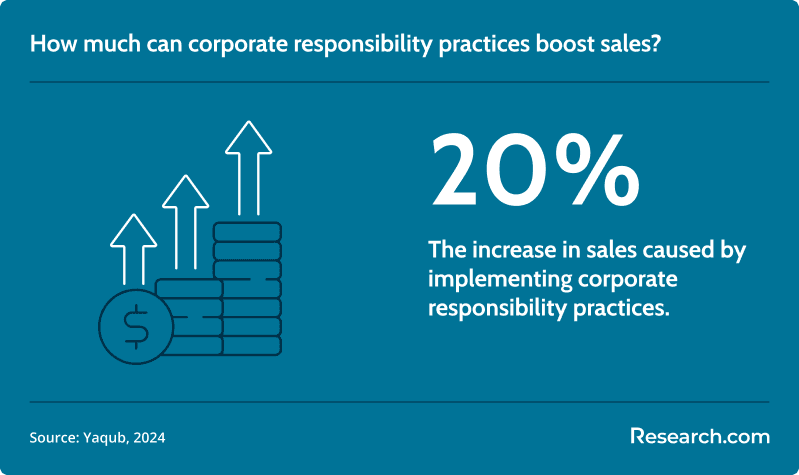
Corporate responsibility practices have been associated with a 20% increase in sales, which is one reason many programs treat sustainability as part of business performance rather than a separate charitable activity.
Common electives
- Renewable Energy Management: Introduces the business, policy, operational, and financial dimensions of renewable energy projects.
- Circular Economy Practices: Studies ways to reduce waste, extend product life cycles, reuse materials, and rethink production systems.
- Sustainable Supply Chain Management: Addresses supplier selection, transparency, emissions, labor practices, logistics, and resilience.
- ESG Reporting and Metrics: Helps students understand how organizations measure and communicate sustainability performance.
Look for programs that include applied work such as consulting projects, internships, capstones, or live case studies. These experiences can help you show employers how you think, not just what courses you completed.
What types of specializations are available in MBA in sustainability degree programs?
Specializations help students align the MBA with a specific career direction. Before choosing one, compare your target job postings with each program’s courses, projects, faculty expertise, and employer relationships.
Common sustainability MBA specializations
- Environmental Management: Best for students interested in compliance, resource management, environmental planning, and risk reduction.
- Renewable Energy: Useful for professionals pursuing energy project management, clean energy strategy, or business roles in energy markets.
- Global Sustainable Business: Designed for students who want to work across international markets, supply chains, and policy environments.
- Corporate Social Responsibility: Focuses on ethics, stakeholder engagement, social impact, community responsibility, and corporate accountability.
- Green Technology Innovation: Supports students interested in commercialization, product strategy, and environmentally focused technology ventures.
Related MBA options
- MBA in Accounting with a sustainability focus: Can be useful for students interested in ESG reporting, assurance, environmental accounting, or responsible financial disclosure.
- Energy Management: Often fits students targeting utilities, renewable energy developers, energy consulting, or energy-intensive industries.
- Sustainable Operations: Best for professionals interested in manufacturing, logistics, procurement, and process improvement.
Is an MBA in sustainability degree a sound investment?
An MBA in sustainability is a sound investment when the degree helps you reach roles that require both business judgment and sustainability expertise. The strongest cases are usually made by students who already have relevant professional experience, a clear target role, access to scholarships or employer support, and a program that offers practical projects, career services, and credible accreditation.
The investment is weaker if the program is expensive, poorly aligned with your goals, lacks recognized accreditation, provides limited career support, or markets sustainability broadly without meaningful coursework or employer connections. Before enrolling, compare the program with broader online MBA programs to see whether you need the sustainability specialization or could reach your goals through a general MBA plus targeted certificates or work experience.
How do you choose the best MBA in sustainability degree program?
The best MBA in sustainability is not always the highest-ranked or most expensive program. It is the program that fits your career target, budget, schedule, academic background, and preferred learning style.
Use these criteria before applying
- Accreditation: Prioritize recognized business accreditation and verify it directly with the accrediting body or the school. Students seeking a balance of quality and cost may want to compare most affordable AACSB online MBA programs.
- Curriculum depth: Look for specific sustainability courses, not just one elective or a marketing label.
- Applied learning: Capstones, consulting projects, internships, simulations, and employer-sponsored projects can strengthen your resume.
- Faculty and industry links: Review whether faculty have sustainability, ESG, energy, policy, operations, or responsible business expertise.
- Career outcomes: Ask where graduates work, which employers recruit from the program, and what support exists for career changers.
- Format: Choose online, campus, hybrid, full-time, part-time, or accelerated study based on your work schedule and networking needs.
- Total cost: Compare tuition, fees, travel, residencies, books, financing costs, and lost income.
Questions to ask admissions advisors
- Which sustainability courses are required, and which are electives?
- Do students complete a capstone, consulting project, internship, or field experience?
- Which employers have hired recent graduates?
- How does the program support online students with networking and career services?
- What percentage of students receive scholarships, assistantships, or employer funding?
- Are GMAT or GRE waivers available?
- Can transfer credits or prior graduate credits reduce cost or time?
How can online MBA options enhance your sustainability education?
Online MBA options can make sustainability education more accessible for working professionals who cannot relocate or pause their careers. A strong online program uses digital collaboration, case-based learning, discussion boards, group projects, analytics tools, and virtual career services to connect students with real sustainability problems.
However, online learning requires discipline. Students should confirm how networking works, whether synchronous sessions are required, how group projects are managed across time zones, and whether career services are equally available to remote learners. If ease of scheduling is a top priority, compare formats carefully with guides to the easiest online MBA options, while remembering that “easiest” should not mean weak academic quality.
What career paths are available for graduates of MBA in sustainability degree programs?
An MBA in sustainability can support roles across strategy, operations, consulting, compliance, finance, supply chain, energy, and executive leadership. The best career path depends on whether you want to lead internal initiatives, advise clients, manage technical projects, influence policy, or build sustainable products and ventures.
Leadership roles
Chief Sustainability Officers and related top executives guide company-wide sustainability priorities, reporting, risk management, stakeholder engagement, and long-term strategy. Top executives earn a median salary of $103,840 annually. If you are comparing leadership-focused sustainability roles, see our guide to the best job with a sustainability management degree to pursue.
Other career paths
- Sustainability Consultant: Helps organizations evaluate current practices, set goals, manage compliance, and implement sustainability programs.
- Renewable Energy Manager: Coordinates renewable energy projects, budgets, vendors, schedules, and performance goals.
- Corporate Social Responsibility Manager: Develops programs related to ethics, community engagement, responsible operations, and stakeholder communication.
- Environmental Policy Analyst: Studies regulations and policy options that affect environmental and business decisions. Students who prefer scientific or policy-heavy work may also compare paths connected to an environmental science degree online or campus-based environmental science program.
- Supply Chain Sustainability Specialist: Improves sourcing, logistics, supplier accountability, waste reduction, and social or environmental performance across supply chains.
Sustainability can also affect operational performance. For example, 33% of businesses use sustainability strategies to cut costs and increase efficiency, making this expertise relevant to operations, finance, and executive decision-making.
What is the job market for graduates with an MBA in sustainability degree?
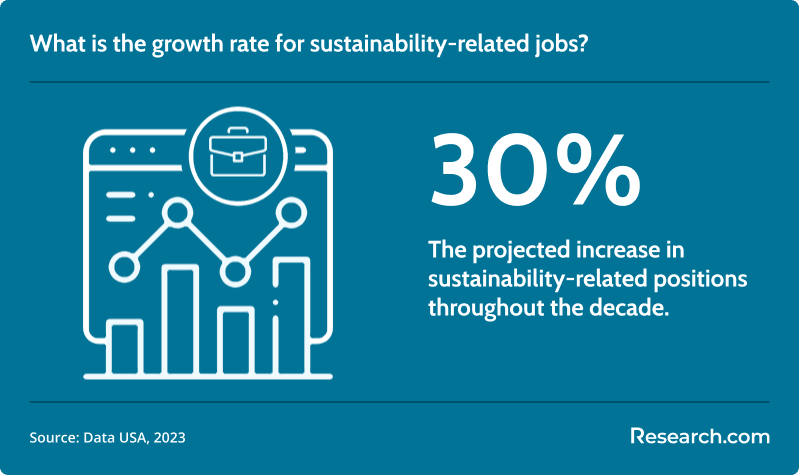
The labor market for sustainability-focused professionals reflects broader employer interest in ESG goals, environmental risk, energy transition, reporting, and responsible operations. According to Data USA, the number of sustainability studies graduates in the workforce increased from 953,786 in 2021 to 979,354 in 2022, a growth rate of 2.68%.
Decade job growth projection
Using that growth rate and a compound annual growth rate formula, the sustainability studies workforce is projected to grow by approximately 30% over 10 years. This projection should be viewed as an estimate based on the stated growth rate, not a guarantee of job openings for every graduate or every location.
Where demand is strongest
Demand is often strongest where sustainability connects to money, regulation, risk, or operations. Employers may seek professionals who can reduce waste, improve energy efficiency, prepare reports, evaluate suppliers, meet compliance requirements, manage ESG data, or help leaders make investment decisions.
Can Accelerated Online Programs Deliver a Robust Sustainability Education?
Accelerated online sustainability MBA programs can provide strong preparation when they maintain rigorous coursework, meaningful faculty interaction, applied projects, and adequate student support. The risk is that a compressed format may reduce time for internships, networking, electives, and deeper reflection.
These programs work best for students who already have professional experience, clear career goals, strong time-management habits, and the ability to handle intensive coursework. If you are comparing business degree timelines more broadly, review How long does it take to get a business degree online? for additional context on pacing models.
What future trends will influence MBA in sustainability programs?
MBA in sustainability programs are adapting as employers expect graduates to understand analytics, artificial intelligence, digital reporting tools, regulatory change, stakeholder communication, and climate-related business risk. Programs are increasingly likely to emphasize data-informed decisions, measurable outcomes, and cross-functional leadership rather than broad sustainability awareness alone.
Flexible delivery is also shaping the field. Some students are looking for faster credentials, including options marketed around a fast track MBA 6 months online. Before choosing an accelerated route, confirm that the program still includes credible faculty, employer relevance, career support, and enough depth in sustainability topics.
How Do MBA in Sustainability Programs Foster Industry Collaboration?
Strong MBA in sustainability programs connect students with employers and practitioners through consulting projects, internships, guest speakers, mentoring, research partnerships, live case competitions, and capstone work. These experiences matter because sustainability problems are rarely solved inside one department. Students need practice working with finance, operations, legal, marketing, procurement, public affairs, and executive teams.
Industry collaboration also helps students test whether a career path fits them. For example, healthcare, energy, manufacturing, finance, and technology all approach sustainability differently. Students comparing sustainability with other specialized business fields may also review the best affordable online MBA degree in healthcare management to understand how industry-specific MBA training differs.
What is the return on investment of an MBA in sustainability?
The ROI of an MBA in sustainability depends on total cost, debt, time to completion, salary growth, career mobility, employer support, and how strongly the program connects to your target role. Financial ROI is important, but this degree may also deliver nonfinancial returns such as mission alignment, leadership credibility, access to sustainability networks, and the ability to influence organizational decisions.
To evaluate ROI honestly, compare the program’s cost with realistic career outcomes, not best-case marketing claims. Ask whether graduates enter the roles you want, whether your current employer values the credential, and whether the program will help you build measurable skills. If you are weighing this degree against very different professional credentials, such as a doctorate in pharmacy online, focus on your intended occupation, licensure needs, and long-term career identity.
What graduates say an MBA in sustainability changed for them
-
: "
The program helped me connect environmental impact with business strategy. I learned how to make sustainability part of decision-making instead of treating it as a side project. Nadine
"
-
: "
My MBA gave me a clearer way to lead teams around complex environmental and social challenges. The network was one of the most valuable parts of the experience. Nelson
"
-
: "
I expected to study business, but I also learned how to think differently about value, responsibility, and long-term organizational performance. David
"
What accreditation should I look for in an MBA in sustainability program?
Accreditation is one of the first quality checks for any MBA. For business schools, recognized accreditors such as AACSB, EQUIS, or AMBA are commonly used indicators of academic standards, faculty quality, and continuous improvement. Programmatic accreditation does not guarantee a job, but it can affect employer perception, transferability, and confidence in the curriculum.
Students should verify accreditation on the school’s website and, when possible, through the accreditor’s own directory. Be cautious with programs that use vague claims such as “internationally recognized” without naming a credible accrediting organization. If you are comparing accreditation expectations across fields, note that professional programs can vary widely; for example, students researching a low cost online Pharm D degree would need to examine field-specific requirements rather than relying on business accreditation standards.
What challenges do professionals face during an MBA in sustainability degree program?
An MBA in sustainability can be demanding because students must learn both management fundamentals and complex sustainability issues. Common challenges include balancing work and school, handling quantitative coursework, keeping up with changing regulations, translating values into business cases, and finding hands-on experience in a competitive field.
Online and accelerated students may face additional challenges with networking, group work, and self-direction. If speed is important, compare the support structures, workload, and career services of the fastest MBA programs online before assuming the shortest program is the best value.
Common mistakes to avoid
- Choosing a program without checking accreditation: Always verify the school and business program’s accreditation status.
- Looking only at tuition: Total cost includes fees, books, residencies, travel, lost wages, and loan interest.
- Assuming every online program offers equal networking: Ask how remote students meet alumni, recruiters, faculty, and project partners.
- Picking a vague sustainability label: Review the actual courses, faculty, and projects before applying.
- Expecting guaranteed salary growth: An MBA can improve opportunities, but outcomes depend on experience, employer demand, geography, and performance.
- Ignoring career services: Career support matters especially if you are changing industries or functions.
Should I pursue an advanced degree to complement my MBA in sustainability?
Some graduates add another advanced degree when their goals require deeper research, teaching credentials, technical expertise, or executive-level specialization. A doctorate, specialized master’s degree, or professional certificate may make sense for professionals pursuing academic roles, advanced consulting, organizational leadership, policy research, or highly technical sustainability work.
Additional education is not automatically necessary. Before enrolling again, ask whether the credential is required for your target role or whether you would gain more by building project experience, earning a focused certification, publishing applied work, or moving into a sustainability role now. Professionals considering doctoral-level business study may compare options such as a 1 year DBA program online.
What skills are most valued by employers in MBA in sustainability graduates?
Employers value sustainability professionals who can connect mission-driven goals to practical business execution. The strongest candidates can analyze data, build financial arguments, manage stakeholders, lead change, and communicate clearly with both technical and nontechnical audiences.
| Skill | Why employers value it | How to build evidence |
| Strategic analysis | Organizations need leaders who can identify sustainability opportunities that also support business goals. | Complete case studies, consulting projects, and strategy-focused capstones. |
| Financial and operational literacy | Sustainability proposals often require budgets, ROI estimates, risk analysis, and implementation plans. | Take finance, accounting, operations, and sustainable finance courses. |
| Data and reporting skills | Employers need people who can measure progress, track indicators, and support transparent reporting. | Build projects using dashboards, metrics, ESG data, or operational performance measures. |
| Change management | Sustainability initiatives often require behavior change across departments and suppliers. | Lead group projects, manage cross-functional work, and document implementation results. |
| Communication | Executives, employees, investors, customers, and regulators may all need different explanations of the same issue. | Practice presentations, executive memos, stakeholder reports, and consulting deliverables. |
Some professionals strengthen leadership preparation through advanced study, including an online PhD organizational leadership, but most employers still expect evidence of applied results in addition to credentials.
What factors drive long-term career growth and earning potential in sustainability roles?
Long-term growth in sustainability careers is usually driven by leadership scope, measurable business impact, industry knowledge, technical fluency, and the ability to work across functions. Professionals who can show cost savings, compliance improvements, risk reduction, stronger reporting, better supplier performance, or successful renewable energy projects are often better positioned for advancement.
Industry also matters. Sustainability roles in energy, finance, technology, manufacturing, consulting, and consumer goods may differ in compensation, responsibilities, and advancement paths. Candidates comparing compensation across sectors can review broader career resources such as best paying medical jobs with a bachelor's degree to understand how pay structures can vary widely by field.
Key Insights
- An MBA in sustainability is best for professionals who want to lead sustainability through business strategy, finance, operations, ESG management, consulting, or executive decision-making.
- Traditional full-time programs usually take two years, while part-time options can take more than three years. Accelerated formats can be faster but may reduce time for networking and applied learning.
- Online MBA programs can be a strong fit for working adults, but students should carefully evaluate career services, networking access, residencies, and applied project opportunities.
- The average cost of an MBA in sustainability often ranges from $20,000 to $80,000, and NCES reported average graduate tuition and required fees of $12,596 at public institutions and $28,017 at private institutions in the 2021–2022 academic year.
- Financial aid may include scholarships, grants, federal aid, employer reimbursement, and assistantships. The best funding plan combines multiple options and accounts for total cost, not just tuition.
- Accreditation matters. Look for recognized business accreditors such as AACSB, EQUIS, or AMBA, and verify claims before applying.
- Sustainability career outcomes are strongest when students pair the MBA with practical experience, measurable projects, data skills, and a clear target role.
- Salary growth is possible but not guaranteed. Entry-level sustainability roles often pay $50,000 to $70,000 annually, while top executives earn a median salary of $103,840 per year.
- 33% of businesses use sustainability strategies to cut costs and increase efficiency, which shows why employers often value candidates who can connect sustainability goals to operational and financial results.
References:
- BLS. (2024, August 29). Top executives. BLS.
- Data USA. (2023). Sustainability Studies. datausa.io.
- NCES. (2023, May). Average and percentiles of graduate tuition and required fees in degree-granting postsecondary institutions, by control of institution: Academic year 1989-90 through 2021-22. NCES.
- Segal, M. (2024, August 19). 68% of large U.S. companies now have dedicated sustainability reporting budgets: EcoOnline survey. ESG Today.
- Yaqub, M. (2024, October 25). 29+ Business sustainability Statistics Must know in 2024. BusinessDasher. businessdasher.com.
Other Things You Should Know About the Best MBA in Sustainability Degree Programs
Top MBA in Sustainability programs for 2027 include the Yale School of Management's MBA, the University of Michigan's Ross School of Business, and Stanford Graduate School of Business. These programs are renowned for integrating cutting-edge sustainability practices, offering robust curricula that combine fundamental business skills with immersive sustainability projects and real-world experiences.
In 2027, MBA in Sustainability programs often offer international exposure through study abroad modules, global internships, and collaboration with international companies. Students benefit from cross-cultural experiences, understanding global sustainability challenges, and networking with international professionals in the field.
In 2027, the most affordable MBA in sustainability programs are offered by institutions that provide a mix of online coursework and in-state tuition benefits. Schools like the University of Massachusetts Amherst and the University of Colorado Denver are known for their lower tuition fees while still maintaining a robust curriculum in sustainability.


