2027 Online BS in Business Administration Admissions with Repeated Introductory Accounting Courses: What to Check
Audited and Verified:
Our Editorial and Data Verification Process
Research.com uses government datasets, official education statistics and primary institutional information to support its career and degree guides. Our review process checks factual accuracy, occupational definitions, source dates and the requirements associated with the credentials discussed.
How This Article Was Fact-Checked
Our editorial team verifies salary estimates, employment projections, education requirements and program information against original data providers and official organizations. Salary figures are checked against the relevant occupational definitions and reporting periods. Information about licensure, accreditation and required in-person training is reviewed separately.
Fact-checked and verified on:

Co-Founder and Chief Data Scientist
Two introductory accounting courses may look alike on a transcript but count differently toward an online BS in Business Administration. For transfer and returning students, that distinction can determine whether a course satisfies the business core, becomes an elective, or must be taken again.
Before applying or enrolling, you need more than an assurance that your credits "transfer." This guide shows how to identify the reason for an apparent repeat requirement, obtain the right academic decision in writing, and compare the resulting time and cost across programs.
Key Things You Should Know
- Admission, transfer-credit acceptance, and satisfaction of the accounting requirement are separate decisions; request an official degree audit before relying on a credit estimate.
- Compare course content, grades, credit units, recency rules, and required accounting sequence before agreeing to retake a class.
- Price each option using the remaining required courses - not the advertised tuition alone - and confirm whether a repeat changes course sequencing or financial-aid eligibility.
What Is an Online BS in Business Administration with Repeated Accounting Courses?
This is a transfer or degree-completion situation, not a separate kind of degree. An applicant has previously taken introductory accounting - perhaps more than once - but the prospective online program still lists an accounting requirement as incomplete. One course may have been financial accounting and another managerial accounting; alternatively, the transcript may show two attempts at substantially the same course.
The distinction matters. A school can admit you, accept both courses as transfer credits, and still determine that neither satisfies a particular business-core requirement. Its catalog and official degree audit, rather than the course title alone, control how credit applies. When comparing online business degree rankings for US college applicants, use program listings to identify candidates, then ask each institution to evaluate your actual transcript and accounting syllabi.
Why Do Some Online Business Programs Require Repeated Introductory Accounting Courses?
An apparent repeat can result from a genuine content gap or an administrative rule. Financial accounting generally emphasizes external financial statements; managerial accounting emphasizes internal decisions, costs, and budgets. A program requiring both may not accept two versions of financial accounting as a substitute for that sequence.
Other possible reasons include insufficient credit units after a quarter-to-semester conversion, a grade below the major's minimum, a course judged too different from the required class, or a limit on older coursework. The receiving institution decides equivalency and whether an exception is available. Ask its transfer office or business department to identify the specific unmet requirement and the policy behind it - not merely to say that accounting must be repeated.
If the extra course changes your choice of major, compare curricula rather than assuming another business-related degree has no accounting requirement. For example, HR bachelor's programs with flexible transfer pathways may suit an HR goal, but each school must still evaluate your credits and remaining core.
How Can You Verify Accreditation for an Online Business Administration Degree?
Verify the institution's accreditation status through the accreditor and the U.S. Department of Education's accreditation database, checking that the institution and your intended enrollment period are covered. Then check whether any advertised AACSB, ACBSP, or IACBE business accreditation actually includes the school or program offering this BS. Institutional accreditation and business-specific accreditation have different scopes; neither resolves whether your accounting courses meet the major's requirements.
Accreditation also does not establish that every student receives federal aid. If financing affects your decision, listings of online business administration degrees accepting federal aid applications can help you form a shortlist. Confirm the institution's current aid participation, your eligibility, and whether the courses in your approved degree plan count toward aid with its financial-aid office.
Schools commonly request an application and official transcripts, but GPA standards, prior-college-credit thresholds, and admission to the business major vary. Some applicants can enter the institution while completing a missing accounting prerequisite; others must satisfy it before taking upper-level business courses. Admission is therefore not approval of a transfer equivalency or confirmation that you can graduate on the proposed schedule.
Gather evidence before requesting a decision. This sequence helps the appropriate office review the issue rather than relying on a general admissions answer:
- Obtain transcripts showing every accounting attempt, including grades and credit units, plus catalog descriptions and syllabi if available.
- Ask admissions whether you meet entry requirements and ask the transfer office or business department which attempt, if any, satisfies each accounting requirement.
- Request an official degree audit showing accepted credits, credits applied to the business core, and any outstanding prerequisites.
- If a requirement remains, ask about a documented equivalency appeal, substitution, exam, or prerequisite waiver; confirm who has authority to approve it.
If you are studying while employed, compare that approved course sequence with flexible business administration programs for career progression. Even an admitted student may face a scheduling delay if the required accounting course is offered infrequently.
Delivery mode does not determine whether prior accounting credit applies: online and campus students may follow the same catalog, or they may be enrolled in different programs with different requirements. Ask for the degree audit for the exact online program you intend to enter. Also check live attendance, exam proctoring, group work, and the availability of the accounting course that blocks later classes. An asynchronous course can still have fixed deadlines.
A campus option may make sense if it offers an approved accounting equivalent sooner or provides in-person tutoring you need; an online option may better protect work hours or reduce travel. Compare both using the remaining course schedule and total charges. If project coordination is your goal and you are considering a different degree, low-cost project management schools and aid options provide another starting point - but check their accounting and transfer requirements before treating them as a shortcut.
Alongside accounting, a BS in Business Administration may include economics, statistics, finance, marketing, management, operations, business law, and a capstone. The exact sequence matters more than the course list when accounting is unresolved: financial accounting may precede managerial accounting or finance, delaying several later requirements if it cannot be transferred.
Ask an adviser which courses you can take while an appeal is pending and whether a concentration adds prerequisites beyond the business core. An elective labeled "supply chain" is not necessarily a formal concentration or a substitute for required accounting. If your primary goal is logistics rather than broad business preparation, compare the actual curriculum and completion audit with low-cost shorter supply chain degree options; a specialized program can still require business prerequisites.
Your remaining requirements - not the number of credits accepted - determine the likely completion timeline. A repeated accounting class can add tuition and fees, but its larger effect may be a delayed prerequisite chain or an additional enrollment term. Conversely, an accepted accounting course that applies only as an elective may leave your business-core workload unchanged.
Request a term-by-term plan and an itemized estimate from each school. Include required tuition, fees, materials, exam or proctoring charges, and any extra term caused by course availability. Ask the financial-aid office how repeating or adding a course affects your eligibility and satisfactory academic progress; do not assume aid will cover it. Strategies to reduce tuition costs for a business degree are most useful after you know which courses you actually need.
The degree can support applications for business operations, administrative, sales-support, marketing-coordination, or HR-related positions, depending on your experience and demonstrated skills. Introductory accounting is useful for reading financial statements and discussing budgets, but repeating it does not by itself make you an accountant or qualify you to manage a department.
Choose coursework and applied assignments around a target role. An applicant interested in HR, for example, should evaluate experience with hiring processes, records, communication, and employment practices rather than relying on the degree title alone. Human resources education and career options can help you compare a general business path with more focused preparation.
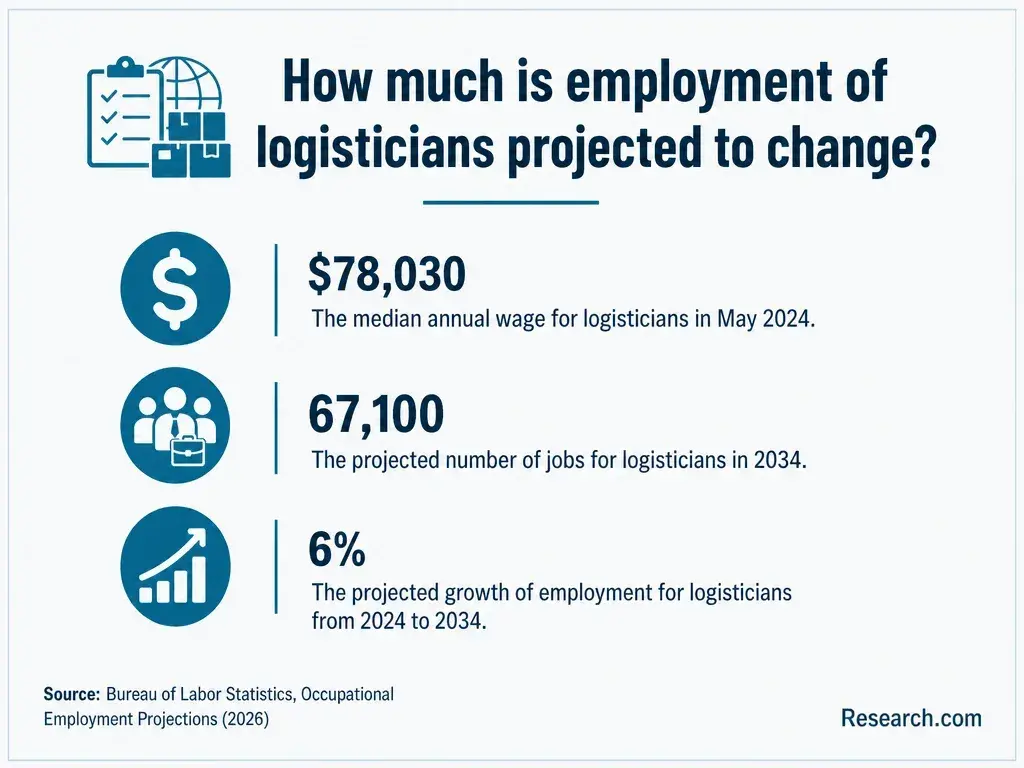
There is no single salary or growth rate for BS in Business Administration graduates. The U.S. Bureau of Labor Statistics reports a May 2025 median annual wage of $75,940 for human resources specialists and projects 6% employment growth for that occupation from 2025 to 2035. That is an occupation-wide median, not a starting salary or an outcome attributable to this degree; employers also assess relevant experience and role-specific skills.
For a project-coordination goal, compare job postings and work samples before choosing between a broad business degree and economical project management degree programs. Neither path makes a new graduate automatically eligible for a specialist or manager position. The better choice is the one whose remaining courses, applied work, and cost match the roles you can realistically pursue.
Which Certifications and Professional Standards Matter After Graduation?
A BS in Business Administration is an academic credential, not a professional license. Accounting licensure, HR credentials, and project management certifications have separate eligibility rules set by licensing boards or credentialing organizations. If one is your goal, check its education, experience, and examination requirements before assuming an accounting course - or the completed BS - qualifies you.
Keep degree funding and later certification expenses separate in your plan. Resources that compare grants for project management undergraduates concern bachelor's education, not automatic payment for a professional exam. For the immediate admissions decision, obtain written confirmation of the accounting equivalency first; then assess whether any additional credential serves your intended role.
Other Things You Should Know About Business Administration
Possibly. Ask whether the school accepts a specific exam for credit or offers a challenge exam, and whether the resulting credit satisfies the business core rather than only an elective.
Ask the state higher-education agency or designated transcript custodian where its records are held. The receiving school may also request archived course descriptions or syllabi to evaluate equivalency.
Some schools assess prior learning, but employment does not automatically replace a course. Confirm whether an available assessment awards credit that applies to the required accounting class.
Only after reviewing the risk with an adviser. Get a written plan for courses you can take now and confirm how an unsuccessful appeal would affect your schedule, charges, and aid.
- Program Integrity Questions and Answers - Retaking Coursework | U.S. Department of Education http://www.ed.gov/laws-and-policy/higher-education-laws-and-policy/program-integrity-information-questions-and-2
- School-Determined Requirements - FSA Partner Connect https://fsapartners.ed.gov/knowledge-center/fsa-handbook/2026-2027/vol1/ch1-school-determined-requirements
- Staying Eligible | Federal Student Aid https://studentaid.gov/understand-aid/eligibility/staying-eligible
- Transfer Credit - Academics - iMpact Web Portal | Ross IT https://rossweb.bus.umich.edu/academics/studentresources/transfer-credit/
- Transfer credit practices - UC Admissions https://admission.universityofcalifornia.edu/counselors/preparing-transfer-students/transfer-credit-practice.html
- Transfer Coursework, Minimum Grade and GPA Calculation | KU https://services.ku.edu/TDClient/818/Portal/KB/Article/21421/Transfer-Coursework-Minimum-Grade-and-GPA-Calculation
- Special regulations for courses in specific subject areas | UCOP https://www.ucop.edu/transfer-articulation/transfer-course-agreements/tca-policy/regulations-by-subject-area.html
- Transfer Credit Evaluation - TXST Admissions https://www.admissions.txst.edu/future-students/transfer-credit-evaluation.html
- Transfer Credit Evaluation | Office of Admissions https://admissions.tc.umn.edu/admissions/transfer-admission/transfer-credit-evaluation
- Transfer Credit | Office of the University Registrar (OUR) https://registrar.ucdavis.edu/records/transfer-credit