2027 From Frontline Supervision to Cross-Functional Leadership: When Does a BS in Business Administration Make Sense?
Audited and Verified:
Our Editorial and Data Verification Process
Research.com uses government datasets, official education statistics and primary institutional information to support its career and degree guides. Our review process checks factual accuracy, occupational definitions, source dates and the requirements associated with the credentials discussed.
How This Article Was Fact-Checked
Our editorial team verifies salary estimates, employment projections, education requirements and program information against original data providers and official organizations. Salary figures are checked against the relevant occupational definitions and reporting periods. Information about licensure, accreditation and required in-person training is reviewed separately.
Fact-checked and verified on:

Co-Founder and Chief Data Scientist
Frontline supervision gives you evidence that you can manage people and daily operations. A cross-functional role may ask for something different, coordinating budgets, processes, projects, and decisions across departments.
This article is for experienced employees weighing whether a BS in Business Administration will help bridge that gap. It explains what the degree can add, where experience may matter more, and how to compare programs against a specific next role before committing time and money.
Key Things You Should Know
- A BS in Business Administration makes the strongest case when your target role requires a bachelor's degree or broader financial, analytical, and organizational skills than your supervisory job has developed.
- It is not a promotion credential by itself: cross-functional employers also need evidence that you can influence stakeholders, manage trade-offs, and deliver work beyond your own team.
- The U.S. Bureau of Labor Statistics projects 7% employment growth for project management specialists from 2025 to 2035, but that occupation-wide figure does not predict an individual graduate's prospects.
What Is a BS in Business Administration, and Who Is It For?
A BS in Business Administration is an undergraduate degree combining general education with business subjects such as accounting, finance, management, marketing, operations, and analytics. A cross-functional leader coordinates work across areas - for example, helping operations, finance, and customer service agree on a process change. The degree can give a supervisor a shared vocabulary for those conversations, but it does not replace experience carrying them out.
It is most relevant to supervisors whose next role spans several business functions or whose employer specifies a bachelor's degree. A BBA or BA in Business may serve a similar goal; compare actual courses rather than assuming the letters determine quality. If the target is narrowly defined - such as managing project schedules and risks - a specialized option, including budget-friendly online project management programs, may offer more focused preparation. Compare remaining credits and required courses before assuming a specialized program is the cheaper route.
When Does a BS in Business Administration Make Sense for Career Growth?
The degree makes sense when it closes an identifiable gap between your current responsibility and a target job. A supervisor who already coaches staff and handles daily scheduling may benefit more from learning to interpret financial statements, assess organization-wide processes, and present recommendations to stakeholders than from another introductory leadership course.
Start with postings and internal promotion criteria for the role you want. Separate a degree requirement from preferred skills, then compare both with work you can document. If you meet the educational requirement and mainly lack experience coordinating projects across departments, an employer-sponsored assignment or mentorship may be more direct. If the role calls for a bachelor's degree and broader business judgment, degree completion becomes a stronger investment.
A project-focused supervisor should also compare the business degree with a specialized pathway. Where prior college work matters, investigate online undergraduate project management credit acceptance as well as business-program transfer rules. Credits a school accepts may still fail to satisfy its major requirements, changing which path is faster.
What Jobs Can You Get With a BS in Business Administration?
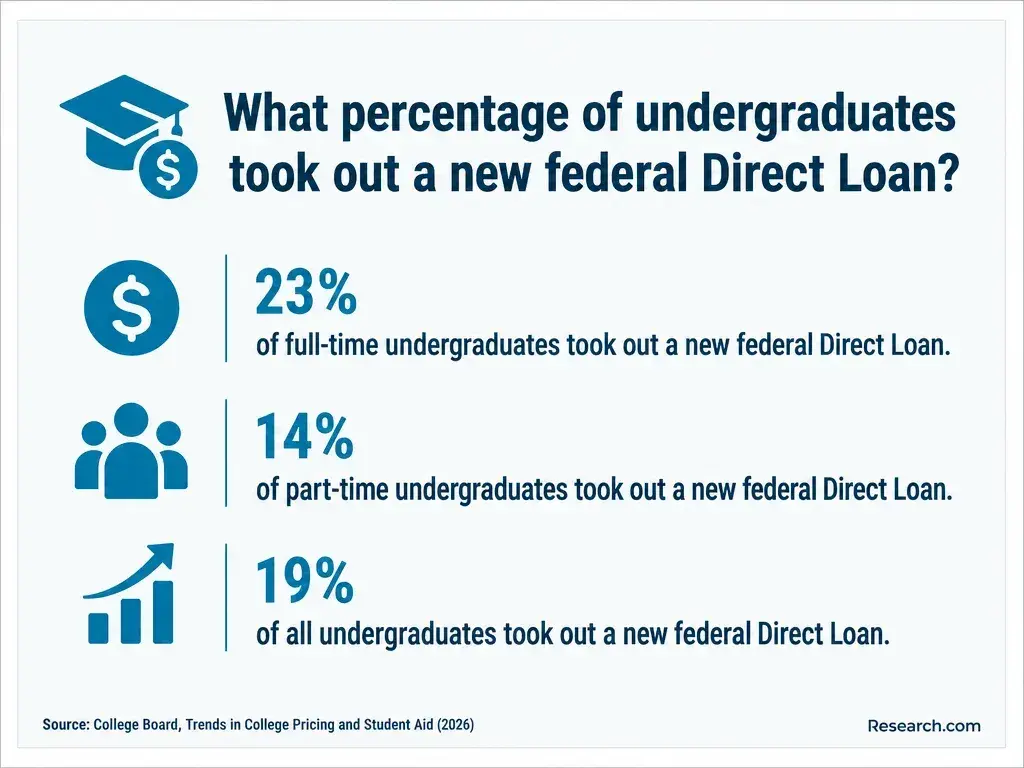
The best next job depends on what you have supervised, not just the degree title. The table distinguishes plausible transitions from roles that typically require additional functional experience. Job titles and requirements vary by employer.
| Target role | What you would need to demonstrate | Likely transition issue |
| Operations or administrative services coordinator | Process documentation, resource planning, and coordination across teams | Moving from running a shift to improving a wider workflow |
| Project coordinator or project management specialist | Scheduling, stakeholder updates, risk tracking, and completed projects | Showing results beyond your direct reports |
| HR or training specialist | Staff development, records, communication, and relevant HR knowledge | Distinguishing supervisory experience from specialist HR practice |
| Supply chain or logistics role | Purchasing, inventory, supplier, or distribution analysis | Building function-specific knowledge and tools |
A supervisor with substantial inventory or distribution experience may find that focused study is more useful than a general degree. Compare the required courses in accelerated undergraduate supply chain programs with the jobs you want; an accelerated label does not establish that your credits will apply or that the schedule fits your work.
Typical programs cover accounting, economics, finance, marketing, management, operations, statistics, business law, and communication, alongside general education. Requirements differ by school. For a supervisor seeking cross-functional responsibility, the most valuable courses are often those that connect decisions: managerial accounting for cost trade-offs, operations for process design, and analytics for evaluating results.
Look beyond course titles for assignments that require you to present a recommendation, build a budget, or analyze a process with stated assumptions. Ask whether a concentration or capstone permits an approved workplace project. Current employment does not automatically earn academic credit, and using employer data may require permission. When comparing online business administration program cost-and-time comparisons, check whether the courses most relevant to your target role are actually included and offered when you can take them.
A bachelor's degree commonly follows a four-year full-time plan, but a working supervisor's completion time depends on applied transfer credits, course sequence, and enrollment pace. Part-time study can preserve work capacity while extending the calendar; an accelerated schedule compresses deadlines rather than eliminating coursework.
Request an official degree audit showing what remains in general education, the business core, any concentration, and residency requirements. Then ask when required courses run and whether group projects or live sessions conflict with shifts. You can compare ranked accelerated undergraduate business schools to identify options, but use each school's evaluation of your credits - not an advertised completion time - to plan your finish date.
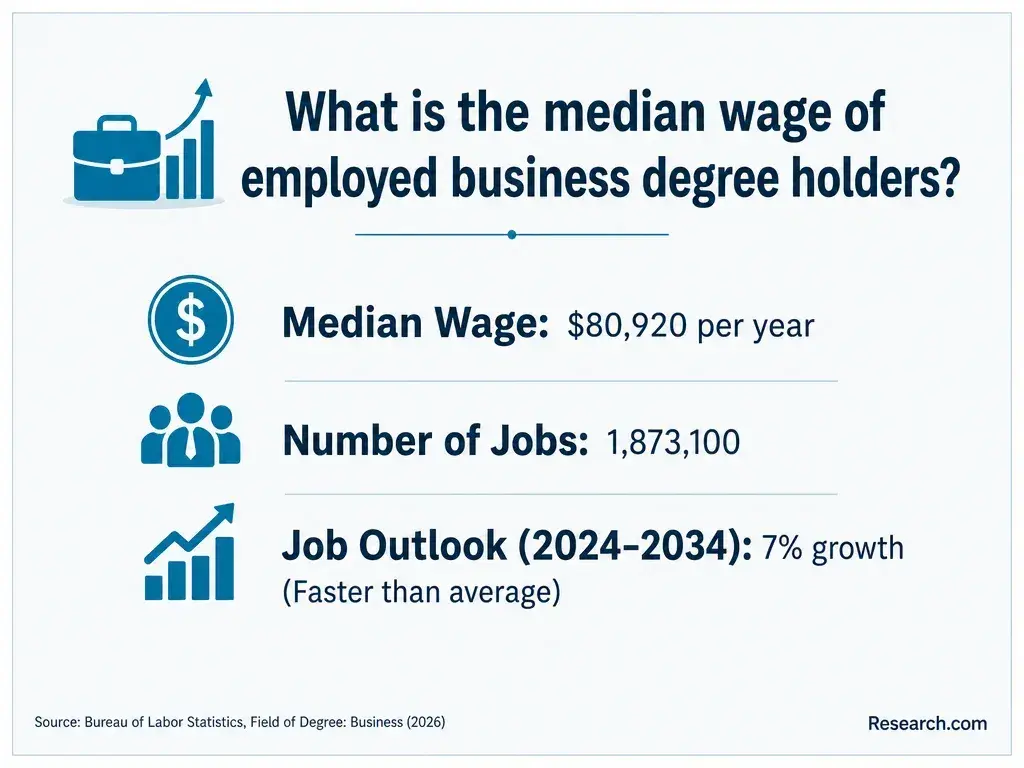
The relevant figure is your remaining cost to complete, not an advertised tuition rate. Add tuition for courses still required, mandatory fees, books and software, and any travel or proctoring costs. Account separately for borrowing costs, time away from paid work, and the possibility that employer reimbursement arrives only after a successful term.
Ask each school for a written estimate based on its evaluation of your credits and proposed pace. Compare that estimate with grants, loans, and any employer benefit for which you actually qualify. Guides to business administration tuition budgets using federal student aid can help frame the comparison, federal aid eligibility and a school's listed price do not establish your personal net cost. A cheaper program can cost more overall if required courses delay completion.
An online degree can be a sound choice if the institution and program meet your needs and the format lets you finish while working. Delivery mode alone does not establish academic quality or how employers will assess your experience. For a supervisor, the practical test is whether you can complete collaborative work, presentations, and applied assignments without routinely missing shifts or leadership obligations.
Check live-attendance rules, weekly deadlines, group-work expectations, exam arrangements, faculty access, and career support. Online does not necessarily mean self-paced. If speed is important, review online colleges offering accelerated bachelor's, then verify the business degree's specific schedule and required courses rather than relying on a college-wide format description.
Requirements depend on whether you apply as a first-time student, a transfer student, or a returning student. Schools may request prior transcripts and evidence that you meet their academic standards; entry to the institution and entry to its business major can be separate decisions. Prior supervisory work can strengthen your application, but it does not automatically replace prerequisite courses or award credit.
Gather transcripts from every prior college, then ask admissions whether mathematics, accounting, or other courses are required before entering the major. Ask the transfer office where accepted credits would apply, not merely how many would transfer. If upfront application expense matters, colleges that waive online application costs may be worth considering, though an application-fee policy says little about total degree cost or program fit.
First verify the institution's accreditation through the accreditor and a recognized U.S. accreditation directory. Then check whether any claimed AACSB, ACBSP, or IACBE accreditation covers the business school or program you would enter. Institutional accreditation and business-specific accreditation have different scopes; neither alone proves that a program will secure a promotion.
For your decision, request the current catalog, an official credit evaluation, a sample course schedule, and details of career services for working adults. Ask whether a capstone can address an approved workplace problem and how the school handles confidential information. Even when reviewing business administration degrees for limited tuition budgets, confirm these academic and support details before treating a low price as good value.
What Salary and Job Outlook Can Business Administration Graduates Expect?
There is no single salary for BS in Business Administration graduates: pay follows the occupation, location, industry, and level of responsibility. The U.S. Bureau of Labor Statistics reports a May 2025 median annual wage of $102,320 for project management specialists and projects 7% employment growth for that occupation from 2025 to 2035. That median includes workers at different career stages; it is not an expected salary for someone newly entering the role.
For a realistic return-on-investment estimate, compare pay ranges for specific openings you could credibly pursue with and without the degree. Include the remaining education cost and any experience you must still gain. If project management is the clear destination, compare the business degree's net cost with a focused program and its aid options; an online project management undergraduate funding guide can support that separate comparison. Do not assume either credential produces an immediate raise.
Other Things You Should Know About Business Administration
Sometimes. Ask whether the school offers prior-learning assessment and what evidence it requires. Employment alone does not guarantee credit, and awarded credit may apply only as an elective.
No. Employers may value a bachelor's degree, relevant experience, or both. An MBA is graduate study; check target-role requirements before assuming it is necessary.
Not by itself. CPA eligibility depends on state board rules, including specific education and other requirements. Verify those rules before choosing courses for an accounting goal.
Usually only with appropriate employer permission. Describe your role and methods without disclosing confidential financial, customer, or employee information; use a redacted or independently created example when needed.
- Career Guide: Logistics Manager | American College of Education https://ace.edu/student-success/career-guides/logistics-manager/
- What Can You Do with a Business Administration Degree? | American InterContinental University https://www.aiuniv.edu/blog/what-can-you-do-with-a-business-administration-degree
- Why Cross-Functional Teams Are Easier to Manage | columbia.edu https://business.columbia.edu/insights/cross-functional-teams-high-performance-motivation
- What Jobs Can You Get With a Business Degree? | snhu.edu https://www.snhu.edu/about-us/newsroom/business/what-jobs-can-you-get-with-a-business-degree
- 11 Types of Business Degrees and Career Pathways | National University https://www.nu.edu/blog/types-of-business-degrees/
- Types of Business Degrees: Your Complete Guide | UWA Online https://online.uwa.edu/news/types-business-degrees/
- What Can You Do With a Business Administration Degree? | American Military University https://www.amu.apus.edu/area-of-study/business-administration-and-management/resources/what-can-you-do-with-a-business-administration-degree-exploring-options/
- Online Bachelor's Degree in Business Administration | Purdue Global https://www.purdueglobal.edu/degree-programs/business/bachelor-business-administration/
- How Long Does it Take to Get a Business Degree Online? | stevenson.edu https://www.stevenson.edu/online/about-us/news/how-long-does-it-take-to-get-a-business-degree-online/
- Business Administration vs. Management: Key Differences and Career Fit | post.edu https://post.edu/blog/business-administration-vs-management/