
2027 Best Online Graduate Certificate in Accounting Programs

Co-Founder and Chief Data Scientist
An online graduate certificate in accounting is a short, graduate-level credential designed for people who need stronger accounting knowledge without committing immediately to a full master’s program. It can help working professionals add accounting skills to their current role, prepare for more advanced study, explore CPA-related coursework, or move toward accounting, auditing, tax, bookkeeping, financial analysis, or business management work. It is not the same as a full accounting degree program, so choosing the right option requires understanding what the certificate can—and cannot—do for your career.
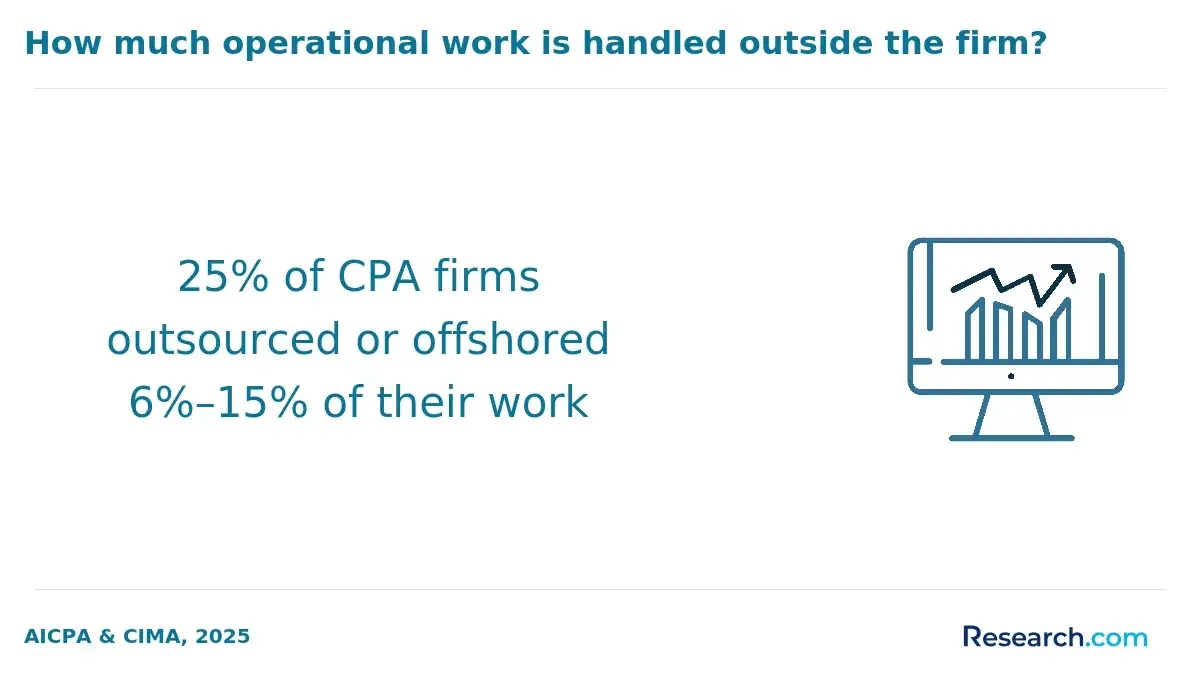
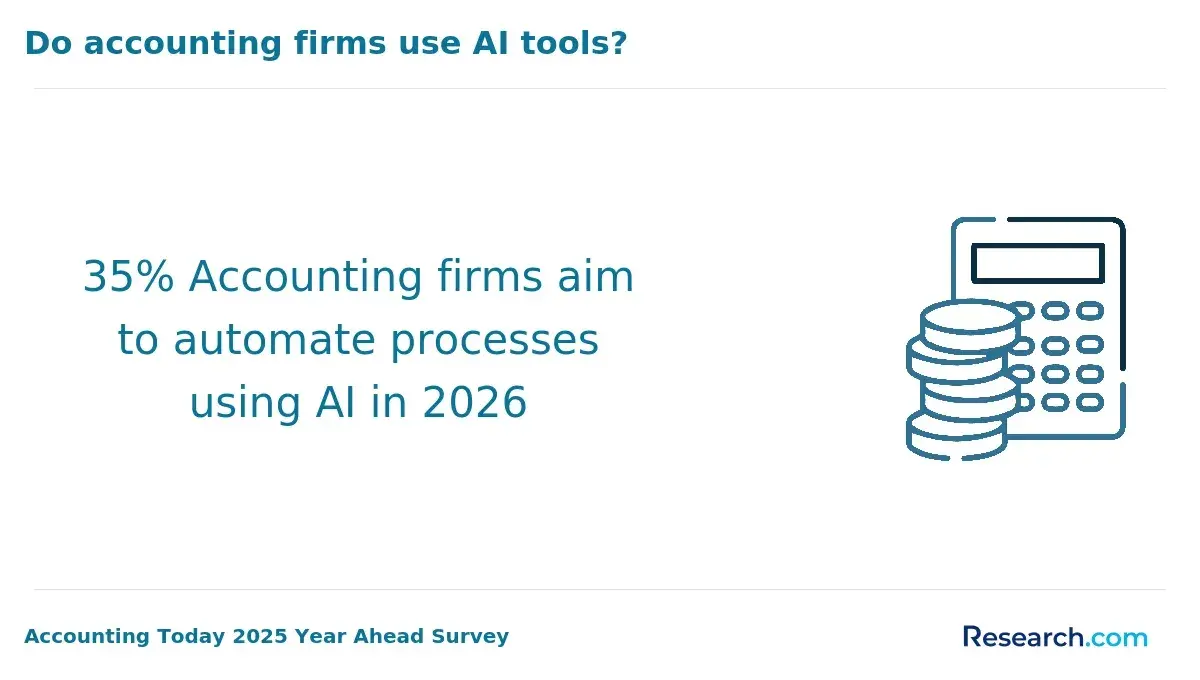
The timing matters. Accounting teams are under pressure to do more with better technology, stronger compliance processes, and fewer manual workflows. An AICPA survey reported a 6.9% increase in the net hourly billing rate over two years, while 25% of U.S. firms outsource or offshore around 6% to 15% of their work because of demand. At the same time, 35% accounting firms aim to automate processes using AI in 2026 to keep pace with the market.
This guide explains how online graduate accounting certificates work, how they compare with traditional and master’s-level programs, what they cost, what courses to expect, and how to evaluate whether the credential is worth it for your goals. It also includes Research.com’s 2027 selection of strong online graduate certificate options, chosen from available datasets using factors such as program reputation, course offerings, faculty publications, and expertise. If you are still comparing broader options, you may also want to review online accounting degrees.
Best Online Graduate Certificate in Accounting Program Table of Contents
- Can you get a degree completely online?
- Will employers take my online degree seriously?
- Are online degrees recognized all over the world?
- Online vs. Traditional Graduate Certificate in Accounting Program
- How much does an online graduate certificate in accounting cost?
- What are the requirements for an online graduate certificate in accounting program?
- Courses to Expect in an Online Graduate Certificate in Accounting Program
- Things to Look for in an Online Graduate Certificate in Accounting Program
- Career Pathways After Completing a Graduate Certificate in Accounting
- 2027 Best Graduate Certificate in Accounting Programs
- How do online graduate certificates stack up against master’s degrees in accounting?
- What are the career prospects and earning potentials after earning an online graduate certificate in accounting?
- Can an online graduate certificate in accounting lead to the highest paid accounting jobs?
- What are the common challenges in online graduate certificate in accounting programs?
- What financing options are available for online graduate certificate in accounting programs?
- Can an Online Graduate Certificate in Accounting Bridge Diverse Career Pathways?
- What networking opportunities are available for online graduate certificate in accounting students?
- Does the Online Graduate Certificate in Accounting Provide Hands-on, Real-world Experience?
- Does an Online Graduate Certificate in Accounting Offer a Strong Return on Investment?
- How to Choose the Right Online Graduate Certificate in Accounting Program for Your Career Goals
- What are the key factors to consider when choosing accredited online certificate programs?
- Should I Pursue Additional Professional Certifications After Earning an Online Graduate Certificate in Accounting?
- What Student Support Services Enhance Success in Online Graduate Certificate in Accounting Programs?
- Emerging Trends and Future Outlook in Accounting Education
Quick Answer: Is an Online Graduate Certificate in Accounting Worth Considering?
An online graduate certificate in accounting can be worth it if you already have a bachelor’s degree and need focused accounting coursework for career advancement, CPA preparation, a career transition, or stronger financial decision-making in your current job. It is usually shorter and more targeted than a master’s degree, but it does not provide the same depth, credential weight, or broad graduate education as a full master’s program.
The best candidates are working professionals, business owners, managers, analysts, bookkeepers, and career changers who need graduate-level accounting skills quickly. The certificate is less ideal for students who need a complete undergraduate accounting foundation, a guaranteed path to CPA eligibility in every state, or a full graduate degree for leadership, teaching, or advanced specialist roles.
| Best Fit | Use the Certificate For | Be Careful If |
| Working professionals | Adding accounting knowledge without pausing employment | Your work schedule leaves little time for weekly deadlines |
| Career changers | Testing an accounting pathway before a master’s degree | You lack prerequisite business or accounting coursework |
| CPA-focused students | Completing targeted coursework that may support exam preparation | You have not checked your state board’s CPA education rules |
| Business owners and managers | Improving budgeting, tax, cost, and financial statement skills | You expect the certificate alone to replace professional accounting advice |
Can you get a degree completely online?
Yes, many universities now offer graduate accounting certificates fully online, while others use a hybrid model that combines online coursework with limited campus or scheduled live requirements. For many students, the more important question is not whether the course is online, but whether the institution is accredited, whether the curriculum matches their goal, and whether the program fits their schedule.
Most online graduate certificate programs use a learning management system for lectures, assignments, readings, discussions, quizzes, grade tracking, announcements, and instructor communication. Transcripts commonly list the credential and courses rather than emphasizing whether each class was completed online, on campus, or in a hybrid format.
Online study is especially practical for adults who work full time, manage family responsibilities, or live far from campus. It can also reduce commuting and relocation expenses. However, flexibility does not mean the coursework is easy. Accounting requires careful reading, problem-solving, spreadsheet work, and regular practice with financial concepts.
Students need reliable internet access, an updated computer, and enough technical confidence to submit assignments, join virtual meetings, use accounting or spreadsheet tools, and complete exams. Some schools may require proctored assessments, and a few may require students to complete certain exams in person or under approved supervision.
Will employers take my online degree seriously?
Employers are most likely to respect an online graduate certificate when it comes from a properly accredited institution and when the coursework clearly connects to the job. In accounting, credibility depends heavily on the school’s reputation, curriculum quality, faculty expertise, and the student’s ability to apply accounting skills—not simply on whether the class was delivered online.
When listing the credential on a resume, students typically name the certificate and institution rather than describing the delivery format. For example, the credential may be presented as a graduate certificate in accounting, accounting fundamentals, financial accounting and reporting, or accounting information security, depending on the program.
Many online programs are taught by the same faculty who teach campus-based courses and use comparable readings, case studies, assignments, and assessments. What employers usually want to see is evidence that the applicant can handle accounting tasks, communicate clearly, use relevant software, interpret financial information, and meet deadlines.
Employer acceptance is also shaped by market conditions. Because 25% of CPA firms in the U.S. outsourced or offshored 6%–15% of their work, many organizations are paying close attention to skills, productivity, and technical adaptability. A well-chosen online credential from an accredited institution can be evaluated similarly to campus-based study when the academic standards are comparable. For readers comparing business credentials more broadly, an affordable online business degree may also be relevant.
Are online degrees recognized all over the world?
Online credentials are widely accepted in many professional and academic settings, but recognition is not automatic everywhere. The key factors are the institution’s accreditation, the country or employer reviewing the credential, the subject area, and whether the program satisfies any licensing or professional requirements.
This matters in accounting because rules can vary by jurisdiction. A graduate certificate may strengthen your knowledge and resume, but CPA eligibility, professional licensing, and recognition for international employment may require specific courses, credit totals, degree levels, or documentation. Students planning to work outside the United States should ask schools how their credentials are described on transcripts and whether graduates have used the certificate internationally.
Online study can apply to many levels of education, including certificate programs, BS/BA or MS accounting degrees, and online associates degrees. Still, a credential becomes more valuable when it is paired with strong grades, relevant software skills, analytical ability, and work experience.
Global employers are also watching technology skills more closely. With accounting firms aiming to automate processes using AI in 2026, students should look for programs that introduce analytics, accounting systems, AI-supported workflows, and digital controls alongside core accounting concepts.
Online vs. Traditional Graduate Certificate in Accounting Program
Online and traditional graduate accounting certificates can cover similar academic content, but the learning experience differs. Campus programs provide in-person classroom interaction and may be better for students who need fixed schedules and direct face-to-face support. Online programs are often better for working adults who need to study around employment, caregiving, military service, or location constraints.
| Factor | Online Graduate Certificate | Traditional Campus Certificate |
| Schedule | Often asynchronous or designed for working students | Usually tied to set class meeting times |
| Location | Can be completed from home if all requirements are online | Requires commuting or living near campus |
| Interaction | Discussion boards, video meetings, email, virtual office hours | In-person classes, office visits, campus events |
| Course materials | Readings, lectures, cases, announcements, and submissions are usually digital | May combine digital resources with live classroom activities |
| Best for | Self-directed students who need flexibility | Students who prefer structured in-person learning |
The best format depends on how you learn. Online students benefit from recorded lectures because they can pause, replay, and review difficult sections. They also need discipline, since no one is physically reminding them to attend class. Campus students may find it easier to build spontaneous relationships with classmates and faculty, but they give up some scheduling flexibility.
In either format, accounting coursework is practical and detail-oriented. Students should expect to use spreadsheets, analyze statements, solve accounting problems, and apply standards to business scenarios. Technology is not optional in modern accounting education; it is part of the work.
Is an online degree cheaper?
Online programs can be less expensive than campus programs, but they are not always cheaper. The total price depends on tuition, fees, residency rules, course load, required software, books, and whether foundation courses are needed. Some schools charge the same tuition to online students regardless of state residency, while others separate in-state, out-of-state, and military rates.
Online students often avoid room, board, commuting, parking, and relocation costs. They may also reduce printing and textbook expenses when materials are digital. However, they still need reliable technology, internet access, and sometimes proctoring, software, or platform fees.
Financial aid for certificate students varies by institution and program structure. Some working professionals use employer tuition assistance, while military-affiliated students may be eligible for education benefits. The Veteran Affairs’ Yellow Ribbon Program is one example students may investigate if they qualify.
Is an online degree as good as a regular degree?
An online accounting certificate can be as academically credible as a campus-based certificate when the institution is accredited, the curriculum is rigorous, and the same academic standards apply. The delivery method is different; the value comes from the coursework, assessment quality, faculty, and relevance to your professional goal.
Online learning has become common across disciplines, from business programs to online English degree programs. Strong online courses still require substantial reading, analysis, writing, problem-solving, and interaction. The difference is that many of those activities happen through digital systems rather than in a physical classroom.
Before enrolling, ask whether the transcript or diploma identifies the delivery format, whether online students have access to faculty and career support, and whether the program has the same learning outcomes as the campus version.
How much does an online graduate certificate in accounting cost?
The cost of an online graduate certificate in accounting varies widely by school, credit requirement, residency status, and whether the student must complete prerequisite or foundation courses. Tuition at well-known universities may be higher because of faculty depth, institutional reputation, student services, and business-school resources.
Examples of online graduate certificate in accounting tuition from a sampling of universities include Purdue University Global ($7,760), Pennsylvania State University ($12,084), Southern New Hampshire University ($5,760), University of Connecticut ($12,300), and Eastern Washington University ($5,600). These figures do not include foundation courses. If a student needs prerequisite courses before entering the certificate curriculum, the final cost can increase.
| Cost Item | Why It Matters | Question to Ask |
| Tuition | This is the largest direct cost and may be charged by credit, course, or program | Is the quoted price the total certificate cost or only tuition? |
| Foundation courses | Students without prior accounting coursework may need extra classes | Will I need prerequisites before graduate courses begin? |
| Residency pricing | Some online programs charge different rates for in-state and out-of-state students | Is there a separate out-of-state online tuition rate? |
| Books and software | Accounting courses may require digital textbooks, spreadsheets, or specialized tools | Which materials are required and what do they cost? |
| Technology | Students need a capable computer and reliable internet connection | Are there student discounts for hardware or software? |
| Financial aid | Certificate eligibility for aid can differ from degree eligibility | Does this specific certificate qualify for aid, scholarships, or employer billing? |
Is an online accounting certificate degree worth it?
An online graduate certificate in accounting may be worth it if it helps you qualify for new responsibilities, strengthen your current role, prepare for graduate study, or close a specific skills gap. It is less likely to pay off if you choose a program without checking accreditation, prerequisites, CPA relevance, employer recognition, or total cost.
Career outcomes vary because students enter these programs with different backgrounds. A production manager, for example, may use accounting coursework to improve inventory, cost, and budgeting decisions. A career changer may use the certificate to move toward staff accounting or bookkeeping work. A current accountant may use it to refresh knowledge or prepare for more specialized roles.
Payscale lists the following occupations and estimated annual salaries: accounting manager at $87,142, senior accountant at $78,520, general project manager at $80,674, financial controller at $98,916, and office manager at $57,361. Related occupations and estimated annual salaries are listed below (Payscale, 2026):
| Job Title | Average Annual Salary (Estimated) |
| Account Manager | $65,907 |
| Account Representative | $52,557 |
| Accounts Payable Clerk | $45,427 |
| Accounts Receivable Manager | $71,187 |
| Administrative Coordinator | $53,208 |
| Assistant To The Vice President | $66,640 |
| Billing Administrator | $58,719 |
| Buyer | $64,503 |
| Customer Service Representative (CSR) | $45,851 |
| Customer Service Supervisor | $59,189 |
| Document Control Coordinator | $70,369 |
| Finance Specialist | $61,768 |
| Full Charge Bookkeeper | $57,388 |
| General / Operations Manager | $75,239 |
| General Manager, Restaurant | $58,682 |
| Office Manager | $57,361 |
| Payroll & Benefits Manager | $80,226 |
| Production Planner, Manufacturing | $68,805 |
| Program Director, Non-Profit | $68,589 |
| Project Manager, (Unspecified Type / General) | $82,878 |
| Purchasing Manager | $77,207 |
| Reservations Manager | $58,825 |
| Salesperson / Salesman / Saleswoman | $63,157 |
| Staff Accountant | $60,062 |
| Team Leader, General | $71,936 |
Salary data should be used as a benchmark, not a promise. Your outcome will depend on work experience, location, employer type, industry, prior education, CPA eligibility, and whether the certificate leads to measurable new responsibilities.
What are the requirements for an online graduate certificate in accounting program?
Most graduate certificate in accounting programs require applicants to hold a bachelor’s degree. Some programs expect prior coursework in accounting or business, while others are designed for students who need accounting fundamentals. A minimum cumulative high school GPA of 2.7 on a 4.0 scale is the usual requirement. International applicants are commonly asked to document English-language proficiency through standardized exams. Students comparing options can review different accounting degree types before choosing a certificate pathway.
Common Admission Requirements
- Bachelor’s degree, with the minimum GPA set by the university
- Official transcripts from prior colleges or universities
- Professional certification documents, if available and relevant
- Professional employment documents, which are often requested by career-focused programs
- GRE or GMAT scores, when required or accepted by the program
- TOEFL, TOEIC, or IELTS scores for international students when required
Common Application Materials
- Application and processing fees
- Statement of purpose, personal goal statement, or admissions essay
- CV or resume
- Recommendation letters, often from an employer, supervisor, or academic contact
- GRE or GMAT test scores when required by the school
What are the technological requirements of students for online learning?
Students should plan for stable broadband internet through Wi-Fi, fiber, or cable service. A phone or tablet may be enough for checking messages, but accounting coursework is much easier on a laptop or desktop computer because students often need to work with spreadsheets, PDFs, videos, tax or accounting exercises, and long written assignments. A dual-core computer with at least 4 GB of RAM may be adequate for basic online coursework, but stronger hardware can make multitasking smoother.
Students should also expect to use cloud storage, web browsers, office software, spreadsheet applications, PDF readers, video platforms, and the school’s learning management system. Some programs may provide university licenses for specialized tools, while others may require students to purchase or access software independently.
Courses to Expect in an Online Graduate Certificate in Accounting Program
An online graduate certificate in accounting usually focuses on core accounting knowledge rather than broad electives. Because certificates are shorter than degrees, they tend to prioritize practical subjects such as financial reporting, taxation, auditing, cost accounting, managerial accounting, and analysis.
Course names vary by institution, but students often encounter topics like these:
- Financial Statement Analysis: Students learn how to read, compare, and interpret financial statements to evaluate performance, liquidity, profitability, leverage, and business trends. This often includes ratio analysis and the analysis of financial statements.
- Taxation: This course introduces federal income tax concepts and their application to individuals, corporations, partnerships, and other entities. Students may also examine tax consequences of business transactions and basic tax return preparation.
- Auditing: Students study internal and external auditing concepts, the auditor’s role, financial evidence, risk, controls, and standards. Programs may also introduce the elements of a financial audit.
- Cost Accounting: This subject covers cost measurement, cost behavior, budgeting, performance evaluation, cost-volume-profit analysis, and tools used to support operational decisions.
- Managerial Accounting: Students learn how accounting information supports planning, control, budgeting, variance analysis, capital budgeting, and internal management decisions.
- Advanced Accounting Theory: This course may address the conceptual basis of accounting practice, international financial reporting, advanced reporting issues, and specialized topics such as accounting for mergers and acquisitions.
Most graduate certificates do not include formal concentrations because they are short. Even so, many programs are updating assignments and examples to reflect data analytics, accounting information systems, automation, and digital reporting tools. Coursework that introduces Power BI, Python, analytics dashboards, or accounting systems can be useful for students who want to stay relevant as accounting work becomes more technology-enabled.
Things to Look for in an Online Graduate Certificate in Accounting Program
The right program depends on your goal. A student preparing for CPA-related coursework should evaluate a certificate differently from a small business owner who wants better financial literacy or a manager who needs stronger cost accounting skills. Students considering location-specific options can also compare programs such as those at accounting schools in Michigan.
Accreditation and institutional credibility
Start by verifying institutional accreditation. Then look at whether the business school or accounting program has specialized recognition, when applicable. Accreditation does not guarantee employment, but it helps confirm that the school meets recognized academic standards. This same principle applies across online fields, including programs such as an online electrical engineering degree.
Curriculum fit
Review the exact course list. If you need tax knowledge, do not choose a certificate centered mostly on financial reporting. If you want to move toward audit or fraud investigation, look for auditing, controls, forensic accounting, or accounting information systems content. If you plan to pursue the CPA, ask whether the courses can count toward your state board’s education requirements.
Total cost and financial aid
Compare the full cost, not just tuition. Include application fees, course materials, software, exam proctoring, technology, and prerequisite classes. Ask whether the certificate qualifies for scholarships, employer reimbursement, military benefits, or installment billing.
Faculty and practitioner access
Faculty quality matters because accounting is both technical and judgment-based. Look for instructors with graduate credentials, professional certifications, research activity, industry experience, or experience teaching working adults. Also ask whether online students can attend office hours, receive timely feedback, and access faculty for career guidance.
Student support
Strong online programs provide academic advising, library access, tutoring, technology support, writing help, career services, and clear onboarding. These services can be especially important for students who have been out of school for several years.
Career Pathways After Completing a Graduate Certificate in Accounting
A graduate certificate in accounting can support several career directions, but the best path depends on your prior degree, work experience, location, and professional goals. For some students, the certificate is a bridge into entry-level accounting. For others, it adds financial expertise to an existing business, operations, management, or entrepreneurship role.
| Career Path | How the Certificate Helps | What Else May Be Needed |
| Staff Accountant | Builds knowledge of financial reporting, journal entries, reconciliations, and accounting principles | Accounting experience, software proficiency, and possibly additional coursework |
| Financial Analyst | Strengthens financial statement interpretation and business analysis skills | Strong Excel, data analysis, forecasting, and industry knowledge |
| Tax Preparer or Tax Specialist | Introduces tax rules, compliance concepts, and return-related analysis | Tax software experience, seasonal practice, and possibly additional tax credentials |
| Auditor | Provides exposure to audit evidence, controls, compliance, and financial review | Audit experience, communication skills, and possible CPA preparation |
| Forensic Accountant | Supports fraud, controls, and investigative thinking when paired with analytical coursework | Specialized fraud, legal, data, or certification training may be needed |
Students who want a long-term accounting career should map the certificate to the next credential. That may include CPA coursework, a master’s degree, or professional certifications. If you are starting from the beginning, Research.com’s guide on how to become an accountant can help you understand education, skills, and career progression.
2027 Best Online Graduate Certificate in Accounting Programs
Research.com selected the following online graduate certificate in accounting programs as strong options for 2027 based on available program information, academic reputation, faculty expertise, and curriculum relevance. Students should verify current tuition, admission rules, course availability, accreditation status, and CPA applicability directly with each school before applying.
1. The University of Connecticut
The University of Connecticut offers a Graduate Certificate in Accounting Fundamentals for students who already hold a bachelor’s degree. The program is designed to develop accounting knowledge through topics such as financial statement preparation and analysis, legal liability, risk analysis, pensions, investments, liabilities, bonds, notes, leases, intangibles, property tax, investment, compensation, retirement, and estates.
Courses are taught by faculty involved in both online and campus instruction, and the program emphasizes practical accounting knowledge while reflecting changes in the field.
- Program Length: 1 year (summer + fall)
- Tracks/concentrations: N/A
- Cost: $1025 per credit hour ($3075 per course)
- Required Credits to Graduate: Two fall courses + two spring courses
- Accreditation: The Association to Advance Collegiate Schools of Business (AACSB)
2. University of Massachusetts at Dartmouth
The University of Massachusetts at Dartmouth offers a 12-credit online Graduate Certificate in Accounting that can be completed in one year. The program is intended for working professionals who want to deepen accounting knowledge and strengthen professional credentials through applied coursework. Students comparing certificate-focused options can also review Research.com’s guide to a graduate certificate in accounting online.
- Program Length: 1 year
- Tracks/concentrations: N/A
- Tuition: $1,659 per 3-credit course
- Required Credits to Graduate: 12 credits (four courses)
- Accreditation: New England Commission of Higher Education (NECHE)
3. The Golden Gate University
Golden Gate University offers a Graduate Certificate in Financial Accounting and Reporting that can be completed in one year and is restricted to domestic students. All courses must be completed at Golden Gate University, and students must earn a minimum cumulative GPA of 3.00. Prerequisites may be satisfied through equivalent prior learning or by completing coursework at GGU.
The curriculum emphasizes financial accounting and reporting skills, CPA-relevant knowledge, accounting analysis, leadership, and taxation. Students may study online or at the main San Francisco campus.
- Program Length: 1 year
- Tracks/concentrations: N/A
- Cost per Credit: $1,090 /unit
- Required Credits to Graduate: 12 units
- Accreditation: WASC Senior College and University Commission (WSCUC), USA
4. Southern New Hampshire University
Southern New Hampshire University offers a Graduate Accounting Certificate made up of seven courses. The program is designed for students who want to refresh or expand accounting skills in areas such as basic accounting and financial reporting, managerial accounting, intermediate accounting, federal taxation, auditing, advanced financial reporting, and cost accounting.
- Program Length: 1 year
- Tracks/concentrations: N/A
- Cost: $5760 (18 credits)
- Required Subjects to Graduate: 7 courses
- Accreditation: New England Commission of Higher Education (NECHE)
5. The University of Maryland Global Campus
The University of Maryland Global Campus (UMGC) offers a certificate in Accounting Information Security. The program is designed with practical input from professionals in cybersecurity and accounting and is especially relevant for students interested in accounting systems, cyber accounting, data analytics, information systems, fraud investigations, compliance, and audit preparation.
- Program Length: 1 year
- Tracks/concentrations: N/A
- Required Credits to Graduate: 18 credits
- Accreditation: Middle States Commission on Higher Education
- Cost: $524 per credit (in-state)/$659 per credit (out-of-state)/$480 per credit (military)
How do online graduate certificates stack up against master’s degrees in accounting?
An online graduate certificate is shorter, narrower, and usually more targeted than a master’s degree in accounting. It can be a smart choice when you need a specific group of courses, want to test a field, or need to upskill quickly. A master’s degree is usually the stronger option when you want deeper specialization, broader graduate study, more advanced career positioning, or a more comprehensive CPA-aligned academic pathway.
| Option | Best For | Main Limitation |
| Graduate certificate in accounting | Focused upskilling, career transition, prerequisite building, or targeted CPA-related coursework | Less comprehensive than a full degree |
| Master’s degree in accounting | Advanced accounting roles, deeper specialization, leadership preparation, and broader graduate credentialing | Requires more time, coursework, and financial commitment |
| Stackable pathway | Students who want to start with a certificate and later apply credits to a master’s program | Credit transfer is not guaranteed unless the school confirms it |
If you are already considering a full graduate degree, compare certificate costs with the cheapest online accounting master's degree options and ask whether certificate credits can transfer into a master’s program.
The Future of Accounting
Accounting work is becoming more automated, analytical, and systems-driven. Routine manual tasks such as reconciliation, billing workflows, cash flow tracking, and journal-entry processing are increasingly supported by AI, machine learning, and integrated financial platforms. This does not remove the need for accountants; it changes what employers expect them to do.
Modern accounting professionals need to understand controls, data quality, technology risk, regulatory requirements, and how automated outputs should be reviewed. Employers are also watching developments in 5G, Artificial Intelligence, predictive analytics with Big Data, and Blockchain technology as they evaluate accounting processes and reporting systems.
A 2021 study by A. Hazan in the peer-reviewed Open Journal of Business and Management found that “Wider application of AI in accounting and auditing profession is expected to provide the benefits of greater efficiency, productivity and accuracy… Preparation is needed on the part of educators, regulators and professional bodies by addressing the paradigm shift and preparing the students, policies, and future professionals for the challenges of the world that are fraught with big data, blockchain technology, artificial intelligence, and so on, ushering the fourth industrial revolution."
An online postgraduate certificate in accounting can remain useful when it teaches both accounting fundamentals and current tools. It may also complement non-accounting career paths. For example, professionals in healthcare, operations, technology, public service, or entrepreneurship may benefit from stronger financial literacy. Students pursuing dual interests may compare accounting with other online professional pathways, including nurse practitioner schooling programs.
For additional accounting education options, Research.com also provides guides such as accounting schools in Georgia.
What are the career prospects and earning potentials after earning an online graduate certificate in accounting?
Career prospects after an online graduate certificate in accounting depend on how the credential fits with your prior experience. A certificate can strengthen a resume for roles in accounting support, staff accounting, payroll, tax preparation, audit support, budgeting, financial analysis, operations management, and business administration. It can also help current employees move into roles with more financial responsibility.
The certificate alone does not guarantee advancement or a specific salary. Employers often weigh work history, technical skills, location, CPA progress, software experience, and industry knowledge. Students targeting advanced earnings should compare job requirements carefully and review guides to the accountant highest salary roles to understand what additional experience or credentials may be needed.
Can an online graduate certificate in accounting lead to the highest paid accounting jobs?
An online graduate certificate can contribute to a path toward higher-paying accounting roles, but it is rarely the only requirement. Senior accounting, controllership, forensic accounting, audit leadership, and executive finance roles often require a combination of advanced education, certifications, years of experience, management ability, and strong technical judgment.
Use the certificate strategically. Choose courses that match your target role, build accounting software and analytics skills, and ask whether credits apply to CPA or master’s-level requirements. Students aiming for the highest paid accounting jobs should plan beyond the certificate and identify the experience, licensing, and leadership milestones those roles typically require.
What are the common challenges in online graduate certificate in accounting programs?
Online graduate accounting certificates are flexible, but they can be demanding. Students must keep pace with weekly assignments, technical concepts, problem sets, case analysis, and exams while often balancing full-time work. The biggest risks are underestimating the workload, falling behind in asynchronous courses, and choosing a program without enough academic support.
| Common Mistake | Why It Creates Problems | Better Approach |
| Choosing a program without checking accreditation | Employers, graduate schools, and licensing boards may question the credential | Verify institutional accreditation and any relevant business-school recognition |
| Looking only at tuition | Fees, books, software, and prerequisites can change the real price | Ask for a full cost estimate before enrolling |
| Assuming all courses count toward CPA requirements | CPA education rules vary by state | Confirm requirements with your state board before applying |
| Ignoring course format | Some students struggle without live meetings or structured deadlines | Choose asynchronous, synchronous, or hybrid delivery based on your learning style |
| Underestimating math, spreadsheet, and writing demands | Accounting requires precision, analysis, and documentation | Refresh spreadsheet and business writing skills before classes begin |
| Skipping support services | Online students may feel isolated or delay asking for help | Use tutoring, faculty office hours, advising, and discussion boards early |
If you are not ready for graduate-level work, a lower-cost foundation may be more appropriate. Comparing an affordable accredited online accounting associates degree can help you decide whether to build undergraduate accounting skills first.
What financing options are available for online graduate certificate in accounting programs?
Financing a graduate certificate takes more planning than many students expect because aid rules can differ between degree and non-degree programs. Start by asking the school whether the certificate is eligible for federal aid, institutional scholarships, payment plans, employer billing, veterans benefits, or private loan certification.
- Employer tuition reimbursement: A strong option for working adults if the certificate supports the employee’s current or future role.
- Institutional scholarships: Some schools offer awards for working professionals, military-affiliated students, or students in business programs.
- Military and veterans benefits: Eligibility depends on the student, school, program, and benefit type.
- Payment plans: Monthly payment options can reduce the need to borrow.
- Private education loans: These may be available, but students should compare repayment terms carefully.
- Lower-cost stepping stones: Students who need foundational coursework may first compare an affordable online associate's degree in accounting.
Can an Online Graduate Certificate in Accounting Bridge Diverse Career Pathways?
Yes. Accounting knowledge is useful outside traditional accounting departments because every organization must track revenue, expenses, budgets, compliance, performance, and financial risk. A certificate can help professionals in operations, administration, purchasing, project management, nonprofit leadership, small business ownership, and consulting make better financial decisions.
It can also support entrepreneurship. Founders and small business leaders who understand cost behavior, cash flow, taxes, financial statements, and controls are better prepared to evaluate growth, pricing, funding, and risk. Students considering business ownership can connect accounting study with broader careers in entrepreneurship.
What networking opportunities are available for online graduate certificate in accounting students?
Online students should not assume networking will happen automatically. The best programs create structured ways for students to meet faculty, alumni, employers, and peers. Students should also take initiative by joining professional groups and participating actively in class discussions.
- Virtual alumni networks: Online alumni communities can help students find mentors, job leads, and industry advice.
- Course discussion boards: Thoughtful participation can build peer relationships and make group projects more productive.
- Webinars and virtual career events: Guest lectures, employer panels, and online fairs can expose students to accounting specializations.
- Professional associations: Organizations such as the American Institute of Certified Public Accountants (AICPA) and state accounting societies can offer publications, events, and professional development.
- LinkedIn groups: Program-specific and accounting-focused groups can help students follow trends, connect with alumni, and identify openings.
- Mentorship programs: Some schools match online students with experienced professionals who can advise on CPA preparation, career moves, and specialization choices.
Does the Online Graduate Certificate in Accounting Provide Hands-on, Real-world Experience?
Some online graduate accounting certificates are highly applied, while others are more theory-focused. Students who want job-ready skills should look for courses that use case studies, simulations, accounting software, tax or audit scenarios, spreadsheet modeling, group projects, and real-world financial statement analysis.
Ask whether students complete projects similar to workplace tasks: preparing analyses, reviewing controls, interpreting statements, building budgets, evaluating risks, or explaining findings to non-accountants. This type of practical work can strengthen confidence and help students connect accounting theory to business decisions. Students comparing finance-related online options may also find value in an accelerated finance degree.
Does an Online Graduate Certificate in Accounting Offer a Strong Return on Investment?
The return on investment depends on your starting point, career goal, total program cost, and how directly the certificate improves your employment options. A certificate can offer a strong ROI when it is affordable, completed quickly, recognized by employers, and tied to a clear next step such as a promotion, CPA preparation, a master’s degree, or a career change.
Before enrolling, compare expected benefits with the actual cost. Review compensation benchmarks, including resources explaining what do CPAs make, but avoid assuming that one certificate will automatically produce a salary increase. ROI improves when students choose accredited programs, use employer reimbursement, avoid unnecessary prerequisites, and select courses aligned with their target jobs.
How to Choose the Right Online Graduate Certificate in Accounting Program for Your Career Goals
Choosing an online graduate certificate in accounting should start with your career objective, not with a ranking alone. A well-known program may still be the wrong fit if the courses do not match your goals or if the schedule is unrealistic.
- Define your goal. Decide whether you want CPA preparation, a career transition, promotion support, small business knowledge, tax skills, audit exposure, or accounting systems expertise.
- Check admission and prerequisites. Ask whether your bachelor’s degree and prior coursework are enough for direct entry.
- Verify accreditation. Confirm institutional accreditation and any relevant business-school accreditation or recognition.
- Match courses to your target role. Compare required courses with job descriptions for the roles you want.
- Confirm CPA relevance if needed. Contact your state board and ask the school how courses are classified.
- Calculate total cost. Include tuition, fees, software, books, technology, and extra foundation courses.
- Evaluate online support. Look for advising, tutoring, library services, career coaching, tech support, and faculty access.
- Ask about credit transfer. If you may pursue a master’s degree later, confirm whether certificate credits can apply.
- Review outcomes carefully. Ask about alumni roles, employer partnerships, and career services without assuming job placement is guaranteed.
Students who want a dedicated overview of this credential can continue with Research.com’s guide to an accounting graduate certificate.
What are the key factors to consider when choosing accredited online certificate programs?
For any online certificate, accreditation should be the first filter. After that, compare curriculum, cost, faculty, student support, flexibility, transcript wording, transferability, and career relevance. In accounting, also ask whether courses cover current tools, reporting standards, tax topics, audit concepts, and analytics skills that employers may value.
Do not choose a program only because it is inexpensive or convenient. The best value is a credential that is credible, affordable, flexible enough to finish, and aligned with your next professional step. Students comparing online certificates across subjects can review accredited online certificate programs for broader selection guidance.
Should I Pursue Additional Professional Certifications After Earning an Online Graduate Certificate in Accounting?
Additional certifications can be useful if they match your career goal. A graduate certificate provides academic coursework; professional certifications can validate specific job skills. For example, students interested in bookkeeping, payroll, tax preparation, fraud, auditing, or management accounting may pursue targeted credentials after completing academic study.
Choose certifications based on employer demand and your role, not simply to collect credentials. A student pursuing bookkeeping or small-business accounting may investigate a bookkeeping certification online, while a student aiming for public accounting may focus on CPA requirements.
What Student Support Services Enhance Success in Online Graduate Certificate in Accounting Programs?
Support services can make the difference between enrolling and finishing. Strong online accounting programs provide academic advising, virtual tutoring, technical support, digital library access, writing assistance, career coaching, and clear communication from faculty. These services are especially important for students returning to school after time away or studying while employed full time.
Students should ask how quickly instructors respond, whether tutoring is available for accounting and quantitative topics, how career services support certificate students, and whether online learners can access the same resources as campus students. Those considering additional credentials can also compare guidance on which bookkeeping certification is best.
Emerging Trends and Future Outlook in Accounting Education
Accounting education is changing because accounting work is changing. Online graduate certificate programs are increasingly expected to teach not only accounting rules and reporting concepts, but also how technology affects financial processes, internal controls, audit work, and decision-making.
- AI and automation: Programs are beginning to address how automated tools support routine accounting tasks and how professionals should review, interpret, and control automated outputs.
- Data analytics: Employers increasingly value accountants who can work with dashboards, spreadsheets, data visualization, and structured data.
- Accounting information systems: Systems knowledge is becoming important for audit preparation, compliance, cybersecurity awareness, and process improvement.
- Global accounting knowledge: International business activity creates demand for professionals who understand topics such as IFRS and cross-border reporting issues.
- Stackable education: Certificates can serve as shorter credentials that may lead to additional certificates, certifications, or graduate degrees when credits transfer.
Students who want targeted skills without the cost of a full degree can compare the cheapest online graduate certificate programs, but they should still verify accreditation, course quality, and career relevance.
Key Insights
- An online graduate certificate in accounting is best for targeted upskilling. It works well for professionals who need accounting knowledge quickly, but it is not a substitute for a full accounting degree or guaranteed CPA eligibility.
- Accreditation and curriculum fit matter more than delivery format. Employers are more likely to value an online credential when the school is credible and the courses match real accounting responsibilities.
- Costs vary significantly. Published tuition examples include Purdue University Global ($7,760), Pennsylvania State University ($12,084), Southern New Hampshire University ($5,760), University of Connecticut ($12,300), and Eastern Washington University ($5,600), but prerequisites and fees can change the total.
- Technology is reshaping accounting education. With 35% accounting firms aiming to automate processes using AI in 2026, students should look for exposure to analytics, accounting systems, automation, and digital controls.
- Career value depends on your starting point. The certificate can support roles in staff accounting, tax, audit, finance, operations, and management, but salary outcomes depend on experience, location, credentials, and employer needs.
- Do not skip CPA and transfer-credit checks. If your goal is CPA eligibility or a future master’s degree, confirm requirements before enrolling rather than assuming credits will apply.
- The strongest choice is practical and decision-aligned. Choose a program that fits your schedule, budget, career goal, support needs, and long-term education plan.
References:
- AICPA. (n.d.). Forensic Accounting. AICPA.
- AICPA forensic accounting resource. Hasan, A. R. (2021, December 13). Artificial intelligence (AI) in accounting & auditing: A literature review. SCIRP Open Access.
- Lawrence, B. P. (2023, March 15). 3 trends that will reshape accounting and finance in 2023. Journal of Accountancy.
- PayScale. (2026). Average Team Leader, General Hourly Pay. PayScale.com.
- Understanding a financial statement audit. (n.d.). PricewaterhouseCoopers. UMGC technology requirements.
- USA.Gov. (n.d.). Financial aid and student loans. USA.Gov.
- Veterans Affairs. (n.d.). Yellow Ribbon Program. Veterans Affairs.
- Slotta, D. (2025, December 17). Accounting industry in the U.S. - statistics & facts. Statista.
- AICPA & CIMA. (2025). MAP survey executive summary. https://www.aicpa-cima.com/resources/download/map-survey-executive-summary
- Hood, D. (2026, January 2). Accounting in 2026: The year ahead in numbers. Accounting Today. https://www.accountingtoday.com/list/accounting-in-2026-the-year-ahead-in-numbers
- AICPA. (2025). AICPA 2025 Trends Report. https://www.aicpa-cima.com/professional-insights/download/2025-trends-report
Other Things You Need to Know About Online Graduate Certificate in Accounting Programs
Requirements for an online graduate certificate in accounting in 2027 often include a bachelor's degree from an accredited institution, transcripts, a resume, and, in some cases, relevant work experience. Some programs may also require GMAT or GRE scores, though this is becoming less common.
The admission process typically involves submitting an application form, official transcripts, and a resume. Some programs may require a personal statement or letters of recommendation. Application deadlines vary, so check with each institution for specific dates for 2027 entries.
In 2027, online graduate certificate programs in accounting typically include core courses like Financial Accounting, Managerial Accounting, and Taxation. Elective options often cover Auditing, Forensic Accounting, and International Accounting, offering a diverse range of topics to enhance specific skills.
The cost varies depending on the institution but generally ranges from $5,600 to $12,300 for the entire program. Some programs may have additional costs for materials, software, or exams.
Yes, prerequisites often include an undergraduate degree in accounting or a related field. Some programs might require professional experience or prior coursework. It's essential to check the specific requirements of each program as they can vary.
Yes, if the courses are upper-division or graduate-level and accepted by your state board, they can count toward CPA licensure education. Most states require 150 semester hours total and a degree from an accredited institution, with specific accounting and business-credit minimums.


