2027 Online Healthcare Administration Degrees for Students Re-entering College

Co-Founder and Chief Data Scientist
Returning to college for healthcare administration can be a practical move if you want a business-focused healthcare career without becoming a clinician. The field is growing quickly: the U.S. Bureau of Labor Statistics reports a May 2024 median salary of $117,960 for medical and health services managers.
This guide is for working adults comparing online degree options, transfer credits, costs, accreditation, and career outcomes. You'll learn how to choose a credible program, avoid common enrollment mistakes, and decide whether this path fits your time, budget, and career goals.
Key Things You Should Know
- For adults re-entering college, the best online healthcare administration degree depends on prior credits: an associate degree can support entry-level office roles, a bachelor's degree is the common management foundation, and a master's degree fits advancement into director-level or executive roles.
- Employer credibility depends more on institutional accreditation, relevant curriculum, internships or projects, and work experience than on whether courses are online or on campus.
- The U.S. Bureau of Labor Statistics reports a May 2024 median salary of $117,960 for medical and health services managers, but pay varies by role, region, employer type, experience, and whether the position requires clinical or long-term-care licensure.
What is an online healthcare administration degree and how does it prepare working adults?
An online healthcare administration degree teaches the business side of healthcare: budgeting, staffing, compliance, health information systems, quality improvement, patient access, ethics, and operations. It is different from a clinical healthcare degree because the focus is on managing people, processes, facilities, data, and services rather than diagnosing or treating patients.
For adults re-entering college, the online format can be especially useful because many programs allow asynchronous coursework, part-time enrollment, and transfer credit from previous college study. A strong program should connect coursework to real workplace problems, such as reducing appointment delays, improving billing workflows, preparing for audits, or managing teams across departments.
If you are not ready to commit to a full degree, reviewing an affordable healthcare administration course or degree pathway can help you compare lower-cost options before enrolling. This is especially helpful if you want to test your interest in healthcare management before using financial aid or employer tuition benefits.
The degree can prepare working adults in three practical ways. First, it gives nonclinical employees a path into supervisory roles. Second, it helps career changers translate experience in customer service, military administration, finance, human resources, or operations into healthcare settings. Third, it can help current healthcare workers move from patient-facing or support roles into management.
Are online healthcare administration programs respected like campus programs by employers?
Yes, online healthcare administration programs can be respected by employers when they come from properly accredited institutions and include relevant coursework, projects, and career support. Employers usually care less about delivery format and more about whether the school is legitimate, whether the curriculum matches the job, and whether the applicant can show practical skills.
Many online programs use the same faculty, catalog descriptions, learning outcomes, and degree titles as campus programs. In some cases, the diploma and transcript do not identify the course delivery format. However, students should verify this directly with the school because policies vary.
The table below shows what typically affects employer confidence. Use it to evaluate whether an online program is likely to strengthen your resume or raise questions during hiring.
| Employer concern | What strengthens credibility | What may be a red flag |
| School legitimacy | Institutional accreditation recognized by the U.S. Department of Education or CHEA | Unclear accreditation, vague state authorization language, or pressure-based enrollment tactics |
| Job relevance | Courses in healthcare finance, compliance, quality, operations, data systems, and leadership | Generic business coursework with little healthcare-specific content |
| Applied learning | Capstone, internship, practicum, case study, or employer-based project | No opportunity to demonstrate workplace-ready skills |
| Career support | Resume help, employer partnerships, alumni network, and internship coordination | No healthcare-specific advising or career placement transparency |
For adults returning to college, the strongest strategy is to combine the degree with evidence of experience. That can include a project portfolio, supervisor recommendations, Excel or data skills, compliance training, volunteer board work, or measurable achievements from your current job.
Which healthcare administration degrees are best for adults re-entering college?
The best degree depends on your current education level, work experience, and target job. Adults with no college credit may need a different pathway than adults who already have an associate degree, military training, or years of healthcare work experience.
The table below compares the main healthcare administration degree levels. It can help you decide whether to start small, finish a bachelor's degree, or pursue graduate study.
| Degree option | Best fit for returning adults | Common career direction | Key trade-off |
| Certificate | Adults testing the field or adding healthcare knowledge to existing business experience | Administrative assistant, patient access support, billing support, team lead preparation | Faster and cheaper, but usually not enough for management roles by itself |
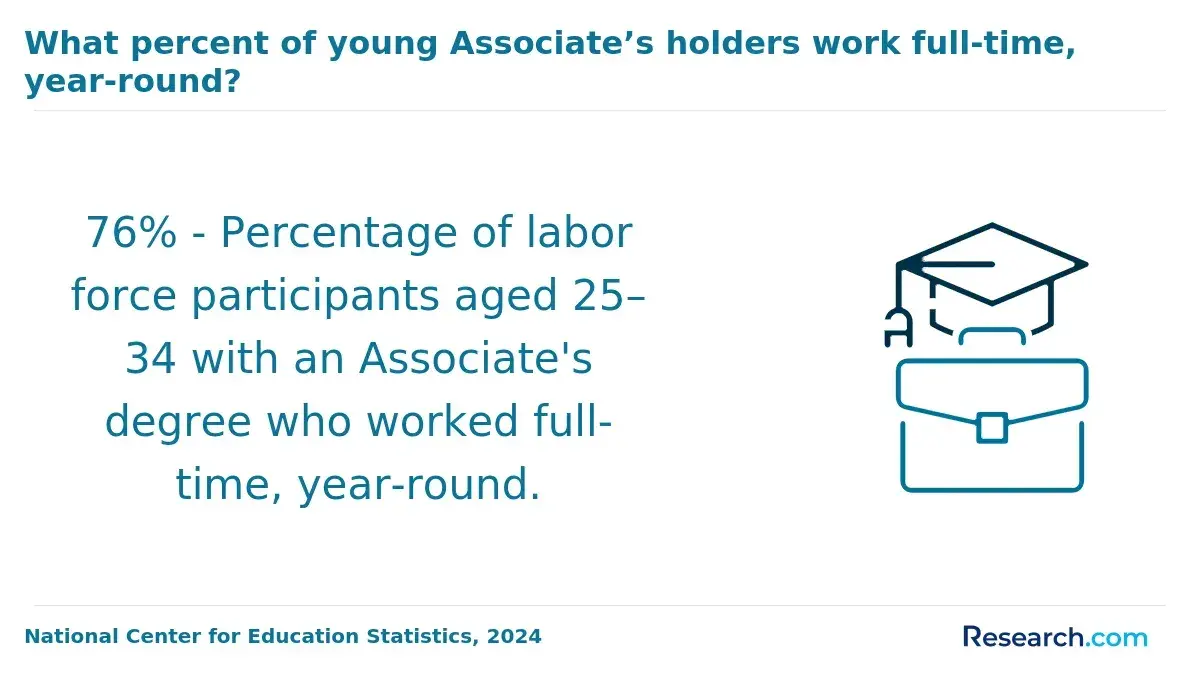
| Associate degree | Students with little or no college experience who want a lower-commitment starting point | Medical office coordinator, admissions representative, records support, entry-level supervisor | Can build momentum, but may limit advancement without a bachelor's degree |
| Bachelor's degree | Adults seeking the standard foundation for healthcare management roles | Practice manager, operations coordinator, department supervisor, healthcare analyst support | Longer and more expensive, but broader career utility |
| Master's degree | Adults with a bachelor's degree aiming for senior leadership, policy, consulting, or complex operations roles | Clinic director, health services manager, operations manager, administrative director | Higher cost and workload, but better alignment with leadership advancement |
A bachelor's in healthcare administration is often the most balanced option for adults who want management mobility. However, an online degree business administration pathway may be a better fit if you want broader options outside healthcare, especially in finance, operations, human resources, or entrepreneurship.
Choose healthcare administration if you are committed to the healthcare sector and want to understand regulations, patient experience, reimbursement, and care delivery systems. Choose a broader business degree if you want flexibility across industries or are unsure whether you want to stay in healthcare long term.
How do online and on-campus healthcare administration programs compare in format and flexibility?
Online and on-campus healthcare administration programs can cover similar academic content, but they differ in how students interact, complete assignments, access services, and manage schedules. Adults re-entering college should compare learning format as carefully as tuition because a poorly matched format can lead to withdrawal even when the program is academically strong.
The table below compares the major format differences that matter most for working adults, caregivers, and students returning after a long break.
| Factor | Online program | On-campus program | Best choice when... |
| Schedule | Often asynchronous or evening-based | Set class times and campus attendance | Online is better if work or caregiving hours change |
| Interaction | Discussion boards, video meetings, group projects, email advising | Face-to-face class discussion and campus events | Campus is better if you learn best through in-person structure |
| Networking | May be regional, national, or employer-based | Often local and campus-centered | Online can work well if the program has strong virtual career support |
| Commute and access | No regular commute, but requires reliable technology | Requires travel, parking, and location availability | Online is better for rural students or those far from a campus |
| Accountability | Requires self-direction and time management | Built-in routine through class meetings | Campus or hybrid may be better if you need external structure |
Before choosing a format, ask the school questions that reveal how the program actually works day to day. These questions are especially important if you have not taken college courses recently.
- Are courses fully asynchronous, or do they require live attendance at specific times?
- How many hours per week should a working adult expect to spend per course?
- Can students pause enrollment or reduce course load without losing good academic standing?
- Are internships, practicums, or capstones available near the student's location?
- What tutoring, writing help, library access, and career services are available to online students?
A common mistake is choosing the fastest program without checking workload. Accelerated terms can be valuable, but they compress reading, projects, exams, and group work into fewer weeks. That can be difficult if you work full time or are rebuilding academic confidence after years away from school.
What accreditation should healthcare administration programs have for quality and credibility?
Accreditation is one of the most important quality checks for any online healthcare administration degree. At minimum, the college or university should have institutional accreditation from an agency recognized by the U.S. Department of Education or the Council for Higher Education Accreditation. This affects transfer credit, graduate school eligibility, employer perception, and access to federal financial aid.
Programmatic accreditation can add another layer of credibility, especially at the graduate level. The Commission on Accreditation of Healthcare Management Education, commonly known as CAHME, accredits many graduate healthcare management programs. Not every reputable bachelor's program has programmatic accreditation, so students should not automatically reject a school for lacking it; instead, they should look at institutional accreditation, curriculum depth, faculty qualifications, applied learning, and outcomes.
Use this accreditation checklist before submitting an application. It can help you avoid programs that look convenient but may create problems later.
- Search the school in the U.S. Department of Education's Database of Accredited Postsecondary Institutions and Programs.
- Confirm that the accreditor listed on the school's website matches the official database entry.
- Ask whether credits from the program have been accepted by graduate schools or transfer institutions.
- If considering a master's program, check whether CAHME accreditation matters for your target employers.
- If you want long-term care administration, ask whether the program meets any education requirements in your state.
Be cautious if a school avoids direct accreditation questions, promises unusually fast completion with little coursework, or advertises guaranteed jobs. Accreditation does not guarantee employment, but lack of recognized accreditation can make a degree much less useful.
What are typical admission requirements for online healthcare administration degrees?
Admission requirements vary by school and degree level, but online healthcare administration programs are often designed with adult learners in mind. Many accept transfer credits, offer rolling admissions, and waive standardized tests for qualified applicants.
The table below summarizes common requirements. Use it as a planning tool, not a universal rule, because each institution sets its own policies.
| Program level | Typical requirements | Adult learner considerations |
| Certificate | High school diploma, GED, or current college enrollment; sometimes prior work experience | Good for testing the field or building confidence before a degree |
| Associate degree | High school diploma or GED, transcripts, placement assessment or college readiness review | May be transfer-friendly if you later pursue a bachelor's degree |
| Bachelor's degree | High school diploma or GED, college transcripts if applicable, minimum GPA policy, application form | Prior college credits, military training, or professional certifications may reduce time to completion |
| Master's degree | Accredited bachelor's degree, transcripts, resume, statement of purpose, references, possible GPA minimum | Some programs prefer healthcare or management experience but may admit career changers |
Adults returning after a long break should request an unofficial transfer credit review before applying whenever possible. This can show how many credits will count, whether old credits expire, and which general education requirements remain.
To prepare a stronger application, focus on clarity rather than trying to sound overly academic. Admissions teams often want to know why you are returning, how your work experience connects to healthcare administration, and whether you understand the time commitment.
- Gather transcripts from every previous college, even if you did not finish.
- Ask about credit for prior learning, military training, industry certifications, or employer-based training.
- Confirm whether math, statistics, or writing prerequisites are required before major courses.
- Review technology requirements, including webcam rules, proctored exams, and software access.
- Check withdrawal, re-entry, and satisfactory academic progress policies before using financial aid.
How long do online healthcare administration programs take, and what do they cost?
Program length depends on degree level, transfer credits, course load, and term format. A certificate may take a few months, an associate degree commonly takes about two years of full-time study, a bachelor's degree often takes about four years from the start, and a master's degree commonly takes one to three years depending on pace. Adults with transfer credits can sometimes shorten the timeline significantly.
Cost is harder to compare because schools advertise tuition differently. Some list cost per credit, others list annual tuition, and some separate online fees, technology fees, books, and graduation charges. College Board's 2024 tuition data shows why total cost matters: published tuition and fees for public four-year in-state students averaged $11,610 for 2024-25, while private nonprofit four-year institutions averaged $43,350. Online students may pay different rates, but this gap shows why comparing institution type, residency rules, and aid is essential.
The table below outlines common cost drivers. It can help you estimate the real price rather than relying only on advertised tuition.
| Cost factor | Why it matters | What to ask before enrolling |
| Per-credit tuition | Most online programs charge by credit, so remaining credits strongly affect total price | How many credits will I need after transfer evaluation? |
| Residency pricing | Some public universities charge different rates for in-state and out-of-state online students | Do online students receive in-state, out-of-state, or separate online tuition? |
| Fees | Technology, course, lab, graduation, and proctoring fees can add up | What is the full estimated cost of attendance? |
| Books and software | Healthcare analytics, statistics, or coding-related courses may require paid platforms | Are textbooks, simulations, or software included in tuition? |
| Transfer credit | Accepted credits can reduce both time and cost | Is there a maximum number of transfer credits, and do older credits count? |
| Employer tuition assistance | Healthcare employers may reimburse approved education expenses | Does the school meet my employer's reimbursement requirements? |
To reduce cost, start with transfer credit evaluation, complete the FAFSA if eligible, compare public and private nonprofit options, ask about employer tuition assistance, and avoid borrowing more than needed for your target role. The lowest tuition is not always the best value if the program lacks advising, transfer acceptance, or career support, but high tuition alone does not prove better outcomes.
What core courses and specializations are offered in healthcare administration programs?
Healthcare administration programs usually combine business fundamentals with healthcare-specific policy, finance, compliance, and operations. The best curriculum for an adult learner is one that builds practical skills you can show in interviews, not just theory you can describe on a transcript.
Most programs include a mix of foundational and applied courses. These course areas are especially important because they connect directly to common administrative responsibilities in hospitals, clinics, insurance organizations, public health agencies, and long-term-care settings.
- Healthcare finance and reimbursement, including budgets, payer systems, revenue cycle basics, and cost control
- Healthcare law, ethics, and compliance, including privacy rules, risk management, fraud prevention, and regulatory expectations
- Operations and quality improvement, including workflow analysis, patient safety, process redesign, and performance measurement
- Human resources and leadership, including staffing, conflict management, organizational behavior, and team supervision
- Health information systems and analytics, including electronic health records, reporting tools, data privacy, and decision support
- Strategic planning and healthcare policy, including population health, access, value-based care, and organizational strategy
Specializations vary by school. Common options include health informatics, long-term-care administration, healthcare finance, public health administration, human resources, quality and patient safety, and operations management. If you already work in healthcare, choose a specialization that complements your current experience rather than duplicating it.
Technology is changing the curriculum. More programs now emphasize data dashboards, telehealth operations, patient access systems, cybersecurity awareness, and AI-supported workflow tools. For students who want broader leadership roles in systems, logistics, and process improvement, an online MBA operations management pathway may be worth comparing with a specialized healthcare administration degree.
A useful test is to ask each school for sample assignments from upper-level courses. Strong assignments often involve budgets, compliance memos, process maps, staffing plans, quality dashboards, or case studies based on realistic healthcare scenarios.
What jobs can you get with a healthcare administration degree, and what are the salaries?
A healthcare administration degree can support roles in hospitals, physician practices, outpatient centers, long-term-care organizations, insurance companies, public health agencies, health technology firms, and nonprofit healthcare organizations. The exact job you qualify for depends on degree level, prior work experience, local labor market needs, and whether the role requires clinical credentials.
The U.S. Bureau of Labor Statistics reports a May 2024 median annual salary of $117,960 for medical and health services managers. This figure is useful for understanding the profession's earning potential, but it should not be treated as an entry-level expectation. Many adults start in coordinator, analyst, office management, patient access, or department support roles before moving into higher-level management.
The table below connects common roles with typical responsibilities and degree alignment. It is meant to help you map education choices to realistic career steps.
| Role | Typical responsibilities | Common preparation |
| Medical office manager | Manage scheduling, billing workflows, staff coordination, vendor communication, and patient service issues | Associate or bachelor's degree plus healthcare office experience |
| Patient access supervisor | Oversee registration, insurance verification, front-desk teams, and patient intake processes | Bachelor's degree preferred for advancement; experience often important |
| Healthcare operations coordinator | Support process improvement, staffing plans, reporting, and department projects | Bachelor's degree with operations, analytics, or quality coursework |
| Health services manager | Plan, direct, and coordinate services for a department, clinic, facility, or program | Bachelor's degree common; master's degree may help for senior roles |
| Healthcare compliance coordinator | Support audits, policy updates, training documentation, privacy processes, and regulatory monitoring | Bachelor's degree plus compliance, law, or risk management coursework |
| Long-term-care administrator | Manage facility operations, staffing, quality, resident services, and regulatory compliance | Degree plus state-specific licensure requirements for many roles |
Healthcare administration is not the only path into people-centered operations work. If you are drawn to wellness, recreation facilities, athletics, or community programming rather than healthcare delivery, comparing online sports degrees can help you evaluate a related but distinct management track.
To improve career readiness, build proof of skills while you study. Good examples include a process improvement project at work, a budget analysis, a policy memo, a quality improvement proposal, or a dashboard using de-identified sample data. These artifacts can make your resume stronger than a degree listing alone.
What is the job outlook for healthcare administration and are certifications required?
The job outlook for healthcare administration is strong because healthcare organizations need managers who can handle growth, regulation, staffing pressure, technology adoption, and cost control. The U.S. Bureau of Labor Statistics projects employment for medical and health services managers to grow 29% from 2023 to 2033, which is much faster than the average for all occupations. For students, that suggests a healthy long-term market, but competition can still be strong for desirable hospital and executive roles.
Certifications are usually not legally required for general healthcare administration jobs, but they can help demonstrate specialized knowledge. Licensure is different from certification: some long-term-care and nursing home administrator roles require state licensure, and requirements vary by state.
The table below explains common credentials and when they may matter. Always verify requirements with the employer, state board, or credentialing organization before planning your degree around a certification.
| Credential or requirement | Who it may fit | Important limitation |
| State nursing home administrator licensure | Students pursuing licensed long-term-care or skilled nursing facility leadership | Requirements vary by state and may include exams, supervised experience, and specific coursework |
| FACHE | Experienced healthcare executives seeking recognition through the American College of Healthcare Executives | Generally not an entry-level credential and requires professional experience |
| CHC or healthcare compliance credentials | Professionals focusing on compliance, privacy, audits, or regulatory operations | Best paired with relevant compliance experience |
| RHIA | Students pursuing health information management leadership | Typically tied to specific accredited health information management education pathways |
| Project management or Lean Six Sigma credentials | Students interested in operations, quality improvement, or workflow redesign | Helpful in some settings but not a substitute for healthcare knowledge |
AI and automation are also reshaping administrative work. Routine scheduling, documentation review, claims workflows, and reporting may become more automated, but managers still need to interpret data, lead teams, protect patient privacy, improve processes, and make ethical decisions. Adults who combine healthcare administration coursework with analytics, communication, and change management skills will be better positioned than those who rely on the degree alone.
Before enrolling, avoid three common mistakes: assuming every healthcare management job pays at the BLS median, ignoring state licensure rules for long-term care, and choosing a program without checking whether its curriculum matches your target role. The smarter approach is to identify three job postings you want, note the required degree and skills, and compare programs against those requirements.
Other Things You Should Know About Healthcare Administration
Many online programs are built for working adults, but the workload can still be demanding. If you work full time, consider starting with one or two courses, especially if you have been away from college for several years.
Clinical experience can help, but it is not required for many healthcare administration programs. Students often come from customer service, business, military, human resources, finance, insurance, or office administration backgrounds.
Pursuing an online healthcare administration degree in 2027 offers flexibility, allowing students re-entering college to balance their studies with other commitments. It opens career opportunities in various healthcare settings without needing clinical experience. Students gain management skills crucial for healthcare systems, making the field accessible and in demand.
Request a transfer credit review, verify accreditation, compare total cost, ask about online student support, and review job postings for your target role. These steps help you choose a program that fits your career goal rather than relying only on convenience or rankings.
References
- How to Become a Healthcare Administrator: A Guide to Your Career https://masterspublichealth.com/how-to-become-a-healthcare-administrator/
- Health Administration: Online Degrees and Careers https://www.publichealthonline.org/healthcare-administration/online-degree-programs/
- Are there Fully Online Master of Health Administration (MHA) Programs? https://www.mhaonline.com/faq/fully-online-mha-programs
- Healthcare Administration Certifications https://www.publichealthdegrees.org/careers/healthcare-administrator/certification/
- Health Administration Careers | HealthAdministrationDegrees.com https://www.healthadministrationdegrees.com/health-administration-careers/
- Online Healthcare Administration Bachelor Degree | Indiana Wesleyan University https://www.indwes.edu/program/bs-healthcare-administration/
- Are Online Healthcare Degrees Respected by Employers? https://www.chcp.edu/blog/are-online-healthcare-degrees-respected-by-employers/
- 3 Degrees of Healthcare Management: MSHCM vs. MBA vs. MHA https://www.michiganstateuniversityonline.com/resources/healthcare-management/degrees-in-healthcare-management-mba-vs-mha-mshcm/
- What Jobs Can You Get With a Healthcare Administration Degree? [Quiz] https://www.umassglobal.edu/blog-news/jobs-can-you-get-a-healthcare-administration-degree-quiz
- Online BS in Healthcare Administration https://www.baypath.edu/academics/undergraduate-programs/healthcare-administration/