2027 Online Healthcare Administration Degrees That Maximize Community College Healthcare Credits

Co-Founder and Chief Data Scientist
If you already earned healthcare credits at a community college, the smartest bachelor's program is usually the one that accepts the most usable credits, not simply the one with the lowest tuition. The stakes are real: the U.S. Bureau of Labor Statistics projects medical and health services manager employment to grow 29% through 2033.
This guide is for associate degree holders, allied health students, and working healthcare staff comparing online bachelor's options. You'll learn how transfer credit works, which accreditation matters, how long completion may take, and how to choose a program with better career fit.
Key Things You Should Know
- Many bachelor's programs allow up to 60 to 90 community college transfer credits, but credits must usually match general education, healthcare core, or elective requirements to shorten the degree.
- For cost planning, College Board's 2024 pricing data shows average published tuition and fees of $4,050 at public two-year colleges versus $11,610 for in-state public four-year colleges, making transfer strategy central to affordability.
- The strongest online options are regionally accredited, clearly publish transfer limits, accept healthcare-related coursework or prior learning where appropriate, and align with roles in operations, compliance, health information, revenue cycle, or practice management.
What is an online healthcare administration degree that maximizes community college healthcare credits?
An online healthcare administration degree that maximizes community college healthcare credits is usually a bachelor's completion program designed for students who already hold an associate degree or significant lower-division coursework. Instead of making you restart as a first-year student, the program evaluates your prior credits and applies them toward general education, electives, lower-level healthcare courses, or sometimes major requirements.
The key word is usable. A school may advertise a generous transfer maximum, but that does not mean every course from your transcript will reduce your remaining degree requirements. Anatomy, medical terminology, coding, medical office procedures, health law, public health, accounting, statistics, and management courses are often easier to apply than highly specialized clinical courses that do not match a healthcare administration curriculum.
This pathway fits students who want to move from patient care, billing, records, scheduling, front-office operations, or allied health into supervisory or administrative roles. It is less ideal if your main goal is a licensed clinical role such as RN, radiologic technologist, or respiratory therapist, because healthcare administration degrees generally prepare you for management and operations rather than clinical licensure.
Students comparing a broad healthcare management degree should look beyond the program title. "Healthcare administration," "healthcare management," "health services administration," and "healthcare leadership" can overlap, but their transfer rules, business course requirements, internship expectations, and concentration options may differ.
The table below summarizes the most common credit categories and how they typically help community college graduates reduce time to completion.
| Community college credit type | How it may apply | What to verify before enrolling |
| General education courses | Usually applies to writing, math, social science, humanities, and natural science requirements | Whether the school accepts the full associate degree block or reviews each course individually |
| Healthcare support courses | May apply to electives or introductory major requirements | Whether medical terminology, healthcare delivery, coding, or medical office courses count toward the major |
| Clinical or technical allied health credits | Often applies as electives, but not always to the healthcare administration core | Whether the program grants credit for accredited clinical training, certifications, or prior learning |
| Business and computer courses | May apply to accounting, management, information systems, or statistics requirements | Whether the course level, grade, and age meet transfer standards |
| Noncredit certificates or workforce training | May be considered through prior learning assessment at some schools | Whether documentation, exams, portfolios, or fees are required |
A strong transfer-friendly program should give you a written degree audit before you commit. If an admissions representative will only estimate your credits verbally, treat that as a red flag because the final evaluation may leave you with more remaining courses than expected.
How can you transfer community college healthcare credits into an online healthcare administration program?
Transferring community college healthcare credits is a process, not a single yes-or-no decision. The best results usually come from gathering documentation early and asking each school to show exactly how your credits fit the bachelor's plan.
Use the following sequence to avoid losing credits that could have counted toward your degree:
- Request official transcripts from every college you attended, including dual enrollment, military-affiliated coursework, and any previous four-year institution.
- Collect course descriptions or syllabi for healthcare courses that may not have obvious equivalents, especially coding, medical terminology, health records, pharmacology, clinical procedures, and administrative practicum courses.
- Ask whether the school has an articulation agreement with your community college or state transfer pathway that guarantees junior standing after an associate degree.
- Request a preliminary transfer evaluation that separates accepted credits from credits that actually apply to your degree requirements.
- Compare the remaining course list, not just the number of accepted credits, because two schools may accept the same credits but leave very different graduation timelines.
- Confirm grade minimums, course age limits, residency requirements, and whether upper-division major credits must be completed at the bachelor's institution.
Community college savings can be meaningful. College Board's 2024 data places average published tuition and fees for public two-year colleges at $4,050 for in-district students. That lower-cost foundation can improve return on investment, but only if your later bachelor's program applies the credits efficiently.
Common mistakes include assuming an associate degree automatically equals 60 applicable credits, ignoring residency requirements, or choosing a school before seeing the degree audit. Another frequent problem is transferring into a program with a narrow curriculum that does not recognize healthcare support courses as part of the major.
Before enrolling, ask the admissions or registrar's office these practical questions:
- What is the maximum number of lower-division credits I can transfer into this bachelor's program?
- Will my associate degree waive all lower-division general education requirements?
- Which of my healthcare courses apply to major requirements rather than free electives?
- Do you accept credit for certifications such as medical coding, medical assisting, EMT, or licensed practical nursing training?
- How many credits must I complete through your institution to graduate?
- Will I receive the transfer evaluation in writing before the enrollment deadline?
If a school is slow to provide answers, consider whether that same lack of clarity could affect advising after enrollment. Transfer students benefit most from programs with dedicated transfer advisors, transparent credit policies, and degree maps for associate degree holders.

Which accredited online healthcare administration schools accept the most community college credits?
No single accredited online healthcare administration school is automatically best for every transfer student. The school that accepts the most credits on paper may not be the school that gets you to graduation fastest. Your best option depends on your associate degree, state transfer agreements, course grades, healthcare certificates, and whether you need a fully online format.
The table below shows the types of accredited institutions that commonly serve community college healthcare graduates and what to compare when evaluating them.
| School type | Transfer-credit strength | Best fit | Possible trade-off |
| Public state universities with online completion programs | Often strong when they have statewide articulation agreements with community colleges | Students with an in-state associate degree who want predictable transfer pathways | May require specific general education patterns or upper-division prerequisites |
| Public universities with adult-learner divisions | Often flexible with electives, prior learning, and part-time pacing | Working healthcare employees balancing shifts and family responsibilities | Course availability may vary by term, which can affect completion speed |
| Private nonprofit online universities | Can be generous with transfer credits and may offer multiple start dates | Students who need year-round scheduling or broader national transfer review | Sticker price may be higher, so net cost after aid and transfer credits matters |
| Competency-based institutions | May recognize prior knowledge through competency assessments rather than only seat-time credits | Experienced healthcare workers who can move quickly through familiar material | Requires strong self-direction and may not suit students who need frequent live instruction |
| Career-focused universities | May accept technical healthcare credits that traditional universities treat as electives | Students with medical office, coding, billing, or allied health coursework | Accreditation, employer recognition, and total cost require careful review |
To identify schools that may accept the most relevant credits, start with programs that explicitly market themselves as bachelor's completion, degree completion, transfer-friendly, or designed for associate degree holders. Then compare the written policies rather than relying on advertising language.
Look for these evidence points on a school's website or in its catalog:
- A published maximum transfer-credit limit, such as 60, 75, or 90 credits toward a bachelor's degree
- Clear minimum grade rules, often a C or higher for transfer courses
- Transfer equivalency databases or course-by-course lookup tools
- Articulation agreements with community colleges or state systems
- Prior learning assessment options for certifications, military training, or documented healthcare work experience
- Degree maps showing how associate degree holders complete upper-division requirements
A useful rule of thumb is to compare remaining credits, remaining tuition, and remaining time together. A school that accepts 80 credits but charges much more per credit may not be cheaper than a school that accepts 70 credits with lower tuition and stronger advising.
What accreditation should online healthcare administration programs have to be recognized by employers?
For employer recognition, the most important baseline is institutional accreditation from an accreditor recognized by the U.S. Department of Education or the Council for Higher Education Accreditation. Regional accreditation remains the most widely recognized form for transfer, graduate school admission, and public-sector employment, though some nationally accredited institutions may be appropriate depending on your goals.
Programmatic accreditation is less universal in healthcare administration bachelor's programs than in clinical fields, but it can matter in related areas. For example, students interested in health information management should compare best CAHIIM-accredited him programs online, because CAHIIM accreditation is tied to health information management education standards and can matter for certain HIM credentials.
The table below explains the accreditation types most relevant to healthcare administration and adjacent degree paths.
| Accreditation or recognition | Why it matters | Who should pay closest attention |
| Institutional accreditation | Supports credit transfer, federal financial aid eligibility, employer recognition, and graduate school review | Every student pursuing an online bachelor's degree |
| CAHME accreditation | Primarily applies to graduate healthcare management programs rather than most bachelor's degrees | Students planning a master's in healthcare administration or executive leadership path |
| CAHIIM accreditation | Applies to health information management and informatics-related programs | Students focused on HIM, coding leadership, data governance, or RHIA-related pathways |
| Business program accreditation | May indicate external review of business curricula when healthcare administration is housed in a business school | Students comparing healthcare administration with broader management programs |
| State authorization and professional disclosures | Confirms whether an online program can enroll students in your state and whether it meets any stated professional requirements | Online students living outside the school's home state |
Be cautious with schools that make vague claims such as "fully accredited" without naming the accrediting agency. Also avoid assuming that accreditation alone means a program is the right fit. Accreditation tells you the school meets external standards; it does not tell you how many credits will transfer, how strong advising is, or whether the curriculum matches your career target.
Before applying, verify accreditation directly in the U.S. Department of Education's Database of Accredited Postsecondary Institutions and Programs or CHEA's recognized-accreditor resources. Then ask employers, graduate programs, or certification bodies relevant to your goals whether they recognize the degree type you are considering.
How do online and campus-based healthcare administration degrees compare for flexibility and outcomes?
Online and campus-based healthcare administration degrees can lead to similar academic credentials when they are offered by accredited institutions, but the student experience is different. The better choice depends on your schedule, learning style, local networking needs, and how much structure you need to stay on track.
The comparison below focuses on practical differences that matter most to transfer students who may already be working in healthcare.
| Factor | Online healthcare administration degree | Campus-based healthcare administration degree |
| Schedule flexibility | Often stronger for students working shifts, nights, or rotating schedules | Usually better for students who prefer fixed class times and face-to-face accountability |
| Transfer convenience | May be designed for associate degree holders across many locations | May have stronger local transfer pipelines with nearby community colleges |
| Networking | Often built through virtual projects, discussion boards, internships, and professional associations | Often easier through campus events, local employer visits, and in-person faculty relationships |
| Learning format | Requires self-management, comfort with learning platforms, and strong written communication | Provides more in-person interaction and immediate classroom support |
| Career services | Can be strong if the school offers remote coaching, virtual fairs, and healthcare employer connections | May be stronger for students seeking jobs in the school's local healthcare market |
Online learning is a strong fit if you are already employed in a hospital, clinic, long-term care facility, insurer, or medical office and can connect coursework to real workplace problems. It can be less effective if you need frequent in-person reminders, do not have reliable internet access, or struggle to complete asynchronous work without a fixed schedule.
Campus learning may be better if you are changing careers with limited healthcare experience and want closer access to faculty, internships, and local networking. However, commuting and fixed schedules can slow progress for adults who need to keep full-time employment.
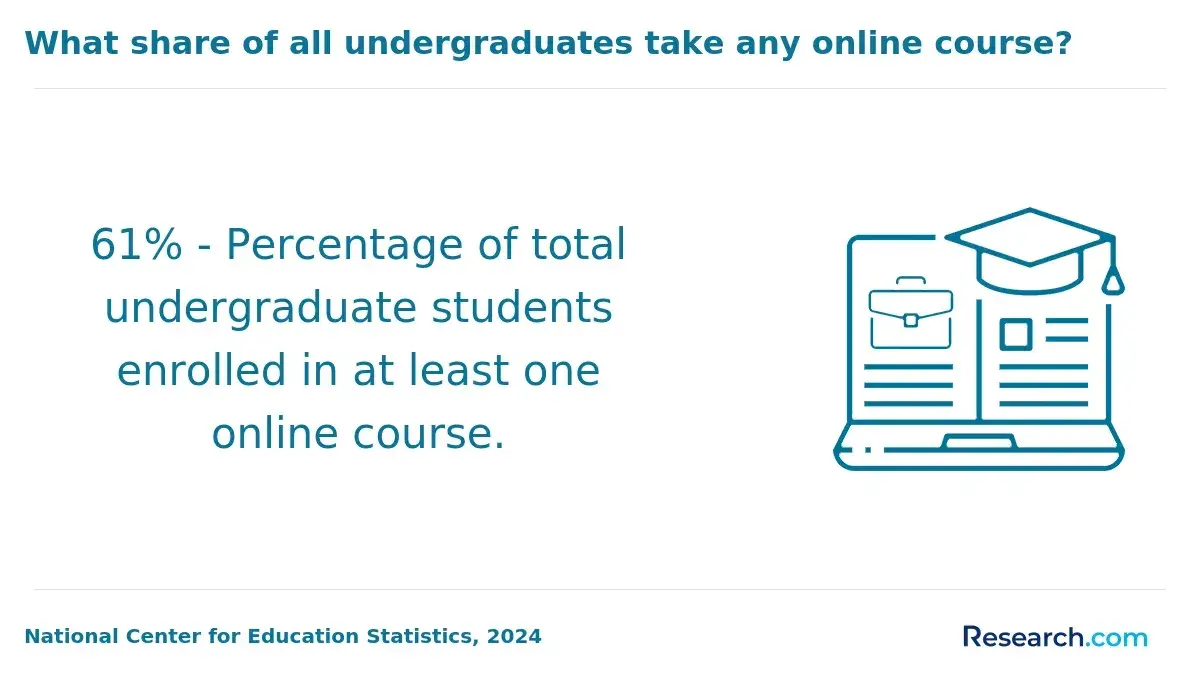
Online education has become more normalized among working adults, and employers increasingly focus on accreditation, skills, experience, and degree relevance rather than delivery format alone. Still, not all online programs are equal. Look for programs with live support, clear weekly deadlines, accessible instructors, and healthcare-specific projects rather than generic business assignments with minimal healthcare context.
What courses and concentrations are common in online healthcare administration bachelor's programs?
Most online healthcare administration bachelor's programs combine healthcare systems knowledge with business, policy, finance, data, ethics, and leadership. The goal is to prepare graduates to coordinate people, budgets, compliance requirements, patient access, and operational processes in healthcare organizations.
Common courses often include the following areas, though exact titles vary by school:
- U.S. healthcare delivery systems and health policy
- Healthcare finance, budgeting, and reimbursement
- Healthcare law, ethics, privacy, and compliance
- Human resources and organizational behavior in healthcare
- Quality improvement, patient safety, and performance measurement
- Health informatics, data analytics, and electronic health records
- Strategic planning and healthcare operations management
- Marketing, communication, and community health planning
- Capstone, practicum, internship, or applied healthcare leadership project
Students coming from community college healthcare programs should pay close attention to concentrations because they can help convert prior coursework into a more coherent career story. For example, medical coding or records coursework may pair well with health information or revenue cycle concentrations, while medical assisting or office coursework may support ambulatory care management.
The table below outlines common concentrations and the students who may benefit most from each.
| Concentration | Best fit | Career direction |
| Healthcare operations | Students interested in clinics, hospitals, urgent care, or outpatient service lines | Operations coordinator, department supervisor, practice manager |
| Health information management | Students with coding, records, informatics, or data-quality interests | HIM supervisor, data integrity coordinator, revenue cycle analyst |
| Long-term care administration | Students interested in skilled nursing, assisted living, or aging services | Resident services manager, long-term care operations assistant, administrator track roles |
| Public health administration | Students drawn to prevention, community programs, and population health | Program coordinator, community health administrator, grant-supported program staff |
| Healthcare human resources | Students interested in staffing, training, employee relations, and workforce planning | HR coordinator, credentialing specialist, workforce development assistant |
Administrative skills also transfer across industries. Students who first built clerical, scheduling, bookkeeping, or records skills through office administration classes may find healthcare administration a natural next step if they want to specialize those skills in a regulated healthcare environment.
One current trend affecting curricula is the growth of data-driven decision-making. Programs increasingly include analytics, dashboards, quality metrics, and informatics because healthcare leaders must understand patient access, cost, staffing, outcomes, and compliance data. AI tools may support scheduling, documentation review, coding workflows, and predictive analytics, but administrators still need judgment, privacy awareness, and process-management skills to use these tools responsibly.
What admission requirements do online healthcare administration programs set for community college graduates?
Admission requirements for online healthcare administration programs are usually transfer-friendly, but they vary by institution. Community college graduates often enter as transfer students rather than first-year applicants, especially if they have completed an associate degree or a substantial number of credits.
Typical requirements may include the following:
- Official transcripts from all colleges previously attended
- A minimum cumulative GPA, often around 2.0 to 2.5 depending on the school
- Completion of an associate degree or a minimum number of transferable credits for degree-completion programs
- Prerequisite coursework in writing, college math, statistics, biology, business, or introductory healthcare, depending on the curriculum
- Personal statement, resume, or work history for programs designed for adult learners
- Proof of English proficiency for applicants whose prior education does not meet the school's language requirement
Some programs are open to students without healthcare work experience, while others strongly prefer applicants who already understand clinical or administrative settings. If you are changing careers from outside healthcare, choose a program with introductory healthcare systems coursework and internship support. If you already work in healthcare, look for applied projects that let you use your workplace experience.
Community college graduates should also watch for hidden enrollment conditions. A program may admit you but require you to complete missing prerequisites before you can enter upper-division major courses. That can extend your timeline even if your total accepted credits look strong.
To avoid surprises, ask the school to identify each of the following before you enroll:
- Which prerequisites are still missing after transfer review
- Whether any transferred courses are too old to satisfy current requirements
- Whether clinical credits apply only as electives
- Whether you must complete a minimum number of upper-division credits at the school
- Whether internships, practicums, or capstone projects can be completed near your home
A strong application strategy is to apply to more than one transfer-friendly program and compare official evaluations side by side. The best offer is not always the largest acceptance of credits; it is the one that leaves you with the shortest, most affordable, and most relevant path to completion.
How long does it take to finish an online healthcare administration degree after an associate?
After an associate degree, many students can finish an online healthcare administration bachelor's degree in about two years of full-time study, but the actual timeline depends on how many credits transfer, whether they apply to the major, and how many courses you can take each term. Part-time students often need longer, especially if they work full time or take breaks during heavy work seasons.
The table below shows typical completion scenarios for students entering with prior community college coursework.
| Starting point | Likely remaining credits | Common completion pace | Best fit |
| Associate degree that fully satisfies lower-division requirements | About 60 credits | Roughly two years full time or three to four years part time | Students with a clear transfer pathway or articulation agreement |
| Associate degree with some credits applying only as electives | About 60 to 75 credits | Often two to three years depending on prerequisites | Students from clinical or technical healthcare programs |
| Many credits but no completed associate degree | Varies widely | Depends on general education gaps and school residency rules | Students who changed majors or attended multiple colleges |
| Competency-based or accelerated online format | Varies by assessed competencies | Potentially faster for highly self-directed students with relevant experience | Experienced healthcare workers comfortable with independent progress |
Acceleration can be helpful, but it is not always the best choice. A fast program may compress assignments, group projects, and capstone work into short sessions. That can work well for disciplined students with stable schedules, but it may be stressful for healthcare workers with unpredictable shifts.
To finish efficiently without overloading yourself, focus on sequencing. Some courses are prerequisites for later major classes, and missing one course can delay graduation by a term. Ask your advisor for a term-by-term plan that shows when each required course is offered.
Consider these timeline strategies:
- Choose a program with multiple start dates if you want to avoid waiting a full semester to begin.
- Take statistics, accounting, or writing prerequisites before transferring if they are cheaper at your community college and guaranteed to transfer.
- Use summer or short terms strategically, but avoid stacking writing-heavy courses with demanding work periods.
- Confirm whether the capstone or internship must be completed in a specific final term.
- Keep copies of all transfer evaluations because advisor turnover can create confusion later.
The fastest path is usually not the one with the most aggressive marketing. It is the path with the fewest lost credits, the clearest course sequence, and the most realistic workload.
What healthcare administration careers can you pursue after completing an online bachelor's degree?
An online bachelor's degree in healthcare administration can prepare you for entry-level and early management roles across hospitals, clinics, physician practices, long-term care organizations, insurance companies, community health programs, and health technology vendors. The degree is most useful when paired with healthcare experience, internships, administrative skills, or a concentration aligned with a specific job family.
Common career directions include the following:
- Medical office manager or practice manager, overseeing scheduling, billing coordination, staff workflows, patient access, and daily office operations
- Healthcare operations coordinator, supporting department performance, process improvement, supply coordination, and service-line administration
- Patient access supervisor, managing registration, intake, insurance verification, and front-end revenue cycle processes
- Revenue cycle or billing coordinator, helping improve claims workflows, reimbursement processes, denials tracking, and payment operations
- Health information supervisor, supporting records quality, privacy, data integrity, coding operations, or electronic health record processes
- Quality improvement coordinator, assisting with performance metrics, patient safety projects, compliance documentation, and process audits
- Long-term care administrative assistant or department manager, supporting resident services, staffing, compliance, and operations in aging-services settings
Graduates do not usually step directly into senior executive roles without experience. A realistic path may begin with coordinator, analyst, supervisor, or assistant manager positions and advance through proven performance, certifications, graduate education, or specialized experience.
The table below links common interests with career paths that may fit those strengths.
| If you enjoy | Consider roles in | Skills to build |
| Improving workflows | Operations, practice management, patient access | Process mapping, staffing, scheduling, quality improvement |
| Working with data | Health information, revenue cycle, analytics support | Excel, dashboards, EHR reporting, coding basics, privacy rules |
| Leading people | Department supervision, office management, long-term care operations | Communication, conflict resolution, hiring support, training |
| Understanding rules and risk | Compliance, privacy, quality, credentialing | Documentation, auditing, policy interpretation, regulatory awareness |
| Community impact | Public health programs, nonprofit healthcare, population health | Program coordination, grant reporting, outreach, evaluation |
Healthcare administration is not the only management path for students with operational strengths. If you discover that you prefer building projects, facilities, logistics, or field operations outside healthcare, a construction management degree may align better with your long-term interests than a healthcare-focused program.
To strengthen employability, build evidence of skill while still enrolled. Complete projects using real healthcare scenarios, pursue internships or employer-based capstones, learn spreadsheet and dashboard tools, and join professional associations related to healthcare management, HIM, revenue cycle, or long-term care.
What salary range and job outlook can healthcare administration graduates expect in the U.S.?
Salary and job outlook for healthcare administration graduates vary by role, region, employer size, experience, and whether the job involves direct supervision. A bachelor's degree can help you qualify for administrative and management-track roles, but it does not guarantee a specific title or salary.
The strongest national benchmark is the U.S. Bureau of Labor Statistics category for medical and health services managers. In its 2024 wage data, BLS reported a median annual wage of $117,960 for this occupation. That figure reflects established managers across healthcare settings, so new bachelor's graduates often start below the median until they gain supervisory experience or specialize in a high-demand function.
BLS also projects 29% employment growth for medical and health services managers through 2033, much faster than the average for all occupations. For students, this suggests strong demand for people who can manage healthcare operations, technology changes, compliance pressures, staffing challenges, and patient access needs.
The table below places common healthcare administration paths in context without implying guaranteed outcomes.
| Career stage | Example roles | Salary context | What may improve advancement |
| Entry or transition stage | Administrative coordinator, patient access lead, billing coordinator, assistant office manager | Often below the national manager median because roles may not include full department leadership | Healthcare experience, technical systems skills, strong communication, reliability |
| Early management stage | Practice manager, department supervisor, revenue cycle supervisor, HIM supervisor | May approach stronger earnings as supervisory scope and budget responsibility increase | Team leadership, process improvement results, compliance knowledge, certifications |
| Advanced management stage | Clinic administrator, operations manager, service-line manager, director-track roles | More likely to align with higher management wage ranges, depending on employer and market | Graduate education, multi-site experience, analytics, strategic planning, measurable outcomes |
Cost also affects the value of the degree. College Board's 2024 pricing data shows average published tuition and fees of $11,610 for in-state public four-year colleges and $43,350 for private nonprofit four-year colleges. These are sticker-price benchmarks, not your final cost, but they show why transfer credits, employer tuition assistance, public-university options, and federal aid can materially change ROI.
When judging value, compare the total remaining cost of attendance with the roles you realistically qualify for after graduation. Include tuition, fees, books, technology costs, lost work hours, commuting if required, and any internship-related expenses. Also ask whether the program's career services can help with healthcare-specific resumes, internships, employer contacts, and interview preparation.
The degree is more likely to be worth it if you already work in healthcare, can transfer substantial credits, and want to move into administration, supervision, compliance, health information, or operations. It may be less worthwhile if you lack interest in healthcare systems, dislike administrative work, need clinical licensure, or would need to borrow heavily for a program that does not offer strong transfer value.
Other Things You Should Know About Healthcare Administration
Yes, many online healthcare administration programs in 2027 do not require clinical experience for admission. These programs focus on the administrative and operational aspects of healthcare, rather than clinical skills, making them accessible to students from various academic backgrounds, including those with community college credits.
Not always. A bachelor's degree may be enough for coordinator, supervisor, practice management, and early administrative roles. A master's degree can become more important for director, executive, policy, consulting, or competitive hospital leadership roles.
Useful options depend on your career direction. Students often consider certifications in medical coding, revenue cycle, project management, health information, compliance, long-term care, or quality improvement. Check eligibility rules carefully because some credentials require experience, exams, or specific accredited coursework.
References
- Online Bachelor’s in Healthcare Administration Programs (BHA / BSHA) https://www.onlineeducation.com/healthcare/bachelors-in-healthcare-administration-programs
- Online vs Hybrid vs Campus Learning in Healthcare: Which Is Right for You? https://www.edumed.org/articles/online-vs-hybrid-vs-campus/
- Healthcare Administration | Oakland County, MI | Oakland Community College https://www.oaklandcc.edu/health/healthcare-administration/
- 10 careers you can pursue with a Healthcare Administration Degree - SMWC https://www.smwc.edu/10-careers-you-can-pursue-with-a-healthcare-administration-degree-blog-december-22/
- Healthcare Administration Associate vs Bachelor’s Degree https://campus.edu/blog/healthcare/healthcare-administration-associate-vs-bachelors-degree
- Online vs On-Campus HIM Programs: How to Choose | Health Information Management Programs https://healthinformationmanagementprograms.com/guides/online-vs-campus-him-programs/
- Medical Assistant to Healthcare Administration: Online Degree Pathways https://www.collegetransitions.com/blog/medical-assistant-to-healthcare-administration/
- Who Accredits MHA Programs? https://www.mhaonline.com/faq/who-accredits-online-mha-programs
- Online Health Administration Degree Program | University of Phoenix https://www.phoenix.edu/online-healthcare-degrees/health-administration-bachelors-degree.html