2027 Information Technology Transfer Credit Trends: How Schools Are Adapting for Adult Learners

Co-Founder and Chief Data Scientist
Amid a demanding schedule, Maria, a working professional with military training, recently discovered that many of her previously earned college credits were rejected when transferring to an Information Technology bachelor's program. This unexpected setback threatens to add semesters and costs to her degree plan, a challenge shared by 42% of adult learners nationwide in 2024, according to the National Student Clearinghouse Research Center.
Such credit denial exposes limitations in credit mobility policies and reflects institutional caution over nontraditional learning assessments, forcing students to reassess their educational investments. This article examines emerging transfer credit trends, evolving acceptance standards, and strategies to optimize degree completion for adult IT students.
Key Things to Know About Information Technology Transfer Credit Trends for Adult Learners
- Expanded transfer credit acceptance increasingly includes workforce certifications and military training, yet uneven evaluation standards mean adult IT students face variable credit articulation, affecting time-to-degree estimates and financial planning.
- Technology-enabled transcript reviews improve evaluation speed but often prioritize general education credits over specialized IT coursework, creating a tradeoff that can misalign transfer credits with employer-valued skills.
- Recognition of prior learning accelerates access for working professionals but often excludes rapidly evolving IT topics, pressuring students to retake courses and impacting the cost-effectiveness of degree completion.
- Key Things to Know About Information Technology Transfer Credit Trends for Adult Learners Key Things to Know About Information Technology Transfer Credit Trends for Adult Learners
- How Are Information Technology Programs Changing Transfer Credit Policies for Adult Learners? Evolving Adult Transfer Policies
- Why Are More Information Technology Schools Accepting Credit for Prior Learning and Work Experience? Prior Learning Credit Benefits
- How Do Information Technology Colleges Evaluate and Award Transfer Credits Today? Transfer Credit Evaluation Process
- Which Alternative Credits Are Most Commonly Accepted by Information Technology Programs? Accepted Alternative Credits
- How Are Information Technology Schools Improving Transfer Pathways for Community College Students? Improved Community College Pathways
- How Can Transfer Credits Help Information Technology Students Graduate Faster? Accelerating Degree Completion
- How Much Money Can Students Save Through Information Technology Transfer Credit Opportunities? Cost Saving Through Transfers
- How Are Information Technology Programs Supporting Military Students and Workforce Learners Through Transfer Credits? How Are Information Technology Programs Supporting Military Students and Workforce Learners Through Transfer Credits?
- What Transfer Credit Innovations Are Shaping the Future of Information Technology Education? What Transfer Credit Innovations Are Shaping the Future of Information Technology Education?
- How Can Adult Learners Maximize Transfer Credits in an Information Technology Program? Maximizing Your Transfer Credits
How Are Information Technology Programs Changing Transfer Credit Policies for Adult Learners?
Information technology programs are increasingly redefining transfer credit policies to reduce barriers for adult learners, working professionals, and military-affiliated students by embracing a broader spectrum of prior learning. This includes recognizing credentials from professional certifications, military training, and other alternative pathways as valid credits, which can significantly shorten time-to-degree and lower overall costs.
However, this shift requires students to carefully evaluate institutional policies, as credit acceptance still varies widely, affecting course sequencing and degree progression. For example, a military veteran transferring to a four-year institution might gain substantial credit through mapped military experience, but without stringent alignment to program-specific IT competencies, some credits may not apply toward core requirements, necessitating strategic academic planning.
The growing focus on transfer credit policies for adult learners in information technology programs responds to both learner needs and workforce demands but introduces tradeoffs around credit mobility and degree completion timelines. Community colleges and universities are strengthening articulation agreements tailored to IT pathways, helping minimize credit loss-an issue experienced by nearly 60% of transfer students before recent policy reforms reported by the National Student Clearinghouse Research Center.
Nonetheless, students must navigate varied eligibility criteria and institutional limitations, as not all forms of prior learning receive equal recognition. Those comparing options benefit from institutions that pair flexible credit acceptance with transparent evaluation processes, often enhanced by digital credentialing and AI-driven audits, to support accelerated degree completion. For access to an expanded network of colleges online that accept FAFSA, this flexibility can be a decisive factor in choosing the most cost-effective and efficient educational pathway.
Why Are More Information Technology Schools Accepting Credit for Prior Learning and Work Experience?
The increasing acceptance of credit for prior learning (CPL) and work experience in information technology programs reflects a strategic shift tied to institutional priorities and labor market realities, not merely more lenient transfer policies. Programs increasingly assess military training, professional certifications, and employer-based learning through structured competency evaluations to align credits with current industry demands.
This approach acknowledges that demonstrated skills often surpass traditional academic seat time, but institutions balance this with rigorous standards to protect credential integrity. For adult learners and military-affiliated students, such policies can shorten time to degree completion, which a 2024 Council for Adult and Experiential Learning report links to graduation rates up to 40% faster, though uneven state and institutional standards complicate transferability and persistence planning.
Economic and workforce factors also drive expanded CPL recognition; faster degree completion reduces student costs and better meets employer preferences for verified competencies over hours logged. However, students must navigate inconsistencies in credit acceptance across schools, impacting transfer decisions and potentially extending time to employment if credit is denied or reassessed.
From an institutional standpoint, expanding CPL offerings supports enrollment sustainability by appealing to nontraditional students, but requires ongoing investment in robust assessment frameworks and clear communication channels. The evolving landscape demands students critically evaluate how prior learning translates into credit at prospective schools and weigh tradeoffs between accelerated pathways and program rigor.
An IT professional transitioning from the military encountered mixed experiences submitting training records and certifications for transfer credit. While one university granted substantial credits based on a detailed portfolio review and aligned certifications, a second institution required comprehensive course assessments and delayed decisions pending faculty evaluation.
The process was marked by uncertainty and repetitive documentation requests, leaving the student cautiously optimistic but wary about timing and consistency. This experience underscored the importance of thorough preparation and proactive inquiry when leveraging nontraditional learning for degree acceleration within information technology programs.
How Do Information Technology Colleges Evaluate and Award Transfer Credits Today?
Transfer credit evaluation within information technology colleges has evolved from a routine administrative task into a strategic function integral to enrollment management and degree completion. Institutions weigh the accreditation status of prior coursework heavily, often privileging regionally accredited credits while subjecting those from non-traditional or competency-based programs to more rigorous scrutiny.
For example, a military veteran seeking credit for technical training may encounter varying levels of acceptance depending on how well their prior learning aligns with current industry standards and course equivalencies established by the receiving institution, reinforcing the importance of documented learning outcomes over mere course titles. Modern evaluation practices incorporate technology platforms and articulation agreements to expedite credit reviews, but they also maintain strict criteria, such as residency requirements and the need for upper-division credits in specialized IT domains.
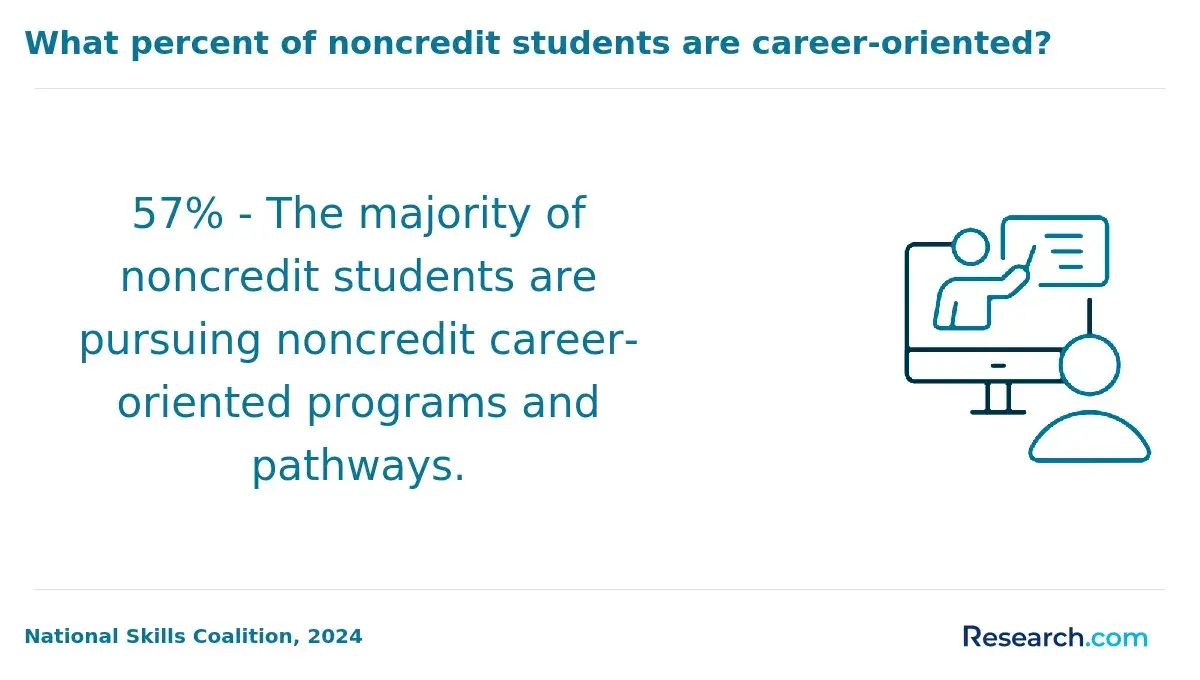
Approximately 60% of colleges reported expanding credit-for-prior-learning policies in 2024 to better accommodate adult learners and professionals aiming to shorten time to degree and reduce educational costs. However, transfer credits accepted often apply unevenly toward core versus elective requirements, influencing students' academic planning and labor market readiness. Navigating these factors demands that transfer students carefully assess how their background, from community college credits to workforce certifications, will realistically translate within their chosen IT programs and impact long-term career trajectories.
Which Alternative Credits Are Most Commonly Accepted by Information Technology Programs?
Alternative credit acceptance has evolved into a strategic approach for enhancing accessibility and accelerating degree completion for adult learners in information technology programs, rather than merely a transfer policy modification. Programs frequently assess a range of alternative credit sources, including credit for prior learning (CPL), military training aligned with ACE recommendations, standardized exams like CLEP, and competency-based assessments reflecting workforce skills.
However, acceptance often depends on institutional accreditation standards, course equivalency evaluations, and residency requirements, with many programs limiting the use of such credits for upper-division or core technical courses. For example, a veteran with military training credits may find those credits accepted toward elective courses but not for specialized IT certifications required for employment, necessitating careful transfer planning.
From affordability to flexibility, these alternative credit sources can significantly affect degree timelines, but the heterogeneity of transfer policies across institutions makes predicting outcomes complex for students. Approximately 75% of IT programs recognize CPL credits in some form, illustrating a growing trend toward valuing nontraditional learning pathways; yet, students must be mindful that some credits from online providers or employer-sponsored learning may only count partially or not at all, depending on the program.
Adult learners weighing whether their prior experience advances their academic goals should consider these nuances, especially when balancing work and study demands. Those exploring degree routes can benefit from resources like a lMFT program online to compare institutional policies and optimize credit transfer strategies.
How Are Information Technology Schools Improving Transfer Pathways for Community College Students?
Improving transfer pathways has become a strategic priority for information technology programs due to the significant impact on student momentum and degree completion timelines. Schools that develop clear articulation agreements and tightly aligned course maps help minimize credit loss, which the National Center for Education Statistics (2024) estimates can reduce transfer credit attrition by up to 25%.
Such precision in credit evaluation and dual-admission partnerships can accelerate progress for adult learners balancing work and life commitments, yet transfer credit acceptance often varies based on institutional priorities and program specificity. Students need to weigh the practical tradeoffs when credits for specialized IT topics are not universally accepted, as opting to transfer versus restarting foundational courses directly affects time-to-degree and financial investment.
Many programs now incorporate prior learning assessments recognizing certifications and work experience to validate nontraditional learning, but inconsistencies in policies require careful verification before reliance. Enhanced virtual advising platforms provide personalized guidance for navigating complex requirements, helping students avoid redundant coursework and plan efficient paths.
Meanwhile, flexible, competency-based degree designs accommodate part-time pacing, expanding access for working professionals and military-affiliated students, though this flexibility sometimes requires careful scheduling to maintain academic continuity. These adaptations collectively improve educational accessibility but demand that learners remain proactive in confirming credit applicability and understanding institutional nuances.
A community college student pursuing an information technology degree described a cautious process of credit evaluation after transferring. Initially uncertain whether several core programming and networking courses would transfer as equivalent credits, they encountered conflicting information between admissions and departmental advisors.
The student ultimately found clarity through a virtual advising session that outlined articulation agreement provisions and degree pathways, alleviating concerns of credit loss. Despite the frustration during this evaluation, the clear transfer roadmap allowed the student to strategically plan remaining coursework, reducing redundant classes and expediting progress toward graduation.
How Can Transfer Credits Help Information Technology Students Graduate Faster?
Transfer credit acceptance policies significantly shape how quickly information technology students complete their degrees. While applying prior credits can reduce time to graduation, students must navigate institutional requirements such as residency rules, upper-division coursework mandates, and program-specific credit applicability.
For example, credits earned through community colleges or workforce certifications may count toward general education but fall short of satisfying technical core requirements, compelling some students to retake courses despite a robust credit transfer. This tradeoff necessitates strategic academic planning to prioritize credits aligned with degree frameworks and employer-valued competencies rather than assuming all transfer credits equally accelerate completion.
Adult learners, military-affiliated students, and working professionals frequently leverage prior learning assessments (PLAs) and recognition of experiential training to bridge gaps between previous education or service and degree programs. However, variations in credit evaluation and limits on transferable credits can extend timelines if not anticipated.
These evolving transfer-friendly policies also influence enrollment strategies and affordability, as students weigh accelerated paths against credit transferability ceilings and course sequencing constraints. Those pursuing information technology degrees benefit from understanding how different institutions apply articulation agreements and credit acceptance, especially when juxtaposing options like community college credits against transfer credits from regional or national universities.
Maximizing transfer credits for information technology students requires calculated decisions grounded in employer expectations and practical degree-completion objectives. Navigating these realities helps reduce redundant coursework and aligns studies with professional outcomes. For adult learners exploring flexible degree pathways, it is valuable to reference resources such as urban planning master's programs to compare how transfer policies adapt across disciplines and institutions, emphasizing the nuanced benefits of accepting prior learning credits for information technology students.
How Much Money Can Students Save Through Information Technology Transfer Credit Opportunities?
Transfer credit policies in information technology programs can significantly impact the financial burden and timeline of a degree, but these benefits are heavily dependent on institutional frameworks and student circumstances. For example, military-affiliated learners may leverage credit for prior service training to bypass up to 30 credit hours, potentially cutting tuition costs by 25-30% in bachelor's programs; however, such savings require navigating variable acceptance standards and residency rules that can limit how many transferred credits apply to major requirements.
Similarly, students moving from community colleges to four-year institutions may avoid duplicative coursework and save 40-60% on overall degree expenses, yet they face risks of losing credits during transfer-over a third of transfer students experience credit denial-resulting in extended enrollment and additional costs. These credit pathways are a form of educational investment strategy, where the financial returns depend on how well previous learning aligns with program curricula and institutional policies. Adult learners and working professionals must carefully assess articulation agreements and credit evaluation procedures at target schools, as restrictions on credits accepted from certifications or workforce training can reduce anticipated savings.
This variation forces students to balance accelerated completion against potential gaps in major-specific credits that may require retaking courses. The impact of credit transfer thus influences not only tuition expenses but also enrollment decisions, as students weigh policies that affect degree completion speed and the practical relevance of prior experience toward employer expectations in the information technology field.
How Are Information Technology Programs Supporting Military Students and Workforce Learners Through Transfer Credits?
Information Technology programs increasingly rely on detailed evaluations of military training and workforce credentials to shape transfer credit policies that reflect real-world skills and industry standards. For military-affiliated students, this often means professional certifications like CompTIA or AWS Cloud can directly offset technical coursework, but the degree to which these credits reduce remaining academic requirements varies significantly by institution.
A key practical consideration is that about 70% of service members achieve some credit transfer through prior learning assessments aligned with the American Council on Education (ACE) recommendations, yet many still face unpredictable credit applicability to degree pathways, which can complicate academic planning and extend time to graduation.
These policies impact adult learners' educational accessibility by streamlining credit for valid training while maintaining academic rigor, but institutional constraints such as inconsistent transcript interpretations and varying articulation agreements persist. For example, a working professional returning to school with Cisco certifications might find smoother credit transfer at colleges with established military credit mobility initiatives, shortening degree completion timelines by roughly 20% according to National Center for Education Statistics data.
However, this depends on the interplay between the certification's scope, course equivalency policies, and whether schools integrate competency-based options or online formats to accommodate nontraditional learners' schedules and financial realities. Ultimately, while more programs recognize nontraditional learning like apprenticeships and military training, decisions must be made with an eye toward degree relevance and workforce recognition rather than credit quantity alone.
Transfer credit policies that fail to prioritize alignment with industry-recognized credentials risk leaving capable students with excess coursework or unclear pathways. Information Technology students, military personnel, and workforce learners benefit most when institutions transparently connect prior learning with specific academic outcomes, enabling more strategic educational planning and employability advancement.
What Transfer Credit Innovations Are Shaping the Future of Information Technology Education?
Transfer credit practices increasingly shape degree accessibility and mobility for adult learners in information technology education by integrating technology-driven assessment methods that prioritize efficiency and precision. The adoption of AI-assisted transcript evaluation, for example, has cut credit processing times by about 30%, according to a 2024 National Center for Education Statistics study, enabling working professionals to expedite enrollment.
However, institutions face practical tradeoffs in balancing rapid credit decisions with maintaining academic quality and consistency, especially as credit for prior learning and competency-based education models gain traction. These approaches recognize experiential knowledge from military service and the workplace but require rigorous validation frameworks to ensure credits align with evolving industry standards.
Digital credentialing and blockchain-secured transcripts further enhance credit portability and transparency but reveal persistent challenges in standardizing transfer pathway agreements between community colleges and four-year institutions. Military-affiliated students often encounter bottlenecks where articulation policies lack uniformity, complicating credit acceptance and degree planning.
Adults navigating these systems must consider how variable institutional policies affect time to completion and career timelines, incorporating technology-driven transfer credit assessment methods for adult learners into their long-term strategies. To supplement formal degrees, many also explore easy certifications to get that offer targeted skills with measurable workforce relevance, complementing traditional credit pathways without extending time in school.
How Can Adult Learners Maximize Transfer Credits in an Information Technology Program?
Maximizing transfer credits in an information technology program demands strategic navigation of transcript evaluations and institutional policies that often impose strict caps on transferable credits. Adult learners transferring from community colleges or prior certifications must reconcile the variable acceptance of technical certifications like CompTIA or Cisco, along with military training, which requires proactive submission of official transcripts.
Failure to align course equivalencies can extend time-to-degree despite credit acceptance, as course sequencing and residency requirements often block seamless credit application toward core concentrations. According to the National Student Clearinghouse Research Center's 2024 report, about 43% of transfer students face credit loss due to articulation mismatches, underscoring the need for early, detailed credit pathway analysis.
Effective transfer credit strategies for adult IT students include leveraging credit for prior learning (CPL) and alternative credit pathways such as CLEP or DSST exams to supplement formal coursework. However, some institutions' transfer caps force prioritization of credits that directly accelerate degree milestones, especially for those balancing work and academics. Military-affiliated students benefit from formalized recognition of service training but must manage complex documentation requirements.
Adult learners should also engage in thorough degree mapping with academic advisors to avoid redundant coursework and ensure that accepted credits translate into employable skills relevant to current market demands, a practical necessity given the evolving IT landscape. For students considering different academic pathways, evaluating transfer policies' practical impact extends beyond cost and time savings, affecting long-term academic flexibility and career adaptability.
Working professionals can find value in programs with clear articulation agreements and structured credit transfer protocols, enabling a smoother transition often absent from less flexible systems. Those interested in exploring cross-disciplinary options might consult resources like the best online criminal justice associate degree programs to assess comparative credit transferability and program responsiveness.
Overall, maximizing transfer credits in information technology programs requires a nuanced, informed approach that balances prior learning credits in information technology programs, institutional limitations, and strategic academic planning.
References
- How to Transfer College Credits and Finish Your Degree Faster https://www.park.edu/blog/transfer-college-credits-finish-degree-faster/
- 5 Alternative ways to get college credit | University of Phoenix https://www.phoenix.edu/blog/5-alternative-ways-to-earn-college-credits.html
- 2.04 – Transfer and Exam-based Credit | Ozarks Technical Community College https://ozarkstech.edu/policy/2-04-transfer-of-credit/
- New Lessons for Improving Community College Transfer to Independent Institutions - Ithaka S+R https://sr.ithaka.org/blog/new-lessons-for-improving-community-college-transfer-to-independent-institutions/
- The Missing Link: Adult Learners and the Transfer Process https://www.cael.org/resouces/pathways-blog/the-missing-link-adult-learners-and-the-transfer-process
- Why stay? Factors That Encourage Active-Duty Military and Veterans to Complete Their Online degrees - OJDLA https://ojdla.com/articles/why-stay-factors-that-encourage-active-duty-military-and-veterans-to-complete-their-online-degrees
- College Credit Transfer to Stretch Savings Further https://www.collegesavings.org/college-credit-transfer-to-stretch-savings-further
- Making technology work for adult learners: our 6 key research findings - European Association for the Education of Adults https://eaea.org/2025/09/04/making-technology-work-for-adult-learners-our-6-key-research-findings/
- Advanced Placement (AP) https://sunyorange.edu/registrar/transfer_credit.html
- 4 Ways Transfer Students Can Maximize College Credits for Prior Experience https://www.umassglobal.edu/blog-news/4-ways-transfer-students-can-maximize-college-credits-prior-experience
Other Things You Should Know About Information Technology
Transfer credits earned from courses taken several years ago may not align with current industry standards in areas like cybersecurity or cloud computing. This mismatch can leave gaps in your knowledge and weaken your competitiveness with employers expecting up-to-date skills. Prioritize programs that require completion of recent core courses or offer certifications integrated with your degree to ensure your education stays relevant.
While maximizing transfer credits can shorten time to graduation, relying on credits from diverse institutions increases the risk of inconsistent curriculum quality and potential non-transferability if you switch schools. This can lead to additional coursework, lengthening your educational path unexpectedly. Evaluating a program's transfer policies carefully and focusing on accredited credits reduces this uncertainty.
Choosing flexible programs may ease scheduling and accommodate work-life balance, but rigorous programs with strict core coursework often provide more comprehensive, updated training valued by employers. For long-term employability, it's generally better to prioritize programs that balance transfer credit acceptance with robust, current curricula in critical IT domains.
Transferred credits may fulfill general education but not specialized prerequisites for certifications or graduate programs, potentially forcing you to retake foundational courses. To avoid this, map out your intended credential pathway early and select transfer credits that align closely with both degree requirements and industry certification standards.