2027 Information Technology Career Outcomes by Degree Level Report: Pay, Employment, and Advancement Patterns

Co-Founder and Chief Data Scientist
Choosing the right degree level in information technology can drastically affect career trajectories, yet prospective students often lack clear, actionable data on outcomes. For example, a 2024 report from the National Center for Education Statistics found that bachelor's degree holders in information technology experience notably higher job-placement rates within six months post-graduation than those with associate degrees. This gap highlights crucial differences in employer expectations, credential valuation, and long-term advancement potential.
Navigating these distinctions matters more for working adults balancing time and financial constraints than ever before. This article examines pay, employment, and career advancement patterns by degree level to clarify those tradeoffs and guide informed decisions.
Key Things to Know About Information Technology Career Outcomes by Degree Level
- Associate degrees offer quicker labor market entry but limit access to leadership roles, reflecting a tradeoff between immediate employment and long-term career progression in IT sectors valuing advanced credentials.
- Bachelor's degree holders dominate employer shortlists for mid-level IT jobs, signaling workforce preference for balanced foundational knowledge and practical skills, which shapes hiring and credential valuation trends in 2024.
- Master's and doctoral pathways often delay workforce entry and increase costs but correspond with higher advancement rates in specialized IT roles, underscoring important timing and investment considerations for credential planning.
- Key Things to Know About Information Technology Career Outcomes by Degree Level Key Things to Know About Information Technology Career Outcomes by Degree Level
- What Career Outcomes Can Students Expect From Each Information Technology Degree Level? Career Outcomes by Degree
- How Much Do Information Technology Graduates Earn by Degree Level? Salary by Degree Level
- Which Information Technology Degree Level Offers the Strongest Employment Prospects? Best Degrees for Employment
- What Entry-Level Jobs Can You Get With a Information Technology Degree? Entry-Level Career Opportunities
- How Do Information Technology Degree Levels Affect Career Advancement and Promotion Opportunities? Career Growth by Degree
- Is a Information Technology Degree Worth It Based on Salary, Employment, and ROI? Salary, ROI, and Value
- How Do Associate, Bachelor's, Master's, and Doctoral Information Technology Degrees Compare? Comparing Degree Levels
- Which Industries and Employers Hire Information Technology Graduates by Degree Level? Which Industries and Employers Hire Information Technology Graduates by Degree Level?
- What Skills, Credentials, and Experience Improve Information Technology Career Outcomes? What Skills, Credentials, and Experience Improve Information Technology Career Outcomes?
- Which Information Technology Degree Level Is Best for Your Career Goals? Choosing the Right Degree
What Career Outcomes Can Students Expect From Each Information Technology Degree Level?
Career outcomes in information technology degree level employment outcomes reflect distinct tradeoffs between rapid workforce entry and long-term advancement. Associate degrees and certificate programs tend to facilitate quicker access to support or technician roles, ideal for those prioritizing immediate employment or balancing education with work or military service. However, these pathways often limit access to managerial or specialized opportunities, where employers consistently favor bachelor's degrees due to expectations around foundational competencies in programming, systems analysis, and project coordination. For example, a working adult pursuing an associate degree may enter the field promptly but find progression constrained without additional credentials or transfer plans aligned with bachelor-level studies.
Bachelor's degree holders generally unlock broader role readiness and career mobility, benefiting from employer preferences that emphasize this credential for mid-tier to supervisory positions. The National Center for Education Statistics notes roughly 65% of IT professionals hold a bachelor's degree or higher, indicating industry preference for comprehensive preparation. Master's degrees further elevate specialization and leadership readiness in emerging areas such as cybersecurity and data analytics, aligning with projections favoring advanced degrees for research, strategic planning, and high-responsibility roles.
Doctoral degrees, while less common, often focus on academic research or niche consultancy, requiring significant time investment but offering unique ceilings in innovation-driven segments. Working professionals and transfer students must weigh how these degree levels fit within their time, credit transfer, and career trajectory priorities, especially considering employer expectations that increasingly integrate certifications with formal education for holistic skills validation, such as those highlighted in the best online AI degree programs.
How Much Do Information Technology Graduates Earn by Degree Level?
Earnings for information technology graduates differ markedly by credential, influenced not only by education level but also by specialization, geographic location, and employer expectations. Associate degree holders typically enter the workforce with median salaries near $55,000, often in roles emphasizing technical support or network maintenance that may have limited upward mobility without further education or experience. Bachelor's degrees widen access to higher-paying positions averaging around $85,000, including systems analysis and cybersecurity roles that demand broader skill sets and greater autonomy. However, choosing to pursue a master's can be a strategic move for mid-career professionals aiming at specialized or managerial roles, where median income often surpasses $105,000, reflecting leadership responsibilities and advanced expertise needed in sectors like data science or enterprise security.
Beyond wages, employment stability and progression pathways are critical considerations, especially for working adults balancing time and financial investment. Certificates and associate degrees offer quicker workforce entry but often correspond with higher job volatility and slower advancement unless complemented by professional certifications or significant on-the-job experience. Meanwhile, bachelor's and graduate degree holders typically experience lower unemployment and access to formal leadership tracks, which underscores pay differences beyond just starting salaries. Geographic factors also play a role, as tech hubs disproportionately reward advanced credentials, amplifying returns on investment but sometimes requiring relocation or acceptance of higher living costs. These nuanced tradeoffs highlight the importance of aligning educational choices with realistic expectations about transfer credits, completion timelines, and local labor market conditions, particularly for military-affiliated students or transfer learners weighing if additional years of study justify potential income gains.
One information technology graduate shared that after comparing online salary data with local job postings, they hesitated before committing to a master's program. They found that while several advertised positions favored bachelor's degrees with certifications, management roles requiring a graduate degree were scarce nearby, making the higher tuition and extended timeline harder to rationalize. This prompted them to pursue targeted industry certifications and seek employer tuition assistance, balancing credential advancement with immediate employment needs. Their experience illustrates the challenge of matching published career outcomes with specific regional markets and personal circumstances, where the decision to pursue additional degrees depends heavily on measurable returns and workplace realities rather than generalized salary increases alone.
Which Information Technology Degree Level Offers the Strongest Employment Prospects?
The strongest employment prospects in information technology typically align with earning at least a bachelor's degree, as many employers set this as a minimum requirement for mid-level and higher roles. Despite the quicker workforce entry afforded by associate degrees or certificates, these credentials often limit long-term upward mobility due to narrower skills and less theoretical grounding. For example, a candidate entering support roles with a certificate may secure immediate employment but face challenges advancing into management or specialized technical areas without further education. According to the U.S. Bureau of Labor Statistics (2024), graduates holding bachelor's degrees achieve employment rates over 85% within six months, significantly outpacing those with associate degrees or certificates.
Master's degrees in information technology further improve compensation and access to leadership positions, with median salaries trailing bachelor's holders by 25% to 35%. These advanced programs cater to employer demand for expertise in fields like cybersecurity and data science and often integrate internships or applied projects that enhance job market readiness. However, the investment of additional time and tuition means students must weigh immediate financial and career returns against these potential long-term benefits. Doctoral or professional degrees, while less common, serve specialized roles in research and policy, offering career paths distinct from standard IT employment but requiring substantial commitment and focus.
Deciding between faster workforce entry with lower credentials and pursuing higher degrees to improve eligibility for specialized or managerial jobs depends heavily on career goals, current work experience, and regional market demands. Candidates in tech hubs may find a master's degree more valuable due to intense competition and employer expectations, while those needing swift employment might prioritize certificate programs supplemented by on-the-job learning. Ultimately, strategic selection of degree level requires balancing immediate accessibility with longer-term opportunities for advancement and specialization.
What Entry-Level Jobs Can You Get With a Information Technology Degree?
Entry-level information technology jobs with high demand shift significantly based on degree level, relevant certifications, and practical experience. Those holding an associate degree typically secure hands-on roles such as IT technician or desktop support specialist, where technical skills take precedence over formal education. In contrast, bachelor's degree graduates access broader starting careers for information technology degree holders, including positions like help desk technician or junior network administrator, which often require both academic knowledge and proven exposure to real-world IT environments. Employers increasingly favor candidates who supplement their degrees with certifications like CompTIA A+ or Cisco's CCNA, and a 2024 National Center for Education Statistics report highlights that nearly 60% of employers prefer internship experience, making early practical exposure a decisive factor in employability.
Choosing between degree levels demands weighing immediate job stability against long-term skill-building and upward mobility. While associate degrees may facilitate quicker entry into the workforce, they can limit advancement without continued certification or further education. Bachelor's graduates often face more rigorous expectations but gain access to roles designed as pathways for growth and specialization, especially in competitive tech hubs offering remote opportunities. Geographic location and transferable soft skills-such as problem-solving and communication-also influence outcomes, underscoring the need for strategic planning to align job choices with career objectives. Those contemplating continuing education should consider pathways that integrate practical skills with academic credentials to maximize future flexibility.
For students seeking guidance on cost-effective options for expanding knowledge beyond degree requirements, referencing resources related to the cheapest online counseling degree programs can provide insights into balancing affordability with educational quality. Ultimately, effectively navigating entry-level information technology roles requires understanding the nuanced interplay of degree type, certifications, and experiential learning to meet evolving employer demands and enhance long-term career prospects.
How Do Information Technology Degree Levels Affect Career Advancement and Promotion Opportunities?
Bachelor's degrees in information technology significantly affect promotion eligibility and leadership opportunities, often serving as gatekeepers for mid- and upper-level roles in competitive areas like cybersecurity and software development. Employers typically seek candidates with these credentials for supervisory tracks, valuing the broader critical thinking and management preparation such programs provide over technical certificates or associate degrees alone. For working professionals, this means balancing the immediate accessibility of entry-level credentials against the strategic advantage of a bachelor's in accelerating advancement-Lightcast's 2024 data indicates bachelor's degree holders achieve mid-career promotions roughly 20% faster than those without. While certifications remain important, especially in specialized roles, they complement rather than replace degree requirements for those targeting leadership positions.
This dynamic also influences career timing and mobility. Adult learners or military-affiliated students with prior credits often find flexible bachelor's programs enable continuous skill development aligned with promotion expectations, whereas relying solely on lower-level credentials can limit upward movement. Internal employer policies frequently prioritize degree holders for key roles, creating a distinct practical tradeoff between entering the workforce quickly and investing time to meet formal academic thresholds valued in competitive IT fields. For those already experienced, the decision to pursue a higher degree hinges on whether additional education meaningfully improves access to supervisory roles or growth in specialized areas governed by professional licensure or enhanced credibility.
One IT professional recalled hesitating before enrolling in a bachelor's completion program after years in technical roles with only an associate degree. Facing a stagnated position, they carefully weighed how the degree might impact eligibility for a team lead role their company had buffered behind formal credential requirements. The decision wasn't automatic; it involved skepticism about the actual value of the degree versus certifications and experience. Yet, after completing the program, their increased confidence and the employer's clearer promotion pathway substantiated the initial burden of returning to school, illustrating how degree level can tangibly shape advancement beyond technical skills alone.
Is a Information Technology Degree Worth It Based on Salary, Employment, and ROI?
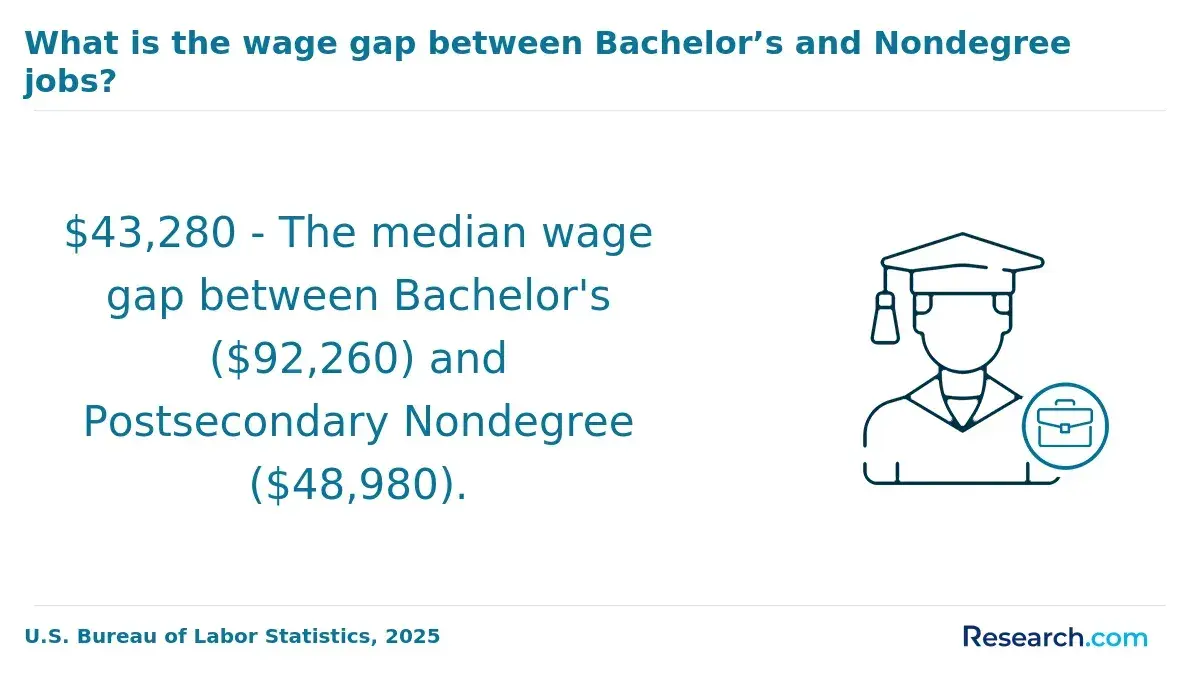
The decision to pursue an information technology degree often hinges on weighing salary differentials against completion time and employment stability. Those holding bachelor's degrees typically see higher median earnings compared to associate degree holders, reflecting stronger employer demand for advanced credentials paired with relevant experience or certifications. Yet, the extended time and cost of completing a bachelor's can offset short-term gains, especially for working adults or those balancing other obligations. For example, a professional with an associate degree who gains industry certifications and work experience may outperform a less experienced bachelor's graduate in certain specialized fields like cybersecurity, emphasizing the importance of targeted credential relevance alongside formal education.
Employment stability and career mobility in information technology correlate closely with how well a degree aligns with current labor market needs and up-to-date skills. Rapid digitization drives demand, but employers increasingly prioritize practical expertise and certifications in addition to degrees, which can mitigate underemployment risks for those who accelerate program completion or opt for part-time study. From an ROI perspective, costs and opportunity costs vary widely; a four-year degree's total expenses and debt may burden some students longer, whereas shorter programs or industry-recognized certificates often allow faster workforce entry but may limit long-term salary growth. Prospective learners should evaluate these trade-offs considering their existing experience, local demand, and how advancing through degree levels interacts with their broader career trajectory.
Those balancing professional commitments can consider flexible options such as the accelerated sports management degree online model, which illustrates one pathway to reduce time to completion. Applying similar strategies to IT degree programs may help minimize financial strain and opportunity costs while maintaining competitiveness. Overall, careful analysis of information technology degree salary and employment outcomes paired with realistic assessment of personal circumstances and credential requirements can guide more informed, practical decisions on education investments.
How Do Associate, Bachelor's, Master's, and Doctoral Information Technology Degrees Compare?
Opting for an associate degree in information technology frequently positions graduates for immediate entry-level roles such as IT support or network technician jobs, trading a shorter time commitment and lower tuition costs for restricted leadership and specialization opportunities. The tradeoff is that these positions tend to offer limited upward mobility, with employment rates hovering around 70% within a year of graduation, according to the National Center for Education Statistics. A bachelor's degree opens broader avenues, qualifying candidates for mid-level technical and managerial roles in software development, cybersecurity, or systems analysis, and supports credit transfer from associate programs-a critical factor for learners leveraging stackable credentials and seeking to optimize time-to-degree. Employers often view the bachelor's credential as a baseline for professional positions, even when licenses or certifications are also required.
Master's degrees in information technology focus on elevating professionals into specialized, consultancy, or leadership tracks, yielding employment rates above 85% within six months, per Integrated Postsecondary Education Data System data. Such programs increasingly cater to working adults through flexible formats that blend experience with advanced study, though the incremental payoff must be weighed against additional time and financial investment. Doctoral study, in contrast, serves a narrower cohort aiming for research, academia, or executive roles, where the labor market is more limited and highly competitive. The prolonged duration, intensive rigor, and relatively low completion rates of doctoral programs underscore the importance of aligning this path strictly with career goals centered on innovation leadership or scholarly impact, rather than generalized advancement.
Decisions about stopping after an associate or bachelor's degree versus pursuing graduate or doctoral education hinge on practical considerations of employment stability, specialization needs, and leadership aspirations within information technology fields. While higher degrees correlate with enhanced prospects, the relationship is not linear-earnings and mobility gains can plateau, especially if employers prioritize skill demonstration over formal credentials. Aligning educational choices with specific role requirements, industry demands, and individual circumstances-such as eligibility for stackable credit pathways or readiness for certification exams-helps clarify when further education will meaningfully expand opportunities versus when it may simply extend time in school without proportional returns.
Which Industries and Employers Hire Information Technology Graduates by Degree Level?
Employer demands in information technology vary markedly by degree level, shaping career entry points and trajectories that reflect industry-specific needs and job complexity. Associate degree holders often fill roles in technical support or networking within telecommunications firms, retail chains, and smaller IT service providers, where demonstrated hands-on skills and certifications can outweigh advanced academic credentials. For example, nearly 40% of entry-level IT support jobs prioritize candidates with associate degrees or certificates, according to the U.S. Bureau of Labor Statistics 2024 data. These positions offer faster workforce entry but usually come with narrower advancement pathways compared to higher degrees.
Bachelor's degree graduates encounter broader opportunities across finance, healthcare, government, and large technology companies, where roles emphasize software development, cybersecurity, and systems analysis. Employers in these sectors typically expect proficiency in programming and data management, aligning hiring with bachelor's graduates who benefit from structured career ladders and formal training programs. Approximately 65% of IT jobs requiring bachelor's degrees are concentrated in organizations with such frameworks, per National Center for Education Statistics findings. In contrast, master's and doctoral degree holders frequently target leadership, strategic project management, research, or policy-making roles in defense, consulting, or research institutions, where advanced analytical and management skills are critical and sometimes mandatory.
Certificate programs complement this landscape by enabling professionals to pivot rapidly into emerging niches like cloud computing or cybersecurity, a point underscored by their relevance in fast-evolving sectors needing updated technical proficiencies without lengthy degree commitments. Choosing between these pathways involves tradeoffs: higher degrees generally expand access to specialized and managerial roles but require greater time and financial investment, while associate and certificate credentials provide quicker labor market access but with limited scope for upward mobility. This differentiation guides workforce decision-making by clarifying which industries and employer types align best with specific credential levels, thus informing educational investments based on practical employment outcomes and advancement potential.
What Skills, Credentials, and Experience Improve Information Technology Career Outcomes?
Employers prioritize candidates who combine technical prowess with applied experience, as hands-on skills often differentiate equally credentialed applicants. For instance, programmers with knowledge of cybersecurity, cloud computing, and data analytics improve their promotion prospects substantially when complemented by internships or cooperative education placements that demonstrate real-world problem-solving under pressure. In practice, an applicant holding only a bachelor's degree but lacking certifications or project experience may face slower advancement compared to one who supplements their degree with stacked credentials like CompTIA Security+ or AWS Certified Solutions Architect. These certifications not only validate specialized competencies but also align with employer demand for demonstrable expertise, particularly at associate and bachelor's degree levels, underscoring the strategic value of targeted information technology certifications for career advancement.
Soft skills and leadership exposure increasingly influence career mobility beyond initial hiring, especially in mid- and senior-level roles where communication and teamwork affect project outcomes and organizational fit. Military-affiliated learners and those with prior industry experience benefit from discipline and adaptable problem-solving approaches that meet versatile employer expectations. Additionally, portfolio evidence showcasing completed projects or contributions to open-source initiatives can provide tangible proof of capability when academic credentials alone do not suffice.
For working adults balancing upskilling with career demands, combining prior credits and experience with credentials from affordable pathways-such as cheap online masters in finance-can optimize return on investment while addressing evolving market requirements for key skills and credentials boosting IT career outcomes.
Which Information Technology Degree Level Is Best for Your Career Goals?
Employment and pay outcomes for information technology vary significantly by degree level, reflecting employer preferences and role requirements. Bachelor's degrees remain the predominant credential linked to broader employability and upward mobility, with recent data from the National Center for Education Statistics indicating an employment rate approximately 8% higher than associate degree holders. For working professionals or military-affiliated students aiming for rapid workforce entry or cost-effective credentialing, associate degrees often fulfill support and technician role requirements but tend to limit advancement without further study. This dynamic underscores a key practical tradeoff: accelerated completion versus long-term career flexibility and potential earnings.
Graduate degrees unlock strategic, research, and specialized technical roles, including cybersecurity and data science niches, critical in tightening labor markets where leadership and innovation are increasingly prioritized. However, adult learners and degree completers must weigh significant opportunity costs and longer time-to-completion periods. Many employers regard advanced degrees as essential for leadership track eligibility, often combined with relevant work experience. For those pursuing highly specialized credentials or looking beyond the master's level, programs such as online PhD in data science offer focused academic and practical rigor aligned with evolving industry demands.
Realistic planning around credit transfers, specialization opportunities, and student debt burden is vital given that bachelor's degrees serve as a baseline for most professional development roles in this field. Individuals assessing which information technology degree level offers the best career advancement opportunities must prioritize how their choice influences not only immediate employment access but also longer-term pay progression and flexibility to switch roles or industries. This evaluation is grounded in understanding employment and pay by degree level analysis as a continuous decision with consequences for career durability and mobility.
References
- Jobs you can get with an IT degree | Monroe University https://www.monroeu.edu/academics/undergraduate-programs/school-information-technology/jobs-with-degree-in-it
- Information Technology Degree ROI: Is It Worth the Investment? https://hakia.com/degrees/information-technology/salary-roi/
- Building Your Career in IT: Must-Have Skills for Future Employers | TrainSmart Australia https://tsa.edu.au/building-your-career-in-it-must-have-skills/
- Breaking into IT: How to Gain Experience Without a Formal Degree https://gdhinc.com/breaking-into-it/
- Is a computer / information technology degree worth it? https://community.spiceworks.com/t/is-a-computer-information-technology-degree-worth-it/1104223
- Information Technology and Systems | University of Phoenix https://www.phoenix.edu/articles/it/information-technology-and-systems-differences.html
- Top five career opportunities for computer science and information technology graduates https://gbs.edu.mt/blog/top-five-career-opportunities-for-computer-science-and-information-technology-graduates/
- There are Many Paths to Career Success in Information Technology https://www.mefa.org/article/there-are-many-paths-to-career-success-in-information-technology/
- 5 Essential IT Skills Employers Want to See in Candidates https://www.umassglobal.edu/blog-news/5-essential-skills-employers-want-see-candidates
- Careers in IT: Lucrative Fields for Recent Grads https://www.onlinemastersdegrees.org/careers/information-technology-it/
Other Things You Should Know About Information Technology
The workload and rigor increase significantly from associate to doctoral levels, with bachelor's and master's degrees demanding more sustained and specialized effort. Associate programs often focus on foundational skills with practical labs, making them manageable for working students. By contrast, bachelor's and master's students should prepare for a heavier balance of theory, project-based work, and sometimes group collaboration, which requires strong time management. Doctoral coursework and research expect independent, original contributions to the field, making it the most demanding both intellectually and timewise.
While formal degrees establish baseline credibility, employers increasingly weigh practical experience heavily, especially for mid-level IT roles. Associate degrees may suffice when combined with relevant certifications and internships, but bachelor's degrees better open doors to positions with managerial or specialized technical expectations. For roles requiring deep expertise or leadership in innovation, master's and doctoral credentials provide an advantage but often still require demonstrable project experience. Students should weigh the value of real-world application opportunities within programs alongside credential level to maximize employability.
Employers expect graduates at all levels to demonstrate technical competency, but soft skills gain pronounced importance at higher degree levels. Bachelor's and master's degree holders are often expected to navigate complex team dynamics, communicate technical concepts to non-specialists, and manage projects-skills less emphasized in associate programs. Doctoral graduates face additional demands for leadership in research and innovation, requiring high adaptability and strategic thinking. Prospective students should consider how program emphasis on these interpersonal and problem-solving skills influences post-graduation success.
Part-time or online bachelor's and master's programs offer working adults flexibility, but extending study time can delay career advancement despite higher earning potential of advanced degrees. Associate programs offer quicker entry into the workforce and immediate income but may limit long-term upward mobility. For many working professionals, balancing workload with degree rigor is crucial; focusing on degrees that provide incremental skill-building and recognized credentials suited to current job roles may yield better practical outcomes than rapid completion. Prioritizing program format and employer recognition can be more impactful than speed alone.