2027 Best Accredited Online Higher Education Degree Programs: Compare Tuition, Admissions, and Career Outcomes

Co-Founder and Chief Data Scientist
Choosing an online higher education degree is a major investment because the credential often leads to roles in academic advising, student affairs, enrollment management, institutional research, or college administration. The decision matters now because the U.S. Bureau of Labor Statistics reported a May 2024 median salary of $104,070 for postsecondary education administrators, making program quality and cost especially important.
This guide is for working adults, career changers, and education professionals who want to compare accredited online options and choose a program with the right balance of tuition, flexibility, admissions fit, and long-term career value.
Key Things You Should Know
- The strongest overall value usually comes from institutionally accredited public or nonprofit online master's programs that combine moderate tuition, transfer-friendly policies, career services, and transparent graduate outcome data.
- College Board's 2024 pricing data lists average published tuition and fees at $11,610 for in-state public four-year institutions and $43,350 for private nonprofit four-year institutions, so school type can affect cost but should not be the only factor.
- Career ROI depends on role, experience, and institution type; BLS May 2024 wage data places postsecondary education administrators at a median salary of $104,070, while related leadership and training roles may have different salary ranges and hiring expectations.
Which Accredited Online Higher Education Degree Programs Offer the Best Overall Value?
The best accredited online higher education degree program is not always the cheapest or the most selective. For most students, the best value is the program that is properly accredited, affordable after aid, flexible enough to finish, and aligned with a clear career goal such as student affairs, academic advising, enrollment management, higher education leadership, or institutional research.
Students who are still deciding whether higher education administration is the right academic direction may benefit from comparing broader college majors before committing to a specialized graduate pathway. This is especially useful for first-time college students and career changers who are weighing education leadership against business, psychology, communications, public administration, or data-focused majors.
The table below compares common online higher education degree options by value profile. It is designed to help you match the program type to your goals rather than treating all accredited online programs as interchangeable.
| Program type | Best fit | Typical value advantage | Main trade-off |
| Online bachelor's degree with an education or organizational studies concentration | First-time degree seekers and transfer students interested in education support roles | Builds a foundation for entry-level advising, admissions, training, or graduate study | May not qualify candidates for higher-level administrative roles without a master's degree |
| Online master's in higher education administration, student affairs, or educational leadership | Working adults seeking advancement in colleges, universities, student services, or enrollment offices | Often the strongest balance of career relevance, completion time, and cost | Field experience, assistantships, or campus-based networking may be limited in some fully online programs |
| Online EdD in higher education leadership | Experienced professionals pursuing senior administrative, policy, or executive leadership roles | Applied doctorate focused on leadership problems, institutional improvement, and practice-based research | Higher total cost and longer time commitment than a master's degree |
| Online PhD in higher education or related leadership field | Students interested in research, faculty work, policy analysis, or scholarly careers | Strongest fit for research-intensive goals | May be less practical than an EdD for students focused mainly on administrative promotion |
For overall value, start with a regionally accredited online master's program if your goal is advancement into professional higher education roles. Consider a bachelor's pathway if you do not yet have an undergraduate degree, and consider a doctorate only if the roles you want commonly require advanced leadership, research, or executive preparation.
What Accreditation Should Students Look for in an Online Higher Education Degree Program?
Accreditation is the first quality filter for any online higher education degree. In the United States, the most important baseline is institutional accreditation from an agency recognized by the U.S. Department of Education or the Council for Higher Education Accreditation. This status affects federal financial aid eligibility, transferability, employer recognition, and access to graduate or doctoral study.
Programmatic accreditation is less uniform in higher education administration than in fields such as nursing, counseling, or teacher preparation. Some education schools may hold specialized accreditation, but a higher education administration program does not always need a field-specific accreditor to be legitimate. The key is to verify that the institution itself is accredited and that any licensure-related concentration meets state or employer requirements.
Use this checklist before applying because accreditation mistakes can be expensive and difficult to reverse after enrollment:
- Confirm the institution's accreditation status in the U.S. Department of Education's official accreditation database or the accreditor's public directory.
- Check whether the school is nonprofit, public, or for-profit, but do not assume that institution type alone determines quality or ROI.
- Ask whether credits from the program are accepted by graduate schools, doctoral programs, or employers relevant to your career goal.
- If the program includes counseling, school administration, teaching, or licensure-adjacent coursework, confirm state-specific requirements before enrolling.
- Review whether the program publishes student outcomes, graduation rates, faculty credentials, and complaint resolution information.
A common red flag is a school that emphasizes speed and easy admission but does not clearly identify its accreditor. Another warning sign is vague language such as "internationally approved" or "fully recognized" without naming a legitimate U.S. institutional accreditor.
How Do Tuition Costs Compare Across Accredited Online Higher Education Degree Programs?
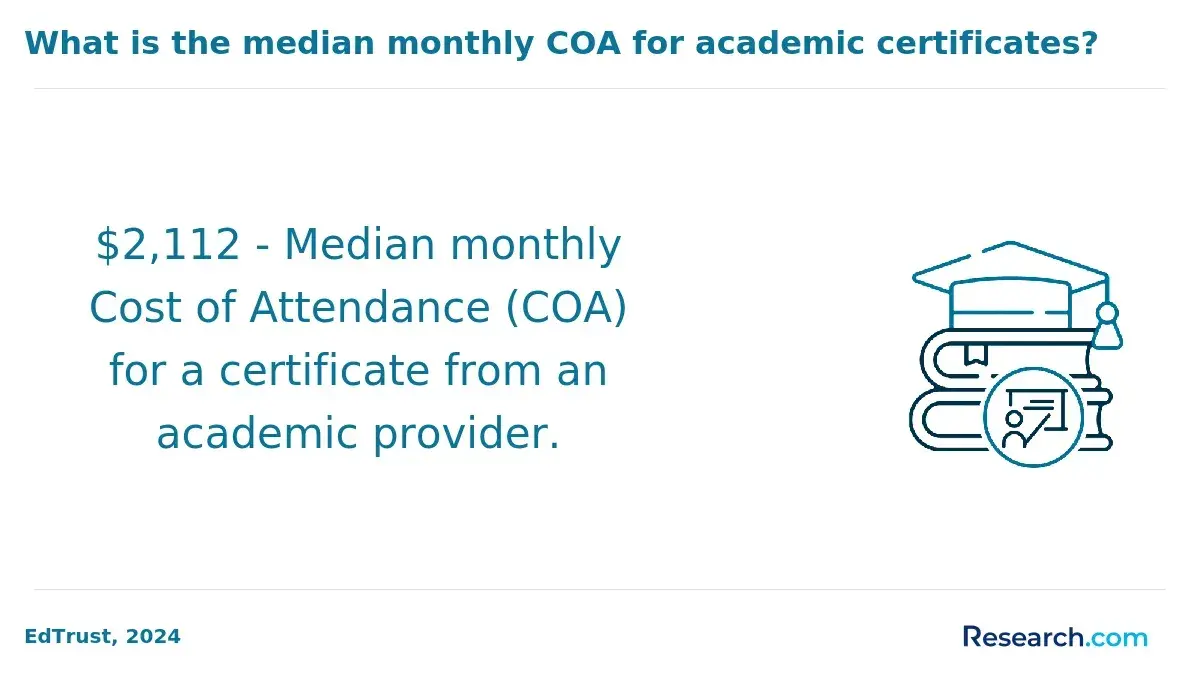
Tuition for accredited online higher education degree programs varies widely by school type, residency policy, degree level, and whether online students pay special technology or distance-learning fees. The most useful comparison is total estimated cost, not just cost per credit, because fees, textbooks, required intensives, and transfer-credit limits can change the real price.
College Board's 2024 Trends in College Pricing provides a useful national benchmark for published undergraduate tuition and fees. These figures are not specific to online higher education programs, but they help show how public and private pricing structures can differ before financial aid:
- Public four-year, in-state average published tuition and fees: $11,610
- Public four-year, out-of-state average published tuition and fees: $30,780
- Private nonprofit four-year average published tuition and fees: $43,350
The table below shows the main cost variables students should compare when reviewing online higher education programs. Use it to identify which price differences are meaningful and which are only surface-level.
| Cost factor | Why it matters | What to ask the school |
| Per-credit tuition | Determines the base price of the degree, especially in master's and doctoral programs | Is the online rate the same for in-state and out-of-state students? |
| Required credits | A lower per-credit price can still lead to a higher total cost if the program requires more credits | How many credits are required for graduation after transfer review? |
| Online and technology fees | Can add recurring costs each term | Are fees charged per course, per credit, or per semester? |
| Residency or intensive requirements | Hybrid weekends or campus residencies can add travel and lodging costs | Are any in-person sessions required, and are they optional or mandatory? |
| Transfer credit and prior learning | Can reduce time and cost for students with previous graduate credits or professional learning | What is the maximum number of credits that can be transferred? |
Lower tuition is important, but it should not automatically outweigh completion support, accreditation, faculty access, or career alignment. A program that costs less but has limited advising, unclear transfer policies, or weak course availability may become more expensive if it delays graduation.
How Competitive Is Admission to Accredited Online Higher Education Degree Programs?
Admission to accredited online higher education degree programs ranges from open or transfer-friendly undergraduate pathways to selective doctoral programs that require professional experience and a strong academic record. Competitive does not always mean better; the right level of selectivity depends on your preparation, goals, and need for flexibility.
The table below summarizes common admissions expectations by degree level. Requirements vary by institution, so applicants should confirm details directly with each school before submitting materials.
| Degree level | Common admission requirements | Competitiveness | Best applicant profile |
| Bachelor's degree | High school diploma or GED, transcripts, transfer credit evaluation, and sometimes placement requirements | Often accessible, especially at public online colleges and adult-completion programs | First-time students, transfer students, and working adults building toward graduate study |
| Master's degree | Bachelor's degree, minimum GPA, résumé, statement of purpose, references, and sometimes relevant work experience | Moderate; stronger programs may review professional fit and writing quality closely | Professionals in education, student services, nonprofit work, advising, training, or administration |
| EdD | Master's degree, leadership experience, writing sample, interview, references, and career goals statement | Moderate to high; applied leadership experience often matters | Mid-career professionals seeking senior administrative or executive roles |
| PhD | Master's degree or strong graduate preparation, research interests, writing sample, faculty fit, and academic references | Usually high; research alignment can be decisive | Students pursuing research, policy, faculty, or scholarly careers |
Admissions flexibility can be a strength for adult learners, especially when a school evaluates professional experience and transfer credit fairly. However, be cautious if a program admits nearly anyone but provides little evidence of academic support, faculty engagement, or graduate outcomes.
Before applying, compare admissions requirements using a practical sequence:
- Identify your target role and the degree level commonly preferred for that role.
- Compare GPA requirements, experience expectations, writing samples, and test policies across at least three accredited schools.
- Ask whether conditional admission is available if your GPA is below the standard threshold.
- Confirm whether transfer credits, prior graduate coursework, or professional certifications can reduce required credits.
- Apply only to programs where you can meet both admission standards and ongoing workload expectations.
Which Learning Formats Offer the Greatest Flexibility in Online Higher Education Degree Programs?
Flexibility is one of the main reasons students choose online higher education programs, but "online" can mean several different things. Some programs are fully asynchronous, while others require live evening classes, weekend intensives, cohort participation, internships, or scheduled advising sessions.
Students who need the fastest undergraduate route before entering graduate study may also compare an accelerated online bachelor's degree. That option can be useful for adults who need to finish a bachelor's credential before applying to master's programs in higher education administration or leadership.
The table below compares learning formats by flexibility and student fit. It can help you avoid choosing a program that looks convenient on paper but does not match your schedule or learning style.
| Online format | Flexibility level | Best fit | Potential drawback |
| Asynchronous courses | Highest | Working adults with changing schedules or caregiving responsibilities | Requires strong self-discipline and time management |
| Synchronous online courses | Moderate | Students who want live discussion, structure, and regular faculty interaction | Scheduled meeting times may conflict with work |
| Cohort-based online programs | Moderate | Students who value peer networking and predictable course sequencing | Less flexibility to pause, accelerate, or change course order |
| Hybrid or low-residency programs | Lower but often more connected | Students who want online coursework plus occasional campus networking | Travel requirements can increase total cost and scheduling burden |
| Competency-based programs | High for self-paced learners | Experienced adults who can move quickly through familiar material | Not ideal for students who need frequent deadlines and instructor-led pacing |
AI-supported tutoring, virtual advising, learning analytics, and online collaboration tools are becoming more common in digital education. These tools can improve convenience, but they should supplement-not replace-qualified faculty, clear feedback, and accessible student services.
What Student Support Services Improve Success in Online Higher Education Degree Programs?
Student support services can make the difference between enrolling and actually finishing. This is especially true for online students who may be balancing full-time work, family responsibilities, military service, or a career change into higher education administration.
Strong programs make support visible before enrollment. Look for services that help students plan, persist, and connect coursework to career goals:
- Dedicated online academic advising that helps students map courses by term and avoid unnecessary credits.
- Career services with résumé reviews, mock interviews, job-search coaching, and higher education employer connections.
- Faculty access through virtual office hours, prompt feedback, and clear communication expectations.
- Writing, research, and library support for graduate-level papers, capstones, dissertations, and data projects.
- Technology help desk coverage during evenings or weekends when online students are most likely to study.
- Internship, practicum, or fieldwork coordination for students who need supervised experience in a college or university setting.
A common mistake is focusing only on curriculum and ignoring student services until a problem appears. Before enrolling, ask for the name of the office that supports online students, typical response times, and whether support is available outside standard business hours.
Red flags include unclear advising ownership, limited faculty availability, no online library access, weak disability accommodations information, and career services that are restricted to campus-based students. If the program serves working adults, its support model should reflect working-adult schedules.
Which Financial Aid Options Are Available for Accredited Online Higher Education Degree Students?
Accredited online higher education degree students may qualify for federal aid, state aid, employer tuition assistance, military education benefits, institutional scholarships, payment plans, and private scholarships. Federal aid eligibility generally requires enrollment in an eligible program at an accredited institution and completion of the FAFSA.
The federal Pell Grant can be relevant for eligible undergraduate students; the maximum award remains $7,395 for the 2024-25 award year. Graduate students are not eligible for Pell Grants, so master's and doctoral students typically rely more on loans, employer support, institutional scholarships, assistantships, and payment plans.
When comparing aid, focus on net cost rather than the size of the aid package. The following aid sources are commonly available, but eligibility depends on the student and the school:
- Federal grants for eligible undergraduate students, including Pell Grants.
- Federal Direct Loans for undergraduate and graduate students who meet eligibility requirements.
- Institutional scholarships based on merit, need, professional background, leadership, or program fit.
- Employer tuition reimbursement or tuition assistance for employees in education, government, nonprofit, or corporate training roles.
- Military and veteran education benefits for eligible service members, veterans, and dependents.
- Graduate assistantships or campus employment, which may be limited for fully online students but are worth asking about.
Use this process to compare financial aid offers from multiple schools:
- Calculate total program cost, including tuition, fees, books, technology, travel, and required residencies.
- Subtract grants, scholarships, and employer aid before considering loans.
- Separate renewable aid from one-time awards so the second-year cost is not a surprise.
- Ask whether scholarships require continuous enrollment, minimum GPA, or a specific course load.
- Compare monthly loan repayment estimates against realistic salary expectations for your target role.
Do not assume the school with the largest aid package is the most affordable. A smaller scholarship at a lower-cost public university may reduce debt more than a larger discount at a higher-priced institution.
Which Career Outcomes Are Associated With Accredited Online Higher Education Degree Programs?
Accredited online higher education degree programs can lead to careers in colleges, universities, community colleges, education nonprofits, student services, enrollment management, academic advising, institutional research, training, and education consulting. Outcomes depend on prior experience, degree level, geographic market, and whether the role requires specialized credentials beyond the degree.
Students comparing adjacent leadership pathways may also review organizational leadership master's programs, especially if they are interested in broader management roles outside colleges and universities. This can be a strong alternative for professionals who want leadership mobility across education, nonprofit, healthcare, government, and corporate training settings.
The table below uses BLS May 2024 wage data and current occupational outlook categories to provide salary context. These figures are national medians or outlook indicators, not guarantees for any individual graduate.
| Career path | Relevant preparation | Median pay or outlook context | What improves competitiveness |
| Postsecondary education administrator | Master's degree in higher education, student affairs, educational leadership, or related field | BLS May 2024 median annual wage: $104,070 | Experience in admissions, advising, registrar services, student affairs, financial aid, or academic operations |
| Academic advisor or student success specialist | Bachelor's or master's degree, depending on employer and role level | Often evaluated within broader education and administrative job categories rather than one single BLS occupation | Communication skills, case management, student data systems, and knowledge of retention practices |
| Instructional coordinator or curriculum-related role | Master's degree and curriculum, assessment, or instructional design experience | BLS May 2024 median annual wage for instructional coordinators: $74,720 | Assessment literacy, learning technology experience, and program evaluation skills |
| Training and development manager | Leadership, adult learning, organizational development, or education-related graduate study | BLS May 2024 median annual wage: $127,090 | Corporate training experience, learning analytics, project management, and leadership background |
A higher education degree is most likely to pay off when it connects directly to a role you can realistically pursue. For example, a working academic advisor may use a master's degree to move into student success leadership, while a faculty member or administrator may need a doctorate for senior leadership or research-intensive positions.
Current hiring trends also reward data literacy and technology fluency. Candidates who understand student information systems, retention analytics, online learning platforms, compliance, accessibility, and AI-supported student services may be better positioned than candidates with only general administrative knowledge.
How Do Online and Campus-Based Higher Education Degree Programs Compare?
Online and campus-based higher education degree programs can both be academically credible when they are properly accredited. The better choice depends on your schedule, learning preferences, networking needs, location, and whether the program includes practical experiences that are easier to complete in person.
The same comparison logic applies across online fields; for example, a student reviewing an accredited online graphic design degree would still need to evaluate accreditation, portfolio support, faculty feedback, technology requirements, and career alignment. For higher education degrees, the equivalent questions involve advising practice, administrative experience, institutional research exposure, and professional networks.
The table below compares online and campus-based formats on factors that affect the real student experience. Use it to decide whether convenience or in-person connection should carry more weight in your choice.
| Comparison factor | Online higher education program | Campus-based higher education program |
| Schedule | Best for working adults, remote learners, and students outside commuting distance | Best for students who can attend daytime or evening classes on campus |
| Networking | Can be strong if the program has cohorts, live sessions, alumni events, and virtual career support | Often easier for informal networking, assistantships, and campus employment |
| Cost | May reduce relocation and commuting costs, but fees and residency requirements still matter | May provide access to assistantships, campus jobs, or local internship relationships |
| Learning style | Works best for self-directed students who communicate proactively | Works best for students who prefer face-to-face structure and immediate interaction |
| Practical experience | Can be completed locally if the school approves a nearby college, nonprofit, or education site | May offer easier access to campus offices, supervisors, and student affairs units |
Online is often the better investment if you need to keep working while studying or if relocation would increase debt. Campus-based study may be worth it if you need assistantship funding, close faculty mentorship, or direct access to a university's student affairs and administrative offices.
How Should Students Choose the Best Accredited Online Higher Education Degree Program?
Choosing the best accredited online higher education degree program requires more than reading rankings. The strongest decision comes from matching the program's accreditation, curriculum, cost, format, and outcomes to a specific career goal.
Students considering doctoral leadership roles may also compare a PhD organizational leadership pathway with higher education doctorates. That comparison is useful when your interests include executive leadership, organizational change, research, or consulting beyond colleges and universities.
Use this step-by-step process to narrow your options and avoid common enrollment mistakes:
- Define your target role first, such as academic advisor, student affairs director, enrollment manager, institutional researcher, dean, or training leader.
- Identify the degree level commonly preferred for that role by reviewing job postings from colleges, universities, community colleges, and education organizations.
- Verify institutional accreditation before comparing tuition, rankings, or admissions convenience.
- Calculate total cost after scholarships, employer aid, transfer credits, fees, books, travel, and expected time to completion.
- Compare curriculum depth in areas such as higher education law, student development, assessment, finance, leadership, diversity, data analysis, and policy.
- Ask how online students complete internships, practicums, capstones, or applied research projects.
- Review student support, faculty access, career services, alumni networks, and online library resources.
- Request outcome information, including graduation rates, job placement support, alumni roles, and employer partnerships when available.
- Choose the lowest-cost option only if it also meets your accreditation, support, flexibility, and career-alignment requirements.
Several red flags should slow your decision. Be cautious if a program lacks transparent accreditation details, will not provide a total cost estimate, pressures you to enroll quickly, offers vague career claims, or cannot explain how online students receive advising and career support.
The best program for a working adult may not be the best program for a recent graduate, and the best program for a future dean may not be the best program for an academic advisor. In general, prioritize a well-accredited, affordable, flexible program with a curriculum and support model that clearly match the job you want next.
Other Things You Should Know About Higher Education
Often, yes. Many online programs allow students to complete approved field experiences at a local college, university, nonprofit, or education organization, but approval rules vary by school.
Most accredited institutions do not label the diploma as "online," but policies vary. Ask the registrar how the degree, transcript, and concentration will appear before enrolling.
Many students do, especially in part-time or asynchronous programs. The key is to confirm weekly workload expectations, course pacing, and whether live sessions or field hours conflict with your job.
Not always. Bachelor's and some master's programs may admit students from related fields, but doctoral programs and leadership-focused tracks often prefer applicants with professional education or administrative experience.
References
- European Online University Accreditation Explained - MIA Digital University https://miauniversity.com/european-online-university-accreditation/
- Tuition & ROI | ACE https://ace.edu/tuition-and-admissions/tuition-details/
- Average Cost of a Master's Degree: 2025 Analysis https://educationdata.org/average-cost-of-a-masters-degree
- Putting Evidence into Action to Support Student Success https://www.partnershipstudentsuccess.org/
- Quality Standards and Accreditation of Distance Education Programs in a Pandemic - OJDLA https://ojdla.com/articles/quality-standards-and-accreditation-of-distance-education-programs-in-a-pandemic
- Graduate degrees pay—but it’s complicated | Brookings https://www.brookings.edu/articles/graduate-degrees-pay-but-its-complicated/
- Online Student Trends and Success Factors - OnlineEducation.com https://www.onlineeducation.com/guide/who-studies-online
- Colleges Ranked by Acceptance Rate | OEDB https://www.oedb.org/rankings/acceptance-rate/
- Understanding Academic Accreditation for Online Universities https://www.qahe.org/article/understanding-academic-accreditation-for-online-universities/