
2027 Entity Resolution Capstones: What to Look for in a Data Science Master's

Co-Founder and Chief Data Scientist
An entity resolution capstone can show whether a data science master's program teaches students to turn messy records into trustworthy decisions - not just build a matching model. If you want to work on customer, patient, supplier, or other linked data, the key is to find a program that supports realistic data access, rigorous evaluation, and responsible handling of sensitive information.
This guide explains what a strong project looks like and what to verify before choosing a program.
Key Things You Should Know
- Look for a capstone that defines which records represent the same entity, measures both missed and incorrect matches, and explains the consequences of each error.
- Confirm that students can obtain suitable data, supervision, computing resources, and permission to share a privacy-safe portfolio artifact; a capstone requirement alone does not establish that support.
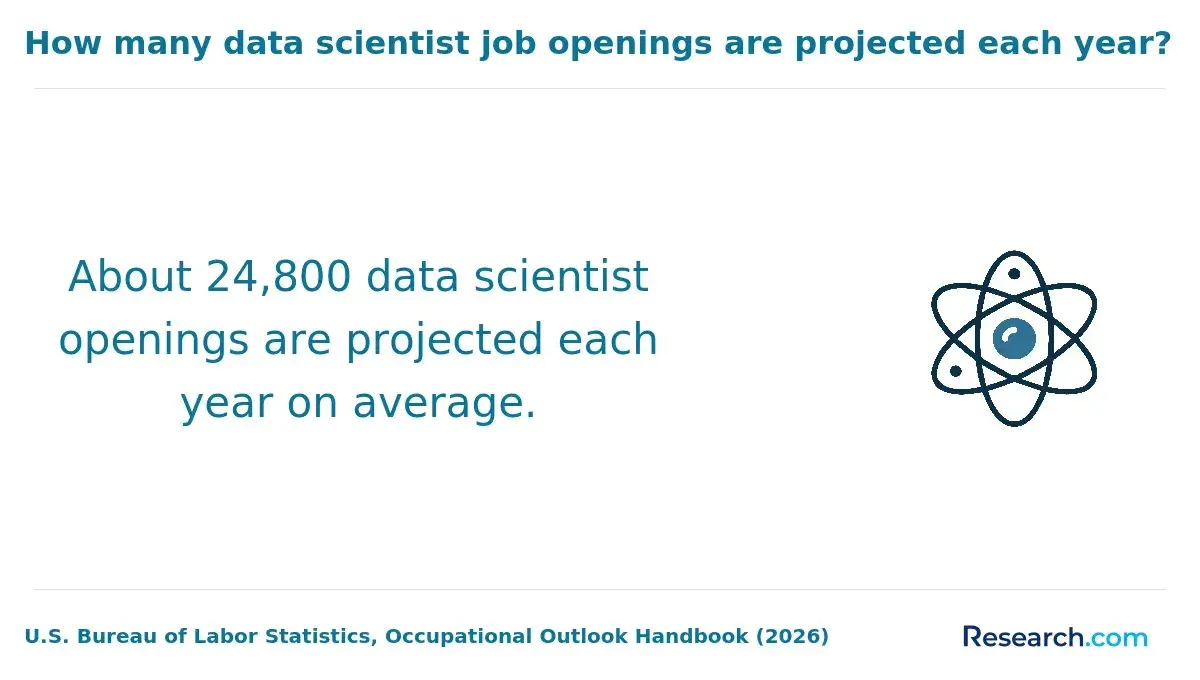
- The Bureau of Labor Statistics projects 35% growth in data scientist employment from 2025 to 2035, but that occupation-wide projection does not establish demand for entity resolution specialists or guarantee a job.
What Is an Entity Resolution Capstone in a Data Science Master's Program?
Entity resolution identifies records that refer to the same real-world person, organization, product, or other entity despite differences in spelling, formatting, identifiers, or source systems. A capstone applies that problem to a defined use case: for example, linking supplier records across purchasing systems without accidentally combining distinct businesses.
A substantive project goes beyond cleaning a spreadsheet. It defines what counts as a match, prepares records, generates plausible candidate pairs, scores or classifies those pairs, groups matches where appropriate, and evaluates the resulting decisions. It also explains how someone would review uncertain cases and use the resolved data. A thesis may emphasize novel research; a capstone may instead emphasize a reproducible solution to an applied problem. Neither label guarantees that an entity resolution topic is available.
Ask whether students propose their own topics or choose from sponsor projects, when topics are approved, and how much of the program schedule is reserved for project work. If that time commitment affects your choice, compare data science master's duration and tuition comparisons alongside each school's actual capstone calendar.
What Skills Should an Entity Resolution Capstone Demonstrate?
A strong capstone demonstrates an end-to-end workflow, not just a high-performing similarity score. Students should be able to explain why they chose particular identifiers, normalization rules, candidate-generation methods, comparison features, and decision thresholds. Depending on the problem, appropriate methods might include deterministic rules, probabilistic linkage, supervised pair classification, or graph-based grouping.
The most persuasive work evaluates precision - how many proposed matches are correct - and recall - how many true matches were found. It also tests difficult cases, such as common names, changed addresses, missing identifiers, and records from sources with different conventions. A reproducible pipeline, documented assumptions, and a review process for uncertain matches make the result more useful to an employer than a model score alone.
Privacy and fairness matter especially when records describe people. A project should minimize unnecessary personal data, restrict access, and examine whether error rates differ across relevant groups when that assessment is lawful and feasible. Students interested in the governance side can compare responsible AI tracks in graduate programs, while checking whether those programs also support hands-on data linkage work.
How Do Data Science Master's Programs Evaluate Entity Resolution Projects?
Assessment criteria vary by program, so request a capstone rubric or examples of past submissions rather than assuming that model accuracy determines the grade. The table distinguishes common dimensions of a credible entity resolution project; it does not describe a universal grading policy.
| Evaluation dimension | What substantive evidence looks like | Why it matters |
| Problem definition | A clear entity and match definition tied to a use case | Prevents technically correct matches that do not serve the intended decision |
| Data and methods | Documented sources, preprocessing, candidate generation, and matching approach | Makes the workflow understandable and reproducible |
| Validation | Appropriate labeled examples or another defensible review method, with error analysis | Shows where the system fails, not merely where it succeeds |
| Implementation and communication | A usable output, limitations, and a stakeholder-facing explanation | Connects technical results to practical use |
Be wary of a project that reports only overall accuracy: when most record pairs are nonmatches, that figure can conceal poor matching performance. Ask how faculty assess precision and recall, how labels are checked, and whether students must explain the operational cost of false merges versus missed links. For a fraud investigation, missing a useful connection may be costly; for patient records, an incorrect merge can create a different and potentially serious risk.
What Coursework Prepares Students for Entity Resolution Capstones?
Useful preparation spans databases and SQL, data cleaning, statistics, machine learning, and software practices such as testing and version control. Courses in information retrieval, record linkage, data engineering, graph analytics, or data governance can add depth. Check syllabi and assignments: a passing mention of fuzzy matching is not equivalent to implementing, validating, and maintaining a linkage pipeline.
A student with strong modeling skills but limited database experience may struggle to join and profile large source tables. Someone experienced in data engineering may need more preparation in sampling labeled pairs, choosing thresholds, and interpreting error rates. If your preparation is uneven, distinguish an admissions prerequisite from coursework that would simply help you succeed. Applicants considering adjacent fields can examine AI master's routes with additional preparation, but should verify that any bridge courses address their specific gaps and lead to an appropriate capstone.
How Do Online and Campus Programs Structure Capstone Projects?
Either format can support a strong entity resolution project. The consequential differences are access to data and people: how students meet advisers and sponsors, obtain approved datasets, collaborate, use computing resources, and present results. Do not assume that "online" means asynchronous or that "campus" means an in-person industry sponsor.
For an online program, confirm meeting times, time-zone expectations, group-work requirements, and whether remote students can use sponsor data under the same conditions as campus students. For a campus program, confirm any required in-person schedule and whether a sponsor project is actually available in your area. In either format, a well-supported public or simulated dataset may be preferable to an impressive-sounding partnership that cannot provide usable data in time.
If travel or relocation would strain your budget, weigh those costs against access to project support rather than comparing tuition alone. Start with data science master's programs for smaller budgets, then verify each candidate's capstone arrangements directly.
What Accreditation Should a Data Science Master's Program Have?
For a U.S. master's program, first verify that the institution holds recognized institutional accreditation and that the credential is awarded by that institution. This is a baseline check for the degree; it does not certify that an entity resolution capstone is available or technically rigorous. Do not treat a school's marketing language about "industry recognition" as a substitute for accreditation verification.
Then examine the more topic-specific evidence: the published curriculum, capstone rules, faculty expertise, and recent project examples. If you may use employer tuition benefits or seek federal student aid, confirm the institution's and your program's eligibility under the applicable policies before enrolling.
What Are the Admission Requirements for Data Science Master's Programs?
Requirements vary, but programs commonly assess undergraduate preparation and evidence that an applicant can handle quantitative and programming work. Check each program's current policy for required prior courses, transcripts, recommendations, work experience, tests, and application deadlines. Professional experience with messy records can strengthen an application, but it does not automatically satisfy a formal mathematics or programming prerequisite.
If entity resolution is your goal, use the application to describe a concrete data-quality problem you have encountered and what you learned from it. Before applying, ask whether applicants from your background can complete missing preparation before enrollment, during the program, or not at all. That answer is more useful than assuming every data science master's admits the same profile.
How Long Do Data Science Master's Programs Take and Cost?
Program length and total cost depend on credit requirements, enrollment pace, tuition rules, mandatory fees, and whether the capstone can begin only after specified courses. A shorter advertised path may leave less time to secure data, obtain approvals, and validate a difficult linkage problem. Ask for a sample course sequence that includes the capstone, not just a minimum completion time.
For cost, compare the full estimated tuition and required fees at your intended pace, then account for materials, computing needs, and any travel or reduced work hours. Published prices can change, and an employer-sponsored dataset does not necessarily mean an employer will pay tuition. For financing options and questions to raise with a financial aid office, see how to fund a data science master's. Choose a schedule you can afford that still permits a substantial project; the lowest sticker price is not necessarily the best value.
What Careers Can an Entity Resolution Capstone Support?
A well-documented project can provide relevant evidence for data scientist, data engineer, analytics engineer, master data management, and data-quality roles. The strongest fit depends on what the project demonstrates: modeling and error analysis for data science; scalable pipelines and system integration for engineering; or review rules, stewardship, and governance for master data work.
When presenting the project, describe the records involved, your individual contribution, how you assessed mistakes, and what a stakeholder could do with the output. If confidentiality prevents sharing data or code, prepare a permitted architecture diagram, methods summary, and privacy-safe demonstration. An entity resolution capstone is portfolio evidence, not a replacement for experience or a guarantee of entry into a particular role.
What Salary and Job Outlook Can Data Science Graduates Expect?
The U.S. Bureau of Labor Statistics reports a $120,230 median annual wage for data scientists in May 2025. That is a wage for workers in the occupation - not a starting salary for master's graduates or a salary attributable to an entity resolution capstone. Prior experience, location, employer, and the role you pursue can substantially affect your outcome.
BLS projects 35% growth in data scientist employment from 2025 to 2035. The projection indicates growth for the broader occupation, not a separate forecast for record-linkage jobs. Treat it as career context while judging a program on the skills, project access, and total cost you can actually verify.
Other Things You Should Know About Data Science
Yes. The entity can be a company, supplier, product, or another object. The important requirement is a clear definition of when two records refer to the same entity.
Not necessarily. General-purpose programming, database, and machine learning tools can support a rigorous project. The choice matters less than whether you can explain, test, and reproduce the matching process.
Do not assume so. Check the dataset's license, the program's rules, and any privacy or research restrictions before publishing records or derived outputs. A public source can still contain sensitive personal information.
It can use a documented sample reviewed by qualified people, provided the limits of that review are clear. Without a defensible way to assess matches, avoid claiming that the system's precision or recall is known.
References
- (Almost) all of entity resolution - PMC https://pmc.ncbi.nlm.nih.gov/articles/PMC11636688/
- What is synthetic data - and how can it help you competitively? | MIT Sloan https://mitsloan.mit.edu/ideas-made-to-matter/what-synthetic-data-and-how-can-it-help-you-competitively
- Data Governance | Office of Technology and Digital Innovation https://it.osu.edu/data/governance
- Become a Capstone Partner | cornell.edu https://phs.weill.cornell.edu/graduate-education-clinical-training/become-capstone-partner
- Applied Data Science (MS) Student Capstone Projects | Bay Path University https://www.baypath.edu/academics/graduate-programs/applied-data-science-ms/student-capstone-projects/
- Master's in Data Science: Capstone Project | NYU CDS https://cds.nyu.edu/masters-in-data-science-capstone/
- Using Entity Resolution Tools for Enterprise Data | Data Ladder https://dataladder.com/a-guide-to-entity-resolution-tools-for-enterprise-data-projects/
- What is entity resolution? | Neo4j Graph Intelligence Platform https://neo4j.com/blog/graph-database/what-is-entity-resolution/
- What Is Entity Resolution? How It Works & Why It Matters | Senzing Entity Resolution AI https://senzing.com/what-is-entity-resolution/


