2027 From Farm Operations to Agribusiness Management: When Does a BS in Business Administration Make Sense?
Audited and Verified:
Our Editorial and Data Verification Process
Research.com uses government datasets, official education statistics and primary institutional information to support its career and degree guides. Our review process checks factual accuracy, occupational definitions, source dates and the requirements associated with the credentials discussed.
How This Article Was Fact-Checked
Our editorial team verifies salary estimates, employment projections, education requirements and program information against original data providers and official organizations. Salary figures are checked against the relevant occupational definitions and reporting periods. Information about licensure, accreditation and required in-person training is reviewed separately.
Fact-checked and verified on:

Co-Founder and Chief Data Scientist
Running a farm involves more than producing a crop or raising livestock. Purchasing, cash flow, staffing, contracts, and sales can determine whether a sound production plan works as a business. For farm employees, owners, and career changers considering broader responsibility, a BS in Business Administration may fill important gaps - but it is not always the most direct route. This guide explains when an agribusiness-focused business degree is worth considering, how it compares with targeted training, and what to verify before committing time and money.
Key Things You Should Know
- A BS in Business Administration makes the strongest case when your next role requires sustained responsibility for budgets, purchasing, people, customers, or multiple parts of an agricultural business - not just stronger production skills.
- Check the actual credential: an agribusiness concentration, a few agricultural electives, and a separately named agribusiness degree can provide different levels of industry-specific preparation.
- For context, the U.S. Bureau of Labor Statistics reports a May 2025 median annual wage of $82,320 for logisticians and projects 18% employment growth from 2025 to 2035. Those occupation-wide figures are not starting salaries or forecasts for agribusiness graduates.
What Is a Business Administration Degree in Agribusiness Management?
A BS in Business Administration typically combines a general business core - such as accounting, finance, marketing, management, and operations - with general education. Agribusiness management may be a formal concentration within that BS, an elective cluster, or a separately named degree. The credential on the transcript and the required courses depend on the institution.
The agricultural component should connect business decisions to conditions such as seasonal revenue, commodity-price exposure, perishable inventory, land and equipment costs, and relationships with processors or distributors. A general business curriculum can still be useful, but agricultural experience or relevant electives may have to supply that context.
If you begin with US business college rankings for online learners, treat them as a starting point rather than evidence that a listed school offers an agribusiness concentration. Confirm the degree title and curriculum in the current catalog.
When Does a Business Administration Degree Make Sense for Farm Operations?
The degree is most useful when you need a broad, connected set of business skills and a bachelor's credential matters for your target employer or advancement path. It may be less useful when the immediate problem is narrow - for example, learning farm bookkeeping software or a particular production method.
These situations call for different investments. The comparison centers on the responsibility you want next, not the appeal of the degree title.
| Goal or situation | Likely better starting point | Why |
| Manage purchasing, budgets, staff, and sales across an operation | BS in Business Administration with relevant agricultural coursework | Broad business training can connect decisions across functions. |
| Improve one immediate task, such as bookkeeping or inventory tracking | Targeted course, employer training, or mentorship | A full bachelor's may cost more time and money than the skill gap warrants. |
| Build deep expertise in crops, livestock, or agricultural engineering | Relevant agricultural or technical degree | Business coursework does not replace technical preparation. |
| Move into a role requiring a bachelor's after substantial farm experience | Compare degree-completion programs | Applicable transfer credit and a workable schedule may make completion feasible. |
Before enrolling, describe the role you want and compare its job postings with work you already do. Someone who negotiates with suppliers and tracks margins may need formal finance and analytics training; someone seeking only a better planting schedule may not need a business degree. If continuing to work is essential, evaluate whether you can study business administration without leaving your job under the program's actual attendance rules.
What Careers Can You Pursue With a Business Administration Degree in Agriculture?
Experience and the target function matter more than the phrase "agribusiness graduate." Possible entry routes include purchasing assistant, operations coordinator, sales support, inventory analyst, or administrative roles with farms, cooperatives, food processors, distributors, and agricultural suppliers. Responsibilities may include comparing supplier quotes, tracking orders, preparing sales reports, or monitoring inventory.
With relevant results and experience, a worker might pursue procurement, logistics, account management, or operations leadership. Managing a farm or supervising a team generally requires demonstrated judgment and responsibility beyond coursework. A business degree also does not substitute for technical qualifications an employer requires.
For a people-operations goal, compare the business curriculum with human resources degree requirements before choosing a broad program. Agricultural employment adds seasonal staffing and safety concerns, but an HR-focused role may require deeper employment-law and personnel preparation than an agribusiness elective provides.
The most valuable coursework links general business methods to decisions the student can explain. Accounting and finance can help distinguish profit from available cash during a seasonal cycle. Operations and supply chain courses can support purchasing, storage, transportation, and inventory decisions. Marketing and management can address buyer relationships, staffing, and organizational planning.
Look for assignments that require students to state assumptions, compare options, and explain risks - not merely present a polished plan. A useful hypothetical exercise might compare equipment options using estimated costs and cash-flow timing. Its estimates are practice, not evidence of savings on a real farm. Any assignment using an employer's prices, employee information, or customer records needs appropriate permission.
Project scheduling may be covered within operations, but it is not the same as an agriculture-focused business education. If project coordination is your primary goal, compare the curriculum and tuition and aid questions for project management students against an agribusiness pathway before choosing either credential.
Online study can reduce travel and make it easier to remain employed on a farm, but it does not necessarily mean self-paced study. Scheduled discussions, group projects, proctored exams, and fixed deadlines can conflict with harvest or livestock responsibilities. Campus programs may offer easier access to agricultural facilities, local employers, faculty, and in-person projects, while requiring travel or a less flexible timetable.
Ask for a recent course schedule, assessment formats, required visits, and internship or capstone rules. Also check whether agricultural electives are offered online often enough to finish on your intended schedule. When reviewing online business education on a smaller budget, compare travel savings with technology fees and any required time away from work.
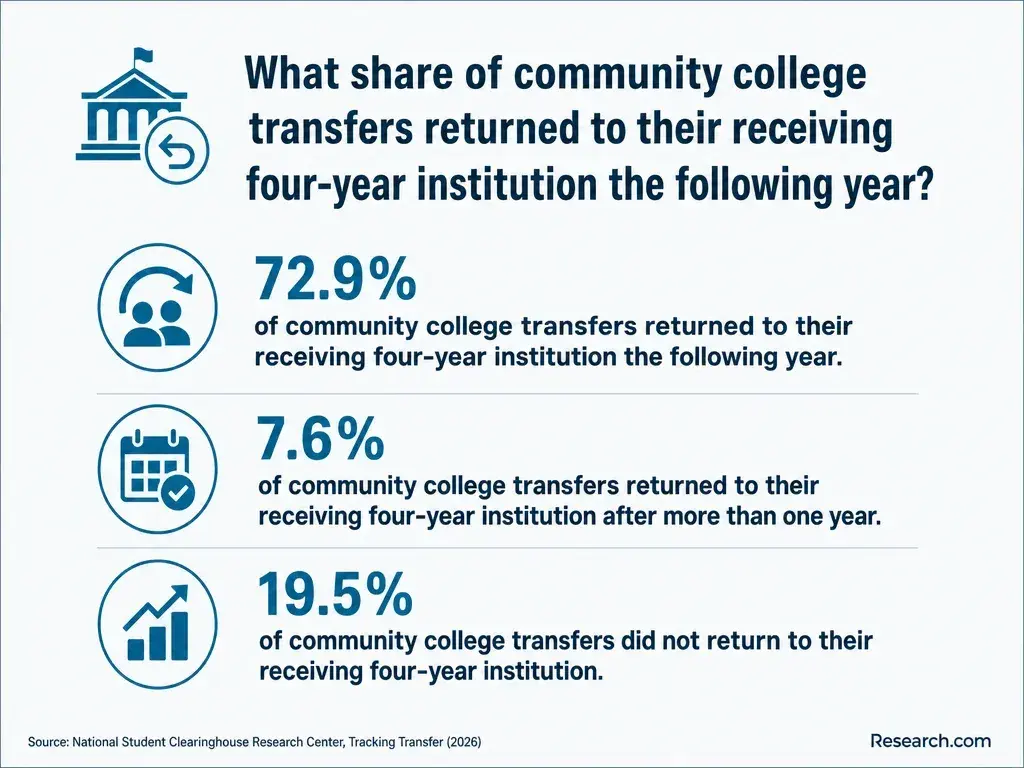
Requirements vary by school and by entry point. A first-year applicant may need secondary-school records, while a transfer applicant generally needs transcripts from previous colleges. Some programs have separate requirements for entry to the business major or for upper-level accounting, economics, mathematics, or statistics courses.
Farm experience can strengthen an application or support a prior-learning request where a school offers that option, but it does not automatically replace required courses. Transfer students should request a written evaluation showing not only accepted credits but which ones satisfy the business core, agricultural concentration, general education, and residency requirements.
Application cost is worth checking, especially if you are comparing several schools. A list of places to apply to accredited online colleges for free can help you identify possibilities; verify each school's current fee policy and whether it offers the agricultural coursework you need.
A bachelor's degree commonly takes about four years of full-time study from the beginning, but a transfer student's remaining time depends on the official degree audit. Part-time enrollment may fit a seasonal workload better, while extending the calendar timeline. An accelerated term does not reduce the work required for its courses.
Pay particular attention to prerequisite chains and how often required agribusiness classes run. A course offered infrequently can delay completion even when a student has enough total credits. Compare the school's written graduation plan with bachelor's programs for faster completion, and ask whether the faster schedule is compatible with your busiest months.
The useful figure is the cost of finishing your degree, not an advertised tuition rate alone. Ask each school for an estimate based on its evaluation of your prior credits and your likely enrollment pace. Include required fees, books or software, travel, financing costs, and any wages you would forgo to attend.
Compare aid offers by separating grants and scholarships from loans, and check whether employer reimbursement arrives only after a course is completed. If you are weighing agribusiness against another operations-related major, project management undergraduate scholarship comparisons may illustrate questions to ask about funding; awards listed for another degree should not be assumed available for agribusiness.
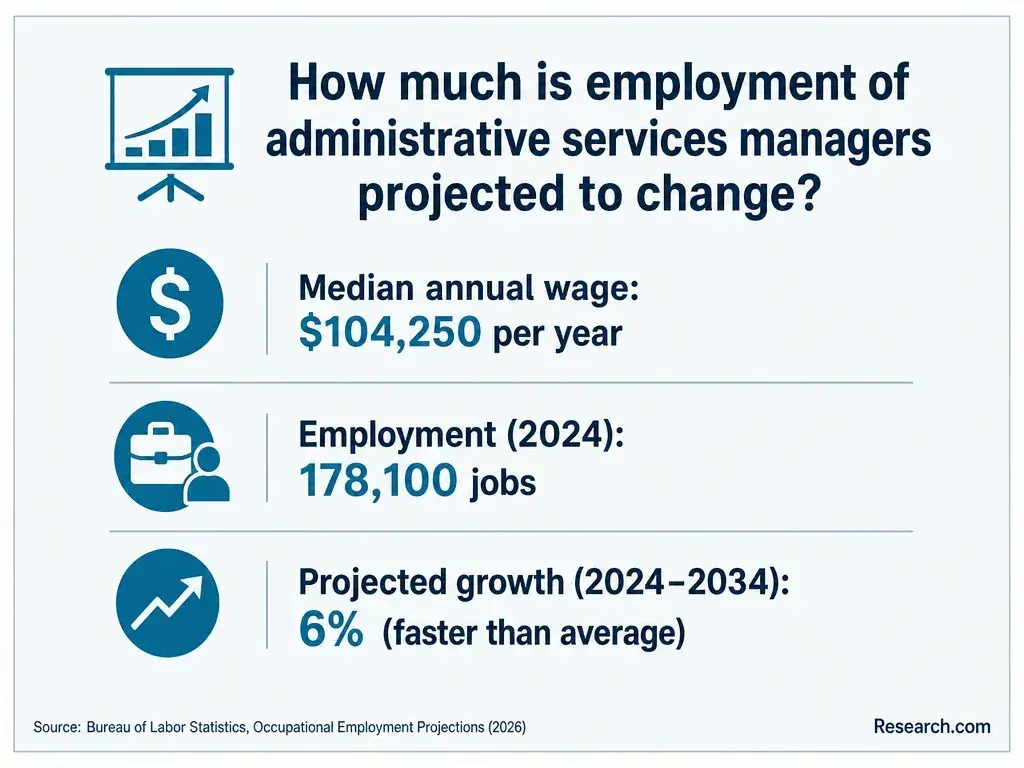
There is no single salary or growth rate for "agribusiness graduates." Pay depends on the occupation, location, employer, and prior experience. For one relevant path, the U.S. Bureau of Labor Statistics reports a May 2025 median annual wage of $82,320 for logisticians and projects 18% U.S. employment growth from 2025 to 2035. That median covers workers across industries and career stages; it is not an expected offer for a new graduate or a farm-specific forecast.
Use occupation data to identify promising functions, then check local agricultural job postings for actual duties and qualifications. Compare likely starting roles with your current earnings and the full cost of completion. If a bachelor's credential is needed but agribusiness specialization is not, shorter affordable business administration degree pathways may be worth comparing - without assuming their advertised timeline or career outcomes will apply to you.
How Can You Choose an Accredited Agribusiness Management Program?
First, verify that the institution holds recognized institutional accreditation. Then check whether any claimed AACSB, ACBSP, or IACBE business accreditation covers the school or program you are considering; institutional and business-specific accreditation are different claims. Neither alone proves that a program will lead to a particular job.
Request the current catalog, a sample degree plan, the agricultural course rotation, and written answers about transfer credit, internships, and online attendance. Ask who teaches the agricultural courses and whether projects can address farm operations without requiring access to confidential workplace data. Compare those answers alongside the final aid offer, not just the school's marketing description. A guide to affordable business administration programs with federal aid access can help identify candidates, but confirm accreditation, aid eligibility, and agribusiness availability directly with each institution.
Other Things You Should Know About Business Administration
No. Farm employment, supplier work, or an interest in agricultural commerce can provide context. Check whether a program expects access to an agricultural workplace for any required project.
Possibly, if the institution offers prior-learning assessment and approves documented learning under its policies. Years worked do not automatically translate into credits or satisfy a required business course.
That depends on the school. Ask whether it appears on the transcript, diploma, both, or neither, and confirm that you can complete its required courses.
Not necessarily. An MBA is graduate study and generally requires a bachelor's degree for admission. If you need one specific skill, targeted training may be more direct; if a target role calls for broader graduate-level management preparation, compare MBA programs against its requirements.
- Plan Your New Farm Operation | Farmers.gov https://www.farmers.gov/your-business/beginning-farmers/business-plan
- Economies of Size in Production Agriculture - PMC - NIH https://pmc.ncbi.nlm.nih.gov/articles/PMC3489134/
- Charting the Essentials - Farming and Farm Income http://www.ers.usda.gov/data-products/ag-and-food-statistics-charting-the-essentials/farming-and-farm-income
- Starting or Diversifying an Agricultural Business | Early Learning Professionals (Better Kid Care) https://extension.psu.edu/starting-or-diversifying-an-agricultural-business/
- Online Agricultural Business Bachelor's Degree | Vols Online https://volsonline.utk.edu/program/bachelors/agricultural-business-bsare/
- (PDF) A comparison of curriculum in baccalaureate degree programs in agribusiness management | researchgate.net https://www.researchgate.net/publication/23941016_A_comparison_of_curriculum_in_baccalaureate_degree_programs_in_agribusiness_management
- Farmers, Ranchers, and Other Agricultural Managers | onetonline.org https://www.onetonline.org/link/summary/11-9013.00