2027 Public Health BS Fieldwork Planning for a Future Global Health Career

Co-Founder and Chief Data Scientist
A future global health career does not require your first field placement to be overseas. For a public health BS student, the more important decision is whether a project offers supervised work with communities, usable skills, and evidence you can discuss with employers.
This guide explains how to choose and secure fieldwork, assess program requirements, and weigh costs and career outcomes. It also shows when a local placement may prepare you better than an expensive international trip.
Key Things You Should Know
- Choose fieldwork for its supervised responsibilities, community partnership, and tangible deliverable—not its country. Local refugee health or infectious disease projects can develop relevant global health skills.
- Before committing, confirm four separate permissions: academic approval, a willing host and supervisor, permission to access information, and approval to share any resulting work.
- A public health BS commonly takes about four years of full-time study, but placement hours and costs vary by school. Budget for travel or unpaid work separately; a degree does not guarantee an international job.
What Is a Public Health BS and How Does It Support a Global Health Career?
A Bachelor of Science in public health is an undergraduate degree focused on population health, prevention, and the conditions that shape health outcomes. "Global health" describes problems and partnerships that cross borders or have international relevance; it is not necessarily a separate profession or a requirement to work abroad.
For an early-career student, the BS can provide a foundation in epidemiology, data interpretation, health communication, and program evaluation. Fieldwork makes that foundation more credible when you can explain your contribution and its limits. Graduates considering more specialized work can later explore choosing a public health master's specialization, but a master's degree is not a prerequisite for every entry-level program role.
How Does Fieldwork Prepare Public Health BS Students for Global Health Careers?
Good fieldwork turns classroom concepts into supervised tasks: adapting a health message with community input, checking the quality of survey data, mapping referral barriers, or tracking whether a program reached its intended audience. Those tasks transfer across settings more readily than travel experience alone.
A local organization serving immigrant communities, a health department, or a university research team may offer stronger supervision than a short overseas placement. The useful test is whether you will practice a defined skill, receive feedback, and produce an approved deliverable. A student interested in advanced analysis should distinguish introductory data work from the deeper preparation offered by biostatistics graduate education for employed adults.
Respect the host's priorities: students should not arrive with a predetermined "solution," claim to represent a community, or collect sensitive information simply to build a résumé.
What Accreditation Should You Look for in a Public Health BS Program?
Check that the institution has recognized institutional accreditation, then check whether the Council on Education for Public Health (CEPH) accredits the relevant school, unit, or standalone bachelor's program. A university's accreditation does not establish CEPH coverage, and an accredited graduate program does not automatically mean every undergraduate degree is covered.
Ask the program to identify its accreditation scope and explain how students obtain approved placements. Accreditation is one quality check, not proof that a particular site, international opportunity, or graduate credential will be available. If an MPH may be a later step, CEPH accreditation for online MPH study requires its own program-specific check.
Look for a sequence that connects epidemiology and statistics to population needs, then applies health policy, environmental health, social and behavioral science, and evaluation to real programs. Courses on health systems, migration, infectious disease, or humanitarian settings can add context, but their titles matter less than the methods and ethical reasoning students actually practice.
If you expect to evaluate a field project, take introductory statistics and research methods before the placement when scheduling permits. Language study and region-specific history can strengthen a particular career plan without substituting for partnership skills. Keep records of methods courses and project responsibilities if graduate study is possible; accessible admissions pathways for online MPH study still have program-specific requirements, and easier admission is not a reason to skip useful preparation.
Compare access to supervision and placements, not just lecture delivery. An online BS may let you work with a nearby health department or nonprofit, but its internship may still require fixed daytime hours and an approved local supervisor. A campus program may have established partners, yet those placements can be competitive or difficult to reach without transportation.
Ask each school who finds the site, whether remote tasks qualify, how supervisors are assessed, and whether international placements receive academic approval. If you need shorter academic terms, compare undergraduate public health programs with faster course cycles against the actual fieldwork calendar: a fast course does not make a host organization's project run faster.
There is no universal BS fieldwork-hour requirement. Schools may require an internship, practicum, service-learning course, capstone, or a combination; some opportunities are optional. Obtain the handbook for your entry term and confirm required hours, prerequisites, site criteria, supervision, insurance, assessments, and deadlines with the fieldwork coordinator.
Before accepting a placement, separate four decisions that are often mistaken for one approval. The coordinator must approve academic fit; the host must agree to tasks and supervision; the organization must authorize any data access; and the appropriate people must permit any public portfolio use. Existing employment or volunteering does not automatically satisfy a course requirement.
Ask a prospective supervisor: What decisions will my work inform? Who reviews it? What information may I use? What can I describe publicly? A supervisor may later be able to speak to your work, though graduate applications set their own reference rules; students without conventional academic referees can separately examine MPH admissions without faculty recommendations.
First-year applicants generally apply to the institution; some schools also require a separate application or prerequisites before entry to the public health major. Transfer applicants should request a written degree audit showing not merely which credits are accepted, but which satisfy statistics, general education, major, and residency requirements. The receiving institution decides equivalencies.
Ask when required methods courses must be completed and whether missing prerequisites delay fieldwork. If further education is part of your plan, protect room in your budget for it rather than choosing a bachelor's program solely by a future graduate school's marketing; tuition-conscious pathways to a public health master's are relevant only after you establish that graduate training serves your target role.
A BS is commonly planned as four years of full-time study, but transfer-credit application, course sequencing, part-time enrollment, and placement availability can change the finish date. Get a term-by-term plan that reserves time for prerequisites, site approval, fieldwork, and any final project.
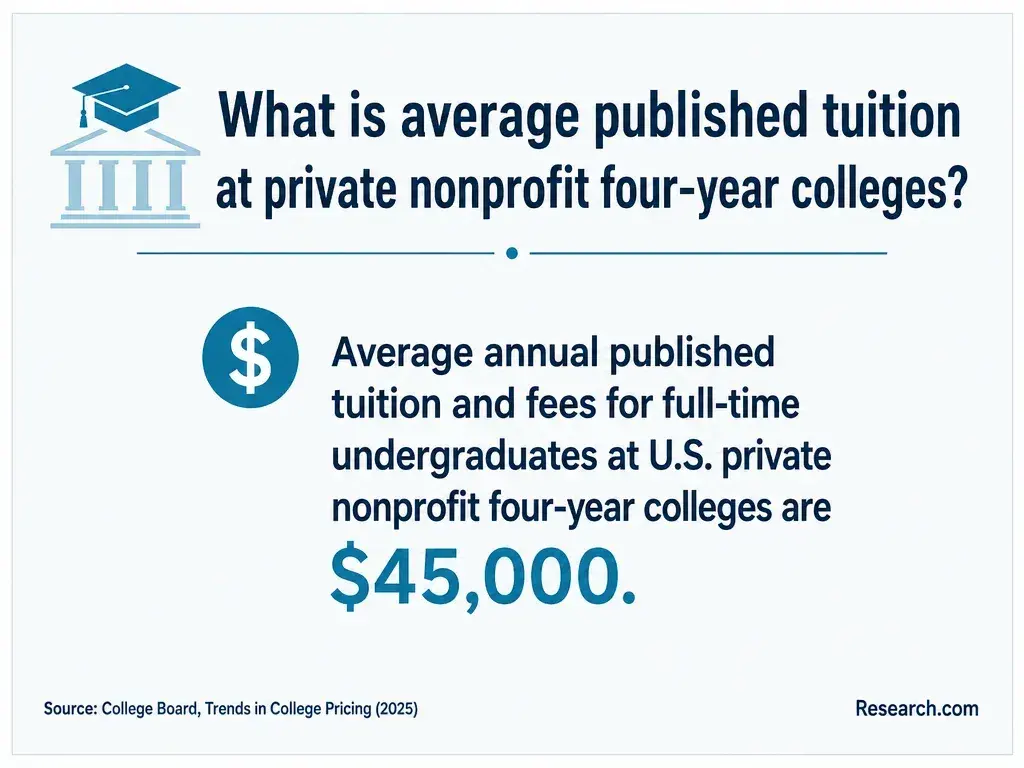
Compare total expected costs rather than tuition alone: mandatory fees, materials, transportation, background checks if required, and income forgone during unpaid fieldwork. An overseas option may also involve travel, housing, insurance, and contingency expenses. Ask whether a similarly supervised local project meets your learning objectives before paying for travel.
Borrowing for an undergraduate placement on the assumption that a future MPH will raise earnings adds risk. If graduate study later becomes necessary, compare its full price and aid separately; online MPH affordability rankings are a starting point, not a substitute for an individual cost estimate.
Possible first roles include program assistant, outreach coordinator, community health worker, research assistant, and monitoring-and-evaluation support staff. The fit depends on the job's tasks: outreach calls for communication and trust; research support calls for careful data handling; program support calls for scheduling, documentation, and reporting. International organizations may also expect language skills, regional knowledge, and prior work experience.
For pay comparisons, use the US Bureau of Labor Statistics occupation that matches the duties and location of a real posting, then examine its wage distribution—not a claimed salary for "global health graduates." Community health worker and health education specialist are distinct occupations with different entry expectations. The Master of Public Health earning potential should likewise not be treated as the expected return on a BS or as a promise of an overseas position.
Do Public Health Graduates Need Certifications or Licensure for Global Health Jobs?
There is no single global health license conferred by a public health BS. An employer may prefer a public health or health education credential, language proficiency, or training specific to a project. Clinical work remains subject to the applicable professional license; public health coursework does not authorize nursing, medicine, or other regulated care.
Check the certifying body's current eligibility rules before planning around CPH or CHES, and read each job posting for jurisdiction-specific requirements. If you later consider a graduate degree partly to meet a credential or hiring condition, verify that condition first, then assess online public health master's aid eligibility separately from professional eligibility. Funding and a credential are different decisions.
Other Things You Should Know About Public Health
Not for every role. Language ability becomes important when your tasks involve direct communication with people who use that language; verify the proficiency a specific employer needs rather than claiming fluency after introductory courses.
Check destination-specific entry rules, health and safety guidance, insurance coverage, emergency contacts, and the school's travel-approval process. Do not purchase nonrefundable travel before the necessary approvals are clear.
Ownership and reuse depend on your school's policies and the host agreement. Ask before saving documents or showing them to employers; remove confidential information only under the host's approved process.
Possibly, but a degree alone provides no right to work in another country. Employers and destination authorities determine hiring and work-authorization requirements, which you should check for each opportunity.
- How to obtain informed consent for research - PMC - NIH https://pmc.ncbi.nlm.nih.gov/articles/PMC5980471/
- Competencies for Public Health Professionals | cdc.gov https://www.cdc.gov/infrastructure/training-professional-development/competencies-for-public-health-professionals.html
- Careers | ucsd.edu https://globalhealthprogram.ucsd.edu/undergraduate-program/careers.html
- Informed Consent Guidelines & Templates | umich.edu https://hrpp.umich.edu/irb-health-sciences-and-behavioral-sciences-hsbs/informed-consent-guidelines-templates/
- Program: Public Health, MPH | binghamton.edu https://catalog.binghamton.edu/preview_program.php
- Practical Experience | Global Health | Social Sciences https://socialsciences.uoregon.edu/global-health/practical-experience
- Visa Costs | UCLA Extramural Fund Management https://efm.research.ucla.edu/visa-costs/
- Bachelor of Science in Public Health | sfsu.edu https://publichealth.sfsu.edu/bs-public-health
- Fieldwork - School of Public Health | The University of Memphis https://www.memphis.edu/publichealth/academics/fieldwork.php
- Budget Planning for On-Site International Research | pitt.edu https://www.globaloperations.pitt.edu/research/budget-preparation/