2027 Evaluating MPH Employment Reports With Low Survey Response Rates

Co-Founder and Chief Data Scientist
An MPH program may advertise a strong employment rate while hearing from only a small share of its graduates. That gap matters when you are deciding whether the degree, concentration, and cost fit your career plans.
This guide explains how to read response rates, unknown outcomes, salary claims, and accreditation-related disclosures without mistaking incomplete data for proof of success or failure. You will leave with specific questions to ask programs and a fairer way to compare the evidence they provide.
Key Things You Should Know
- Ask for four counts before trusting an MPH employment percentage: graduates in the cohort, survey respondents, graduates with independently verified outcomes, and graduates whose outcomes remain unknown.
- A low response rate does not prove poor employment, but a high employment rate among respondents does not establish the rate for the entire graduating class.
- Compare programs using the same graduation period, follow-up date, outcome definitions, concentration, and student background; treat missing data as uncertainty, not as employment.
How Reliable Are MPH Employment Reports With Low Response Rates?
A survey response rate is the share of eligible graduates who answered the survey. A low rate reduces confidence that respondents represent the full class, particularly if employed graduates are easier to reach or more inclined to reply. Sending more reminders may increase participation, but it does not by itself show whether nonrespondents had similar outcomes.
Reliability depends on more than response rate. A program that verifies some nonrespondents' jobs through documented follow-up may know more about its class than its survey rate suggests.
Conversely, a report can have many responses yet still mislead if it excludes graduates who were seeking work or combines unrelated degrees. The question is whether the program can account for its entire defined cohort and show how each outcome was established.
Applicants drawn to online MPH programs with accessible admissions should evaluate admissions access and employment evidence separately. An attainable entry route is useful, but it does not make an incomplete outcomes report more representative.
How Should You Interpret MPH Employment Rates and Unknown Outcomes?
First identify the denominator. "Employed among respondents" excludes graduates who did not answer. "Known employed among all graduates" uses the full class but may understate employment when some unknown graduates actually have jobs. Neither figure alone describes every graduate's outcome.
The following comparison shows what each calculation can establish. Here, E means graduates confirmed employed, R means survey respondents, N means all graduates in the defined cohort, and U means graduates whose outcomes remain unknown:
| Reported measure | Calculation | What it can and cannot tell you |
| Employment among respondents | Employed respondents divided by R | Describes respondents, not necessarily the full class. |
| Confirmed employment across the cohort | E divided by N | Establishes a documented minimum; unknown graduates may also be employed. |
| Maximum possible employment given unknowns | (E + U) divided by N | Shows an upper bound, not an estimated or verified employment rate. |
The bounds are informative only if the report also identifies graduates known to be unemployed, continuing their education, or otherwise outside its employment category. Do not silently count unknown graduates as employed or unemployed. If a program markets a single percentage without the underlying counts, ask for both the respondent-based figure and the full-cohort accounting.
Applicants exploring public health master's admission workarounds for GPA gaps should apply the same test to every school on their list. Admissions flexibility and confidence in career outcomes are different considerations.
What Methodology Should Reputable MPH Employment Reports Disclose?
A useful report makes its figures reproducible. It should name the graduation cohorts, the date outcomes were checked, and whether the population includes online students, part-time students, joint-degree students, and graduates who were employed before enrollment.
It should define "employed," "seeking employment," and "continuing education," including whether part-time, temporary, unpaid, and self-employed work count.
Before comparing a published rate with another school's, request the details that determine whether the figures mean the same thing:
- Counts for eligible graduates, survey respondents, verified nonrespondents, and unknown outcomes, with exclusions explained.
- The survey timing, contact methods, data sources, and rules used to verify jobs or resolve conflicting information.
- Separate results, where cohort sizes permit responsible disclosure, for concentration, delivery format, prior employment status, and employment sought after graduation.
Small subgroup counts may need to be suppressed to protect privacy. The program can still explain its definitions and provide broader, appropriately aggregated results.
This standard of transparency is distinct from application policies such as public health master's application document alternatives; an easier application tells you nothing about how graduate outcomes were measured.
The Council on Education for Public Health (CEPH) accredits eligible public health schools and programs, not every degree at an institution automatically. Its accreditation process involves program-level evaluation and publicly available information about student outcomes.
Applicants should check the accredited entity, whether the MPH they are considering falls within its scope, and the program's current disclosures rather than assuming institutional accreditation answers those questions.
CEPH accreditation is a meaningful quality check, but it does not turn a respondent-only employment rate into a full-cohort rate or guarantee a graduate a job.
When reviewing CEPH-accredited MPH degree options online, locate each program's own outcomes page and ask how it calculates and documents employment. Accreditation status and the strength of a particular employment claim require separate checks.
Programs may supplement surveys with alumni follow-up, career-services records, employer confirmation, or publicly available professional profiles. These sources can reduce unknown outcomes, but each has limits: a profile may be outdated, a career-services record may reflect only students who used that office, and an employer name alone may not establish a job's start date or duties.
Ask whether staff recorded the source and date for each verified outcome, checked that the graduate, not merely someone with the same name, held the position, and avoided counting the same person twice.
A credible report separates directly reported outcomes from independently verified ones and still labels unresolved cases unknown. It should also follow applicable privacy policies rather than exposing individual employment records to applicants.
Verification matters especially when you are comparing programs for a particular skill-building route. If you are addressing prerequisite gaps before MPH enrollment, ask separately how the curriculum develops the skills you need; an externally confirmed job title does not show which coursework prepared a graduate for it.
Do not interpret a difference between online and campus employment rates as an effect of delivery format without examining who enrolled. Online cohorts may include more established professionals studying while employed; campus cohorts may include more people seeking a first public health job. Location, prior experience, concentration, and whether graduates sought a new position can matter as much as format.
Request separate cohort counts and outcome definitions for each format. In particular, distinguish employed at graduation from obtained a new role after graduation.
For an early-career applicant, a rate dominated by students who kept existing jobs is less informative about entry-level placement. For a working professional, advancement, changed responsibilities, or access to relevant applied projects may be more useful measures.
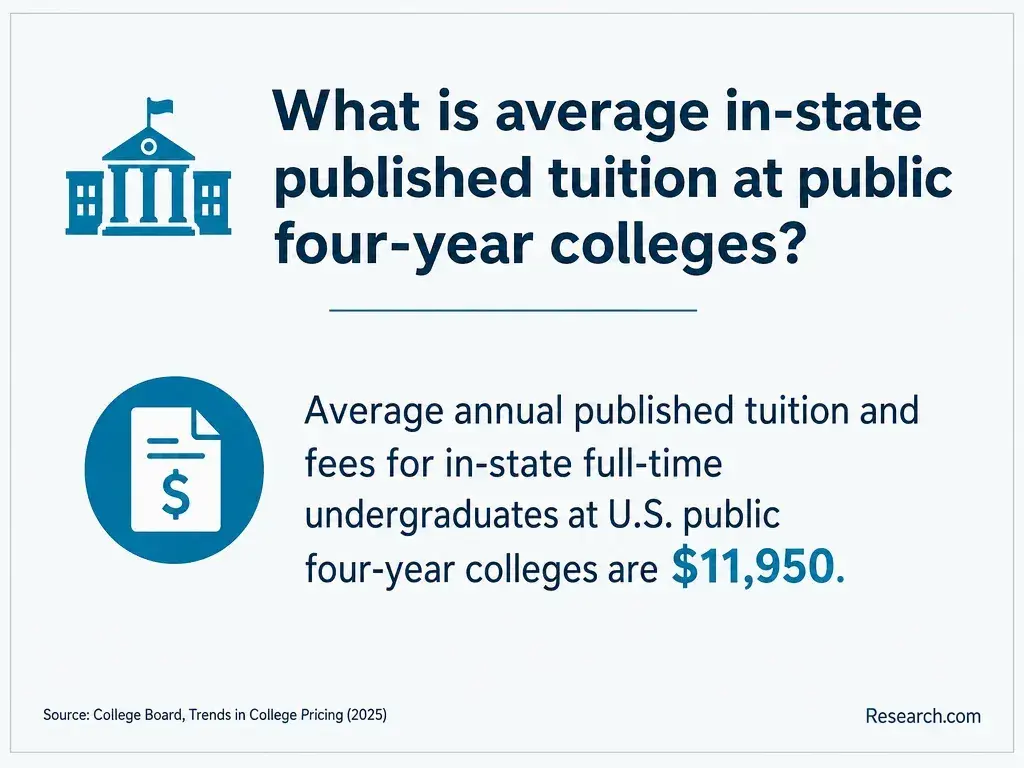
When comparing value, place comparable employment evidence beside total attendance costs. An online MPH tuition comparison guide can help frame the cost side, but confirm each school's current tuition, fees, required visits, and fieldwork-related expenses before deciding that one format offers a better return.
An overall MPH rate can hide whether graduates entered work relevant to the concentration you want. For epidemiology or biostatistics, useful detail includes analytic duties and software or methods used, not just an "analyst" title.
For community health, policy, or environmental health, employer setting and actual responsibilities help distinguish population-health work from adjacent administrative roles.
Programs should report concentration-level outcomes when the groups are large enough to protect privacy, including the number of graduates, known outcomes, job functions, employer sectors, and how many graduates were already employed.
If a concentration is small, aggregated results across clearly identified cohorts may be more responsible than a volatile percentage from one class. Ask for examples of applied projects and employer connections as supporting evidence, not substitutes for missing outcome counts.
If your concentration choice is meant to prepare you for doctoral study rather than immediate employment, job placement is an incomplete measure. Assess methods preparation and research opportunities separately before comparing online doctorate admission routes in public health.
A program salary figure is useful only when it names whose pay was included, when it was measured, how many graduates supplied it, and whether it represents base pay or total compensation.
Ask whether the figure mixes experienced professionals with people entering their first public health role, and whether it includes graduates working outside the United States. A small, self-selected salary sample is especially weak evidence of what a new applicant might earn.
"Placement" also needs a definition. A job secured before enrollment, a short-term appointment, continued employment with the same employer, and a new permanent position are different results.
Compare roles and responsibilities with your own target job; an MPH does not itself confer clinical licensure or qualify someone for every position bearing a public health title.
For broader context, use occupation-specific US wage information rather than treating an occupational median as an MPH graduate salary. MPH career pay comparisons can help identify relevant roles, but the program's own salary claim still requires a disclosed sample and methodology.
Start with the work you actually want to do. The US Bureau of Labor Statistics Occupational Outlook Handbook provides occupation-specific information on typical entry education, duties, pay, and projected employment.
Match those descriptions to the program's reported job functions: an epidemiologist, health education specialist, community health worker, and statistician do not have interchangeable requirements or labor markets.
Use the latest published wage reference year and projection period when making a comparison, and remember that national projections do not predict openings with a particular local employer. Review current job postings for required methods, experience, credentials, and location alongside the MPH report.
This is especially important for career changers: transferable experience may support an adjacent move, while a technical role may require demonstrated analysis or supervised practice beyond the degree.
If your goal is research training rather than a practice-oriented MPH job, compare the full education and funding pathway instead of relying on MPH placement rates. Resources on online epidemiology doctoral funding options may inform that separate decision; verify any offer's actual funding conditions and research expectations.
How Can Students Choose an MPH Program Using Employment Evidence?
Use employment reports as one input, weighted by their completeness and relevance to your target role. A program with an impressive respondent-only rate should not automatically outrank one that reports a less striking result but accounts carefully for its full cohort.
Nor should uncertain outcomes alone disqualify a program whose curriculum, applied opportunities, and cost fit your goals.
Before paying a deposit, use this short sequence to turn the reports into a decision:
- Define your target role, location, and starting experience; decide whether you need first-job placement, a career change, or advancement evidence.
- Ask each program for the same cohort counts, follow-up period, outcome definitions, and results relevant to your concentration and format.
- Flag unknown outcomes, small subgroups, and preexisting employment; compare only figures with compatible definitions.
- Check applied learning and career support against the skills employers request, then compare the verified total cost with your financing plan.
If a school cannot supply basic counts, treat its employment claim as unverified and give greater weight to evidence you can inspect. If cost is decisive, investigate reducing MPH tuition with institutional awards, but confirm eligibility and the amount in an actual offer.
A targeted course, employer-supported project, or supervised experience may be a better investment when it closes your specific skill gap without requiring another degree.
Other Things You Should Know About Public Health
Yes. Ask the program to introduce willing alumni with backgrounds and career goals similar to yours. Their experiences can reveal useful details about recruiting and applied learning, but a few conversations are not a representative employment survey.
Possibly. Ask whether alumni retain access to advising, job postings, employer events, and application feedback, and for how long. Services differ by institution and may not include direct placement.
Usually not. Small classes can change substantially from year to year. Ask for results across clearly identified cohorts and check whether definitions stayed consistent before looking for a pattern.
Ask what it can disclose in aggregated form and why more detail is unavailable. Privacy can justify withholding small subgroup results, but it need not prevent an explanation of cohort size, definitions, and missing outcomes. Base your decision on what remains verifiable.
- Final Report Volume I: Background Paper, Declining Response Rates in Federal Surveys: Trends and Implications | ASPE https://aspe.hhs.gov/reports/final-report-volume-i-background-paper-declining-response-rates-federal-surveys-trends-implications
- Comparator Selection - NCBI - NIH https://www.ncbi.nlm.nih.gov/books/NBK126184/
- A Systematic Review of Strategies to Enhance Response Rates and Representativeness of Patient Experience Surveys - PMC https://pmc.ncbi.nlm.nih.gov/articles/PMC9645551/
- Comparing Quality Scores to a Benchmark | Agency for Healthcare Research and Quality https://www.ahrq.gov/talkingquality/translate/compare/choose/benchmark.html
- Fast Facts: Employment after degree (1157) | ed.gov https://nces.ed.gov/fastfacts/display.asp
- Graduate Outcomes 2022/23: Summary Statistics | hesa.ac.uk https://www.hesa.ac.uk/news/17-07-2025/sb272-higher-education-graduate-outcomes-statistics
- Public Health Employment Outcomes | Columbia University Mailman School of Public Health https://www.publichealth.columbia.edu/become-student/career-services/public-health-employment-outcomes
- Chapter 9 Nonresponse | STAT392: Sample Surveys https://homepages.ecs.vuw.ac.nz/~rarnold/STAT392/SampleSurveysBook/_book/nonresponse.html