2027 Separating Selection Bias From Confounding in an Observational Study for MPH and MS Students

Co-Founder and Chief Data Scientist
An observational study can show a convincing association even when the exposure has no causal effect. For MPH and MS students, the first task is often deciding whether the problem lies in who entered the analysis or in differences between the people being compared.
That distinction matters before choosing a regression model, interpreting a published result, or planning a research project. This guide uses public health examples to separate selection bias from confounding, identify each in a study design, and match the problem to a defensible method and level of training.
Key Things You Should Know
- Selection bias arises when inclusion or retention depends on factors related to exposure and outcome; confounding arises when a pre-exposure factor creates a misleading exposure-outcome comparison.
- Neither problem is fixed merely by adding variables to a regression model: adjustment for a selection variable or a post-exposure consequence can make an estimate worse.
- For an MPH or MS project, define the target population and causal question first, then inspect recruitment, follow-up, timing, and a causal diagram before selecting an analytic remedy.
What is the difference between selection bias and confounding?
Confounding occurs when the exposed and unexposed groups differ on a factor that helps determine the outcome, producing an association that does not represent the exposure's causal effect. A potential confounder generally precedes the exposure; it is not caused by that exposure. Selection bias occurs when the process determining whose information is observed or analyzed distorts the exposure-outcome relationship.
Consider an observational study estimating the effect of joining a community exercise program on subsequent diabetes incidence among all eligible adults. Baseline health may influence both enrollment and diabetes risk: that is a confounding concern. If researchers analyze only participants who return for a follow-up screening, and returning depends on both program participation and emerging health problems, selection may also distort the result. These are separate mechanisms and can operate together.
The distinction starts with the estimand: the effect of program participation versus nonparticipation on later diabetes incidence in the eligible population, over a defined follow-up period. Without a clear population, comparison, outcome, and time order, it is difficult to tell whether a variable should be adjusted for or whether missing participants threaten the estimate. Students seeking deeper preparation in causal modeling can compare the methods sequences in online biostatistics master's programs for working professionals; the degree label alone does not establish that a program teaches selection mechanisms.
The comparison below summarizes where to look first. It is a diagnostic distinction, not a claim that every study has only one source of error.
| Feature | Confounding | Selection bias |
| Core problem | The groups being compared differ in causes of the outcome. | Entry into, retention in, or analysis of the study depends on relevant factors. |
| First place to inspect | Exposure assignment and pre-exposure characteristics. | Recruitment, eligibility, follow-up, and missing-data processes. |
| Typical remedy | Design or adjust for appropriately measured pre-exposure confounders. | Improve sampling or retention; when assumptions allow, account for selection analytically. |
How does selection bias affect observational study results?
Selection bias can make an exposure appear protective, harmful, or unrelated to an outcome because the analyzed people no longer provide the comparison needed for the target question. The direction is not predictable from a low response rate alone; it depends on why people were included or lost and how those reasons relate to exposure and outcome.
In the exercise-program example, suppose people who develop symptoms are more likely to attend follow-up screening, while program participation also affects attendance. Restricting analysis to screened participants conditions on a variable influenced by both processes. Even if participation and symptoms were otherwise unrelated, that restriction could create an association. Similarly, studying only hospitalized patients can produce a misleading exposure-disease relationship when either exposure or disease affects hospitalization.
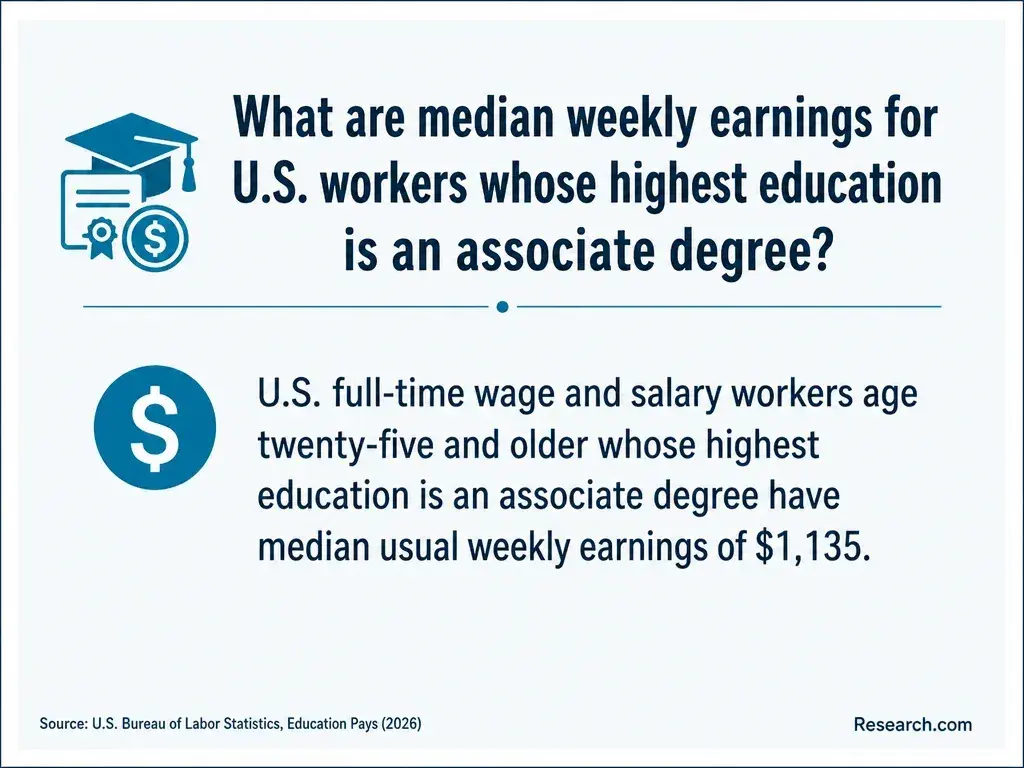
Selection needs careful wording. A volunteer sample may differ from the eligible population and limit generalizability without necessarily biasing the exposure-outcome association within volunteers. Internal bias becomes a concern when selection also distorts that comparison. This matters when reading graduate earnings surveys: respondents may not represent all graduates, so a reported figure should not automatically be treated as an individual outcome. The distinction is useful when reviewing an MPH salary and career earnings outlook as well as when assessing health studies.
How does confounding distort associations in public health research?
Confounding mixes the exposure's possible effect with the effects of other causes of the outcome. In the exercise-program study, baseline health, access to safe places to exercise, and prior activity might influence both enrollment and subsequent diabetes risk. Comparing participants with nonparticipants without considering those differences could credit the program for a lower risk that existed partly before enrollment.
A plausible confounder must be assessed for its role in the specific causal question, not selected solely because it predicts the outcome. An outcome predictor unrelated to exposure need not confound that comparison. Conversely, adjusting for a factor caused by program participation - such as later activity - could remove part of the effect the student intended to estimate. Unmeasured or poorly measured baseline factors can leave residual confounding after adjustment.
The same reasoning applies to education-outcome comparisons. Prior experience and career goals may affect both the decision to pursue a doctorate and later work, so a difference between degree holders is not, by itself, a degree effect. Readers considering doctoral public health study costs and career directions should treat career comparisons as context, not causal estimates of a credential's return.
Start with the study's design and timing, not a list of statistically significant variables. A simple causal diagram can show whether a candidate variable precedes exposure, lies on a pathway from exposure to outcome, or determines entry into the analyzed sample. The diagram is a statement of assumptions to scrutinize, not proof that every relevant cause was measured.
For a class paper or proposed analysis, this sequence makes the two threats easier to locate:
- State the eligible population, exposure, comparison, outcome, follow-up window, and effect you want to estimate.
- Trace who was eligible, recruited, measured, retained, and excluded from the final denominator; compare available characteristics across those stages.
- Draw the assumed relationships among pre-exposure causes, exposure, outcome, and selection or missingness indicators.
- Check when each variable was measured and whether it could instead be a consequence of exposure or an early manifestation of the outcome.
- Document what remains unknown, including unmeasured causes of participation, loss to follow-up, and outcome risk.
Baseline tables and loss-to-follow-up summaries can reveal warning signs, but similar measured groups do not rule out unmeasured bias. Students who need foundational study-design and data-literacy coursework can examine online public health bachelor's curriculum and formats; a general introductory course should not be mistaken for advanced causal-inference training.
For confounding, design options include restriction and matching on justified pre-exposure factors. Analysis options include stratification, outcome regression, standardization, and propensity-score approaches. Each depends on measuring the relevant confounders adequately and retaining comparable exposed and unexposed people. A sophisticated model cannot remove confounding by a cause that was never captured.
For selection bias, prevention is often stronger than repair: define eligibility consistently, recruit across exposure groups, improve follow-up, and record why observations are missing. Inverse-probability-of-selection weighting can sometimes recover a target-population comparison by giving greater weight to people less likely to be observed. It requires credible models for observation, measured drivers of selection, and a positive chance of observation for the groups being represented. Multiple imputation can address some missing-data problems under its assumptions; it does not automatically cure selection bias.
Methods can interact. Conditioning on a collider - a variable affected by two other variables - may introduce an association, even when the intent was to control bias. Before reporting a result, compare the crude and adjusted estimates, inspect model specification and extreme weights, and explain sensitivity to plausible unmeasured factors. If a student needs one supervised analysis rather than a whole credential, a targeted course or research project may be more efficient than choosing among low-tuition online MPH options solely to learn these techniques.
An introductory epidemiology course should establish study designs, incidence and prevalence, measures of association, and common threats to validity. The next useful step is a study-design or intermediate epidemiology course that examines recruitment, sampling, loss to follow-up, confounding, and temporality in actual papers. Advanced causal-inference coursework may add directed acyclic graphs, counterfactual reasoning, propensity methods, weighting, and sensitivity analysis.
Biostatistics and data-management courses matter too: a student must be able to define denominators, inspect missingness, fit and check models, and communicate uncertainty. Course titles vary, so examine syllabi and assessments. A course that mentions "bias" in a lecture is different from one requiring students to justify an adjustment set and critique selection assumptions using data.
If a prerequisite or methods gap prevents enrollment in the desired sequence, ask whether the program accepts approved preparatory coursework before or after admission. Options for public health graduate entry without reference letters address a different application obstacle; they do not replace the quantitative preparation needed for advanced analysis.
An MPH generally places epidemiologic reasoning within professional population-health practice. Students may apply study appraisal and analysis to surveillance, program evaluation, or a supervised applied experience. An epidemiology or biostatistics MS may devote more room to research design, mathematical or statistical methods, and a thesis or other research work. These are common orientations, not guarantees about any particular curriculum.
For this skill, compare the work students actually produce: a causal diagram, a reproducible analysis, a critique of recruitment and missingness, and an explanation of assumptions to a nontechnical audience. Ask who supervises that work and whether students can access an appropriate dataset. Restricted health records require authorization and privacy safeguards; enrollment alone does not confer access.
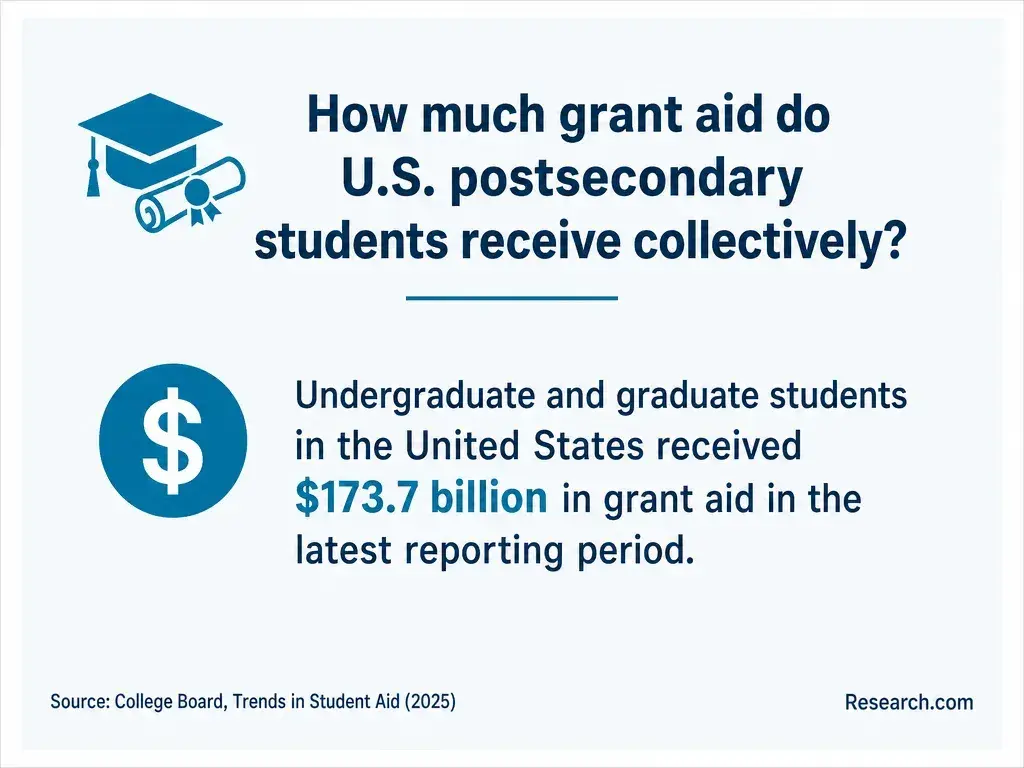
Cost and format matter only after confirming the methods sequence. For online options, compare required live sessions, software access, supervision, and the full price after verified aid rather than headline tuition. A guide to online MPH net tuition after scholarships can help frame that comparison, but aid eligibility and awards must be checked with each school.
First confirm institutional accreditation and, if CEPH accreditation matters to your goals, check the accreditor's listing for the exact school, unit, or program and degree. Institutional accreditation and CEPH accreditation are distinct; neither establishes that a particular causal-inference elective is offered or available to your cohort.
Then inspect course schedules, prerequisites, faculty expertise, research supervision, and opportunities to work with responsibly governed data. Ask whether the program teaches students to distinguish target-population inference from analysis of a convenient sample, and whether its project requirements permit a feasible observational-study critique or analysis. For an online program, verify live-session expectations and how feedback on methods work is delivered.
A prospective student whose goal is original methodological research may also compare public health PhD costs and program choices. A PhD is not required to recognize selection bias or conduct a well-supervised master's analysis; advisor fit, funding, and the research question become more important if doctoral work is the actual goal.
Requirements vary by school and degree. Applicants generally need an accepted prior degree and program-specified application materials; an MS with intensive quantitative work may expect more statistics, calculus, programming, or research preparation than a practice-oriented MPH. Schools differ in their policies on grades, tests, experience, references, and completion of outstanding prerequisites. Read the requirements for the exact program and entry term rather than assuming a universal MPH or MS standard.
For someone entering from another discipline, prior clinical, social science, computing, community, or laboratory work can demonstrate relevant preparation, but it does not automatically satisfy a named prerequisite. Assemble transcripts and syllabi for potentially equivalent courses, then ask admissions staff which requirements are mandatory, which preparation is recommended, and whether a course can be completed before enrollment. If grades are the obstacle, guidance on public health master's admission workarounds for GPA gaps may help identify questions to ask; only the program can decide whether later coursework or an exception is acceptable.
What careers use skills in epidemiology and observational research?
Epidemiologists, research analysts, health-department surveillance staff, and program evaluators use these skills to decide whether an observed pattern supports a public health conclusion. Their tasks differ: a surveillance role may emphasize consistent case definitions and denominators, while an evaluation role may focus on who took part in a program and why outcomes differ between groups. Job titles alone do not show the depth of causal analysis expected.
For an early-career applicant, a credible work sample is more useful than saying "I know regression." A supervised project can demonstrate a defined population, a defensible exposure-outcome comparison, an account of recruitment and missingness, a justified adjustment strategy, and limitations stated plainly. Do not share identifiable or restricted data in a portfolio without authorization. More independent study leadership generally requires experience beyond coursework; employer qualifications vary.
If an entry-level data or evaluation role is the immediate target, supervised work and a focused methods course may be sufficient preparation without a new degree. If a master's program is the better fit but prior coursework is incomplete, investigate addressing prerequisite gaps before MPH enrollment and verify the school's conditions before committing.
Other Things You Should Know About Public Health
No. It can be a clue, but model choice, selection, measurement error, and the behavior of measures such as odds ratios can also affect the estimates. Interpret the change alongside a defensible causal model.
No. A well-chosen negative control can reveal a pattern inconsistent with the proposed causal explanation, but a reassuring result does not prove that selection or unmeasured confounding is absent.
Often, yes. Showing both helps readers see what adjustment changed, provided the paper explains why variables were selected and does not present either estimate as automatically causal.
No. Ask the institution and data holder about human-subjects review, data-use permission, and privacy requirements before accessing or presenting information. A classroom assignment does not itself determine the applicable oversight.
- A Potential Outcomes Approach to Selection Bias - PMC https://pmc.ncbi.nlm.nih.gov/articles/PMC11340682/
- Chapter 6: Methods to address bias and confounding - ENCePP https://encepp.europa.eu/encepp-toolkit/methodological-guide/chapter-6-methods-address-bias-and-confounding_en
- Colliding with Collider Bias: Implications for Precision Public Health | Blogs | CDC https://blogs.cdc.gov/genomics/2022/05/09/colliding-with-collider/
- Causal diagrams to evaluate sources of bias - NCBI https://www.ncbi.nlm.nih.gov/books/NBK612863/
- Illustrating bias due to conditioning on a collider | oup.com https://academic.oup.com/ije/article/39/2/417/680407
- Reducing bias through directed acyclic graphs - Springer Nature https://link.springer.com/article/10.1186/1471-2288-8-70
- Inverse Probability Weighting | Columbia University Mailman School of Public Health https://www.publichealth.columbia.edu/research/population-health-methods/inverse-probability-weighting
- How to investigate and adjust for selection bias in cohort studies | wiley.com https://obgyn.onlinelibrary.wiley.com/doi/10.1111/aogs.13319
- Tutorial on directed acyclic graphs | jclinepi.com https://www.jclinepi.com/article/S0895-4356(21)00240-7/pdf