2027 Physics Career Paths With the Best Advancement Potential

Co-Founder and Chief Data Scientist
Choosing a physics career is really a decision about how far you want to move into research, technology, leadership, or applied problem-solving. The U. S. Bureau of Labor Statistics projects employment for physicists and astronomers to grow 7% from 2023 to 2033, which signals steady demand but also strong competition for top roles.
This guide is for students, career changers, and early-career scientists comparing physics pathways. You will learn which tracks offer the best advancement potential, what degrees help most, and how to choose a program that keeps future options open.
Key Things You Should Know
- The strongest advancement paths for physics graduates are usually applied R&D, data science and AI, quantum technology, semiconductors, aerospace and defense, medical physics, and computational science because they combine technical depth with business or mission-critical outcomes.
- Median pay varies widely by role: BLS May 2024 data lists physicists at $166,290, computer and information research scientists at $140,910, and data scientists at $112,590, but location, clearance status, degree level, and industry can change outcomes significantly.
- A bachelor's degree can open technical entry roles, but master's and PhD pathways usually create more room for senior scientist, principal investigator, faculty, medical physicist, or research leadership positions.
What physics career paths offer the strongest long-term advancement and leadership potential?
The physics career paths with the strongest long-term advancement potential are the ones where scientific modeling, experimentation, computation, and technical judgment influence expensive or high-stakes decisions. In practice, that often means moving beyond "physicist" as a job title and into industries that need physics-trained professionals to lead product development, research strategy, risk analysis, instrumentation, or complex systems work.
Physics advancement usually follows one of three tracks: technical expert, research leader, or people/program manager. The best path depends on whether you want to stay hands-on with science, lead teams, or translate physics into commercial, clinical, national security, or computing applications.
The table below compares major physics-related paths by role focus and advancement potential. Use it to identify which options match your preferred work style, degree plans, and tolerance for long training timelines.
| Career path | Typical work | Best advancement route | Who it fits best |
| Applied or industrial physicist | Designs experiments, develops instruments, models materials, or improves advanced products | Senior scientist, principal scientist, R&D director, technology fellow | Students who want physics-heavy work without relying only on academic jobs |
| Quantum scientist or quantum engineer | Works on quantum computing, sensing, communications, photonics, or cryogenic systems | Technical lead, quantum architecture lead, research manager | Students comfortable with advanced math, computing, and graduate-level physics |
| Medical physicist | Supports radiation therapy, imaging, dosimetry, machine quality assurance, and patient-safety systems | Board-certified clinical physicist, chief physicist, radiation oncology leadership | Students who want a regulated healthcare path with clear credential expectations |
| Data scientist or AI researcher | Builds models, analyzes large datasets, develops algorithms, and applies statistical learning | Senior data scientist, machine learning lead, AI research manager, analytics director | Physics graduates who enjoy coding, probability, modeling, and business impact |
| Computational physicist or simulation scientist | Uses high-performance computing, numerical methods, and simulation to solve scientific or engineering problems | Principal computational scientist, modeling group lead, technical program manager | Students who like programming as much as theory or lab work |
| Semiconductor, optics, or materials specialist | Improves devices, fabrication processes, sensors, lasers, materials, or metrology systems | Process development lead, device physicist, product R&D manager | Students interested in hardware, manufacturing, nanotechnology, and commercialization |
| Aerospace, defense, or national lab scientist | Works on space systems, detection, plasma, nuclear, hypersonics, sensors, or classified technology | Staff scientist, program lead, lab group leader, mission manager | Students who can meet clearance, citizenship, or security requirements when required |
| Professor or academic researcher | Teaches, publishes research, advises students, wins grants, and leads a research group | Tenure-track faculty, full professor, center director, department chair | Students who accept a long PhD and postdoctoral path with competitive hiring |
For advancement, applied physics roles often move faster than traditional academic tracks because employers can promote people who solve operational problems, lead funded projects, or develop revenue-generating technologies. Academic careers can offer prestige and intellectual independence, but the path is narrower and typically requires a PhD, publications, grants, and postdoctoral experience.
A common mistake is choosing a career path based only on a favorite undergraduate course. A better approach is to compare the day-to-day work: writing code, aligning optics, building experiments, managing clinical safety, supervising engineers, publishing papers, or translating technical risk for executives. Advancement usually favors people who can connect physics expertise to institutional goals.
Which physics-related industries currently have the best job growth and promotion opportunities?
The best industries for physics advancement are those investing in advanced technology, national priorities, healthcare infrastructure, and data-intensive decision-making. These industries tend to reward physicists who can combine theory, computation, instrumentation, and communication.
BLS 2023-2033 projections published in 2024 show especially strong growth for data scientists at 36% and computer and information research scientists at 26%. For physics students, this matters because the fastest-growing opportunities may sit in adjacent roles where physics training is valuable but the job title is not "physicist."
The table below summarizes industries where physics skills commonly translate into promotion potential. It focuses on U.S. career relevance rather than ranking industries by prestige.
| Industry | Why physics skills matter | Promotion opportunities | Important trade-off |
| AI, analytics, and scientific computing | Physics graduates bring modeling, statistics, numerical methods, and problem decomposition | Data science lead, ML scientist, AI product lead, research manager | You must build strong software, statistics, and deployment skills |
| Quantum technology | Quantum mechanics, optics, cryogenics, and device physics are central to the field | Quantum researcher, systems lead, architecture lead, technical director | Many roles require graduate training and the market is still developing |
| Semiconductors and photonics | Device physics, materials, lasers, metrology, and process control are core business needs | Senior process engineer, device physicist, R&D manager | Work may be tied to manufacturing schedules and specific geographic hubs |
| Aerospace and defense | Physics supports sensors, propulsion, space systems, materials, detection, and modeling | Principal scientist, systems lead, program manager, lab director | Some jobs require security clearance or U.S. citizenship |
| Healthcare and medical technology | Radiation, imaging, dosimetry, instrumentation, and safety systems rely on applied physics | Clinical physicist, chief physicist, medical device R&D leader | Clinical medical physics has strict education, residency, and board-certification expectations |
| Energy, nuclear, and climate technology | Plasma, materials, radiation, fluid dynamics, sensors, and modeling support energy systems | Research scientist, safety lead, energy systems manager | Hiring can depend heavily on policy, funding, and regional infrastructure |
| Higher education and research institutes | Physics expertise supports teaching, grant-funded research, and student training | Professor, center director, department chair, research administrator | The path is highly competitive and often slower than industry advancement |
Current trends make hybrid skills especially valuable. AI is changing how experiments are analyzed, simulations are accelerated, and scientific literature is searched. Quantum and semiconductor employers need people who can work across physics, engineering, and software. Healthcare employers value physicists who can combine patient-safety standards with technical troubleshooting. These trends do not remove the need for physics depth, but they do raise the value of cross-disciplinary fluency.
What are the most common degree pathways for advancing in physics careers?
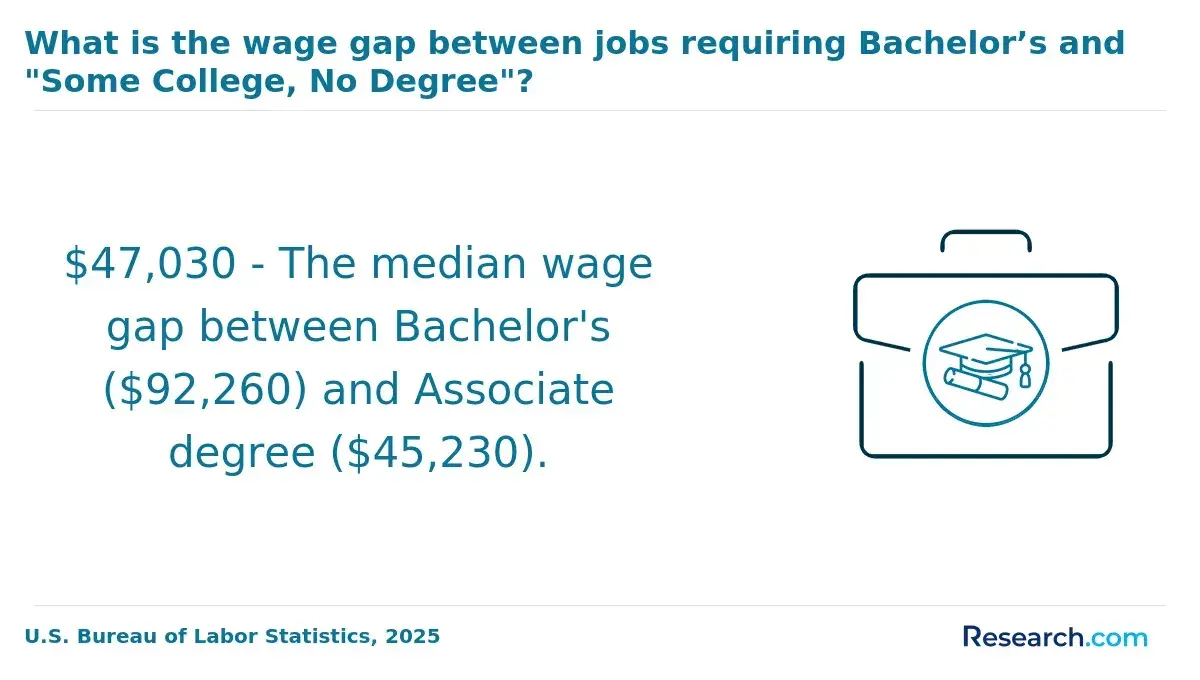
The most common degree pathway is a bachelor's degree in physics followed by either direct entry into technical work or graduate study in physics, engineering, data science, computer science, medical physics, or a related quantitative field. The key decision is whether you want to become a physics specialist, use physics as a launchpad into applied technology, or move toward management.
Students who want flexibility should choose programs with strong math, lab, coding, and research opportunities. If you discover that software or computing roles fit your goals better than lab science, an online CS degree can be a practical adjacent pathway, especially for learners who already have physics credits and want to shift into software-intensive work.
The table below compares degree routes by purpose. It can help you decide whether to stop after a bachelor's degree, pursue graduate school, or combine physics with a more applied discipline.
| Degree pathway | Typical duration | Career purpose | Best fit |
| Bachelor's in physics | About 4 years full time | Foundation in mechanics, electromagnetism, quantum physics, math, lab work, and computation | Students seeking technical entry roles, graduate school preparation, or broad quantitative training |
| Bachelor's in engineering physics or applied physics | About 4 years full time | Connects physics theory to engineering design, devices, materials, or systems | Students who want industry-facing roles sooner |
| Master's in physics, applied physics, or engineering | Often 1.5 to 3 years | Builds specialized technical capability and may improve access to R&D roles | Students who want advancement without committing to a long PhD |
| Master's in data science, computer science, or computational science | Often 1 to 3 years | Translates physics training into analytics, AI, software, or simulation careers | Physics graduates who prefer coding, modeling, or tech-sector mobility |
| CAMPEP-accredited medical physics graduate program | Often 2 to 6+ years depending on MS or PhD route | Prepares students for medical physics residency and board certification | Students targeting clinical radiation oncology, imaging, or nuclear medicine physics |
| PhD in physics or a related field | Commonly 5 to 7+ years | Prepares for independent research, faculty roles, national labs, and senior R&D positions | Students committed to deep specialization and original research |
Before choosing a pathway, compare your target role with actual job postings. Look for repeated requirements such as Python, C++, MATLAB, vacuum systems, optics, finite element modeling, machine learning, cleanroom experience, radiation safety, or grant-writing. If a requirement appears across many postings, build it into your academic plan early.
How do bachelor's, master's, and PhD physics degrees affect career progression?
Bachelor's, master's, and PhD physics degrees affect career progression differently because employers use them as signals of independence, specialization, and readiness for complex work. A bachelor's degree can prove quantitative strength, but advanced roles often require evidence that you can design methods, lead research, or own technical decisions with limited supervision.
A bachelor's degree in physics is strongest when paired with internships, undergraduate research, programming, and applied electives. Graduates may start in roles such as laboratory technician, research assistant, engineering technician, data analyst, software developer, quality analyst, or technical sales engineer. Advancement from this level often depends on adding workplace-specific expertise or completing graduate education.
A master's degree can be a strong option for students who want higher technical responsibility but do not need an academic research career. It can support movement into applied physics, optics, data science, instrumentation, engineering analysis, technical product work, or management-track roles. The trade-off is cost: a master's can improve positioning, but it should be evaluated against the specific job market you plan to enter.
A PhD is most valuable when your goal requires original research, independent scientific judgment, or leadership in a specialized field. It is often expected for faculty positions, many national lab roles, principal scientist positions, and advanced research groups. For physics graduates moving toward AI research or large-scale modeling, a data science PhD online may be worth comparing with traditional physics PhD options if the target roles emphasize computational research rather than laboratory physics.
The degree progression below shows how credentials typically affect responsibility. These are common patterns, not guarantees, because employer expectations vary by industry, location, funding, and specialization.
| Degree level | Typical early roles | Advancement ceiling without added credentials | Best way to increase mobility |
| Bachelor's | Lab assistant, data analyst, technician, software-adjacent analyst, research support | May hit limits in research leadership or specialized scientist roles | Add internships, coding portfolio, research experience, or a technical master's |
| Master's | Applied scientist, data scientist, optical engineer, systems analyst, medical physics trainee route | Can reach senior applied roles, but some research leadership roles may prefer PhD holders | Specialize in high-demand tools and document project impact |
| PhD | Research scientist, postdoctoral researcher, national lab scientist, advanced R&D scientist | Strong access to research leadership, but advancement still depends on output and collaboration | Build grants, publications, patents, cross-functional leadership, or product impact |
The biggest mistake is assuming that "more degree" always means "better outcome." A PhD can be powerful for research leadership, but it may be unnecessary for some data, software, product, or engineering management paths where experience and project results carry more weight.
What skills and specializations help physicists move into senior or management roles?
Physicists move into senior and management roles by combining technical depth with repeatable evidence of impact. Employers promote people who can solve ambiguous problems, communicate risk, mentor others, and turn technical findings into decisions.
The most advancement-friendly skills fall into several categories. Build these intentionally through coursework, research, internships, and documented projects.
- Computing skills: Python, C++, MATLAB, numerical methods, version control, high-performance computing, data pipelines, and reproducible analysis.
- Modeling and statistics: uncertainty analysis, Bayesian reasoning, machine learning, simulation, optimization, experimental design, and model validation.
- Instrumentation and lab skills: optics, electronics, vacuum systems, cryogenics, detectors, radiation measurement, spectroscopy, cleanroom procedures, and safety protocols.
- Communication skills: technical writing, presentations, grant proposals, documentation, stakeholder updates, and translating complex findings for non-specialists.
- Leadership skills: mentoring, project planning, budgeting, vendor coordination, regulatory awareness, conflict management, and cross-functional decision-making.
Specialization matters because physics is broad. A focused specialty helps employers understand where you can contribute immediately, while broader communication and leadership skills help you advance after you are hired.
| Specialization | Advancement advantage | Common senior roles |
| Quantum information and photonics | Supports emerging hardware, sensing, communications, and computing platforms | Quantum systems lead, photonics R&D manager |
| Computational physics and simulation | Applies across aerospace, climate, energy, materials, defense, and AI-assisted modeling | Principal simulation scientist, modeling director |
| Medical physics | Connects physics expertise to regulated clinical care and patient safety | Chief physicist, clinical physics director |
| Materials and semiconductor physics | Supports device development, process control, metrology, and advanced manufacturing | Device physicist, process development manager |
| Plasma, nuclear, and energy systems | Supports fusion, radiation, power systems, defense, and energy research | Research group lead, safety or systems manager |
| Data science and AI | Turns physics modeling strengths into scalable business, scientific, and automation tools | Lead data scientist, AI research manager |
Some physics graduates also build careers around scientific information systems, research data stewardship, archives, scholarly communication, or academic technology administration. If that direction appeals to you more than lab or R&D leadership, a masters in library science can be a relevant alternative credential for roles involving research information infrastructure.
A red flag is relying only on grades or theory courses to prove readiness. Senior roles usually require a portfolio of outcomes: code repositories, publications, conference talks, patents, validated models, instrument builds, clinical competencies, or measurable project results.
How do online physics and related programs compare to campus options for career advancement?
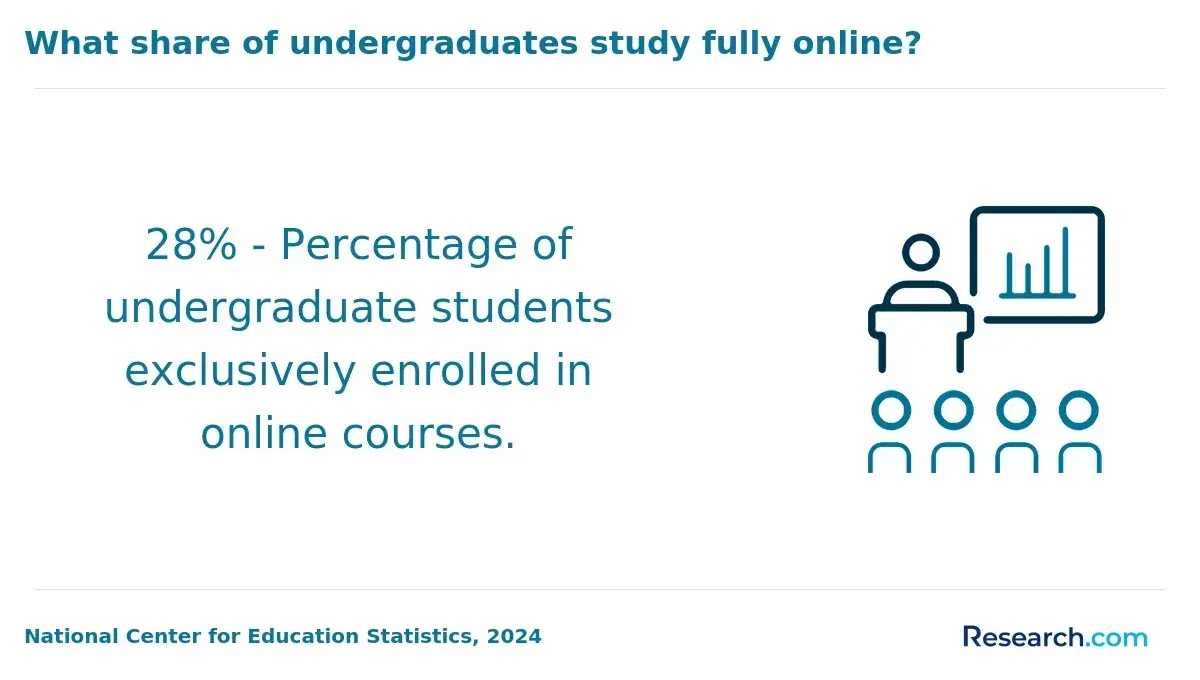
Online physics and related programs can support career advancement, but they are not interchangeable with campus programs. Physics depends heavily on laboratories, research mentorship, instrumentation, and faculty networks, so fully online options are more common in adjacent fields such as data science, computer science, engineering management, analytics, or education.
Online study can be especially useful for working adults who already have a physics background and want to pivot into analytics or computing. If affordability is central to your decision, comparing the cheapest online data science masters options can help you evaluate whether an applied quantitative degree offers a better cost-to-flexibility trade-off than a traditional campus graduate program.
The table below compares online and campus formats for physics-related advancement. Use it to decide which format fits your career goal rather than assuming one format is always superior.
| Program format | Strengths | Limitations | Best fit |
| Campus physics program | Stronger access to labs, equipment, research groups, seminars, and faculty mentorship | Less flexible for working adults and often tied to relocation or commuting | Students targeting PhD research, lab-heavy work, medical physics preparation, or academic careers |
| Online physics-related program | Flexible scheduling and stronger access for working professionals | May not provide enough hands-on lab or research experience for certain physics roles | Students shifting into data science, software, analytics, teaching, or technical management |
| Hybrid program | Combines online coursework with campus labs, residencies, or research experiences | Travel requirements can add cost and scheduling complexity | Students who need flexibility but still want supervised technical experiences |
| Certificate or short program | Fast way to add coding, machine learning, radiation safety, project management, or cloud skills | Usually not a substitute for a degree in research-heavy fields | Professionals filling a specific skill gap for promotion or career pivoting |
Before enrolling online, ask whether the program includes live faculty access, substantial projects, employer-recognized coursework, career support, and opportunities to produce portfolio evidence. For clinical medical physics, engineering licensure, or research-intensive goals, confirm that the online format satisfies any accreditation, residency, lab, or employer expectations before you commit.
What are typical salaries and earning growth for physics careers over time?
Physics careers can offer strong earning growth, but salaries vary because physics graduates enter many occupations rather than one standardized job ladder. The highest long-term earnings often come from roles that combine physics expertise with software, leadership, regulated healthcare, defense programs, patents, or high-value R&D.
BLS May 2024 wage data provides a useful baseline for comparing related occupations. These are national medians, so they should be used as reference points rather than predictions for any individual graduate.
| Occupation | Median annual wage, May 2024 | What the figure means for physics graduates |
| Physicists | $166,290 | Reflects specialized roles that often require advanced training and are concentrated in research, government, and industry |
| Computer and information research scientists | $140,910 | Relevant for physics graduates who move into algorithms, AI research, simulation, or advanced computing |
| Nuclear engineers | $125,460 | Relevant for physics students who specialize in nuclear systems, radiation, energy, or related engineering environments |
| Data scientists | $112,590 | Relevant for physics graduates who translate modeling and statistical skills into business, scientific, or technical analytics |
| Medical scientists, except epidemiologists | $100,590 | Relevant for physics graduates working in biomedical research, imaging, radiation, or medical technology settings |
Earning growth usually comes from moving through responsibility levels rather than simply accumulating years of experience. Early roles often focus on analysis, lab support, coding, or experiments. Mid-career professionals may own models, instruments, product modules, safety systems, or research workstreams. Senior professionals often lead teams, budgets, proposals, clinical programs, technical strategy, or patent-producing R&D.
To evaluate salary potential realistically, compare job postings in your target region and industry. Look at degree requirements, security clearance needs, required tools, travel expectations, and whether the employer promotes technical experts without forcing them into people management.
What is the job outlook for major physics career tracks in the United States?
The U.S. job outlook for physics career tracks is strongest where physics overlaps with computing, healthcare, advanced manufacturing, and government-funded research. Traditional physicist and astronomer roles are growing, but the broader opportunity set is larger when students include adjacent occupations.
The table below uses BLS 2023-2033 employment projections published in 2024. These projections describe occupation-level growth, not guaranteed outcomes for any degree program or individual graduate.
| Career track | Projected U.S. employment growth, 2023-2033 | What it means for advancement planning |
| Data scientists | 36% | Strong growth makes analytics and AI one of the most flexible pivots for physics graduates with programming and statistics skills |
| Computer and information research scientists | 26% | Advanced computing, AI, and algorithms can be strong options for physics graduates with graduate-level research ability |
| Medical scientists | 11% | Biomedical research and medical technology can reward physics graduates who build healthcare, imaging, or instrumentation expertise |
| Physicists and astronomers | 7% | Growth is steady, but many top research roles remain competitive and may require graduate education |
| Postsecondary teachers | 8% | Academic teaching opportunities exist, but tenure-track physics roles are more competitive than the broad category suggests |
| Nuclear engineers | 1% | Growth is limited overall, so specialization, location, and employer type are especially important |
Readers should interpret outlook data alongside hiring conditions. A fast-growing occupation may still require a strong portfolio and technical screening. A slower-growing field may still offer excellent careers if it has specialized employers, retirements, government funding, or high barriers to entry.
The safest advancement strategy is to avoid a single-track plan. Physics students should build a primary direction, such as medical physics or quantum technology, and a transferable backup skill set, such as programming, data analysis, technical writing, or systems engineering.
How do certifications, licenses, and professional memberships support advancement in physics?
Certifications, licenses, and professional memberships can support advancement by proving specialized competence, expanding networks, and helping physicists meet employer or regulatory expectations. They are most valuable when they match a specific career path; a random credential rarely offsets weak experience.
The options below are common in physics-related careers. Requirements can change, so students should verify details with the relevant board, employer, or state authority before choosing a program.
| Credential or membership | Relevant career path | How it can support advancement |
| American Board of Radiology or related medical physics board certification | Clinical medical physics | Often important for independent clinical practice, senior hospital roles, and chief physicist positions |
| CAMPEP-accredited education and residency pathway | Medical physics | Supports eligibility for clinical training and board-certification routes |
| Certified Health Physicist | Radiation safety, nuclear facilities, healthcare, government, and industry | Can strengthen credibility for radiation protection and safety leadership roles |
| Professional Engineer license | Engineering physics, nuclear, systems, or regulated engineering work | May matter for roles involving public safety, stamped engineering work, or state-regulated practice |
| Project Management Professional or similar project credential | R&D management, technical program management, defense, aerospace, and product development | Can help technical experts demonstrate readiness to manage timelines, budgets, and teams |
| Cloud, data, or machine learning certifications | Data science, AI, scientific computing, and software-adjacent roles | Can validate applied tools, especially when paired with a portfolio of projects |
| Professional societies such as APS, AAPM, IEEE, Optica, ANS, or SIAM | Physics, medical physics, optics, nuclear, computing, and applied math communities | Provide conferences, publications, networking, job boards, leadership roles, and continuing education |
Use credentials strategically. A medical physics student should prioritize accreditation, residency preparation, and board eligibility. A data-focused physicist should prioritize demonstrable projects, coding tests, and applied machine learning tools. A physicist moving into management may benefit more from project leadership evidence than from another technical certificate.
The most common mistake is collecting credentials without a target role. Before paying for a certification, review job postings and ask whether employers request it, prefer it, or ignore it. If postings emphasize experience, build a project or internship instead.
How can students choose accredited physics programs that maximize future advancement options?
Students should choose accredited physics programs by starting with the career outcome they want, then working backward to the degree level, format, research access, and cost structure that fit that outcome. Accreditation matters because it affects credit transfer, graduate admissions, federal financial aid eligibility, and employer confidence.
For standard physics degrees, look first for institutional accreditation from an agency recognized by the U.S. Department of Education or the Council for Higher Education Accreditation. For engineering physics or engineering-heavy routes, ABET accreditation may matter. For medical physics, CAMPEP accreditation is especially important because it can affect residency and board-certification pathways.
Cost should be evaluated as total investment, not just tuition. College Board's 2024 pricing data lists average published tuition and fees for public four-year in-state students at $11,610 and private nonprofit four-year students at $43,350 for 2024-2025, before room, board, aid, and program-specific costs. That gap makes scholarships, assistantships, transfer credits, and graduate funding essential parts of the decision.
Use the following steps to compare programs in a practical way. The goal is to avoid choosing a school that looks strong on paper but does not support your actual advancement path.
- Define your target career track, such as medical physics, data science, quantum technology, semiconductors, teaching, or national lab research.
- Check institutional accreditation, and then verify any programmatic accreditation needed for engineering, medical physics, or licensure-linked goals.
- Review the curriculum for advanced math, programming, laboratory work, statistics, technical writing, and electives tied to your target field.
- Look for research access, internships, co-ops, capstone projects, undergraduate research funding, or partnerships with hospitals, labs, agencies, or technology employers.
- Ask for outcome evidence, including graduate school placement, employer examples, assistantship availability, career services, and alumni roles.
- Calculate total cost after aid, fees, housing, relocation, equipment, travel, and lost income if you plan to study full time.
- Compare flexibility, transfer policies, faculty access, lab requirements, and whether online or hybrid formats align with your career goal.
Red flags include vague accreditation language, limited lab access for lab-heavy goals, no clear faculty research areas, weak career placement information, few advanced electives, and admissions teams that promise salary outcomes. A strong program should help you understand both opportunities and limitations.
Other Things You Should Know About Physics
Yes, physics can be a strong major for advancement if you pair it with applied skills such as programming, data analysis, instrumentation, engineering, or communication. The degree is broad, so students should build a clear career direction before graduation.
High salary potential often appears in applied R&D, technology, medical physics, defense, AI, scientific computing, and senior research leadership. Actual pay depends on degree level, region, employer, specialization, and whether the role includes management or high-value technical ownership.
Students should learn programming, complete research or internship experiences, build a project portfolio, practice technical communication, and compare job postings before choosing electives or graduate programs. These steps make the degree more marketable and reduce the risk of a narrow path.
References
- Physics Employment Facts https://www.compadre.org/careers/facts.cfm
- Atlantic Cape Community College Libraries: Physics: Professional Associations https://library.atlanticcape.edu/physics-guide/associations
- Frequently Asked Questions https://www.saintmarys.edu/academics/departments/physics/why
- Green Jobs For Physics Majors | APS Physics Jobs https://www.apsphysicsjobs.com/article/green-jobs-for-physics-majors/
- Membership https://comp-ocpm.ca/english/membership-services/member-benefits.html
- Professional Certification (PPhys) https://cap.ca/programs/pphys-certification/