2027 Online Physics Degrees With Real-World Applied Science Projects

Co-Founder and Chief Data Scientist
Choosing an online physics degree is harder than comparing tuition: you need to know whether the labs, projects, accreditation, and career outcomes match your goals. Physics remains relevant because applied science skills support semiconductors, aerospace, data analysis, energy, medical technology, and AI-enabled research. The U. S. Bureau of Labor Statistics reported a 2024 median annual wage of $166,290 for physicists, showing why advanced quantitative training can matter. This guide helps prospective bachelor's and master's students compare online physics options, understand real-world project work, and decide whether this path is the right investment.
Key Things You Should Know
- Online physics degrees are available but uncommon; students should verify institutional accreditation, lab delivery, transfer policies, and whether the degree is physics, applied physics, engineering physics, or a related natural science program.
- Applied science projects often include sensor systems, computational modeling, optics experiments, materials testing, electronics, data analysis, and capstone work that can be shown in a portfolio.
- College Board's 2024-25 published tuition and fees averaged $11,610 for in-state public four-year colleges, $30,780 for out-of-state public colleges, and $43,350 for private nonprofit four-year colleges.
What is an online physics degree with real-world applied science projects?
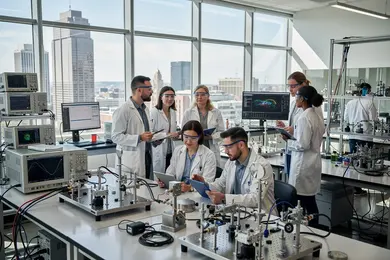
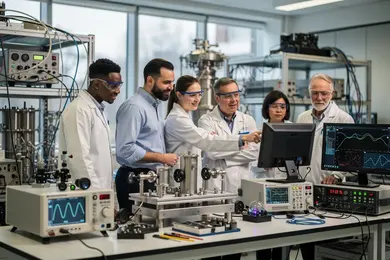
An online physics degree with real-world applied science projects is a bachelor's or master's program that teaches core physics while requiring students to apply concepts to practical problems. Instead of studying only theory, students may build circuits, analyze experimental data, model physical systems, test materials, simulate motion, or complete a capstone project for a research, engineering, education, or technology use case.
The phrase applied science projects matters because it signals a career-oriented curriculum. Pure physics programs often emphasize mathematical theory, laboratory methods, and preparation for graduate research. Applied physics or project-focused programs usually connect physics to devices, instruments, software, manufacturing, healthcare technology, aerospace, defense, energy, or data-heavy technical roles.
Online physics degrees tend to fit students who want strong quantitative training but need scheduling flexibility. They may be especially useful for working adults, military-affiliated learners, transfer students, teachers seeking deeper science preparation, or students planning to combine physics with engineering, computing, or analytics.
The main trade-off is access to physical laboratories. A strong online program should explain exactly how lab work is completed, whether through at-home lab kits, remote instrumentation, simulations, short campus residencies, local proctoring, or hybrid lab intensives. If a program cannot clearly describe how students develop experimental skills, it may not be the best choice for applied science careers.
This table clarifies the most common online degree types so readers can match the credential to their career goal rather than relying only on the word "physics."
| Program type | Typical level | Best fit | Important limitation |
| Online BS or BA in Physics | Bachelor's | Students seeking broad preparation in mechanics, electromagnetism, quantum physics, thermal physics, and lab methods | May require advanced math sequencing and carefully planned labs |
| Online Applied Physics Degree | Bachelor's or master's | Students targeting optics, instrumentation, materials, defense, energy, or technical R&D support roles | May be less theory-heavy than a traditional research-focused physics curriculum |
| Online Engineering Physics or Related Engineering Degree | Bachelor's or master's | Students who want physics plus design, systems, electronics, or engineering applications | Programmatic accreditation expectations may differ by employer or licensure goal |
| Online Natural Science Degree with Physics Coursework | Bachelor's | Students interested in teaching, science communication, interdisciplinary science, or transfer-friendly pathways | May not provide enough advanced physics for graduate physics admissions |
How do online physics degrees compare to campus programs in rigor and lab experience?
Online physics degrees can be academically rigorous when they use the same faculty standards, calculus-based coursework, assessment methods, and lab learning outcomes as campus programs. The main difference is not necessarily difficulty; it is how the program delivers experimentation, collaboration, mentoring, and equipment access.
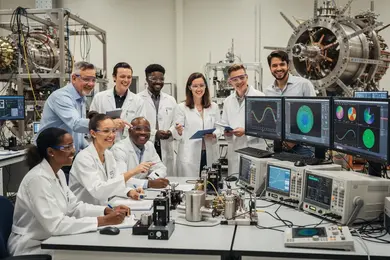
Campus programs usually provide easier access to oscilloscopes, lasers, vacuum systems, detectors, machine shops, and research groups. Online programs must replace or supplement those experiences through structured alternatives. The best online programs are transparent about these alternatives before enrollment.
The following comparison shows where online and campus formats usually differ most. Use it to identify what questions to ask, not to assume one format is always better.
| Factor | Online physics degree | Campus physics degree | Decision point |
| Course rigor | Can match campus rigor when calculus, differential equations, and upper-division physics are required | Typically follows a traditional sequence with in-person exams and seminars | Compare syllabi, prerequisites, and assessment methods |
| Laboratory experience | May use lab kits, simulations, remote labs, local facilities, or short residencies | Usually includes direct access to department labs and equipment | Ask how many courses include hands-on measurement and error analysis |
| Research access | Often more limited, though some programs offer remote computational or data projects | More opportunities for faculty-led lab research | Students aiming for PhD programs should prioritize research access |
| Flexibility | Strong fit for working adults and students far from campus | Less flexible but often richer in daily academic interaction | Choose based on schedule, location, and learning style |
| Networking | Depends on virtual advising, project teams, career services, and alumni engagement | Often easier through clubs, labs, seminars, and internships | Look for required capstones, employer projects, or faculty mentoring |
For applied science careers, the strongest signal is not simply whether the degree was online. Employers and graduate programs often care more about the student's math depth, lab competence, coding ability, project portfolio, internships, recommendations, and ability to explain technical work clearly.
Students should be cautious about programs that rely too heavily on passive video lectures. Physics is a problem-solving discipline, so a credible online program should include frequent graded problem sets, proctored or authenticated assessments, collaborative work, lab reports, data analysis, and faculty feedback.
Which accredited schools offer online physics degrees focused on applied science projects?
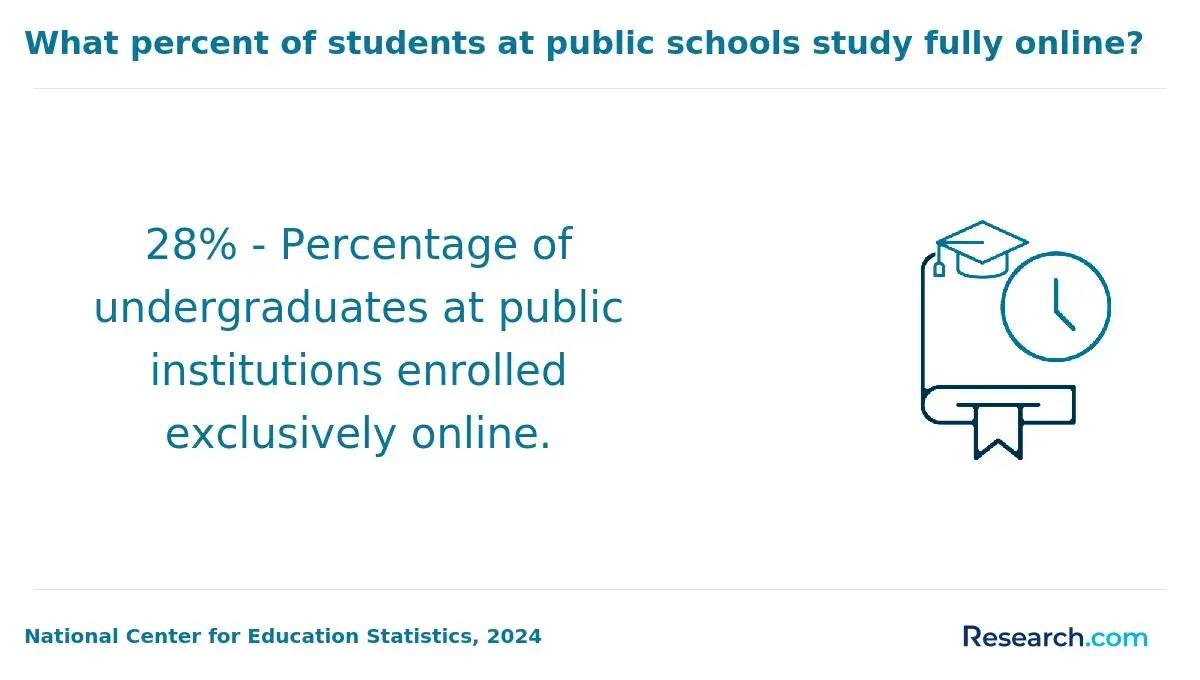
Accredited online physics degree options exist, but they are less common than online degrees in computer science, business, healthcare, or education. In the U.S., students should first look for institutional accreditation from an agency recognized by the U.S. Department of Education or the Council for Higher Education Accreditation. Physics programs themselves do not typically require a separate professional accreditation in the same way that many engineering programs use ABET accreditation.
The table below summarizes examples of U.S. schools and program types that prospective students commonly evaluate when searching for online physics or applied physics study. Because program availability, modality, tuition, and lab requirements can change, students should confirm current details directly with each institution before applying.
| School or program category | Example credential | Applied science relevance | What to verify before enrolling |
| Arizona State University Online | Online bachelor's-level physics study | Useful for students seeking a broad physics foundation with online flexibility | Current lab format, upper-division course availability, transfer credit limits, and graduate school preparation |
| Fort Hays State University | Online bachelor's-level physics pathway | May appeal to transfer students and working adults seeking a physics-focused undergraduate option | Exact degree name, lab expectations, required campus or proctored components, and course rotation |
| Johns Hopkins Engineering for Professionals | Master's-level applied physics study | Strong fit for working professionals interested in optics, systems, instrumentation, space, defense, or R&D-adjacent work | Prerequisite physics and math background, course delivery mode, employer tuition support, and capstone options |
| Regionally accredited universities with online natural science degrees | Natural science, physical science, or interdisciplinary science degrees with physics coursework | May support teaching, technical communication, or science-adjacent careers | Whether the transcript and coursework are sufficient for physics-intensive jobs or graduate programs |
When comparing schools, avoid assuming that the most famous university is automatically the best fit. A less expensive public institution with transparent lab design, transfer-friendly policies, and strong advising may be more practical than a prestigious program that does not align with your schedule or career goal.
Students should also distinguish between physics, applied physics, engineering physics, and physics education. These degrees can overlap, but they may lead to different graduate school options, licensure pathways, and employer expectations.
What courses and hands-on applied science projects are included in online physics curricula?
Online physics curricula usually combine mathematics, foundational physics, laboratory methods, computational tools, and advanced electives. In project-focused programs, students are expected to turn formulas into measurements, models, prototypes, simulations, or technical reports.
Most bachelor's programs start with calculus-based physics and progress into upper-division theory and lab work. Master's programs usually assume prior coursework in mechanics, electromagnetism, quantum mechanics, thermodynamics, and advanced mathematics.
The following table shows common course areas and the types of applied projects that may accompany them. The exact mix depends on the school and degree level.
| Course area | What students learn | Possible applied science project |
| Classical mechanics | Motion, forces, energy, oscillations, and rotational systems | Modeling a drone trajectory, analyzing vibration data, or designing a pendulum-based measurement experiment |
| Electricity and magnetism | Fields, circuits, waves, and electromagnetic behavior | Building and testing a sensor circuit or simulating electromagnetic shielding |
| Modern and quantum physics | Atomic behavior, wave-particle concepts, and quantum systems | Analyzing spectroscopy data or modeling energy levels in a semiconductor material |
| Thermodynamics and statistical physics | Heat, entropy, probability, and energy transfer | Evaluating thermal performance in insulation, battery systems, or heat exchangers |
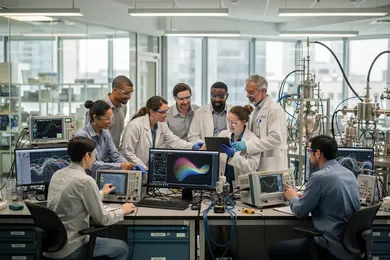
| Computational physics | Numerical methods, coding, simulation, and data visualization | Writing Python or MATLAB code to simulate planetary motion, diffusion, or wave propagation |
| Advanced laboratory or capstone | Experimental design, uncertainty analysis, instrumentation, and reporting | Completing a portfolio-ready project with a formal technical paper and presentation |
Students who want applied science outcomes should look for evidence that the curriculum builds both theory and execution. A strong program will help students practice the following skills through labs, assignments, or capstones:
- Designing experiments with clear variables, controls, measurements, and uncertainty estimates.
- Using computational tools such as Python, MATLAB, Mathematica, LabVIEW, or simulation software.
- Reading technical literature and translating it into a testable model or prototype.
- Writing lab reports, technical memos, and presentations that explain assumptions and limitations.
- Working with electronics, sensors, optics, materials, imaging, or data acquisition when the program's format supports it.
One common mistake is choosing a program that lists interesting electives but offers them infrequently. Before enrolling, ask how often upper-division courses run, whether online students receive priority access, and whether a delayed course could postpone graduation.
What are the admission requirements for online bachelor's and master's physics programs?
Admission requirements depend on degree level. Online bachelor's programs usually focus on high school completion, transfer credits, math readiness, and general university admission standards. Master's programs are more selective because applied physics coursework assumes prior study in advanced math and upper-division physics.
Prospective students should evaluate admissions requirements as a readiness check, not just as a hurdle. If your math background is weak, an online physics degree can become frustrating quickly because later courses build heavily on calculus, differential equations, linear algebra, and programming.
This table summarizes common requirements and what they mean for planning.
| Requirement | Bachelor's programs | Master's programs | Why it matters |
| Prior education | High school diploma, GED, or transfer coursework | Bachelor's degree, often in physics, engineering, math, or a related field | Determines whether you enter at the lower-division or advanced level |
| Math preparation | College algebra, precalculus, or calculus placement may be required | Calculus, differential equations, and linear algebra are commonly expected | Math gaps can slow progress and increase withdrawal risk |
| Science preparation | High school or introductory college physics may help | Upper-division mechanics, electromagnetism, quantum physics, and thermodynamics may be expected | Advanced courses assume fluency with physics concepts and notation |
| Programming experience | Often recommended rather than required | Frequently useful for computational physics and data-heavy projects | Applied science roles increasingly value coding and data analysis |
| Application materials | Transcripts, application form, and possibly test scores depending on school policy | Transcripts, resume, statement of purpose, recommendations, and sometimes GRE scores depending on program policy | Requirements vary, so students should confirm the current admissions checklist |
Students applying with transfer credits should request a preliminary credit evaluation before committing. Physics sequences can be difficult to transfer if courses differ in calculus level, lab contact hours, or topic coverage.
A practical preparation sequence can reduce the risk of struggling in the first year. Students who have been away from math or science should consider the following steps before starting upper-division physics:
- Refresh algebra, trigonometry, and calculus before taking mechanics or electromagnetism.
- Take an introductory programming course in Python or a similar language if the curriculum includes computational physics.
- Review the program's lab requirements and confirm whether you need equipment, software, local proctoring, or travel.
- Ask an advisor whether your target career requires graduate study, teacher licensure, engineering licensure, or additional certifications.
How long do online physics degrees take, and what do they typically cost?
Most online bachelor's degrees in physics require about 120 credits and commonly take four years of full-time study, though transfer students may finish faster. Part-time students often need longer because physics courses are sequential; delaying calculus or a prerequisite lab can push back multiple later courses. Master's programs commonly require roughly 30 or more graduate credits, with timelines that vary by part-time or full-time enrollment.
Cost is highly school-specific, but national tuition benchmarks help students understand the scale of the investment. College Board reported the following average published tuition and fees for 2024-25:
- $11,610 for in-state students at public four-year institutions.
- $30,780 for out-of-state students at public four-year institutions.
- $43,350 for students at private nonprofit four-year institutions.
These figures are not physics-specific and do not include every cost a student may face, but they show why residency status, transfer credits, and institutional aid can make a major difference. Online students should also budget for technology, textbooks, software, lab kits, exam proctoring, and possible travel for lab intensives.
The table below highlights the cost variables that most often change the total price of an online physics degree.
| Cost factor | Why it changes the total cost | Question to ask |
| Transfer credits | Accepted credits can reduce the number of courses you must pay for | Will the school evaluate my prior calculus, physics, and general education credits before enrollment? |
| Residency pricing | Some public universities charge different rates for in-state and out-of-state students | Do online students pay a separate online rate or standard residency-based tuition? |
| Lab requirements | Lab kits, software, equipment, or travel can add costs beyond tuition | Are lab materials included in tuition or billed separately? |
| Course sequencing | Missed prerequisites can extend time to graduation | How often are upper-division physics courses offered online? |
| Employer or military benefits | Tuition assistance can reduce out-of-pocket costs for eligible students | Does the school participate in my employer, military, or veterans education benefit program? |
Students comparing STEM options primarily by cost may also want to review the cheapest online mechanical engineering degree pathways, especially if their goal is engineering design, manufacturing, robotics, or mechanical systems rather than physics research.
The smartest cost strategy is to calculate total program cost rather than looking only at per-credit tuition. Include fees, repeated courses, delayed graduation risk, lab expenses, and the opportunity cost of reducing work hours.
What careers can you pursue with an online physics degree emphasizing applied science?
An online physics degree emphasizing applied science can support several career directions, but the best path depends on degree level, project experience, internships, coding ability, and whether the role expects graduate training. A bachelor's degree may qualify students for technical, analytical, laboratory, education, or engineering-support roles. Research physicist positions often require a master's degree or PhD.
Physics graduates are valued because they learn to model complex systems, analyze uncertainty, use mathematics, and solve unfamiliar problems. Those skills can transfer into industries where employers need quantitative reasoning, instrumentation knowledge, or computational ability.
The table below summarizes common career paths and how applied projects can make a graduate more competitive.
| Career direction | Typical responsibilities | Helpful applied project evidence |
| Laboratory or research technician | Operate instruments, collect data, maintain lab processes, support experiments | Lab reports, uncertainty analysis, sensor projects, instrumentation work |
| Data analyst or scientific programmer | Clean data, build models, visualize results, support technical decision-making | Python simulations, computational physics notebooks, statistical modeling projects |
| Optics, photonics, or imaging support specialist | Work with lasers, lenses, detectors, imaging systems, or optical measurements | Optics experiments, spectroscopy analysis, image-processing projects |
| Engineering or test technician | Support product testing, validation, troubleshooting, and technical documentation | Circuit testing, materials analysis, thermal modeling, vibration studies |
| Physics or science educator | Teach science concepts, design lessons, assess learning, support STEM programs | Demonstration labs, science communication projects, education-focused capstones |
| Graduate research pathway | Prepare for master's or doctoral research in physics or related fields | Advanced lab work, faculty-mentored projects, computational research, conference-style presentations |
Students who want patient-centered health, biomechanics, or human performance careers may find that physics is not the most direct route. In that case, a best exercise science degree online comparison may be more relevant for goals involving kinesiology, rehabilitation support, sports performance, or wellness.
An applied physics degree is most worth considering when you enjoy mathematical problem-solving and want flexible access to technology-heavy fields. It may be a poor fit if you dislike advanced math, need a credential that leads directly to a licensed profession, or expect the degree alone to substitute for internships, coding practice, or graduate study.
What salary ranges and earning potential are common for physics-related careers?
Physics-related earning potential varies widely because graduates work in many industries and job families. Degree level also matters: many of the highest-paying physicist roles require graduate education, specialized research experience, or advanced technical skills.
The U.S. Bureau of Labor Statistics reported a 2024 median annual wage of $166,290 for physicists. That figure is useful as a benchmark for the occupation, but students should not treat it as the expected outcome for every online physics graduate because many bachelor's-level graduates enter technician, analyst, education, or engineering-support roles with different pay ranges.
The table below provides a practical way to interpret salary data by career direction rather than assuming one physics salary applies to everyone.
| Career path | Typical education level | Salary interpretation | Factors that influence pay |
| Physicist | Often master's or PhD for research roles | BLS reported a 2024 median annual wage of $166,290 | Graduate degree, research area, federal lab or private industry employment, location, and security clearance requirements |
| Engineering support or test roles | Bachelor's plus technical project experience may be sufficient for some roles | Pay usually depends on engineering sector and hands-on systems experience | Electronics, CAD exposure, instrumentation, manufacturing knowledge, and quality systems |
| Scientific data or technical analyst roles | Bachelor's or master's with coding and statistics | Compensation varies by industry and whether the role is classified as science, analytics, or software-adjacent | Python, SQL, machine learning, domain expertise, portfolio strength, and business impact |
| Education roles | Bachelor's plus state-specific teacher licensure for public K-12 teaching | Pay depends heavily on district, state, credential, and experience | Licensure, graduate credits, school district salary schedule, and subject shortage areas |
| Laboratory technician roles | Associate or bachelor's, depending on employer | Often lower than research physicist roles but can provide valuable entry-level experience | Instrumentation, safety training, documentation, regulated industry experience, and shift schedule |
To evaluate return on investment, compare your likely career path with the total cost and time required. A low-cost online program with strong transfer credit acceptance may produce a better personal ROI than a higher-priced program if both lead to similar opportunities for your target role.
Students should also consider non-salary value: research preparation, graduate school readiness, employer tuition reimbursement, geographic flexibility, and the ability to build a technical portfolio while working.
What is the job outlook for physics graduates in applied science and technology fields?
The job outlook for physics graduates is strongest when physics is paired with applied skills such as programming, electronics, data analysis, modeling, optics, materials science, or engineering systems. The degree teaches broad problem-solving, but employers often hire for specific tools and deliverables.
The BLS projected employment for physicists and astronomers to grow 7% from 2024 to 2034, faster than the average for all occupations. For students, this suggests continued demand for advanced scientific expertise, but the number of pure physicist roles is smaller than broader technology or engineering labor markets.
Several current trends are shaping the value of applied physics training:
- AI and scientific computing: Employers increasingly need workers who can combine domain knowledge with simulation, data pipelines, and model validation.
- Semiconductors and advanced manufacturing: Physics knowledge supports materials, optics, metrology, sensors, and process control.
- Energy and climate technology: Applied physics skills are relevant to batteries, thermal systems, solar materials, grid technologies, and measurement systems.
- Aerospace and defense modernization: Optics, remote sensing, navigation, propulsion, and instrumentation create opportunities for physics-trained professionals, especially those with U.S. work authorization or clearance eligibility where required.
- Healthcare technology: Imaging, radiation, lasers, and medical devices rely on physics concepts, though clinical roles may require specialized graduate training or certification.
Students who want the broadest technology job market may consider combining physics with computing coursework or comparing a computer science degree online. Computer science may be more direct for software engineering, while physics can be stronger for scientific modeling, instrumentation, and technical R&D contexts.
A common mistake is assuming that physics automatically leads to a specific job title. A better strategy is to choose a target cluster early, such as optics, data science, education, aerospace, energy, or graduate research, and then select electives, projects, internships, and software skills that align with that cluster.
How can students evaluate and choose a reputable online physics program in the U.S.?
Choosing a reputable online physics program requires more than checking whether the school appears in search results. Students should verify accreditation, academic rigor, lab quality, advising, costs, transfer policies, and career alignment before applying.
Use the following steps to compare programs in a structured way:
- Confirm institutional accreditation through recognized accreditation directories or the school's official accreditation page.
- Request the full degree plan, including prerequisites, upper-division physics courses, math requirements, and lab requirements.
- Ask how online labs are completed and whether students use physical kits, remote equipment, simulations, local facilities, or residencies.
- Compare total program cost, not just tuition per credit, including fees, lab materials, software, travel, and course repetition risk.
- Review faculty credentials and whether online students can access advising, office hours, research mentoring, tutoring, and career services.
- Ask about transfer credit evaluation before enrollment, especially for calculus, physics labs, and general education courses.
- Check whether the program supports your intended outcome, such as graduate school, technical employment, teacher licensure, or employer advancement.
- Look for capstones, portfolios, internships, employer projects, or research-style assignments that help you demonstrate applied skills.
Military-affiliated students should also ask about deployment flexibility, credit for prior learning, veterans benefits, and dedicated advising. Those comparing STEM options with stronger engineering alignment can review military friendly online electrical engineering degree programs when electrical systems, power, electronics, or communications are the main career goal.
The table below identifies red flags that should prompt deeper investigation before you enroll.
| Red flag | Why it matters | Better alternative |
| The school does not clearly state institutional accreditation | Credits, financial aid eligibility, and employer recognition may be affected | Choose a school with verifiable recognized accreditation |
| Lab requirements are vague | Applied science careers require measurement, analysis, and technical reporting skills | Ask for sample lab syllabi and equipment expectations |
| The program promises unrealistic job or salary outcomes | No degree can guarantee employment or earnings | Use BLS data, alumni outcomes, and employer requirements as decision inputs |
| Upper-division courses are offered infrequently | Course sequencing can delay graduation | Request a projected two-year course rotation before enrolling |
| The curriculum lacks programming or data analysis | Applied science and technology roles increasingly expect computational skills | Choose electives or minors that build coding, modeling, and statistics |
| The program does not match your licensing or graduate school goal | Teacher licensure, engineering licensure, and graduate admissions requirements vary | Confirm requirements with the relevant state board, employer, or graduate program |
The best online physics program is the one that fits your target outcome. If you want graduate research, prioritize advanced labs and faculty mentoring. If you want technical industry roles, prioritize applied projects, coding, instrumentation, and internships.
If you want the lowest cost, prioritize transfer credits, public tuition options, and clear course sequencing.
Other Things You Should Know About Physics
Yes, but fully online physics degrees are rare. Some programs deliver lectures online and use lab kits, simulations, remote experiments, local arrangements, or short residencies. Always confirm the current lab format before enrolling.
It can be respected if it comes from an accredited institution and includes rigorous math, physics, labs, and applied projects. Employers usually care about skills, portfolio evidence, internships, technical tools, and how well the degree matches the role.
In 2027, most online physics degree programs incorporate virtual labs, allowing students to simulate experiments in a digital environment. However, some programs might still require occasional campus visits or partnerships with local facilities to complete specific hands-on projects.
References
- Admission and enrollment https://www.tue.nl/en/education/graduate-school/master-applied-physics/admission-and-enrollment
- Best Free Sci: Physics Courses & MOOCs | MOOC List https://www.mooc-list.com/categories/sci-physics
- Language switcher https://solvay-education-programme.web.cern.ch/online-course
- What Can You Do with a Physics Degree? https://willamette.edu/academics/college/physics/career-options
- Physics Degree Careers and Salary in Europe - StudyinEurope.eu https://www.studyineurope.eu/physics/physics-degree-careers-salary-europe/
- 15 Online Physics Programs for High School Students https://horizoninspires.com/blog/online-physics-programs-for-high-school-students/
- 2025 Best Online Degrees in Physics https://www.onlineu.com/degrees/physics
- nanoHUB.org https://nanohub.org/courses/FATM