2027 Online School Psychology Degree Programs Costs: Tuition & Fees

Co-Founder and Chief Data Scientist
Choosing an online School Psychology degree is not just an academic decision; it is a cost, licensure, and career-planning decision. These programs can prepare students for roles supporting children, families, teachers, and school systems, but the total price can vary sharply depending on the school, residency rules, credit requirements, fieldwork expectations, and fees outside tuition.
For 2026 planning, students should look beyond the advertised tuition rate. A lower per-credit price may not be the best value if the program requires more credits, has costly campus visits, does not meet your state’s credentialing expectations, or offers limited field placement support. Likewise, a higher-cost program may be easier to justify if it provides strong practicum coordination, exam preparation, advising, and a clear path toward certification or licensure.
This guide explains the typical cost range for online School Psychology degrees, what tuition usually includes, which expenses are easy to overlook, how online programs compare with campus-based options, and what financial aid may be available. It also highlights how to compare schools by total cost and long-term value rather than tuition alone.
Key Points About Online School Psychology Degree Costs
- Average tuition for online school psychology degrees ranges from $15,000 to $45,000 depending on program prestige, residency status, and credit requirements.
- Factors affecting cost include accreditation, faculty expertise, clinical placement fees, and technology access for virtual learning.
- Higher costs can be justified by specialized training, licensure preparation, and increased job placement opportunities within educational and clinical settings.
What Is the Average Cost of an Online School Psychology Degree?
Tuition for online School Psychology degree programs in 2025 generally ranges between $20,000 and $67,000, depending on the degree level, credit load, institution type, and delivery format. Most master's and specialist programs cost between $30,000 and $50,000 for in-state students at public universities. These figures generally refer to total tuition for completing the program, not living expenses or all required fees.
Per-credit pricing is one of the most important numbers to verify. Per-credit expenses typically fall between $350 and $1,350, with most programs requiring 60 to 70 credits. Public institutions often charge less, particularly for in-state students, and some options may be under $10,000 annually, as seen at schools like Fort Hays State University.
Private universities and out-of-state students may face much higher costs. In some cases, tuition can exceed $1,000 per credit or $60,000 for the full program. That difference can substantially affect borrowing needs, monthly loan payments, and the time it takes to see a financial return after graduation.
Compared with general online psychology master's degrees, School Psychology programs tend to be more affordable on average. General psychology master's degrees average about $27,000 annually, though some options remain below $10,000 per year. However, School Psychology programs often include practicum, internship, and credentialing-related requirements, so students should calculate the full cost of attendance rather than relying on tuition alone.
| Cost Item | What to Check Before Enrolling |
| Per-credit tuition | Confirm whether the rate is $350, $1,350, or somewhere in between, and multiply it by the required credits. |
| Total program tuition | Ask whether the quoted amount covers the full 60 to 70 credits or only one academic year. |
| Residency pricing | Check whether online students pay in-state, out-of-state, or flat-rate tuition. |
| Fieldwork costs | Budget for practicum, internship, travel, background checks, and placement-related expenses where applicable. |
What Is Typically Included in the Tuition for an Online School Psychology Degree?
Tuition for an online School Psychology degree usually pays for the academic instruction needed to complete required courses. It may also include access to online learning systems, instructor feedback, virtual class sessions, assessments, and some student support services. However, “tuition included” does not mean “all costs included,” so students should review each program’s tuition disclosure carefully.
Common items included in tuition may include:
- Online coursework and instruction: Access to required courses, lectures, assignments, assessments, and faculty-led academic activities.
- Academic support services: Advising, tutoring, degree planning, and career counseling that help students stay on track and prepare for certification or professional roles.
- Technology access: Use of learning management systems, online library databases, communication tools, and digital platforms needed for remote study.
- Some instructional materials: E-books, journal access, case materials, and other digital resources may be included, although full textbooks are often billed separately.
Several expenses are commonly excluded from standard tuition. These may include textbooks, specialized software, test materials, background checks, fingerprinting, placement costs, professional liability insurance, travel to practicum or internship sites, campus residency requirements, graduation fees, and professional licensing or certification exam fees.
Before comparing programs, ask each school for a full cost breakdown. The most useful figure is not only tuition per credit, but the estimated total cost to finish the degree, including required fees and fieldwork-related expenses.
What Factors Influence the Cost of Pursuing an Online School Psychology Degree?
The cost of an online School Psychology degree depends on more than the school’s advertised tuition rate. The largest cost drivers are institution type, residency policy, credit requirements, program length, fees, and fieldwork expectations. Students should compare programs by total out-of-pocket cost and credential fit, not just the lowest published rate.
- Type of school: Public universities generally offer lower in-state tuition, while private institutions often charge higher tuition and may use the same rate for all students regardless of location.
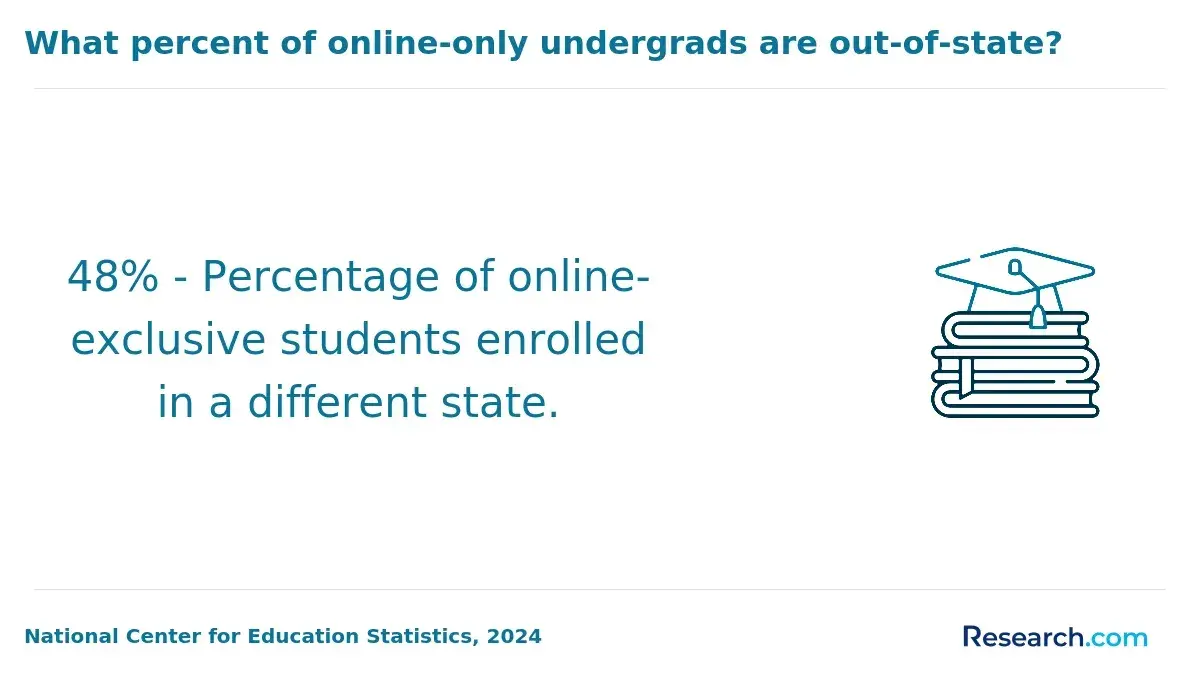
- In-state vs out-of-state tuition for online school psychology programs: Residency can make a major difference at public universities. Some online programs charge out-of-state students more, while others offer the same online rate to all distance learners.
- Credit-hour requirements and program length: School psychology master's programs usually demand 1-2 years of full-time study, with some offering additional internship time. Programs requiring more credits, practicum hours, or internship terms typically cost more because tuition is often billed per credit.
- Additional fees: Technology fees, platform fees, graduation fees, resource kits, internet upgrades, and travel for required campus visits or practicum placements can increase the total price.
- Quality and reputation: Programs with experienced faculty, strong field placement support, and recognized student services may charge more. Higher tuition is not automatically better, but weak advising or poor placement support can create delays that become expensive.
- Licensure or certification alignment: School Psychology is closely tied to state requirements. A cheaper program may become costly if it does not meet the requirements where you plan to work.
Financial aid can reduce the actual price a student pays, so compare schools by net price whenever possible. Students who want a shorter or lower-cost credential in a different career area may also review 6 month certificate programs that pay well online, but those programs are not a substitute for School Psychology preparation when state credentialing is required.
Online School Psychology programs can be cheaper than traditional campus programs, but the savings are usually moderate rather than automatic. Graduate-level online programs average about $19,792 annually, while bachelor's-level programs are around $11,998 online versus $17,797 on-campus. The biggest savings often come from avoiding relocation, commuting, parking, and some campus-based fees.
Online programs may cost less because they can reduce facility-related expenses and give students more flexibility. However, online study still has costs that should not be ignored, including technology fees, reliable internet, equipment upgrades, and software or testing materials. Many School Psychology programs also require in-person practicum or internship hours, which can create travel costs regardless of whether coursework is online or on campus.
| Cost Area | Online Program | Traditional Program |
| Tuition | May be lower, especially when flat online rates are available. | May be higher, especially for out-of-state or residential students. |
| Housing and relocation | Often avoidable if students remain in their current location. | May require moving closer to campus. |
| Technology | Can require added spending on equipment, internet, and online fees. | May rely more on campus facilities and in-person resources. |
| Fieldwork | Still required in many programs and may involve travel. | Often coordinated locally through campus partnerships. |
| Work flexibility | Often easier to balance with employment. | May be harder to combine with full-time work. |
The affordability question also depends on time and income. Online students may be able to keep working while enrolled, which can reduce borrowing and make the degree more manageable. Students comparing broader undergraduate options can also review an easiest bachelor's degree, though those pathways serve different academic and career goals.
Yes. Many public universities still use in-state and out-of-state tuition rates for online School Psychology programs. This can make the same degree substantially more expensive for students who live outside the school’s residency area. Other institutions use flat-rate pricing for online learners, so the tuition is the same regardless of where the student lives.
For example, Pennsylvania Western University bills in-state learners $516 per credit, while out-of-state students must pay $774 per credit. This difference matters because School Psychology programs often require many credits, so a per-credit gap can become a large total-cost difference by graduation.
Some schools take a different approach. Private schools and certain public universities, like Capella University, may charge uniform online tuition regardless of residency. Regional agreements, including those facilitated by the Western Interstate Commission for Higher Education (WICHE), may also allow some out-of-state students to pay reduced tuition rates.
Students should verify residency and online tuition rules directly with each program before applying. Policies can vary by degree, campus, state, and academic year, and they may change. Ask admissions or the bursar’s office these questions:
- Do online School Psychology students pay in-state, out-of-state, or flat-rate tuition?
- Are there additional distance-learning fees?
- Can out-of-state online students qualify for reduced tuition through a regional agreement?
- Will tuition change if the student moves during the program?
- Does the program meet credentialing expectations in the student’s state?
The most affordable School Psychology programs are usually public universities with lower in-state tuition, online or hybrid delivery, and transparent fee schedules. However, the cheapest listed tuition is not always the lowest total cost. Students should compare credit requirements, residency pricing, fieldwork expenses, and whether the program aligns with the state where they plan to work.
Examples of accredited institutions with comparatively low tuition for School Psychology degrees or related psychology pathways include:
- Pennsylvania Western University - California, PA: Offers a hybrid MEd + EdS School Psychology program charging $516 per credit for in-state students, amounting to about $9,288 per year for 9 credits each term and a total tuition near $48,636 for the full 67-credit degree. Out-of-state tuition runs $774 per credit, with additional annual fees between $3,656 and $4,970 depending on campus location.
- National University: Provides an online School Psychology master's degree priced at $16,983 in-state tuition for the entire program. The school supports remote learners with tutoring, career counseling, and flexible course schedules ideal for working professionals.
- University of Northern Colorado: Features an online bachelor's in psychology with in-state tuition of $7,596 per year and out-of-state tuition at $19,854. While not a specialist-level degree, it can serve as a lower-cost undergraduate starting point for students interested in school psychology careers.
When evaluating affordable options, prioritize three checks: whether the program is appropriate for your intended credential, whether field placement support is available in your area, and whether the published tuition includes the fees you will actually pay. Students comparing long-term education value may also review the most lucrative masters degree paths alongside School Psychology options to understand the broader return-on-investment landscape.
The most expensive School Psychology-related programs are often found at institutions with strong academic reputations, extensive student services, research infrastructure, and large professional networks. A higher price may come with benefits, but students should still confirm whether the program’s outcomes, credential pathway, and support services justify the cost for their goals.
Examples of institutions with notably high tuition for School Psychology degrees or related programs include:
- Fordham University: Renowned for its rigorous curriculum and expert faculty, Fordham charges approximately $79,755 per year for undergraduate study in School Psychology.
- Johns Hopkins University: Offering top-tier graduate programs with extensive research opportunities, this university's tuition reaches about $77,977 annually.
- Northeastern University: Known for innovative training and comprehensive student services, Northeastern sets tuition near $77,110 per year for related programs.
Students considering higher-cost programs should ask direct questions about placement rates, fieldwork coordination, credential outcomes, cohort support, and financial aid. Expensive tuition can be manageable if aid is strong and outcomes are clear, but it can also lead to unnecessary debt if similar credential preparation is available at a lower-cost institution. Prospective students can compare broader online learning options through the best colleges offering online programs across the country.
Many graduates begin to see a return on an online School Psychology degree within five to ten years after entering the profession. The timeline depends on total program cost, student loan borrowing, salary in the graduate’s region, repayment plan, and whether the degree leads to the required credential for the role they want.
The median starting salary for school psychologists is approximately $87,000 annually, which can support a reasonable payback period compared with many psychology-related careers. Tuition for online master's programs generally ranges from about $3,400 to $10,000 per year, with most students completing their degree in two to three years.
Return on investment is strongest when students control borrowing and choose a program that fits their state’s professional requirements. A lower-cost program may produce a faster return if it leads to the same credential and employment opportunities. A higher-cost program may still be worthwhile if it offers stronger field placement support, reduces completion delays, or improves access to jobs in the student’s target region.
To estimate your own timeline, compare the full program cost with expected income after graduation. Include tuition, fees, books, technology, travel, unpaid internship time, loan interest, and living costs. Then review salary expectations in the location where you plan to work, not only national figures.
Yes. Online School Psychology students are generally eligible for financial aid when they attend an accredited institution and meet enrollment requirements. Common options include federal student loans, scholarships, grants, assistantships, employer tuition reimbursement, and veteran benefits. Many forms of aid require students to complete the FAFSA each year.
Financial aid for online psychology degree programs can help reduce upfront costs, but students should understand the difference between gift aid and borrowed aid. Scholarships and grants do not usually need to be repaid, while loans must be repaid with interest. Assistantships may reduce tuition or provide pay, but availability can be more limited in online programs than in campus-based graduate programs.
- Federal student aid: Most online School Psychology students qualify for federal Direct Unsubsidized Loans, which can cover a significant portion of tuition. Eligibility requires U.S. citizenship or permanent residency and usually enrollment of at least five credits per term. Loan forgiveness programs are available for those entering public service or education careers.
- Scholarships and grants: Organizations like the National Association of School Psychologists (NASP) and the American Psychological Foundation offer awards typically ranging from $1,000 to $5,000. These scholarships often require NASP membership, a minimum 3.0 GPA, and enrollment in an accredited program.
- State and employer grants: Some states and institutions provide grants for underrepresented or disadvantaged students, such as Wisconsin's Advanced Opportunity Program (AOP). Employers, especially in education fields, may offer tuition reimbursement, while veterans and their families might qualify for substantial educational benefits.
Students should contact both the financial aid office and the School Psychology department. The financial aid office can explain loans and grants, while the department may know about scholarships, assistantships, internship funding, or professional association awards. Students interested in broader academic combinations may also explore dual degree colleges that offer combined credentials relevant to psychology, education, or related fields.
Online School Psychology programs are likely to remain an important option for students who need flexibility, especially working adults and those who cannot relocate for graduate study. At the same time, students should expect costs to remain highly variable by institution type, program length, and residency policy.
Currently, the cost of online School Psychology programs varies widely based on institutional type and program length. Public universities tend to offer more affordable tuition rates compared to private institutions, especially for in-state students. Many programs charge per credit hour, with total costs often exceeding $20,000 for completion. Additional fees, such as technology or practicum expenses, can further affect the overall price.
Looking ahead, tuition fees for these online programs are expected to rise moderately due to increased demand and inflationary pressures in higher education. However, some schools are exploring more competitive pricing and financial aid opportunities to attract online learners. Applicants should monitor tuition updates, fee changes, and aid deadlines each year rather than relying on older cost estimates.
The safest strategy is to build a budget with room for increases. Before enrolling, ask whether tuition is locked for a cohort, whether fees can change annually, and whether practicum or internship requirements may create additional local costs.
What Students Say About The Cost of Pursuing Online School Psychology Programs
- Briar: "Choosing an online School Psychology degree was a pivotal decision for me, especially considering the average cost of attendance was much lower than traditional programs. The affordable tuition made it easier to invest in my future without overwhelming debt, and I've already begun seeing the benefits in my career advancement. The return on investment has been tremendous, and I'm proud of what I've achieved so far."
- Jesse: "Reflecting on the cost of my online School Psychology degree, I'm grateful for the flexible payment options and reasonable tuition fees. The program's accessibility allowed me to balance work and studies while investing in skills that will enhance my ability to support students effectively. It's reassuring to know this degree offers both professional growth and financial practicality."
- Josiah: "Enrolling in an online School Psychology program was a strategic career move, especially given the program's competitive pricing compared to in-person equivalents. Despite the cost being manageable, the knowledge and credentials I gained are invaluable, equipping me with the tools to make a meaningful difference. The cost-to-value ratio exceeded my expectations and motivated me to complete the degree successfully."
Other Things You Should Know About School Psychology Degree Program Costs
Scholarships are sometimes available for 2027 online School Psychology degree programs from universities, professional organizations, or government grants. Applicants should check specific scholarship opportunities related to their program and financial needs, as availability and eligibility can vary widely by institution and location.
Yes. Some public universities charge different tuition rates for online students based on residency, while others use a single online rate for all students. For 2027, many programs also add per-credit technology or distance-learning fees, often ranging from about $25 to $150 per credit.
- Compare Online School Psychology Degree Programs https://www.counselingpsychology.org/psychology/degrees/school-psychology/
- Graduate Scholarships and Resources for Psychology Students https://www.onlinemastersdegrees.org/student-resources/psychology/
- ROI Analysis Of A Master’s In Educational Psychology - Noodle.com https://resources.noodle.com/articles/is-a-masters-degree-in-educational-psychology-worth-it-heres-how-to-decide/
- EdS in Educational Psychology – School Psychology - Online and Distance Degrees - UA Online | The University of Alabama https://online.ua.edu/degrees/eds-in-educational-psychology-school-psychology/
- Is an Online Psychology Degree Cheaper Than a Traditional One? https://www.onlinepsychologydegree.info/faq/is-an-online-psychology-degree-cheaper-than-a-traditional-one/
- Cost of Online College vs. In-Person | Touro University Worldwide https://www.tuw.edu/school-news/cost-of-online-college-vs-in-person/
- Tuition for the Doctorate in School Psychology Program https://www.findlay.edu/education/graduate-programs/edd-school-psychology/Pages/tuition.aspx
- 2025 Most Affordable Online Colleges for Psychology Degrees https://www.onlineu.com/most-affordable-colleges/psychology-degrees