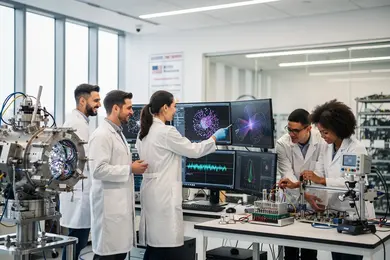
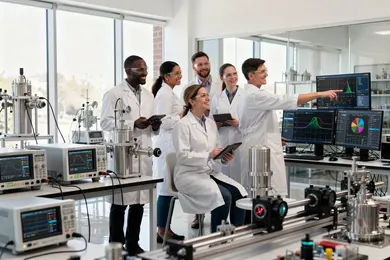
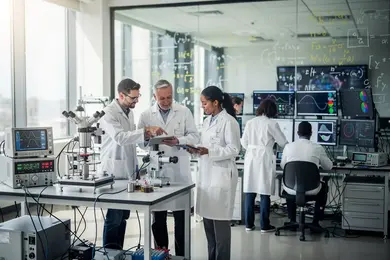
2027 Physics Roles Growing Fast in Modeling, Simulation, and Research

Co-Founder and Chief Data Scientist
Physics students are increasingly choosing careers where equations become working models, simulations, instruments, and research decisions. The latest U.S. Bureau of Labor Statistics projections show employment for physicists and astronomers growing 7% from 2024 to 2034, faster than the average for all occupations.
This guide is for students, career changers, and parents comparing physics, computational science, and research pathways. You will learn which degrees fit these roles, what skills matter, how salaries vary, and how to choose a program that supports a realistic career plan.
Key Things You Should Know
- Physics modeling and research careers usually require strong math, programming, statistics, and laboratory or simulation experience, many research-heavy roles prefer a master's degree or PhD.
- The BLS reported a May 2024 median annual wage of $166,300 for physicists, but pay varies widely by industry, degree level, clearance requirements, geography, and whether the role is academic, government, or private-sector.
- Program choice matters because 2024-25 published tuition and fees averaged $11,610 for in-state public four-year colleges and $43,350 for private nonprofit four-year colleges, before housing, fees, aid, or graduate funding are considered.
What are physics roles in modeling, simulation, and research?
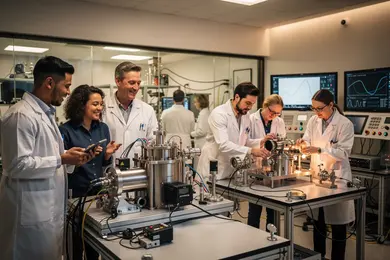
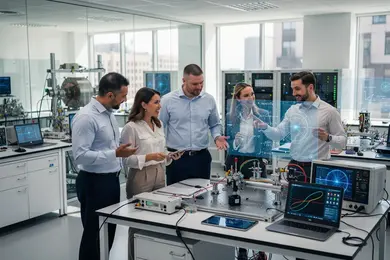
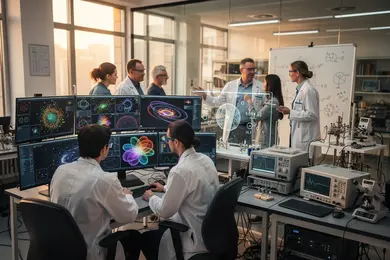
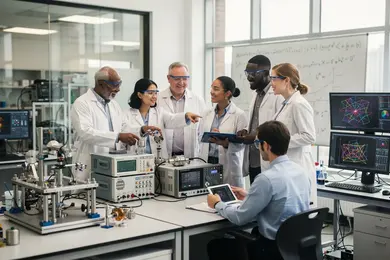
Physics roles in modeling, simulation, and research use mathematical laws, experimental data, and computing tools to understand complex systems. Instead of only asking what happens in a lab, these professionals often build a model, test assumptions, run simulations, compare results against data, and recommend better designs or research directions.
These roles are growing because many industries now need people who can reason from first principles while also working with code, sensors, high-performance computing, and AI-assisted workflows. A physicist in this space might model plasma behavior, simulate radiation transport, optimize materials, analyze satellite data, or help design instruments for advanced manufacturing.
The table below summarizes common work settings and what physics-trained professionals typically do in each one. Use it to identify whether your interests lean more toward theory, software, experimentation, or applied product development.
| Setting | Typical focus | Good fit for students who like |
| National laboratories | Large-scale research, energy systems, particle physics, security-related modeling, advanced instrumentation | Long-term research questions, technical depth, interdisciplinary teams |
| Aerospace and defense | Flight dynamics, sensors, optics, materials, navigation, radar, simulation testing | Applied math, classified or regulated projects, engineering collaboration |
| Technology and AI companies | Scientific computing, machine learning models, optimization, simulation platforms, data analysis | Programming, statistics, scalable software, fast product cycles |
| Medical and health technology | Imaging physics, radiation modeling, instrumentation, quality assurance, computational biophysics | Human-impact applications, regulated environments, precision measurement |
| Universities | Teaching, grant-funded research, publications, graduate mentorship | Academic research, theory, mentoring, independent inquiry |
One important trend is that modeling work is becoming less isolated from software engineering. Employers increasingly expect physics graduates to document code, use version control, validate models, communicate uncertainty, and explain why a simulation can or cannot be trusted. That makes communication and reproducibility nearly as important as technical brilliance.
What education do physics modeling jobs usually require?
Most physics modeling jobs require at least a bachelor's degree in physics, applied physics, engineering physics, computational physics, mathematics, or a closely related field. However, the level of education needed depends heavily on whether the job is entry-level analysis, applied simulation, or independent research leadership.
The table below compares common education levels by career target. It is most useful if you are deciding whether to stop after a bachelor's degree, pursue a master's degree, or commit to a PhD.
| Education level | Best matched roles | Decision point |
| Bachelor's degree | Research assistant, simulation technician, data analyst, test engineer, laboratory technologist | Works best when paired with internships, coding projects, and strong quantitative electives |
| Master's degree | Modeling analyst, computational scientist, applied physicist, systems simulation specialist | Often useful for moving from support roles into more independent technical work |
| PhD | Research scientist, principal investigator, university faculty, advanced R&D scientist | Usually needed for original research leadership, especially in academia and national labs |
| Graduate certificate | Scientific computing, data analytics, machine learning, specialized simulation tools | Best for filling a skill gap, not replacing a full physics or engineering degree |
A bachelor's degree can be enough for some modeling-adjacent roles, especially when the graduate has Python, MATLAB, C++, numerical methods, and data analysis experience. For research scientist positions, employers often prefer graduate-level preparation because the work involves designing studies, defending assumptions, and publishing or presenting technical results.
Students who are drawn more to data-intensive work than traditional physics research may compare physics with analytics-focused programs. For example, reviewing a cheapest data science degree list can help you understand how lower-cost quantitative programs differ from physics programs in curriculum, career outcomes, and computing emphasis.
Which physics degree programs best prepare students for these careers?
The best degree program depends on the kind of problem you want to solve. A traditional physics major is excellent for theory, measurement, and scientific reasoning, while computational physics, applied physics, engineering physics, and data science-heavy tracks may offer a more direct path into simulation or industry R&D.
The comparison below shows how common degree options align with modeling and research careers. It can help you avoid choosing a program that sounds impressive but does not match your target role.
| Program type | Strengths | Limitations to check |
| Physics | Strong foundation in mechanics, electromagnetism, quantum physics, thermodynamics, and experimental methods | May require electives or projects to build enough programming depth for simulation jobs |
| Applied physics | Connects physics theory with engineering, materials, optics, electronics, or industrial applications | Research depth varies by school and faculty specialization |
| Computational physics | Emphasizes numerical methods, simulation, algorithms, and scientific programming | Not offered everywhere; students should verify access to advanced computing courses |
| Engineering physics | Combines physics with engineering design, systems thinking, and applied problem-solving | Course load can be demanding and may leave fewer free electives |
| Mathematics or applied mathematics | Excellent for modeling, optimization, differential equations, and theoretical work | Students may need lab science or domain-specific projects to compete for physics R&D roles |
| Data science or computer science | Strong preparation for machine learning, data systems, software, and analytics | May not provide enough physical theory for roles requiring scientific model development |
A strong program should give you more than lectures. Look for undergraduate research, faculty-led labs, capstone projects, computing clusters, industry-sponsored projects, and opportunities to present technical work. For graduate study, faculty research fit matters as much as the program name because your advisor, lab group, and funding environment can shape your career options.
If you prefer scientific information organization, research data stewardship, archives, or knowledge systems rather than direct physical modeling, exploring online library schools may clarify whether information science is a better fit than a physics research path.
How do online and campus physics programs compare?
Online and campus physics programs can both be useful, but they do not serve the same students equally well. Physics is lab-intensive, so the strongest online options usually appear at the graduate, completion, or computational level rather than as fully online traditional bachelor's programs with advanced laboratory requirements.
The table below compares the formats on the factors that matter most for modeling, simulation, and research preparation. Use it to decide whether flexibility is worth any trade-off in lab access, mentoring, or research opportunities.
| Format | Advantages | Trade-offs | Best fit |
| Campus physics program | Direct lab access, research groups, instrumentation, peer study culture, faculty visibility | Less schedule flexibility and possible relocation costs | Students seeking research experience, graduate school preparation, or laboratory-heavy roles |
| Online computational or applied program | Flexible schedule, useful for working adults, often strong for coding and data analysis | May offer limited hands-on lab training or fewer informal research connections | Students focused on simulation, analytics, or upskilling while employed |
| Hybrid program | Combines online theory with in-person labs, residencies, or research sessions | Travel requirements and scheduling blocks can be hard for some students | Students who need flexibility but still want supervised experimental experience |
Cost is another major difference. College Board's 2024-25 figures show that published tuition and fees vary widely by institution type, but the real comparison should include housing, technology fees, travel, lost work hours, and whether graduate assistantships are available. If your physics plan overlaps with software-heavy careers, comparing computer science cost data can help you judge whether a computing-focused route offers a better price-to-outcome match.
Choose campus study when you need advanced lab work, close research supervision, or a clear path to a PhD. Choose online or hybrid study when your main gap is computational skill, you already have lab experience, or you need to keep working while completing a credential.
What courses matter most in physics modeling and simulation programs?
The most valuable courses are the ones that help you translate physical theory into tested, reproducible models. A good physics modeling curriculum should blend core physics, advanced mathematics, computing, statistics, and communication.
When comparing programs, look for a course sequence that builds from fundamentals to applied modeling. The following areas are especially important because they appear repeatedly in simulation and research roles.
- Classical mechanics and electromagnetism: These courses build the physical intuition needed to model motion, fields, waves, and systems that change over time.
- Quantum mechanics and statistical mechanics: These are essential for materials science, condensed matter, optics, semiconductor research, and many graduate physics tracks.
- Differential equations and linear algebra: Many simulation models are built from systems of equations, matrix methods, eigenvalue problems, and stability analysis.
- Numerical methods: Students learn how to approximate solutions, evaluate error, compare algorithms, and understand when a computation may be misleading.
- Scientific programming: Python is common, but C++, MATLAB, R, Julia, or Fortran may appear depending on the field and legacy code base.
- Statistics and uncertainty quantification: Modeling careers require more than generating outputs; professionals must explain confidence, sensitivity, and the limits of their assumptions.
- Laboratory methods and instrumentation: Even simulation-focused professionals benefit from understanding how real data are measured, calibrated, and cleaned.
- Machine learning for scientific data: AI tools are increasingly used for pattern recognition, surrogate modeling, optimization, and accelerating simulations, but they still require physics-based validation.
A common mistake is choosing only the most theoretical electives while neglecting programming and statistics. That can be fine for some academic paths, but it may make the transition into industry modeling roles harder. A stronger strategy is to graduate with at least one portfolio-quality project, such as a simulation, research poster, GitHub repository, or documented numerical experiment.

What admissions requirements do physics programs typically set?
Admissions requirements vary by institution and degree level, but physics programs usually look for evidence that a student can handle calculus-based science, abstract reasoning, and sustained technical work. Graduate programs also evaluate research fit and preparation for advanced coursework.
The following requirements are common, but students should confirm details with each school because test policies, prerequisites, and funding rules change.
- Bachelor's programs: High school diploma or equivalent, transcripts, strong math preparation, science coursework, application essays, and sometimes standardized test scores depending on school policy.
- Transfer programs: College transcripts, minimum GPA, completed calculus or science prerequisites, and a transfer-credit evaluation before enrollment.
- Master's programs: Bachelor's degree in physics or a related quantitative field, upper-level physics prerequisites, letters of recommendation, statement of purpose, and sometimes GRE or physics GRE scores if required by the department.
- PhD programs: Strong research preparation, faculty fit, advanced coursework, recommendations from research or technical mentors, and evidence of readiness for independent scholarship.
Applicants should not treat admission as the only hurdle. A student can be admitted and still struggle if they lack calculus, differential equations, programming, or modern physics preparation. Before enrolling, ask whether the program offers bridge courses, tutoring, summer preparation, or placement advising.
Watch for red flags such as vague curriculum descriptions, limited faculty research activity, no clear lab or computing access, weak transfer-credit policies, or admissions staff who cannot explain how students gain research experience. For graduate programs, be especially cautious if funding expectations are unclear.
How long does it take to complete a physics degree?
The time required depends on the credential, enrollment intensity, transfer credits, and whether the student pursues research, internships, or assistantships. Physics can also take longer than some majors because course sequences are cumulative; missing one prerequisite may delay upper-division classes by a full term.
The table below gives typical completion timelines for U.S. students. Use it as a planning guide rather than a guarantee, because part-time study, thesis requirements, and prerequisite gaps can change the schedule.
| Credential | Typical full-time timeline | What can extend the timeline |
| Certificate in scientific computing or data analysis | 6 to 12 months | Prerequisite programming or statistics gaps |
| Associate degree with physics transfer pathway | 2 years | Course availability, transfer alignment, calculus sequence timing |
| Bachelor's degree in physics | 4 years | Changing majors late, repeating calculus or physics courses, adding research or co-op terms |
| Master's degree in physics or applied physics | 1.5 to 2 years | Thesis requirements, part-time enrollment, missing undergraduate prerequisites |
| PhD in physics | 5 to 7 years | Research delays, publication expectations, funding changes, dissertation scope |
Students trying to reduce time to completion should map prerequisites early. The safest approach is to ask for a term-by-term plan showing calculus, introductory physics, modern physics, laboratory courses, computational electives, and any research milestones.
Acceleration is useful only when it does not weaken preparation. Taking too many technical courses at once can lower grades and reduce time for research, internships, or projects, which are often more important for modeling careers than simply finishing one term faster.
What jobs can physics graduates get in modeling and research?
Physics graduates can work in several modeling and research roles, but job titles may not always include the word "physicist." Employers often use titles such as computational scientist, modeling analyst, systems engineer, research scientist, data scientist, optical engineer, or quantitative analyst.
The table below shows common career directions and the kind of preparation that usually helps. It can help you translate a physics degree into actual job-search language.
| Job title | Typical responsibilities | Helpful preparation |
| Computational physicist | Builds and validates numerical models for physical systems | Numerical methods, high-performance computing, advanced physics coursework |
| Research scientist | Designs studies, analyzes results, writes reports, presents findings | Graduate research, publications, experimental or simulation specialization |
| Modeling and simulation analyst | Creates simulations for systems, operations, defense, logistics, or technical planning | Programming, statistics, model validation, domain knowledge |
| Data scientist in scientific industries | Analyzes experimental, sensor, imaging, or operational data | Machine learning, statistics, databases, physics-informed interpretation |
| Optics or photonics specialist | Works with lasers, imaging systems, sensors, fiber optics, or optical instruments | Electromagnetism, optics labs, instrumentation, engineering collaboration |
| Medical physicist pathway | Supports radiation therapy, imaging, dosimetry, and safety processes | Specialized graduate education, clinical training, and board-related requirements |
Entry-level candidates should search broadly and not limit themselves to "physicist" postings. Good search terms include scientific programmer, simulation engineer, research associate, quantitative analyst, systems modeler, laboratory data analyst, and computational scientist.
If you are comparing physics with other science-related paths, reviewing jobs with elementary education and environmental science degree can help clarify how different science majors lead to different work settings, from classrooms and fieldwork to laboratories and modeling teams.
How much do physics modeling and research roles pay?
Pay for physics modeling and research roles varies by degree level, employer, region, security clearance, industry, and whether the job is research-focused or software-focused. Salary data should be treated as a labor-market benchmark, not a promise for any individual graduate.
The table below uses May 2024 U.S. Bureau of Labor Statistics wage data for several occupations that commonly overlap with physics modeling, simulation, or research. The figures are useful for comparing career directions, but specific job offers can differ substantially.
| Occupation | May 2024 median annual wage | How it relates to physics modeling and research |
| Physicists | $166,300 | Direct match for advanced physics research, modeling, laboratory science, and applied R&D |
| Computer and information research scientists | $140,910 | Relevant for physics graduates who move into algorithms, AI, scientific computing, or advanced software research |
| Astronomers | $132,170 | Relevant for astrophysics, observational data analysis, instrumentation, and computational modeling |
| Data scientists | $112,590 | Relevant for graduates using physics training in machine learning, sensor data, imaging, or analytics roles |
| Operations research analysts | $91,290 | Relevant for simulation, optimization, decision modeling, logistics, and systems analysis |
The strongest salary potential often appears where physics overlaps with computing, engineering, defense, finance, energy, semiconductors, or medical technology. Academic research can be intellectually rewarding, but early-career pay and job security may differ from private-sector R&D, especially during postdoctoral years.
To evaluate return on investment, compare expected debt with the roles you are realistically preparing for. A funded PhD can reduce tuition risk, while an unfunded graduate degree should be examined carefully against placement outcomes, assistantship availability, and the program's track record in your target industry.
How do you choose an accredited physics program?
Accreditation is one of the first checks students should make because it affects credit transfer, federal financial aid eligibility, graduate admissions, and employer confidence. In the U.S., students should generally look for institutional accreditation from an accreditor recognized by the U.S. Department of Education or the Council for Higher Education Accreditation.
Physics itself does not always have a single required programmatic accreditor in the same way some licensure fields do, but related programs may have specialized expectations. Engineering physics or engineering-heavy programs may involve ABET accreditation, while medical physics pathways may require specific graduate and clinical training standards depending on the role.
Use the following steps to compare programs before applying. They focus on evidence you can verify rather than marketing claims.
- Confirm institutional accreditation through the school's official accreditation page and recognized accreditation databases.
- Review the physics curriculum for calculus-based core courses, advanced labs, computational electives, and research or capstone requirements.
- Check faculty research areas to see whether they match your interests in modeling, simulation, optics, materials, astrophysics, biophysics, or another specialty.
- Ask how undergraduates or master's students join research groups, use computing resources, and present technical work.
- Compare total cost, not just tuition, including fees, housing, travel, software, equipment, health insurance, and lost income.
- Request career outcomes, graduate school placement examples, internship support details, and employer partnerships relevant to physics or computational science.
- Ask whether transfer credits, prior learning, or prerequisite waivers can shorten the program without weakening preparation.
Common mistakes include choosing a school based only on rankings, assuming every physics degree has the same job outcomes, ignoring computing requirements, and enrolling in a graduate program without understanding funding. A better approach is to match the program's strengths to a specific career target and verify that students actually get the research, coding, and mentoring opportunities you need.
Other Things You Should Know About Physics
Yes, physics can be a strong major for modeling and simulation if you add programming, numerical methods, statistics, and project experience. Students who avoid computing may find fewer industry options than those who build a technical portfolio.
You usually need a PhD for independent research leadership, university faculty roles, and many national lab scientist positions. However, bachelor's and master's graduates can qualify for research assistant, modeling analyst, lab, data, and applied simulation roles.
Python is the most practical starting point because it is widely used in scientific computing and data analysis. Depending on the field, C++, MATLAB, Julia, R, or Fortran may also be useful.
In 2027, physics students pursuing careers in modeling, simulation, and research should learn programming languages like Python for data analysis, C++ for performance-intensive tasks, and MATLAB for mathematical modeling. These languages are widely used in physics-related research for their efficiency and diverse application capabilities.
References
- | Mondelēz International, Inc. https://www.mondelezinternational.com/careers/jobs/job
- Modeling and Simulation of Multi-Physics Systems with MATLAB and Simulink https://www.mathworks.com/academia/courseware/multi-physics-systems.html
- Do I need a physics degree to get into a physics graduate program? https://www.physicsforums.com/threads/do-i-need-a-physics-degree-to-get-into-a-physics-graduate-program.1048807/
- Accreditation, Validation and Recognition of Physics Degrees https://telescoper.blog/2022/09/19/accreditation-validation-and-recognition-in-physics-degrees/
- What jobs can I get with a physics degree? https://www.goconstruct.org/faqs/construction-careers/what-jobs-can-i-get-with-a-physics-degree
- How Long to Get a Physics Degree? | ValidGrad https://validgrad.com/blog/physics-degree-timeline/
- Pasteur Labs & ISI - Careers https://simulation.science/careers/
- Different types of physics degrees | University of Surrey International Study Centre https://isc.surrey.ac.uk/blog/types-of-physics-degrees
- The Australian Institute of Physics https://www.aip.org.au/ACCREDITATION
- nanoHUB.org https://nanohub.org/courses/MSE697