2027 Online Physics Degrees With Classical Mechanics Coursework

Co-Founder and Chief Data Scientist
Choosing an online physics degree is harder than choosing many other online majors because lab work, calculus, and mechanics must be taught with enough rigor to support real technical careers. The stakes are meaningful: the College Board reported average published tuition and fees of $11,610 for in-state public four-year students in 2024-25, before books, technology, and living costs.
This guide is for students comparing online physics programs that include classical mechanics. You'll learn what to expect academically, which U. S. options to research, how costs and timelines work, and how the degree can connect to careers.
Key Things You Should Know
- Fully online physics bachelor's options in the U.S. are limited, so students should verify regional accreditation, current course catalogs, lab format, and whether upper-division classical mechanics is required rather than merely listed as an elective.
- Classical mechanics-heavy physics degrees can support careers in engineering-adjacent analysis, research support, aerospace, education, simulation, data, and graduate study, but many licensed engineering roles still require an ABET-accredited engineering degree.
- Use cost and outcome data carefully: 2024-25 average published tuition and fees were $11,610 for in-state public four-year colleges and $43,350 for private nonprofit four-year colleges, while BLS 2023-33 projections show strong growth for several quantitative technical roles but not guaranteed job placement.
What is an online physics degree with classical mechanics coursework, and who is it best for?
An online physics degree with classical mechanics coursework is a bachelor's or graduate-level physics program delivered primarily online that includes the study of motion, forces, energy, momentum, oscillations, gravitation, rigid bodies, and Lagrangian or Hamiltonian methods. In plain terms, classical mechanics is the mathematical language used to describe how objects move, from a falling ball to a satellite trajectory.
This kind of program is best for students who want rigorous quantitative training but need distance learning because of work, military service, family responsibilities, geography, or transfer plans. It can be a good fit if you enjoy calculus, programming, physical modeling, and problem-solving more than memorization.
The degree is especially useful for students aiming for these outcomes:
- Preparation for graduate study in physics, applied physics, aerospace, materials science, mechanical engineering, or computational science.
- Technical roles that involve modeling, measurement, instrumentation, simulation, quality testing, or data analysis.
- Teaching pathways, especially when combined with state-approved teacher preparation requirements.
- Career pivots into quantitative fields where employers value mathematical maturity and scientific reasoning.
It may not be the best option if your main goal is to become a licensed professional engineer as quickly as possible. In that case, an ABET-accredited engineering program may align more directly with licensure expectations. It may also be a difficult fit if you have not completed precalculus or are uncomfortable with asynchronous problem-solving, because physics courses tend to build quickly from one mathematical concept to the next.
A good way to think about the degree is this: physics is broad training in how nature works and how to model it mathematically, while classical mechanics is one of the foundational toolkits that helps students apply that training to motion, machines, space systems, fluids, structures, and simulations.
How does an online physics degree compare to a campus-based program for studying mechanics?
Online and campus-based physics programs can cover the same intellectual material, but the learning experience is not identical. Mechanics can be taught effectively online when lectures, simulations, recitations, homework systems, and instructor feedback are strong; the bigger question is how the program handles labs, exams, collaboration, and access to faculty.
The comparison below shows the practical differences that matter most before enrolling. Use it to decide whether the convenience of online study outweighs the hands-on advantages of a campus program for your goals.
| Decision factor | Online physics degree | Campus-based physics degree | What it means for mechanics coursework |
| Course delivery | Often asynchronous or hybrid, with recorded lectures, digital homework, and remote office hours. | Usually scheduled lectures, in-person recitations, and direct access to classmates. | Online learners need stronger self-discipline because mechanics problem sets require steady weekly practice. |
| Labs | May use home lab kits, simulations, recorded demonstrations, local proctoring, or occasional campus sessions. | Usually uses campus laboratory equipment and in-person supervision. | Ask whether lab work is accepted for graduate school, teacher certification, or transfer credit if those are goals. |
| Faculty access | Available through video meetings, forums, email, and virtual office hours. | Available through office hours, research groups, and department events. | Students planning graduate school should look for opportunities to build faculty relationships. |
| Research opportunities | More variable; some programs offer computational, remote, or local projects. | More likely to include lab-based research, seminars, and departmental assistantships. | Mechanics-focused students may need to seek internships, summer research, or simulation projects outside the classroom. |
| Career alignment | Strong for working adults, transfer students, and students who need location flexibility. | Strong for students who want immersive research, peer study groups, or direct lab access. | Online students should be intentional about building a portfolio of code, projects, and applied problem-solving. |
If you are comparing physics with engineering, be careful about degree labels. A physics degree can be excellent preparation for technical analysis, simulation, graduate school, and interdisciplinary roles, but students seeking engineering licensure or military-aligned engineering pathways may also want to compare best military friendly online electrical engineering degrees because engineering programs may map more directly to certain employer and licensing expectations.
The strongest online physics students usually create their own "campus-like" support system. Before enrolling, plan how you will access tutoring, form study groups, meet instructors, complete labs, and document applied projects. Mechanics is cumulative; falling behind in vectors, differential equations, or energy methods can affect later courses such as electromagnetism, quantum mechanics, and computational physics.
Which accredited U.S. colleges offer online physics degrees that include classical mechanics?
Accredited U.S. colleges offering online physics degrees are relatively uncommon compared with online computer science, engineering management, or data science programs. That scarcity makes verification essential: program names, online availability, lab requirements, and course rotations can change from one catalog year to the next.
The table below highlights U.S. options that prospective students commonly investigate for online physics or applied physics study with mechanics-related coursework. Treat this as a starting point for due diligence, not a substitute for checking the latest catalog and speaking with the department.
| College or university | Online physics-related degree type | Accreditation to verify | Mechanics coursework to confirm | Best fit |
| Arizona State University Online | Bachelor's-level physics program delivered online | Regional institutional accreditation through the Higher Learning Commission | Calculus-based physics, upper-division mechanics or classical mechanics, electromagnetism, quantum physics, thermal or statistical physics, and laboratory requirements | Students seeking a full online physics bachelor's pathway from a large public research university |
| Liberty University Online | Online bachelor's-level physics program | Regional institutional accreditation through the Southern Association of Colleges and Schools Commission on Colleges | University physics sequence, mechanics, modern physics, mathematics, and required labs or lab alternatives | Students who want a private university format with broad online student support and flexible course scheduling |
| University of Arizona Online | Online applied physics or physics-adjacent bachelor's options, depending on current catalog availability | Regional institutional accreditation through the Higher Learning Commission | Mechanics, mathematical methods, computational or applied physics courses, and any required in-person components | Students interested in applied physics, technology, or transfer-friendly online study |
| Johns Hopkins Engineering for Professionals | Online or part-time graduate study in applied physics | Regional institutional accreditation through the Middle States Commission on Higher Education | Mechanics-related graduate electives, mathematical methods, computational modeling, optics, space systems, or materials topics, depending on course plan | Students who already hold a technical bachelor's degree and want advanced applied physics coursework while working |
When reviewing any school, look for the actual course titles and prerequisites rather than relying only on marketing pages. A program that says it includes "physics foundations" may only include introductory mechanics, while a program designed for physics majors should include a more advanced mechanics course after the calculus-based sequence.
Ask admissions and the physics department these questions before applying:
- Is the full degree available online for students in my state, including labs and upper-division physics courses?
- Is classical mechanics required, or is it an elective that may not be offered every year?
- How are laboratory courses completed, and do they appear differently on the transcript?
- Can transfer students receive credit for calculus, differential equations, programming, and introductory physics?
- Does the program support graduate school applications, teacher certification planning, internships, or undergraduate research?
What core courses in classical mechanics and broader physics are typically required?
A physics degree with classical mechanics coursework usually begins with calculus-based introductory physics and then moves into upper-division mathematical physics. Classical mechanics is not just "Physics I" repeated at a higher level; it uses more advanced mathematics to analyze motion in a general and powerful way.
Most programs combine physics, mathematics, computing, and laboratory study. The exact sequence varies by school, but students should expect courses like the following:
- Calculus I, II, and III, covering derivatives, integrals, series, multivariable functions, and vector calculus.
- Differential equations and linear algebra, which are essential for oscillations, waves, quantum mechanics, and systems modeling.
- Calculus-based introductory physics, usually including mechanics, electricity and magnetism, waves, optics, and thermodynamics.
- Classical mechanics or analytical mechanics, covering Newtonian mechanics, energy methods, central forces, rotating systems, Lagrangian mechanics, and sometimes Hamiltonian mechanics.
- Electricity and magnetism, often using vector calculus and field theory.
- Modern physics, quantum mechanics, thermal physics, statistical mechanics, and laboratory methods.
- Computational physics or scientific programming, often using Python, MATLAB, C++, or similar tools.
The table below shows how mechanics-related learning typically progresses. This matters because students who transfer credits should make sure they are not missing a prerequisite that later blocks upper-division physics courses.
| Course level | Typical mechanics content | Main skills developed | Why it matters |
| Introductory physics | Forces, kinematics, energy, momentum, rotation, gravity, and simple harmonic motion | Problem setup, free-body diagrams, vector reasoning, and basic calculus applications | Builds the foundation for all later mechanics and engineering-adjacent work |
| Mathematical methods | Vector calculus, differential equations, matrices, and coordinate systems | Turning physical problems into solvable equations | Prepares students for analytical mechanics, electromagnetism, and quantum theory |
| Classical or analytical mechanics | Lagrangians, Hamiltonians, central force motion, non-inertial frames, coupled oscillators, and rigid body motion | Advanced modeling, abstraction, and solving multi-step systems | Signals physics-major rigor and supports graduate-level technical study |
| Computational physics | Numerical integration, simulation, differential equation solving, and data visualization | Coding physical models and testing assumptions | Helps online students build a project portfolio employers can evaluate |
For career readiness, do not treat mechanics as only a theoretical requirement. Turn course concepts into projects: simulate projectile motion with drag, model a double pendulum, analyze orbital motion, compare numerical methods, or build a small data set from a home experiment. These projects can help compensate for the reduced visibility that online students sometimes face when applying for internships or research opportunities.
What admissions requirements and prior math preparation do online physics programs expect?
Admissions requirements vary by institution and degree level, but online physics programs generally expect stronger math preparation than many other online bachelor's degrees. Some schools admit first-year students broadly and then require successful completion of calculus and introductory physics before the major becomes demanding; others expect transfer students to arrive with several prerequisites already complete.
For a bachelor's program, applicants commonly need the following materials and academic preparation:
- High school diploma, GED, or equivalent credential.
- Official transcripts from high school and any colleges previously attended.
- College-preparatory math, ideally through precalculus or calculus readiness.
- Placement testing or prior credit for calculus if required by the university.
- Transfer evaluations for physics, calculus, laboratory science, and programming coursework.
- English proficiency documentation for applicants whose prior education requires it.
Graduate applied physics programs usually have a higher bar. They may expect a bachelor's degree in physics, engineering, mathematics, astronomy, computer science, or a closely related technical field, along with coursework in calculus, differential equations, modern physics, and upper-division mechanics or electromagnetism.
If your math background is not yet strong, do not rush directly into a full physics load. A safer preparation path is:
- Complete precalculus or a calculus readiness course before enrolling in calculus-based physics.
- Take Calculus I and introductory mechanics at the same institution if possible, so pacing and notation align.
- Add programming early, preferably Python, because computational work is increasingly important in physics-related jobs.
- Use summer terms for one demanding quantitative course at a time rather than stacking calculus, physics, and labs while working full time.
- Keep syllabi from transfer courses because physics departments may need them to evaluate equivalency.
A common mistake is assuming that strong high school algebra is enough for physics-major coursework. It helps, but classical mechanics quickly becomes calculus-intensive. Students who build the math foundation first often have more time to understand the physics instead of constantly catching up on technique.
How long do online physics degrees take, and what do they cost overall?
Most online bachelor's degrees in physics require about 120 credits and take four years of full-time study for first-time students. Transfer students may finish faster if prior credits apply cleanly to general education, calculus, introductory physics, and electives. Part-time students often take five to six years, especially if they work full time or need to sequence math and lab courses carefully.
Cost depends on institution type, residency rules, transfer credits, technology fees, lab kits, books, and whether the student studies full time or part time. The College Board's 2024-25 published tuition and fee averages provide a useful baseline for U.S. undergraduates:
- $11,610 for in-state students at public four-year colleges.
- $30,780 for out-of-state students at public four-year colleges.
- $43,350 for students at private nonprofit four-year colleges.
These figures are not online physics prices, but they help students benchmark whether a quoted online tuition rate is unusually low, typical, or expensive. Online students may avoid room and board, but they can still face course fees, lab materials, proctoring fees, software, and travel for any required campus experiences.
The table below summarizes cost variables that often affect the total amount paid. Review these before comparing schools by tuition alone.
| Cost factor | Why it matters | How to evaluate it |
| Per-credit tuition | Physics degrees are credit-heavy, and small per-credit differences compound over 120 credits. | Ask for a full degree cost estimate, not just a single-course rate. |
| Transfer credit policy | Accepted credits can reduce both cost and time, but physics and calculus credits are often reviewed carefully. | Request a written transfer evaluation before committing. |
| Lab and technology fees | Online science courses may require kits, simulations, proctoring, webcams, or software. | Ask whether each physics lab has additional costs. |
| Course availability | If upper-division mechanics is offered infrequently, graduation can be delayed. | Request a two-year course rotation for required physics courses. |
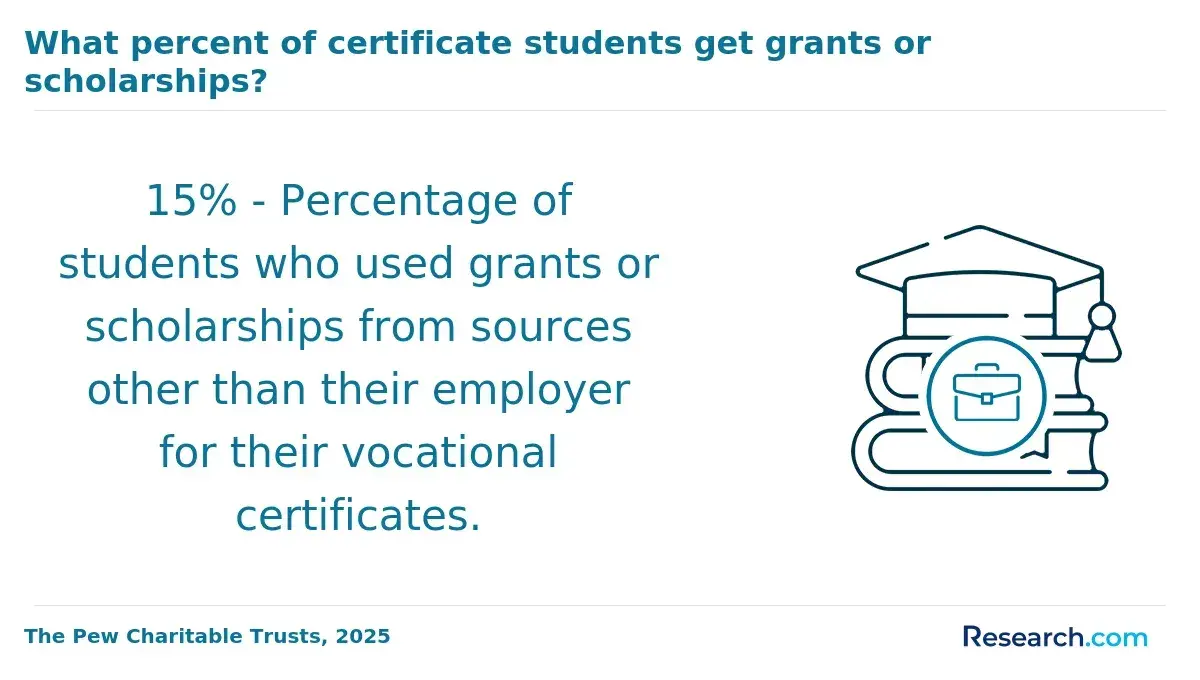
| Financial aid and loan terms | Borrowing costs affect long-term ROI, especially for students planning graduate school. | Compare grants, scholarships, employer aid, military benefits, and federal loan limits. |
Federal loan costs also changed recently. For 2024-25, the fixed interest rate for federal Direct Subsidized and Unsubsidized Loans for undergraduates was 6.53%. That rate makes borrowing more expensive than it was a few years earlier, so students should reduce unnecessary credits, use transfer pathways wisely, and avoid enrolling in a program that does not clearly support their target career or graduate-school plan.
What careers can you pursue with an online physics degree focused on mechanics?
A physics degree focused on mechanics can lead to several career directions, but the title "physicist" is not the only realistic outcome. Many bachelor's-level graduates work in technical roles that use modeling, measurement, programming, data analysis, quality control, or engineering support. Advanced research physicist roles often require a master's or PhD.
The strongest career fit depends on how you combine physics with complementary skills. Mechanics pairs especially well with programming, computer-aided design exposure, instrumentation, statistics, and technical communication.
| Career path | Typical responsibilities | Helpful add-ons | Education level commonly expected |
| Research or laboratory technician | Run experiments, maintain equipment, collect data, document procedures, and support scientists or engineers. | Lab methods, electronics, safety training, Python, and data visualization. | Bachelor's degree; some roles accept strong associate or transfer backgrounds. |
| Simulation or modeling analyst | Build or test models of motion, materials, systems, or physical processes. | Numerical methods, Python, MATLAB, C++, finite element concepts, and statistics. | Bachelor's degree for entry-level roles; graduate study for advanced modeling. |
| Aerospace or defense technical support | Analyze test data, support systems teams, prepare reports, or assist with flight, sensor, or mechanical systems. | Classical mechanics, orbital mechanics, security clearance eligibility, and communication skills. | Bachelor's degree; engineering degree may be preferred for engineering titles. |
| Mechanical or manufacturing test roles | Evaluate product performance, run measurements, troubleshoot failures, and support process improvement. | Instrumentation, CAD familiarity, quality systems, and statistics. | Bachelor's degree; engineering licensure not always required for support roles. |
| Secondary physics teacher | Teach physics, physical science, or mathematics; design lessons and labs; assess student learning. | State-approved teacher preparation, student teaching, and licensure exams. | Bachelor's degree plus state certification requirements. |
| Quantitative technology roles | Analyze data, automate workflows, build models, or move into software-adjacent technical work. | Programming, databases, machine learning basics, and portfolio projects. | Bachelor's degree plus demonstrable technical skills. |
Students who discover they are more interested in software systems than physical modeling may want to compare a computer science degree online. Physics can be powerful preparation for technical problem-solving, but computer science usually offers a more direct curriculum for software engineering, systems design, and development roles.
To improve career outcomes while earning the degree, take practical steps early:
- Build a portfolio with mechanics simulations, data analysis notebooks, lab reports, and visualization projects.
- Apply for internships in aerospace, energy, manufacturing, defense, scientific instrumentation, education technology, or research labs.
- Ask faculty about undergraduate research, even if the project is computational rather than lab-based.
- Learn at least one widely used programming language and one technical writing workflow.
- Track job postings in your target region to see whether employers ask for physics, engineering, computer science, or a graduate degree.
What salary ranges and job outlook are common for physics-related roles using mechanics?
Salary outcomes for physics-related careers vary widely because graduates enter different industries and job titles. A bachelor's degree in physics does not guarantee a physicist job, and many higher-paying research roles require graduate education. Still, mechanics-heavy training can be valuable in quantitative technical occupations.
The U.S. Bureau of Labor Statistics' 2023-33 employment projections, released in 2024, show that several technical fields connected to physics skills are expected to grow faster than the average for all occupations. This matters because students should evaluate both their preferred job title and adjacent roles where physics training is marketable.
| Occupation or role family | U.S. salary context | 2023-33 outlook context | How mechanics coursework helps |
| Physicists and astronomers | BLS reported six-figure median pay for physicists and astronomers, with many roles requiring graduate education. | Projected growth is faster than average, but the occupation is relatively small and competitive. | Advanced mechanics supports research preparation, modeling, and graduate-level study. |
| Mechanical engineers | BLS reported a median annual wage above $100,000 in May 2024. | Projected growth is faster than average for 2023-33. | Mechanics is central, but engineering titles may require an engineering degree and, for some roles, licensure. |
| Aerospace engineers | BLS May 2024 wage data places aerospace engineering among higher-paying engineering occupations. | Projected growth is faster than average for 2023-33. | Classical mechanics supports dynamics, orbital motion, propulsion concepts, and systems thinking. |
| Data scientists | BLS reported a six-figure median annual wage in May 2024. | Projected growth is much faster than average for 2023-33. | Physics students often bring modeling and quantitative reasoning, but need statistics, coding, and data tools. |
| High school teachers | BLS wage data varies significantly by state, district, and experience. | Demand depends heavily on local school systems and subject-area shortages. | Physics content knowledge can be valuable, but state teacher licensure is usually required. |
If your ROI goal is flexible entry into high-growth analytics roles, compare physics with an affordable data science degree. Physics may provide deeper scientific modeling, while data science programs typically offer more direct training in databases, machine learning workflows, and applied analytics hiring requirements.
Use salary data as a planning tool, not a promise. Location, clearance eligibility, internships, graduate school, programming skill, industry, and employer type can all change compensation. A physics student who graduates with strong mechanics knowledge but no portfolio, no internships, and limited coding may face a harder job search than a student who connects coursework to visible applied projects.
Are any licenses, certifications, or professional memberships needed for physics careers?
Most physics careers do not require a single universal license. Requirements depend on the role. Research, laboratory, data, defense, manufacturing, and simulation jobs usually focus on education, technical skill, experience, and sometimes security clearance eligibility rather than state licensure.
However, several related pathways do involve formal credentials or professional standards. Students should understand these distinctions before assuming a physics degree automatically qualifies them for every mechanics-related job.
| Pathway | Credential issue | What students should check |
| Professional engineering | Engineering licensure typically follows an engineering education, FE exam, supervised experience, and PE exam pathway that varies by state. | Whether a physics degree meets the state board's education requirements, especially if the program is not ABET-accredited engineering. |
| Secondary teaching | Public school teaching usually requires state certification or licensure. | Whether the online physics degree is paired with an approved teacher preparation route in your state. |
| Medical physics | Clinical medical physics roles often require graduate education, residency, and board certification pathways. | Whether the program prepares students for accredited graduate medical physics programs. |
| Defense and aerospace roles | Some jobs require U.S. citizenship, background checks, or security clearance eligibility. | Whether your citizenship status, location, and record align with employer requirements. |
| Research and professional communities | Membership is not usually required, but it can support networking and professional development. | Student memberships in physics, astronomy, engineering, or computing societies relevant to your goals. |
Credentials matter differently across fields. For example, a student asking is library science a good degree would need to think about professional accreditation and librarian job requirements, while a physics student must focus more on regional accreditation, lab rigor, math depth, research preparation, and whether the degree aligns with state-specific teaching or engineering rules.
Common credential-related mistakes include choosing a physics program for an engineering-licensed role without checking state board rules, assuming an online bachelor's degree is enough for research physicist positions, or overlooking teacher certification requirements. The safest approach is to identify the exact job title you want, review postings and state rules, and then ask the school how its graduates typically meet those requirements.
How can students evaluate and choose a reputable online physics program in the U.S.?
Choosing a reputable online physics program requires more than checking whether the school is accredited. You need to confirm that the degree has the right physics depth, lab structure, math sequence, student support, and career alignment for your goals.
Start with accreditation and authorization. The institution should hold recognized regional or national institutional accreditation, and the school should be authorized to enroll online students in your state. Physics programs are not typically accredited in the same way many engineering programs are, so institutional accreditation and curriculum rigor matter especially.
Use the following steps to evaluate programs before you apply:
- Verify institutional accreditation through the school and recognized accreditation databases.
- Download the current academic catalog and degree map, not just the marketing page.
- Confirm that classical mechanics or analytical mechanics is required and available online during your expected enrollment window.
- Ask how labs work, whether any campus visits are required, and whether lab credits appear normally on the transcript.
- Request a transfer credit review before enrolling if you have previous calculus, physics, engineering, or programming credits.
- Compare total program cost, including fees, books, lab kits, software, and potential travel.
- Ask about tutoring, faculty office hours, research opportunities, internship support, and graduate-school advising.
- Review recent course syllabi to see the level of math, software, exams, projects, and lab reports expected.
- Check whether graduates pursue employment, teacher certification, graduate school, or another pathway similar to yours.
The table below summarizes red flags and better alternatives. These checks are useful because online science programs can look similar on the surface while differing substantially in rigor and support.
| Red flag | Why it is risky | Better alternative |
| The school cannot clearly explain how online labs work. | Lab uncertainty can delay graduation or weaken preparation for graduate study. | Choose a program with documented lab formats, equipment requirements, and faculty support. |
| Classical mechanics is listed but not regularly offered. | You may not be able to complete the degree on time or build the expected physics foundation. | Ask for a course rotation and written confirmation of online availability. |
| The program markets "physics" but has little upper-division physics. | It may not prepare you for graduate physics, applied physics, or mechanics-heavy roles. | Look for advanced mechanics, electromagnetism, quantum mechanics, thermal physics, and labs. |
| The total cost is unclear. | Fees, repeated courses, and delayed graduation can change ROI. | Request a full cost estimate and compare it with transfer and public university options. |
| Career claims sound guaranteed. | No degree can promise a salary, job title, or graduate admission outcome. | Ask for realistic placement examples, advising resources, and skill-building opportunities. |
The best online physics program is the one that matches your intended next step. If you want graduate physics, prioritize rigor, faculty access, and advanced coursework. If you want technical employment after the bachelor's degree, prioritize internships, coding, applied projects, and employer-recognized skills. If you want teaching or engineering licensure, verify state-specific requirements before enrolling.
Other Things You Should Know About Physics
Yes, in 2027, you can earn a physics degree fully online from many accredited institutions. These programs often include coursework in classical mechanics and provide flexibility for those balancing other commitments. However, verify the program's accreditation and any required proctored exams or in-person labs.
It can lead to engineering-adjacent roles in testing, analysis, simulation, manufacturing, aerospace support, or research support. However, licensed engineering roles and some engineering job titles may require an engineering degree, often from an ABET-accredited program, depending on employer and state rules.
Check accreditation, download the current catalog, verify that classical mechanics is required and offered online, ask how labs work, request a transfer review, and compare total cost. If you have a specific career goal, review job postings first so you know whether physics is the right degree path.
References
- High School Classes Required for College Admission - National Association for College Admission Counseling (NACAC) https://www.nacacnet.org/high-school-classes-required-for-college-admission/
- Preparing For College Math And Physics: A Freshman Guide https://alexandertutoring.com/math-physics-resources/preparing-for-college-math/
- Physics Degree Online - Edubrain https://edubrain.ai/blog/physics-degree-online/
- Online Physics Course: 6 Helpful Considerations - Prereqcourses https://www.prereqcourses.com/online-physics-course/
- 2025 Best Online Degrees in Physics https://www.onlineu.com/degrees/physics
- What Can You Do with a Physics Degree? https://willamette.edu/academics/college/physics/career-options
- Eligibility Criteria https://careers.cern/eligibility-criteria/
- So You Want to Learn Physics... — Susan Fowler https://www.susanjfowler.com/blog/2016/8/13/so-you-want-to-learn-physics
- Professional Certification (PPhys) https://cap.ca/programs/pphys-certification/