2027 Physics Skills Most Commonly Mentioned in Job Postings

Co-Founder and Chief Data Scientist
Physics job postings rarely ask for "physics" alone; they ask for people who can model systems, analyze data, use instruments, write code, and explain results. That matters because the U. S. Bureau of Labor Statistics projects employment for physicists and astronomers to grow 7% from 2024 to 2034, faster than the average for all occupations. This guide is for students, career changers, and working professionals comparing physics-related paths. You will learn which skills appear most often, how to build them, and how to choose a degree or career route with stronger practical fit.
Key Things You Should Know
- Physics-related employers most often look for a mix of quantitative modeling, programming, laboratory or instrumentation experience, data analysis, and communication-not theory alone.
- The strongest career fit usually comes from pairing physics with an applied domain such as semiconductors, aerospace, energy, medical technology, data science, materials, or software.
- BLS May 2024 wage data shows wide variation: physicist roles have a median wage around the six-figure range, while adjacent roles such as data science, engineering, and teaching differ by industry, degree level, and location.
What skills do physics job postings mention most often?
Physics job postings commonly mention skills that prove a candidate can turn abstract scientific training into measurable work outcomes. In practice, employers use different labels for the same ability: "numerical methods," "Python," "modeling," "experimental design," and "signal processing" may all point to the same underlying expectation-solving hard quantitative problems with reliable methods.
The table below groups the physics skills most commonly seen across U.S. job postings for physicist, research scientist, laboratory engineer, optical engineer, data scientist, systems engineer, and technical analyst roles. It does not assign universal percentages because posting language varies by employer and platform, but it reflects the recurring skill clusters readers should prioritize.
| Skill cluster | Common posting language | Why employers mention it |
| Mathematical modeling | Differential equations, numerical methods, statistical mechanics, optimization, uncertainty analysis | Employers need candidates who can describe complex physical systems and predict how they behave under changing conditions. |
| Programming and scripting | Python, MATLAB, C++, R, LabVIEW, Git, automation | Physics work increasingly involves simulations, instrument control, data pipelines, and reproducible analysis. |
| Data analysis | Statistical analysis, signal processing, machine learning, experimental data, visualization | Many physics roles require extracting usable conclusions from noisy measurements or large technical datasets. |
| Laboratory and instrumentation | Optics, lasers, vacuum systems, sensors, spectroscopy, cryogenics, calibration | Hands-on roles require safe, accurate setup, measurement, troubleshooting, and documentation of physical systems. |
| Simulation and computational physics | Finite element analysis, Monte Carlo methods, molecular dynamics, computational modeling | Simulation reduces prototyping costs and helps teams test designs before building expensive hardware. |
| Technical communication | Reports, presentations, cross-functional collaboration, documentation, grant writing | Employers value physicists who can translate technical results for engineers, managers, clients, regulators, or research sponsors. |
| Problem-solving in applied systems | Root-cause analysis, systems thinking, design of experiments, validation | Physics training is most employable when candidates can connect theory to product, research, testing, or operational decisions. |
For a student choosing classes, the practical takeaway is simple: do not build a transcript around theory alone unless you are aiming for a research-heavy graduate path. Add coding, statistics, instrumentation, and applied projects early so you can show evidence of job-ready work.
Which physics skills are most valuable for employers?
The most valuable physics skills are usually combinations, not isolated abilities. A candidate who can model a system, write code to test it, gather or clean data, and explain the result to a non-specialist is easier for employers to place on applied teams.
These combinations are especially valuable because they match how physics work is done in industry, government labs, and applied research settings:
- Physics plus Python or MATLAB: useful for modeling, data cleaning, plotting, automation, and quick technical prototypes.
- Physics plus instrumentation: strong fit for laboratories, optics, semiconductors, sensors, medical devices, aerospace testing, and energy systems.
- Physics plus machine learning: relevant when employers need pattern detection, prediction, image analysis, anomaly detection, or high-dimensional data analysis.
- Physics plus engineering judgment: valuable for systems engineering, product validation, quality testing, reliability analysis, and design support.
- Physics plus communication: important for research funding, product decisions, technical sales support, regulatory documentation, and interdisciplinary teamwork.
AI is changing the value of these skills, but not by making physics irrelevant. Generative AI can speed up coding, summarization, and literature searches, yet employers still need people who understand assumptions, error, measurement limits, and whether a model is physically plausible. For readers planning a career, the safest strategy is to treat AI tools as productivity aids while strengthening fundamentals that cannot be delegated to software.
A common mistake is chasing every new tool without building a technical portfolio. A better approach is to complete two or three substantial projects that show measurable skill: for example, a simulation with documented assumptions, a lab dataset analyzed in Python, or a technical report that explains uncertainty and limitations.
How do physics degrees build job-ready skills?
Physics degrees build job-ready skills through a sequence that usually starts with mechanics, calculus, and laboratory methods, then moves into electricity and magnetism, quantum mechanics, statistical physics, computation, and advanced electives. The strongest programs do more than teach equations; they require students to test ideas, estimate error, defend conclusions, and work through open-ended problems.
Different degree types build different levels of readiness. The table below compares common physics education paths so readers can match the credential to the kind of work they want.
| Education path | Typical skill emphasis | Best fit | Important limitation |
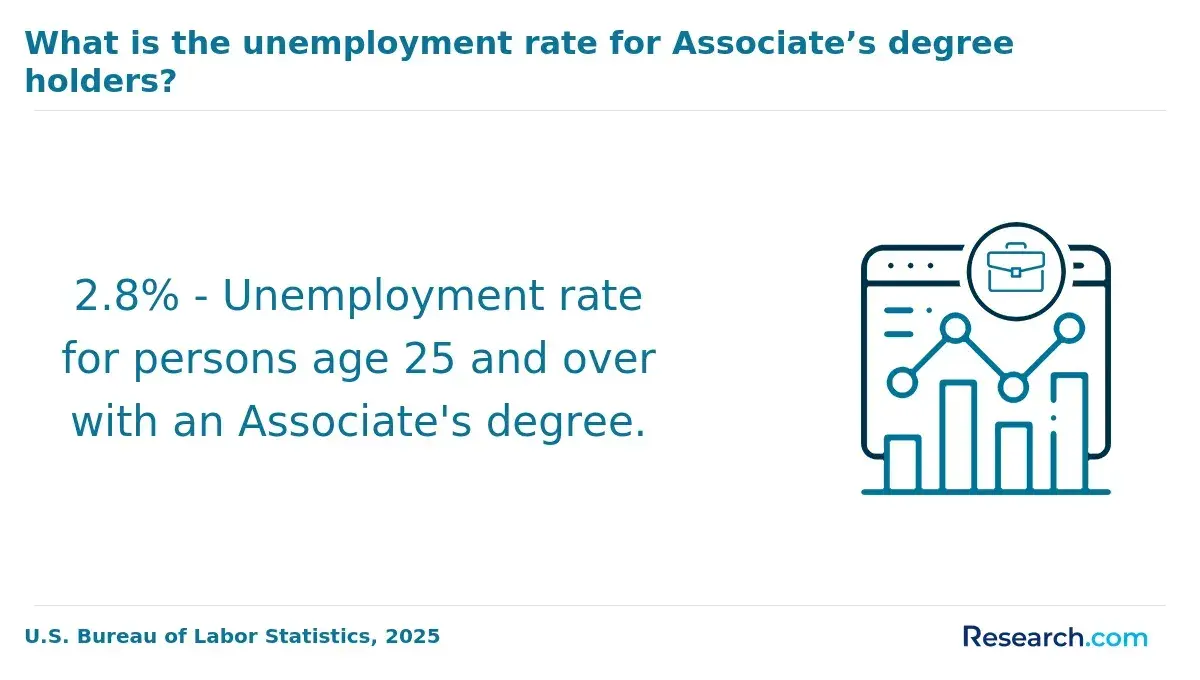
| Associate degree or transfer pathway | Introductory physics, calculus, general education, early labs | Students reducing cost before transferring to a bachelor's program | Usually not enough for physicist or advanced research roles by itself |
| Bachelor's in physics | Core theory, labs, mathematical methods, computation, scientific writing | Entry-level technical roles, engineering-adjacent work, teaching preparation, graduate school preparation | Career options improve when paired with internships, coding, or applied electives |
| Applied physics or engineering physics bachelor's | Physics fundamentals plus design, electronics, materials, optics, or systems work | Students targeting industry roles rather than purely academic research | Program quality depends heavily on lab access, projects, and employer connections |
| Master's degree | Specialization, research methods, advanced computation, applied project work | Advanced technical roles, R&D support, data-intensive science, applied research | Return on investment depends on employer demand in the chosen specialization |
| PhD in physics | Original research, advanced theory, publication, grant-style communication, independent problem design | Research scientist, national lab, academic, advanced industry R&D roles | Long timeline and narrow specialization can be costly if career goals are unclear |
Students interested in Earth systems, planetary science, geophysics, or environmental measurement may also compare physics programs with a best online geology degree, especially if their target careers involve field methods, resource analysis, climate data, or subsurface imaging.
Before enrolling, ask how the program turns coursework into evidence. Strong signals include undergraduate research options, required upper-level labs, coding assignments, senior projects, internship support, modern instrumentation, and faculty who publish or consult in areas that match your goals.
What coursework develops the most in-demand physics skills?
The most useful physics coursework is the coursework that creates transferable proof of skill. A transcript full of rigorous theory helps, but job postings often reward applicants who can also show code, lab notebooks, data visualizations, simulations, or written technical reports.
The table below connects common physics courses to the skills employers tend to recognize. Use it as a planning tool when choosing electives or deciding whether to add a minor, certificate, or research project.
| Course or learning area | Job-ready skills developed | Career relevance |
| Classical mechanics | Model building, differential equations, conservation laws, approximation | Aerospace, robotics, defense, mechanical systems, simulation |
| Electricity and magnetism | Field theory, circuit concepts, sensors, electromagnetic systems | Electronics, optics, communications, energy, instrumentation |
| Quantum mechanics | Abstract modeling, probability amplitudes, atomic and condensed matter concepts | Semiconductors, photonics, quantum technology, materials research |
| Statistical and thermal physics | Probability, distributions, entropy, many-particle systems | Materials, data science, energy systems, computational modeling |
| Advanced laboratory | Experimental design, calibration, uncertainty, troubleshooting, documentation | Research labs, quality testing, manufacturing, medical devices |
| Computational physics | Python or MATLAB, numerical methods, simulation, visualization | Data science, modeling, engineering support, research computing |
| Electronics or instrumentation | Signal measurement, control systems, sensors, circuit debugging | Laboratory engineering, hardware testing, automation, optics |
| Technical writing or communication | Reports, presentations, documentation, audience adaptation | Almost every applied physics career |
If your strongest interest is computational work, compare physics coursework with programs built specifically around statistics, machine learning, and data pipelines, such as a data scientist degree. Physics can be an excellent route into data-heavy work, but only if you intentionally build the missing database, machine learning, and software workflow skills employers expect.
A practical course-planning sequence is to take programming early, use it in lab courses, add statistics before senior research, and complete at least one project that combines modeling with real or simulated data. That sequence makes it easier to explain your value in interviews.
Which physics careers use these skills most?
Physics skills appear in more careers than the job title "physicist" suggests. Many physics graduates work in engineering, software, analytics, finance, education, healthcare technology, government, defense, energy, or manufacturing because those fields need people who can reason quantitatively under uncertainty.
The table below summarizes common physics-related careers and the skills they use most. It can help readers decide whether they need a research-heavy path, an applied bachelor's path, or a hybrid route with computing or engineering.
| Career path | Physics skills used most | Typical responsibilities | Common degree expectation |
| Physicist or research scientist | Modeling, experimental design, simulation, technical writing | Conduct research, design experiments, analyze results, publish or report findings | Master's or PhD is common for advanced roles |
| Optical or photonics engineer | Optics, lasers, electromagnetism, lab testing, instrumentation | Design and test optical systems, sensors, imaging tools, or laser-based products | Bachelor's to graduate degree, depending on role |
| Data scientist or quantitative analyst | Statistics, programming, modeling, uncertainty analysis | Build models, analyze complex datasets, communicate patterns and predictions | Bachelor's may work with strong portfolio; graduate degree often helps |
| Systems engineer | Systems thinking, requirements analysis, modeling, validation | Coordinate technical components, test performance, manage trade-offs | Bachelor's in physics, engineering physics, engineering, or related field |
| Medical physicist | Radiation physics, dosimetry, imaging, safety, calibration | Support radiation therapy, imaging quality, patient safety, and equipment performance | Graduate education and specialized clinical training are typically required |
| Materials scientist | Solid-state physics, microscopy, statistical analysis, lab methods | Study material properties, failure modes, coatings, polymers, or semiconductors | Bachelor's to PhD, depending on research depth |
| Physics teacher or professor | Conceptual explanation, labs, assessment, communication | Teach physics, design labs, mentor students, conduct research in higher education | Licensure for K-12 public schools; graduate degree for college roles |
Physics can also intersect with biological, veterinary, agricultural, and environmental systems through imaging, sensors, biomechanics, climate measurement, and instrumentation. Readers drawn to applied life-science contexts may want to compare physics-heavy routes with online animal science programs if their goal is closer to animal health, agriculture, or food systems than physical modeling.
The best career choice depends on the environment you want. Choose research if you enjoy open-ended questions and long technical timelines. Choose engineering-adjacent roles if you want product, testing, or systems work. Choose data roles if you prefer computation and business or operational decision-making. Choose teaching if your strongest skill is explaining difficult ideas clearly.
What degree level is needed for physics careers?
The degree level needed for physics careers depends on how close the role is to original research. Entry-level technical and analytical jobs may accept a bachelor's degree when the candidate has strong programming, lab, internship, or project evidence. Roles with "scientist," "principal investigator," "medical physicist," or "postsecondary professor" in the title often require graduate education.
The table below gives a practical degree-level guide. Requirements vary by employer, state, funding source, and specialization, so readers should verify requirements in current job postings before committing to a program.
| Goal | Minimum path that may be competitive | When a higher degree makes sense |
| Entry-level lab technician or research assistant | Associate or bachelor's degree with lab experience | If you want to design experiments rather than mainly run protocols |
| Industry technical analyst or junior data role | Bachelor's degree plus coding, statistics, and portfolio projects | If postings consistently request machine learning, advanced statistics, or domain research |
| Optics, sensors, or engineering support | Bachelor's in physics, applied physics, or engineering physics | If the role involves advanced design, R&D, or specialized photonics research |
| Physicist or research scientist | Master's degree may qualify for some applied roles | PhD is usually important for independent research leadership |
| Medical physicist | Graduate degree in medical physics or closely related field | Clinical training and board-related requirements may apply depending on the role |
| College professor | Master's may qualify for some community college roles | PhD is typically expected for tenure-track university positions |
A common mistake is assuming a PhD is automatically the best route because it is the highest credential. It may be the right choice for research, national lab, or academic goals, but it can be excessive for students who want software, analytics, testing, or engineering-support roles. For those goals, a bachelor's degree plus targeted technical experience may be faster and more flexible.
Employer Confidence Share in Online vs. In-Person Degree Skills, Global 2024

How do online and campus physics programs compare?
Online and campus physics programs can both be useful, but they are not interchangeable. Physics is unusually dependent on laboratory practice, instrumentation, and collaborative problem-solving, so students should look carefully at how an online program handles labs, proctored exams, research projects, and faculty access.
The table below compares online and campus formats in the areas that matter most for physics skill development. Use it to decide whether flexibility is worth the trade-offs for your target career.
| Factor | Online physics program | Campus physics program | Best choice when |
| Flexibility | Often better for working adults and students with fixed schedules | Less flexible but more structured | Online fits if you need schedule control; campus fits if you need daily academic structure |
| Laboratory access | May use home kits, simulations, remote labs, or short residencies | Usually offers direct access to equipment and in-person supervision | Campus is stronger for lab-intensive careers unless the online program has robust lab arrangements |
| Research opportunities | Possible but may require extra planning or local partnerships | Often easier to access through faculty labs and campus centers | Campus is usually better for graduate school preparation |
| Networking | Depends on virtual advising, cohorts, and employer partnerships | Often stronger through seminars, labs, clubs, and faculty contact | Campus helps if you are building a professional network from scratch |
| Cost control | May reduce relocation and commuting costs | May provide more assistantships, campus jobs, or local research roles | Compare total cost, not tuition alone |
Students who mainly want computational careers may find that an online physics degree is not the only flexible option. A computer science online degree can be a better fit if the target roles emphasize software engineering, systems design, databases, or production-level coding more than physical modeling.
Before choosing an online physics program, ask admissions advisors how upper-level labs are completed, whether credits transfer to graduate programs, how students access research mentoring, what software tools are required, and whether the degree title differs from the campus version.
Red flags include vague lab descriptions, no clear faculty advising model, limited upper-level physics electives, or poor transparency around transfer and graduation outcomes.
What accreditation matters for physics programs?
Accreditation matters because it affects credit transfer, graduate school eligibility, employer confidence, and access to federal financial aid. In the U.S., students should first confirm that the institution is accredited by an accreditor recognized by the U.S. Department of Education or the Council for Higher Education Accreditation.
Physics itself does not typically have the same universal programmatic accreditation structure as fields like nursing or engineering. However, related paths may have additional expectations. Engineering physics programs may be ABET-accredited if they are structured as engineering programs.
Teacher preparation programs must meet state educator preparation and licensure rules. Medical physics pathways may need to align with specialized accreditation or clinical training expectations depending on the role.
Use the following checks before applying or enrolling:
- Confirm institutional accreditation through an official accreditor database, not only the school's marketing page.
- Ask whether the specific physics, applied physics, or engineering physics program has any program-level accreditation or external review.
- Verify whether credits transfer to public universities or graduate programs you may want later.
- For teaching, medical physics, or engineering licensure-adjacent goals, check state or professional requirements before enrolling.
- Ask for written details on lab delivery, faculty qualifications, graduation rates, and career support.
A major red flag is any school that avoids clear answers about accreditation, licensure alignment, or transfer credit. Another is a program that advertises high-paying physics careers without explaining that many research and clinical roles require graduate training.
How much do physics-related jobs pay?
Physics-related pay varies widely because the degree can lead to research, engineering, data, software, education, healthcare technology, or government roles. Salary also depends on degree level, security clearance, geographic market, industry, and whether the job is closer to research, production, or management.
The table below uses U.S. Bureau of Labor Statistics May 2024 wage data for selected physics and physics-adjacent occupations. Treat these figures as labor-market reference points, not as promises for any individual graduate.
| Occupation | Relevant physics skills | May 2024 median annual wage | What the number means for readers |
| Physicists | Advanced modeling, experimentation, computation, research communication | $166,290 | Specialized physicist roles can pay well, but many require graduate education and strong research experience. |
| Data scientists | Statistics, programming, modeling, uncertainty analysis | $112,590 | Physics graduates can compete if they add practical data tools, portfolio projects, and domain knowledge. |
| Electrical and electronics engineers | Electromagnetism, circuits, sensors, systems thinking | $118,780 | Physics graduates may need engineering coursework, internships, or licensure-aware planning for some roles. |
| Materials scientists | Solid-state physics, lab methods, microscopy, data interpretation | $112,440 | Materials roles often reward lab experience and may prefer graduate training for research-intensive work. |
| Physics teachers, postsecondary | Concept explanation, research, laboratory instruction, mentoring | $94,290 | Higher education teaching pay varies by institution type, tenure status, region, and research expectations. |
When evaluating return on investment, compare the total cost of the degree with the career level you realistically plan to pursue. A lower-cost bachelor's program with strong internships may outperform an expensive program with weak lab access. A graduate degree can be worth it for research, medical physics, or specialized R&D, but it should be chosen with a clear target role and funding plan.
What is the job outlook for physics careers?
The job outlook for physics careers is strongest when physics is paired with growing applied needs: data-intensive research, semiconductors, energy systems, defense, space technology, medical imaging, quantum information, advanced manufacturing, and automation. The narrow category of physicists and astronomers is projected by BLS to grow 7% from 2024 to 2034, but many physics graduates work in adjacent occupations with different outlooks.
Readers should understand the difference between "physics job outlook" and "career outlook for people with physics skills." The first is limited to formal physicist titles. The second is broader and often more useful because physics graduates may qualify for roles in analytics, engineering support, technical consulting, software, instrumentation, or teaching.
To improve your employment odds, take these steps before graduation:
- Review current job postings in three target roles and list the repeated tools, degree levels, and project expectations.
- Build one portfolio project for each major skill cluster: Coding, lab or instrumentation, modeling, and communication.
- Seek undergraduate research, internships, co-ops, or national laboratory summer programs as early as possible.
- Learn version control, reproducible analysis, and professional documentation habits, not just classroom coding.
- Talk to faculty, alumni, and employers about which electives best support your target industry.
The biggest planning mistake is waiting until senior year to translate physics coursework into career evidence. Employers do not always know how to interpret a physics transcript, so your projects, internships, Git repositories, lab reports, presentations, and research posters help make your skills visible.
Other Things You Should Know About Physics
Start with programming for data analysis, especially Python, because it connects directly to modeling, visualization, automation, and technical problem-solving. Pair it with statistics and a physics project so it does not look like a standalone coding exercise.
In 2027, skills related to data analysis, computer programming, and problem-solving are highly sought after in job postings for physics graduates. Those with a bachelor’s in physics can find opportunities in sectors like technology, finance, and education, but may benefit from augmenting their skills with programming or data analysis proficiency.
Graduate school is often needed for advanced research, medical physics, national lab roles, and college faculty positions. It is not always necessary for data, software, lab, technical sales, systems, or engineering-adjacent roles if you build the right applied skills during the bachelor's degree.
References
- What Skills Make a Physicist Valuable to Employers? https://www.physicsforums.com/threads/what-skills-make-a-physicist-valuable-to-employers.806951/
- What jobs can I get with a physics degree? https://www.goconstruct.org/faqs/construction-careers/what-jobs-can-i-get-with-a-physics-degree
- Physics https://www.careerpilot.org.uk/job-sectors/subject/physics
- The Australian Institute of Physics https://www.aip.org.au/ACCREDITATION
- Become a Physicist https://careers.cap.ca/becomeaphysicist.html
- Why a physics degree is so valuable in today's uncertain job market – Physics World https://physicsworld.com/a/why-a-physics-degree-is-so-valuable-in-todays-uncertain-job-market/
- What You Can Do with a Physics Degree https://www.mabecs.com/en-gb/events/student-stories/what-can-you-do-with-a-physics-degree-anyway
- Accreditation, Validation and Recognition of Physics Degrees https://telescoper.blog/2022/09/19/accreditation-validation-and-recognition-in-physics-degrees/