2027 Online Physics Degrees With Strong Scientific Writing Training

Co-Founder and Chief Data Scientist
Choosing an online physics degree is harder than it looks because fully online options are limited, lab requirements vary, and strong writing training is not always obvious in the curriculum. The decision matters because the US Bureau of Labor Statistics projects 7% employment growth for physicists and astronomers from 2024 to 2034, faster than many fields.
This guide is for students comparing accredited online physics programs, science communication pathways, teaching routes, or research careers. You will learn how to evaluate schools, writing-focused coursework, cost, timeline, admissions, career fit, and return on investment.
Key Things You Should Know
- Fully online physics bachelor's degrees are uncommon; students should verify institutional accreditation, lab delivery, transfer credit rules, and whether the curriculum includes lab reports, research writing, or a capstone.
- National pricing context matters: College Board's 2024-25 data lists average published tuition and fees at $11,610 for in-state public four-year colleges and $43,350 for private nonprofit four-year colleges.
- Physics graduates can move into research, data, engineering-adjacent, teaching, technical writing, and science communication roles; BLS May 2024 data reports a $91,670 median wage for technical writers and $166,290 for physicists.
What are online physics degrees with scientific writing training?
Online physics degrees are accredited undergraduate or graduate programs that teach mechanics, electricity and magnetism, quantum physics, thermodynamics, computational modeling, and laboratory analysis through remote coursework, virtual simulations, mailed lab kits, local lab arrangements, short residencies, or hybrid formats.
Scientific writing training means the program intentionally teaches students how to explain evidence: lab reports, literature reviews, research proposals, technical memos, posters, peer-style papers, and public-facing science communication.
This kind of program fits students who want a physics foundation but also need the communication skills used in research teams, government agencies, education, technical writing, science journalism, patent work, and data-heavy industries. It may not fit students who need a traditional campus lab environment, plan to pursue highly experimental doctoral research immediately, or want an ABET-accredited engineering degree instead of a physics major.
The table below compares common online physics-related degree options. Use it to match the degree level to your academic goal, because "online physics degree" can mean very different things across schools.
| Program type | Best fit | Scientific writing opportunities | Decision note |
| Online bachelor's in physics | Students seeking broad physics training for graduate school, teaching preparation, technical roles, or interdisciplinary work | Lab reports, research methods, capstone papers, data analysis reports | Check whether upper-division labs are fully online, hybrid, or completed locally. |
| Online applied physics or physical science master's | Working professionals, teachers, or students building advanced technical credentials | Graduate literature reviews, research proposals, technical presentations | Ask whether the degree is research-based, coursework-only, or designed mainly for educators. |
| Physics minor or concentration in another online degree | Students in data science, engineering technology, environmental science, or education | Scientific briefs, modeling reports, applied research projects | This can be more practical if a full online physics major is unavailable. |
| Science communication or technical writing add-on | Students who want to translate complex science for employers, policy audiences, or the public | Articles, white papers, grant-style proposals, documentation | Look for writing-intensive courses rather than assuming all lab classes teach communication well. |
If you are drawn to physics because you care about climate, energy, or sustainability, it may also be useful to compare physics with "What can you do with an environmental science degree?," since that field often emphasizes applied research, field data, and policy communication.
Which accredited schools offer online physics degrees?
Accredited online physics degrees exist, but they are less common than online business, computer science, or education programs because physics depends heavily on labs and advanced math sequencing. The safest way to search is to start with institutional accreditation, then confirm the exact degree title, online delivery format, lab expectations, and writing-intensive requirements directly with the school.
The table below lists examples of U.S. institutions to investigate. Program availability can change, so treat this as a starting point for verification rather than a final enrollment list.
| School | Example online physics-related option | Accreditation type to verify | What to ask before applying |
| Arizona State University Online | Online BA in Physics | Institutional accreditation through the Higher Learning Commission | Ask how upper-division labs, research projects, and writing-intensive assignments are delivered online. |
| University of North Dakota | Online graduate study in physics or physics education pathways | Institutional accreditation through the Higher Learning Commission | Ask whether the program is designed for teachers, research preparation, or professional advancement. |
| Texas A&M University-Commerce / East Texas A&M University | Online or distance graduate physics options, including teacher-focused pathways where available | Institutional accreditation through the Southern Association of Colleges and Schools Commission on Colleges | Ask whether the degree name, thesis option, and online status match your graduate-school or employer goals. |
| Johns Hopkins University Engineering for Professionals | Applied physics graduate coursework with online availability | Institutional accreditation through the Middle States Commission on Higher Education | Ask whether the full degree can be completed online and whether any applied lab, project, or residency is required. |
A good online physics shortlist should include more than the school name. Before you submit an application, verify these items with admissions, the physics department, and the registrar:
- Institutional accreditation status in the U.S. Department of Education-recognized accreditor database or the school's official accreditation page.
- Exact credential name, such as BA in Physics, BS in Physics, MS in Physics, Applied Physics, or Physical Science Education.
- Whether labs are virtual, kit-based, simulation-based, completed during short campus sessions, or arranged near your location.
- Whether the curriculum includes scientific writing through lab reports, research methods, senior seminar, capstone, thesis, or technical communication courses.
- Transfer-credit limits for calculus, general physics, chemistry, programming, and lower-division general education courses.
A common mistake is assuming that "online courses in physics" equal an "online physics degree." Many universities offer individual online physics classes for prerequisites, but not a full physics major. Always confirm that the degree itself can be completed in the format you need.
How do online and campus physics degrees compare?
Online and campus physics degrees can teach the same core theories, but they differ in how students complete labs, build faculty relationships, access research equipment, and demonstrate hands-on readiness. The best format depends on whether your priority is flexibility, experimental research, teaching preparation, cost control, or access to specialized equipment.
The comparison below shows the major trade-offs. Use it to decide whether online physics is a strong fit or whether a campus, hybrid, or engineering-adjacent program would serve you better.
| Factor | Online physics degree | Campus physics degree | Best choice when |
| Flexibility | Strong for working adults, military students, caregivers, and transfer students | Less flexible but more structured | Choose online if schedule control is essential. |
| Laboratory access | May use virtual labs, kits, local arrangements, or short residencies | Direct access to instruments, faculty labs, and peer lab teams | Choose campus if experimental research is central to your goal. |
| Scientific writing | Can be strong if the program uses lab reports, capstones, and instructor feedback online | Often supported through seminars, research groups, and writing centers | Choose the program with required writing-intensive physics assignments, not just the preferred format. |
| Networking | Depends on virtual office hours, online research groups, internships, and alumni access | Usually easier through labs, clubs, seminars, and faculty proximity | Choose campus if you need intensive mentoring for doctoral admissions. |
| Cost control | May reduce relocation and commuting costs, though tuition varies widely | May provide stronger assistantship or lab-work opportunities in some graduate programs | Compare total cost, not just tuition per credit. |
Students who want physics but are mainly aiming for product design, manufacturing, robotics, or licensed engineering work should compare the curriculum with a mechanical engineering online degree. Physics emphasizes fundamental principles and modeling; mechanical engineering typically provides a more direct professional pathway into engineering design roles.
What coursework builds scientific writing skills in physics?
Scientific writing in physics is not just grammar. It is the ability to describe methods, interpret uncertainty, explain equations in context, connect results to prior research, and present conclusions without overstating the evidence. Employers and graduate faculty value this because physics work often depends on clear documentation, reproducible analysis, and concise technical communication.
Look for the following coursework because it signals that writing is built into the degree rather than treated as an optional skill:
- Physics laboratory sequence with formal lab reports that require abstracts, methods, uncertainty analysis, results, discussion, and citations.
- Research methods or experimental design courses that teach how to frame a question, document procedures, and evaluate error.
- Computational physics or data analysis courses where students submit code documentation, modeling explanations, and written interpretations of results.
- Scientific communication, technical writing, or writing-in-the-disciplines courses focused on translating complex material for expert and nonexpert audiences.
- Senior seminar, capstone, thesis, or independent study requiring a substantial paper, poster, oral presentation, or research portfolio.
- Ethics or responsible conduct of research coursework covering citation, authorship, data integrity, and limitations of evidence.
When reviewing syllabi, do not stop at course titles. A course called "Modern Physics" may include only exams, while a course called "Advanced Laboratory" may require several full research-style reports. Ask for sample assignments or learning outcomes if the catalog is unclear.
Writing-focused physics students may also benefit from information organization skills used in archives, data repositories, and research libraries. If that direction interests you, compare the communication and information-management side of physics with an online degree for library science, especially for careers involving scientific collections, metadata, or scholarly communication.
What admission requirements do online physics programs use?
Admissions requirements vary by level, but online physics programs usually care about math readiness more than almost anything else. A student who can write well but has not completed calculus may still need prerequisites before taking upper-division physics.
Most undergraduate and graduate applicants should be prepared for requirements like these:
- High school diploma or equivalent for bachelor's admission, with recommended preparation in algebra, trigonometry, precalculus, physics, and chemistry.
- Prior college credit or placement evidence for calculus-based physics sequences, especially for transfer students.
- Official transcripts from all colleges attended, with minimum GPA requirements that vary by school and degree level.
- Graduate applicants may need a physics, engineering, mathematics, or closely related bachelor's degree with coursework in classical mechanics, electricity and magnetism, quantum mechanics, and advanced calculus.
- Statement of purpose explaining academic goals, research interests, teaching goals, or professional reasons for choosing online study.
- Letters of recommendation for many graduate programs, especially those with thesis, research, or competitive faculty review.
Use this step-by-step process before applying so you do not lose time or money on a poor fit:
- Compare your completed math and physics courses with the program's published degree map.
- Ask whether missing prerequisites can be completed online before full admission or must be finished elsewhere.
- Confirm whether transfer credits apply to the major, not just to general electives.
- Request details on lab requirements, including equipment, software, residency dates, and local proctoring rules.
- Ask whether scientific writing is assessed through required assignments, capstones, or portfolio work.
A major red flag is a program that gives vague answers about labs or transfer credits. In physics, course sequencing matters; one missing calculus or lab prerequisite can delay graduation by a semester or more.
How long do online physics degrees take to finish?
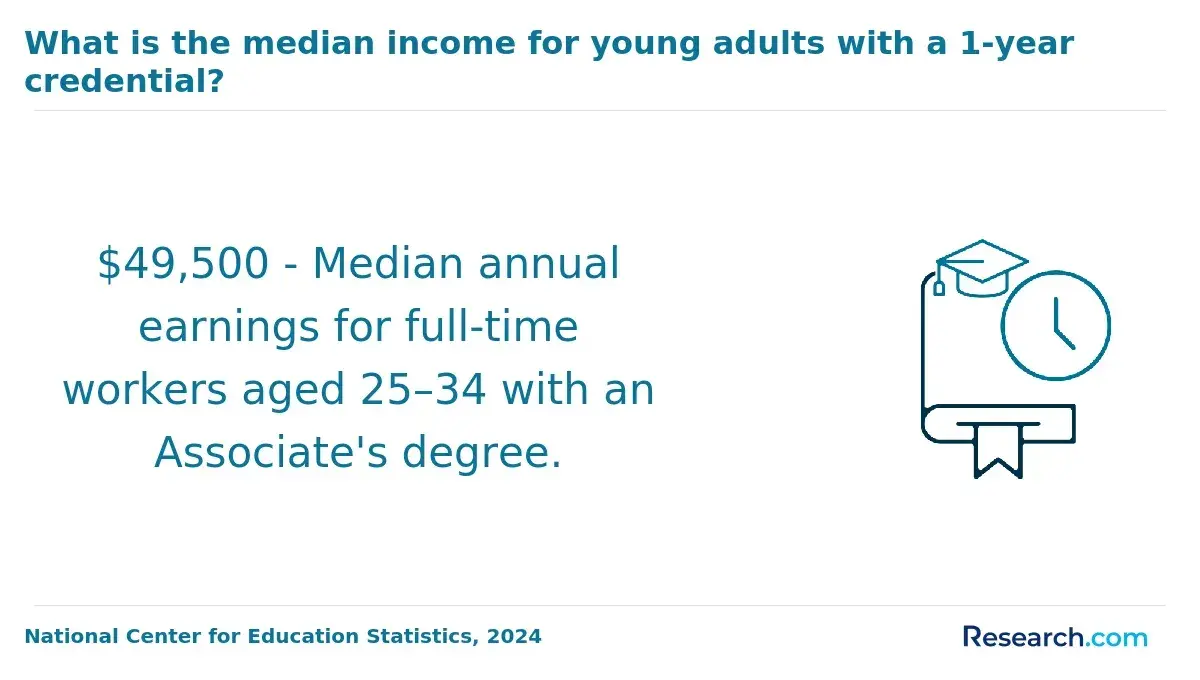
An online bachelor's degree in physics typically takes about four years for first-time, full-time students, but transfer students may finish faster if prior calculus, physics, and general education credits apply cleanly. Part-time students often need longer because physics courses are sequential, and not every advanced class is offered every term.
The table below summarizes realistic timelines. Use it to estimate your pace before assuming that "online" automatically means "accelerated."
| Student situation | Typical timeline | Main factor that affects speed | Planning advice |
| First-time full-time bachelor's student | About 4 years | Math sequence, lab sequence, and upper-division course rotation | Start calculus early and follow the physics department's recommended course order. |
| Transfer student with strong STEM credits | About 2 to 3 years | How many calculus, physics, and lab credits transfer into the major | Request a degree audit before enrolling, not after orientation. |
| Working adult studying part-time | Often 5 to 6 years for a bachelor's | Course load, term availability, and prerequisites | Prioritize prerequisite chains over random electives. |
| Online master's student | Often 2 to 3 years | Thesis, capstone, research project, or teacher-focused schedule | Ask whether summer courses, independent study, or thesis supervision are available online. |
Acceleration can be useful, but it has trade-offs. Physics requires time for problem-solving practice, lab analysis, and writing revision. A faster program is not automatically better if it reduces feedback on scientific writing or limits opportunities to produce a research portfolio.
How much do online physics degrees cost?
Online physics degree costs depend on residency status, public versus private tuition, transfer credits, lab fees, software, books, technology fees, and whether you need short campus visits. College Board's 2024-25 national pricing data provides a helpful benchmark, but your actual cost can be higher or lower depending on the school and your aid package.
Use these published national figures as context when comparing program prices:
- $11,610 average published tuition and fees for in-state students at public four-year institutions in 2024-25.
- $30,780 average published tuition and fees for out-of-state students at public four-year institutions in 2024-25.
- $43,350 average published tuition and fees for private nonprofit four-year institutions in 2024-25.
Those numbers are sticker prices, not the final amount every student pays. Grants, employer tuition assistance, military benefits, scholarships, transfer credits, and residency policies can change the net cost significantly.
To control costs, compare programs using total cost rather than tuition alone. Physics students should pay special attention to lab kits, required software, proctored exams, equipment, travel for residencies, and the cost of retaking sequential courses if prerequisites are missed.
Before enrolling, ask the financial aid or billing office these questions:
- What is the total estimated cost to finish the degree after my transfer credits are applied?
- Are online students charged different tuition, technology fees, or out-of-state rates?
- Are lab kits, simulation platforms, textbooks, graphing tools, or software licenses included?
- Does the program require any campus visits, and if so, how often?
- Can I use federal financial aid, employer reimbursement, veterans benefits, or scholarships for this specific online program?
A common mistake is choosing the lowest per-credit price without checking course availability. If required physics courses are offered only once per year, a cheaper program may still cost more in lost time.
Which careers can you pursue with a physics degree?
A physics degree can lead to several career directions, but the best path depends on degree level, lab experience, writing ability, programming skills, and whether you pursue graduate study. A bachelor's degree can support entry-level technical, data, education, or communication roles; advanced research roles in physics usually require a master's or doctorate.
The table below connects career paths with the kind of preparation employers or graduate programs often expect. Use it to identify what you may need beyond the degree itself.
| Career direction | Typical responsibilities | Useful preparation | When it makes sense |
| Research assistant or lab technician | Collect data, maintain equipment, document methods, help prepare reports | Advanced labs, statistics, programming, careful lab writing | Good for students considering graduate research later. |
| Data analyst or computational role | Model systems, analyze datasets, build visualizations, explain findings | Python, numerical methods, statistics, technical documentation | Strong fit for students who enjoy math and coding more than bench experimentation. |
| Technical writer or science communicator | Create manuals, reports, articles, proposals, and technical documentation | Scientific writing portfolio, physics literacy, audience-focused communication | Good for students who like explaining complex ideas clearly. |
| Secondary physics teacher | Teach physics, design labs, assess students, meet state education standards | Teacher preparation, supervised teaching, state licensure | Best for students who want a classroom career and are ready for licensure requirements. |
| Graduate student in physics or applied physics | Complete advanced coursework, research, publications, and teaching assistant work | Upper-division physics, research experience, faculty recommendations, writing sample | Needed for many physicist and professor roles. |
| Science information or research support specialist | Manage scientific resources, metadata, repositories, or scholarly communication workflows | Physics background plus information science or library training | Useful for students interested in research infrastructure rather than lab work. |
Students who enjoy scientific literature, databases, archives, or scholarly communication may want to compare physics with a library science degree, since some science libraries and research organizations value people who can understand technical content and organize information effectively.
Artificial intelligence is also changing physics-related work. AI tools can help with coding, data cleaning, simulation, literature discovery, and drafting, but they do not replace the need to understand equations, assumptions, uncertainty, or ethical reporting. Students who combine physics, programming, and careful writing will be better positioned to use these tools responsibly.
What salaries do physics graduates earn?
Physics salary outcomes vary widely because graduates enter different occupations. A bachelor's graduate working in technical communication will not have the same labor market as a PhD physicist in research and development, and location, industry, clearance status, graduate education, and experience can all change pay.
The table below uses U.S. Bureau of Labor Statistics May 2024 median wage data for roles related to physics training. Median wage means half of workers in the occupation earned more and half earned less; it is not a promise of earnings for any individual graduate.
| Occupation | Relevant physics connection | Median annual wage, May 2024 | Important limitation |
| Physicists | Research, applied physics, modeling, instrumentation, advanced technical work | $166,290 | Many roles require a doctorate or substantial graduate-level preparation. |
| Astronomers | Astrophysics, observation, computational analysis, research communication | $132,170 | Jobs are specialized and often tied to graduate education and research funding. |
| Data scientists | Modeling, statistics, programming, quantitative problem-solving | $112,590 | Physics graduates usually need strong coding and portfolio evidence. |
| Technical writers | Scientific documentation, reports, manuals, proposals, public-facing technical content | $91,670 | A writing portfolio and domain knowledge often matter as much as the major. |
| High school teachers | Physics instruction, lab design, student assessment | $64,580 | Public school roles generally require state teacher licensure. |
Use salary data as one part of an ROI decision, not the whole decision. A lower-cost online degree may be a good investment if it helps you enter a realistic target role with limited debt, but a program is less attractive if it lacks labs, writing feedback, career support, or graduate school preparation you need.
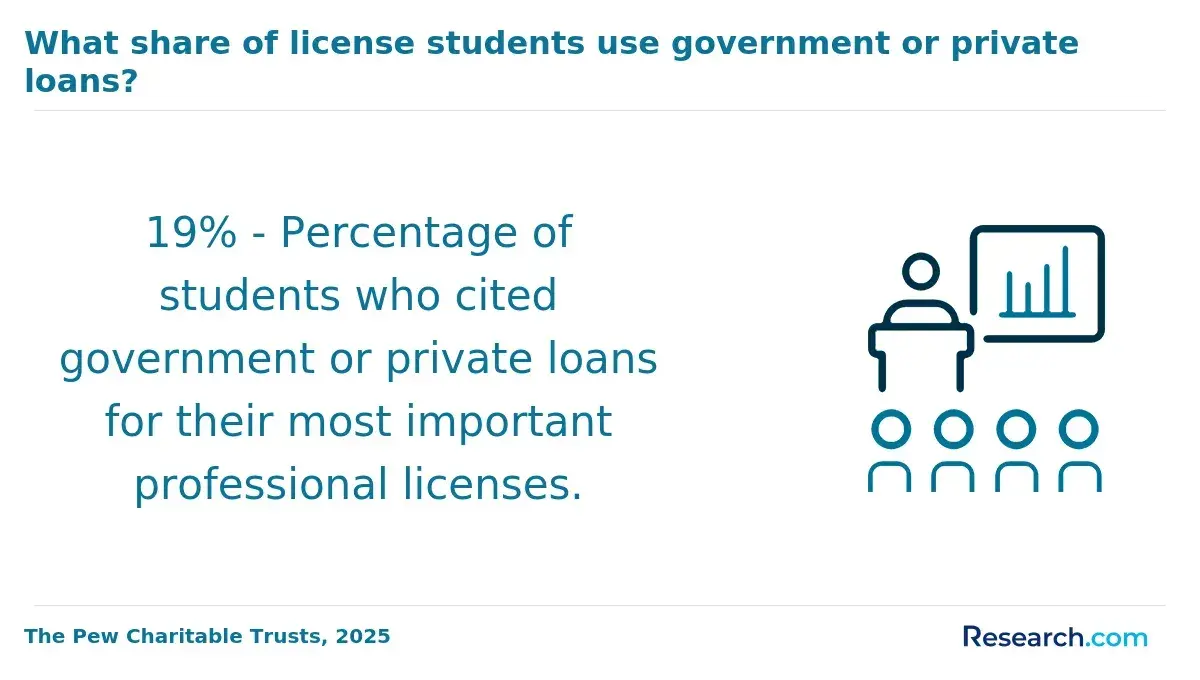
What licensure or certification is needed after graduation?
A physics degree itself does not usually create a license. Licensure or certification depends on the career you pursue after graduation, and requirements can vary by state, employer, school district, or professional board.
The list below summarizes common post-graduation credential queries for physics majors:
- Public school physics teaching usually requires state teacher licensure, including education coursework, supervised teaching, exams, and background checks.
- Engineering roles may require a professional engineer license only for certain responsibilities, especially when offering engineering services to the public; a physics degree alone may not meet every state's engineering licensure pathway.
- Medical physics careers often require graduate education, clinical residency, and board certification expectations for many clinical roles.
- Health physics, radiation safety, or nuclear-related roles may prefer or require specialized training, employer-specific credentials, or professional certification depending on duties.
- Patent agent work requires passing the U.S. Patent and Trademark Office registration examination and meeting technical background rules.
- Research library or science information roles may prefer a master's in library and information science, especially in academic or specialized research settings.
Before choosing a program, work backward from the credential you may need. Contact the state licensing board, school district, employer, or certification organization and ask whether the online physics degree, labs, and student-teaching or clinical requirements will satisfy their rules.
Other Things You Should Know About Physics
Some programs can be completed online, but fully online physics degrees are uncommon because of lab requirements. Always confirm whether labs are virtual, kit-based, local, hybrid, or campus-based before enrolling.
Neither is automatically better. A BS may include more advanced technical coursework, while a BA may allow more electives in communication or interdisciplinary study. The stronger option is the one with required lab reports, research writing, and a capstone or thesis.
Further education, such as graduate school, depends on your career goals. For research or academic positions, a graduate degree is often crucial. However, many industry roles value a bachelor's degree, especially if the program includes strong scientific writing training, which enhances communication skills.
Verify institutional accreditation, the exact degree title, lab format, faculty credentials, transfer-credit policies, graduation requirements, and whether the curriculum includes writing-intensive physics assignments. Avoid programs that cannot clearly explain labs or degree completion requirements.
References
- How Long to Get a Physics Degree? | ValidGrad https://validgrad.com/blog/physics-degree-timeline/
- Top 5 Things to Know About Licensure: Before you choose your degree program! — Higher Education Licensure Pros https://www.higheredlicensurepros.com/blog/top-5-things-to-know-about-licensure-before-you-choose-your-degree-program
- 2025 Best Online Degrees in Physics https://www.onlineu.com/degrees/physics
- What Can You Do with a Physics Degree? https://willamette.edu/academics/college/physics/career-options
- Difference Between Licensure vs. Certification | University of Bridgeport https://www.bridgeport.edu/news/designing-your-career-path-licensure-vs-certification/