2027 Online Physics Degrees That Help Build Experimental Design Skills

Co-Founder and Chief Data Scientist
Choosing an online physics degree is harder than choosing many other online majors because physics depends on measurement, lab technique, and error analysis-not just lectures. The payoff can be meaningful: the U. S. Bureau of Labor Statistics reported a May 2024 median annual wage above $150,000 for physicists and astronomers, though many roles require graduate study. This guide is for students who want flexibility without losing experimental training. You will learn how remote labs work, which accredited options to verify, what costs to expect, and how to judge whether an online physics program fits your goals.
Key Things You Should Know
- Fully online physics bachelor's options in the U.S. are limited; students should verify institutional accreditation, upper-division lab delivery, and whether any short campus residencies are required.
- Experimental design skills come from courses such as modern physics lab, electronics, computational physics, optics, statistical methods, and a capstone that requires measurement planning, uncertainty analysis, and technical reporting.
- College Board's 2024-2025 published tuition benchmarks were $11,610 for in-state public four-year tuition and fees, $30,780 for out-of-state public tuition and fees, and $43,350 for private nonprofit four-year tuition and fees, before aid and program-specific lab costs.
What is an online physics degree and how does it build experimental design skills?
An online physics degree is a college program that teaches mechanics, electromagnetism, quantum physics, thermodynamics, mathematical methods, and laboratory reasoning through distance-delivered coursework. At the bachelor's level, the most relevant credential is usually a Bachelor of Science in Physics, although some schools offer physics concentrations inside broader natural science or engineering-related programs.
Experimental design means planning a testable investigation, controlling variables, choosing instruments, estimating uncertainty, collecting data, analyzing results, and explaining whether the evidence supports a model. In physics, that could mean designing a circuit experiment, measuring optical interference, estimating the acceleration due to gravity with imperfect instruments, or using computational models to compare predicted and observed behavior.
The key decision is whether the online format still gives you enough authentic lab practice for your next step. A student aiming for teaching, technical sales, patent work, data analysis, or engineering support may be well served by a rigorous online physics degree. A student aiming for a PhD in experimental condensed matter physics, particle instrumentation, plasma physics, or optics should pay closer attention to research access, faculty mentorship, and advanced laboratory opportunities.
The table below summarizes the main physics-related online degree paths and how strongly each usually supports experimental design. Use it to decide whether you need a pure physics major or a physics-adjacent option.
| Program type | Best fit | Experimental design strength | Important limitation |
| Online BS in Physics | Students who want the broadest physics foundation for technical roles, teaching preparation, or graduate school prerequisites | Strongest online option when it includes upper-division lab courses, instrument-based experiments, and a capstone | May still offer fewer research-group experiences than a residential physics department |
| Online physical science or natural science degree with physics coursework | Students seeking broad science training for education, technical support, or interdisciplinary roles | Moderate, depending on the number and level of required labs | May not satisfy graduate physics prerequisites without extra coursework |
| Online engineering or applied physics-adjacent degree | Students interested in circuits, materials, systems, sensors, or product testing | Strong in applied measurement and design, but less focused on theoretical physics | May not include the same quantum mechanics or advanced mechanics depth as a physics major |
| Online certificate or nondegree physics coursework | Working professionals filling prerequisites or strengthening one skill area | Limited unless paired with a lab or project sequence | Usually not enough by itself for physics-major career pathways |
How do online physics programs teach hands-on labs and experimental techniques remotely?
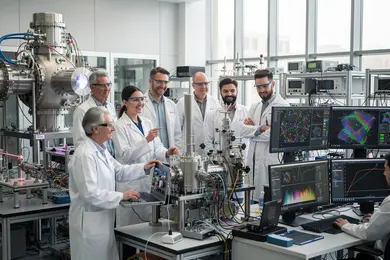
Online physics programs teach hands-on techniques through a mix of mailed lab kits, remote-controlled instruments, simulation environments, video-based experiment review, data acquisition software, and local proctored or supervised activities. The best programs do not simply replace labs with videos; they require students to make decisions, troubleshoot, document uncertainty, and defend results.
Remote experimentation has improved because affordable sensors, microcontrollers, cloud notebooks, and video lab tools are now common. This trend matters because employers increasingly expect physics graduates to work with digital instrumentation, automated data collection, and computational analysis rather than only traditional benchtop equipment.
When you review an online physics lab sequence, look for evidence that students do more than follow a recipe. Strong programs usually include these components:
- At-home instrumentation such as optics kits, circuit boards, photogates, sensors, or microcontroller-based measurement tools
- Remote access to university equipment, where students control instruments online and analyze real experimental data
- Simulation work that is paired with uncertainty analysis rather than treated as a substitute for measurement
- Lab notebooks, technical reports, and oral or video presentations that require students to justify methods and limitations
- Capstone or independent projects where students define a question, plan the method, collect or obtain data, and revise the design after initial results
A good remote lab should feel intellectually demanding even if the equipment is small. For example, a circuits lab using a mailed kit can still teach calibration, noise, resistance tolerance, model mismatch, and repeatability. Those are real experimental design skills because the student must decide whether the observed data are reliable enough to support a conclusion.
One red flag is a program that describes labs only as "virtual" without explaining what students actually measure, build, analyze, or submit. Virtual simulations can be useful, especially for quantum systems or large-scale phenomena that cannot be reproduced at home, but they should not be the only form of experimental training in a physics major.
Which accredited U.S. universities offer online physics degrees focused on experimentation?
The U.S. market for fully online physics degrees is much smaller than the market for online business, computer science, psychology, or nursing degrees. Students should treat any list of online physics programs as a starting point, then confirm current catalog details with the university because lab delivery, residency rules, and degree titles can change.
The table below highlights accredited U.S. universities and physics-related options that students commonly evaluate when looking for online physics study. It also shows what to verify before enrolling, because "online" does not always mean every lab, exam, or capstone requirement is completed from home.
| University | Online physics-related option to verify | Accreditation point | Experimental design questions to ask |
| Arizona State University | Online Bachelor of Science in Physics | Institutionally accredited by the Higher Learning Commission | Ask how upper-division labs are delivered, what equipment students use, and whether the capstone includes original experimental or computational work |
| University of North Dakota | Online or distance-delivered physics bachelor's study options, subject to current catalog availability | Institutionally accredited by the Higher Learning Commission | Ask whether labs require campus visits, local supervision, mailed kits, or remote instrumentation |
| Regionally accredited universities with online natural science degrees | Physical science, natural science, or science education programs with physics coursework | Confirm institutional accreditation through the U.S. Department of Education-recognized accreditor listed by the school | Ask whether the transcript shows enough physics, calculus, and lab credits for your graduate school, teaching, or employer requirements |
For physics, institutional accreditation is essential, but it is not the whole quality check. Unlike engineering, physics bachelor's programs are not usually judged by a single required programmatic accreditation standard. That makes the curriculum review especially important: you need to see the number of lab credits, the level of physics courses, faculty qualifications, and the kind of capstone work students complete.
Students who want a research-heavy future should also ask whether online students can join faculty projects, attend virtual research meetings, apply for summer Research Experiences for Undergraduates, or use local laboratories through approved arrangements. These opportunities can matter as much as the degree title when applying to graduate school or experimental technical roles.
What courses and lab requirements develop experimental design skills in online physics majors?
The courses that build experimental design skills are not limited to courses with "lab" in the title. A strong online physics major connects theory, measurement, computation, and communication across the curriculum. That matters because real experimental work requires both conceptual understanding and practical judgment.
Students should look for a course sequence that moves from guided measurement to independent design. The following course areas are especially important:
- Introductory physics labs, where students learn measurement, graphing, units, propagation of uncertainty, and basic technical writing
- Modern physics lab, where students connect quantum, atomic, nuclear, or relativistic concepts to measurable evidence
- Electronics or instrumentation, where students learn circuits, sensors, signal processing, calibration, and noise reduction
- Computational physics, where students model systems, compare simulations to data, and use programming to test assumptions
- Optics, waves, or electromagnetism labs, where students practice alignment, interference measurement, field mapping, and systematic error analysis
- Statistical methods or data analysis, where students learn confidence intervals, regression, residuals, model selection, and reproducibility
- Senior capstone or research project, where students define a problem, choose methods, analyze results, and present limitations
A strong lab requirement should also include repeated technical communication. Employers and graduate faculty want to know whether you can document what you did, explain what went wrong, and make a defensible recommendation from incomplete data.
The table below shows how common assignments translate into experimental design skills. This can help you read a syllabus more critically before committing to a program.
| Assignment or requirement | Skill developed | Why it matters |
| Formal lab report | Method documentation, uncertainty analysis, and evidence-based conclusions | Shows whether you can communicate results in a format used in research and technical workplaces |
| Open-ended lab project | Question design, variable control, troubleshooting, and iteration | Builds independence beyond step-by-step lab manuals |
| Computational model compared with measured data | Model validation and assumption testing | Reflects how modern physics and engineering teams combine experiment and computation |
| Instrumentation assignment | Calibration, signal quality, and measurement limits | Prepares students for roles involving sensors, test equipment, and quality control |
| Capstone presentation | Technical explanation and defense of design choices | Helps students demonstrate readiness to employers or graduate admissions committees |
How do online physics degrees compare with campus programs for research and lab experience?
Online physics degrees can match campus programs in theory courses, mathematical preparation, coding, and written analysis. The biggest difference is usually access to advanced equipment, spontaneous faculty interaction, peer lab teams, and research groups. Whether that matters depends on your goal.
If you want a flexible route into technical work, teaching, software-adjacent analysis, or interdisciplinary science roles, an online program with rigorous labs can be a strong option. If your goal is a highly competitive experimental physics PhD, a campus program or an online program with documented research access may give you more direct preparation.
The comparison below shows where online physics programs can work well and where campus programs may still have an advantage. Use it to match the format to your intended outcome, not just to your schedule.
| Decision factor | Online physics degree | Campus physics degree | Best choice depends on |
| Lecture and theory coursework | Often comparable when taught by qualified faculty with rigorous assessments | Strong, with easier access to office hours and study groups | Your need for schedule flexibility versus face-to-face academic support |
| Introductory lab experience | Can be effective with mailed kits, remote instruments, and strong reporting requirements | Usually easier to standardize with shared equipment and in-person supervision | How transparent the online program is about lab methods |
| Advanced experimental equipment | May be limited or handled through remote access, short residencies, or local arrangements | More likely to include specialized instruments and supervised lab spaces | Whether your target career requires advanced instrumentation experience |
| Research mentorship | Possible, but students must ask about availability for online learners | More visible through department seminars, labs, and faculty projects | Your graduate school plans and willingness to pursue summer research externally |
| Networking | Requires deliberate effort through virtual clubs, research meetings, internships, and conferences | Often easier through department events and peer cohorts | Your ability to build relationships proactively |
The online-versus-campus trade-off is sharper in physics than in less equipment-dependent majors. For example, a student comparing a physics degree with an online nutritionist degree should recognize that physics programs must prove how students practice measurement, instrumentation, and experimental uncertainty in addition to completing readings and exams.
A practical compromise is to choose an online degree but add in-person experiences where possible. Summer research programs, local internships, maker spaces, community college lab courses approved for transfer, and employer-based test labs can help fill gaps that a remote program cannot fully cover.
What are typical admission requirements for online bachelor's degrees in physics?
Admission requirements for online bachelor's degrees in physics vary by university, but physics is math-intensive, so preparation matters more than in many open-access online majors. Schools may admit first-year students, transfer students, second-degree students, or working adults returning to college.
Most applicants should expect schools to review academic readiness in math and science. Common requirements or recommended preparation include:
- High school diploma, GED, or equivalent credential
- Official transcripts from high school and any colleges attended
- College algebra, precalculus, or calculus readiness, often shown through coursework or placement testing
- High school physics and chemistry, strongly recommended even when not strictly required
- Minimum GPA rules for transfer admission, which vary by institution and applicant type
- English proficiency documentation for applicants whose prior education was not in English
- Technology readiness, including reliable internet access, a computer capable of running scientific software, and space for safe at-home lab work
Students with weaker math backgrounds should not automatically rule out physics, but they should plan for a longer timeline. Starting with precalculus or calculus I before physics can prevent costly withdrawals later. If you are comparing STEM online programs, reviewing electrical engineering degree online admissions can also help you understand how calculus, physics, and transfer prerequisites are commonly evaluated in related technical fields.
Transfer students should ask whether previous physics labs transfer as equivalent lab credits, not just as elective science credits. This distinction can affect graduation time, financial aid planning, and eligibility for upper-division physics courses.
How long do online physics degrees take, and what do they usually cost?
Most online bachelor's degrees in physics take about four years for full-time first-year students. Transfer students may finish faster if they bring general education, calculus, and introductory science credits, while part-time students may need five to six years depending on course sequencing and lab availability.
Cost depends on residency status, tuition model, transfer credits, fees, lab materials, textbooks, software, and whether any campus visits are required. College Board's 2024-2025 national published tuition and fee benchmarks provide useful context before financial aid:
- Public four-year in-state average published tuition and fees: $11,610
- Public four-year out-of-state average published tuition and fees: $30,780
- Private nonprofit four-year average published tuition and fees: $43,350
Those figures are not physics-specific and do not represent net price after grants or scholarships. They are still helpful because they show why transfer credit, in-state tuition eligibility, and aid packages can change the value of an online degree more than the sticker price alone.
The table below summarizes cost factors that are especially relevant for online physics students. Review each item before comparing offers from schools.
| Cost factor | Why it matters in online physics | Question to ask |
| Tuition model | Some schools charge online students a flat rate, while others vary by residency or credit load | Is tuition per credit, per term, or residency-based? |
| Lab kits and equipment | Physics labs may require sensors, circuit components, optics supplies, or safety materials | Which lab materials are included, rented, mailed, or purchased separately? |
| Campus residency or proctored lab | Travel can add lodging, transportation, and time away from work | Are any in-person labs, exams, or capstone presentations required? |
| Transfer credits | Accepted credits can reduce both time and total tuition | Will my prior calculus, physics, and lab courses apply to major requirements? |
| Course sequencing | Physics courses often build on prerequisites and may not be offered every term | Can I see a term-by-term plan for full-time and part-time study? |
| Financial aid eligibility | Degree-seeking status, credit load, and accreditation affect aid access | Is this program eligible for federal financial aid and institutional scholarships? |
A common mistake is comparing only per-credit tuition. A lower per-credit price can be less affordable if the school accepts fewer transfer credits, requires travel, or delays graduation because upper-division physics courses are offered infrequently.
What careers rely on experimental physics skills gained from online degrees?
Experimental physics skills are useful beyond the job title "physicist." Many bachelor's graduates use their training in engineering support, testing, data analysis, quality assurance, technical sales, education, defense, aerospace, energy, semiconductor, software, and laboratory environments. The strongest outcomes usually come from combining physics with programming, electronics, statistics, communication, or domain-specific experience.
The table below connects experimental design skills to practical career paths. It is not a guarantee of eligibility, because employers differ in whether they require a bachelor's, master's, PhD, licensure, security clearance, or specialized industry experience.
| Career path | How experimental design skills apply | Typical additional preparation |
| Laboratory technician or research assistant | Sets up experiments, records data, calibrates instruments, and maintains lab documentation | Strong lab reports, safety training, instrumentation experience, and internships |
| Test engineer or engineering technician | Designs test procedures, evaluates product performance, and investigates failures | Electronics, CAD exposure, programming, and industry-specific tools |
| Data analyst or scientific programmer | Builds models, cleans data, tests assumptions, and communicates uncertainty | Python, statistics, machine learning basics, and a project portfolio |
| Quality assurance or metrology specialist | Checks measurement reliability, tolerance, calibration, and process variation | Statistical process control, documentation standards, and regulated-industry experience |
| Science teacher or educator | Designs demonstrations, explains evidence, and teaches scientific reasoning | State-specific teacher licensure or alternative certification |
| Graduate physics or engineering student | Uses experimental reasoning to join research groups and design original investigations | Advanced coursework, faculty recommendations, research experience, and strong math preparation |
AI and automation are changing these roles, but they are not eliminating the need for experimental judgment. Automated instruments can collect data quickly, and machine learning can find patterns, but humans still define the question, recognize flawed measurements, decide whether assumptions are valid, and explain why a result matters.
Students who enjoy that blend of physics and computation may eventually compare graduate pathways such as an online data science PhD, especially if they want to work at the intersection of experiments, modeling, and large datasets.
For career planning, the best strategy is to build evidence of skill while enrolled. Save polished lab reports, publish code on a portfolio platform if allowed by course policy, pursue internships, ask faculty about undergraduate research, and translate lab projects into resume bullets that emphasize measurement, analysis, and decision-making.
What salary ranges and job outlook can experimental physics graduates expect?
Salary outcomes for online physics graduates vary widely because "physics degree" can lead to technician roles, engineering-adjacent jobs, data roles, teaching, or graduate study. The most research-intensive physicist roles often require a master's or PhD, so bachelor's students should not use physicist salary data as a guaranteed outcome.
The table below uses recent U.S. labor-market benchmarks to frame expectations. Treat these as role-level indicators, not promises tied to any specific school or online format.
| Role category | Relevant experimental physics skills | Recent U.S. salary and outlook context |
| Physicists and astronomers | Research design, advanced modeling, instrumentation, and publication-quality analysis | BLS reported a May 2024 median annual wage of $155,680; many positions require graduate education |
| Architecture and engineering occupations | Testing, measurement, design validation, troubleshooting, and technical documentation | BLS reported a May 2024 median annual wage of $97,310 across this broad occupational group |
| Life, physical, and social science technician roles | Sample handling, instrument operation, data logging, and lab safety | BLS reported a May 2024 median annual wage in the mid-$50,000 range for this broad technician group |
| Computer, mathematical, and data-focused roles | Modeling, statistical reasoning, simulation, and uncertainty-aware analysis | BLS reported six-figure median wages for several computer and mathematical occupational groups in May 2024, with demand strongest for workers who combine quantitative and computing skills |
The job outlook is strongest for students who pair physics with applied skills. A physics graduate who can code, use sensors, analyze noisy data, and explain technical results has more options than a student who completes theory courses without a project portfolio.
Location also matters. Defense contractors, national laboratories, semiconductor firms, aerospace companies, energy employers, medical-device companies, and research universities are not evenly distributed across the country. Online students should research regional employers early and consider whether remote work, relocation, internships, or graduate study will be part of their plan.
How can students evaluate and choose a reputable online physics program?
Choosing a reputable online physics program requires more than confirming that the school is legitimate. You need to know whether the degree supports your specific goal: graduate physics, technical employment, teaching, engineering-adjacent work, or scientific data analysis.
Use the following steps before applying or enrolling. They are designed to help you avoid the most expensive mistakes in online science education:
- Confirm institutional accreditation through a recognized accreditor and make sure the program is offered by the accredited university, not only by a third-party platform.
- Request the full degree plan, including all physics, math, lab, and capstone requirements.
- Ask how each required lab is delivered, what equipment is used, and what students submit for grading.
- Verify whether any campus visits, synchronous meetings, proctored exams, or local lab arrangements are required.
- Ask how often upper-division courses are offered so you can estimate your real graduation timeline.
- Compare transfer-credit policies before assuming previous science courses will count toward the major.
- Ask whether online students can access faculty research, advising, tutoring, career services, and internship support.
- Review graduate school or employer prerequisites if you already have a target career path.
- Calculate total cost after grants, scholarships, transfer credits, fees, lab materials, and travel.
- Look for student outcomes data, but avoid treating salary or placement claims as guaranteed personal results.
Common red flags include vague lab descriptions, no visible physics faculty, an unclear accreditation page, no term-by-term plan, pressure to enroll before you review transfer credits, and promises that the degree will automatically lead to a specific job or salary. A reputable program should be able to answer detailed questions without making unrealistic claims.
Students should also be honest about fit. If you dislike calculus, troubleshooting, and open-ended problems, physics may be frustrating even in a flexible online format. If you enjoy research but prefer organizing information, supporting scholars, and working with databases rather than running experiments, an alternative graduate pathway such as an MLIS may align better with your strengths.
The best online physics degree is not simply the cheapest or fastest. It is the program that gives you credible lab practice, enough mathematical depth, strong faculty support, and a realistic path from enrollment to your intended career or graduate program.
Other Things You Should Know About Physics
Yes, but fully online physics degrees are less common than many other online majors. Students should verify accreditation, lab delivery, course sequencing, and whether any campus or local lab requirements apply.
They can be respected when they involve real measurement, uncertainty analysis, technical reports, and rigorous assessment. For research-heavy graduate programs, students should add faculty research, internships, or summer lab experience when possible.
A bachelor's degree can support entry-level technical roles, but many physicist positions require a master's or PhD. Students aiming for research careers should plan early for advanced coursework, recommendations, and research experience.
Online physics degrees can limit hands-on experience with physical lab equipment, which is crucial for developing strong experimental design skills. Some students might find virtual simulations inadequate for complex experimentation, making on-campus programs more suitable for those seeking intensive lab work.
References
- Can you teach lab science via remote labs? | Tony Bates https://www.tonybates.ca/2013/04/22/can-you-teach-lab-science-via-remote-labs/
- Instructional Laboratories and Experimental Skills | EP3 Guide https://ep3guide.org/guide/instructional-laboratories-and-experimental-skills/
- A note on unexpectedly useful transferable skills for experimental physicists https://antimattergravity.com/2021/07/25/a-note-on-unexpectedly-useful-transferable-skills-for-experimental-physicists/
- Explore online physics courses and programs | edX https://www.edx.org/learn/physics
- Careers in Physics | Academy Online Learning https://academyonlinelearning.com/careers-physics
- Online Physics Course: 6 Helpful Considerations - Prereqcourses https://www.prereqcourses.com/online-physics-course/
- Universities must reform how they evaluate students so that assessment is integral to learning – Physics World https://physicsworld.com/a/universities-must-reform-how-they-evaluate-students-so-that-assessment-is-integral-to-learning/
- Physicist https://www.developingexperts.com/career-builder/704
- 2025 Best Online Degrees in Physics https://www.onlineu.com/degrees/physics