2027 Online Physics Degrees With the Best Financial Aid Guidance

Co-Founder and Chief Data Scientist
Choosing an online physics degree is harder than comparing tuition pages because true fully online physics programs are uncommon, lab requirements vary, and financial aid can change the real price dramatically. College Board reported average published tuition and fees of $11,610 for in-state public four-year students in 2024-25, before housing, books, and fees. This guide is for prospective undergraduates, transfer students, working adults, and career changers who want an accredited physics-related degree with strong aid guidance, realistic career expectations, and a practical way to compare programs before enrolling.
Key Things You Should Know
- Accreditation and lab delivery matter most: a reputable online physics pathway should come from an institutionally accredited U.S. school and clearly explain whether labs are online, kit-based, virtual, campus-based, or completed through approved transfer courses.
- Financial aid can change the best choice: the 2025-26 federal Pell Grant maximum is $7,395, but students should compare net price, transfer credit, scholarships, fees, and loan terms rather than judging programs by tuition alone.
- Career outcomes depend on the role: BLS May 2024 data lists the median annual wage for physicists at $166,290, but many physicist roles require graduate study, while bachelor's graduates often start in labs, engineering support, data, education, or technical sales.
What are the best accredited online physics degrees in the U.S. and how do they work?
The best accredited online physics degree is not simply the cheapest program or the one with the word "physics" in the title. Because physics is lab- and math-intensive, the strongest online options are programs that combine institutional accreditation, transparent lab expectations, transfer-friendly policies, qualified faculty, career advising, and detailed financial aid support.
In the U.S., fully online bachelor's degrees specifically titled physics are limited. Many students therefore compare physics, applied physics, physical science, astronomy, geoscience, engineering-adjacent, and data-oriented degrees depending on their career goal. The table below shows how the most common online-friendly pathways work and when each one is a good fit.
| Program pathway | How it usually works online | Best fit | Main limitation to check |
| Bachelor's in physics or applied physics | Online lecture courses with remote, kit-based, simulation-based, or limited in-person labs | Students aiming for graduate study, research support, technical roles, or teaching preparation | Upper-division labs may require campus visits or approved local alternatives |
| Physical science degree with physics concentration | Broader science curriculum that may include physics, chemistry, astronomy, and earth science | Students seeking flexibility for education, science communication, or general technical careers | May be less rigorous than a traditional physics major for graduate physics admission |
| Astronomy or planetary science degree | Often more online-friendly because observational data, coding, and simulations can be remote | Students interested in space science, data analysis, or science outreach | May not cover the same mechanics, electromagnetism, and lab sequence as physics |
| Engineering, computer science, or data-focused alternative | Physics-related math and modeling are paired with applied computing or engineering coursework | Students prioritizing direct workforce entry in technology, modeling, analytics, or product roles | Not a substitute for a physics major if the goal is physics graduate school |
For many learners, the "best" option is the one that aligns with the next credential they need. A future physics teacher may need a state-approved teacher preparation route, a future physicist may need a graduate-school-ready curriculum, and a working adult may need a flexible physical science degree with strong transfer-credit rules.
How can I find online physics degrees that offer the strongest financial aid support?
Strong financial aid support means more than having a financial aid office. A good online physics program should help you understand federal aid, institutional scholarships, transfer credit, lab fees, part-time enrollment, satisfactory academic progress rules, and the real cost of completing a lab-heavy major.
Use the following process before you apply or deposit. It helps you compare aid support in a way that reflects your actual degree plan, not just advertised tuition.
- Confirm institutional accreditation through a recognized accreditor and make sure the exact online program is eligible for federal student aid.
- Ask for a written cost estimate that includes tuition, mandatory fees, technology fees, lab kits, campus residencies, textbooks, proctoring, and graduation fees.
- Request a preliminary transfer-credit review before enrollment, especially if you have calculus, general physics, chemistry, or community college lab credits.
- Ask whether scholarships are stackable with federal or state aid and whether online students qualify for the same institutional awards as campus students.
- Check how aid works for part-time study because many working adults take fewer credits per term, which can affect aid timing and progress requirements.
- Ask whether summer courses are aid-eligible if you plan to accelerate through math, lab science, or general education requirements.
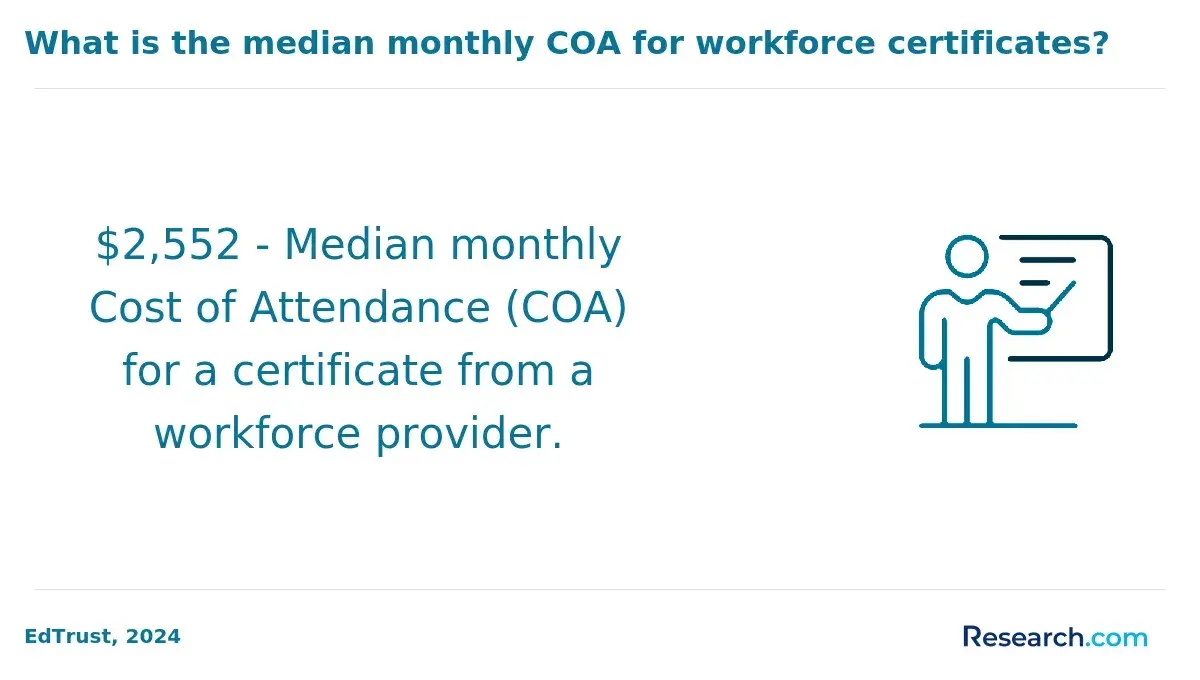
A red flag is any school that will not provide a full cost-of-attendance estimate before you commit. Physics students should be especially cautious because lab materials, required software, and occasional travel can make the final cost higher than a tuition-only comparison suggests.
What admissions requirements and prerequisites do online physics degree programs typically have?
Admissions requirements vary by school, but online physics programs usually expect stronger math preparation than many other online bachelor's degrees. Physics builds quickly from algebra and trigonometry into calculus, differential equations, mechanics, electricity and magnetism, waves, thermodynamics, and quantum concepts.
The table below summarizes common requirements and what they mean for applicants who are new students, transfers, or returning adults.
| Requirement | What schools commonly look for | Why it matters for physics |
| High school diploma or equivalent | Standard undergraduate admission documentation | Establishes eligibility for bachelor's-level study and federal aid |
| Math readiness | Precalculus, trigonometry, placement testing, or prior college math | Students who are not calculus-ready may need extra terms before upper-level physics |
| Science preparation | High school or college physics, chemistry, or lab science coursework | Helps students handle lab reports, measurement, scientific notation, and experimental reasoning |
| Transfer transcripts | Official transcripts from every prior college | Can reduce cost and time if calculus, general education, or introductory physics credits transfer |
| Technology access | Reliable internet, webcam, calculator, software, or lab-kit compatibility | Online physics often requires simulations, remote labs, coding tools, and proctored exams |
If you are not yet calculus-ready, the degree may still be possible, but you should ask whether remedial or prerequisite math courses count toward graduation. Extra prerequisites can be worth taking, but they affect cost, financial aid pacing, and the timeline to degree completion.
How do online physics degrees compare to campus-based programs in quality and outcomes?
Online physics degrees can be academically credible when they are offered by accredited institutions, use qualified faculty, assess students rigorously, and provide real lab experiences. The main quality question is not whether the course is online; it is whether the program can teach experimental reasoning, mathematical modeling, problem solving, and scientific communication at the expected level.
The comparison below can help you decide whether an online or campus-based format better fits your learning needs, budget, and career goal.
| Factor | Online physics program | Campus-based physics program |
| Flexibility | Better for working adults, military students, caregivers, and students far from campus | Better for students who can attend scheduled labs, office hours, and research meetings |
| Lab access | May use lab kits, simulations, remote instruments, local partnerships, or short residencies | Usually offers direct access to teaching labs, research labs, and equipment |
| Research experience | Possible but often requires extra planning with faculty or local institutions | Often easier to access through campus labs and faculty projects |
| Peer interaction | Depends on discussion tools, group projects, and cohort design | More natural for study groups, clubs, seminars, and informal mentoring |
| Cost control | Can be lower if you avoid relocation and keep working | Can be lower if you receive strong campus aid, assistant roles, or in-state public tuition |
Choose online study if flexibility is essential and the lab model is clearly documented. Choose campus study if your goal is highly research-intensive graduate admission and you need frequent access to advanced lab equipment, faculty research groups, and in-person mentoring.
What courses and specializations are included in an online bachelor's in physics curriculum?
An online bachelor's in physics curriculum usually combines mathematics, foundational physics, advanced theory, laboratory work, computing, and electives. Even when the degree is delivered online, students should expect a quantitative program that requires regular problem sets, exams, lab reports, and data analysis.
Most programs organize the curriculum around a sequence like the one below. Reviewing these areas helps you judge whether a degree is rigorous enough for your goals.
- Mathematics foundation: calculus I through III, linear algebra, differential equations, statistics, or computational methods.
- Core physics: classical mechanics, electricity and magnetism, waves, optics, thermodynamics, modern physics, and quantum mechanics.
- Laboratory and measurement: introductory labs, advanced labs, experimental design, uncertainty analysis, scientific instrumentation, and technical reporting.
- Computing and modeling: programming, numerical methods, simulation, data visualization, or computational physics.
- Electives or concentrations: astronomy, materials science, geophysics, education, engineering physics, environmental physics, or data analytics.
Students interested in earth systems, seismic activity, planetary materials, or environmental monitoring may also compare a geology degree online, especially if they want more field science and less theoretical physics. The better choice depends on whether you prefer equations, experiments, earth processes, computing, or applied environmental work.
How much do online physics degrees cost, and what funding options can reduce expenses?
Online physics degree costs vary by institution, residency status, transfer credits, enrollment pace, lab requirements, and fees. College Board's 2024-25 pricing data shows why net price matters: average published tuition and fees were $11,610 for in-state public four-year students and $43,350 for private nonprofit four-year students, before subtracting grants and scholarships.
When comparing programs, build a total-cost estimate instead of relying on per-credit tuition alone. Physics students should include costs that general online degree pages sometimes overlook.
- Tuition per credit or per term
- Mandatory online, technology, registration, and student service fees
- Lab kits, lab manuals, safety equipment, software, calculators, and simulation platforms
- Proctoring fees or testing-center expenses
- Travel, lodging, and missed work if the program requires short campus residencies
- Extra prerequisite math or science courses that do not count directly toward major completion
Funding options can reduce out-of-pocket cost, but each option has rules. Federal Pell Grants do not need to be repaid if eligibility is maintained, federal loans must be repaid with interest, employer tuition benefits may require grade or service commitments, and scholarships may depend on enrollment level or major status.
- Federal Pell Grant maximum for 2025-26: $7,395
- Federal Direct Loan undergraduate fixed interest rate for 2025-26: 6.39%
- Federal Direct PLUS Loan fixed interest rate for 2025-26: 8.94%
Cost comparisons are also useful when weighing physics against adjacent technical degrees. For example, reviewing computer science degree cost information can help you compare the price of a physics-heavy pathway with a computing pathway that may have fewer lab expenses and more direct software job alignment.
Employer Confidence in Online vs. In-Person Degree Skills, Global 2024

What physics-related careers can an online bachelor's degree prepare me for?
An online bachelor's degree in physics can prepare students for technical, analytical, educational, and science-adjacent roles, but the word "prepare" needs context. Many professional physicist and research scientist jobs prefer or require a master's degree or PhD, while bachelor's graduates often enter roles where physics training is valuable but not the only qualification.
The table below shows common career directions and how a physics background is used in each setting.
| Career direction | Typical responsibilities | Additional preparation that may help |
| Laboratory or research technician | Set up experiments, collect measurements, maintain equipment, analyze results, and document procedures | Instrumentation, coding, safety training, and strong lab reports |
| Engineering support or test technician | Assist with product testing, quality control, calibration, modeling, and technical troubleshooting | CAD, electronics, materials, manufacturing, or engineering coursework |
| Data analyst or scientific computing role | Use math, programming, and modeling to analyze datasets and communicate findings | Python, SQL, statistics, machine learning, and project portfolio work |
| Science teacher or education role | Teach physics or physical science, design lessons, assess learning, and support STEM outreach | State-approved teacher preparation, student teaching, and licensure exams where required |
| Technical sales or product specialist | Explain scientific or technical products to customers, support demonstrations, and translate user needs | Communication skills, industry knowledge, and customer-facing experience |
| Graduate study pathway | Pursue advanced work in physics, astronomy, engineering, materials science, medical physics, or related fields | Advanced math, research experience, strong recommendations, and upper-level lab work |
If you enjoy physics problem solving but want a more direct analytics career path, comparing data science degrees may be worthwhile later, especially after completing a quantitative bachelor's degree. Physics students often build strong modeling habits, but employers also expect evidence of programming, statistics, and real data projects.
What salary ranges and earning potential can physics graduates expect in different industries?
Salary potential for physics graduates varies widely because the degree can lead to many industries, and some higher-paying physics roles require graduate education. Use salary data as a planning benchmark, not a promise. Your location, employer, internships, programming skills, clearance eligibility, graduate degree, and industry can all change outcomes.
The table below uses representative BLS May 2024 median annual wages for roles that physics graduates may pursue directly or after additional preparation.
| Role or occupation | Median annual wage | How a physics degree fits |
| Physicist | $166,290 | Usually requires graduate-level preparation for independent research roles |
| Computer and information research scientist | $140,910 | Physics can support modeling and algorithms, but advanced computing education is often needed |
| Data scientist | $112,590 | Physics training helps with quantitative reasoning, but programming and statistics are essential |
| High school teacher | $65,220 | Requires state-specific teacher preparation and licensure for public school roles |
The practical takeaway is that physics can be financially strong when paired with the right next step. Students who stop at the bachelor's level should build applied skills early, while students aiming for research should plan for graduate study and seek research or lab experience before applying.
How is the job market and long-term demand for physics-related roles and skills changing?
The job market for physics-related skills is being shaped by artificial intelligence, automation, advanced manufacturing, national laboratory research, energy systems, aerospace, semiconductors, climate modeling, and data-intensive science. Employers increasingly value people who can combine physical intuition with coding, measurement, simulation, and communication.
BLS projects employment for physicists and astronomers to grow 7% from 2024 to 2034, which is faster than the average for all occupations. That projection does not mean every bachelor's graduate will become a physicist, but it does signal continued demand for advanced quantitative and scientific problem-solving skills in research-heavy sectors.
AI is also changing what students should learn. Physics graduates who can use Python, numerical methods, simulation tools, version control, machine learning basics, and automated data workflows may be more competitive for technical roles than students who complete only traditional coursework without a portfolio or applied projects.
How do I evaluate and choose a reputable, accredited online physics program confidently?
To choose a reputable online physics program confidently, evaluate the degree as an academic pathway, a financial investment, and a career tool. A polished website is not enough; you need evidence that the program can deliver rigorous science education in an online format.
Use this checklist when comparing schools. It focuses on the questions that most directly affect credibility, cost, completion, and career value.
- Verify institutional accreditation and federal aid eligibility before discussing admissions or scholarships.
- Ask whether the degree title, transcript, and diploma distinguish between online and campus delivery.
- Request a full lab plan showing which courses use kits, simulations, remote labs, local labs, or campus visits.
- Compare net price after grants, scholarships, transfer credits, employer benefits, and required fees.
- Ask how many credits must be completed at the institution and whether upper-level physics credits can transfer.
- Review faculty credentials, student support services, tutoring access, advising load, and career resources for online students.
- Ask for examples of graduate school placements, internships, research projects, teaching pathways, or employer partnerships, while remembering that outcomes are not guaranteed.
- Confirm whether the program supports your intended goal, such as teacher licensure, graduate physics admission, technical employment, or a broader science career.
Common mistakes include choosing a program only because it is cheap, assuming all online labs are accepted by graduate schools, ignoring transfer policies, underestimating math prerequisites, and borrowing before comparing net cost. If your interests shift toward research organization, archives, scholarly communication, or scientific information services, you might also compare library science degrees online as a different but related path for people who enjoy knowledge systems and research support.
Other Things You Should Know About Physics
They can be respected when they come from an accredited institution and include rigorous math, lab, and analytical coursework. Employers usually care more about skills, projects, internships, lab experience, and technical ability than the delivery format alone.
Some programs offer mostly or fully online coursework, but upper-level labs may require kits, simulations, local lab arrangements, or short campus residencies. Always ask for the complete lab plan before enrolling.
It can be, but only if the curriculum includes the expected upper-level physics, advanced math, laboratory work, and research preparation. Students planning for graduate physics programs should ask advisors how previous graduates met research and recommendation requirements.
To find the best financial aid for online physics degrees in 2027, explore federal aid programs like FAFSA, university-specific scholarships, and online platforms like Fastweb. Consulting a school's financial aid office can provide guidance on application processes and available funding options tailored for your online physics degree path.
References
- Physicists wanted: the demand for physics skills in the UK workplace – Physics World https://physicsworld.com/a/physicists-wanted-the-demand-for-physics-skills-in-the-uk-workplace/
- Physics Degree Careers and Salary in Europe - StudyinEurope.eu https://www.studyineurope.eu/physics/physics-degree-careers-salary-europe/
- Online Physics Course: 6 Helpful Considerations - Prereqcourses https://www.prereqcourses.com/online-physics-course/
- 2025 Best Online Degrees in Physics https://www.onlineu.com/degrees/physics