2027 Online Physics Degrees That Maximize Community College Science Credits

Co-Founder and Chief Data Scientist
Transferring community college science credits into an online physics degree can cut time and cost, but only if your courses match the receiving school's physics, math, and lab requirements. College Board's 2024 data shows average in-district public two-year tuition at $4,050, far below public four-year tuition, making transfer planning a major ROI decision. This guide is for students with calculus, chemistry, physics, or general education credits who want an online or hybrid bachelor's path and need to compare programs, lab formats, accreditation, costs, timelines, and career outcomes before enrolling.
Key Things You Should Know
- Community college credits are most valuable when they include calculus-based physics I and II with labs, Calculus I through III, differential equations, chemistry, and transferable general education courses accepted through an articulation agreement.
- Fully online physics bachelor's degrees are less common than online engineering, data science, or physical science programs, so students should verify upper-division lab delivery, transfer caps, residency rules, and whether the degree title is physics, applied physics, physical science, or science education.
- Cost savings can be substantial. College Board reported average 2024-25 in-district public two-year tuition of $4,050 versus $11,610 for in-state public four-year tuition, but the savings shrink if credits transfer only as electives instead of major requirements.
How can you use community college physics and science credits toward an online physics degree?
You can use community college physics and science credits toward an online physics degree by matching completed courses to the bachelor's program's lower-division major map. In practice, this means your credits must satisfy specific requirements, not just appear on a transcript. A course labeled "physics" may transfer as a general elective if it is algebra-based when the major requires calculus-based physics.
The highest-value transfer credits usually come from the first two years of a physics curriculum. Before you apply, organize your transcript around the categories most physics departments evaluate:
- Calculus-based physics sequence: Physics for scientists and engineers I and II, usually with separate or embedded labs, is often the most important transfer block.
- Mathematics sequence: Calculus I, Calculus II, Calculus III, differential equations, and sometimes linear algebra are essential because upper-division physics depends heavily on advanced math.
- Foundational science: General chemistry with lab, computer programming, astronomy, geology, or engineering science may count toward major electives or related science requirements, depending on the school.
- General education: English composition, communication, humanities, social science, and U.S. history or government requirements often transfer well when completed at a regionally accredited community college.
- Associate degree pathways: An Associate of Science or transfer-oriented Associate of Arts can simplify general education transfer, especially in states with common course numbering or guaranteed transfer frameworks.
The most common mistake is assuming "accepted credits" and "applied credits" mean the same thing. A university may accept 60 credits from a community college but apply only 42 toward the physics degree if the remaining credits do not fit the program plan. Ask for a degree audit before enrolling, not just an admissions estimate.
Use this sequence when you are trying to maximize transfer value:
- Request unofficial transfer evaluations from more than one online or hybrid physics program.
- Send syllabi for physics, lab, math, and chemistry courses, especially if course titles differ from the university catalog.
- Ask whether each course applies to the major, general education, free electives, or upper-division prerequisites.
- Confirm whether lab credits meet in-person, virtual, take-home kit, or summer residency requirements.
- Get the final transfer plan in writing before paying an enrollment deposit.
Which online physics degrees best accept transfer credits from community college programs?
The online physics degrees that best accept community college science credits are usually programs built for degree completion, adult learners, military-connected students, or statewide transfer pathways. Because fully online physics bachelor's programs are limited, students should compare closely related options such as applied physics, physical science, engineering physics, science education, or computational physics when the exact "B.S. in Physics online" format is unavailable.
The table below compares common degree types by transfer fit. Use it to identify which option is most likely to turn lower-division science credits into progress toward graduation rather than unused electives.
| Degree option | Best transfer fit | Online availability | When it makes sense | Potential limitation |
| B.S. in Physics | Calculus-based physics, calculus sequence, labs, chemistry, programming | Limited; often hybrid for labs | You want graduate study, research preparation, or technical physics roles | Upper-division labs may require campus visits or approved local arrangements |
| B.A. in Physics | Physics, math, general education, electives | Somewhat more flexible than B.S. formats | You want physics plus teaching, technical sales, science communication, or interdisciplinary work | May include fewer advanced lab or theory requirements than a B.S. |
| Applied Physics | Physics, calculus, programming, electronics, engineering science | Sometimes available online or hybrid | You prefer industry-facing work in instrumentation, optics, materials, energy, or computing | May be less research-theory focused than a traditional physics degree |
| Physical Science | Physics, chemistry, earth science, astronomy, general education | More common online | You need a broad science degree for teaching preparation or technical support roles | May not satisfy prerequisites for physics graduate programs without extra coursework |
| Science Education with Physics Concentration | Lower-division science, math, education prerequisites | Often online with field placements | You want to teach secondary science or physics | Teacher licensure requirements vary by state and may require local clinical hours |
If your real goal is engineering work rather than physics research, compare transfer policies across engineering programs as well. Military-connected students, for example, may find a more direct applied pathway through an online electrical engineering bachelor degree for veterans, especially if prior technical training or electronics credits are part of the transfer record.
When comparing programs, ask admissions and the physics department the same set of questions so the answers are comparable:
- How many total transfer credits can be applied to the bachelor's degree?
- How many community college credits can apply directly to the physics major?
- Is there a minimum number of upper-division physics credits that must be completed at the university?
- Are labs delivered online, through kits, by simulation, through local proctoring, or during campus intensives?
- Will an associate degree waive lower-division general education requirements?
- Are older physics or math credits subject to expiration or department review?
What accreditation and quality standards should online physics degree programs meet?
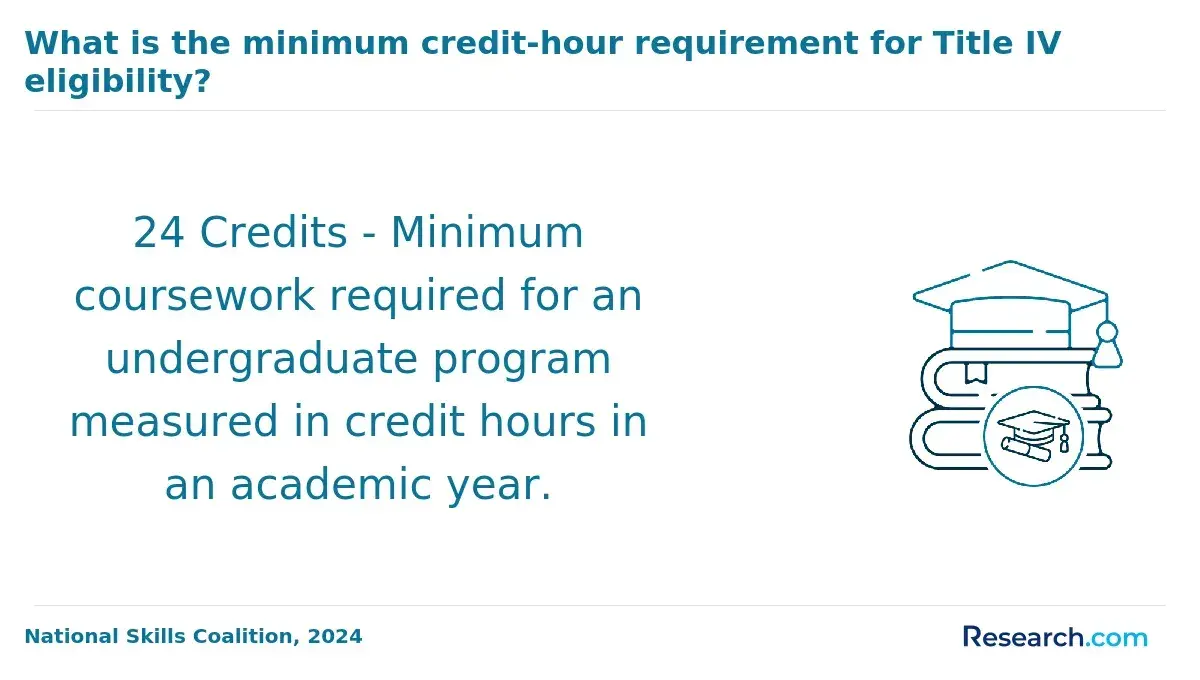
Online physics degree programs should meet the same institutional accreditation standards as campus programs. In the U.S., the most important baseline is accreditation from an institutional accreditor recognized by the U.S. Department of Education or the Council for Higher Education Accreditation. Without recognized accreditation, transfer credit, federal financial aid, graduate admission, and employer acceptance can become difficult.
Physics itself does not have a single mandatory programmatic accreditor equivalent to ABET in engineering or CAEP in teacher education. That makes institutional quality checks more important. For physics education or engineering-adjacent programs, additional approvals may matter.
The table below summarizes quality markers that are especially important for online physics students because labs, transfer credits, and graduate school preparation require more scrutiny than many lecture-only majors.
| Quality standard | Why it matters | What to verify |
| Recognized institutional accreditation | Supports credit transfer, federal aid eligibility, and broad employer recognition | Check the institution's current accreditation status directly with the accreditor or federal database |
| Department-level physics curriculum | Ensures the program includes standard physics theory, lab, and math progression | Review upper-division courses such as mechanics, electromagnetism, quantum physics, thermodynamics, and advanced lab |
| Transparent lab requirements | Physics is experimental, so lab access affects rigor and graduate preparation | Ask how each required lab is completed and assessed |
| Transfer articulation | Determines whether community college credits reduce time to degree | Request course-by-course equivalencies before committing |
| State authorization | Online programs may not enroll students in every state, especially when field placements are involved | Confirm your state is approved for enrollment and, if relevant, teacher licensure placement |
| Graduate school alignment | Physics master's and Ph.D. programs often expect rigorous math and lab preparation | Ask whether recent graduates have entered graduate programs or technical research roles |
A red flag is a program that advertises "100% online physics" but cannot clearly explain how advanced laboratory work is completed. Another red flag is pressure to enroll before a transfer audit is complete. A legitimate program should be willing to document accreditation, transfer applicability, lab formats, and graduation requirements.
How do online physics degrees compare with campus-based programs for labs and rigor?
Online physics degrees can match campus-based programs in theory courses, problem-solving workload, and mathematical rigor, but labs are the main point of difference. A strong online program does not remove experimentation; it redesigns how students complete it through remote instrumentation, simulation plus analysis, home lab kits, local lab partnerships, short campus residencies, or hybrid intensives.
Here is the practical comparison most transfer students should make before choosing a format. The goal is not to decide whether online or campus is universally better, but which format fits your schedule, learning style, and career target.
| Feature | Online or hybrid physics degree | Campus-based physics degree | Decision factor |
| Lecture courses | Often asynchronous or live online with recorded sessions | Usually in-person with scheduled class meetings | Online works well if you are disciplined and comfortable learning math-heavy material independently |
| Problem solving | Discussion boards, virtual office hours, digital homework systems | In-person recitations, tutoring centers, peer study groups | Campus may be stronger if you need frequent real-time support |
| Labs | Kits, simulations, remote labs, local approvals, or short residencies | Regular access to department equipment and lab staff | Campus is often better for research-intensive graduate school preparation |
| Research access | Varies widely; may require initiative and remote projects | More direct access to faculty labs and undergraduate research | Research access matters if you plan to apply to physics graduate programs |
| Flexibility | Stronger for working adults, caregivers, rural students, and transfer students | Stronger for students who can attend full time in a fixed location | Choose based on life constraints, not convenience alone |
Rigor depends more on curriculum design than delivery mode. A credible online physics course should still require derivations, multistep problem sets, lab reports, uncertainty analysis, coding or data analysis, proctored assessments, and instructor feedback. If a program seems to replace quantitative physics with broad science survey courses, it may not be the right fit for students aiming at physics graduate study or technical research roles.
Students who are strongest online usually create their own support structure. That can include weekly study blocks, virtual office hours, peer groups, tutoring, and scheduled time for lab reports. Physics is not a degree where watching recorded lectures at the end of the week is usually enough.
What prerequisite courses and GPA are typically required for online physics admission?
Admission to an online physics bachelor's program depends on whether you are applying as a first-year student, lower-division transfer, or upper-division transfer. Community college students with a strong math and science record may be better positioned for upper-division admission, but requirements vary by institution and by whether the degree is physics, applied physics, physical science, or education-focused.
Most programs look for evidence that you can handle calculus-based science. Typical prerequisites include:
- High school diploma, GED, or equivalent credential for undergraduate admission
- College algebra, precalculus, or calculus readiness for lower-division entry
- Calculus I and II for many transfer pathways into physics major coursework
- Calculus-based physics I and II with labs for upper-division physics standing
- General chemistry with lab for some B.S. or physical science programs
- Introductory programming, often in Python, MATLAB, C++, or another scientific computing language
- Minimum cumulative GPA, commonly with a higher GPA expectation in math and science courses than in general electives
A GPA cutoff is not the whole story. Physics departments may pay close attention to grades in calculus, differential equations, and physics because those courses predict readiness for upper-division mechanics, electromagnetism, and quantum physics. If you earned weak grades early but improved later, ask whether the program reviews grade trends or allows prerequisite repeats.
Applicants with military, technical, or career credits should be careful. Some credits may count toward electives but not toward the physics major. If you are exploring alternative STEM pathways, compare whether applied engineering, computing, or science programs give more usable credit for prior experience.
Students who enjoy science but prefer information systems, archives, or research support over advanced mathematics may want to compare science-adjacent options such as library science degrees online. That path can lead toward technical services, data curation, academic libraries, or scientific information management without requiring the full upper-division physics sequence.
What core physics and math courses will you take in an online bachelor's program?
An online bachelor's in physics is built around a sequence: math foundations first, lower-division physics next, then upper-division theory, laboratory, computation, and electives. Transfer students should map their completed community college courses against this sequence to see whether they are truly entering as juniors or still need key prerequisites.
The core curriculum below reflects common U.S. physics bachelor's expectations, though exact course names and credit counts vary by school.
| Course area | Common courses | Why it matters |
| Mathematics | Calculus I, II, and III; differential equations; linear algebra; probability or statistics | Provides the language used in mechanics, electromagnetism, quantum physics, and modeling |
| Introductory physics | Calculus-based mechanics, electricity and magnetism, waves, optics, thermodynamics, modern physics | Builds the lower-division foundation most transfer evaluations focus on |
| Upper-division theory | Classical mechanics, electromagnetic theory, quantum mechanics, statistical mechanics, thermodynamics | Separates a physics major from a general science degree |
| Laboratory and methods | Electronics, experimental physics, advanced lab, instrumentation, measurement and uncertainty | Develops experimental design, data collection, and technical reporting skills |
| Computation | Scientific programming, numerical methods, computational physics, data analysis | Connects physics to modeling, simulation, AI-enabled workflows, and technical industry roles |
| Electives | Astrophysics, optics, materials, nuclear physics, condensed matter, geophysics, biophysics | Lets you align the degree with graduate study, teaching, engineering support, or industry interests |
AI and automation are changing what physics graduates are expected to know. Employers increasingly value students who can combine physics reasoning with coding, data analysis, simulation, and instrumentation. That does not mean physics students need to become software engineers, but it does mean a program with computational physics or scientific programming is often more marketable than one with only traditional lecture courses.
If you are planning graduate school, prioritize a rigorous B.S.-style curriculum with advanced labs and upper-division theory. If you are planning industry employment after the bachelor's degree, look for applied electives, programming, project work, internships, and career services that connect physics to real technical roles.
How long does it usually take to finish an online physics degree with transfer credits?
The time to finish an online physics degree with transfer credits depends on how many credits apply to the major, how often upper-division courses are offered, and whether labs require summer or campus sessions. A student with a well-planned Associate of Science may finish faster than a student with more total credits but fewer applicable math and physics courses.
The table below gives practical timeline ranges. These are planning estimates, not guarantees, because course sequencing in physics can create bottlenecks.
| Starting point | Likely remaining work | Typical completion timeline | Main risk |
| No college credits | Full general education, calculus sequence, lower-division science, upper-division physics | About 4 years full time | Falling behind in math delays the entire major |
| General education credits only | Most math, science, labs, and upper-division physics still required | About 3 to 4 years | Credits reduce electives but not the physics sequence |
| Associate degree without calculus-based physics | Calculus, physics sequence, labs, upper-division major courses | About 2.5 to 3.5 years | Associate degree may not equal junior standing in the major |
| Associate of Science with calculus-based physics and calculus completed | Upper-division physics, advanced labs, electives, residency credits | About 2 to 3 years | Upper-division courses may be offered only once per year |
| Returning student with older STEM credits | Department review, possible repeats, upper-division coursework | Varies widely | Older math or lab credits may not satisfy current prerequisites |
To shorten your timeline without weakening your preparation, focus on sequencing rather than simply taking more credits. Physics courses are often prerequisite-locked, so one missing calculus or lab course can delay several later requirements.
Before enrolling, take these practical steps:
- Ask for a term-by-term graduation plan based on your actual transfer audit.
- Confirm when each required upper-division physics course is offered.
- Check whether summer courses can accelerate labs or prerequisites.
- Avoid overloading your first online term with multiple math-heavy courses until you understand the workload.
- Ask whether internships, research, or capstone projects can be completed near your home.
What are typical tuition, fees, and financial aid options for online physics majors?
Tuition for online physics majors varies by public or private institution, residency status, transfer credits, lab fees, technology fees, and whether the program charges online students a separate rate. The best cost comparison is total remaining cost after transfer, not advertised tuition per credit.
College Board's 2024 Trends in College Pricing reported average published tuition and fees of $11,610 for in-state students at public four-year institutions and $4,050 for in-district students at public two-year colleges for 2024-25. For transfer students, the takeaway is clear: completing the right lower-division courses at community college can reduce cost, but only when those courses apply to the degree plan.
Common cost categories include the following. Review each one because physics can involve expenses that do not appear in a basic tuition quote:
- Per-credit tuition for remaining lower-division and upper-division courses
- Online learning, platform, proctoring, or technology fees
- Lab kits, lab materials, software, calculators, sensors, or equipment deposits
- Travel and lodging for required campus lab intensives, if applicable
- Textbooks, open educational resources, homework platforms, and scientific computing tools
- Graduation, transcript, transfer evaluation, and portfolio assessment fees
- Lost income or reduced work hours if course intensity affects your schedule
Financial aid options may include federal Pell Grants, federal student loans, state grants, institutional scholarships, employer tuition assistance, military education benefits, and community college transfer scholarships. Students should submit the FAFSA, ask whether online students qualify for the same institutional aid as campus students, and check whether scholarships require full-time enrollment.
A common mistake is choosing the lowest per-credit tuition without checking how many credits remain. A school that costs more per credit but accepts more major requirements may be cheaper overall than a lower-priced school that converts science courses into electives.
If you are comparing long-term education investments beyond the bachelor's degree, look at how different graduate options align with your intended career. For example, a student who discovers that physics coursework is leading toward analytics or machine learning may later compare an online masters data science program instead of a physics graduate program.
What careers, job roles, and industries can you pursue with an online physics degree?
An online physics degree can lead to several career directions, but outcomes depend heavily on skills, internships, projects, location, and whether you pursue graduate study. Physics is a flexible quantitative degree rather than a single-job credential, so students should connect the curriculum to a career path early.
The table below shows common career directions for physics graduates and what usually strengthens employability in each path.
| Career direction | Possible roles | Helpful preparation | Best fit |
| Research and development | Research assistant, laboratory technician, instrumentation specialist | Advanced lab, electronics, data analysis, undergraduate research | Students who enjoy experimentation and technical documentation |
| Engineering-adjacent industry | Test engineer assistant, systems technician, optics technician, quality analyst | Applied physics, programming, CAD exposure, electronics, internships | Students who want applied technical work without necessarily becoming licensed engineers |
| Data and computation | Data analyst, scientific programmer, modeling assistant, simulation technician | Python, numerical methods, statistics, machine learning basics, portfolio projects | Students who like coding and quantitative problem solving |
| Education | Secondary physics teacher, science teacher, instructional lab coordinator | Teacher preparation, state licensure, classroom fieldwork | Students who want to teach and can meet state-specific certification rules |
| Aerospace, energy, and defense | Technical analyst, test support specialist, sensor systems technician | Security eligibility where required, instrumentation, mechanics, electromagnetism | Students interested in mission-driven technical environments |
| Graduate or professional school | Physics graduate student, engineering graduate student, medical physics applicant | Rigorous B.S. courses, research, strong GPA, faculty recommendations | Students aiming for advanced research, faculty roles, or specialized technical careers |
Some physics-related careers require graduate education. Physicist roles in research labs, national laboratories, or university research settings often expect a master's degree or Ph.D. Medical physics typically requires specialized graduate training and clinical certification pathways. Teaching in public schools generally requires state licensure, while college teaching usually requires graduate study.
Students who like science but prefer organizing scholarly resources, research data, or academic information systems may consider library and information science as an adjacent path. An online library science masters can be relevant for careers in academic libraries, research data services, digital archives, and scientific information support.
To improve career readiness while studying online, build evidence of applied skill. Strong options include coding projects, lab reports formatted as portfolio samples, internships, undergraduate research, GitHub repositories, instrumentation projects, teaching assistant work, or capstone projects tied to local employers.
What are the salary ranges and job outlook for physics-related careers in the U.S.?
Salary and job outlook for physics-related careers vary widely because physics graduates move into research, engineering support, analytics, education, software, energy, aerospace, and graduate school. The bachelor's degree can open doors, but the strongest salary outcomes usually depend on technical specialization, work experience, graduate education, or industry alignment.
BLS wage data can help you benchmark possibilities, but it should not be read as a promise for new graduates. The table below lists selected U.S. roles connected to physics training and shows how different paths can lead to different labor market outcomes.
| Occupation | Relevant connection to physics | Recent U.S. salary context | Outlook note |
| Physicist | Advanced research, modeling, experimentation, national labs, industry R&D | BLS reported a median annual wage of $166,290 for physicists in May 2024 | Many roles require graduate education, especially for independent research |
| Data scientist | Quantitative modeling, programming, statistical analysis, simulation | BLS reported a median annual wage of $112,590 for data scientists in May 2024 | Physics graduates may need a strong portfolio in Python, statistics, and machine learning |
| Aerospace engineer | Mechanics, fluids, materials, sensors, systems testing | BLS reported a median annual wage of $134,830 for aerospace engineers in May 2024 | Some roles prefer or require engineering degrees, so physics majors should check job descriptions carefully |
| High school teacher | Physics and physical science instruction | Salary varies substantially by state, district, contract, and licensure status | Public school roles generally require state teacher certification |
| Engineering technician or technologist | Testing, measurement, quality control, lab operations | Pay varies by specialty, industry, and associate or bachelor's preparation | Applied lab and instrumentation skills are especially important |
The strongest job outlook signal for physics majors is not only the word "physics" in a job title. It is the combination of quantitative reasoning, programming, instrumentation, and domain knowledge. Students who graduate with projects and applied experience are often better positioned than students who complete only lecture coursework.
Use salary data carefully. A median wage for physicists often reflects workers with advanced degrees and experience, not necessarily new bachelor's graduates. For ROI planning, compare your expected total debt, the cost of completing remaining credits, likely entry-level roles in your region, and whether graduate school is part of your plan.
Other Things You Should Know About Physics
Some programs offer online or mostly online physics, applied physics, or physical science degrees, but advanced labs may require hybrid sessions, approved local labs, remote instrumentation, kits, or short campus residencies. Always verify lab requirements before enrolling.
It may transfer as a general science course or elective, but many physics majors require calculus-based physics for scientists and engineers. Ask for a course-by-course evaluation before assuming it satisfies the major.
Employers generally care most about accreditation, skills, projects, internships, and whether the curriculum is rigorous. The online format is less of a concern when the institution is accredited and the degree includes serious math, lab, and computational work.
Opting for an online physics degree in 2027 that maximizes community college science credits offers accelerated graduation by transferring more credits, reduced overall costs, and increased flexibility in course selection. This pathway provides a smoother transition for students and can make their educational journey more efficient and cost-effective.
References
- Online Degree vs. Traditional: Choosing the Right Path https://beal.edu/online-degree-vs-traditional/
- Top Online Schools That Accept Transfer Credits https://www.edvisorly.com/student-guides/online-schools-that-accept-transfer-credits
- Cost of an Online Degree: Calculate the Cost of Your Higher Education https://www.edumed.org/articles/cost-of-an-online-degree/
- Accreditation, Validation and Recognition of Physics Degrees https://telescoper.blog/2022/09/19/accreditation-validation-and-recognition-in-physics-degrees/
- Physics Transfer Major, AS Degree https://iowalakes.edu/program/associate-in-science-physics-transfer-as/
- Careers in Physics | Academy Online Learning https://academyonlinelearning.com/careers-physics
- Physics https://www.aims.edu/degrees-certificates/physics
- Physics | EICC https://eicc.edu/classes-programs/pathway/stem/physics-transfer/default.aspx
- Accreditation https://www.iomp.org/accreditation/
- Physics Studies, A.A. – CSCU Pathway Transfer Degree https://threeriverscollegefoundation.org/academics/degrees-certificates/physics-studies-a-a-cscu-pathway-transfer-degree/