2027 Online Physics Degrees That Prepare Students for Cross-Functional Technical Roles

Co-Founder and Chief Data Scientist
Choosing an online physics degree is really a question of career flexibility: can a remote program build the math, coding, lab, and communication skills employers expect in technical teams? The answer depends on accreditation, lab design, transfer options, and career goals. The Bureau of Labor Statistics reported median pay of $149,530 for physicists and astronomers in 2024, showing the earning potential of advanced technical work, though many applied roles require broader skills. This guide helps prospective students compare formats, costs, requirements, and outcomes before enrolling.
Key Things You Should Know
- Online physics degrees can prepare students for roles in data analysis, instrumentation, aerospace, energy, manufacturing, software-adjacent technical work, and research support, but the strongest outcomes usually come from programs that include labs, coding, and project-based work.
- Cost varies widely. College Board's 2024-25 data placed average published tuition and fees at $11,610 for in-state public four-year colleges and $43,350 for private nonprofit four-year colleges, so transfer credit and residency status can strongly affect ROI.
- Accreditation is essential. Students should verify institutional accreditation through a U.S. Department of Education-recognized accreditor and confirm whether the program's lab format, calculus sequence, and upper-division physics courses match their target career or graduate-school path.
What is an online physics degree and how does it prepare for technical careers?
An online physics degree is a bachelor's or graduate program that teaches the principles governing matter, energy, motion, fields, waves, thermodynamics, quantum behavior, and measurement. In career terms, physics is not only preparation for becoming a physicist; it is also a rigorous training path for technical problem-solving across industries that need people who can model systems, interpret data, test hypotheses, and communicate with engineers, software developers, product teams, and operations leaders.
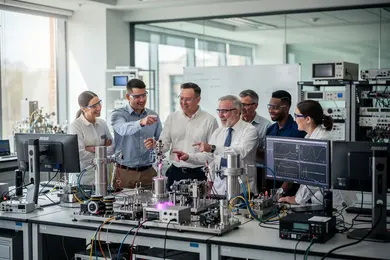
The phrase cross-functional technical roles refers to jobs that sit between disciplines. A physics graduate might help an engineering team analyze sensor data, support a manufacturing group with quality-control measurements, work with software teams on simulation tools, or translate research findings into product requirements. These roles reward people who can move between theory, data, hardware, and business constraints.
Online physics programs usually fit one of several student profiles. The right fit depends on whether the student needs a first degree, career mobility, or preparation for graduate study.
| Program type | Best fit | Common outcome | Decision note |
| Online bachelor's in physics | Students seeking a broad technical foundation | Entry-level technical, data, laboratory, engineering-support, or graduate-school pathways | Look closely at lab delivery, calculus requirements, and upper-division course availability |
| Online applied physics or physical science degree | Students who want technical breadth with more flexibility | Applied technology, education-adjacent, operations, or interdisciplinary roles | May be less ideal for highly research-intensive physics graduate programs unless coursework is rigorous |
| Online master's in physics or applied physics | Working professionals with a science, engineering, or math background | Advanced technical roles, R&D support, teaching at some institutions, or doctoral preparation | Confirm thesis, project, or research expectations before enrolling |
| Physics minor or concentration in an online STEM degree | Students primarily targeting software, engineering technology, or analytics | Hybrid roles that need physics literacy plus another applied skill | Can be efficient if the target job does not require a full physics major |
A physics degree makes the most sense for students who enjoy abstract reasoning but also want practical technical options. It may be a weaker fit for students who dislike advanced math, want a licensed engineering path without additional engineering coursework, or need a program with fully local hands-on labs that an online school cannot provide.
How do online physics programs compare to campus-based degrees for cross-functional roles?
Online and campus-based physics degrees can cover similar theory, but they differ in how students access laboratories, peer networks, faculty research, and career services. For cross-functional technical roles, the key issue is not whether the program is online; it is whether the program produces evidence of technical capability through labs, code, analysis, and projects.
The table below compares the practical trade-offs students should weigh before choosing a format. It focuses on factors that affect career readiness rather than assumptions about prestige.
| Factor | Online physics degree | Campus-based physics degree | What it means for cross-functional roles |
| Schedule flexibility | Often better for working adults and transfer students | Usually tied to fixed class and lab times | Online students may maintain work experience while studying, which can strengthen resumes |
| Laboratory access | May use lab kits, simulations, remote instrumentation, short residencies, or local partners | Typically offers regular access to on-campus labs and equipment | Students targeting hardware-heavy roles should verify lab depth before enrolling online |
| Research exposure | Available in some programs but may require proactive outreach | Often easier to access through faculty labs and campus institutes | Research-intensive graduate goals may favor programs with strong faculty project access |
| Networking | Depends heavily on virtual advising, student groups, and employer connections | Often includes in-person seminars, clubs, and recruiting events | Online students should deliberately build a portfolio and professional network |
| Career signaling | Strong if the school is accredited and coursework is rigorous | Strong if the department has recognized research or industry ties | Employers usually care most about skills, projects, internships, and degree legitimacy |
Online study is often better for students who need flexibility, already work in a technical setting, or can access local internship opportunities. Campus study may be better for students seeking intensive research mentorship, specialized lab equipment, or a traditional undergraduate experience with frequent faculty interaction.
A common mistake is assuming online automatically means easier. In physics, online courses can be demanding because students must manage calculus, problem sets, lab reports, coding assignments, and group projects with less face-to-face structure. Students should ask whether lectures are synchronous, how office hours work, how labs are assessed, and whether exams require proctoring.
What technical and interdisciplinary careers can graduates with online physics degrees pursue?
Physics graduates often move into roles where quantitative reasoning matters more than a narrow job title. Some positions require only a bachelor's degree plus applied experience, while others require a master's, doctorate, or specialized engineering background. The strongest candidates usually pair physics with programming, statistics, electronics, CAD, materials knowledge, or domain-specific experience.
The table below summarizes common technical career directions for online physics graduates. It is not a promise of eligibility; actual requirements vary by employer, industry, security clearance needs, and graduate education expectations.
| Career direction | Typical responsibilities | Helpful add-on skills | Degree level commonly expected |
| Data analyst or scientific data specialist | Analyze experimental, operational, sensor, or simulation data | Python, SQL, statistics, visualization, machine learning basics | Bachelor's for entry-level roles; master's for advanced modeling |
| Test or validation engineer support | Design tests, document results, troubleshoot equipment, compare outputs to specifications | Instrumentation, LabVIEW, MATLAB, quality systems, technical writing | Bachelor's, though some employers prefer engineering degrees |
| Optics, photonics, or laser technician/specialist | Support optical systems, measurement setups, calibration, and product testing | Optics labs, electronics, safety protocols, alignment procedures | Bachelor's or associate plus experience; advanced R&D may require graduate study |
| Materials or semiconductor process support | Monitor processes, analyze defects, support metrology, improve production yield | Solid-state physics, cleanroom procedures, statistics, manufacturing systems | Bachelor's for support roles; graduate degree for research roles |
| Aerospace or defense technical analyst | Model systems, evaluate performance, analyze mission or sensor data | Simulation, numerical methods, security clearance eligibility, systems thinking | Bachelor's to master's depending on role |
| Technical product or solutions specialist | Translate technical capabilities into customer requirements, demos, or implementation plans | Communication, product thinking, documentation, domain knowledge | Bachelor's plus strong portfolio or industry experience |
Students who want software-heavy technical roles should build a coding portfolio alongside physics coursework. A computer science degree online may be a better primary path if the goal is software engineering, while physics can be a strong differentiator for scientific computing, simulation, robotics, or data work involving physical systems.
The degree is less direct for careers that require a specific license or accredited professional pathway. For example, becoming a licensed professional engineer usually depends on engineering education, exams, state rules, and experience. Physics can still be valuable, but students should not assume it substitutes for an engineering degree in regulated roles.
What courses and skills do online physics programs emphasize for cross-functional work?
Strong online physics programs emphasize both conceptual mastery and applied execution. Students should expect difficult math, repeated problem-solving, lab reports, and quantitative reasoning. For cross-functional technical roles, the most valuable programs connect physics theory to data, computation, instrumentation, and communication.
The following table shows the coursework and skills that most directly support interdisciplinary technical work. Use it to compare whether a program is simply offering physics content or actually building job-relevant capabilities.
| Course or skill area | What students learn | Why it matters for cross-functional roles |
| Calculus and differential equations | Rates of change, multivariable systems, mathematical modeling | Helps students understand engineering models, simulations, and physical system behavior |
| Classical mechanics | Motion, forces, energy, oscillations, dynamics | Useful in aerospace, robotics, manufacturing, and mechanical systems analysis |
| Electricity and magnetism | Fields, circuits, waves, electromagnetic interactions | Supports work with sensors, electronics, communications, and instrumentation |
| Thermodynamics and statistical mechanics | Heat, entropy, probability-based behavior of systems | Relevant to energy, materials, process engineering, and climate-related modeling |
| Quantum mechanics | Atomic-scale behavior, wave functions, quantization | Important for semiconductors, photonics, materials science, and advanced research |
| Computational physics | Numerical methods, simulations, data processing | Builds the bridge between physics theory and software-enabled technical work |
| Experimental methods | Measurement, uncertainty, calibration, lab documentation | Prepares students for testing, validation, quality assurance, and research support |
| Technical communication | Reports, presentations, documentation, cross-team explanation | Helps graduates explain complex findings to non-physicists and decision-makers |
Students interested in sustainability, energy systems, water resources, or climate-related technology may also compare physics with environmental engineering schools online, especially if they want a more directly applied engineering curriculum.
Before choosing a program, students should look for evidence that these skills are assessed through real work, not only exams. Strong indicators include coding assignments, lab notebooks, data-analysis projects, capstones, faculty-supervised research, and opportunities to present technical findings.
How do I choose an accredited online physics degree from a reputable U.S. school?
Accreditation should be the first screening step for any online physics degree. In the United States, students should verify that the institution is accredited by an agency recognized by the U.S. Department of Education or the Council for Higher Education Accreditation. This matters for federal financial aid, credit transfer, graduate-school recognition, and employer trust.
Physics programs generally do not follow the same programmatic accreditation pattern as nursing, teaching licensure, or many engineering programs. That makes institutional accreditation, curriculum rigor, faculty qualifications, and lab delivery especially important. Students planning to move into engineering-adjacent work should also check whether employers in their target field prefer ABET-accredited engineering degrees.
Use the following steps to evaluate whether an online physics program is credible and aligned with your goals.
- Verify the school's institutional accreditation in an official federal or accreditor database rather than relying only on marketing pages.
- Review the full physics curriculum, including calculus, differential equations, modern physics, upper-division labs, computational coursework, and capstone requirements.
- Ask how labs are completed, what equipment or software is required, and whether any campus visits or local proctoring are mandatory.
- Check faculty profiles for physics, applied physics, astronomy, engineering, materials science, or computational research experience.
- Request data on transfer credits, graduation requirements, career services, internship support, and graduate-school advising.
- Confirm whether the transcript and diploma identify the degree as online, and ask whether that has any implications for graduate applications or employer review.
Red flags include vague lab descriptions, unclear accreditation language, missing faculty information, unrealistic claims about salaries, pressure-based enrollment tactics, and programs that cannot explain how students complete advanced physics experiments remotely.
What admission requirements and prior math preparation do online physics degrees expect?
Admission requirements vary by degree level, but physics is math-intensive at every stage. For bachelor's programs, schools typically expect a high school diploma or equivalent, transcripts, placement readiness in college algebra or calculus, and sometimes prior science coursework. Transfer-friendly programs may require completed general education courses before students enter upper-division physics classes.
Graduate programs usually expect a bachelor's degree in physics, engineering, mathematics, or a closely related field. Applicants may need prior coursework in classical mechanics, electromagnetism, quantum mechanics, thermodynamics, differential equations, and laboratory methods. Some programs may ask for recommendation letters, a statement of purpose, a minimum GPA, or evidence of programming experience.
Students who are unsure about readiness should assess their preparation before enrolling. Physics becomes much harder when math gaps are ignored.
- If calculus is rusty, complete a refresher or community-college course before taking calculus-based physics.
- If programming is new, start with Python for data analysis because many physics and technical roles use it for modeling and visualization.
- If lab experience is limited, ask whether the program begins with guided labs or assumes prior experience with measurement, uncertainty, and technical reports.
- If graduate school is the goal, confirm that the bachelor's curriculum includes the standard upper-division sequence expected by physics departments.
A common mistake is choosing a lighter physical science curriculum when the real goal is a competitive physics master's or doctoral program. Flexibility can be useful, but students should not trade away core theory and lab depth unless their target career does not require it.
How long do online physics degrees take and what do they typically cost?
A bachelor's degree in physics typically requires about four years of full-time study, though transfer students may finish sooner if prior credits apply. Part-time students often take longer because calculus, physics sequences, and labs must be completed in order. Online master's programs commonly take about two years full time, with part-time options for working professionals.
Cost depends on school type, residency, transfer credit, fees, lab materials, textbooks, software, and whether students can keep working while enrolled. College Board's 2024-25 figures show why the choice of institution matters: average published tuition and fees were $11,610 for in-state students at public four-year colleges and $43,350 at private nonprofit four-year colleges. Published prices do not equal net prices after grants or scholarships, but they are useful for comparing starting points.
When estimating total cost, students should look beyond the advertised per-credit rate. Physics can include expenses that are easy to miss.
- Tuition per credit and the total number of required credits
- Online course fees, technology fees, proctoring fees, and graduation fees
- Lab kits, scientific calculators, sensors, safety materials, or required campus residencies
- Software, cloud computing, textbooks, and homework platforms
- Travel costs if the program requires short in-person lab sessions
- Opportunity cost, especially if reducing work hours is necessary for upper-division courses
Students comparing STEM options should also examine adjacent degree economics. For example, reviewing mechanical engineering degree online cost can help clarify whether a physics degree or an engineering degree provides the better route to a specific hardware, manufacturing, or design role.
The best cost decision is usually not the cheapest program by tuition alone. A more expensive program may be worth considering if it has stronger labs, transfer acceptance, employer connections, or graduate-school placement. Conversely, a low-cost public option can be excellent if it is accredited, rigorous, and aligned with the student's goals.
How do online physics degrees incorporate labs, projects, and real-world technical experience?
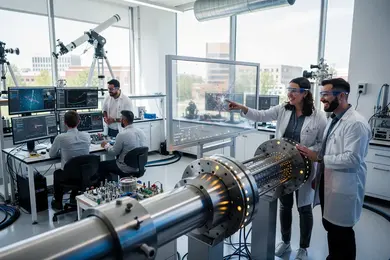
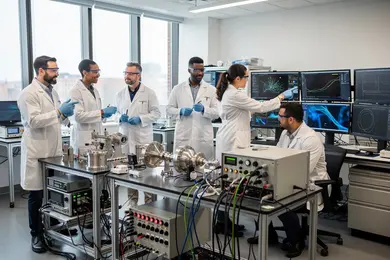
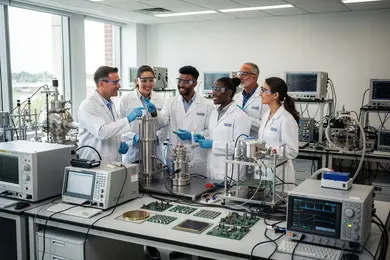
Labs are one of the most important quality tests for an online physics degree. Physics is not only a mathematical subject; it also teaches students how to measure, calibrate, estimate uncertainty, troubleshoot equipment, and document results. Employers in technical settings value those habits because real systems rarely behave like clean textbook examples.
Online programs may deliver lab and project experience in several ways. Each model has strengths and limitations, so students should ask for specifics before enrolling.
| Experience model | How it works | Strength | Limitation to check |
| Home lab kits | Students receive or purchase equipment for guided experiments | Flexible and hands-on for mechanics, circuits, optics basics, and measurement | May not replicate advanced institutional lab equipment |
| Remote labs | Students control real instruments through an online interface | Useful for specialized equipment and repeatable experiments | May provide less tactile troubleshooting experience |
| Simulation-based labs | Students model systems using software and analyze virtual results | Strong for computational thinking and parameter exploration | Should not be the only lab method in a rigorous physics program |
| Short campus residencies | Students complete intensive lab sessions in person | Offers access to equipment, faculty feedback, and peer collaboration | Requires travel, time off work, and additional costs |
| Local partnerships or internships | Students complete approved work with nearby labs, employers, or institutions | Can create direct career experience | Availability varies by region and requires careful approval |
Projects are just as important as formal labs for cross-functional roles. A strong portfolio might include a Python simulation, an uncertainty analysis report, a sensor-data dashboard, a circuit characterization project, a materials or optics analysis, or a capstone that solves a real technical problem.
Students should ask admissions or faculty for examples of recent capstones, lab reports, and internship placements. If the school cannot describe how online students build practical evidence of skill, the program may be too theoretical for applied technical career goals.
What salaries and job outlook can physics graduates expect in technical industries?
Physics graduates can enter several technical labor markets, so salary expectations should be tied to role, degree level, industry, location, and experience. A graduate working as a data analyst, test engineer, research assistant, or technical specialist will not necessarily earn the same as a doctoral-level physicist in a national lab, aerospace company, or advanced R&D unit.
The Bureau of Labor Statistics reported a 2024 median annual wage of $149,530 for physicists and astronomers. This figure is useful as a benchmark for advanced physics occupations, but many of those roles require graduate education and specialized research experience. Bachelor's graduates should compare salaries for the specific applied roles they are targeting rather than assuming physicist-level pay immediately after graduation.
The table below shows how to think about outcomes by career stage. It avoids treating "physics graduate" as one single job category because the degree leads to multiple pathways.
| Career stage | Typical roles | What affects earning potential | Practical next step |
| Entry-level bachelor's graduate | Research assistant, data analyst, lab technician, test associate, technical support specialist | Internships, coding ability, lab experience, industry, location | Build a portfolio that proves applied skills beyond coursework |
| Early-career applied technologist | Validation analyst, systems analyst, process support specialist, scientific programmer | Domain expertise, software tools, documentation, cross-team communication | Target roles where physics knowledge directly improves analysis or troubleshooting |
| Graduate-degree professional | Physicist, applied scientist, R&D engineer-adjacent role, modeling specialist | Research record, thesis or project work, publications, specialized equipment experience | Choose graduate programs with faculty and projects in the desired technical field |
| Cross-functional technical leader | Technical product manager, systems lead, principal analyst, research manager | Leadership, business judgment, communication, project delivery | Pair technical depth with management, product, or operations experience |
AI and automation are changing the value of physics training, but not by making the degree obsolete. Tools can automate coding assistance, simulation setup, and data cleaning, yet employers still need people who understand whether outputs make physical sense. Physics graduates who combine domain knowledge with AI literacy, reproducible analysis, and clear communication may be better positioned than those who rely only on theory.
Are there certifications or advanced degrees that enhance physics-based technical careers?
Certifications are not a universal requirement for physics-based careers, but targeted credentials can help students signal job-ready skills. The best choice depends on the intended role: data-heavy, lab-heavy, engineering-adjacent, product-facing, or research-focused.
The following options can strengthen a physics graduate's profile when they are chosen strategically rather than collected randomly.
- Programming and data credentials can support roles involving Python, SQL, machine learning, visualization, or scientific computing.
- Quality, Six Sigma, or process-improvement credentials can help with manufacturing, validation, and operations roles.
- Project management credentials can be useful after gaining work experience, especially for technical coordination roles.
- Laser safety, radiation safety, or lab-specific training may matter in optics, medical physics support, nuclear, or regulated laboratory environments.
- A master's degree can help with advanced applied science, modeling, or R&D roles, while a PhD is commonly expected for independent research physicist positions.
Some physics graduates move into information-heavy technical fields such as scientific data curation, research knowledge management, archives, or technical documentation. Students drawn to that intersection may also compare online library science programs, especially if they want to manage scientific information systems rather than conduct experiments directly.
The main mistake is pursuing credentials before defining the target role. A better approach is to read job postings, identify repeated requirements, and choose one credential or graduate pathway that directly closes a gap. For many students, a strong project portfolio and internship experience will matter more than a long list of unrelated certificates.
Other Things You Should Know About Physics
An online bachelor's can be a starting point, but many physicist roles require a master's or PhD. Students aiming for research careers should choose a program with strong upper-division physics, labs, faculty mentoring, and graduate-school advising.
Yes, an online physics degree is increasingly respected by employers, especially when obtained from an accredited institution. These programs often include rigorous coursework and can effectively prepare students for technical roles across various industries.
Ask how labs work, whether the institution is accredited, how many credits transfer, which upper-division physics courses are offered online, what software or equipment is required, and what career or graduate-school support online students receive.
References
- Physics with Artificial Intelligence https://www.keele.ac.uk/study/undergraduate/undergraduatecourses/physicswithartificialintelligence/
- Where Can I Find a Physics Online Course for Credit? 5 Great Options - Prereqcourses https://www.prereqcourses.com/physics-online-course-for-credit/
- Explore online physics courses and programs | edX https://www.edx.org/learn/physics
- What Can You Do with a Physics Degree? https://willamette.edu/academics/college/physics/career-options
- Virtual Physics Experiments for College https://praxilabs.com/en/blog/2026/04/05/physics-experiments-for-college/
- 2025 Best Online Degrees in Physics https://www.onlineu.com/degrees/physics
- LESSWRONG LW https://www.lesswrong.com/posts/gEiGQMTBAHRuMAy2H/career-prospects-for-physics-majors