2027 Best Online Bachelor's in Physics for Transfer Students

Co-Founder and Chief Data Scientist
Transferring into an online physics bachelor's program is a high-stakes choice because credits, labs, and math sequencing can change both cost and graduation time. The payoff can be meaningful: the U. S. Bureau of Labor Statistics projects 7% growth for physicists and astronomers from 2023 to 2033, faster than the average for all occupations. This guide is for transfer students comparing accredited online physics degrees. You'll learn which programs fit different goals, how labs work online, what to ask about transfer credits, and how to judge cost, career value, and academic quality.
Key Things You Should Know
- Online bachelor's degrees in physics are rare, so transfer students should start with institutionally accredited schools that clearly publish lab requirements, upper-division course availability, and transfer-credit rules.
- A 60-credit associate degree can shorten completion to about two years of full-time study, but missing calculus, differential equations, or introductory physics sequences can add one or more terms.
- BLS data published in 2024 lists the median annual wage for physicists at $155,680 in May 2023, but many bachelor's-level graduates begin in adjacent roles such as data analysis, engineering support, lab technology, software, or education.
What is an online bachelor's in physics for transfer students and who is it best for?
An online bachelor's in physics is an undergraduate degree that teaches mechanics, electromagnetism, thermodynamics, quantum physics, mathematical methods, computational modeling, and laboratory analysis through distance-based courses. For transfer students, the key difference is that the program is designed to accept prior college credits from a community college, four-year university, military training, or another accredited institution.
This degree is best for students who already have some college credit and want a flexible route into technical, analytical, scientific, or graduate-study pathways. It can be a strong fit if you enjoy advanced math, problem-solving, coding, experiments, and abstract models that explain how physical systems work.
The table below summarizes who is most likely to benefit from an online physics bachelor's and who may need a different path. Use it to match the degree format to your academic background and career goal before you contact admissions offices.
| Student profile | Good fit? | Why it matters |
| Community college transfer with calculus and calculus-based physics completed | Strong fit | You may enter upper-division coursework sooner and reduce duplicated credits. |
| Working adult with prior STEM credits | Strong fit | Online delivery can make it easier to continue working while finishing the degree. |
| Student seeking engineering licensure preparation | Possible but not ideal | Physics is broad and analytical, while engineering programs usually align more directly with ABET-accredited engineering pathways. |
| Student who wants research-intensive lab access every term | May prefer campus | Online programs can offer labs, but campus programs often provide more frequent hands-on lab, faculty research, and equipment access. |
| Student who has not completed college algebra or precalculus | Possible but slower | You may need several prerequisite math courses before starting the physics major sequence. |
Students should also understand the difference between a B.A. and a B.S. in physics. A B.S. usually has more major, lab, and advanced math requirements, making it better for graduate school in physics, applied physics, or some research-focused paths. A B.A. may offer more electives and can work well for students targeting teaching, technical communication, data work, or interdisciplinary careers.
How do online physics bachelor's programs compare to on-campus options for transfer students?
Online physics programs can be excellent for motivated transfer students, but they are not identical to campus programs. The biggest trade-offs involve lab delivery, scheduling, access to research, peer collaboration, and how easily you can complete advanced courses in the right order.
The comparison below highlights the practical differences that matter most to transfer students. It is especially useful if you are deciding whether convenience outweighs the benefits of campus-based scientific facilities.
| Factor | Online physics bachelor's | On-campus physics bachelor's |
| Schedule flexibility | Often better for working adults, military-connected students, and students with family responsibilities | Usually tied to fixed class and lab schedules |
| Lab access | May use home lab kits, simulations, remote instruments, local proctoring, or short residencies | Typically provides direct access to campus labs and equipment |
| Research opportunities | Available at some schools but may require extra planning or remote computational projects | Often easier to access through faculty labs, seminars, and undergraduate research groups |
| Transfer-credit evaluation | Can be transfer-friendly, but upper-division physics equivalencies may be strict | May offer more face-to-face advising but not necessarily more transfer flexibility |
| Peer interaction | Usually depends on discussion boards, group projects, tutoring platforms, and virtual office hours | More spontaneous interaction through labs, study groups, and department events |
An online format makes the most sense if your priority is finishing an accredited degree without relocating. It may be less ideal if your goal is experimental physics research, optics, condensed matter lab work, or a PhD path that requires intensive undergraduate research experience. In that case, ask whether the online program supports faculty research, summer research placements, or campus lab residencies.
Students comparing physics with applied engineering pathways should be clear about the end goal. For example, military-connected learners interested in power systems, electronics, or applied engineering may want to compare physics with online electrical engineering degrees for veterans, because the curriculum and accreditation expectations can differ substantially.
Which accredited schools offer the best online bachelor's in physics for transfer students?
Online bachelor's programs in physics are uncommon compared with online business, psychology, or computer science degrees. That scarcity makes accreditation, course availability, transfer evaluation, and lab transparency more important than a long ranking list.
The schools below are among the most relevant accredited options for transfer students seeking an online physics bachelor's. Program names, lab formats, and transfer rules can change, so verify details directly with the university before applying.
| School | Online physics option | Best for transfer students who... | Accreditation point to verify |
| Oregon State University Ecampus | B.S. in Physics | Want a science-focused physics degree from a public research university with established online delivery | Institutional accreditation through the Northwest Commission on Colleges and Universities |
| Arizona State University Online | B.A. in Physics | Want a flexible physics foundation with room for interdisciplinary electives or career exploration | Institutional accreditation through the Higher Learning Commission |
| University of North Dakota | B.S. in Physics online option | Want a structured physics pathway from a public university and are willing to confirm any lab or residency requirements | Institutional accreditation through the Higher Learning Commission |
There is no single "best" online physics program for every transfer student. The best choice depends on how many credits transfer, whether your previous physics courses match the school's sequence, how labs are handled, and whether the degree supports your next step, such as graduate school, teaching, data science, software, or engineering-adjacent work.
Before ranking schools for yourself, request an unofficial transfer evaluation. A lower advertised tuition rate may not be the better deal if the program accepts fewer credits or requires you to repeat prerequisite courses.
Employer Confidence in Online vs. In-Person Degree Skills, Global 2024

What admission and transfer credit requirements apply to online physics bachelor's programs?
Admission requirements vary by school, but most online physics bachelor's programs expect transfer students to submit college transcripts, meet minimum GPA requirements, and show readiness for calculus-based science coursework. Some schools admit students to the university first and then require separate progression into the physics major once prerequisites are complete.
Physics transfer evaluation is more complicated than general education transfer because course sequencing matters. A school may accept your credits as electives but not count them toward the major if your prior mechanics, electricity and magnetism, or lab courses do not match its curriculum.
Pay close attention to these requirements before you apply, because they directly affect cost and time to graduation:
- Institutional accreditation of your previous college: Credits from regionally or institutionally accredited schools are usually easier to transfer than credits from unaccredited institutions.
- Calculus sequence: Many physics majors require calculus I, calculus II, calculus III, and often differential equations or linear algebra.
- Calculus-based introductory physics: Algebra-based physics may not satisfy the major requirement for physics, engineering, or graduate-school preparation.
- Laboratory equivalencies: A lecture course without a matching lab may not fulfill a lab-science requirement.
- Upper-division credit limits: Schools may require a minimum number of major credits to be completed through the degree-granting institution.
- Residency requirements: Even online students may need to complete a set number of credits at the university awarding the degree.
Unlike fields with mandatory programmatic accreditation tied to licensure, such as some healthcare pathways covered in guides to best online registered dietitian programs, physics bachelor's programs are usually judged first by institutional accreditation, curriculum rigor, faculty qualifications, and graduate or career fit. That makes your transcript evaluation especially important.
How do online physics programs handle lab courses, math prerequisites, and core curriculum?
Physics is not just a lecture-based subject. A credible online program must show how students collect data, analyze uncertainty, write lab reports, use scientific software, and demonstrate experimental reasoning. Schools may solve this challenge in different ways, and transfer students should not assume that "online" means "no labs."
Common lab delivery models include several formats. Ask which model applies to each required lab, because one unexpected campus visit can affect travel, work schedules, and total cost.
- At-home lab kits: Students complete guided experiments using mailed equipment and submit data, calculations, and reports online.
- Remote instrumentation: Students access real equipment through internet-connected lab systems or instructor-controlled demonstrations.
- Simulation-based labs: Students use software to model experiments, analyze results, and test physical principles.
- Local lab arrangements: Students may complete approved lab work at a nearby college or supervised site.
- Short campus residencies: Some programs require brief in-person lab sessions, especially for advanced experimental courses.
The math sequence is equally important. A student who transfers with general education credits but not calculus may still need several terms before reaching upper-division physics. Core coursework commonly includes classical mechanics, electricity and magnetism, modern physics, quantum mechanics, statistical mechanics or thermodynamics, optics, computational physics, and advanced lab.
A current trend shaping physics education is the rise of computational and data-intensive coursework. Employers increasingly value Python, numerical modeling, instrumentation, machine learning awareness, and data visualization, even for graduates who do not become physicists. When comparing programs, look for courses or electives that connect physics concepts with modern computing tools.
How long does it take transfer students to complete an online bachelor's in physics?
Most bachelor's degrees require about 120 credits. A transfer student with an associate degree or roughly 60 accepted credits may finish in about two years of full-time study, but physics sequencing can make the timeline longer if key math or science prerequisites are missing.
The table below shows typical completion scenarios. Use it as a planning tool, not a guarantee, because each school's credit evaluation and course schedule can change the result.
| Transfer situation | Likely remaining work | Typical timeline |
| Associate degree with calculus I-III and calculus-based physics completed | Upper-division physics, advanced labs, electives, and any university residency credits | About 2 years full time |
| Associate degree with general education completed but limited STEM coursework | Calculus sequence, introductory physics, major core, labs, and upper-division requirements | About 2.5 to 3.5 years |
| Prior college credits from a non-STEM major | General education review plus most math and physics major requirements | About 3 to 4 years |
| Part-time working student | Same academic requirements spread across fewer credits per term | Often 3 to 5 years after transfer |
To shorten your timeline, do not just ask, "How many credits will transfer?" Ask which credits apply to the physics major, which count only as electives, and which prerequisites unlock the next course. A 75-credit transfer evaluation is less valuable if many credits do not move you closer to the degree.
Students who need flexibility should also check course rotation. Some upper-division physics courses may be offered only once per year. Missing one prerequisite can delay a later course even if you are otherwise academically ready.
What does an online bachelor's in physics cost, and what financial aid can transfers get?
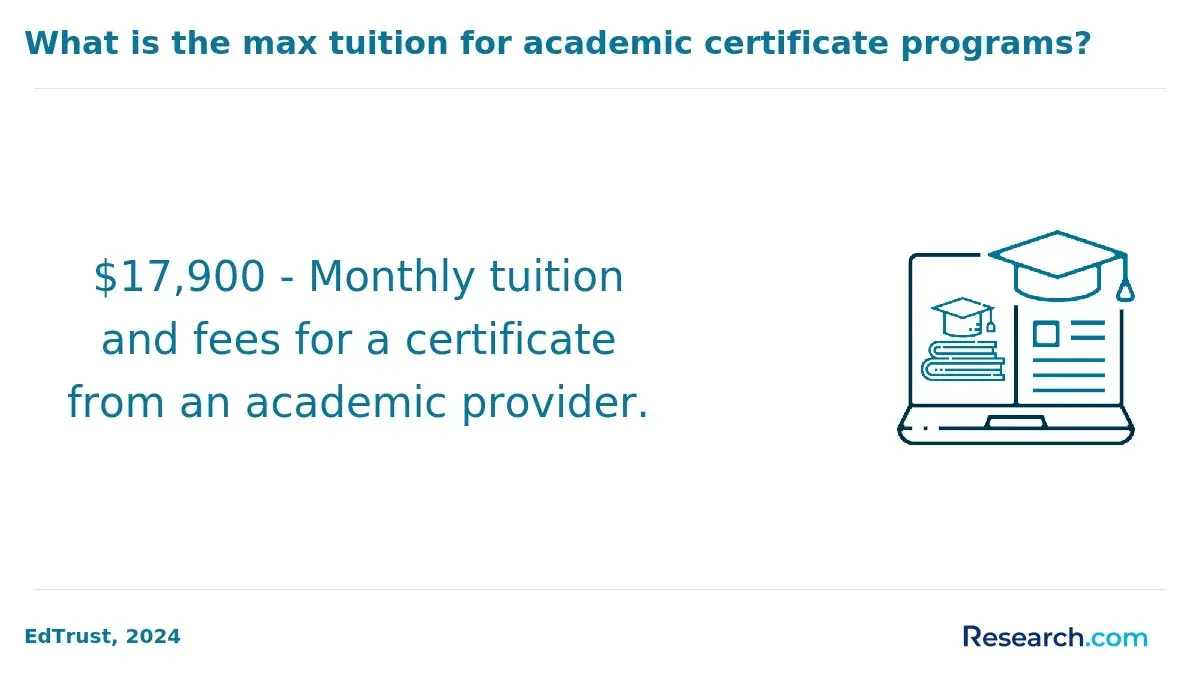
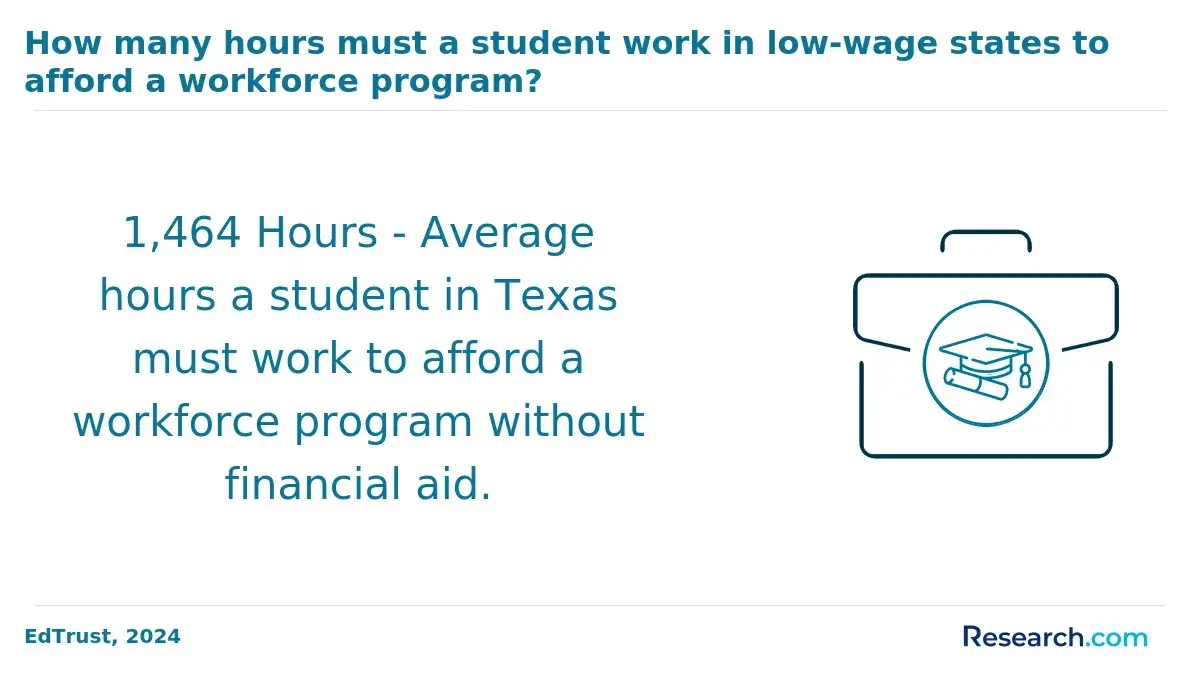
The cost of an online physics bachelor's depends on tuition, accepted transfer credits, fees, textbooks, lab kits, software, proctoring, and any required travel. For transfer students, the most important cost variable is not the sticker price; it is the number of credits the school accepts toward the actual physics degree.
College Board's 2024 Trends in College Pricing and Student Aid reported average published tuition and fees of $11,610 for in-state students at public four-year institutions for 2024-25. That benchmark helps you judge whether an online public program is priced competitively, but your real cost may be higher or lower depending on residency rules, online tuition rates, and aid eligibility.
Common cost items include the following. Review them together so you can compare total cost rather than tuition alone.
- Per-credit tuition for online students
- Distance education or technology fees
- Physics lab kits, experiment materials, or equipment deposits
- Textbooks, homework platforms, calculators, and scientific software
- Proctoring fees for exams
- Travel and lodging if the program requires short lab residencies
- Repeated credits if prior coursework does not satisfy major requirements
Transfer students can usually apply for the same federal aid as other eligible undergraduates by completing the FAFSA. Aid may include Pell Grants, federal student loans, state grants, institutional scholarships, employer tuition benefits, military education benefits, and transfer scholarships. The maximum Federal Pell Grant for the 2024-25 award year is $7,395, but eligibility depends on financial need, enrollment intensity, and remaining lifetime eligibility.
To reduce cost, ask each school for a degree audit before enrolling. Then compare net price, not just tuition. A program that costs slightly more per credit may still be cheaper if it accepts more of your previous calculus, physics, and general education credits.
What careers can you pursue with an online bachelor's in physics and what roles are common?
A bachelor's in physics can lead to multiple career directions, but students should be realistic: many jobs with the title "physicist" require a master's degree or PhD. At the bachelor's level, the degree is often valued because it signals quantitative reasoning, mathematical modeling, coding ability, experimentation, and comfort with complex systems.
Common bachelor's-level pathways include technical and analytical roles. These options are especially relevant if you build complementary skills through electives, internships, undergraduate research, or projects.
- Laboratory technician or research assistant: Supports experiments, maintains equipment, collects data, and documents results in academic, government, healthcare, or industrial settings.
- Data analyst or scientific programmer: Uses statistics, coding, and visualization tools to interpret technical data.
- Engineering technician or engineering support specialist: Assists engineers with testing, troubleshooting, quality control, instrumentation, or product development.
- Software or simulation support role: Applies mathematical modeling and programming to scientific, defense, aerospace, or technology problems.
- High school physics teacher: May require state-approved teacher preparation, student teaching, and licensure in addition to the physics degree.
- Graduate or professional school applicant: Uses the physics degree as preparation for graduate study in physics, engineering, astronomy, materials science, data science, medical physics, or related fields.
Physics can also be a strong foundation for engineering-adjacent careers, but students who want a direct engineering credential should compare curricula carefully. If your target is power, electronics, communications, or embedded systems, reviewing online electrical engineering career outcomes can help you decide whether physics or engineering better fits the job market you want.
To improve employment options, pair the degree with practical evidence of skill. Employers often respond well to coding portfolios, lab reports, instrumentation experience, capstone projects, undergraduate research, internships, and clear examples of problem-solving with real data.
What are salary expectations and job outlook for graduates of online physics programs?
Salary outcomes vary widely because physics graduates enter many different roles. The highest-paying physics occupations often require graduate education, while bachelor's graduates may start in technical, computing, analyst, education, or engineering-support positions.
BLS data published in 2024 lists the median annual wage for physicists at $155,680 in May 2023. That figure is useful as an upper-career benchmark for physics-intensive roles, but it should not be treated as the typical starting salary for every bachelor's graduate.
The table below shows how to interpret common career directions. It separates roles that commonly require graduate education from roles where a bachelor's degree plus applied skills may be enough to enter.
| Career direction | Typical education expectation | How physics graduates use the degree |
| Physicist or astronomer | Often master's or PhD for research roles | Applies advanced theory, modeling, experimentation, and data analysis |
| Laboratory or research technician | Bachelor's often relevant | Supports experiments, measurements, quality control, and technical documentation |
| Data or quantitative analyst | Bachelor's plus coding and statistics skills often relevant | Uses modeling, Python, statistics, and visualization to solve business or scientific problems |
| Engineering support or test role | Bachelor's may be relevant; engineering degree may be preferred for some roles | Works with instrumentation, testing, prototypes, materials, electronics, or systems |
| Teacher | Bachelor's plus state licensure requirements | Teaches physics or physical science, usually after completing educator preparation rules |
The job outlook is strongest for students who treat physics as a platform, not a narrow job title. Build marketable skills in programming, electronics, statistics, simulation, technical writing, and teamwork. AI and automation are also changing technical work: graduates who can use computational tools responsibly, validate outputs, and connect models to real physical systems may be better positioned than those with theory alone.
How can transfer students choose a reputable, accredited online physics program that fits their goals?
The best online physics program is the one that is accredited, academically rigorous, transparent about labs, generous but honest with transfer credits, and aligned with your next step. Do not rely only on rankings or tuition pages; physics degrees require careful sequencing, and a weak transfer plan can erase the convenience of online study.
Use this step-by-step process before enrolling. It is designed to help you avoid the most common mistakes transfer students make.
- Verify institutional accreditation through the school's official accreditation page and the U.S. Department of Education or CHEA-recognized accreditor listings.
- Request an unofficial transfer-credit evaluation that shows which credits apply to general education, major prerequisites, upper-division physics, electives, and residency requirements.
- Ask how each lab course is completed, including whether any campus visit, local site, lab kit, or proctored activity is required.
- Map the course sequence from your first term to graduation, paying special attention to calculus, differential equations, modern physics, and upper-division courses offered only once per year.
- Compare total net cost after transfer credits, scholarships, fees, books, lab materials, and possible travel.
- Check career support, tutoring, faculty access, undergraduate research options, internship guidance, and graduate-school advising.
- Confirm whether the degree type matches your goal: a B.S. may be stronger for graduate physics preparation, while a B.A. may offer more flexibility for interdisciplinary plans.
Watch for red flags such as unclear accreditation language, vague lab descriptions, pressure to enroll before receiving a credit evaluation, no published curriculum plan, limited access to faculty advising, or promises about salaries and jobs. A reputable school should be able to explain exactly how your previous credits fit the degree.
If you are comparing online programs across fields, it can help to look at how accreditation and field requirements differ by discipline. For instance, guides to MLIS programs show how another field evaluates affordability, accreditation, and career fit, even though physics has its own curriculum and lab expectations.
Other Things You Should Know About Physics
Some schools offer online physics bachelor's pathways, but "fully online" depends on lab requirements. Ask whether labs use kits, simulations, remote instruments, local arrangements, or short campus residencies.
It can be, especially if the school is institutionally accredited and the curriculum includes rigorous math, lab work, and computational skills. Employers usually care about your skills, projects, experience, and the credibility of the institution.
Many general education credits may transfer, but physics major credits are evaluated more strictly. Calculus-based physics, lab courses, and advanced math are the most important credits to verify.
In 2027, graduates with an online bachelor's in physics can pursue careers in fields like data analysis, engineering, or education. While some roles may benefit from advanced degrees, there are opportunities available immediately after graduation in sectors such as research, technology, and applied physics.
References
- 2025 Best Online Degrees in Physics https://www.onlineu.com/degrees/physics
- Types of Financial Aid for Online Colleges https://www.umassglobal.edu/blog-news/types-financial-aid-online-colleges
- How Long to Get a Physics Degree? | ValidGrad https://validgrad.com/blog/physics-degree-timeline/
- Physics Employment Facts https://www.compadre.org/careers/facts.cfm
- What Can You Do with a Physics Degree? https://willamette.edu/academics/college/physics/career-options
- Cost & Financial Aid https://www.semesteratsea.org/financial-aid/
- Online Physics Course: 6 Helpful Considerations - Prereqcourses https://www.prereqcourses.com/online-physics-course/