2027 Best Online Bachelor's in Physics With Asynchronous Coursework

Co-Founder and Chief Data Scientist
Choosing an online physics degree is difficult because true fully online options are rare, labs are hard to deliver remotely, and career outcomes vary widely. The Bureau of Labor Statistics projects 7% growth for physicists and astronomers from 2024 to 2034, but many physicist roles still require graduate study. This guide is for working adults, transfer students, military learners, and STEM-focused students who need schedule flexibility. You'll learn which programs to compare, what asynchronous coursework really means, how costs and labs work, and whether this degree fits your career plan.
Key Things You Should Know
- Accredited online bachelor's programs specifically in physics are limited; Arizona State University and Liberty University are among the better-known U.S. institutions that have offered online physics bachelor's pathways, but students should verify current delivery format, labs, and transfer rules before applying.
- Asynchronous coursework can make a physics degree more realistic for working students, but it does not remove deadlines, exams, math intensity, or lab requirements; the strongest fit is usually a self-directed student with prior success in calculus-based science courses.
- The BLS reported a May 2024 median annual wage of $166,290 for physicists, but bachelor's graduates often begin in adjacent roles such as engineering support, data analysis, software, technical sales, laboratory operations, or teaching pathways rather than working as independent physicists.
What is an online bachelor's in physics with asynchronous coursework?
An online bachelor's in physics with asynchronous coursework is an undergraduate degree that teaches mechanics, electromagnetism, thermodynamics, quantum physics, mathematics, computation, and experimental methods through online classes that do not require students to attend live lectures at fixed times. "Asynchronous" usually means lectures, readings, assignments, and discussion boards are available on a learning platform, while quizzes, proctored exams, lab reports, and project deadlines still follow a weekly schedule.
This type of degree is best for students who want a broad quantitative science education but cannot relocate or attend daytime classes. It can support careers in technical industries, preparation for graduate school, science teaching pathways, engineering-adjacent roles, data work, or military and government technical positions. If your main goal is to become a professional research physicist, however, you should view the bachelor's degree as the first step toward a master's or PhD rather than the final credential.
Students comparing an online degree physics pathway should pay close attention to whether the program is a true physics major, an applied physics option, a physical science degree, or a general studies degree with physics electives. These labels can lead to different graduate school preparation, teaching eligibility, and employer perceptions.
Before enrolling, ask schools for written answers to the most important format questions. These details affect whether the program is genuinely flexible or only partially online.
- Are all required physics, math, and laboratory courses available online, or are campus visits required?
- Are lectures fully asynchronous, or do some courses require live evening sessions?
- How are labs completed: home kits, simulations, local lab arrangements, remote instrumentation, or short residencies?
- Are exams proctored online, and are there extra proctoring fees?
- Does the degree prepare students for graduate physics, engineering, data science, teacher certification, or general technical employment?
Which accredited schools offer online physics bachelor's degrees?
Fully online physics bachelor's programs are much less common than online business, psychology, computer science, or general science degrees. The main reason is practical: physics relies heavily on sequenced math courses and experimental lab work, which makes online delivery more complex. For that reason, the "best" program is usually the one that is accredited, transparent about labs, realistic for your schedule, and aligned with your goal after graduation.
The table below summarizes accredited U.S. universities that have been known for online physics bachelor's options. Program availability can change, so use this as a starting point and confirm current catalog requirements directly with the institution before applying.
| School | Known online physics pathway | Institutional accreditation | Best fit | Decision note |
| Arizona State University | Online bachelor's pathway in physics, commonly offered through ASU Online | Higher Learning Commission | Students who want a large public research university, strong online infrastructure, and preparation for technical or graduate study | Confirm whether the current degree is a BA, BS, or concentration and how upper-division labs are delivered |
| Liberty University | Online Bachelor of Science in Physics | Southern Association of Colleges and Schools Commission on Colleges | Students seeking an online private university format with shorter course terms and a faith-based institutional setting | Review transfer-credit limits, lab expectations, and whether the curriculum matches your graduate school or employer goals |
Accreditation should be nonnegotiable. For physics bachelor's degrees, institutional accreditation is the baseline because it affects federal financial aid, transfer credit, graduate school eligibility, and employer recognition. Unlike many engineering degrees, physics bachelor's programs are not typically evaluated through ABET in the same way, so do not assume the absence of programmatic engineering accreditation is a problem for a physics major.
Use a comparison process rather than relying only on rankings or marketing language. A strong online physics program should make the following information easy to find.
- Confirm institutional accreditation through the school and the U.S. Department of Education's recognized accreditor listings.
- Download the full degree plan and check the sequence of calculus, differential equations, linear algebra, and upper-division physics courses.
- Ask how every required lab is completed and whether any lab requires travel, special equipment, or local placement approval.
- Request transfer-credit guidance before enrolling, especially if you already completed calculus, chemistry, computer science, or introductory physics.
- Ask where recent graduates go, including graduate programs, teaching pathways, technical employers, or military and government roles.
How do asynchronous online physics programs differ from campus programs?
Asynchronous online physics programs differ from campus programs mainly in delivery, lab design, peer interaction, and student support. The academic content can be rigorous in both formats, but the student experience is not identical. Online learners need stronger time management because they often learn from recorded lectures, digital homework systems, remote office hours, and independent lab preparation.
The comparison below shows how the two formats typically differ in ways that matter for student success. Use it to decide whether flexibility is worth the trade-offs for your learning style and career goals.
| Factor | Asynchronous online physics program | Campus physics program | What it means for you |
| Schedule | Lectures and assignments can often be completed around work or family obligations | Classes and labs meet at scheduled times | Online is better for flexibility; campus may be better if you need structured accountability |
| Labs | May use home kits, simulations, remote tools, local arrangements, or limited residencies | Usually uses on-campus equipment and supervised lab rooms | Ask exactly how labs work before enrolling because this is the biggest online physics variable |
| Faculty access | Often through email, discussion boards, video office hours, and scheduled appointments | Often includes in-person office hours and informal department access | Online students should be proactive about asking for help early |
| Research exposure | May be limited or require extra planning | More likely to include in-person research groups, seminars, and lab assistant roles | Students targeting a PhD should investigate research opportunities carefully |
| Peer network | Built through discussion boards, group projects, virtual clubs, and online study groups | Built through classes, labs, department events, and campus organizations | Online students may need to create their own study network intentionally |
The best online choice is not always the cheapest or fastest option. For example, students comparing lab-heavy STEM degrees may also want to review mechanical engineering degree online cost considerations because engineering programs often have different accreditation, lab, and employer-alignment requirements than physics programs.
Common mistakes include assuming "online" means easier, ignoring lab delivery, and choosing a program without checking graduate school prerequisites. To avoid these problems, compare the actual course list against your target outcome: graduate physics, engineering, data science, teaching, or technical employment.
What courses are included in an online physics curriculum?
An online physics curriculum usually combines a core physics sequence, advanced mathematics, computational tools, laboratories, and general education. The exact mix depends on whether the degree is a BA, BS, applied physics major, or interdisciplinary physical science pathway. A BS often includes more advanced technical coursework, while a BA may offer more room for electives, teacher preparation, or a second field.
The table below outlines common course areas and why each matters. It is especially useful if you are checking whether an online program is strong enough for graduate school or technical employment.
| Course area | Common subjects | Why it matters |
| Introductory physics | Classical mechanics, waves, electricity, magnetism, optics | Builds the foundation for all upper-division physics and engineering-adjacent work |
| Advanced physics | Modern physics, quantum mechanics, thermodynamics, statistical mechanics, electromagnetism | Signals whether the program has enough depth for graduate study or technical roles |
| Mathematics | Calculus I-III, differential equations, linear algebra, probability or mathematical methods | Physics is math-intensive; weak math preparation is one of the biggest barriers to completion |
| Laboratory work | Experimental design, measurement, instrumentation, error analysis, lab reports | Employers and graduate programs value evidence that students can work with data and uncertainty |
| Computation | Programming, numerical methods, modeling, data analysis, Python or similar tools | Computational skill improves employability in data, software, engineering, and research support roles |
| Electives | Astronomy, materials science, electronics, optics, education, computer science | Electives let students align the degree with a career direction |
Students should also look for project-based work. A capstone, research-style project, computational modeling assignment, or advanced lab portfolio can help demonstrate applied skills to employers, especially when the program is online and students may have fewer in-person lab experiences.
If you are choosing electives, connect them to a clear outcome rather than picking only what sounds interesting. These combinations are especially practical.
- For data science or analytics, add programming, statistics, machine learning foundations, and numerical methods.
- For engineering support, add electronics, materials science, CAD exposure, instrumentation, or applied mechanics where available.
- For graduate physics, prioritize upper-division quantum mechanics, electrodynamics, statistical mechanics, advanced labs, and research experience.
- For teaching, ask whether the program pairs with a state-approved teacher preparation route and includes the right science education requirements.
What admission requirements do online physics programs usually require?
Admission requirements for online physics bachelor's programs are usually similar to other undergraduate STEM degrees, but the math expectations are more important. Many schools admit first-year students under general university standards, then require students to complete prerequisite math and science courses before moving into upper-division physics.
The most common requirements fall into a few categories. Review them early because missing prerequisites can add time and cost to the degree.
- High school diploma, GED, or equivalent credential for first-year applicants.
- Official transcripts from high school and any colleges previously attended.
- Minimum GPA requirements that vary by institution and applicant type.
- Placement into college algebra, precalculus, or calculus, depending on the school's physics sequence.
- Transfer evaluations for prior college math, chemistry, physics, engineering, or computer science coursework.
- English proficiency documentation for applicants whose prior education was not in English.
- Optional or test-flexible SAT or ACT scores at many universities, though policies vary.
Transfer students should be especially careful. Physics curricula are sequential, so even one missing prerequisite can delay upper-division coursework by a term or more. If you completed algebra-based physics but the major requires calculus-based physics, the school may not accept the course as a direct substitute.
A practical admissions strategy is to request a degree audit before you commit. Ask which credits apply to the major, which apply only as electives, and which must be repeated. This is one of the easiest ways to avoid paying for courses that do not move you toward graduation.
How long does an online physics bachelor's degree usually take?
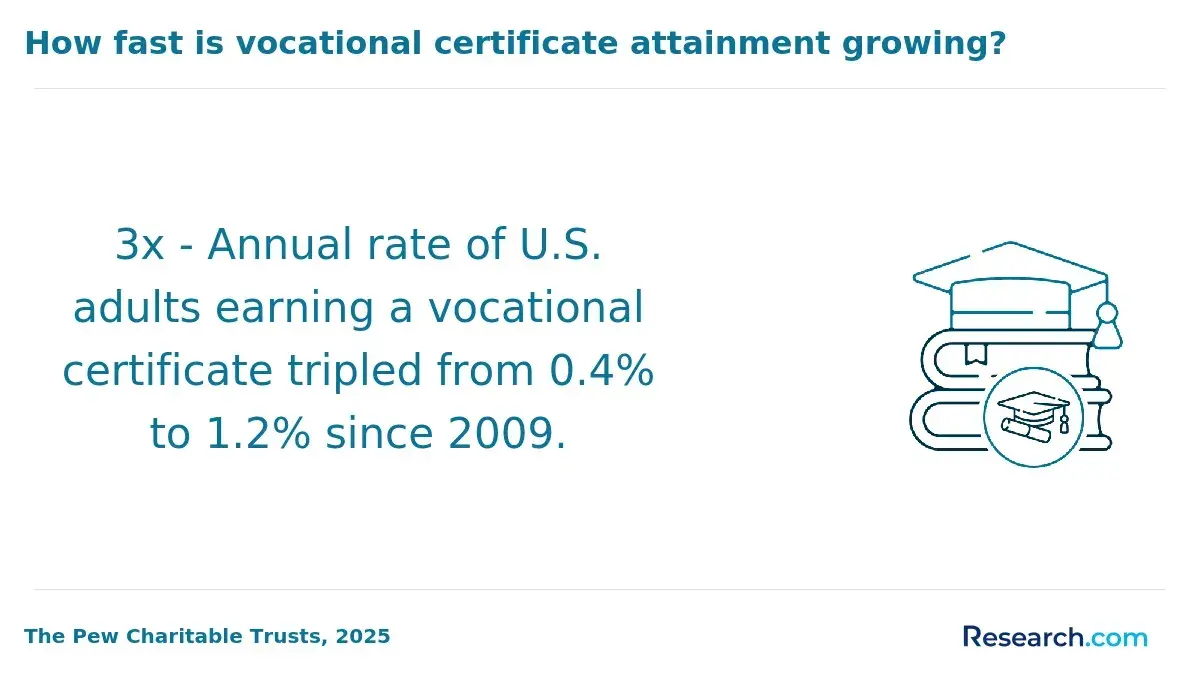
A standard online bachelor's in physics usually requires about 120 semester credits and takes four years of full-time study for first-time students. Transfer students may finish faster, but physics is less flexible than many majors because calculus, differential equations, introductory physics, and upper-division physics courses often must be taken in order.
The table below shows common timelines. Use it to estimate not just calendar time, but also whether the pace is realistic alongside work, family, or military obligations.
| Student profile | Typical timeline | Main advantage | Main risk |
| First-time full-time student | About 4 years | Can follow the intended math and physics sequence from the beginning | Heavy STEM load can be difficult without strong study habits |
| Transfer student with general education completed | About 2 to 3 years | May reduce total cost and time to completion | Physics prerequisites may not transfer cleanly |
| Working adult taking part-time courses | About 5 to 6 years or more | More manageable weekly workload | Longer time to graduation can increase total fees and delay career benefits |
| Accelerated student | Potentially under 4 years | Faster completion if math preparation is strong | Compressed physics and calculus courses can be demanding |
When estimating completion time, compare both credit requirements and course availability. Some online programs offer general education courses every term but advanced physics courses only once per year. That scheduling pattern can slow progress even if you have many transfer credits.
Students comparing flexible degree timelines across fields may find it useful to look at how other online programs handle credits and affordability, such as resources on the average cost of MLIS degree us. The lesson for physics students is similar: total value depends on tuition, transfer credit, course availability, and whether the credential supports your intended role.
How much do online physics bachelor's programs cost?
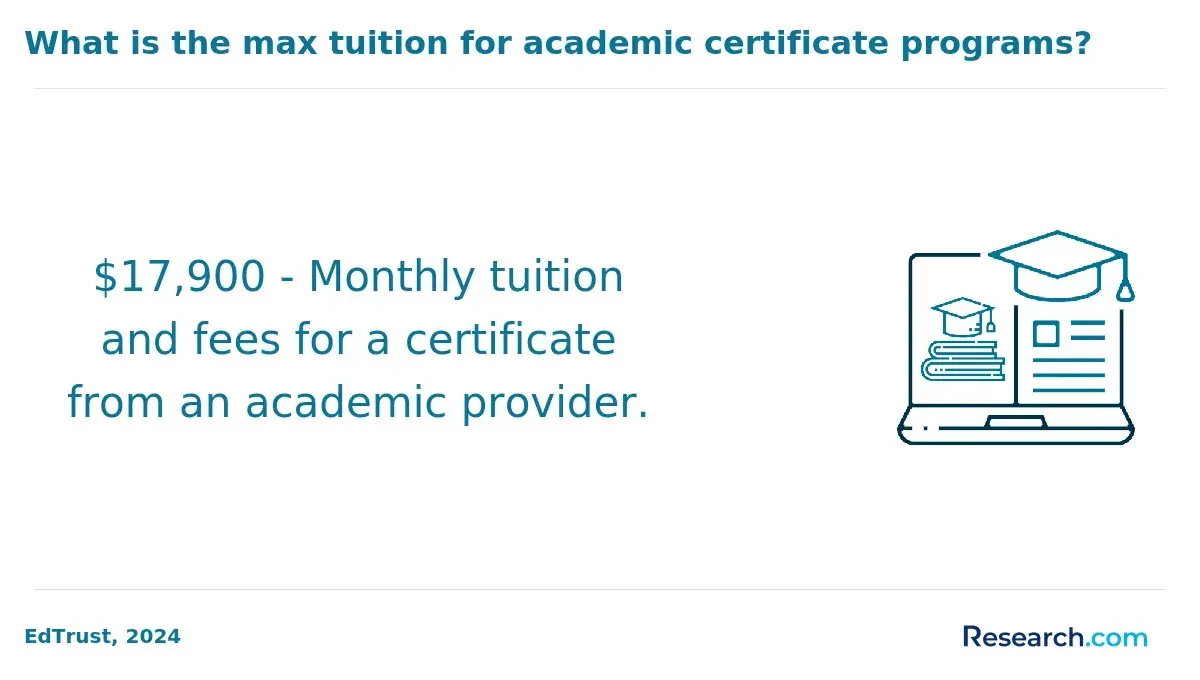
Online physics bachelor's program costs vary by institution, residency status, transfer credits, course load, technology fees, lab materials, and financial aid. Tuition is only one part of the total price. Students should also budget for textbooks, graphing or scientific software, lab kits, proctoring, graduation fees, and possible travel if any lab or exam requirement is not fully remote.
For national context, College Board reported average published tuition and fees for full-time undergraduates at public four-year in-state institutions of $11,610 for 2024-25. That figure is not the price of every online physics program, but it gives students a benchmark for evaluating whether an online rate is unusually low, typical, or expensive before financial aid.
When comparing schools, ask for a full cost estimate rather than a tuition quote. The following cost items are the ones most likely to affect your real budget.
- Per-credit tuition for online undergraduate courses.
- Mandatory online learning, technology, or student service fees.
- Physics lab kits, supplies, shipping, or replacement materials.
- Online proctoring fees or approved testing-center fees.
- Textbooks, homework platforms, calculators, and software.
- Transfer-credit evaluation fees, if charged.
- Travel and lodging if any lab, orientation, or exam has an in-person requirement.
Affordability also depends on how many credits you actually need to complete at the university. A program with a higher tuition rate can sometimes cost less overall if it accepts more transfer credits, offers predictable course scheduling, and helps you avoid repeating prerequisites. A cheaper program can become more expensive if it delays graduation or requires extra nontransferable courses.
To reduce cost, start with regionally accredited community college courses for general education, calculus, chemistry, and introductory physics only if the bachelor's program confirms they will transfer into the major. File the FAFSA, ask about institutional scholarships for online students, check employer tuition assistance, and compare net price after aid rather than sticker price alone.
What jobs can you get with a physics bachelor's degree?
A physics bachelor's degree can lead to several career paths, but the job title "physicist" is not the most common immediate outcome for bachelor's graduates. Many professional physicist and astronomer roles require a graduate degree, especially in research universities, national labs, and advanced R&D settings. At the bachelor's level, the degree is often valued for quantitative reasoning, modeling, programming, data analysis, and problem-solving.
The table below shows realistic career directions for physics bachelor's graduates. It focuses on role fit rather than promising a specific outcome, because hiring depends on location, internships, technical skills, security clearance, industry, and graduate education.
| Career direction | Typical entry roles | What you may do | How to strengthen your candidacy |
| Engineering and technical support | Engineering technician, test technician, systems support associate | Support experiments, testing, documentation, quality checks, and instrumentation | Add electronics, CAD, materials, manufacturing, or instrumentation experience |
| Data and computation | Data analyst, junior data scientist, scientific programmer, modeling assistant | Clean data, build models, write code, analyze trends, and communicate findings | Build a portfolio in Python, statistics, SQL, visualization, and numerical methods |
| Laboratory and research support | Lab technician, research assistant, instrumentation specialist | Operate equipment, collect measurements, maintain records, and assist senior researchers | Document lab projects, measurement techniques, and error analysis experience |
| Education | High school physics teacher pathway, tutor, instructional support specialist | Teach or support science learning, often with additional state certification requirements | Confirm teacher preparation and licensure rules in your state before enrolling |
| Graduate or professional school | Physics, engineering, astronomy, materials science, medical physics, data science | Use the bachelor's degree as preparation for advanced study | Prioritize research, advanced math, strong faculty recommendations, and rigorous upper-division courses |
AI and automation are changing what employers expect from physics graduates. Routine calculations are easier to automate, but employers still need people who understand assumptions, validate models, design experiments, interpret uncertainty, and explain technical findings. Students who combine physics with coding, statistics, simulation, and communication are usually better positioned than students who complete only the minimum major requirements.
Before choosing this degree, decide whether you want physics itself or the broader quantitative skill set. If you want a clearly licensed profession, a direct engineering credential, or a fast route into healthcare, another major may be more efficient. If you enjoy mathematical modeling and want flexible technical options, physics can be a strong foundation.
What salary can physics bachelor's graduates expect?
Salary outcomes for physics bachelor's graduates vary because the degree feeds into many occupations. The highest BLS wage figures for physicists usually reflect roles that often require graduate education, specialized research experience, or advanced technical responsibility. Bachelor's graduates should compare salary data by target occupation rather than assuming every physics major enters the same labor market.
The table below uses BLS May 2024 median annual wage data for selected U.S. roles connected to physics skills. These figures are occupational medians, not starting salaries or guarantees for online degree graduates.
| Occupation | May 2024 median annual wage | How it relates to a physics bachelor's degree |
| Physicists | $166,290 | Often requires graduate-level preparation for research and advanced R&D roles |
| Software developers | $133,080 | Possible for physics graduates who build strong programming and project portfolios |
| Data scientists | $112,590 | Relevant for students who add statistics, machine learning, databases, and coding |
| Mechanical engineers | $99,510 | Physics knowledge helps, but some engineering roles prefer or require engineering degrees |
| High school teachers | $64,580 | Requires state-specific teacher preparation and licensure in public schools |
Use salary data as a planning tool, not a promise. Your likely return depends on whether you gain internships, programming ability, lab experience, graduate credentials, teacher certification, geographic mobility, and employer-relevant projects. An online student who graduates with a strong computational portfolio may be more competitive for analytics roles than a student who completes the degree without applied work samples.
If you are comparing science degrees based on earnings, it can also help to examine field-specific ROI discussions such as online animal science degree salary considerations. The broader point is that the same degree level can lead to very different outcomes depending on industry, credentials, and local demand.
Do physics graduates need certification or licensure for careers?
Physics graduates usually do not need a general license to work in private-sector technical roles, data roles, laboratory support, software, or many research support positions. Licensure becomes important when the physics degree is used for a regulated profession, especially public school teaching, professional engineering pathways, medical physics, or certain government and safety-sensitive roles.
The table below explains where certification or licensure may matter. Requirements vary by state, employer, and role, so students should verify rules before choosing courses or assuming the bachelor's degree is enough.
| Career goal | Certification or licensure issue | What to check before enrolling |
| High school physics teacher | Public school teachers generally need state licensure or certification | Whether the online physics degree connects to a state-approved teacher preparation route |
| Professional engineer pathway | Engineering licensure is usually tied to engineering education, exams, and supervised experience | Whether a physics degree meets your state board's requirements or whether an engineering degree is better |
| Medical physicist | Clinical roles commonly require graduate education, residency, and board certification expectations | Whether the bachelor's curriculum prepares you for accredited graduate medical physics programs |
| Government, defense, or national lab work | Some roles require background checks, security clearance, citizenship conditions, or specialized training | Whether your target employers hire bachelor's graduates and what additional qualifications they prefer |
| Data, software, or technical business roles | Usually no state license is required | Whether employers expect portfolios, certifications, internships, or specific tools |
The biggest mistake is assuming one physics degree automatically satisfies every career requirement. If you want to teach, contact your state education agency or the university's licensure office. If you want engineering licensure, contact the relevant state engineering board. If you want medical physics, review graduate program prerequisites before you select electives.
For many students, optional credentials can still help. Cloud certificates, data analytics certificates, programming portfolios, laboratory safety training, or teaching endorsements may make the degree more marketable when they are aligned with a specific role.
Other Things You Should Know About Physics
It can be, if the university is institutionally accredited and the curriculum includes rigorous math, physics, labs, and applied projects. Employers usually care more about skills, experience, projects, internships, and the credibility of the institution than whether lectures were online.
Sometimes, but lab delivery varies widely. Programs may use home lab kits, simulations, remote equipment, local proctors, or short in-person requirements. Always ask for a course-by-course explanation of lab expectations before enrolling.
A BS is often better for graduate physics, engineering-adjacent technical work, or research preparation because it usually includes more advanced science and math. A BA may be better for students combining physics with teaching, communication, policy, business, or a second major.
When choosing an online bachelor's in physics program in 2027, consider accreditation, the availability of asynchronous coursework, support services, faculty expertise, and flexibility in completion time. Programs that offer robust online labs and interactive resources can greatly enhance your learning experience.
References
- Licenses and Certs for Physics Major? https://www.physicsforums.com/threads/licenses-and-certs-for-physics-major.679518/
- Top jobs with a physics degree https://www.surrey.ac.uk/news/top-jobs-physics-degree
- What Can You Do with a Physics Degree? https://willamette.edu/academics/college/physics/career-options
- Explore online physics courses and programs | edX https://www.edx.org/learn/physics
- Medical Physicist License Requirements in Illinois (2026) | American Association of Physicists in Medicine https://careers.aapm.org/career-resources/get-the-job-2/medical-physicist-license-requirements-in-illinois-2026-122
- 2025 Best Online Degrees in Physics https://www.onlineu.com/degrees/physics
- Client Challenge https://www.khanacademy.org/science/highschool-physics
- General Physics I https://www.straighterline.com/online-college-courses/general-physics-i/
- Careers - Vault https://vault.com/professions/physicists/requirements