2027 Online Physics Degrees That Prepare Students for Aerospace and Defense Work

Co-Founder and Chief Data Scientist
Choosing an online physics degree for aerospace or defense work is a high-stakes decision because the field rewards strong quantitative skills but often requires careful program selection. The U. S. Bureau of Labor Statistics projected aerospace engineer employment to grow 6% from 2023 to 2033, and the defense sector continues investing in satellites, sensors, hypersonics, modeling, and AI-enabled systems.
This guide is for students comparing online physics programs, career changers, military learners, and working technicians. You will learn which degree level fits your goal, what to verify before enrolling, and how to judge cost, accreditation, and career value.
Key Things You Should Know
- An online physics degree can support aerospace and defense careers, but bachelor's-level roles are usually more applied, while research, modeling, optics, space systems, and advanced defense laboratory jobs often prefer a master's or PhD.
- Accreditation matters more than the word "online": defense employers typically expect a degree from an institutionally accredited school, and some roles may also require U.S. citizenship, security clearance eligibility, or export-control compliance.
- Cost and payoff vary widely: College Board reported average 2024-25 published tuition and fees of $11,610 for in-state public four-year colleges and $43,350 for private nonprofit four-year colleges, while BLS May 2024 data listed median annual pay of $134,830 for aerospace engineers and $166,290 for physicists.
What are online physics degrees for aerospace and defense careers?
Online physics degrees for aerospace and defense careers are programs that teach mechanics, electromagnetism, waves, thermodynamics, quantum physics, computation, and experimentation in a flexible format. They are not the same as aerospace engineering degrees, but they can prepare students for work involving flight dynamics, propulsion analysis, satellite systems, radar, optics, materials, simulation, weapons effects, and space environments.
The key distinction is that physics is a science degree, while aerospace engineering is a design and systems implementation degree. Physics students learn the mathematical laws behind motion, energy, fields, particles, and matter. Aerospace and defense employers may value that foundation when the job involves modeling, measurement, instrumentation, signal behavior, or research rather than only aircraft design.
The table below shows how common degree choices compare for students aiming at aerospace and defense work. Use it to match your academic path to the type of role you want rather than assuming one degree works equally well for every job.
| Degree path | Best fit | Typical aerospace or defense use | Main limitation |
| Online bachelor's in physics | Students seeking a broad quantitative foundation | Test support, data analysis, technical sales, quality, lab support, systems support, entry-level analyst roles | Some engineering titles may prefer ABET-accredited engineering degrees |
| Online bachelor's in applied physics or engineering physics | Students who want physics with more applied design or instrumentation | Sensors, optics, materials testing, aerospace instrumentation, defense technology support | Availability is limited online, and labs may be hybrid |
| Online master's in physics or applied physics | Working professionals moving toward advanced technical roles | Modeling and simulation, optics, space systems analysis, research support, applied R&D | May require strong undergraduate math and physics preparation |
| Online master's in aerospace, systems, electrical, or mechanical engineering | Students targeting engineering-design roles | Aircraft systems, propulsion, control systems, structures, mission engineering | Physics graduates may need prerequisite engineering coursework |
| Online graduate certificate | Professionals filling a specific skill gap | Space systems, computational methods, photonics, data analytics, systems engineering | Usually not a substitute for a degree when a job requires one |
Students interested in simulation-heavy work should also recognize that aerospace and defense teams increasingly combine physics with programming, statistics, and machine learning. If your preferred role is more about predictive modeling, sensor data, or autonomous systems than core physics, comparing a master's degree in data science online may help you decide whether a data-focused graduate route is a better fit.
Which online physics degree is best for aerospace jobs?
The best online physics degree for aerospace jobs depends on the job family you want. For entry-level technical analyst, test, or laboratory support roles, a bachelor's in physics can be enough when paired with programming, lab experience, and internships. For aerospace R&D, space systems modeling, advanced optics, plasma physics, propulsion research, or national laboratory work, a graduate degree is often the stronger route.
A practical way to choose is to start with target job descriptions and work backward. If several postings say "physics, aerospace engineering, mechanical engineering, electrical engineering, or related field," physics may be a viable pathway. If postings repeatedly require "ABET-accredited engineering degree," "professional engineer pathway," or detailed design ownership, an engineering degree may be safer.
The comparison below can help you decide which route is strongest for specific aerospace and defense goals. It is not a ranking; it is a fit guide based on common employer expectations.
| Career goal | Strongest online degree choice | Why it fits | What to add |
| Flight test data analyst | Bachelor's in physics or applied physics | Strong mechanics, measurement, uncertainty, and data interpretation background | Python, MATLAB, statistics, instrumentation experience |
| Aerospace systems engineer | Physics plus master's in systems or aerospace engineering | Combines physical modeling with requirements, integration, and lifecycle thinking | Systems engineering tools, requirements management, internship or defense contractor experience |
| Optics, lasers, or sensor systems | Physics or applied physics with optics coursework | Physics directly supports wave behavior, electromagnetism, photonics, and detection | Lab work, optical design software, electronics |
| Space environment or orbital analysis | Physics, astrophysics, or aerospace-focused graduate study | Useful for radiation, plasma, orbital mechanics, and satellite environment modeling | Numerical methods, spacecraft systems, astrodynamics |
| Advanced defense R&D scientist | Master's or PhD in physics, applied physics, or closely related field | Research roles often require deeper theory and independent research preparation | Publications, thesis work, clearance eligibility when relevant |
If you are aiming for advanced defense analytics, autonomy, or computational research, a physics degree can pair well with doctoral-level data training. A PhD data science online is not a substitute for physics research training, but it can be relevant for professionals whose defense work centers on large-scale modeling, AI, or mission data systems.
The best choice is usually the program that gives you the strongest combination of physics depth, computational skill, credible labs, and employer-recognized credentials. A low-cost online degree is not automatically the best option if it lacks upper-division physics, faculty access, or a realistic plan for laboratory learning.
Are online physics degrees accredited for defense careers?
Online physics degrees can be acceptable for defense careers when they come from an institutionally accredited college or university. Accreditation is the quality-control system used in U.S. higher education, and it affects transfer credit, graduate admission, federal financial aid, and employer recognition. For defense work, the most important question is usually not whether the course was online, but whether the school is legitimately accredited and the curriculum matches the role.
Physics programs generally do not have one universal programmatic accreditor equivalent to ABET for many engineering programs. This matters because some aerospace engineering jobs, especially those tied to engineering licensure, design authority, or government contracting requirements, may prefer or require an ABET-accredited engineering degree. A physics degree can still be valuable, but students should not assume it will satisfy every engineering requirement.
Before enrolling, verify accreditation and defense-career compatibility using a short checklist. These checks reduce the risk of paying for a degree that looks convenient but does not meet employer or graduate-school expectations.
- Confirm institutional accreditation through the U.S. Department of Education or the Council for Higher Education Accreditation database.
- Ask whether the transcript and diploma distinguish online study from campus study, and whether that matters for your target employers.
- Review whether required physics labs are online, in-person, hybrid, summer intensive, or completed through approved local arrangements.
- Compare the curriculum with job postings for aerospace contractors, federal laboratories, space companies, and defense agencies.
- Ask graduate programs you may later apply to whether the online physics degree satisfies prerequisite expectations.
- Check whether any target roles require U.S. citizenship, security clearance eligibility, export-control access, or an engineering degree rather than physics.
Security clearance is separate from academic accreditation. A reputable degree can help you qualify educationally, but clearance decisions depend on federal rules, the employer's contract, citizenship requirements, background review, and the sensitivity of the work.
What courses do online physics programs include for aerospace work?
Online physics programs that prepare students for aerospace and defense work should include both core physics and applied technical skills. The most useful programs go beyond lecture videos by requiring problem-solving, labs, computational assignments, and projects that resemble real technical work.
The course areas below are especially important because aerospace and defense problems often involve motion, fields, signals, materials, and numerical modeling. A program does not need every elective, but it should offer enough depth for your target role.
- Classical mechanics and dynamics for motion, forces, orbits, vibrations, and flight-related modeling.
- Electricity and magnetism for radar, communications, sensors, antennas, electromagnetic compatibility, and directed-energy concepts.
- Waves and optics for imaging systems, lasers, photonics, remote sensing, and atmospheric propagation.
- Thermodynamics and statistical mechanics for propulsion, heat transfer, materials behavior, and aerospace environments.
- Quantum mechanics for semiconductors, detectors, advanced materials, lasers, and some defense research areas.
- Computational physics for numerical simulation, finite methods, Monte Carlo approaches, and large-scale technical analysis.
- Laboratory methods for measurement, uncertainty analysis, instrumentation, calibration, and technical reporting.
- Programming and data analysis using tools such as Python, MATLAB, C++, or scientific computing libraries.
Students should pay close attention to labs. Physics is an experimental discipline, and fully online labs vary in quality. Some programs use mailed lab kits, remote instrumentation, simulations, local lab approvals, or short campus residencies. Simulations are useful, but they should not completely replace hands-on measurement if your career goal involves test, instrumentation, or laboratory work.
For aerospace and defense preparation, strong electives can make a major difference. Look for options such as orbital mechanics, fluid dynamics, plasma physics, electronics, materials science, signal processing, control systems, photonics, remote sensing, space physics, or systems engineering. These courses help translate physics theory into the language used by aerospace teams.
What admission requirements do online physics programs typically have?
Admission requirements vary by school and degree level, but online physics programs usually expect evidence that you can handle calculus-based science. Physics is mathematically demanding, so admissions teams often look closely at prior coursework rather than relying only on general college readiness.
For bachelor's programs, students typically need a high school diploma or equivalent, transcripts, and placement or prior credit in algebra, trigonometry, precalculus, or calculus. Transfer students may need completed general education courses and prerequisite science credits.
For graduate physics programs, schools commonly expect a bachelor's degree in physics or a closely related field, calculus sequence, differential equations, linear algebra, modern physics, upper-division mechanics, electromagnetism, and sometimes quantum mechanics or statistical mechanics.
Use the following admissions checklist before applying. It helps you avoid losing time on a program that cannot admit you directly into the physics sequence or will require extensive prerequisites.
- Request a transfer-credit evaluation before committing, especially if you have military, community college, AP, IB, CLEP, or prior university credits.
- Ask whether online students have equal access to upper-division physics courses, labs, faculty advising, tutoring, and research opportunities.
- Confirm math placement requirements so you know whether you can start in calculus-based physics or must first complete prerequisite math.
- For graduate programs, ask whether missing prerequisites can be completed after admission or must be finished before applying.
- Check whether the program requires standardized tests, letters of recommendation, a statement of purpose, or evidence of programming experience.
If you are comparing online science degrees more broadly, note that admissions expectations can differ sharply by field. For example, an online nutritionist degree may emphasize biology, chemistry, and health prerequisites, while physics programs place heavier weight on calculus, mechanics, and quantitative problem-solving.
How long do online physics degrees take to finish?
Online physics degrees typically take about the same amount of academic time as campus programs, but calendar flexibility can change the real completion timeline. Full-time bachelor's students commonly need about four years from first enrollment, while transfer students with substantial credits may finish sooner. Part-time students often take longer because upper-division physics courses must be taken in sequence.
Graduate timelines depend on whether the program is thesis-based, coursework-based, or designed for working professionals. A master's degree may take around two years full time, but part-time online students often spread courses over a longer period to balance work, family, and lab or project requirements.
The table below summarizes realistic timelines. Use it to judge whether an accelerated program is actually practical for physics, where prerequisites and course sequencing can limit how quickly you can move.
| Program type | Common full-time timeline | Common part-time timeline | Timeline factors to check |
| Bachelor's in physics | About 4 years | 5 to 6 years or more | Calculus readiness, transfer credits, lab availability, summer course options |
| Bachelor's completion program | About 2 years after transfer | 3 years or more | How many major credits transfer and whether upper-division courses rotate annually |
| Master's in physics or applied physics | About 2 years | 2.5 to 4 years | Thesis requirements, employer schedule, research project access |
| Graduate certificate | 6 to 12 months | 1 to 2 years | Course availability and whether credits later apply to a master's degree |
The biggest timing mistake is assuming that online means self-paced. Many physics courses are cohort-based because students need instructor feedback, synchronized labs, proctored exams, and prerequisite sequencing. Before enrolling, ask how often each required course is offered and whether a missed course can delay graduation by a semester or full year.
How much do online physics degrees cost?
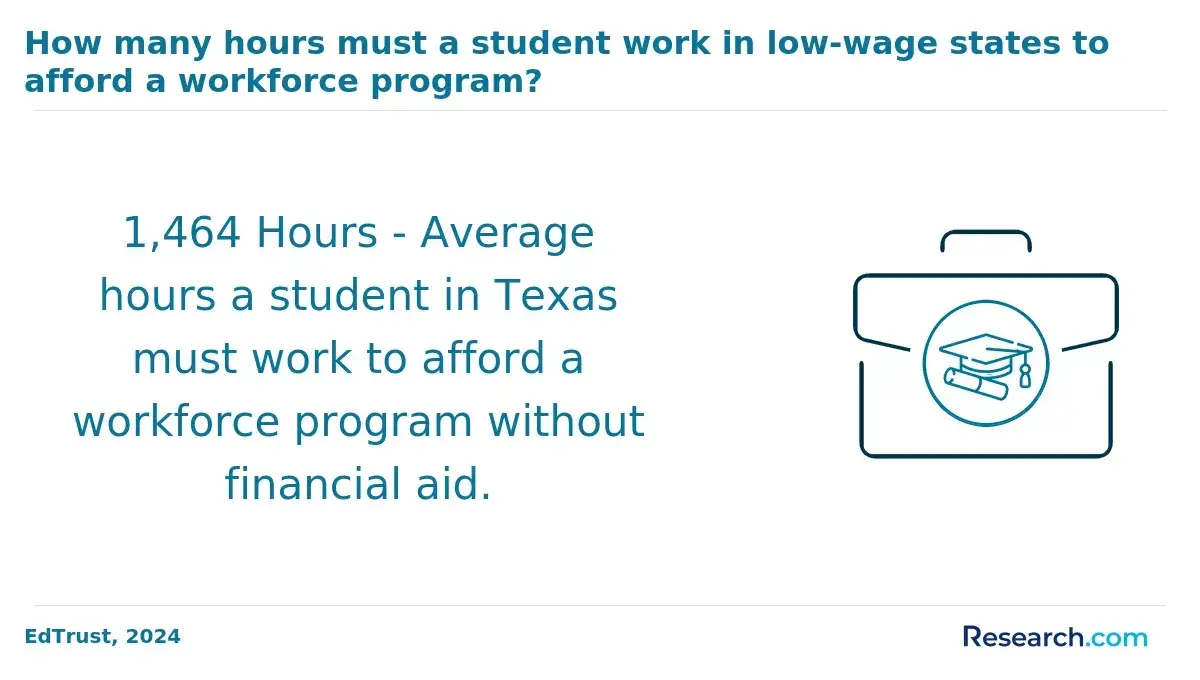
Online physics degree costs depend on residency status, public versus private tuition, transfer credit, lab fees, technology fees, books, software, and whether you need campus visits. College Board's 2024-25 data reported average published tuition and fees of $11,610 for in-state students at public four-year institutions, $30,780 for out-of-state students at public four-year institutions, and $43,350 at private nonprofit four-year institutions.
These are sticker prices, so your net cost may be lower after grants, scholarships, employer tuition assistance, military benefits, or transfer credits.
- Public four-year in-state published tuition and fees: $11,610 on average for 2024-25.
- Public four-year out-of-state published tuition and fees: $30,780 on average for 2024-25.
- Private nonprofit four-year published tuition and fees: $43,350 on average for 2024-25.
Physics students should estimate total program cost, not just tuition. A program with lower per-credit tuition may become more expensive if it accepts fewer transfer credits, requires travel for labs, charges high online fees, or delays graduation because key courses are offered infrequently.
The table below breaks down cost factors that matter specifically for online physics students. Use it when comparing schools so you do not overlook expenses that are easy to miss during an admissions call.
| Cost factor | Why it matters for physics students | Question to ask |
| Per-credit tuition | Physics degrees require many credits, and upper-division science courses may cost more | Is tuition different for online, out-of-state, or upper-division students? |
| Lab costs | Lab kits, remote equipment, campus residencies, or local lab fees can add expense | Are all lab costs included in tuition and fees? |
| Transfer credit | Accepted credits can shorten the degree and reduce total cost | How many prior credits apply directly to the physics major? |
| Software and technology | Scientific computing may require specialized software or a stronger computer | Does the school provide licenses for MATLAB, simulation tools, or cloud computing? |
| Time to completion | Delayed graduation can increase tuition, fees, and opportunity cost | How often are required upper-division physics courses offered online? |
To reduce cost, prioritize accredited public programs, transfer-friendly policies, employer tuition assistance, military education benefits, and scholarships for STEM students. Avoid choosing solely by lowest tuition if the program lacks the labs, electives, or advising needed for aerospace and defense goals.
What jobs can you get with a physics degree in aerospace and defense?
A physics degree can lead to several aerospace and defense roles, especially when students build applied skills in programming, instrumentation, modeling, and technical communication. The degree is strongest for jobs that require quantitative reasoning and physical-system understanding. It is less direct for roles that legally or contractually require a specific engineering credential.
The table below summarizes common job directions for physics graduates in aerospace and defense. Titles vary by employer, and some roles may require graduate study, security clearance eligibility, or engineering experience.
| Role | Typical responsibilities | Best preparation |
| Test engineer or test analyst | Analyze flight, propulsion, environmental, or systems test data; document results; troubleshoot anomalies | Mechanics, statistics, instrumentation, Python or MATLAB, lab experience |
| Modeling and simulation analyst | Create or validate models of vehicles, sensors, trajectories, materials, or mission scenarios | Computational physics, numerical methods, programming, differential equations |
| Optical or sensor systems analyst | Support imaging, lasers, detectors, radar, infrared systems, or remote sensing projects | Electromagnetism, optics, signal processing, electronics |
| Space systems analyst | Work with orbital behavior, radiation environments, satellite performance, or mission data | Classical mechanics, space physics, astrodynamics, coding |
| Materials or effects analyst | Evaluate materials behavior, thermal response, shock, radiation, or environmental effects | Thermodynamics, materials science, lab testing, data analysis |
| Research scientist | Design studies, develop models, run experiments, publish or brief findings | Usually master's or PhD-level physics or applied physics |
To make the degree more employable, students should build a portfolio that shows applied problem-solving. Aerospace and defense employers often care about whether you can use physics to solve messy, real-world problems, not just whether you completed theory courses.
- Complete projects involving orbital mechanics, sensor modeling, flight data, thermal analysis, or electromagnetic simulation.
- Learn Python, MATLAB, C++, or another language used in technical computing.
- Seek internships, co-ops, undergraduate research, military technical assignments, or contractor experience.
- Practice writing concise technical reports, because defense work often requires clear documentation and review-ready analysis.
- Understand security-clearance basics and avoid assuming that academic eligibility automatically means clearance eligibility.
AI and automation are changing these roles by increasing demand for people who can validate models, interpret sensor data, and understand whether algorithmic outputs make physical sense. Physics graduates can be competitive when they combine domain knowledge with data literacy and responsible use of computational tools.
What salaries do physics graduates earn in aerospace and defense?
Salaries in aerospace and defense vary by role, degree level, clearance, location, employer type, and experience. A physics degree does not guarantee a specific salary, but national labor data can help you compare the earning potential of related occupations.
BLS May 2024 wage data reported a median annual wage of $166,290 for physicists and $134,830 for aerospace engineers. These figures include workers across industries and experience levels, so they should be treated as labor-market benchmarks rather than expected starting salaries for new graduates.
The table below gives salary context for roles that physics graduates may pursue in or near aerospace and defense. Use it to compare career directions, but always check local job postings and employer requirements before making a degree decision.
| Occupation category | BLS May 2024 median annual wage | How it relates to physics graduates |
| Physicists | $166,290 | Most relevant to research, national laboratory, advanced modeling, optics, or applied physics roles; many positions prefer graduate education |
| Aerospace engineers | $134,830 | Relevant when physics graduates move into aerospace analysis, systems, testing, or pursue engineering graduate study |
| Mechanical engineers | $99,510 | Relevant to propulsion, structures, thermal systems, and test roles where physics overlaps with mechanical analysis |
| Electrical and electronics engineers | $111,910 | Relevant to sensors, radar, avionics, communications, electronics, and electromagnetic systems |
For return on investment, compare the total cost of the program with the roles it realistically helps you access. A lower-cost bachelor's degree may have strong value if you already work in a technical defense role and need a credential for advancement. A more expensive graduate program may make sense if it unlocks a specific technical specialty, employer tuition assistance is available, or it aligns with a role that clearly prefers advanced study.
The common mistake is reading high national median salaries as entry-level promises. New graduates, career changers, and students without internships may start in support or analyst roles before moving into higher-responsibility engineering or research positions.
How do you choose a reputable online physics program?
Choosing a reputable online physics program requires more than checking rankings or tuition. You need to know whether the program is accredited, technically rigorous, realistic for online learners, and aligned with aerospace and defense hiring expectations.
Start by comparing programs against your target outcome. A student aiming for defense test analysis needs strong labs and instrumentation. A student aiming for space modeling needs advanced mechanics and computation. A student aiming for engineering design may need an engineering degree instead of, or in addition to, physics.
Use these practical steps before applying. They are designed to help you separate credible programs from convenient but weak options.
- Collect 10 to 15 job postings from aerospace companies, defense contractors, federal agencies, national laboratories, or space firms and list the required degrees, skills, and clearance conditions.
- Map each program's required courses to those job requirements, especially upper-division physics, computing, labs, and relevant electives.
- Ask for online-student outcomes, internship support, graduate-school placement, employer partnerships, and examples of student projects.
- Verify how labs work, who teaches upper-division courses, and whether online students can access office hours, tutoring, research, and career services.
- Compare total cost after transfer credits, fees, lab expenses, travel, scholarships, employer benefits, and likely time to completion.
- Speak with admissions, the physics department, financial aid, and career services rather than relying on one enrollment counselor.
Watch for red flags. Be cautious if a school is vague about accreditation, cannot explain lab requirements, offers very limited upper-division physics, promises specific salaries, pressures you to enroll quickly, or cannot show how online students receive academic and career support.
It can also help to compare how transparent schools are across different online disciplines. For example, when reviewing a master's in library science online program, students still check accreditation, outcomes, cost, and support services; physics students should apply the same scrutiny while adding deeper questions about labs, math sequencing, and technical electives.
The strongest program is the one that fits your target role, your academic background, your budget, and your ability to complete rigorous quantitative work. If a program cannot clearly explain how it prepares online students for physics-heavy careers, keep looking.
Other Things You Should Know About Physics
Yes, but the role matters. An online physics degree from an accredited school can support jobs in test analysis, modeling, sensors, space systems, and technical research support. Some aerospace engineering design roles may prefer or require an engineering degree.
Online physics degrees in 2027 equip students with fundamental skills in physics, including quantum mechanics and thermodynamics, essential for problem-solving in aerospace and defense. Specialized courses in computational physics and materials science further enhance their capability to handle defense-related challenges effectively.
Reputable physics programs usually require labs because measurement and experimentation are central to the field. Online programs may use mailed kits, remote labs, simulations, approved local labs, or short campus residencies, so students should ask exactly how lab work is completed.
Many defense jobs require clearance eligibility, but not all do. Clearance depends on the employer, contract, citizenship requirements, background review, and work sensitivity. A degree may help you meet education requirements, but it does not guarantee clearance.
References
- Learn aerospace engineering | edX https://www.edx.org/learn/aerospace-engineering
- 2025 Best Online Degrees in Physics https://www.onlineu.com/degrees/physics
- Accreditation, Validation and Recognition of Physics Degrees https://telescoper.blog/2022/09/19/accreditation-validation-and-recognition-in-physics-degrees/
- How to Launch a Career in Aerospace Without an Engineering Degree - MSU Denver https://www.msudenver.edu/innovative-lifelong-learning/blog/how-to-launch-a-career-in-aerospace-without-an-engineering-degree/
- Defence & aerospace jobs https://www.physicsworldjobs.com/jobs/defence-and-aerospace/
- How Long to Get a Physics Degree? | ValidGrad https://validgrad.com/blog/physics-degree-timeline/
- Best Online Aerospace Programs: The Ultimate Resource Guide - Hex-Star Universe https://hexstaruniverse.com/best-online-aerospace-programs-the-ultimate-resource-guide/
- What is the Best Way to Study Aerospace Engineering? - GD Goenka Aerospace Department https://aerospace.gdgoenka-university.com/what-is-the-best-way-to-study-aerospace-engineering/
- Space-related degrees - Space Training Catalogue https://training.spaceskills.org/degrees